Use NaNoWriMo to Repo Your Mojo

by James Scott Bell
@jamesscottbell

Yes, it’s almost here, November—which is National Novel Writing Month (NaNoWriMo). This singular event challenges writers all over the world to complete a 50,000 word (or more) novel in only one month.

I’ve participated a few times in the past and produced a couple of published books out of it. (Not, I quickly note, without a lot of revision work!) While that is all well and good, there is perhaps a better reason for jumping in—to recapture the joy of writing.

I love the NaNo vibe. Writers writing. Newbies trying. Keyboards clacking. Coffee brewing. Possibilities awakening. It’s a major accomplishment to finish a novel. To do it in one month is astounding.

Of course, it’ll only be a first and very rough draft. But it will exist. You can let it sit for a month and then figure out what to do with it. One likely outcome is that you’ll use it as a “discovery draft” that now allows you to structure a re-write. Another is that the novel never sees the light of day. That’s fine, so long as you get some writing lessons out of it. Analyze the draft. Judge your craft. Make a plan to strengthen your skills.

At the very least you will have proved something to yourself. Unless you’re a full-time writer, averaging 1667 words a day is hard. Doing so for a month stretches you. When you get back to your normal rate of production, try to up it by 10% now that you’ve gone through NaNo.

Here are three other NaNo tips:

Plan

NaNoWriMo is catnip for pantsers. But a little planning (starting today) can make all the difference in your final product.

First, take a day to do some free-form journaling on your idea. Who it’s about, why it matters, why anybody should care. Jot down scene ideas that come to mind, in random order.

Second, take one day to define your concept with a three sentence “elevator pitch.” This will be your plumb line, what keeps you from getting too far away from the essence of your story. Even if you go down rabbit trails, you can use this to get yourself back on the main track. (On the form of an elevator pitch, see my TKZ post here.)

Finally, brainstorm a tentative “mirror moment” for your main character. This beacon of light will help you find your way if you get stuck in the dark.

Write

Check out my 10 tips for powering through NaNoWriMo.

Try to get a “nifty 350” words done the very first thing in the morning (or second, after you get the coffee going … hey, maybe invest in a coffee maker with a timer!)

Don’t edit your work except for a quick review of your daily pages. If you can do that review right before hitting the sack, so much the better. Your “boys in the basement” will work through the night and you can dive into writing the next morning.

Take Part

Go to NaNoWriMo.org and sign up. It’s free, and will give you access to “pep talks” and local groups of participants.

Even if you’re not going for a NaNoWriMo “win,” you can still use November to re-charge your writing batteries. Cheer others on via social media and get excited about their progress. Use that positive energy in your own writing. Set a November goal. Try upping your quota for the month. Or complete the development of a new project.

But whatever you do, do it with a sort of wild abandon. Be a “crazy dumbsaint of the mind,” as Kerouac put it. Repossess your writing mojo. Then spread that out for a year, when you’ll come up to November again!

Anyone planning on doing NaNoWriMo this year? How about your past experience with it? Any tips for those who are about to try?

Cold Turkey

By Elaine Viets


Don and I have had no phones or Internet since last Thursday. We live in a mandatory evacuation area in Fort Lauderdale, Florida. When we were ordered to leave our condo at noon, Thursday, Sept. 7th, we packed up the cats and headed for our friend Anne’s house in Boynton Beach to ride out the hurricane. Irma was coming and she was mean. We didn’t know if we’d see our condo again.

It was a week before we could go home. We had electricity, but no Internet and no phones. We still don’t.

It may be the best thing that ever happened to me.

My agent wanted me to write a short story, and write it fast.

“Do you have any ideas?” he asked.

A couple. He nixed the idea that involved cute animals. “I think your heart is really on the dark side,” he said.

So I told him about an idea flitting around in my head. You know what I mean. It’s in your brain like a mosquito in your bedroom late at night. You can hear its annoying whine, but you can’t get rid of it. The only way to make it go away is to turn it into a story.

My agent liked the idea: a conversation I’d had with a man in a bank line several years ago – yes, it had been buzzing around that long.

I knew the story’s main characters. I had an idea for the opening. But what did I do after that?

I hadn’t the foggiest. I didn’t know where to take the idea. I had no plot. I had no ending. But it was time to get it out of my head.

“How quickly can you write that story?” he asked.

“Three weeks,” I said. That was fast, since I hadn’t written one word.

I started writing the story three days ago and it’s almost finished.

Why?

No Internet and no phones.

I discovered I’m an Internet addict. I’d get so far in my writing and then, when I got to a difficult part – when I needed to start a new scene or describe a character – I’d automatically go online to answer a question for my story: How do you spell Keurig? What are some names for the Devil?

Except I’d get distracted by the political news. A cute cat video. Click bait about a movie star who was big in 1975. A video tour of a tiny house. An unsolved murder from 1898.

You get the idea. It would be a half hour or more before I got back to my writing. My train of thought had been derailed. I’d write for a bit, but with less enthusiasm. Then another question would come up, and I’d be back on the Net. And I’d post on Facebook, tweet, and answer my e-mail. That took more time. Then I’d see a fascinating video about the 90-year-old sweethearts reunited after 50 years. Their great-granddaughter was the maid of honor . . .

Now I can’t do that. I still have the urge to run to the Internet when I have a question. My fingers itch to hit that browser button. They actually twitch when I see the Firefox icon. Then I realize I don’t have the Internet.

Instead I take a break, have a cup of tea, walk around the house – and the idea comes to me. Suddenly, I can see the next scene. That character is standing in front of me and I can describe him. Or I didn’t paint myself into a corner after all. I know how I can solve the problem. And damn, that opening, the one I’ve cherished for two years, is dull. I need to tear it up and rewrite it.

Writing is faster and easier without the Internet.

The AT&T repair person will be here Friday morning to restore our phones and get us back on the Internet.

I hope I can stand the itching and twitching of withdrawal, and not get caught in the Net again.

Note: I finished the short story, “The Deal,” two days later, and sent it to my agent. At last, it was out of my head. Our condo is livable, but damaged: Don’s bathroom ceiling collapsed and water damaged one wall and our bedroom ceiling. Compared to how Irma pounded the Caribbean, we are lucky. We got phones and Internet Friday, September 15, and well, I went on the Net again. Just to check my email. I swore I’d be strong, and stay away the distractions, but I had to find out what was going on in our country. And if Bo Derek still looks good now. And how to clean my house using all-natural ingredients. I’m supposed to finish a manuscript, but there’s this story about two women who tried to take selfies with a freaking elk. My name is Elaine and I am an addict . . .


Deadline Hell

By John Gilstrap

I’ve never understood very much about my own creative process (God, I hate that phrase), and because of that, I try not to think about it very much.  Where do ideas come from?  I have no idea.  They just arrive, and always just in time.  I talk to writers whose minds are filled with stories demanding to be told, and I admire them.  My ideas stumble into my head one, maybe two at a time, and they just sit at the bar and stare.  “Go ahead, Writer-man,” they say.  “Do your job and make us pretty.”

One constant in my life for more than a decade now has been a September 15 deadline for the next Jonathan Grave book.  I plan my entire year around that deadline.  A second constant is a July 1 publication date for the book that was submitted the previous September 15.  That early July drop date is important because of its proximity to ThrillerFest, and the boost in publicity brought by that.  But July is also Gilstrap Beach Vacation Month, so that’s another week gone from the ten weeks leading up to my deadline.  (I bring my computer and writing pad to the beach, but if I get 1,000 words written over those seven days, I’m lucky.)

On the far side of my deadline is Joy’s and my wedding anniversary, which almost always includes an exotic trip to somewhere.  This year, it was 16 days in Scotland, commencing September 12.  That shortened my deadline by three whole days!  That means there was no possibility of overshooting the deadline by only a day or two.  It was either submit two days early or four weeks late.  In my world, we call that “motivation.”

Because I’ve been doing this for so long, I’ve figured out a system that (almost) always works.  If I can be at the 200-page mark by the opening of ThrillerFest, I can be at 70,000 words by August 1.  Given a 100,000-word manuscript length, that makes August busy but doable.  Plus, by then, I’m transitioning to the third act, which for me is the easiest to write.  I can usually have a polished first draft done by the first week in September, which leaves me 10 days or so for final revision.

This year, reality bitch-slapped me.  ThrillerFest didn’t start until July 13, easily a week later than usual, and from July 19-23, I was on the faculty of the Midwest Writers Conference in Muncie, Indiana.  When all was said and done, I’d effectively lost 16 writing days in July.

And September 12 still sat there, immovable.

I hit my 70,000-word milestone on August 8, three days after I taught an all-day seminar at the Smithsonian, and the one day after an all-day charity signing event.  Math was beginning to work against me.  I needed to write 10,000 words a week for the next three weeks in order to give me the cushion I needed for final revisions.  Sounds horrible, but doable.

Then came the long lunch with a grieving friend who reached out because he didn’t want to be alone.  And the long overdue birthday dinner with another friend.  The un-turn-downable invitation to a luxury suite at the Washington Nationals.  Let’s not forget the long-standing three-day commitment to the always-fabulous Creatures Crimes & Creativity Conference from September 8-10.

Tick and Tock were both laughing at me.  In fact, they were mocking me.

Oh, and God forbid the book actually pull itself together at 100,000 words.  Perish the thought.  The final count came in at 112,230 words, and I clicked send for Scorpion Strike on the evening of September 11, 2017.

Never in my life have I written so much in so little time.  That’s 42,230 words in what was effectively 14 writing days (as opposed to editing/revision days).  If I wrote evenly, that would be over 3,000 words per day, but that’s never how it works for me.  The last two writing days were each 6K-plus.  It was exhausting.

As I jetted off to Scotland, I fully expected to receive a polite but scolding email regarding the revisions that would be necessary.  And that was fine, because that’s what revisions are for.  Instead, the email from my agent included the phrase, “best book you’ve ever written.”  Surely, she was pulling her punches so she wouldn’t ruin my vacation.  No, she promised, she and her assistant both read it through in one long gulp, loving it the whole way.

When we returned from our trip, my editor called and told me that they were sending Scorpion Strike straight through to copy editing.  For the first time in the history of history, there would be no editorial letter.  No structural changes, no punching up of this character or toning down of that one.  Just spelling and continuity.

So . . . what the f-bomb?  How could my most hurried book turn out to be my least-flawed, in the eyes of my writer universe?  I don’t have an answer–not even close–but if I were one to be introspective about my creative process (have I mentioned that I hate that phrase?), it might be worthy of consideration.

Here’s what’s off the table: I’m not going to try to recreate the magic of 6,000-word writing sessions.  I like being able to feel my legs and stand up straight.  I like a focal length longer than twenty-four inches. And that much coffee can’t possibly be good for me.

Next deadline: First two chapters of the next Grave book by November 1.  Piece of cake.

What Do Readers Really Want?

“A great book should leave you with many experiences, and slightly exhausted at the end. You live several lives while reading.” ― William Styron

By PJ Parrish

A writer friend of mine, Tim Hallinan, had an interesting post on Facebook the other day. Well, all his posts are interesting, but I thought this one you all at TKZ might really enjoy. Plus, I read it at a special point while my writing my new book. Here’s the post. Then I’ll be back and we’ll talk.

Bruce Springsteen in the NY Times today, talking about his goals for his one-man Broadway show:

“I think an audience always wants two things. They want to feel at home and they want to be surprised.”

If I had a single writing space, I’d put those words on the wall.

I think book readers want the same things, except that by “at home” they mean knowing instinctively that they can trust the writer not to violate the covenant between them, the sort of handshake made in the first few pages, that says the writer will do his/her best throughout the considerable amount of time the reader is generously volunteering to the experience. The reader needs to “feel at home” in their expectation of the kind of story and the level of quality and commitment the writer is attempting to bring to the experience. (It’s actually more like an airbnb, in that readers might expect different kinds of experiences from different spaces or books.)

But in addition to that level of comfort, they also want to be surprised — the book needs to take them places they weren’t expecting to go. And I think that covers everything from major story developments to tiny moments of grace among individual characters, maybe just a new way to say something.

I can’t think of anything, from a mild chuckle to a moment of illumination, that this doesn’t imply.


Isn’t that great stuff? Both from Bruce and Tim.  A couple years back, I read Tim’s Edgar-nominated book The Queen of Patpong. Normally, I don’t go for Asian settings, but I really was transported by his rendering of his location and the arc of his character Rose, village girl turned sex worker. Her story reminded me of another book that took me east, Memoirs of a Geisha by Arthur Golden, another tale of a girl sold into sex trade. (Click here to read the opening of The Patpong Queen to get a taste of of what it’s like in a Bangkok lap bar. Tim’s latest release, by the way, is coming in November — Fools’ River)

I’m also a big Springsteen fan. Not just for the tunes. Mostly it’s because he’s a great storyteller. So many of his songs are short stories, filled with damaged characters and locations painted with Van Gogh virtuosity. With just a few quick impasto strokes, Springsteen makes me see his places —

New Jersey Turnpike riding on a wet night
‘Neath the refinery’s glow out where the great black rivers flow.
License, registration, I ain’t got none
But I got a clear conscience ’bout the things that I done

And makes me feel for his people —

My name is Joe Roberts I work for the state
I’m a sergeant out of Perrineville barracks number 8
I always done an honest job as honest as I could
I got a brother named Franky and Franky ain’t no good

Now ever since we was young kids it’s been the same come down
I get a call over the radio Franky’s in trouble downtown
Well if it was any other man, I’d put him straight away
But when it’s your brother sometimes you look the other way

Me and Franky laughin’ and drinkin’ nothin’ feels better than blood on blood
Takin’ turns dancin’ with Maria as the band played “Night of the Johnstown Flood”

I catch him when he’s strayin’ like any brother would
Man turns his back on his family well he just ain’t no good

Like a good novelist, Springsteen honors the covenant between writer and reader. He makes us feel at home in his genre and his world, yet his song-stories can surprise through their ability to ignite a memory, touch a heart, or thrum a fear.  I’ve cried listening to him perform Independence Day, a song about a son’s inability to connect with a father. This is what great books do as well — they resonate, they connect, they make you think when you read them, yes, that is exactly how I feel!

As Tim so nicely puts it, a novel “is a handshake in the first few pages” that the writer will do everything in her power to keep up her side of the bargain. And as for that element of surprise both Bruce and Tim talk about, well, that’s the magic, isn’t it.

“Surprise” isn’t just a mere plot twist (though that can be fun). It isn’t just the final revelation of who did, indeed, do it. (though that can be satisfying). It isn’t the colorful rendering of your location (though who doesn’t want to visit far away places with strange-sounding names, like Bangkok and Bayonne?) “Surprise” is, as Tim says, the magic dust you spread throughout your entire book, from the care you put in your plotting, to the love you invest in your characters, even the bad ones, maybe especially the bad ones.

I’m one chapter shy of finishing the latest book.  This book has taken my sister Kelly and I “home” in that we have returned to our series character Louis Kincaid, and I am hopeful this story will make Louis’s fans feel a comfort that maybe they didn’t feel with our previous stand alone thriller. And we’ve worked really hard — and long — on this one to strengthen the covenant by producing what we really hope is a subtle and mutli-layered psychological mystery.

But I also hope the readers will be surprised. We’re taking them up to the wilds of Michigan’s Upper Peninsula, where small skeletons are found buried in abandoned copper mines, and into the arcana of the Catholic religion, where good cops struggle to reconcile the sanctity of the confessional with their need for justice.

This is why Tim’s post resonated with me. It is also why I started out today with one of my favorite quotes from Styron. We’re about ready to type THE END. I’ve had some experiences. I’m a little exhausted. And I’ve lived a couple lives while writing it. I can only hope the readers will feel the same.

First Page Critique

I confess to being a little trepidatious about tackling today’s first page critique entitled ‘We the People are Good to Eat’, not just because of the subject matter (you’ll see…) but also because I’m not really sure of the author’s intention (dystopian YA? parody?). It’s always tricky when reviewing only one page, but this particular submission had me scratching my head even more than usual. Read on – my general and specific comments follow.

We the People are Good to Eat

At 7:37 AM, on the 1378th Level of the City Building of Manhattan, thousands of people moved along the West 55th Street Corridor, going east from the 9th Avenue to the 8th Avenue corridor. Many teenage students walked among them, heading toward their local Public High School; HS L-1378-55, which stood between 8th and 7th.

As the crowd moved along, they went past an enormous advertising billboard, displaying a photographed line of full figured Warrior Women dressed in bikinis, while armed with swords and spears. Shrunken human heads were tied on their belts. Superimposed above them, across the top of the photo, was the slogan, “Paradise Meats. Healthy Tasty Treats”

17 year old Karen Bennet moved with the crowd. She was dressed in a lightweight, dark green jacket, with the words “HS L-1378-55”, printed in yellow on the back. She also wore a light blue skirt, hanging to her knees. Like all the other students in the crowd, the hungry, blonde Karen carried her edu-computer, and like many of them, she also had a pair of shrunken human heads tied on her belt.

She was about halfway down the block, when her steady boyfriend David Krendell came up beside her.  He was irritated.

“Hey Karen!”

Like most of the people in the City Building of Manhattan, he was a little thin and his energy level was low. She was also thin and not very energetic. A daily ration of sausages and meat patties was allocated for each citizen, but the portions were small.

Karen was annoyed. “Hi Dave.”

“I hear” he accused “you’re planning to try out for cheerleader?”

She snapped at him. “Since I already fought on the Warrior Girls Squad last year, I’m now qualified to join the cheerleaders. All cheerleaders and their families receive triple rations for the entire season, just like the warrior girls. Why not?”

“You might be the cheerleader who gets hanged, after we lose a game.”

“The extra rations will improve the health of me and my whole family for the entire season. Isn’t that worth the risk?”

“I wish you didn’t have to take that risk at all.”

She sighed, “And I wish you weren’t such a wimp, Dave.”

“I’m not being a wimp.” He told her, “The extra rations are intended to make the cheerleaders fill out, so they’ll look sexy, instead of unhealthy.”

She laughed, “You’ve got a complaint about that?”

“The girls on the cheerleading squad are expected to do it with every guy on the Warrior Team. I’m the Team’s equipment handler, so I know everything that goes on. I want you to be my girlfriend alone. Not the entire Team’s.”

“I know what’ll be expected of me, and I don’t see the point of me being a well fed, sexy cheerleader, if I’m not a team girlfriend. They’re the girls who have all the fun.”

“What about me?”

She groaned. “You’re too much of a wimp, and not all that much fun.”

Karen stepped away from Dave.

General Comments

As I wrote in my introduction, I’m not entirely sure what the author’s intention is here, but assuming it is a YA dystopian novel then I have a number of specific issues to raise, but my main overall comment would go back to my blog post a couple of weeks ago – does the author really think the idea of teenagers eating human flesh is a saleable premise? To be honest I can’t imagine many editors favorably reacting to that. Even if the author intended the novel to be a parody of a YA dystopian novel (which is not apparent in this first page) then this would have to be made obvious from the start and, even then, I’m not sure the premise would really sustain a publishable novel.

Specific Issues

Information Dump

Moving onto the specific issues in this first page… I think the major concern I have is that this first page is more of an information dump that a compelling start to a novel. While I was intrigued by the initial setting (the 1378th Level of the City Building of Manhattan), there were a lot of details that seem extraneous (the address and repetition of the HS number) and the dialogue between Karen and Dave seems designed to provide the reader with information, rather than a natural conversation between two teenagers (would Dave really have to explain to Karen why cheerleaders get extra rations or that a cheerleader gets hanged after losing game? She obviously knows this – so the information is really only for the readers’ benefit). In terms of story craft, however, this first page cannot be merely an information dump masquerading as conversation. We need action and tension to become engaged in the story – right now, this first page seems staged and unrealistic.

World Building

This stifled conversation drains the page of any tension or drama a reader may have felt after the mention of the Warrior Women billboard (the first mention of the shrunken heads) and so far, the information the reader is getting seems more off-putting than compelling. I’m assuming society has resorted to cannibalism because meat has become scarce but how and why remains unclear (and to be honest, as a reader I’m not sure I even want to know…). When re-reading this piece I wasn’t even sure how cannibalism is involved (although, given the title I’m assuming it is). Do Warrior Women just show off their skills by having shrunken heads tied to their waist bands? Is everyone else hungry because of meager meat rations or is human meat their only option? When creating a dystopian world, it’s fine to leave questions unresolved on the first page but the reader must feel confident that the author has created a viable and intriguing world – which I’m not convinced has been achieved as yet.

Dialogue

As I mentioned, the dialogue on this first page seems to be nothing more than an informational dump and I certainly don’t get any sense of attraction or friendship between Karen and Dave to indicate there would be any possibility of them being boyfriend and girlfriend. In fact, Karen seems pretty unlikable so far, which isn’t a great start. Also the conversation about cheerleaders ‘doing it’ with the whole team seems a bit off-kilter (although the mention that Dave is the team’s ‘equipment handler’ was possibly inadvertently hilarious). Neither Karen nor Dave come across as real (dare I say it) flesh and blood people yet – which leads me to my final specific comment…

Characterization

When dealing with a rather icky subject matter (cannibalism) an author is going to have to rely on some amazing characterization to get over that initial hurdle. The reason why the Hunger Games was so popular was, in major part, because the character of Katniss Everdeen was so compelling. So, while that series dealt with teenagers fighting to the death, the empathy of Katniss really added a humane touch to what was otherwise a pretty horrific premise for a book series.

Perhaps the author of this first page was inspired by that series and wanted to push the envelope even further – but as my comments demonstrate – in order to pull that off you need to have a solid and believable world (which hasn’t been developed in this first page yet), empathetic and compelling characters, and action that compels a reader to turn the page and keep reading. Sadly, because of the issues I’ve raised, I would not want to turn the page with this story – but I also think the author needs to take a step back and consider the ‘saleable’ premise question before addressing any of the specific comments I’ve raised.

TKZers, what do you think?

On Empathy

by James Scott Bell
@jamesscottbell

The other day my laptop and I drove to a local caffeine establishment to do some work. The early morning rush was over and the place relatively quiet. A young woman was at the cash register with a customer. A young man, a little older than the woman, was working the espresso machine like Frank Morgan behind the curtain in the Wizard of Oz.

When it was my turn to order I stepped to the counter, but before I could say a word a look of shock came over the young lady. She looked directly at me and said, “Oh my God!”

I was so sure I’d shaved that morning.

But then she said, “Excuse me!” and spun around to face a couple of large coffee urns. She started to fiddle with one, but apparently didn’t know the tune.

The young man saw this and said, “What are you doing?”

Woman: “I forgot to change the [something].”

Man: “You don’t do it that way.”

Woman: “I saw [unintelligible] do it this way.”

Man: “Well, that’s not the way you do it. Look out.”

He began rearranging and replacing things on and around the coffee urns, the whole time rat-a-tatting at the young woman with transparent annoyance.

“That’s how,” he snapped when finished, then went back to steaming milk. The woman returned to the counter, her eyes literally downcast. When she finally looked up at me, the hurt in her face was palpable. She could have been my daughter. I heard myself say, “It’s all right.” Then I placed my order.

Now why did I say that? I didn’t plan it, it just popped out. I don’t think the answer is complicated—I was hit with a jolt of empathy.

Empathy, simply put, is the ability to understand another person’s feelings, to “step into their shoes” as it were. It’s a common human attribute unless a) you are a sociopath; or b) have conditioned yourself not to care by practicing hate, selfishness, or some other form of conscience-weakening.

Empathy is powerful. So much so that it’s the theme of Harper Lee’s classic To Kill A Mockingbird. As Atticus tells Scout, “You never really understand a person … until you climb into his skin and walk around in it.”

Empathy should be the theme of a writer’s life, too. You can’t really know your characters without it, and that includes the bad guys. Fiction that transcends the predictable and mundane is largely built, I would argue, upon layers of empathy. Those layers reach out from the page and connect to readers on an emotional level.

Which, of course, is what we’re going for. Fiction is an emotion-delivery system, not a lecture or jeremiad. Sure, you can have a message, but it won’t penetrate very deeply without character empathy.

Writers also need empathy for their readers, who are looking for escape into a story. Why? Because, as Wordsworth put it, “the world is too much with us.” We all need some relief in crazy times. If we can give that to a reader through our books, we’ve done more for that reader than a million characters of Twitter ever will.

So try this:

  • Create a childhood scene for every one of your main characters. In that scene confront them with one of the following: a bully, a pet that dies, an accident, a humiliation, a disappointment, a failure.
  • Write a diary entry from that character, describing in detail how she felt during and after the experience.

In the next scene you write, explore how that feeling might affect the way the characters in the scene treat each other.

Do the same throughout the book.

And in your life, too. Oscar Levant, the songwriter and TV curmudgeon of the 1950s and 60s, once remarked: “When I was young I looked like Al Capone, but I lacked his compassion.”

Don’t let that be your epitaph.

So how deeply to you identify with your characters … including the bad ones?


This Is (Almost) Halloween…

I know. Perhaps it is too early for me to be writing about Halloween. I’ve been seeing  merchandise for the unofficial holiday in stores since September 5th, however, so I’m actually behind the curve. Herewith please find my subjective list of Top Five frightening reads that will carry you through the next few weeks:

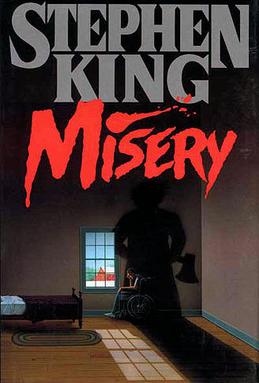
MISERY — I was given this newly published book as a present for Father’s Day 1987. I started reading it that afternoon and did not stop until I finished it that evening. Some dad, huh? Stephen King’s now-iconic tale of popular author Paul Sheldon’s extended visit with defrocked nurse Annie Wilkes — his Number One Fan — more than stands on its own merits. It makes/tops my list, however, because I had a relationship with someone very much like Annie, right down to her potentially dangerous mood changes and odd turns of phrase, the manifestation of which always preceded what I would come to call an “episode.” I read this book at least once a year, repenting at leisure and recalling the exhilarating sound of doom whistling by me at a near-miss.

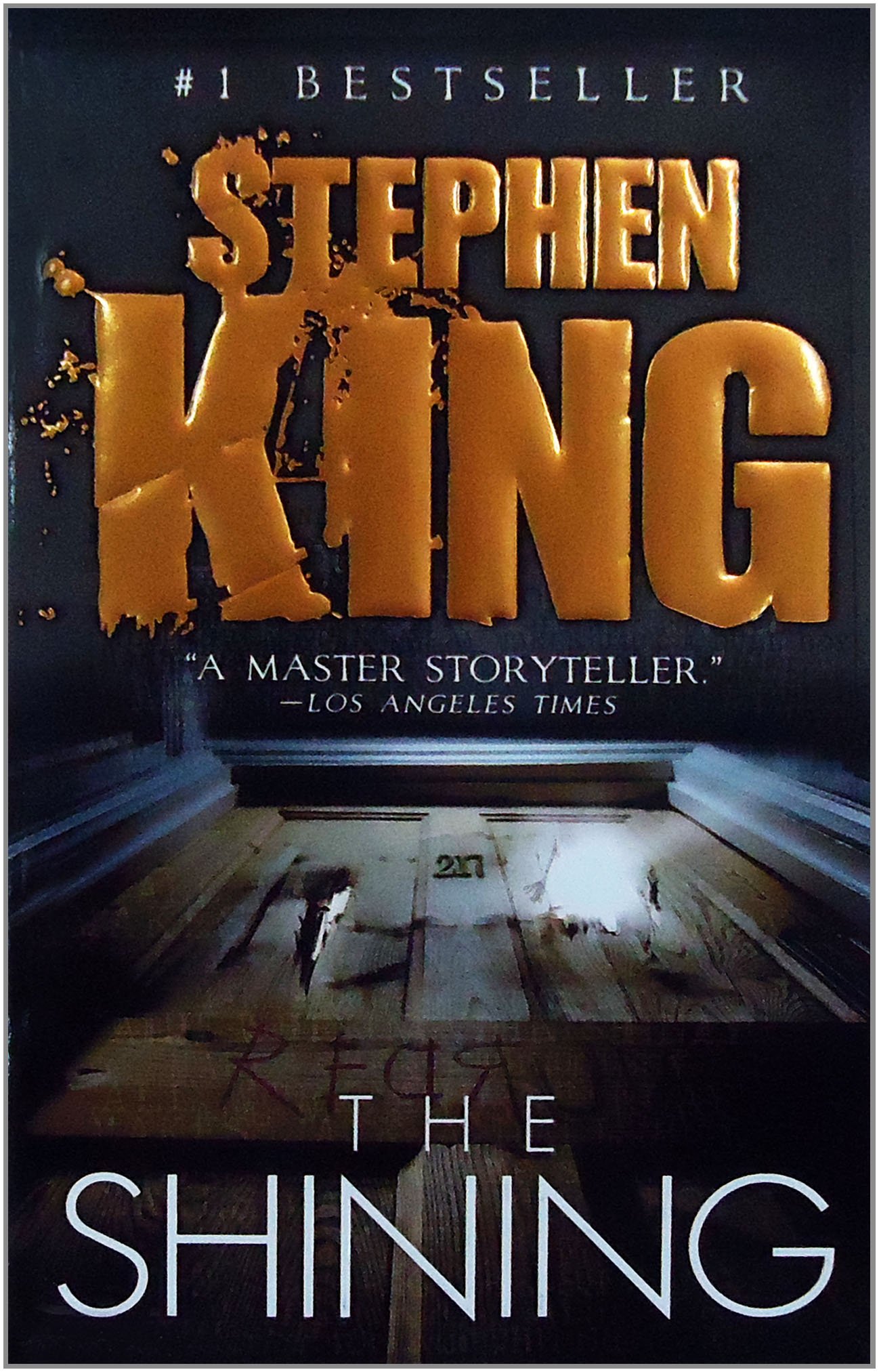
THE SHINING — This tale about Jack Torrance, a struggling author with writer’s block the size of a Jersey Wall, and his family was already quite well known when it was adapted for a (lesser) film by Stanley Kubrick. I screamed twice while reading it. The first was during young Danny Torrance’s encounter with the girls in the hall.  To this day, when I am in a large hotel with a long, carpeted corridor, I think of Danny and the girls who wanted to play with him forever.The second was during the bathroom scene. I have, unbidden, remembered this scene at inopportune moments over the course of my adult life, with unhappiness ensuing. The book as a whole, however, is a terrific example of how to wring every bit of drama that can be wrung out of a single location.

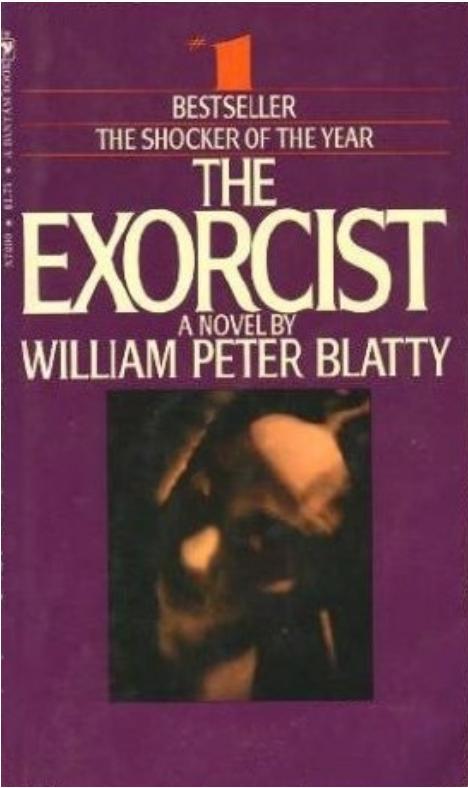
THE EXORCIST by William Peter Blatty — This early 1970s novel was a potboiler for sure — and that is one of my highest compliments — but it is a cringe-inducing tale of demonic possession and the efforts of a heroic priest to save the life and soul of an innocent girl  which fed right into my Roman Catholic upbringing. My father, who spend serious and quality time in Seminary school, assisted in an exorcism and told me that Blatty’s account of possession was mild compared to what he witnessed. That might have been, but it is hard to believe that what (almost) Father Joe experienced was any more frightening than Blatty’s description.

‘SALEM’S LOT by, ummm, Stephen King — I have always enjoyed well-written vampire novels — there aren’t many of them — but there is a special place in my heart for this story of the Undead and love lost in a small town on its last legs. King’s second novel published under his own name is a textbook example of how to plant a slow, unnamable dread on the first page, nurture it, and grow it to full blossom stark terror. The television adaptation, with David Soul in the lead role, has its weaknesses but actually stands up quite well. A planned sequel was later incorporated into the Dark Tower series in THE WOLVES OF THE CALLA and SONG OF SUSANNAH but neither quite reach the atmospheric levels of fright found in this book.

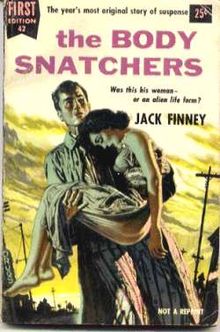
THE BODY SNATCHERS by Jack Finney — I saw the 1956 movie Invasion of the Body Snatchers before I read the book upon which it is based. That august novel, although almost as old as I am, has held up much better than either myself or its film adaptation. Marketed as science fiction, THE BODY SNATCHERS is a paranoia-laden horror story about alien seed pods that land on earth and begin producing a duplicate replacement copy of each human being. You have almost certainly seen at least one of the three films based on the book but you can’t beat the source material on any level. Five-year-old mini-Me was also certain at one point that his parents had been pod-snatched. You might as well, but take a chance and pick up a copy of this classic if you’ve never read it.

You know what I’m going to ask now, I’m sure: what are your favorite horror/scary novels? And why? Thank you.

What is Amazon Doing Now? Can it Work for You?

Jordan Dane
@JordanDane

I received a notice recently from Amazon regarding its implementation of “Amazon Stores,” a way to promote a brand or company products. I’m not sure how open and available this is for anyone with a brand or a store concept. Are many authors using this?

I have a corporation, Cosas Finas LLC, that I have developed into Cosas Finas Publications to promote my brand and I have a website that I’m still developing for this entity. (My navigation needs improvement and I’m tweaking it after my deadline, so be kind.)

Awhile back I set up an Amazon PAGE for my company/brand using Amazon Marketing Services (AMS) to link ad campaigns to. I created a landing page for my ads to show more of my books and group them by series or featured new releases. I’ve come to realize that the Amazon platform has some faults but I still think it is the best for when when I’m selling my books. The main issue that I, as well as other sellers on Amazon, have been having is the inventory mistakes they make. It loses money unless you use an Amazon reimbursement software to get your money back. This hasn’t effected me too much as I’m not selling as many products as other sellers but it could start to effect me once I start selling more. My friend told me to check out this helium 10 review since I’m starting to sell on Amazon a little more. I think it’s a great platform and I love using it.

I’m a user of Amazon Marketing Services (AMS) and have various ad campaigns established for my books as they release or I develop a concept to promote a series, for example. Through AMS I had created a Cosas Finas Publications company PAGE, which is different than their new STORE idea. Amazon Stores are slicker and more attractive in appearance.

Brand pages are going away or the links to these pages will start to be phased out by Oct 31 and completely gone by Dec. It’s only cost me the money for “click-thru” ads and I set my budget and can monitor the expense vs sales revenues. I’ve been satisfied with the benefits outweighing the cost on AMS and I monitor my profitability and tweak ad campaigns to make them more effective.

Amazon Stores are free to vendors. I just set up an ad campaign that links directly to my new store. It was very easy. I chose a HEADLINE search for keywords as my campaign structure (recommended by Amazon and others I’ve researched) and I can query Amazon’s own system for high traffic keywords used by customers. I set up a daily max budget with a click-thru cost for an ongoing campaign without an end. It’ll be up to me to periodically evaluate the effectiveness and I can terminate any campaign at any time. From what I understand, these vendor stores will be required to have at least one ad campaign linked to them to keep them active. This will probably go into effect after Dec, 2017.

I really liked the ad design I submitted yesterday for Amazon approval. Instead of me creating an intriguing tag line for each book, I was able to use my brand slogan, which is “Take a front Row Seat to Suspense” and direct readers to my store. My ad dollars will go farther if I can consolidate my ads for my brand. We’ll see how this turns out. It’s still very new and I need a final approval on my ad campaign before I can see what traffic and sales it generates, but the metrics are there to analyze, with revenues vs ad cost.

To check out more details, visit AMS for vendors (first party sellers are vendors) or Seller Central (for 3rd party sellers that sell other’s products) for sellers.

How many of you advertise through AMS? What’s been your experience?

My STORE is approved as of yesterday. I hope this link works – Cosas Finas Publications The pre-set design templates are not flexible enough for me. It would be nice to have them in modules where you could mix and match, but I can play with the templates to see what works best for books.

Key Features of Amazon Stores:

1.) Design templates allow you to feature different books in a way that your Amazon Author Page isn’t set up to do. You can add video/book trailers, post promo text, praise blurbs/awards, or feature upcoming releases.

2.) Flexible ability to feature different products at your command. You are the keeper of your store and what is in it. If you have other products that are associated with your brand or writing, like T-shirts or coffee mugs for writers, you can feature those along with your books.

3.) There are social sharing buttons tagged to your store and you can set up HEADLINE search ads or drive readers to your store through your ad campaigns and increase your store traffic. Amazon allows a vendor to search existing keywords already proven to have high traffic on their system.

4.) You can take your Amazon Store link and use it in other promotions off the Amazon website. I can see this working for KDP Select products that are exclusive to Amazon for a time.

5.) Developing an ad campaign for my whole brand of books allows me to make the most of my budget for advertising. Rather than creating an ad for a new release, I can create one for my brand and update the book offerings as I have releases.

For those of you focused on your writing and not at the point of targeting the “not so fun” part of the business end, it’s still important for you to see what authors are doing to promote their work. I talk to many aspiring authors whose eyes glaze over when you share the very necessary business side. They want to believe a publisher will “take care of them” and sell their books, easy/peezy, but that’s not how it works.

I wanted TKZers to see how this might work for you, if you’re not aware of AMS and the Amazon STORE concept, but if you are using it, what are your thoughts? Where do you see this going for Amazon? Is this concept directed at larger companies with multiple products, like a running shoe company for example, or can this work for authors on a budget?