But Does It Sell Books?

By John Gilstrap

I just returned from a fabulous week in New York, communing with fellow writers at Thrillerfest, the annual confab of the International Thriller Writers Association (ITW).  As always happens when two or more writers occupy the same space, the conversation turned to strategies to employ for the purposes of selling books.

There’s universal agreement that a writer needs a platform from which to launch his or her marketing campaign.  There’s equal unanimity that social media accounts are the way to go.  Dutifully, I’ve established my Facebook page, my Twitter feed and my Instagram account.  In addition, I have a YouTube channel, and this biweekly blog in TKZ.  I attend conferences, teach seminars when opportunities arise, and in general make myself as accessible as reasonable security and privacy allow.

For the most part, I enjoy the marketing side of what I do.  I’m kind of a Type-A personality to begin with so I enjoy the interaction with people, even if most of it is virtual.  If the invested time and effort didn’t sell a single book, I would probably do a lot of that stuff anyway.

So, here’s my first question for the group: Forgetting what the pundits proclaim to be immutable fact, what is your experience?  Do you read blog posts in this space or others that inspire you to buy books by authors you otherwise have not read?  Do Facebook travelogues or Twitter insights make you actually feel so much closer to an author that you’ll plop down some bucks for the latest book?

My second question is closely related: Have social media posts ever driven you away from an author you have otherwise been inclined to read?

My answers to my own questions are yes and yes, particularly with regard to blog posts and Facebook.  Excepting the nonfiction blogs that I lean on for research, I will occasionally read a post from a fiction writer whose voice intrigues me enough to take a poke at the fruits of his or her imagination.  And, sometimes an ill-informed political or social screed will push me to place an author on my never-again list.  I don’t care what side a FB friend takes on a position so long as it is well-argued.  When the name-calling starts, I’m out.  (And that’s exactly why I don’t understand why anyone in the entertainment business chooses to write screeds.)

Now, fair warning: When this post goes up, I will be doing my best torpedo impersonation inside the tube of an MRI machine to diagnose the source of pinched nerve in my neck.  Because I am a raging claustrophobe, I expect to be in a narcotic haze for some of the day, and past experience has demonstrated that it’s best to stay away from the Internet and emails while drugged.  Thus, I will likely not be a part of the conversation.


How Pickle Ball Helped Me
Up My Writing Game

By PJ Parrish

It’s not easy being a new cucumber.

I think about this every time we here at The Kill Zone critique another First Page submission. I really feel for the writers who send in their work for us to comb over because it’s not easy putting yourself out there when you’re just starting out. Which is what a “new cucumber” is.  When I was a kid, that is what we called the kid who came into the game last, the one who didn’t know the rules, the one who was smallest, slowest or just plain didn’t get it yet.

I was often a new cucumber. It wasn’t so bad when I played baseball because I can switch-hit. But dodge ball…geez, I’m just thankful I got out of fourth grade alive.

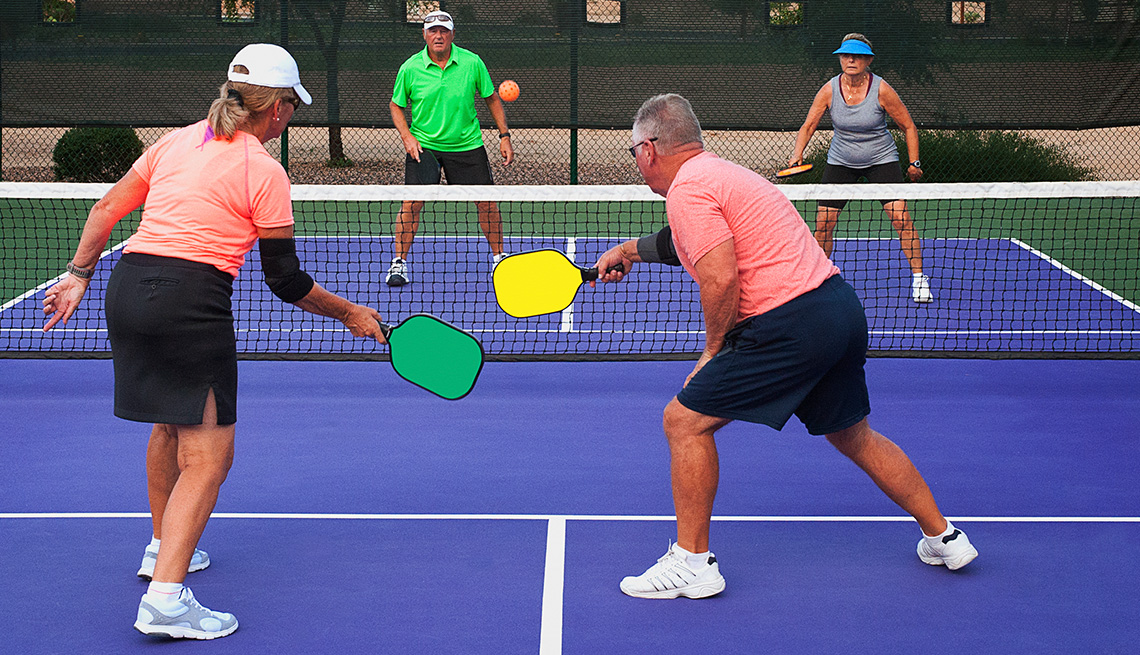
I am a new cucumber at pickle ball.  I started playing this game (the fastest growing sport in America!) this summer as a way to get some exercise when my knees started going on me.  Pickle ball is a mix of tennis, badminton and ping pong. It’s played on a small-sized tennis court with paddles and wiffle ball-like things. It’s a blast and great for old farts like me. It takes skill, strategy, stamina, heart, patience….and lots of practice.

Pickle ball looks easy, like anyone could do it. Until you screw up your courage, put yourself out there, and try it. Pickle ball is a lot like writing.

I play every day now, 9 to noon, with a group called The Friendly Pickle Ballers. I am, oh, probably the third-worst person on the courts, but all my teammates are kind and patient, teaching me the game, because I think they realize I am determined to learn. Which is sort of what we do here at TKZ with our First Page Critiques and posts. It’s a little community where any new cucumber can find help and solace. One of my favorite partners is Tom, a retiree who can smash and dink with the best of them. The other day, I learned that Tom is trying to write science fiction. He asked for some advice and I told him to come to TKZ, which he does now. I also told him that learning to write fiction is pretty much like learning to play pickle ball. And it’s helped me remember some stuff we talk about a lot here but that’s worth repeating:

  1. You need to learn the rules. Pickle ball has some funky rules that you need to know before you set foot on a court or you end up wasting time — your own and your fellow players. Ditto for writing, right? Why flail around trying to write a bestseller if you haven’t bothered to even learn the basics of the craft?
  2.  You must be creative.  Yes, learn the underpinnings of what makes for good fiction. But don’t be afraid to try something different. You might surprise yourself.  Like I did when, being a vertically challenged person, I learned to lob over the tall men.
  3. Play with folks who are better than you are. I’ve said this a million times, but don’t get sucked into a bad critique group, which can be pity-parties, bad for your self confidence or they just reinforce your worst habits.  Find folks who can help you up your game and listen to them. My friend Tom has taught me to…wait for this piece of wisdom!…keep my eye on the ball at all times.  Which is what Jan Burke told me once at an Mystery Writers of America meeting when I was grousing about James Patterson.
  4. Stay out of the kitchen.  In pickle ball, The Kitchen is the area just in front of the net and the rules say you can’t smash the ball if you have even one toe in there and you can’t dribble a serve into The Kitchen. I’m not sure what this says about writing except maybe don’t make really stupid mistakes.
  5. Hit hard along the lines.  If you are writing genre fiction (and I don’t happen to think that’s a derisive term), learn everything you can about that type of novel. Read extensively in your genre, be it sci-fi, thriller or YA.  Because you need to be smart about what’s going on in the market.  But then, learn to play hard at the edges of those lines, because the best genre fiction is the stuff that honors the past but points to something in the future. I have, for the record, a heck of a back hand along the line in pickle ball.
  6. Don’t always go for the smash shot. Pickle ball attracts a lot of tennis players. Many of them come in thinking they can beat up on the old guys by smashing the ball down their opponent’s throat. (This is sort of like literary types who try to write thrillers and wiff.) Trouble is, the pickle ball has about as much bounce as a dead chicken. And the smashers quickly learn they will be dinked to death (an ultra soft shot that just clears the net) by 82-year-old women named Norma.  And yes, I play with a real Norma. She’s a killer. For writers, not going for the smash shot means not trying to hit a home run on your first attempt, ie a bestseller. You’re doomed if you try because you’re aiming at a constantly moving market-target.  Just go out there in the beginning and have fun.
  7. Try the dink.  This is a money shot in pickle ball, a sweet little “dink” across the net that causes the smasher-guys (sorry, they are almost always guys) to race desperately to the net and sometimes do a face plant on the asphalt. So, if you feel lost in the middle of your 400-page novel, set it aside and write a short story or even a novella. You might find your rhythm again. It’s good for the confidence.
  8. Practice, practice, practice.  When I first starting playing, I went only once a week. Guess what, I didn’t get any better.  I got discouraged and depressed. To say nothing of putting on weight. When my friend Linda came to visit up here in Michigan, she dragged me to the Friendly Pickle Ballers.  I was terrible at first. But I am quickly getting better. Why? I go every morning now. Do you write every day? Why not?
  9. Keep score but don’t obsess about it.  Sure, I want to win in pickle ball, but right now I mostly lose. I’m trying to learn that this is okay.  For writers, I think the point is you should keep an eye on your sales, your Amazon ranking, your reviews, etc. But you don’t want to let it get to you. Messes with your head…
  10. And last but not least, don’t beat up on yourself.  This has been the hardest thing for me to learn in pickle ball because I am sort of competitive and feel like crap when I let my team mates down. But as my fellow players keep telling me, “there’s no I’m sorry in pickle ball.”  So for you writers out there, yeah, you will fail.  You’re going to hit a lot of balls into the net. Your serves will go wide. You’re going to get rejection letters. Whatcha gonna do? Pack up your pickle ball and go home? No. You’re going to put on the old sports bra, get back out there and try again. You will get better. You will get good. You will get published. Because even a new cucumber can become a pickle baller.


Can Creativity Pass Through Generations via DNA?

By SUE COLETTA

This video sent me down a rabbit hole of research.

As you can imagine, my writer brain lit up. Turns out, the research was even more fascinating than the video. A scientific study showed that a traumatic event could affect the DNA in sperm or eggs and alter the brains and behavior of subsequent generations. This breakthrough is an important discovery in the fight to treat phobias and anxiety.

Do you fear spiders, heights, or small spaces for no apparent reason? This may explain why.

Neuroscientists trained mice to fear a cherry blossom scent prior to copulation. While breeding these mice, the team at the Emory University School of Medicine looked at what was happening inside the sperm. Incredibly, the sperm showed a section of DNA, responsible for sensitivity to the cherry blossom scent, was indeed more active.

The mice’s offspring, and their offspring — the grand-mice, if you will — were all extremely sensitive to cherry blossom and avoided the scent at all costs, despite never experiencing a problem with it in their lives. They also found changes in brain structure.

In the smell-aversion study, scientists believe either some of the odor ended up in the bloodstream, which affected sperm production, or the brain sent a signal to the sperm to alter the DNA.

The report states, “Our findings provide a framework for addressing how environmental information may be inherited transgenerationally at behavioral, neuroanatomical and epigenetic levels.”

Enivronmental change can also critically affect the lifestyle, reproductive success, and lifespan of adult animals for generations. Exposure to high temperatures led to the expression of endogenously repressed copies of genes — sometimes referred to as “junk” DNA. The changes in chromatin occurred in the early embryo before the onset of transcription and were inherited through eggs and sperm. In mealworms, they traced the DNA changes through 14 generations.

Why mealworms? It’s quicker to test generation after generation on an animal with a short lifespan.

Another study showed that a mouse’s ability to remember can be affected by the presence of immune system factors in their mother’s milk. Chemokines — signaling proteins secreted by cells — carried in a mother’s milk caused changes in the brains of their offspring, affecting their memory later in life.

Memories are passed down through generations via genetic switches that allow offspring to inherit the experience of their ancestors. These switches, however, can be turned on and off, according to Science Daily. Scientists have long assumed that memories and learned experiences must be passed to future generations through personal interactions. However, this research shows that it’s possible for some information to be inherited biologically through chemical changes that occur in DNA.

Creativity counts as a learned behavior, but I also believe it goes deeper than that. Think about how deeply you feel about your writing. For most writers I know, when we’re “in the zone” our soul does the writing. One could argue we’re merely vessels who type. Have you ever read a passage that you don’t remember writing? Our ability to create burrows into the core of who we are, and thus, leaves an indelible mark. How, then, can we not pass that part of ourselves to future generations?

How many of you have creative folks in your family tree, be it writers, artists, musicians, singers, or other forms of creativity?

To test my theory, I asked the same question to my fellow TKZ members. Please note: this revelation occurred to me yesterday, so I’ve only included the members who saw the email in time. Hopefully, the others will add their responses in the comments.

For those I did catch on a Sunday, check out what they said …

Elaine Viets said, “My late cousin Kurt was a talented wood carver, and my grandfather was known as a great story teller in the local saloons.”

I love wood-carved pieces. The smell, the texture, the swirl to the grain. It’s not an easy creative outlet to master.

Jordan Dane comes from a long line of creative people. Here’s her answer: “My paternal grandfather was a writer for a Hispanic newspaper. My dad was an architect and artist (painter), my older brother went into architecture too, specializing in hospital design. My dad is a real renaissance guy. He could sculpt, paint, draw and he has a passion for cooking. My older brother Ed and I share a love for singing. I sang in competitive ensemble groups. He played in a popular area band and has sung in barbershop quartets. My mom was the original singer in our family. She has a great voice.”

Joe Hartlaub has two talented children. Here’s what he said, “Annalisa Hartlaub, my youngest daughter, is a photographer. My oldest son Joe is also a highly regarded bass guitar player locally.”

He’s being modest. When I checked out Annalisa’s photographs on Facebook and Instagram they blew me away. A photography project she created at 15 years old also went viral.

When I prodded further, Joe added, “My maternal grandfather played guitar, but we never knew it until we came across a picture of him taken at a large Italian social club gathering where he was strumming away. He was in his twenties at the time. As far as the source of Annalisa’s talent goes…her mother is a terrific photographer. The conclusion is that Annalisa gets the form of the art from her mother and her creativeness from me.”

Laura Benedict stunned me with her answer. “Someone doing genealogy linked my maternal grandfather’s family to Johann Sebastian Bach.”

Talk about a creative genius!

Laura added, “I remember a few very small watercolors that I believe my maternal grandmother painted. Trees and houses. But while we were close, we never talked about art. My aunt also did some drawing.”

John Gilstrap also came from a long line of creative people. Here’s his answer…

“My paternal extended family has always been fairly artistic.  My grandfather, I am told–he died long before I was born–had a beautiful singing voice, and for a period of time worked whatever the Midwest version of the Vaudeville circuit was.  My father, a career Naval aviator, wrote the Navy’s textbook, The Principles of Helicopter Flight, and had two patents on helicopter cargo handling operations.  He passed away in 2006.

My brother, four years older than I, plays a number of instruments, but his primary proficiency is the piano.  His daughter is a very accomplished cellist who makes her living as the director of a high school orchestra that consistently kills at competitions.
Closer to home, my only musical talent is to be a passable tenor in the choir.  For years, I sang with a choral group that performed all over the DC area, including a number of gigs at The Kennedy Center.  As a high schooler, our son was a pretty good cellist, but he walked away from it in college and never really looked back.”


Although I wasn’t able to catch her in time, PJ Parrish is the sister team of Kris Montee and Kelly Nichols.

As for me, my maternal grandfather was a highly regarded artist (painter) in his time. My mother was a beautiful writer, even though I never knew it while she was alive. After she passed, I discovered notebooks full of her writing.

So, can creativity be passed through our DNA? Judging by this small pool of writers, I find it hard not to entertain the possibility.

I’m betting the same holds true if I expand the test subjects to include you, my beloved TKZers. How many of you have creative folks in your family tree?
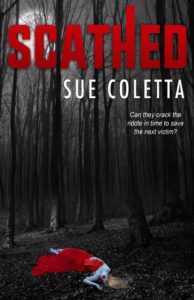
On a picturesque fall morning in Grafton County, New Hampshire, a brutal murder rocks the small town of Alexandria. In the backyard of a weekend getaway cabin, a dead woman is posed in red-satin, with two full-bloomed roses in place of eyes.

In her hand, a mysterious envelope addressed to Sheriff Niko Quintano. Inside, Paradox vows to kill again if his riddle isn’t solved within 24 hours.

With so little time and not enough manpower, Niko asks his wife for help. But Crime Writer Sage Quintano is dealing with her own private nightmare. Not only did she find massive amounts of blood on the mountain where she and her family reside, but a phone call from the past threatens her future–the creepy mechanical voice of John Doe, the serial killer who murdered her twin sister.

Together, can Niko and Sage solve the riddle in time to save the next victim? Or will the killer win this deadly game of survival?

Pre-order for 99c and save! Releases July 25, 2018. Want an early peek? Read opening chapter HERE.

 

Creating Tension Between the Lines

by James Scott Bell
@jamesscottbell

Another first page for us to analyze today. Note: Davina is not the title of the book, but the name of a first-person narrator. The author intends to switch POVs with other characters, and put the name at the start of each chapter.

Davina

      Someone once said nothing good happens after two am

      I try the familiar number at 3:10.

     Where was she? My sister’s an insomniac like me. She promised to call, the big move slated for yesterday. Pick up, damn it. Six rings, seven. I click off and pace, picking up and replacing my hairbrush, the phone, a bottle of baby aspirin, an inch-high silver tree with roots spreading out so it will stand. That one I keep hold of, cradling it in my palm, where the lines resemble roots.

   At 3:30, I try again.

   She answers on the sixth ring. “I didn’t,” she says. “I don’t think I did. I wanted to, but I wouldn’t. Would I?”

   Click, connection broken. What has she done or not done? I call again, get the annoying voice telling me the subscriber is unavailable.

   Off and on for four hours, I call, no answer. The little tree’s still in my palm, I can’t seem to put it down. The last present my father gave me, before he died and left Marissa and me alone with Mother. All these years and no sign of tarnish.

   At 7:30 I call Nate. He lives in the cabin next to ours. “Marissa hung up on me. She sounded weird. You have any idea what’s up?”

  “Trudy’s dead and the sheriff thinks Marissa killed her.”

  I drop the phone, the silver tree, clutch my hair in both hands. Marissa, what have you done? My hands shake, two tries to tap the speaker icon. “How, why?”

   Where’s my tree? Must have fallen on the floor.

    “Trudy went on the deck. The rail gave way where the porcupines gnawed the post. Last night, early morning, I guess.” Nate’s voice swells, an announcer who’s come to the juicy part. “I heard the sheriff talking to the ME. He thinks Marissa made the porcupine’s damage worse, or maybe just pushed her.”

     “Mother was deaf, mostly blind. had trouble walking. An accident waiting to happen.” I hear my voice rising, but can’t stop it. “She probably just fell.”

 “Not what the sheriff thinks,” Nate says. “You should come.”

***

JSB: The author has begun with a disturbance, which automatically puts this page into the “highly promising” category. Over the course of time here at TKZ we’ve seen two common errors popping up on these first pages: openings with characters alone, thinking or feeling; and loads of exposition and/or backstory.

But this page starts with the narrator, Davina, trying to get hold of her sister late at night. When she does, the sister sounds “weird.” Then she finds out the very bad news. Bad news is a good choice for an opening!

Now let’s render it in the most effective manner.

The first line seems superfluous to me. The second line is action, and I’d start there. Tweak it a bit. It’s 3:10 a.m. when I try the number again. 

I like the details of the next paragraph. It helps us feel what the narrator feels. The pacing, the anxiety. Specificity of small details is something many new writer’s overlook. Not so this author.

Next, the sister answers and gives her odd response. To this point, I’m right with the author.

Then:

Click, connection broken. What has she done or not done? I call again, get the annoying voice telling me the subscriber is unavailable.

Here is where a little craft will pay off with large dividends. Cut this line: What has she done or not done? We don’t need it. It’s explanatory. Never explain when what’s actually happening on the page. We know this is what the narrator is thinking; we don’t have to be told.

Off and on for four hours, I call, no answer.

This is a good use of narrative summary. It moves us along quickly to the next point in the scene. There are times when you should “tell” in just this way. Usually it’s to transition between scenes, but sometimes, as here, you do it jump ahead in time to get to the meat of a scene.

I like the one line of backstory: The last present my father gave me, before he died and left Marissa and me alone with Mother. My rule of thumb for new writers is three lines of backstory in the first ten pages, used together or spread out. This is one such line.

Then we come to the phone call to Nate. I have some concerns about the dialogue.

When the narrator asks what’s up, Nate immediately says, “Trudy’s dead and the sheriff thinks Marissa killed her.”

Is that the way a neighbor would give such horrible news? And he uses the name Trudy instead of Your mother. Maybe there’s something odd about him (no social skills?) but that doesn’t come through here. I think it would be more impactful if he prepared her a bit, and didn’t use Trudy to break it to her.

Let’s look at this passage:

I drop the phone, the silver tree, clutch my hair in both hands. Marissa, what have you done? My hands shake, two tries to tap the speaker icon. “How, why?”

Where’s my tree? Must have fallen on the floor.

Again, there are two lines in here that are explanatory. Can you spot them?

Look how much crisper it reads when those lines are removed:

I drop the phone, the silver tree, clutch my hair in both hands. My hands shake, two tries to tap the speaker icon. “How, why?”

Where’s my tree?

Then we get some exposition “slipped in” for the reader:

“Mother was deaf, mostly blind. had trouble walking. An accident waiting to happen.”

Always be aware of dialogue where one character tells another something they both already know. Chances are you’ve done that primarily to give the reader expository info you think they need to understand the scene.

Resist that urge. You can wait until a more natural time for this info, such as the narrator being questioned by the police or some such.

Try ending the page this way:

I hear my voice rising, but can’t stop it. “She probably just fell.”

“Not what the sheriff thinks,” Nate says. “You better come.”

(I changed should to better.)

In sum: this is a scene that has the natural tension of an opening disturbance. Cutting the lines of needless explanation will allow the tension to be felt more directly by the reader. And some simple cuts in the dialogue will render a more natural sound.

Well done, writer.

Okay, I’m in travel mode today, so I leave our author in the hands of the TKZ community for further comment!

Inspired by a Good Deed


Photo courtesy www.clipartxtras.com

I write this while taking a break from an interesting if long-delayed project. I have a bed in the basement which has been buried by boxes which have accumulated over the past twenty-four years. The bed is suddenly needed the boxes need to be moved, the contents examined, and determinations made with respect to keeping or disposing of the contents. I have been working on this at the rate of one box per hour, with fifteen minutes allocated for each box. The fifteen minutes is broken down as follows: 1) kick box to dislodge spiders hiding within — ten minutes; 2) carry box upstairs — thirty seconds; 3) go through contents of box — four minutes thirty seconds. I’ve made great progress but it’s been somewhat depressing in a way.

You might be surprised to learn that many of the boxes contained books. I don’t remember reading a lot of them, and it’s depressing on a number of levels. The primary one is that there were and are a LOT of books out there. Many of this lot were published before there was such a thing as Facebook or Twitter, so that the author could not instantaneously announce to the world when the book would be published, when the book was published, when the book was reviewed, and so one. One had to rely on email. I have no idea what an author did before that, other than to hope that a kindly clerk at Walden’s or a knowledgeable librarian would recommend their book to a prospective reader. Still…look at all the darn books. One might ask oneself, “Why bother writing? All the stories have been told.”

The answer is that if you have a story, write it. A good story stands on its own. People empathize with it. One can also take the basics of it and work it, maybe twist it around a bit, and make it different.

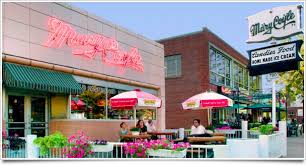
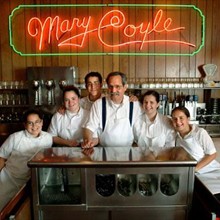
It may also surprise you that I have an example. Let’s start with a bit of backstory.  I misspent my formative high school and college years in Akron, Ohio. One of the few good parts of that experience was making friends in high school with a guy named Michael Trecaso. Michael combined restaurant experience with an innate ability to squeeze a nickel until the buffalo screams to succeed in a very tough business. He bought an ice cream parlor named Mary Coyle — it was where he worked when we were in high school — and turned it from a popular neighborhood place in the Highland Square neighborhood into a destination restaurant.

Photo courtesy Michael Trecaso’s Mary Coyle Restaurant

Another good part of growing up in Akron for me was making friends with a guy we will call P. I have been friends with him for almost as long as I have been friends with Michael. P. is an antique dealer in Akron, which means that he gets to meet a lot of people and hear a lot of stories. Keep in mind that people who live in Akron tend to stay in Akron. Each resident is at best two or three degrees of separation from another. So it is that on one recent afternoon P. was speaking with a husband and wife in their eighties about who they knew, and what had changed in the city. The husband mentioned Mary Coyle. P. mentioned that a friend of his (that would be me) knew the owner. The wife said, “Oh,  Michael Trecaso is the nicest man.” She then told P. a story.

The lady’s father — who we will call F. and who is now deceased — had some fifteen years previously been living in an elder care residence in downtown Akron. One day he caught a bus which took him to a doctor’s appointment near Highland Square. When he finished with the poking, prodding, and sticking he went outside to discover that the perfect summer day that had been present on his trip there had been chased off by storm clouds. It began raining in torrents as he crossed the street to the bus stop, which was located in front of Mary Coyle.

F. had been standing in the downpour for two minutes when he heard someone calling to him. He turned around and the owner of the restaurant — Michael Trecaso as described above — was beckoning to him, calling, “Come stand in the doorway! You’ll get soaked!” F did so. Michael said, “What are you doing out there?” F. said, “Waiting for the bus.” Mike asked F. where he was going. F told him. Michael looked at F. for a second, came to some internal decision, and walked over to the counter. He wrote “Back in thirty minutes” on a sheet of notebook paper and taped it to the front door. Michael then told F “Come on” and gave F. a ride to his residence. F. never forgot that. Neither did his daughter, who tells everyone she meets about it. Michael has told me a lot of stories, but he never told me that one. I don’t think he’s told anyone that story, actually. It would ruin his reputation. I am accordingly telling it now.

You can do a lot with that tale. If you’re Linwood Barclay, your protagonist in a small city could do the good deed and go back to work, only to have the police show up three days later inquiring as to the whereabouts of the elderly man who was last seen getting into his car. If you’re Paula Hawkins, your protagonist sees her long-absent daughter/sister/husband while she is giving an elderly woman with dementia a ride. And so on. That’s just one story. The woods are full of them. Don’t let my tale of a basement full of books discourage you.

I also must note that doing a good deed is its own reward. Should you be in Akron, however, please stop by Mary Coyle at 780 West Market Street to say hello to Michael and give his establishment your patronage. Should you do so, tell him to report to your office or ask him what school he is going to next week. He’ll know who sent you.  

Photo courtesy Michael Trecaso’s Mary Coyle Restaurant

Now…if you are so inclined, I would love to hear about a spontaneous good deed that you or someone you know performed and that has heretofore gone unremarked. We’ll remark upon it. Thank you.


Creative Destruction

By Elaine Viets

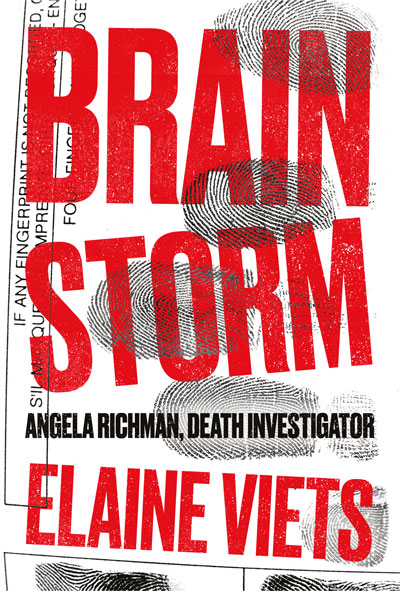
I’ve been hard at work on my fourth Angela Richman, death investigator mystery. Until last week I was up to schedule. Then I hit a snag at Chapter 11. An important character was being arrested for drug dealing. I thought – after writing 33 mysteries – that I knew the procedure. So I wrote the chapter. Then I got the little niggling doubt that all writers get, and decided I should check with my police procedure adviser, a former homicide detective.

Good thing I did: I not only had the procedure wrong – but the ex-detective suggested a better idea: Why not have the dealer discovered in the cop shop when a drug-sniffing canine “alerts” to the controlled substance?

Beautiful! Except I had to tear up the whole chapter and rewrite it. Now I’m a week behind.
I’m glad I did – the new scene is better.
It’s not the first time I’ve had to kill something, or even bury it. Like many novelists, I have parts of several novels, including an embarrassing serial killer mystery and a lackadaisical modern Sherlock Holmes pastiche, that I’ve buried deep in a file drawer, where I hope they’re never found.

We’re told (on the Internet) that Hindus worship Shiva as a god of contrasts who destroys as well as creates. “Shiva’s role as a destroyer is also constructive,” one source said. “This extends to all things in the world, meaning that Hindus regard Shiva as the source of all good and evil.”
“Shiva is full of passion which leads to extremes in his behaviors,” said another. “Sometimes he removes himself from the material world and abstains from pleasure, at other times he gives in to all desire. Shiva’s wife Pavarti tempers his passion and gives him balance.”
As good a description of writing – and married writers – as any.
Shiva is my new model, and I follow the art of creative destruction.
What about you?

Like forensic mysteries? My first two Angela Richman, Death Investigator mysteries are on sale for $1.99 each: https://www.amazon.com/s/ref=nb_sb_noss?url=node%3D13819722011&field-keywords=brain+storm+by+viets&rh=n%3A13819722011%2Ck%3Abrain+storm+by+viets

The Procrastination Habit

Procrastination is so rife among my writer friends and other creatives I know that we don’t even joke about it. We are clichés. While I would never lie about procrastinating when I’m supposed to be working, I rarely volunteer the fact. If another writer confesses to me that she’s procrastinating on getting pages done, I feel a huge sense of relief. There’s no misery like procrastination misery to build solidarity between writer friends.

Even some of the most productive bestselling writers I know sometimes procrastinate. Personally, when I’m in my deepest procrastination moments, I forget that. It feels lonesome, and I become my own harshest judge. (That whole comparing oneself to other writers is deadly too, but we can consider that another time.) Being judgy while procrastinating is doubly unhelpful.

Procrastination offers an escape from tension. If I have a project (or chapter or paragraph or phone call or chore) that makes me feel anxious, I sometimes literally walk away from it. It might be for five minutes. It might be for an hour. It might be for weeks. Eventually I’ll return to it–or, if it’s some kind of chore or event–my lack of action will mean it expires and goes away.

Avoidance. It’s embarrassing to admit that I’m sometimes guilty of it. Ouch.

I’ve read many, many books to try to improve my productivity, shape my behavior, and, yes, fix my procrastination habit. Because it is a habit, not a disease or fatal flaw.

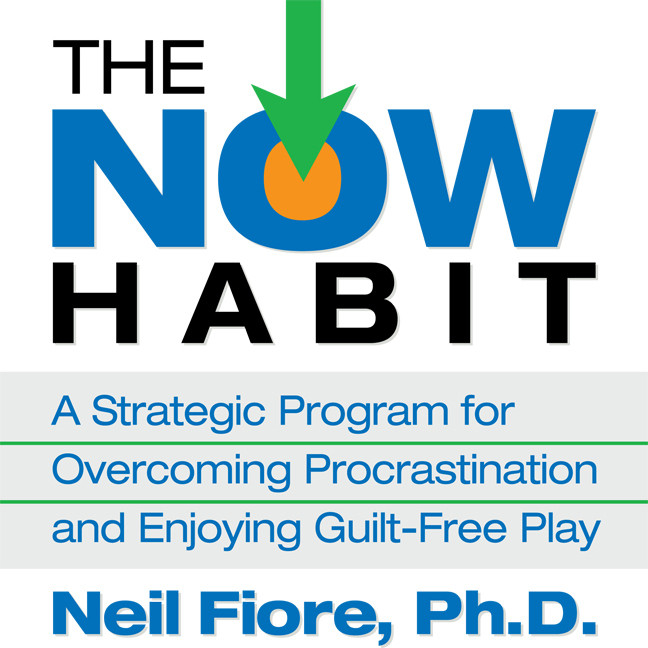
Here’s the latest book I’ve read on the subject:

I listened to it on audio via Overdrive and liked it well enough that I bought the ebook. (I often do that, anecdotal proof that library reads influence consumer book purchases.)

Notice that appealing subtitle. “A Strategic Program for Overcoming Procrastination and Enjoying Guilt-Free Play.” How sexy is that? I couldn’t resist checking it out when I was browsing available audiobooks. The subtitle worked on me exactly the way I’m sure it was intended: put the focus on the positive, not the procrastination.

KillZone is not the place for book reviews, but is about the writing life. So I’ll be brief.

THE NOW HABIT

  1. Helps you identify when and why you might be procrastinating.
  2. Doesn’t judge you for procrastinating–and even explains how it becomes an active coping tool.
  3. Doesn’t prioritize work over pleasure (a real revelation for me).
  4. Offers some compelling client stories.
  5. Has focus exercises and talks about the process and importance of flow.
  6. Helps you create your own “unschedule.”
  7. Has a good section about dealing with the procrastinators in your life.
  8. Explores goal setting.

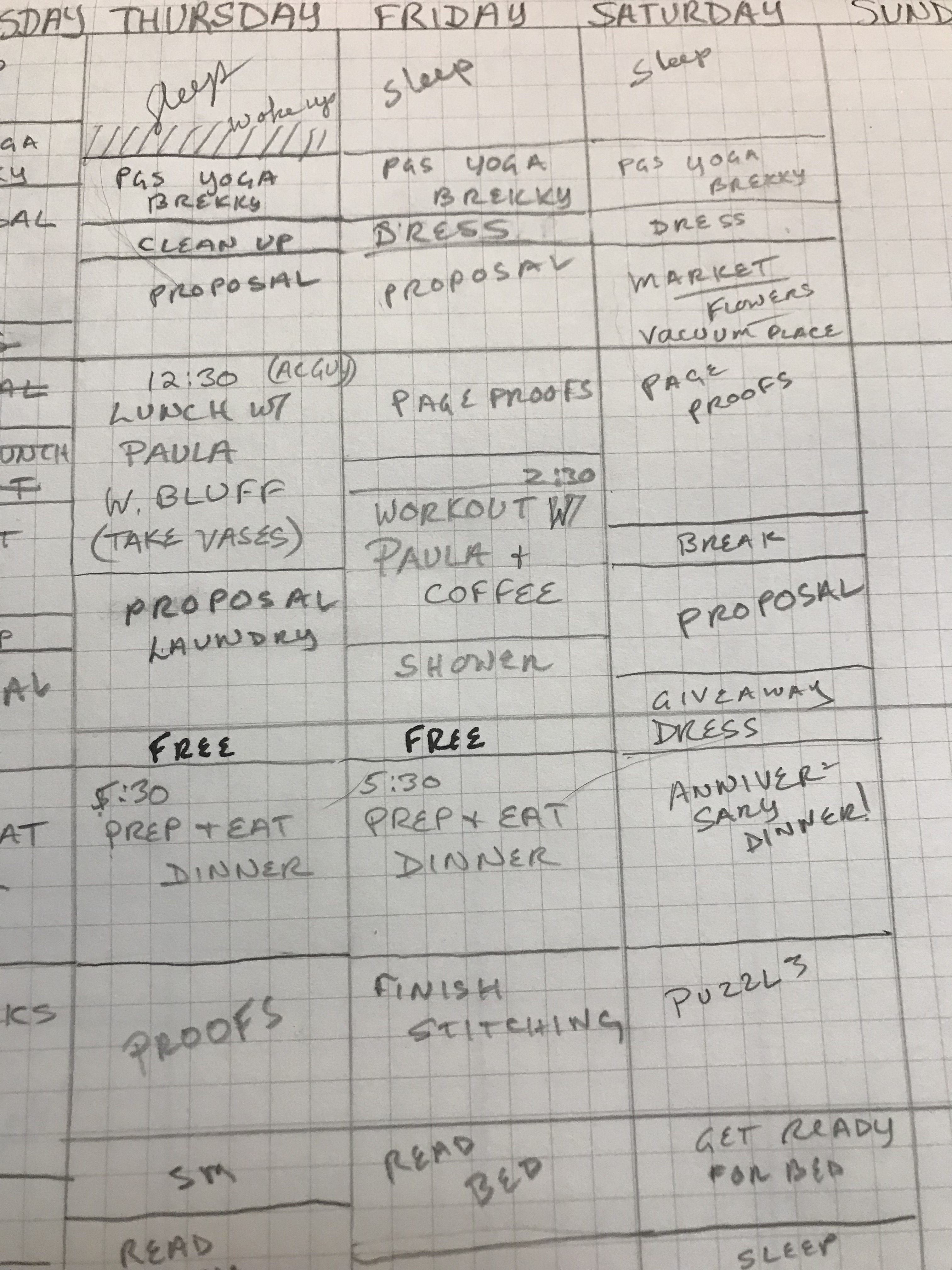
The “unschedule” is my favorite piece of the process because it turns one’s schedule upside down. After blocking out the time you require for life’s necessities like eating, cleaning, sleeping, and tending dependent creatures, you mark out time for things that give you pleasure and put you in a state of play or creative play. Working out, practicing hobbies, spending time with friends. It might happen daily, weekly, or bi-weekly. Whatever you choose. It becomes a priority. A reward to work toward.

Work (or writing or publishing business for most of us here) can become more energizing. More efficient. I confess that on the days I’ve managed to put this into serious practice, I’ve found myself happily working overtime, sometimes working well into my scheduled pleasure time–but not feeling a bit deprived because I know I’ll get to play again soon. Also, I’m getting a huge amount of pleasure from my work hours.

I know many people who have always operated their lives this way. They tend not to be procrastinators, and are what Fiore calls “producers.” If you are one of those people, you either stopped reading this a long time ago, or are shaking your head, wondering what’s wrong with the rest of us. Congratulations! You are in a really good place.

I’ll give you a peek at a part of my “unschedule” from last week. Up to last month, my two primary jobs were writer and homeschool mom. Now I’m a writer with a rising college freshman in the house, so my time is primarily mine to schedule. Everyone’s life circumstances are different, so your mileage will vary.


I make my schedule in pencil because it never works out exactly as I plan and I like to go back and put in what I actually do. It’s quite revelatory for me.

Dealing with procrastination can be a real battle. Particularly for writers. Not all, of course. I’d love to hear from both sides of the aisle. What do you do to fight procrastination, if you fight it at all? If you don’t, what keeps you focused on your goals?

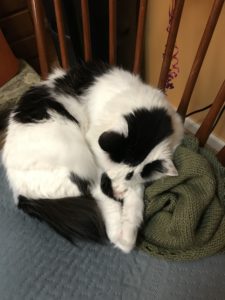
(I won’t tell you how many times I got up from my chair and wandered out into another part of the house as I wrote this. But here’s what happens if I’m gone for even a minute!)


First Page Critique: 12 Rules

Happy Monday! Today we have a first page critique entitled 12 Rules. My comments follow and I’m hoping that TKZers provide some great input and feedback for our brave submitter. I will be on a plane to Europe so may not be able to respond to comments – but I’m sure it will be a great discussion!

Title: 12 Rules

Chapter 1

Everything around them tended to die, including people. She always struggled with keeping pretty flowers in her room alive by forgetting to water them, and he never could sustain tiny house pets lifespan beyond a couple of weeks. Even inatime things like hopes and dreams had a tendency to writher over time between the two.

Though they both had to admit, this was the first human to die in their presence.

As heartless as Arlo hated to be, the person who had fallen quite literally at their feet was of no importance to either of them. It was Parks’ third cousins step sister. Technically, she wasn’t really family according to him.

Two weeks ago they were at his annual family gathering. Everyone was drinking, laughing, and having a good time as far as Arlo could tell. Her and Parks were huddled by a picnic table full of all the younger kids while sipping on red punch, discussing the boy Parks believed to be his nephew, but wasn’t all that sure. He was cute, Arlo had commented, and in the corner they were devising a plan to get him to talk to Arlo. She knew Parks was the wrong person to ask when his first suggestion came with, “accidently spill your drink on him.” Before she could even fathom saying a word to the gorgeous new stranger, Parks’ mom pulled them over for a picture. Lined up by height, Arlo of course was at the front along with a younger lady who was very pretty. She smiled at Arlo, flashing perfect whitened teeth over baby pink lipstick that popped. Then there was blinding flashes of more than one camera, and then the flashes were gone and she was seeing spots. Everyone stood up, including the nice lady next to her. Parks had already been back at her side with a new and improved plan, but never got the chance to tell her. The lady’s eyelids fluttered and her ocean blue eyes rolled like pool table balls backwards, and she tumbled to the ground like a tiny building- quick and short. The lady didn’t just fall to the side or backwards, she fell forward; right on Arlo’s sunshine yellow shoes she’d been so excited to wear. And just like that, the lady had smeared death all over her new converse. Following the fall and destroyed shoes had been earfuls of screaming.

Now they were bumper to bumper in early morning traffic yelling at each other over a blaring radio.

“You were supposed to take that exit we passed like ten minutes ago!” Arlo shouted. She felt the need to cup one of her hands around her mouth like a mega phone. But leaned back in the driver’s seat, he still refused to listen.

My Comments:

Somewhere in this first page there is a great story waiting to emerge – I can see glimmers of a cool, detached, wry POV and the beginnings of a story about two people who can’t keep anything alive suddenly being confronted with an actual death. Unfortunately, this story is stymied by some stylistic choices, a passive choice of sentence structure, and a lack of characterization that robs the page of much of its dramatic tension.

In brief, I think these are the main issues that need to be addressed:

  1. Pronoun confusion – The use of ‘them’, ‘she’ and ‘he’ before we know and understand the characters creates confusion as well as distance. At first I had no idea who was ‘he’ or ‘she’ as Arlo and Parks are gender neutral names (which is no issue – just needs clarification so we know who is who) and had initially assumed they were a couple who lived together. All through this first page, the use of pronouns creates an awkward sense of distance from the story which makes it hard for a reader to feel engaged.
  2. Passive sentence structure – Many of the sentences in this first page are written in passive voice creating further distance from the story. An good example of this is the phrase “Following the fall and destroyed shoes had been earfuls of screaming”…not only does this sound awkward and strange, it also robs the scene of the drama of having people screaming as someone literally dies in front of them. I would recommend the writer go through this first page and change passive sentences to active ones to create  sense of immediacy and action.
  3. Lack of dramatic tension – In the first few paragraphs, the reader starts to feel some anticipation about the death that is going to occur only for it to be handled in a prosaic, indifferent way that drains away all the dramatic tension. I wanted to be intrigued and invested in the characters and how they responded to this initial death and also to get some sense of the story to follow. Once the scene switched from the death to Arlo shouting about how they’d missed the exit, I was no longer engaged in the story.
  4. Lack of detailed characterization – Apart from my uncertainty over the relationship between Arlo and Parks – at first I thought they were a couple whose hopes and dreams withered as much as their house plants – there is also the issue of providing characters with real meaningful scenes and dialogue so that we, as readers, become invested in them as three-dimensional characters. In this first page, none of the characters introduced are given any real substance. We are told  that that Parks is trying to set Arlo up with someone at the party, but there’s no real action or dialogue to make us care about this occurring (also the suggestion to ‘accidentally spill your drink on him’ is so bland that it doesn’t give us a true sense of character’). Likewise all the minor character’s are merely described in detached terms like ‘Parks’ third cousin’s step sister’, ‘gorgeous new stranger’, ‘a younger lady who was very pretty’, ‘ the nice lady next to her’, and someone who Parks ‘believed to be his nephew, but wasn’t all that sure’ (which I didn’t really understand…). This meant it was very hard to visualize any of the minor characters or care about what happens to them in this scene.
  5. Telling not showing – This first page is almost entirely told to us rather than shown, with only the death itself containing much in the way of visual details. I would have preferred we were immersed in the scene and given sensory details so we could visualize all the characters and become invested in the story.
  6. Spelling and grammar issues – We always emphasize here at TKZ that a first page is the all-important first impression and, as such, it must be as perfect as possible. Grammar errors such as missing apostrophes and spelling errors (‘inatime’ not inanimate and ‘writher’ rather than ‘wither’) will immediately put off any agent, editor or reader from continuing to read the story.

Overall, I think there’s a good story lurking beneath the surface of this first page, but the writer could benefit from cleaning up the sentence structure, grammar, and pronoun use, adopting a more active voice, and immersing us in the scene with action, dialogue and more detailed characterization for this first page.

So TKZers what other advice or feedback would you provide our brave submitter?