Don’t be Afraid to Go There in Your Writing

by James Scott Bell
@jamesscottbell

I’m a fan of the AMC series Mad Men, which I’ve been re-watching. So smartly written and superbly acted, and its attention to detail in the setting—1960s New York ad world—is fantastic.

Among the many episodes and scenes that have stayed with me, the one that stands out is from the first season—Episode 9, “Shoot” (written by Chris Provenzano and series creator Matthew Weiner ). The title is a play on words, for in the episode there’s a photo shoot, and at the end another kind of shoot, which I’ll get to in a moment.

In this one, Betty Draper—perfectly played by the incandescent January Jones—is given a (seemingly) out-of-nowhere offer to become the new face of Coca-Cola. She had done some modeling before marrying Don Draper and taking on the duties of a full-time housewife.

Betty is flattered and excited. It’s a chance to break out of the routine she’s in, to escape some of the mundane problems she has to deal with at home. One of those problems is a neighbor who raises pigeons. The man chewed out Betty’s kids for letting their dog attack one of his free-flying birds. He threatens to shoot the dog if it happens again.

Now Betty has this opportunity! An exec at McCann-Erickson, one of the big agencies, calls her into a studio for a photographic session.

And then she gets canned. The agency tells her it’s because the higher-ups have decided to go in a different direction. It’s a lie. Unbeknownst to Betty, the exec at McCann gave her the gig only to coax Don to come over to his agency. When Don tells him to pound sand, Betty is shown the door.

You really feel for Betty, of course. She was so thrilled at getting selected for a prime role, while all along she was just a pawn in a man’s game.

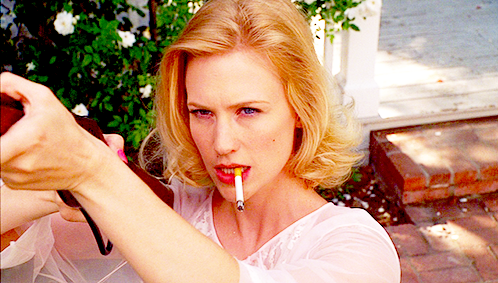
At the end of the episode, Betty is dressed in a flimsy robe one morning. She lights a cigarette and sticks it in her mouth, gun-moll style. Then she takes her son’s BB gun out into the yard and starts shooting at the neighbor’s pigeons, as he screams at her to stop.

Fade out.

It is one of the most stunning and surprising endings to a TV episode ever. Variety called it “the first truly brilliant moment of the 2007-08 television season with the pitch-perfect end…”

One of the secrets of page-turning fiction is what I call unanticipation. It’s the opposite of boring, for boredom comes when a reader anticipates (even subconsciously) what will happen next—and then it does.

If that occurs over and over, the reader is not going to finish the book. Why should they? They already know what will happen.

Thus, it behooves a writer to constantly be asking, What would the average reader expect to happen next? and then do something else.

Even more to the point, sometimes go to a place that is at the far end of the unanticipation scale, so far that it makes you nervous.

I wonder what the story meeting on this Mad Men episode sounded like.

“So Betty is deeply hurt and despairing about getting dropped as a model. She tries to save Don’s feelings by telling him she didn’t want the gig after all. How do we fade out?”

“Maybe Betty is sitting alone, smoking a cigarette, pouring herself a drink.”

“Kind of what we’d expect, though.” 

“Yeah…what if she looks at herself in the mirror then breaks the glass?” 

“Again, seen it.” 

“So then what?” 

“I dunno. What if she drives the car into a lamppost … no … what if she stands in the window at Macy’s as if she’s a mannequin … wait … she goes outside her house with a gun and shoots at some birds!”

“What birds?”

“We’ll plant a neighbor in act one, who’s obnoxious and raises pigeons. Betty’ll blast ’em!”

“Whoa! That is so un-Betty like. She’s Miss Perfect.”

“That’s what’ll blow people away!” 

That’s the kind of thinking you should do. Learn to reject the first, second, even third idea you come up with in order to get to a place you never thought you’d go. Because if you never thought it, it’s certain the reader won’t think it, either!

So when was a time you went to a place in your writing that surprised or even shocked you? How did it turn out?

Knives Out!

It is Thursday, September 19, 2019, as I write this. I had been working on my blog for Saturday, September 21 — what you who are reading this will call “today” — when I realized that it just wasn’t working. I started with the intent of presenting some suggestions concerning how to make good writing even better. Soon, however, I found myself discussing Miles Davis, Henry Kissinger, and Kurt Godel. That was all well and good, but I was meandering down multiple roads and decided to save that piece of work for another time. 

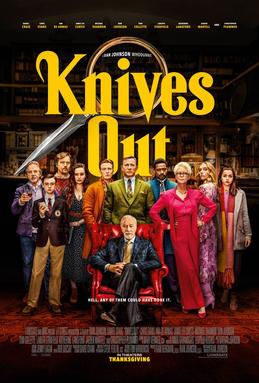
Instead, I’m going to talk about a new movie titled Knives Out. An ad for it popped up while I was looking at knives online and I was quickly diverted. It is scheduled for wide-release in the United States on November 27, which by amazing coincidence is Thanksgiving Day this year. Knives Out is pertinent here because it is a mystery, dark comedy film about a fabulously successful crime novelist who invites his very dysfunctional family back home to help him celebrate his eighty-fifth birthday. The novelist is named Harlan (you’re laughing already) Thrombey who physically bears an uncanny resemblance to a popular thriller author who is not the one you are laughing about. Thrombey is murdered during the gathering and a police detective is called in to sort out who in his family did what.

Knives Out will almost immediately you in the mind of an Agatha Christie novel, and from what I have seen in the film’s trailers (which you can find links to here) it winks at its heritage — and thriller and mystery novels in general — several times. The camera lens glides over rows and rows of books (“Did I see one by Harlan Coben?!”). Thrombey, it is clear,  is a fan of A Game of Thrones, as demonstrated by a particular piece of decor in his home. I also don’t think that it is coincidental that one of the primary members of the cast happens to be associated with one of the most enduring characters in action film history, which in turn is based on a gold standard series of spy novels.  

Oh. I mentioned the cast. Daniel Craig has a lead role. You will forget fairly quickly that he plays whats-his-name in the movies. Jamie Lee Curtis is here. Let’s talk for a minute about Jamie Lee Curtis. No one realizes how good an actress she is. Curtis played a lead role in a horror movie franchise that would have sunk the career of a lesser actress. Think about that. She’s still around because she is really, really good at what she does. Don Johnson. Yes, Don freakin’ Johnson, who in his seventies is still the coolest guy in the room, even when he’s not in the room. There are others. Check out the link to the website, above and you’ll see several million dollars worth of talent on the screen. There are supposed to be all sorts of theatrical easter eggs throughout the movie as well. I even learned that the viewers will actually be able to figure out whodunnit if they can identify five clues that are presented during the course of LIGHTS OUT and put them together correctly. 

The primary reason I am psyched on KNIVES OUT, however, isn’t the cast, the scenery or the dialogue (which sounds exquisite from what I heard in the trailer). It’s not how wonderfully it’s staged and filmed, even though I jumped each of the three times that I saw the same two-second clip. The clip? It involves a cheek and…something else. No. What I love about KNIVES OUT is that it is about an author. Yes, he gets murdered, but he has lots of cool stuff in his house, seems to be a bit of a jerk, and is worth killing. He is interesting, in other words. Authors are interesting. They have to be to think up stories that are worth reading. It might not seem that way to everyone, but everyone doesn’t get to hide behind a palm tree the way that I did several years ago in a hotel lobby with a famous author, a really interesting author, who was trying to avoid a clinging, stalking fan. KNIVES OUT doesn’t look like it is quite up to that experience — what possibly could be? — but it is close. Check the website and trailers, and make your plans to see it in a couple of months at a multiplex near you. It will be showing in the theater with the line of grownups waiting to enter. 

Are there any movies that you are looking forward to or any films about authors that you love? Let us know. And thanks for stopping by. You’re the best.


First Page Critique: The God Glasses

Jordan Dane
@JordanDane

Please enjoy the first 400 words of “The God Glasses” from an anonymous submitter. I’ll have my critique after the excerpt. Please contribute constructive criticism in your comments.

***

Ella raced up the stairs as fast as her twelve year old legs could carry her. She had one objective, the same one every time—to escape the terror. She stopped mid-way and listened to her mother scream at her father.

“You never listen to me! You’re buried in your work, your motorcycle, or your sports. We wait for you to come home, but you never do. When you’re here, you’re somewhere else. Why don’t you just go away and never come back? Wouldn’t be much of a change—”

A slap and a heavy fall. Mama moaned—a pitiful sound, Ella thought. Her fists balled up at her sides, her legs shook.

She crept back down to the landing and peered over the railing into the kitchen. Daddy picked Mama up by the hair and backed her tight against the wall, his other hand knotted on her breastbone, pushing cruelly. He towered over her smallness, tattooed muscles bulging under his sleeves, face mere inches from hers. He wrenched her head back, forcing her to look up.

Mama’s wide eyes met hers. She blinked and a tear wetted her bruised cheek.

Ella gripped the rail. It creaked.

Daddy jerked his head up and smiled. He moved his hand from Mama’s breastbone to her throat and leaned in, thrusting his mouth next to Mama’s ear.

“You watch your mouth or I just might leave and never come back!” he screamed. Pulling back, he said, “What would happen to you and the girl if I left? How would you like that—to have to go and beg for help from that old woman up the street? Yeah, I thought not. So straighten up. I’m going out.” He snapped her head back. She fell again with a crash, upsetting the small side table which held his liquor and glasses.

“Clean that up before I get back,” he bellowed.

“Clean it up yourself, you pig—”

Ella ran, long dark hair streaming behind her. She stumbled on the top stair and fell to her face. She picked herself up, raced to her bedroom closet, and yanked the door open. She backed into the corner and sank to the floor, hands tight against her ears.

After Daddy leaves, I’ll go see Grandmother. She’ll tell me again about her God glasses. Maybe she’ll let me wear them.

She rocked back and forth, recalling better times.

***

FEEDBACK

First impressions, I like this author’s voice and the clear concise writing with visual imagery. Good use of the senses. On the surface, there is plenty to get drawn into with Ella. I like that the author stuck with the actions of the domestic violence scene and didn’t stray into backstory or an explanation. I’m rooting for Ella and love that the author has told the story through a twelve-year-old girl’s eyes. Domestic violence through a child’s eyes can be more powerful. Readers will want to protect her, but this first scene feels rushed for the sake of action. Violence like this should be more emotional, especially from a kid’s eyes. Make us feel Ella’s fear and helplessness.

We have clean copy and a solid start, but let’s dig deeper from a bird’s eye view to see how we can strengthen this scene.

ANOTHER OPENING SUGGESTION – The author has a choice to start with action (as in this case) or ground the reader into Ella’s world before the violence happens and build towards it. Anticipation can milk the tension in ways this action opening can’t. Would readers relate to Ella more if they got a taste of her world before the shocking inevitable happens? Should the author build toward a mounting dread that her father will be home or he’s late and both mom and daughter know what that means (without telling readers)?

In this opener, it’s my gut instinct when dealing with a young protagonist to show her world in a short punchy beginning that doesn’t slow the pace. Make every word count and build on what will happen with hints of foreshadowing. As much as I like the action in this opener, I can see how an unexplained growing tension between a mother and daughter can pique a reader’s interest more. Have Ella rushing to finish her homework from the safety of her small bedroom and not quite get it done because her mother yells for her to come downstairs to set the table. That would allow the reader to know what kind of mother she is before everything erupts.

Ella and her mother look at a clock ticking on a wall. When they hear boots climbing stair outside, they tense and wait for the door to open. He steps into the small apartment and he reeks of alcohol. Have Ella read her mother’s cues. Both women know what’s coming. How do they each react? Have patience for the scene to erupt and build on the natural tension.

In this current scene, Ella’s mom aggressively goes after the angered dad and puts Ella in danger. That makes both parents look bad. Is that the intention of the author? I don’t know. Let’s talk about character motivation.

CHARACTER MOTIVATION – This feels like violence that has happened more than once. If Ella’s mother is a battered wife, why would she taunt this man into beating her? She’s overly aggressive with someone who will punch her in the face and put her daughter in danger. It doesn’t feel natural, from a motivation standpoint. If the author would show more of how this anger is triggered and how the reactions would flow, the violence would be more grounded for the reader.

Also, Ella runs scared up the stairs, but turns around and comes back to watch. That feels like a cheat to the reader, to get them into the race up the stairs, only to deflate the tension by having Ella retreat. I can totally see a young kid who might want to protect the mom, stick around to watch. But that’s not how this began.

Make the reader understand why Ella might have a reason to protect the mom. By a slower build toward the violence, we could get a glimpse into Ella’s personality. Is she feisty or a beat dog? Is she ready to fight when her mother isn’t? Ella’s character motivation could be more interesting in this opener.

As a reader, I’m questioning character motives. The author should have patience to let the reader know the hearts of these characters. Contrivances (for the sake of action and tension) don’t allow the reader to buy into the story.

DIALOGUE – There are two long dialogue groupings – the first one when the mom goes after the dad. The second comes when the dad yells back. Because these are grouped together, they feel contrived and forced. Arguments, especially when there is violence, they are more believable if there is an exchange with shorter lines. Let the action ratchet up the tension and have the dialogue be punchy and shorter. More natural.

Have the dialogue get louder. Maybe have a neighbor yell and pound the thin wall, “Shut up or I’ll call the cops.” Then finish with the violence that will stop both parents. I can see him yelling down at her as she struggles to stay conscious.

“See? You drive me crazy. You always ask for it.”

RESEARCH – Abusers often blame their victims. It wouldn’t hurt to research the psychology behind domestic violence. Good research on motivation will add authenticity. Although there are lots of good books on the subject, I often look first at online articles on any given topic. These type of articles can inspire ideas on how to add impact to a scene. Here is a link to “The Psychological Wounds of Domestic Violence.”

COMBINE THE YELLING LINES? The long diatribe has the potential of losing the interest of the reader if it’s lumped together, without much grounding. Below is an example of breaking apart the dialogue groupings and combine them, with tensions escalating toward his first assault on her.

“You never listen to me!”

“Watch your mouth.”

“You’re buried in your work, your motorcycle, or your sports. That’s what matters to you. Not us.”

“Give me something to come home to. Look at you. You’re a mess.”

“Why don’t you just go away and never come back? Wouldn’t be much of a change—”

“Oh, yeah. What would happen to you and the girl if I left? How would you like it if you had to beg for help from the old woman? You don’t know how to make it alone.”

“Being alone is better than being with you.”

“You ungrateful pig.” (He strikes her)

WHAT WOULD ELLA DO? – What options does Ella have as a twelve-year-old child? Even if you didn’t change this scene much, I wondered what was going through Ella’s mind as she sat at the top of the stairs and watched her dad beat her mother. She must be in agony. I wanted the author to show the conflicts that must be raging through her. For Ella to sit on the stairs, without lifting a finger to call police or help her mom, that did not feel normal.

If you have the neighbor call the cops, the sirens could be wailing before he storms out, leaving Ella and her mom to deal with the aftermath. Ella would want to see if her mom is okay, wouldn’t she? Would she try to stop her father? The combination of Ella crying and fending off the old man, along with the cop sirens coming, could be enough to make the wife beater leave. But Ella running to hide in her closet, without checking on her mother, doesn’t seem heroic.

That’s why it matters to build on Ella’s world, even a little. A stronger foundation gets the reader in the girl’s corner from the start. We get a glimpse into her home life and how she feels toward her mother and father.

TITLE – I’m not sure what God’s Glasses have to do with the story. I like the title but I’m not sure why yet. It piqued my interest, but don’t rush to have Ella thinking about the old woman and God’s glasses. That feels like a contrivance for the sake of having a better opening scene cliffhanger. Be patient as the story unfolds. I’m sure there is something magical about God’s Glasses and Ella.

SUMMARY – This is the kind of story that would make it through a writer’s group reading with flying colors. It’s clean copy and there’s a lot to like about it. But as I read this strong opening, I had questions in my mind. Character motivation is a big one. Make it believable and real. Then ask yourself, is there a better way to start this? I don’t know if Ella will be a main character. I presume so, given the title, but it’s doubly important to have the reader think favorably of her from the first page. Or at least, be intrigued enough to turn the page. Have patience to portray your character. I normally love to start with action. Many of us do, here at TKZ. But with this opening, I thought a more deft hand in Ella’s portrayal was needed. What do you think, TKZers?

DISCUSSION:

Let me know what you think of this story, TKZers. I’m pretty sure we would all turn the page of this story, but what would you do to make this intro stronger?

Do you have different ideas on how to make this opening stronger?

Are there relationship elements between Ella and her parents that would enhance this scene?


Blue Menace: First Page Critique

Photo credit: Canva.com (author pro access)

Greetings, readers, writers, and population at large. Today we have a first page critique of a futuristic story about a young woman with the colorful name of Diamond Blue. Please read the submission, and my comments, then let our dear writer in on your thoughts.

Working Title: Blue Menace

Diamond Blue scrambled around her small bedroom, grabbing clothes and accessories at random, shoving them in her backpack.

She looked at her wrist. Crap! Ten minutes to get to the ship, and maybe another twenty before the cops figured out what she had done.

In the bathroom, she held the backpack up to her side of the shelf and swiped everything in. She rested the bag on the vanity and pushed at the jumble inside to close the zip. As she finished, she glanced at the mirror – red face, sweaty, and wild-eyed. Oh sure, they’d let her on board looking like a panicked junkie after a marathon, no problem.

She splashed water on her flushed face and ran her damp hands over her long sapphire-blue braids.

Deep breaths.

The memory flashed of her best friend, Rina, surrounded by a swarm of armed cops. She shook her head to clear it. If she didn’t get moving, it would all be for nothing.

She turned out of the bathroom, swinging the backpack onto her shoulder, and crossed the living room. She and Rina weren’t messy flatmates, but the remains of yesterday’s hasty planning session was strewn across the coffee table – pizza, wine, chocolate. Diamond grabbed the last few squares of chocolate and popped them into her mouth. Breakfast of champions.

At the front door, she waved her hand over the sensor. It slid across the opening and disappeared into the opposite wall.

Diamond pulled the hood of her sweater over her hair, leaned out and checked the corridor.

Her neighbors in this quadrant of Residential Floor Three liked to start work a little later than most. There was no one around.

Neither was her ride. Of all the times for the damn Sliders to malfunction!

The Sliders, a simple hover-platform with a t-bar to steer, was supposed to come from the public bays near the core to her location based on the quantum chip in her hand.

The chip! Ahh, she was a class-A idiot!

She slapped at the cuff around her lower left arm to wake it up, and re-ordered the Slider in the name she’d stolen in the early hours of the morning – Rina Cavanaugh.

Somewhere on the Justice floor was a Slider hovering around the booking desk, maybe even outside Rina’s cell if it got that far.

She had less time than she thought.

______________________-

This, dear readers, is an example of a quite accomplished opening to a story. We have immediate action occurring in the midst of some troubling event—that desirable in medias res we so often encourage around here. A well-defined setting: sometime in the technological future. Clear, identifiable characters: Diamond Blue and her flatmate, Rina Cavanaugh, the cops. Interesting nomenclature in the story’s world. And a nearly complete scene that doesn’t lose its focus. Check, check and check.

So let’s look at some details, dear writer.

I like the title, Blue Menace. Evocative, and connected to the main character. While I’m not certain, the title and voice make it sound like it’s a YA story.

Opening line:

“Diamond Blue scrambled around her small bedroom, grabbing clothes and accessories at random, shoving them in her backpack.”

This is a perfectly good opening line for a chapter. I’m less convinced that it is telling enough for a novel. If this is, indeed, a novel, I’d like to see the opening chapter—even just a paragraph– be an event in the obviously chaotic world outside the building (or whatever where Diamond lives is called). It can be in the past, such as the scene where Rina is surrounded, or some apocalyptic event that we will eventually learn about. Make the stakes of the story bigger right off.

“She splashed water on her flushed face and ran her damp hands over her long sapphire-blue braids.”

A couple of commas will make the sentence clearer:

She splashed water on her flushed face, and ran her damp hands over her long, sapphire-blue braids.

You could even lose “-blue.” I don’t think anyone would imagine her hair is made of actual sapphires. Though there are a few sapphire stones of other colors (rubies are technically sapphires), they are typically blue. Then again, it occurs to me that her name is Diamond. Is the sapphire reference intentional?

I admire the way you do the reflection description of Diamond, dear writer. Mirrors can be cliché, but it works.

Quoting a character’s thoughts—

Oh sure, they’d let her on board looking like a panicked junkie after a marathon, no problem.”

Using italics to hear a third-person character’s thoughts is fine. But if you’re going to use quotes or italics, you need to treat thoughts like internal dialogue, and use me instead of her, and I instead of she. It should read:

“Oh sure, they’d let me on board looking like a panicked junkie after a marathon, no problem.”

When you quote this way, you can make the thoughts sound a little more natural, as in,

Sure. Like they’ll let me on board looking like a crackhead after a five mile run, no problem.”

Later, Damn Sliders. Of course they choose now to screw up!” and Holy crap, I’m an idiot!

A matter of agreement—

“The Sliders, a simple hover-platform with a t-bar to steer, was supposed to come from the public bays near the core to her location based on the quantum chip in her hand.”

I had to think about this one a moment. I’m assuming individual Sliders are referred to as “a Slider.” If so, the sentence should read:

(Simpler, preferred version. Don’t get caught up in exact locations.) A Slider, a simple hover-platform with a t-bar to steer, was supposed to come from a public bay closest to the requester’s location based on the quantum chip in their hand.

 Or, The Sliders, simple hover-platforms with t-bars to steer, were supposed to come from the public bays near the core to requesters’ locations based on the quantum chip in their hands.

(I know I use “their” as singular in the first one. According to some, that usage is still under debate. I’ve made the change in my work.)

 “She slapped at the cuff around her lower left arm to wake it up, and re-ordered the Slider in the name she’d stolen in the early hours of the morning – Rina Cavanaugh.

Somewhere on the Justice floor was a Slider hovering around the booking desk, maybe even outside Rina’s cell if it got that far.”

Okay, you’ve got me here, dear writer. I’m lost. Am I supposed to understand that she ordered in her own name originally? If the Slider is supposed to come to her based on the fact that it responds to the chip in her hand, shouldn’t it have located her where she is? What does the cuff have to do with it? I finally understand that Rina is locked up on the Justice floor—good news that she’s not dead—but I don’t get the explanation for the Slider mixup.

Perhaps simply drop the whole mistaken Slider thing, unless it will have an effect on the plot later. If that’s the case, just make it as simple as possible, and put the revelation of Rina’s location somewhere else.

What a great start, dear writer. I would definitely read on.

Have at it, TKZers! What are your thoughts and suggestions?


Behind the Scenes at a Writers Conference

What the well-dressed crime novelist wears to a writers conference.

If you’ve attended writing conferences, you likely had a great time. You chatted with fellow authors, learned about craft, picked up marketing tips, and made important contacts with editors and agents. Organizers strive to make the schedule seamless, the meals hot and tasty, the speakers interesting.

Everything probably ran smoothly and you walked away happy.

You never saw the drama behind the scenes.

And that’s how it should be.

But making it look easy requires lots of preparation plus the ability to drop back and punt when circumstances go awry.

The 29th Annual Flathead River Writers Conference wrapped this past weekend. By all accounts, attendees went home happy, loaded with new tools, inspiration, and fresh energy.

Jeff Giles, Ben Loehnen, Haven Kimmel

The speakers were excellent as well as great fun, as this photo shows. Mugging for the camera is Jeff Giles, Vanity Fair Hollywood editor, Simon & Schuster editor Ben Loehnen, and Haven Kimmel, author of A Girl Named Zippy.

As a conference committee member and sometimes co-chair, I’ve worked many of those 29 events.

Some years are a blast. Other years, s**t happens.

Manuscript evaluations by editors and agents are always major draws for attendees. Slots fill fast and the back-up wait list is long.

This year, three weeks before the conference, the guest agent suffered a family medical emergency. He remained hopeful he could still attend but the outcome was too uncertain to predict. We told him to take care of his family and that we would find a replacement.

We organizers felt terrible for him. But we also had 100+ attendees to worry about. Many travel from other states and expect to hear an agent. We had to deliver. Out went a wild flurry of phone calls and emails.

But…August is traditional vacation time in the publishing industry. Some were out of the office and unplugged. Others already had commitments and couldn’t come on such short notice.

As our panic grew and time evaporated, a hero stepped up. A couple of years before, Barbara Schiffman had been a big hit at our conference. She’d worked for decades in the Hollywood film industry, doing story analysis and script evaluation for producers. Recently, she semi-retired and moved to nearby Whitefish, Montana. She graciously agreed to substitute, including doing manuscript critiques.

Whew! Saved!

One year, a much-anticipated horror author was sidelined by airline snafus. She departed New Orleans on Friday morning and was supposed to arrive in Montana by 4 p.m. in time for the welcome dinner for speakers.

At noon, she called from Houston where she was stuck. A weather system caused a domino effect, delaying all flights. The poor woman spent nine hours in the Houston airport trying to reschedule. The upshot: the airline could deliver her to Montana at midnight the following day…after half the conference was over. She wound up going home to New Orleans, unfortunately with a new horror story to tell.

Years ago, a renowned true crime author agreed to present. We were over the moon to have such a big name. Registrations poured in. Even non-writers paid to hear her speak.

But…she was a nervous flyer. First, she said she’d drive. Then she decided her health wasn’t good enough to drive. Could she take a train? I looked into arrangements but the cost was four times that of a plane ticket. Our group is nonprofit and the money for a train ticket wasn’t there.

She nearly backed out several times. I spent hours on the phone with her, trying to reassure her. Finally she gathered her courage and got on the plane.

She was a huge hit–the attendees were thrilled. Best of all, she herself had a fabulous time and loved every minute.

At the end of the conference, she clasped my hands and said, “I am SO glad I came! This is the best conference I’ve ever been to. And to think I almost didn’t come.”

Whew!

Most speakers are wonderful, gracious people who want to help other writers. In 29 years, I can count the clinkers on the fingers of one hand. But those few clinkers really leave an impression.

One year, a big-name mystery author was supposed to teach a three-day intensive workshop. He showed up with his girlfriend and they were fighting. He then told us he shouldn’t have come because he was on deadline.

Uh, you didn’t know that when you committed to teach?

The first morning, he grumbled and complained for three hours to his students about his deadline and troubles with his girlfriend. After lunch, he pitched a fit, saying he couldn’t possibly write in his hotel room because his girlfriend was irritating him. “I’m not hard to please,” he claimed, “just find me a quiet place with a table.” So I found several alcoves in the hotel where he could write. He couldn’t stand any of them.

The second morning, more whining, no teaching. Students were irritated and their complaints were totally valid.

The third morning, he put in a halfhearted effort to review a few manuscripts but the class was a disaster. We wound up refunding tuition to his disappointed students.

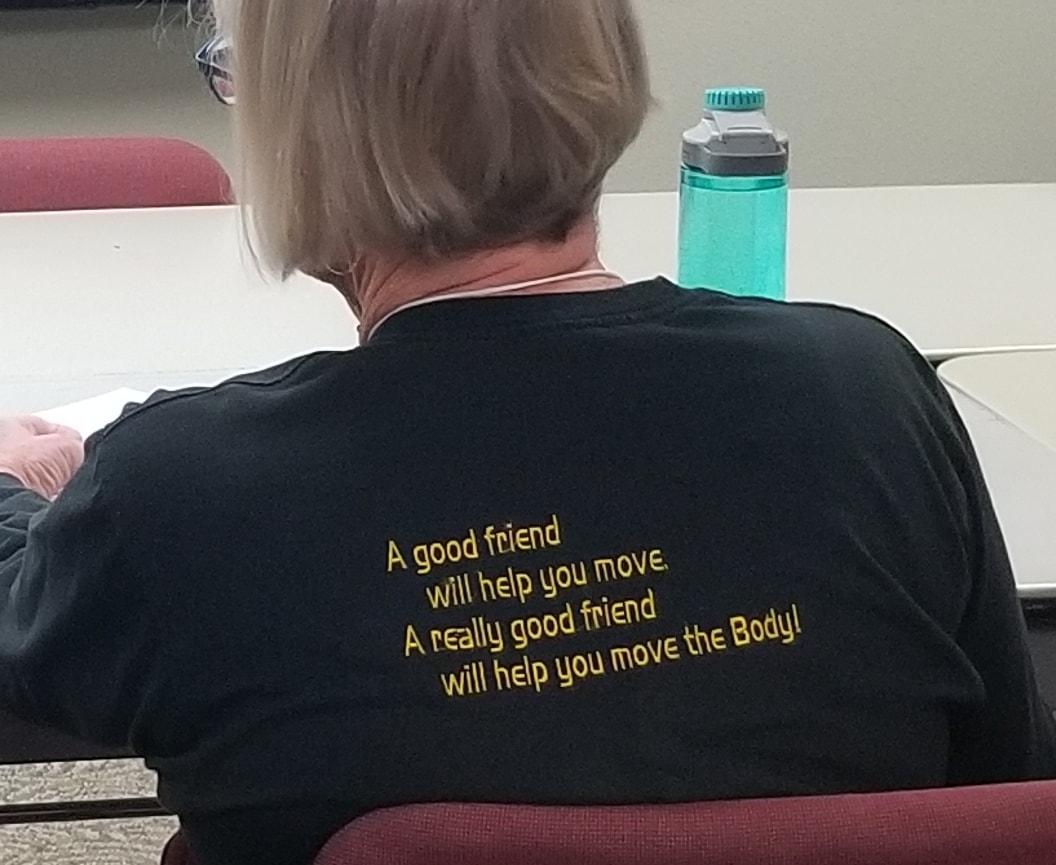
At the party on the last evening, in front of everyone, he apologized to me for his behavior and presented me with a T-shirt…that advertised his books.

Can you spell E-G-O?

Hiccups aren’t always with speakers. Once in a while, volunteers throw sand in the gears. One member was obsessed with finding an agent. He found out when the agent’s flight was scheduled to arrive, even though someone else had been assigned to do airport pickup. He showed up early, grabbed the agent, took him out to dinner, and badgered him for three hours about representation.

This happened before cell phones so we couldn’t call the agent. We knew he’d arrived on the plane but he’d disappeared. No one could find him.

Finally, the dazed agent arrived at the hotel. He told us he wasn’t thrilled that we’d sent this obsessed writer to pick him up. We apologized profusely and explained the guy had acted on his own, totally without our knowledge. Fortunately, the agent had a sense of humor. He probably told that story at future conferences as a cautionary tale of how not to impress an agent.

Needless to say, the kidnapper didn’t receive an offer of representation.

For every horror story, there are at least a hundred tales of writers who were inspired to finish a book, take the plunge into publication, or step up to the next level in their careers.

This year, attendees came from all over Montana, as well as Texas, California, Indiana, Iowa, Colorado, Missouri, Arizona, and Canada.

I’m introducing Gabe Grende, up and coming Orson Welles

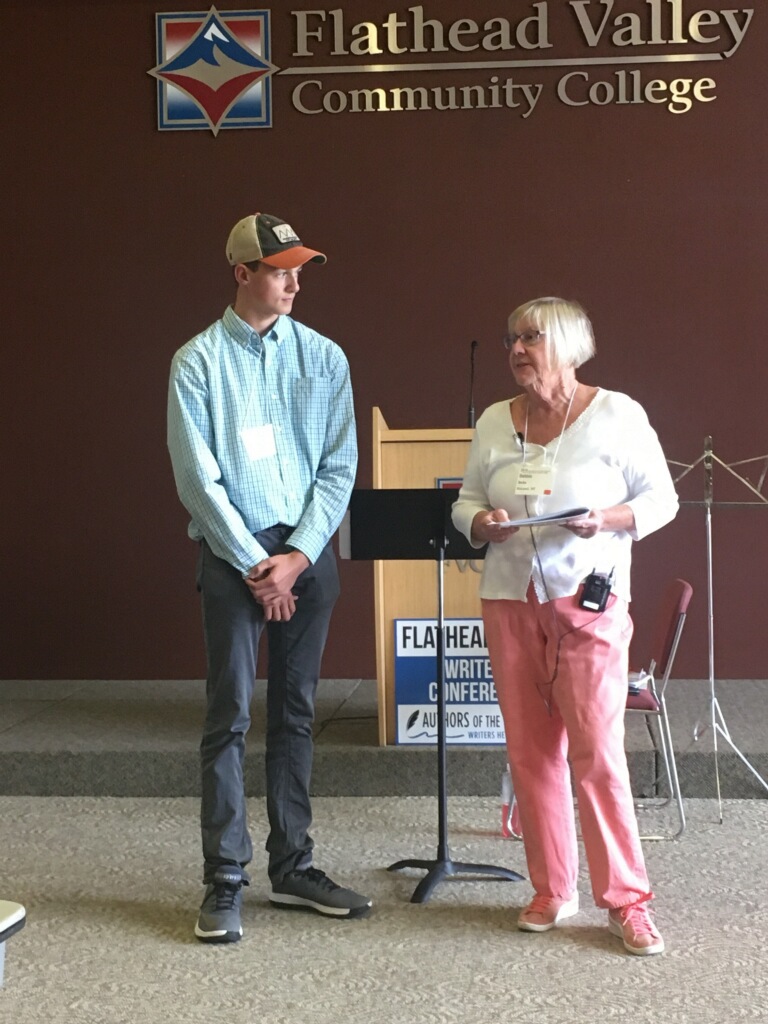
Several young writers were at their very first conference, including a 16-year-old filmmaker. Gabe Grende is a local high school student who started working in video six years ago. He recently attended a film school taught by Michael Polish and Kate Bosworth. Gabe so impressed Michael that Michael took him to Puerto Rico for a location shoot of a Mel Gibson movie.

Gabe agreed to film our conference and we can’t wait to see the finished product.

Meeting a student who’s eager and already accomplished at a young age gives all of us hope and inspiration.


Writing conferences are lots of work. Are they worth it?

Oh, yeah!

~~~

TKZers: What’s the best lesson you learned at a conference?

If you’ve volunteered, how did working behind the scenes increase your understanding of the business?

~~~

Debbie Burke’s new thriller Stalking Midas is available here.

What book made you a reader?

I’ve been reading some of the previews of the upcoming version of Little Women (though seriously, how many film versions do we need?…) and it got me nostalgic for the days when my sister and I would reenact scenes from the book (I was always Jo, she was always Amy). Looking back I realize just how definitive this book was in turning me into a lifelong reader – and when I see books like ‘How to Raise A Reader’, I wonder if some books really do turn out to be pivotal in inspiring someone to love reading. I know for my sister at least, there really wasn’t any one book (or books) that proved critical to turning her into a lifelong book lover. In fact, growing up she was indifferent to many of the books I adored and, though we played ‘Little Women’, she didn’t actually read that book until she was a young adult. I wonder if for her it was just a matter of timing – finding that one amazing book at the right time in childhood that would make all the difference – because, even though she is a great reader now, she was never as passionate (nor as voracious) a reader as I was as a child. This got me questioning whether many ‘non-readers’ simply never found that one pivotal book in childhood that inspired them to read…

For me, Little Women was one of many books that inspired my love of reading. I remember how much I wanted to be just like Jo, how I wished she’d married Laurie (I really hated Amy for a while!), and how much a wept over Beth’s death. Little Women wasn’t the only book I remember reading vividly – there was also C. S. Lewis’ Narnia series, Madeline L’Engle’s ‘A Wrinkle in Time’, and Elinor M. Brent Dyer’s Chalet School Series (which I read and re-read for many years). When I think back to my childhood reading experience, these are the books that really stand out for me – with the memories of the first time I read them indelibly imprinted on my brain. When I look at my own children, I feel grateful to have witnessed their own ‘book’ moments that turned them into lifelong readers – but then I wonder what happens to those kids that never find that special book, or who never have those moments which turn them into book lovers…?

So TKZers, what were your early reading experiences like? Was there a particular book (or books) that turned you into a reader? Do you think it’s getting harder for kids to experience this? (asked against a background of dread that ‘screen time’ has now replaced book time!)

Some Healthful and Practical Writing Advice

by James Scott Bell
@jamesscottbell

We here at TKZ care about writers—how they write, of course, but also how they can stay healthy. Today I bring you some venerable wisdom on both counts.

First, on health:

Over at Project Gutenberg I happened upon the definitive treatment of the healthy side of coffee, published in London in 1721, with the snappy title of The Virtue and Use of Coffee With Regard to the Plague, And Other Infectious Distempers. We all know coffee gives you a lift in the morning, among other benefits. But until I read this little book, I had no idea of the number of infirmities a daily cup of joe can overcome. To wit:

[Coffee] cures Consumptions, Swooning Fits, and the Rickets; and it helps Digestion, rarefies the Blood, suppresses Vapours, gives Life and Gayety to the Spirits, prevents Sleepiness after eating, provokes Urine and the Catamena.

It contracts the Bowels, and confirms the Tone of the Parts, being drank after Victuals, provided it be fresh made; for if it stands but two or three Hours, it loseth much of its Virtue. … It is an effectual Remedy against Worms in Children; so that if the Mother drinks frequently of it when she is With Child, the Infant will not be troubled with Worms, during its first Years.

’Tis likewise useful to such as are afflicted with Rheumatick or Gouty Humours. The Dutch Physicians commend the Use of it in Intermitting Fevers, and hold it to be good against Infection; because of the great Refreshment it gives the nobler Parts of the Body, and its sudden Effect upon the Spirits, which are wonderfully recreated by it. And it is apparently the Opinion of all Physicians who have yet wrote concerning the Plague, That such Bodies whose Spirits are the most overcome by Fear, are the most subject to receive Infections. And again, That the Spirits must be refresh’d only by such Liquors, or Preparations, as will not promote Inflammations. And of this nature, say they, is Coffee, which by a right Use supports the vital Flame, and defends the Body from Pestilential Infection. And as such it is generally recommended, as a necessary Drink, at least twice a day; the first thing in a Morning, and at four in the Afternoon.

Got that? Drink coffee first thing in the morning and at four in the afternoon, and your kids won’t get worms.

Now, about writing. Louisa May Alcott wrote this letter sometime in 1878:

I can only say to you as I do to the many young writers who ask for advice—There is no easy road to successful authorship; it has to be earned by long & patient labor, many disappointments, uncertainties & trials. Success is often a lucky accident, coming to those who may not deserve it, while others who do have to wait & hope till they have earned it. This is the best sort & the most enduring.

I worked for twenty years poorly paid, little known, & quite without any ambition but to eke out a living, as I chose to support myself & began to do it at sixteen. This long drill was of use, & when I wrote Hospital Sketches by the beds of my soldier boys in the shape of letters home I had no idea that I was taking the first step toward what is called fame. It nearly cost my life but I discovered the secret of winning the ear & touching the heart of the public by simply telling the comic & pathetic incidents of life.

Little Women was written when I was ill, & to prove that I could not write books for girls. The publisher thought it flat, so did I, & neither hoped much for or from it. We found out our mistake, & since then, though I do not enjoy writing “moral tales” for the young, I do it because it pays well.

But the success I value most was making my dear mother happy in her last years & taking care of my family. The rest soon grows wearisome & seems very poor beside the comfort of being an earthly Providence to those we love.

I hope you will win this joy at least, & think you will, for you seem to have got on well so far, & the stories are better than many sent me. I like the short one best. Lively tales of home-life or children go well, & the Youth’s Companion is a good paying paper. I do not like Loring as he is neither honest nor polite. I have had dealings with him & know. Try Roberts Brothers, 299 Washington St. They are very kind & just & if the book suits will give it a fair chance. With best wishes for a prosperous & happy New Year I am your friend

L.M.A.

Questions:

What is your beverage of choice when you write?

Where are you on the “long & patient labor, many disappointments, uncertainties & trials” road that we call the writing life?

What part of writing brings you the most joy?

Putting the Power Back: 8 Ways to Fix a Stalled Mystery

By Elaine Viets

Is your novel stalled like an old car on the railroad tracks, and your deadline is bearing down? You can’t get the thing jump-started, no matter what you do.
We’ve all been stuck in that situation. Here are a few suggestions that might help you get your work moving again.

1. Are you using all five of your senses?
Can you see, hear, smell, touch and taste things? Can you hear the night wind? Smell your character’s aftershave? Hear his voice? Feel her soft hands?
If not, your writing will be dead.

2. Are you being general or specific?
Generalities are dull and lifeless. Specifics perk up your writing.
“He wore old pants” is general.
“He wore old jeans that sagged at the seat and were oil-stained at the knees” is specific. It’s descriptive. It makes your reader wonder: Where did the oil come from? Is he a mechanic or is there some other reason?

3. Are you showing or telling?
This is an old one, and TKZers have often addressed it. But it never hurts to check if you are writing an essay or a novel.
Tell: She was mad.
Show: Her face grew red, and she pounded the desk.
Tell: She loved her son.
Show: She stayed up all night making a Halloween costume for him.

4. Ask yourself: Why is your character doing this?
Because you want to write a novel — or because this is the natural way to act?
Do you have a strong enough motivation? If not, you don’t have a chapter.

5. Is there any conflict in your novel?
Is there a reason to root for your character? Is there something she needs to overcome? I’ve seen manuscripts where the protagonist is young, talented, beautiful and rich. So what? Take something away: She gets in an accident and is badly scarred. She makes a bad investment and loses all her money.

6. Did you give your readers a sense of time and place?
Readers who don’t know where they are become lost. It’s like feeling around in a dark room for a light switch. Let us know early on where your characters are and what year it is.

7. Are there any scenes in your novel that don’t move it forward?
This one is hard. It’s so tempting to use your novel as a soapbox, and expound on everything from man buns to tourist traffic. Instead of a lecture, use that information to tell your readers something about the novel’s character or the plot. Personally, I like man buns, and when I see one, that suggests the guy will probably be a thoughtful and nonthreatening. So I’d put a man bun on a character I liked. As for tourist traffic snafus – those are saved for villains and to frustrate my characters.

8. If your character seems flat, ask yourself — do I know enough about my character?
Write a short biography about your character. Is he married or single? Does he have children? Where does/did she go to school? What does he look like? Even if you don’t use all that, it will help you know your character and make decisions on the kind of person he or she is.
I had a waitress named Marlene in one of my novels. She was particularly protective of the young female servers she worked with, and chased away predatory male customers. Why? Marlene had had a bad marriage to a man like that. I mentioned that fact in a line or two, but it was a major key to Marlene’s behavior.