Bad Copy: Is This the End of the World As We Know It?

You might want to stand back, or at least put earplugs in, because I’m about to have a full-on get-off-of-my-lawn-what’s-the-matter-with-kids-these-days moment.

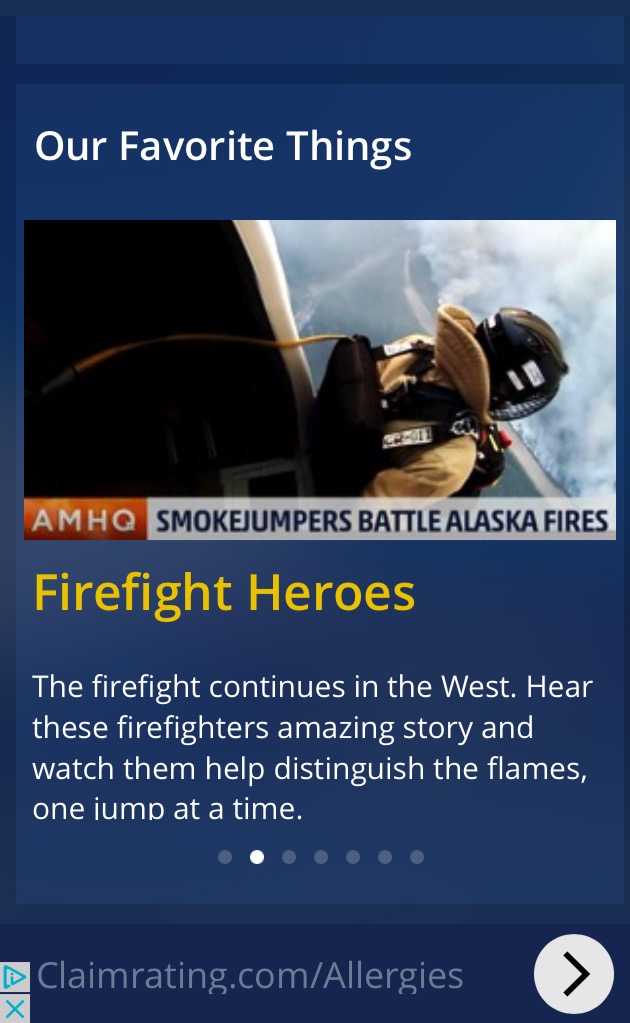
Two years ago, I came across this captioned photo in my Weather Channel phone app. In the interest of full disclosure, I have mocked this photo more than once on Twitter and Facebook, and even included The Weather Channel folks with an @. And, yet, it remains.

Notice anything?
fullsizerender-5

Two years ago! This abomination has shown up on my phone through two entire years of daily weather events: sunshine, fog, rain, clouds, sleet, hail, ice, and thunder snow (which is a also a thing, according to the app). The weather events are described with pleasantly short, declarative sentences, i.e., “Partly to mostly cloudy. High 34F. Winds NNW at 5 to 10mph.”

I won’t bother to dig deeply into what’s wrong with the grammar of this non-sentence, because we are all adults. Agreement is a problem, of course, and “distinguish the flames” makes me spew tea all over my keyboard every time I read it. When I read the hot, flaming mess that is, “Hear these firefighters amazing story,” I suspect that the single issue the writer considered for any length of time is whether or not the phrase should have an apostrophe hanging about somewhere. That he or she made the bold decision just to leave it out is characteristic, I think, of the incredible, sans-serif confidence of the whole bizarre caption.

I have so many questions about this:

Who wrote the caption?

What were they thinking?

Who okayed it for use online?

Is The Weather Channel requiring meteorologists to write app copy? (I don’t think so. My guess is that the meteorologists write the tidy forecast copy.)

Am I overreacting?

Does The Weather Channel not know/care that they are putting out copy that is, for want of a better word, illiterate? Despite the fact that millions may have seen it?

Does this make anyone else question the quality of The Weather Channel’s work in other areas, like forecasting?

Did the same person write the caption for the image below? Or was it a different person, one obsessed with Initial Caps? (See what I did there? I can play this game, too.)

fullsizerender-6

Captions like these make me worry. The grammar illiteracy I see in both print and online newspapers also makes me worry. Though our local university paper is always good for laughs when it comes to homophones and word choices that make me grit my teeth, national and international newspapers are almost as bad. While there are still plenty of writers and editors out there who do their best to be correct, the vast majority of words we read now–especially online–are not necessarily written by people who are concerned about communicating clearly. They’re more concerned with clicks than content.

As a child, I didn’t receive much of a formal education in the finer points of grammar. Studying Spanish and French helped me a lot. But I learned nearly everything I know about how language works through reading. If I needed to punctuate something like the phrase, “children’s stories,” or was confused about whether to use “lie” or “lay,” I would search through the books–usually fiction–on my own shelves. Shelves which held a few classics, but also a lot of Nancy Drew. These days, I always find myself in tussles with (often quite young) copyeditors. (See, I told you this was going to be a kids-these-days rant.)

I’m all about the growth of language. English is so dynamic and fun, absorbing new words and concepts with lightning speed. But what happens if it softens into a constant refrain of “oh, they’ll know what I mean” excuses?

Do you have any egregious, public examples of grammar misdeeds? Do you think we are headed for grammar chaos–and is that a bad thing?


Laura Benedict is the author of the Bliss House Trilogy and several other books of dark suspense. Sign up for her newsletter and get to know her better at www.laurabenedict.com.

How Many Of These Classic Books Have You Read?

img_1341We’re in an end-of-year, light-hearted mood today, so let’s take a quiz about what our accumulated reading habits “reveal” about ourselves, for better or for worse. Are you game?

This quiz is called “How Many Of These Classic American Books Have You Actually Read?”

I took the aforementioned quiz, dutifully checking off the books I read in high school or college (or at least, I checked the books that I remember reading–the tail end of the 70’s now seems long ago and far away. (To be honest, the entire late-70’s decade has become slightly fogged-over in my memory, somewhat obscured by a brume of natural herbal smaze).img_1342

My quiz result?

It was this: “You must be an English major.”

Wrong. Back in college I was a Political Science major, with a strong interest in journalism (there was no Journalism major at my liberal arts school, so I spent every free moment working at the campus newspaper, and a local TV news outlet). In those days, I had very little interest in fiction. I did eventually end up taking a few English Literature courses, mainly because I saw those courses as being located somewhere within the realm of a Kingdom known as the “Land of Easy A’s”. Whatever “serious” literary books I read, I read them only as a result of the requirements of a course syllabus. My then-ambition was to become an ink stained wretch, not a literati (or literatus, per my Ghost of Latin Teacher Past).

Okay, so you know the worst about me–that I am an English major poseur, at best. What about you? Can you take the “Which Books Have You Read.” quiz, and share your results?? ?

The Bestseller Code

by Larry Brooks

If today’s title rings familiar, that may be because there is a new writing book out by that title (with a subtitle added: Anatomy of the Blockbuster Novel, by Jodie Archer and Matthew L. Jockers) .

The title at first struck me as shamelessly derivative (what’s next, The Lovely Funny Bones?), but when I investigated further I realized that it is actually clever, since the book describes how novels like The Davinci Code achieve as they sometimes do, with over-the-moon success that everyone immediately tries to explain.

With — literally — a code, no less.

The Davinci Code is, of course, a gift to cynics — Dan Brown? A symbologist? An albino assassin working on retainer for The Vatican? Really? — but the numbers prove them wrong. Inarguably so. Sometimes when a novel breaks that big it can be explained — even cynically — as some happy confluence of social temperature, marketing budget and the unbreakable Tipping Point Code (not a novel yet, just a mystery we all strive to solve), rather that what it really is: an intense application of the forces of story that make novels work. Which include a conceptually-rich premise, dramatic tension, an empathetic hero in a world of trouble, more dramatic tension, thematic weight, killer scenes, and a passable writing voice… stir in a publisher’s commitment to back it strongly, then hope the media likes it as much as that pub committee did… then pray for a little luck and a big order from B&N.

But there is always a better explanation behind the numbers. And, even in this book, it begins with the list of story attributes I just described.

Writing is a lot like love, in that regard. The principles are simple, but the chemistry remains beyond defintion. And so we dive in, do what we can with our best choices, and keep hoping we hit the jackpot.

Writers of these iconic blockbusters have done something right. I mean, really right. Saying you aren’t impressed with the writing is like saying you don’t think that Cate Blanchat is good looking… it’s not the point. The explanation goes much deeper than what meets the eye and ear, and for the serious emerging author it’s worth pursuing.

The Bestseller Code is to writing novels what sabermetrics is/was to baseball, and to the novel Moneyball: The Art of Winning Unfair Game (Michael Lewis, 2003) that broke it to the public, and popularized it with a movie adaptation starring Brad Pitt (because yeah, all baseball GMs look just like that). It is an attempt to codify the aesthetics of storytelling that go ballistic in ways that transcend basic, commodity craft — not to mention logic — to reach people on a deeper level. It actually seeks to explain the numbers as a form of algorithm that can be analytically applied to raw manuscripts to access potential for marketplace success.

I’ve attempted that same explanation myself, in my book Story Physics, which covers the same elements of craft without the ones and zeros.

The Bestseller Code presents a case that I believe fails in its aspiration — that we can predict success based on a survey and quantification of story essences… while indeed landing on the identification of the core elements of dramatic fiction that tend to whip readers into a frenzy. The authors duly observe that books come and go that score high on that algorhythmic scale (as high as the home run titles) and achieve little notice, while some novels with C-level scores end up on bestseller lists without an explanation at all.

Proving what William Goldman famously told us in his book, Adventures in the Screen Trade: “nobody knows anything.” Including the 46 agents who rejected Kathryn Stockett’s manuscript called The Help a few years ago.

So I’m not here to recommend the book, per se.  Rather…

… just to flag it for you, and to suggest that you go to Amazon, click on the cover and read the first chapter (The Bestseller-Ometer, or, How Text Mining Might Change Publishing) shown in the Look Inside feature. It is a fascinating 1500 word read, quite well written, which circles around the drain of suggesting that success can be predicted based on which boxes are checked off (something us writing guru types like to echo), instead of the more easily swallowed rationale that to achieve massive success those boxes corresponding to issues of core craft must indeed be honored… the very thing this magic algorhythem seeks to digitize.

It’s finding a publisher and a handful of reviewers who notice that’s the real math of it.

Click HERE to give it a read. Chewy food for thought, indeed.

*****

This is my last KZ post of 2016, before we break for the holidays to catch our breath and plan our assault on 2017. I wish you all a blessed season, rich and warm with family and friends, and may you arrive at the New Year story milestone refreshed, renewed and armed with a killer premise that will make Dan Brown wish he’d thought of it first.

See you back here in January!


I Got Your Number


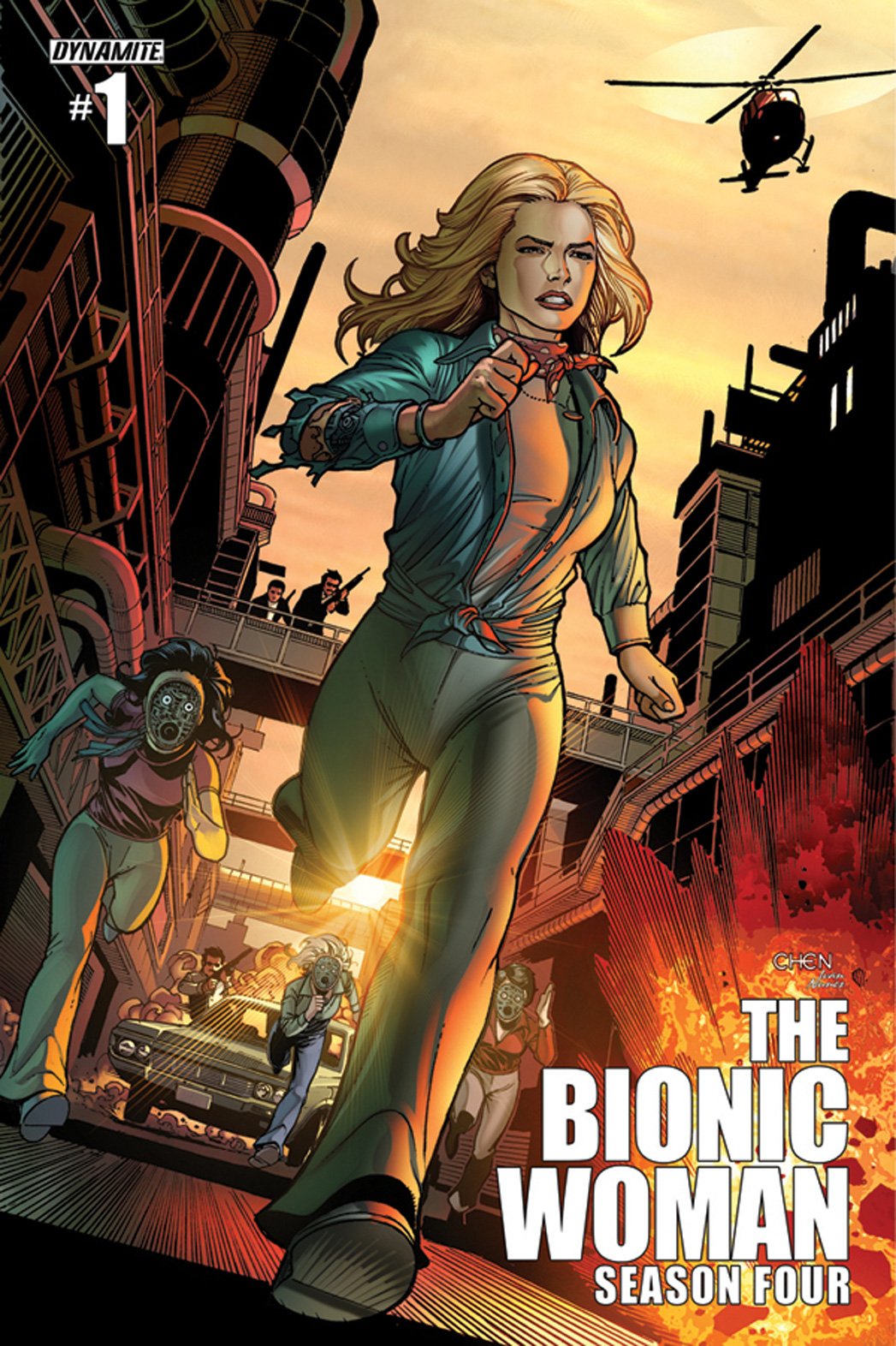
the-bionic-woman-1-coverBy Elaine Viets

My body is special, and here’s why: It’s traceable from top to bottom.
Several winters ago, I slipped on the ice in St. Louis and wound up with a total hip replacement. I was recovering from the surgery in the hospital, floating on a fluffy morphine cloud. (Let me tell you, morphine is definitely my favorite drug. No wonder the docs take it away after three days.) Anyway, I was pushed off my morphine high when a pathologist friend called.

hospital-room“Congratulations on your hip replacement!” she said.
Huh? I didn’t see any reason to celebrate.
“No matter what happens,” she said, “if you’re murdered and buried in the woods, they’ll always be able to identify your headless body.”

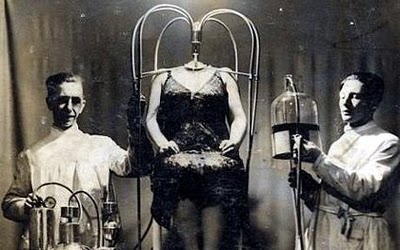
6-olga-the-headless-ladyThat’s never been one of my top ten worries. But at the time, a serial killer was stalking the area, kidnapping women, cutting off their heads, and leaving their decomposing bodies in trash bags along the highway. Police were having trouble identifying the victims – many didn’t have fingerprints in the system.
But my hip replacement had a nice traceable number engraved in the titanium. Decomp would make no difference. I wasn’t a no body any more.
Fast forward twenty years. That’s when I had six strokes, including a hemorrhagic stroke, and brain surgery. (I’m fully recovered, thanks.) Brain surgery put me a head of most people. When the surgeon sawed open my skull, he held the pieces in with titanium doodads (that’s a medical term). Those are numbered, too.
I am now identifiable top to bottom.
If deer hunters stumble across my skull in the woods, or I wind up on a shelf in some serial killer’s basement, I’m no Jane Doe.

skullMost mystery writers struggle with body identification in their novels. Identifying the victim can slow down a fast-paced plot. Yes, there are dental records, but you need to know the victim’s name to match her to them. Her prints have to be in the system for those to work. And you have to know who she is already to confirm her identity with DNA.
Medical implants cut through that. You usually won’t find out the victim’s name in ten minutes. But implants can help you trace your victim faster. If you want to pick up the pace of your crime novel and have your victim ID’d quicker, consider giving her a medical implant: a knee implant, hip implant, a pacemaker or other cardiac device.

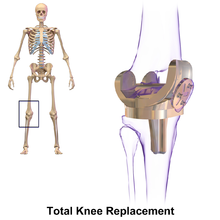
knee_replacementBreast implants are also numbered. Both kinds, saline-filled and silicone gel. So your unidentified woman – or man, for that matter – could be someone who wanted a larger chest. Or she could be a woman who had breast implants after a mastectomy or other reconstruction from an experienced surgeon.

breast-implantThe makers of medical implants sold in the US must list them with the FDA, and ME’s offices usually contact the manufacturer. It’s faster – but not lightning quick. The surgeon who used the implant may have closed his practice, and the records may be in storage. The hospital where the surgery took place may have the records on file.
Twenty years after I had a hip replacement, I had to track down the model and name of the device for an orthopedic surgeon. The surgeon who’d performed the replacement was long gone – but the hospital had the records stored in the cloud.
They had my number.

******************************************************************
viets-brainstorm-smallWin Brain Storm, my new Angela Richman Death Investigator mystery. TKZer PJ Parrish says, “Brain Storm has everything I love in crime fiction – complexity, intelligence, pretzel plotting, and a touch of dark humor.” To enter, click Contests at www.elaineviets.com

You Know You Want It…
It’s the Bad Sex in Fiction Awards!

By PJ Parrish

You’ve been waiting for it all year with bated breath. Your pulse rises every time you think about it. Some of you, oh faithful TKZ regulars, have even been emailing me begging to know when I was going to post my one annual post you can’t live without.

issue-449-dec-2016-600x800

Yes, friends, just in time for Christmas, wrapped up here in a big blue-language bow, is THE LITERARY REVIEW’S BAD SEX IN FICTION AWARDS!

This is the 24th year the Literary Review has honored an author who has written the most “outstandingly bad scene of sexual description in an otherwise good novel.” Past winners have included Norman Mailer, David Guterson, and Thomas Wolfe and the nominees pretty much include every big literary name you’ve heard of. I like presenting this every December because, if nothing else, it makes us mere mortal writers understand that when it comes to sex, we’re all human — or, in one case this year, maybe bovine. The award was announced at a lavish ceremony Nov. 30 at the In & Out Club in London. No, I did not make up the name of that club. It is a distinguished private gathering place for members of the British armed forces.

But let’s get on with it, what say?

Here are the finalists first, so we can work ourselves up into a good lather waiting for the winner. And don’t write blaming me for any of this. I’m just the messenger here. I stopped trying to write sex scenes decades ago.

gas

But  a loose ball bearing was his downfall…

A Doubter’s Almanac by Ethan Canin
As she talked Andret would make gentle, two-fingered tugs all the way around the hem of her dress to expose the lacy parts of her undersuit, like a child pulling candles from the rim of a birthday cake. Then he would begin kissing the frills. This she found beguiling. During sex she would quiet, moving suddenly on top of him like a lion over its prey. Her eyes stayed wide, Andret liked to keep his own closed; but whenever he opened them, there she would be, staring down at him, her black pupils gyroscopically inert. Again: leonine. He couldn’t help thinking that her gaze, even as she bent over him and strained her shoulders like a collared beast, was in fact an indictment.

The act itself was fervent. Like a brisk tennis game or a summer track meet, something performed in daylight between competitors. The cheap mattress bounced. She liked to do it more than once, and he was usually able to comply. Bourbon was his gasoline.

age-of-cigar-box-label-beach-mercuria

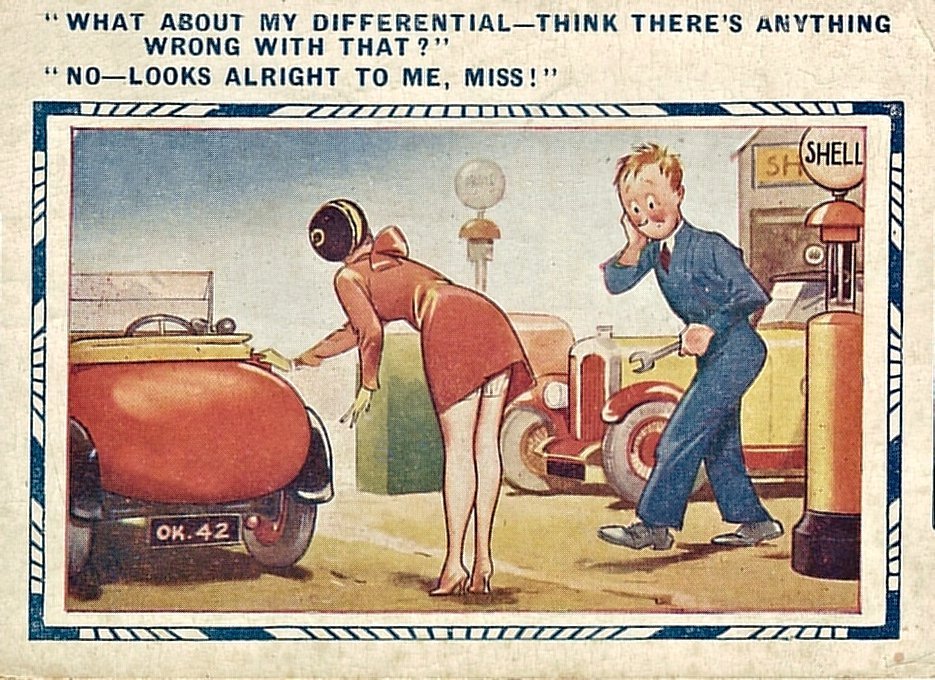
Is that a cigar rack in your back or are you just glad to see me?

The Tobacconist by Robert Seethaler

She looked him in the eyes, and, very slowly, brought her face up close to his, and when he felt her breath on his mouth and saw the delicate trembling of her puckered top lip, a shudder of joy passed through him with such force that he would almost certainly have fallen backwards into the cigar rack if Anezka hadn’t caught him at the last moment and pressed him firmly against her body. He closed his eyes and heard himself make a gurgling sound. And as his trousers slipped down his legs all the burdens of his life to date seemed to fall away from him; he tipped back his head and faced up into the darkness beneath the ceiling, and for one blessed moment he felt as if he could understand the things of this world in all their immeasurable beauty. How strange they are, he thought, life and all of these things. Then he felt Anezka slide down before him to the floor, felt her hands grab his naked buttocks and draw him to her. ‘Come, sonny boy!’ he heard her whisper, and with a smile he let go.

sawing-logs-on-the-airport-floor-podolux-flickr

I could have lasted longer if we hadn’t used TSA Pre-Check.

Men Like Air by Tom Connolly
The walkway to the terminal was all carpet, no oxygen. Dilly bundled Finn into the first restroom on offer, locked the cubicle door and pulled at his leather belt. ‘You’re beautiful,’ she told him, going down on to her haunches and unzipping him. He watched her passport rise gradually out of the back pocket of her jeans in time with the rhythmic bobbing of her buttocks as she sucked him. He arched over her back and took hold of the passport before it landed on the pimpled floor. Despite the immediate circumstances, human nature obliged him to take a look at her passport photo.

cows

Cow-A-Bung-Her!

The Butcher’s Hook by Janet Ellis
I slide my hands down his back, all along his spine, rutted with bone like mud ridges in a dry field, to the audacious swell below. His finger is inside me, his thumb circling, and I spill like grain from a bucket. He is panting, still running his race. I laugh at the incongruous size of him, sticking to his stomach and escaping from the springing hair below. All the while, we stifle our noise and whisper like a church congregation during the sermon. He pinches my lips when I yelp, I shove my fingers in his mouth when he opens it to howl.

‘Anne,’ he says, stopping and looking down at me. I am pinned like wet washing with his peg. ‘Till now, I thought the sweetest sound I could ever hear was cows chewing grass. But this is better.’ He sways and we listen to the soft suck at the exact place we meet. Then I move and put all thoughts of livestock out of his head.

how-to-last-longer-in-bed

Like a virgin, knock-knocking for the very first time

Leave Me by Gayle Forman
Once they were in that room, Jason had slammed the door and devoured her with his mouth, his hands, which were everywhere. As if he were ravenous.

And she remembered standing in front of him, her dress a puddle on the floor, and how she’d started to shake, her knees knocking together, like she was a virgin, like this was the first time. Because had she allowed herself to hope, this was what she would’ve hoped for. And now here it was. And that was terrifying.

Jason had taken her hand and placed it over his bare chest, to his heart, which was pounding wildly, in tandem with hers. She’d thought he was just excited, turned on. It had not occurred to her that he might be terrified, too.

Whew…

And finally, here is our winner, the Italian author Erri De Luca, who has been called by critics “the writer of the decade.” Proving, as the judges said, that even in the wake of Brexit, bad sex knows no borders.

hula

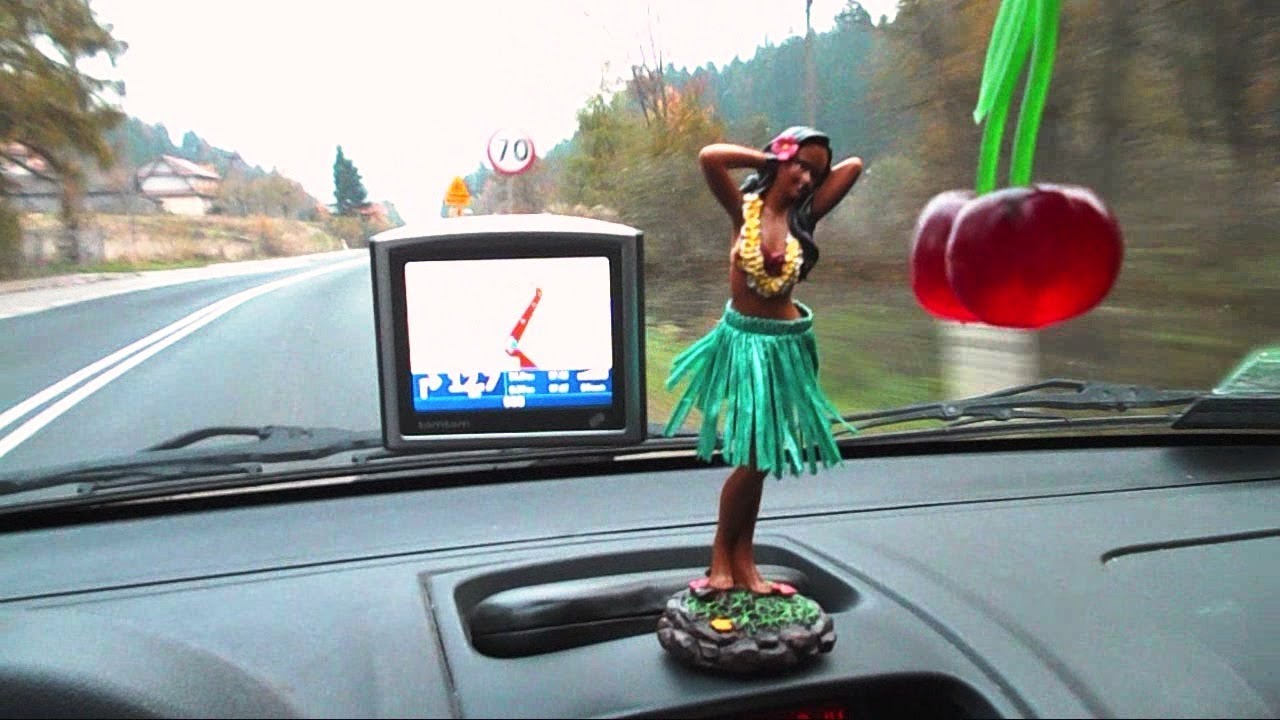
Paradise by the dashboard light

The Day Before Happiness by Erri De Luca
She looked at me, her eyes wide open, and brought her bloody lips to mine, pushed her mouth inside mine until I could feel it in my throat. My prick was a plank stuck to her stomach. She eased the pressure of the kiss, broke off. With a swerve of her hips, she turned me over and I was on top of her. She unwound her arms from my shoulders and guided my hands to her breasts. Opened her legs, pulled up her dress and, holding my hips over her, pushed my prick against her opening. I was her plaything, which she moved around. Our sexes were ready, poised in expectation, barely touching each other: ballet dancers hovering en pointe.

We stayed like that. Anna looked down at them. She pushed on my hips, an order that thrust me in. I entered her. Not only my prick, but the whole of me entered her, into her guts, into her darkness, eyes wide open, seeing nothing. My whole body had gone inside her. I went in with her thrusts and stayed still. While I got used to the quiet and the pulsing of my blood in my ears and nose, she pushed me out a little, then in again. She did it again and again, holding me with force and moving me to the rhythm of the surf. She wiggled her breasts beneath my hands and intensified the pushing. I went in up to my groin and came out almost entirely. My body was her gearstick.

Happy holidays, TKZers! Good health and good writing to you in the coming new year. Peace out.

Call the Typo Police!

Last week I was helping an author friend of mine with some final proofreading of the galley proofs her publisher had sent – she sent me and other friends approx. 50 pages each to do a final typo check and, to her dismay, everyone still found some. The manuscript had been through so many rounds of revision, editing and proofreading that it seemed incredible that there were still minor typos to be found – but, as any author will tell you, those little buggers manage to elude even the most eagle eyed amongst us…

This got me thinking about my own proofreading process (or, to be honest, the lack thereof!). Obviously, I use spell check and have beta readers (although they are mainly there for content feedback) and I do as many careful run-throughs of the manuscript that I can before I email it off to my agent. Then, whatever revisions are needed are completed and another proofreading occurs before the manuscript is (hopefully) ready to go off to publishers. If you go the traditional route, publishers also have line editors who are the last line of ‘typo defense’ and usually the process results in a relatively clean manuscript…although inevitably (as readers will always point out to you) there are still  typos that slip through the dragnet and end up in the published book.

In the indie route, it’s really up to the author to make sure this ‘typo’ cleaning process is done and dusted before the book is uploaded and made available to the reading public. While there isn’t the same formal process as a traditional publisher undertakes, I assume most professional indie authors go through the same multiple ’rounds’ of editing to ensure the cleanest manuscript is produced.

I am acutely aware of my own proofreading limitations. While I am pretty good on the content editing side (and willing to take constructive feedback on that front and revise as many times as needs be) when it comes to the laborious task of proofreading I know I fall way short. The main problem is that I am too close to the material to spot typographical errors any more – and, if my friend’s experience is anything to go by, often multiple people can miss some typos even in a rigorous proofreading process. Although it’s much easier to proofread someone else’s work, when it comes to your own manuscript it can often be hard to find friends or family who are all that keen on acting as the ‘typo police’ after they’ve already read the book in its many iterations before.

So TKZers, what is your process for dealing with ridding your manuscript of all those pesky last minute typos? How do you handle the dreaded proofreading stage?

FIRST PAGE CRITIQUE: (No Title) by Anonymous

annalisa-and-colman2

Photograph (c) 2015 by Annalisa Hartlaub. All rights reserved.


Anonymous, on behalf of all the of TKZ family  I bid you welcome and thank you for submitting to our FIRST PAGE CRITIQUE and thus braving the constructive slings and arrows which may or may not be coming your way!

“Lyssa, come back!” the large, dark haired man shouted.  The woman had lured him into a hedge maze, but he suspected that was only to provide him with a false sense of security.  If the woman had survived this long, had done the things he suspected she did, there was no chance that she wouldn’t know his particular abilities.  He sighed, exhaling slowly and closing his eyes, hearing the voices on the wind as the plants themselves bent to whisper of her actions to him.  She was waiting at the center.  He hesitated, almost turning to leave but deciding that if he could not defeat this hack on his own grounds then he was doomed to fall on hers.  He strode forward, determined and defiant, the plants parting for his footsteps until he reached the end of the maze.

Lyssa saw the dwarf boxes part, a grin crawling onto her face.  She was laying on her back, her head towards the man that currently pursued her and her arms spread out to her sides, tilting her chin up to look up towards the man.  “Did you like the maze mister?  I know how much you love plants.”  She saw him hesitate again, only grinning wider, stretching comfortably on the grass.  Reaching this moment overjoyed her, the peak of her efforts, the climax of this story.  The man was reluctant, but he too had fallen to the strings that bound all living beings, and in a moment he would be no more than a mere puppet, a toy for her to toss away as she became bored with him.  Toys were never any fun after they stopped working.

He had loved her like a daughter.  He still did, but he needed to know what she was.  He continued his strong stride towards her, her words like needles in his mind, laced with that all too familiar giggle.  He snapped his fingers, the hedges moving like vines to snap around her limbs and hold her on the grounds.  She squirmed a little, but her grin did not waver in the slightest.  Was she so confident he would not kill her?  It would take only a moment like this, another snap, but he dared not imagine what the brambles would do to her if he did.

Anon, this is an intriguing opening page with an interesting premise. I like the pacing and was actually disappointed that I only had one page to read. That’s a good sign, especially for someone like myself who doesn’t read fantasy literature on a regular basis. Let’s keep that in mind as I review a few deficiencies which I think are readily remediable:

Names — Give the male character  a name at or very near to the beginning And since you have named the female character “Lyssa,” use her name rather than “the woman” as general rule. Repetitive use of  “the woman” and “the man” tends to depersonalize both of them; when we’re reading we want to get them in focus a little more clearly and naming them will do that.  often than not. And let’s use the term “dwarf boxes” — a terrific name — repetitively instead of “plants,” at least for a couple of pages. Drop little hints, like breadcrumbs through the forest of your story, each one describing the dwarf boxes so that by the third page or so we know that they are plants without telling us. Show, don’t tell.

Perspective — Let’s keep the perspective with the man for the first page or two. It changes here after the first paragraph and it’s a bit of a sudden jump. Shifting perspectives so early in the story and so quickly is a bit jarring, and doing so from paragraph to paragraph is a bit much. I’m seeing a little more of the abrupt shifting, probably for the reason of creating suspense, in published books these days but it usually takes place (much) later in the story. I recommend getting your story rolling — and I mean really rolling, like several chapters — before you start doing that if you do it at all. It appears that you are trying to create what I call a “Bugs (Bunny) and Elmer (Fudd)” scenario, as in Elmer sticking his hand down the rabbit hole saying “Now I’ve got you!” to which Bugs responds, “On the contrary! I’ve got YOU!” You can do this solely from the man’s perspective. He sees her smile, hears her question about the maze, and senses her confidence but is in turn confident in his own powers over the dwarf boxes to control the situation.

Literary elements — Some of the similes, metaphors and turns of phrase in the second and third paragraphs read as if you’re trying just a little too hard. You get an ‘A’ for effort, but sometimes the phrasing is a bit awkward. “Grin crawling on her face…” Ugh. I pictured a spider or something crawling out of the grass. Try something like “The corners of her mouth slowly turned upward.” Then there is“The moment overjoyed her, the peak of her efforts, the climax of this story.”  I’m not sure what that means. The story has barely started and you’re talking about the climax. “The words like needles in his mind…” again, it’s a simile that doesn’t quite work. It’s somewhat cringe-inducing.  I think it’s just a matter of overreaching, and while there are worse sins you could commit I recommend that you focus on telling the best story you can the first time through and then going back and judiciously embellishing your sentences. A great example of a metaphor of yours that works is in the final sentence of the second paragraph. It’s simple and we can all relate.

Relationships — I’m somewhat confused about the extent of the relationship between the two characters. The man knows Lyssa’s name, and indicates that he loves her like a daughter, while from her perspective he is “the man who currently pursued her.” Again, name the man, and you can clear up the confusion by having Lyssa either call him by name, addressing him as “Stranger,” or a bit of further dialogue that hints at their familiarity with one another.

Proofreading — Proofreading is always a must, and you did a good job here, Anon, for the most part. I spotted two mistakes in one sentence in the second paragraph.  “Did you like the maze mister” would read better as “Did you like the maze, Mister?” There are probably more, but possibly not. I need a second steady eye to review my work and recommend that you employ the same if you’re not doing so already.

Anon, all else aside, I like the conflict that you have set up by the end of the page: the two characters are confronting each other, the man seemingly having Lyssa at a lethal disadvantage for a reason that you have revealed, while Lyssa seems to have a yet-unrevealed advantage of her own. Again, I really wanted to see more of this tale when I reached the conclusion of your submission. Keep plugging away and let us know when your efforts are rewarded. And thank you again for submitting your work to our First Page Critique. With that, I shall step aside and let our readers make their comments!

Stripping Away Distance to Draw on Emotion – 1st Page Critique – A Devotion of Dads

Jordan Dane
@JordanDane

usmc-08340

This intriguing 400-word introduction comes to us from an anonymous author seeking feedback. Please read and enjoy. Share your comments/impressions with constructive criticism in your comments.

***

The video was grainy and dark, the images distorted.

“Can you tell who this is?” Dean pointed, his voice low, with only a slight nuance of horror.

“No,” Mabel lied, because she didn’t want her brother involved, not anymore.

The four people clustered around the laptop viewed the rest of the video in silence. Watched as one person slowly drowned while another patiently waited. The figure walking around the edge of the pool wore dark, loose clothing with a cap pulled low over their face, but not low enough to obscure their mouth. Whoever it was, and Mabel knew there was a chance she was wrong, had a lot to say to the poor soul in the water. There was no audio but you could see one set of lips moving slightly, as if calmly. The other set, when above water, was often distorted in apparent, but thankfully silent, screams.

Two things about the woman in the pool were obvious to the viewers. She couldn’t swim and was fully dressed. She hadn’t entered the water of her own free will. There was only one thing obvious about the person walking around the pool. They did not want that woman to live. Every time an attempt was made to cling to the side of the pool, her hands were stomped on, over and over and over, until she finally let go, fingers too broken to grip. It took a long time for her to die.

The final minutes showed the capped figure leave the pool area, alone, and Mabel was more sure by then who it was. But when she looked up to voice her opinion, she found herself alone in the room. She looked back at the blank screen. Could she stand to watch it one more time? She hit replay. She had to be absolutely sure.

FEEDBACK:

There is definite mystery to this creepy scene of people trying to unravel the identity of a killer, while looking at a video on a laptop and witnessing a murder. Very compelling. Without sound, it would be horrific to see something like this. Chilling. The opening scene (as written) is compelling and it triggered something in me, but I wondered if there might be a more effective way to tap into the emotion of those watching the grainy video as well as focusing more on the sheer panic of drowning.

Below are some suggestions on how to intensity the opener:

1.) CLOSE THE EMOTIONAL DISTANCE – As this 400 word submission is written now, the reader is held at a distance from the action of the scene, by the narrator describing (“telling”) what is happening on the grainy footage. The reader is being told of what’s not only happening, but also what is ‘felt’ by the witnesses. To close the distance, maybe the author could get into the head of the person most affected, Mabel, the one who appears to know the identity of the cold-hearted killer, and have her imagine what it would be like to be that helpless and dying, or perhaps trigger her worst fear of drowning.

2.) PEPPER IN DIALOGUE – More dialogue might help with the pace and the weighty paragraphs of “telling” descriptions. In a scene like this, less is more. Rather than describe what’s happening on a video, let the reader hear a dialogue line that is creepy or that they can imagine what is being seen. In my rewrite example below, lines like ‘She’d never seen anyone die before’ as the first hint of what’s happening on the video can carry a punch. Or a simple question like ‘Why isn’t he helping her?’ followed by ‘He’s killing her’ can be chilling.

3.) ADD PUNCHES OF MYSTERY – Added mystery elements, layered into the narrative, would draw the reader through this submission. In a short intro like this, I would add a question for the reader to ponder and pepper in more as the reader gets deeper into the story. In effect, it’s like being tugged from the shore by a strong current. In the rewrite example below, the mystery elements that might raise a question for the reader are lines like – She’d never seen anyone die before, or introducing the killer by adding a dialogue line ‘Why isn’t he helping her?’ followed by ‘He’s killing her’ is a nonchalant way of adding murder and mystery with a faceless guy.

ON REWRITES – I normally don’t like to rewrite a scene to show an author an alternative way to write it. It’s been my experience that if you can coax an author into seeing their scene in a different way, by asking them open-ended questions that could draw out a creative solution through them, the writer often finds a better way to resolve the scene than my suggestion. But on a blog, we don’t have the luxury of writing and rewriting to enhance an introduction. The following open-ended questions are designed to get the author thinking. The questions may not work or may not add anything to the scene, but in general, open-ended questions can trigger images or character motivations that could enhance the opening.

My open ended questions might be:

1.) Did Mabel ever have a close encounter with drowning? Does she see herself drowning as if she were the victim?

2.) When she sees the film over and over, who does she watch most–the victim or the killer? Does her perspective change the more she watches it?

3.) What does her answer reveal about her? Does she want to protect the killer, or is it more important to reveal the truth to the family of the dead victim?

4.) An even bigger question in my mind is – Who shot the film? Someone had taken the footage and let the killer walk away. Over the years, this mysterious someone didn’t tell anyone what happened?

REWRITE EXAMPLE:

Mabel stared down at the grainy footage on her laptop and felt the pull of the video with its distorted shadowy images. She couldn’t turn away. If she’d been alone, she might’ve succumbed to its unexplained allure and imagined she were there at poolside, watching it happen, but four others sat next to her. They were all voyeurs in the dark.

She’d never seen anyone die before.

“Can you tell who it is?” Dean broke the silence. She sensed his eyes on her, demanding an answer.

“No,” Mabel lied. She saw no point in speculating for the sake of her brother’s curiosity. What would it matter now?

The video had no sound. Thank, God. A woman, fully dressed in street clothes, floundered in the water. Her arms thrashed, but she couldn’t keep her head above water. When she gulped for air, Mabel squirmed in her seat, imagining what drowning would feel like.

You can’t do this. Help me!

Mabel swore she could read the woman’s lips as she begged for her life, pleading with the man in a cap—the only visible part of his face were his lips.

“For Christ’s sake, she’s trying to get out. Why isn’t he helping her?” A voice cut through the stillness, someone sitting next to Mabel. “Oh, no. He’s…what is he doing?”

“He’s killing her.” Mabel didn’t recognize her own voice. She wiped a tear from her cheek before anyone saw.

Mabel hadn’t believed it either, the first time she saw the video. The man, who had shoved the woman into the pool, taunted her and watched her flail and gasp for air. Whenever she reached for the side of the pool, to hoist her body up for air, he smashed his boot heel into her fingers. Blood sent dark spirals into the water.

It took the woman a long time to die.

Mabel watched the video to an ending that would always haunt her. When she looked up from the laptop, she was alone. The others had left. She never heard them go.

No one had asked who’d shot the video?

DISCUSSION:

1.) What do you think of this submission? What revision suggestions, if any, would you make?

2.) Have you used open-ended questions to enhance a scene? 

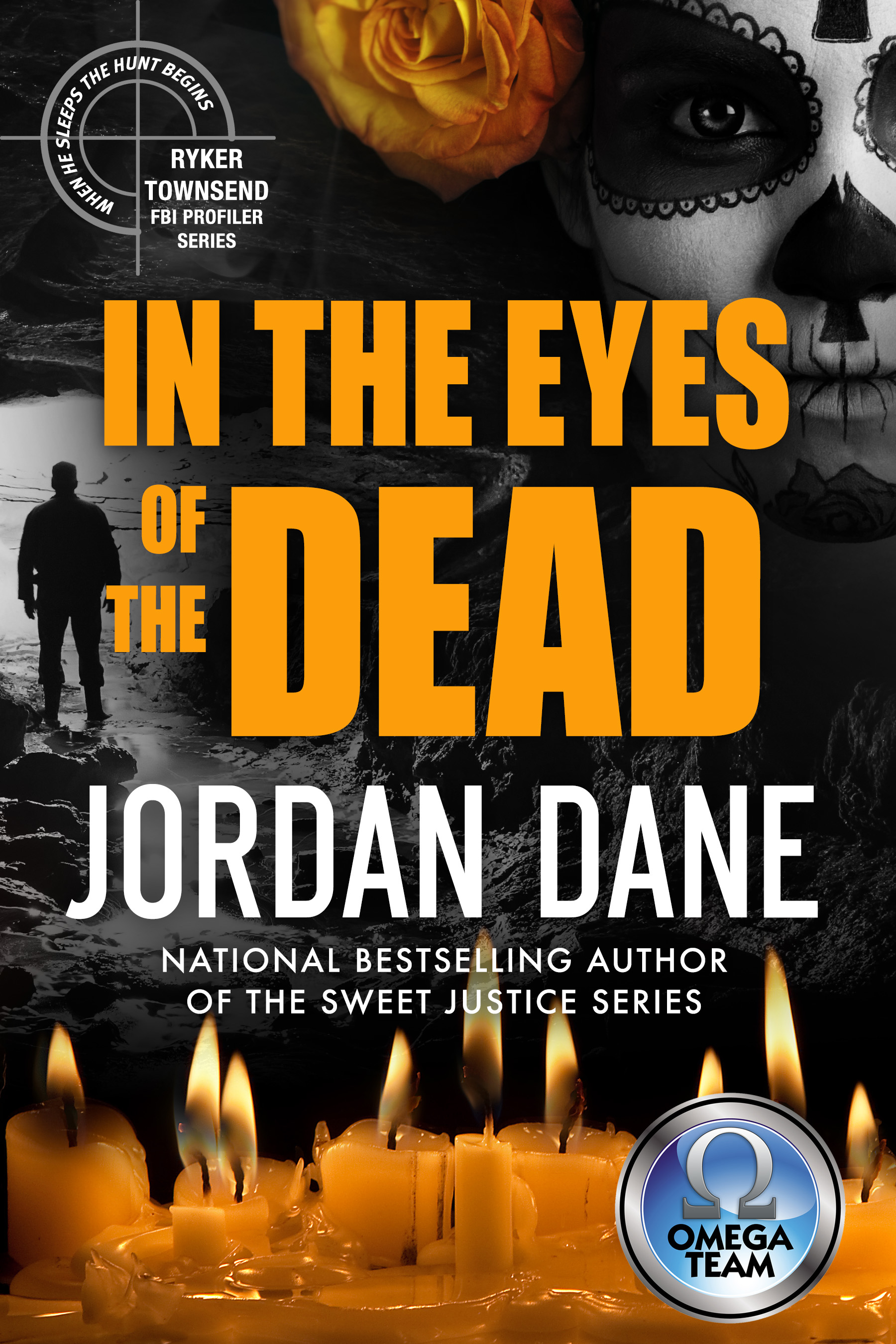
intheeyesofthedead_highres

In the Eyes of the Dead – $1.99 ebook

“He hunts killers through the eyes of the dead”

(A Ryker Townsend – FBI Profiler novella)

A Criminal Obsession: Are You Guilty, Too?

I’m not sure what I was looking at the other day, but for some reason I suddenly realized (“suddenly realized” is a phrase I would warn you away from in your fiction) that my mind and life are consumed with the subject of crime.

I would make a lame criminal. While I’ve had my brushes with Johnny and Jane Law, I’ve only ever almost been arrested (juvenile offenses, and minor ones at that—let’s leave those to your imagination for now). I’m a terrible liar, meaning that I have a very hard time lying without immediately giving myself away. No poker face for me. I blush and stammer and can’t help but laugh nervously. I can feel my heart speed up and my blood pressure rise with the red in my face. Suffice it to say I would never bother to try to fool a polygraph. I’d like to say I can’t lie because of my ironclad moral code, but I suspect it’s more a lack of self-confidence.

Crime fascinates me. I know several people who have been victims of violent crimes, or have had loved ones injured or murdered. Crime is real, and I’m not a groupie of real crimes and criminals. But the stories that catch my attention first when I’m online or reading a newspaper are always crime stories: silly, sordid, violent, white-collar, rural, urban—they’re all fascinating. And I’ve never found the variety and true weirdness in fiction that I can find in the newspaper or online. (With the exception of Harry Crews, of course. Harry used to give me the vapors.)

I’m not sure when I stopped reading books that didn’t involve crime. Or watching non-crime television. Sure, I’ve read a few biographies or literary novels over the past decade, but they’ve been outnumbered by crime, suspense, and historical fiction by a factor of ten. That feels like a strange admission to come from a person who loves the classics and used to review books of all sorts for a living. (Well, even back then, it wasn’t exactly a living.)

Not long before I stopped reviewing professionally, I was a Best Novel judge for a major mystery fiction award. Talk about a baptism by crime fiction fire. I was given hundreds of mystery novels, and read a huge number of them. It felt like a whole new world to me. There were tropes and rules, and so many plots. Did I say I read them? In truth, I devoured them. In younger days, I’d read an Agatha Christie here and there, teethed on Poe, Patricia Highsmith, and Jim Thompson. And lord knows I watched Columbo, MacMillan and Wife, the Rockford Files, and David Suchet’s Poirot until my eyeballs dried out. But I never knew there was such variety in the form. So many crime/mystery niches. So much comfort and exercise for my brain in one genre.

Comfort and exercise. Now, there’s an odd combination.

I like to tell my workshops that all good works of fiction are essentially mysteries. The mystery is the unfolding of the story. Only the author is absolutely certain what will happen before the last page is turned (or in the case of a thriller, the why is more evident, and the how is the mystery). The reader is constantly imagining what might happen next, making up her own possible scenarios that might finish the story. A good book poses at least one question at its opening, and answers it by the end. The challenge for the reader is to try to get inside the writer’s head and know where she is going at least a heartbeat before the story takes her there. Why, why, why, why, why? The reader constantly asks. Every sentence has to have some kind of answer.

If you read enough mysteries or other crime novels, or if you watch mysteries on television, you will definitely be able to predict with some accuracy what the outcomes will be. That’s where the strange comfort comes in. There’s comfort in knowing a crime or mystery has been solved, or comfort in knowing it hasn’t, but that the truth rests with one of the characters we’ve met. Or that someone is punished. You can’t always get that kind of satisfaction in real life. Closure in real life can be protracted and painful, or non-existent.

Not long ago I gave an emerging writer a critique on a family drama novel. The writing was fine, and there was some decent tension in the story. But I found myself wanting to suggest heightened drama and perhaps the introduction of…a crime. Neither the writer nor her intended readers would have much liked that.

I fear I am ruined for everything but crime stories. I want high stakes. I want to live in the head of someone who looks at the world through a lens of twisted intensity. I want things to happen, frequently and with vigor and unintended consequences.

My husband has been teaching creative writing in various universities for three decades. If I were to crystalize his advice to his students, it would be: Don’t bore me.

That’s the thing about crime fiction. It’s rarely boring. If I want quiet intensity, I can read Louise Penny. Rhys Bowen and M.C. Beaton are available for deadly shenanigans. Patricia Cornwell and Kathy Reichs are immersive. John Hart and John Connolly give us unforgettable characters. Reed Farrell Coleman and Cormac McCarthy are full of grit. Lindsay Faye and Susan Elia MacNeal offer historical secrets. I could go on all day.

Crime-centric television is my playground. In the past two years I’ve watched the entire Poirot, Midsomer Murders, Prime Suspect, Inspector Morse and Inspector Lewis series. Also True Detective, The Fall, Vera, Worricker, Bosch, Blue Murder, Grantchester, Whitechapel, Touching Murder, Broadchurch, and a truly embarrassing amount of Nordic noir (not an exhaustive list).

We also watched The Detectorists (charming, not a crime series) and Galavant (musically charming), though I could barely sit through the Galavant songs. Almost no one dies!

I tell myself that all the combination death and destruction and darkness is a big part of my job. That living it and breathing it is okay as long as there are brief excursions into other realms. Realms I used to visit much more frequently. (On Thanksgiving we went to see Arrival, the new alien film. Meh.)

endo-silence

This coming year, I’m going to make a sincere effort to read more widely and watch with a mind open to non-crime possibilities. I thought I’d start with Silence by Shūsakū Endō. Martin Scorcese has directed a film adaptation of the novel, which is about two Jesuit priests who travel to 17th century Japan to find their missing mentor. Christianity has been outlawed, and its adherents are persecuted and tortured. It sounds plenty intense, and the stakes couldn’t be higher. But it at least can’t be categorized as crime fiction. Right?

What genres make up most of your reading and viewing? Are you single-minded, reading mostly in your chosen writing genres, or do you read and watch widely?

Laura Benedict’s latest novel is The Abandoned Heart. It’s full of crime and suspense.