Compulsive Readability

A few weeks ago I purchased the latest Tana French novel, The Witch Elm, even though my TBR pile is almost to the ceiling. The reason? I buy every novel of hers as soon as it comes out. Why? Because of what I call ‘compulsive readability’ – closely aligned to the ‘trustability’ that Jim blogged about yesterday – meaning I automatically, faithfully, buy every book of hers that’s published. There aren’t many authors I’ll do that with – even J.K. Rowling missed the mark with me. I adored all the HP books and pre-ordered each installment, but then came her foray into adult books. I was uninterested in purchasing The Casual Vacancy and then with the Cormoran Strike mysteries, while I liked them, I didn’t love them (which means I got them out from the library but didn’t purchase them). In this instance, an adored author, didn’t necessarily become the compulsively readable one across all genres.

So what makes an author compulsively readable? What makes a reader buy every single book no matter the blurb or description? I think this aligns with what Jim was speaking about yesterday when it comes to ‘trustability’. I trust Tana French’s books implicitly and because of that level of trust, I won’t hesitate when it comes to buying her books. This, in essence, is what we are writers all strive for – to develop that degree of trust amongst our readers (this is what publishers are clearly looking for too!).

So what makes Tana French so ‘trustable’ to me? I thought I’d try and break down the reasons, as it helps highlight the key factors all of us should keep in mind as we build our writing careers.

First, and foremost, all her books are written to a consistently high standard – and by that I mean every single on of them is well-written, well-conceived, and (even when there may be plot holes) beautifully crafted. As a reader I have no hesitation ordering her books because I know I’m not going to be disappointed, even when they don’t appear to directly fit with the series she’s written to date (which is the case with The Witch Elm). Her writing is what has always stood out for me, not the premise of her books or the plots she spins, and this for me is critical. She never loses focus on what matters the most – the beauty of the words on the page.

Secondly, she consistently builds and maintains a world that I want to enter. Her Dublin murder squad series comprises different narrators/voices/characters but the world remains the same – which creates both an expectation and an anticipation in her readers. Whenever a new book comes out, I can’t wait to see what new spin or perspective she brings to this world (and the way she treats overlapping characters is cleverly executed – further enhancing the world).

Finally, her books never feel rushed. She doesn’t just pop out a book as if it’s merchandise. I’ve never got the feeling that she produces to a schedule (even though she almost certainly has to!) – so I don’t ever get the sense of being cheated that, now she’s successful, she’s resting on her laurels or producing ‘more’ at the expense of ‘quality’.

All these elements are worth bearing in mind as we, as writers, continue to try and establish or maintain our own careers. The difficulty is that there’s also an ineffable element – one I can’t pin down – that probably attracts me to these books over and above another (equally talented) author’s work. Nonetheless, what makes an author compulsively readable  is worth analyzing. Af all, if it was easy, we’d all be best sellers:)

So TKZers, who is your ‘compulsively readable’ go-to author? Which author are you committed to buying and why? What factors do you think go into ‘trustability’ as well as ‘compulsive readability’?


It’s Time To Share, TKZers! What Are You Working On?

A while back, a TKZer made an excellent suggestion: to give an opportunity for readers to share something about their writing and latest projects.

So, this is the day we want to hear about YOU, your WIP, and recent accomplishments! Don’t forget to include a link so that folks can find out more about your work.

C’mon, it’s time to toot your horn!

A Different Twist on Storytelling

By John Gilstrap

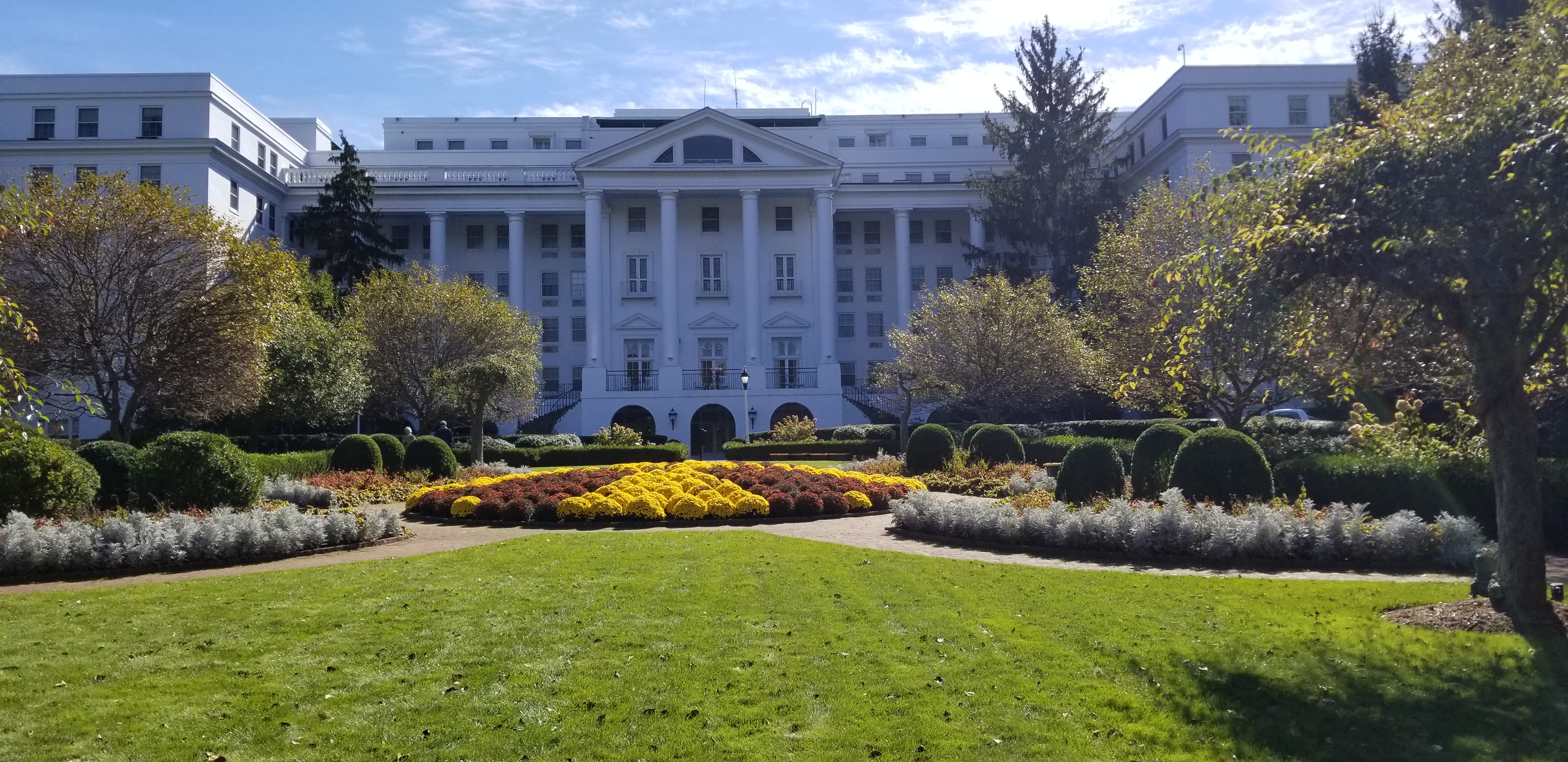
The Greenbrier

Autumn is conference season.  Bouchercon morphed into C3 (Creatures, Crimes & Creativity con), which then morphed into Magna Cum Murder.  As a former road warrior, traveling by air all the time, I decided this year to skip the airport this year and drive from Northern Virginia to Indianapolis for Magna.  On the way out, we broke the trip into two, four-and-a-half-hour drives, stopping for a night in Wheeling, West Virginia.  For the trip home, we decided to take the southern route, which took us through White Sulfur Springs, West Virginia, the home of the stately and wonderful Greenbrier Resort (and yes, that’s spelled properly).

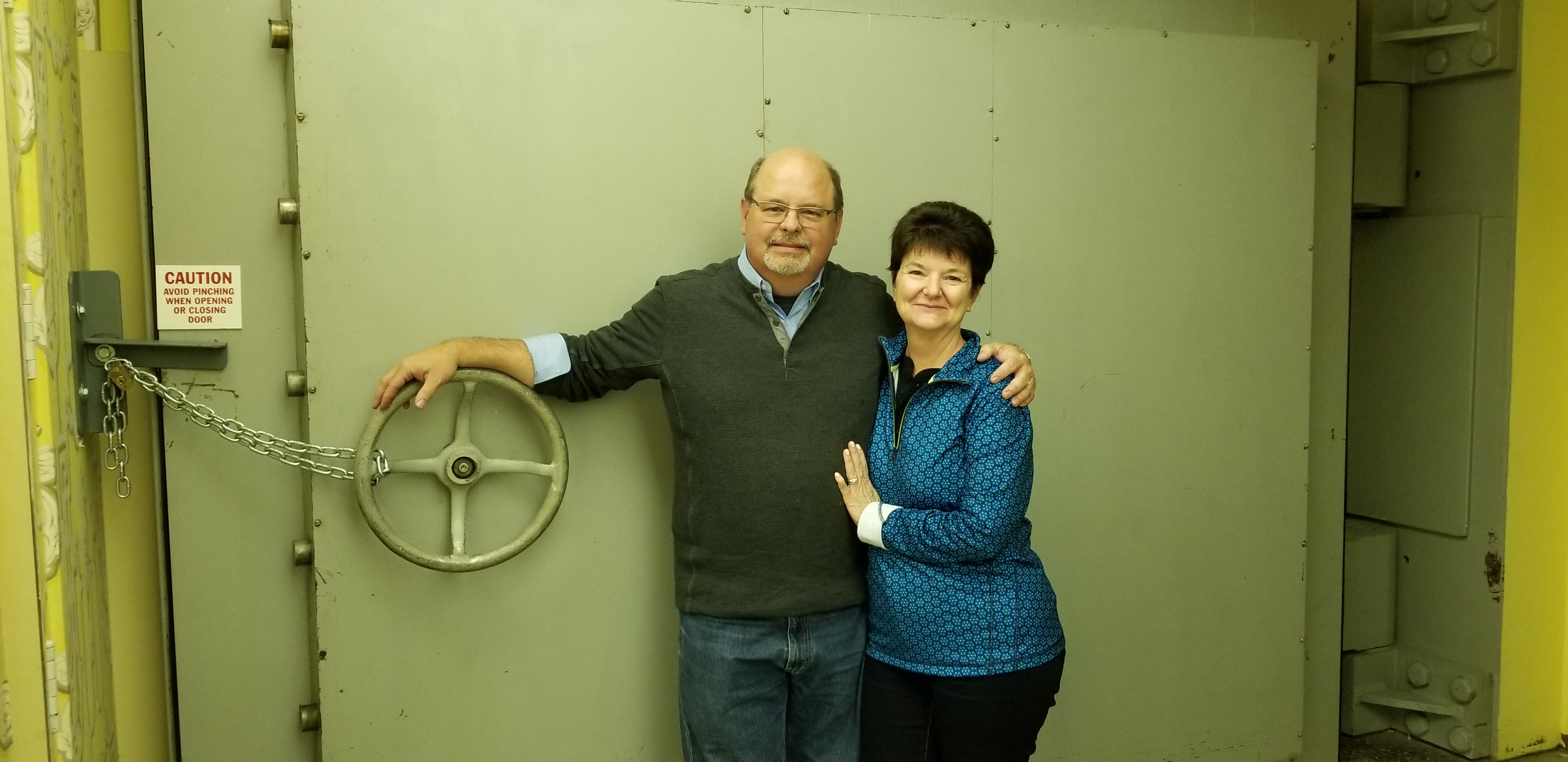
From 1962 till 1992 The Greenbrier kept an important secret.  Then a reporter from the Washington Post decided on his own that the world needed to know something that the government had classified Top Secret.  The Greenbrier had been designated as the relocation spot for members of the US Senate and House of Representatives in the event of a nuclear attack.  (I’m told that said reporter now teaches journalistic ethics at the collegiate level.  Just sayin’.)  A 112,000-square-foot, 153-room bunker facility lies buried 720 feet under the Allegheny Mountains, and is constructed of 50,000 tons of reinforced concrete.  One of the four blast doors that provides access to the bunker weighs 25 tons, and swings on hinges that are four feet long, 14 inches wide and eight inches thick.

The bunker was built in total secret.  How, you might ask?  That’s where storytellers became important.  Beginning in 1955, the C&O Railroad, owner of the resort at the time, started a press campaign celebrating an expansion of the hotel which would add the West Virginia Wing, featuring new guest rooms and massive exhibition space for business meetings and trade shows.

Joy and me standing in front of one of the smaller blast doors.

And here’s the thing: When the bunker was finished in 1962, the massive spaces were all used for business meetings and trade shows.  One of the nation’s most important secrets was kept in plain sight!  The enormous blast doors were disguised as walls, and the House and Senate chambers were rented out for classes and business meetings.  Who would  think to ask if the walls were five feet thick?

For thirty years, the bunker was maintained by a crew of thirteen very special workers who doubled as the television and electronics maintenance team for the hotel and its visitors.  Their cover worked because they actually were the television and maintenance team for The Greenbrier.

If the balloon ever went up, the U.S. Government Relocation Facility–the official name for the bunker–would have become home to roughly 1,100 members of congress and their staffs.  Sleeping in bunks and sharing bathrooms and showers, conditions would have been Spartan at best.  Even in the early sixties, the folks who ran the bunker understood that cramming passionate politicians from all persuasions into tight quarters could lead to flashes of temper.  They understood that after weeks of living underground, somebody might go a little nuts and try to open the blast doors to expose everyone to fallout.  Thus, there was a safe, accessible only to security personnel, where riot gear was stored.  Because these people needed to be fed in shifts and it was therefore necessary to move people along, the architects intentionally included design features that made the cafeteria an unpleasant place to sit and talk.

One of the planning details that impressed me the most was the White House backdrop on the wall of the media room.  The president and the executive branch would never have come near The Greenbrier, so it made sense that the Capitol Building backdrop would be part of any broadcast, but why the White House backdrop?  Well, if the president and vice president were killed, the speaker of the House of Representatives would become the president, and they were prepared for that eventuality.

And then there was the incinerator room.  Yes, it burned documents and clothing that were brought in, but the designers had also taken into consideration that members of congress were of a certain age, and that there would be lots of stress, and, well, you know.  Burial really wasn’t possible.

As I took this tour, my mind whirled at about a million rpm.  Think classic locked-room mystery.  Think psychological thriller.  Think political thriller.  Is there any place one couldn’t go with that kind of setup?


Is Anything Really Taboo
In Today’s Crime Fiction?

I am on book tour in Michigan today, so excuse me if I don’t answer quickly to comments. In meantime, I wrote this recently for the great online mag Criminal Element. (Which coincided with a terrific review for our new Louis Kincaid thriller The Damage Done.) Thanks to my editor at CE, Adam!) 

By PJ Parrish

Taboo. Off limits. That’s a no-no. Don’t go there. Oh man, you can’t do that.

That’s what mystery and thriller writers often hear. Be it from editors, reviewers or readers — especially readers — there are things we aren’t supposed to write about. Things that no one who’s looking for escapist fiction, wants to read about, things that are too sensitive, too controversial, too just plain ick-factor to deal with. After twenty-odd years in publishing and with thirteen thrillers under my belt and a new one just published, this one question never fails to intrigue me.

What is too much? How far can you push the envelope? Where is the line when readers will turn on you? And, maybe most important, as a writer, should you care?

We often hear there are some things you should never do in mysteries and thrillers. Maybe it’s because some folks believe the old boundaries of genre fiction still bind us. Maybe it’s because we’re all hyper-aware of the problems of finding audiences in a world of shrinking shelf space and the blat-blare-honk! of indie-publishing.  Maybe it’s just vestigial adherence to the sad old rule that genre fiction should know its limits. Here’s just a few of the no-no’s I know:

  • Don’t deal with abused children because readers can’t take it.
  • Don’t write about religion because it’s too personal.
  • Don’t write about politics because it’s too divisive and partisan.
  • Steer clear of graphic violence and sex.
  • And never, ever, kill an animal.

I’ve been thinking about this topic since the release of our new book THE DAMAGE DONE. This book heavily stresses the series-long character arc of our protagonist, a biracial PI ex-cop who is desperate to get back to wearing a badge again. Louis Kincaid is mysteriously recruited for a cold-case squad of the Michigan State Police run by an old nemesis who ten years before caused Louis to lose his badge. The “why” behind Louis’s new job is seminal to the plot and tests Louis’s faith in law enforcement.

Faith…

That is the underground railroad that propels the plot of THE DAMAGE DONE. And that means dealing with religion. It is in the foreground when Louis is called upon to solve the murder of a mega-church minister. But in the background, the slow percolation of a second cold case — the remains of two boys are found in an abandoned copper mine —  boils up memories of Louis’s childhood slide through the foster system and tests his complex notion of faith.  Faith in what? Or in whom?

Religion isn’t easy to write about because like anything of import, you can get, well, preachy. But, while many of our characters are people of deep faith, it was important with this story that we didn’t dictate what the reader concludes. And that, I think is how mystery and thrillers can illuminate the social questions of our weird times — deal with hard issues but never be didactic. I’ve been working my way through the John D. MacDonald books for the last year.  In Condominium, MacDonald took on shady real estate developments and crooked politicians. In One More Sunday, he tackles televangelists and moral ambiguity — but never loses sight of telling a ripping good yarn.  Luckily for me, I finished my own novel about faith before I started this one.

I read a crime novel recently by an Edgar-winning writer. The writing was elegant, the plot set-up tantalyzing. I really liked the protag. But about halfway through, I found myself getting irritated. Why? Because the writer started shouting about the devastation of the environment and it was drowning out the story. I don’t like folks banging on my door trying to teach me about Jesus. I don’t like crime writers hitting me over head with a thematic two-by-four about baby seals.

Likewise, I get annoyed by bad women-in-peril books. Now sexual predators are a fixture of crime fiction, and some authors handle the subject graphically. (Karin Slaughter’s Kisscut comes to mind.). But if you can’t bring anything new to the subject, if your female characters are cliched victims, then don’t go there, especially in the red-hot passions of the #metoo movement.  Reality is far more potent than most anything you can put on the page today.

Yes, we should write about politics, sexual violence,  and yes, we even need to kill animals if the story needs it. (Although I had to put down a book by Minette Walters, one of my favorite writers, because she wrote about torturing cats and I had ten cats at the time.). But you have to deal with a touchy subject always with the idea that it must organically support the story.

With our book A Thousand Bones,  we dealt with the devastating rape of the protagonist. Our editor asked us if we really wanted to “go there.” After much agonizing we decided the heroine’s character arc wouldn’t be believable without including the violent act. In the same book, the heroine, a rookie cop, commits an act of vengeance against her rapist. We thought long and hard about the ethics of a law enforcement officer pushing the limits but decided to leave the incident in. We got some emails on this from readers claiming a “a good cop” would never do this. I was at a signing and a man came up holding the book. He said, “I’m a retired Detroit police captain and I need to talk to you about how you ended this story.”  I braced myself. Then he said, “I would have done the same thing she did.”

Not every decision about “taboos” is as difficult. We got a thoughtful email from a regular reader about our book An Unquiet Grave telling us she found the profanity off-putting. We write a hard-boiled police procedurals and thrillers, so we have to reflect the reality of the street and the station house. But we came realize we had become too reliant on profanity to convey intensity of character. It can be a crutch, a poor stand-in for powerful dialogue. Yes, our books still have profanity, but we think about each word we use. Which is sort of what you should do with non-profanity, no?

In the end, after thirteen books and twenty years of crime writing, I’ve decided there is only one real taboo — that the message never overwhelm the plot and characters. The story must always win out.


Valet de Poulet – Some Thoughts on Self-Care (Guest: Bill Cameron)

Jordan Dane
@JordanDane

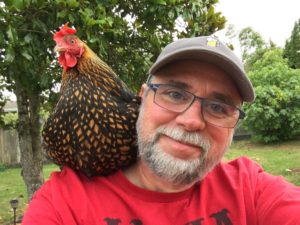
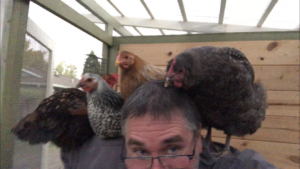
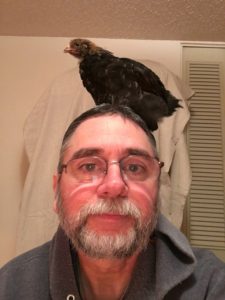
A man and his chicken

It’s my pleasure to have my friend, Bill Cameron, join us today. I’m a big fan of his writing ever since I read his debut book LOST DOG. Bill was in my debut authors group for the International Thriller Writers (ITW) in 2008. That book featured an unlikely kleptomaniac anti-hero smart ass, Peter McKrall, with his unique voice that has always stuck with me. It launched Bill’s detective series that features Detective Skin Kardash.

I also follow/harass Bill on Instagram (@bcmystery) where he posts pics of his urban chickens. His daily videos and pics of his chicken drama are tons of fun and addictive, like his writing. Thanks for being our guest, Bill. Shake a tail feather and take it away.

***

Much of my day was spent chasing chickens around my yard—an act of pure slapstick if there ever was one. Usually the ladies will come right up to me (probably because I often have treats), but today they sensed I had something else in mind. So they fled, making comical “bock-bock-bock” sounds as they went. I was no doubt equally comical, trying to both run and scoop up indignant chickens simultaneously. The result was a kind of bow-legged lurch with my hands flapping around near ground level. I may have fallen, but if you don’t have video you can’t prove anything.

My problem, or rather the chickens’ problem, was a possible infestation of scale mites. These awful little bugs burrow under the skin of a chicken’s legs, drink blood, and can wreak havoc on the well-being of a flock. (Do not image search for “chicken scale mites” unless you want to see true horror.)

Now, I say possible infestation because until the the situation gets really bad, the vermin are difficult to see. Some discoloration on the legs of our oldest hen, Hinie, was the only indication something might be amiss. That discoloration could also mean nothing at all, but since we don’t want the mites to get a leg-hold, I decided to address the problem proactively.

The treatment is basically Chicken Spa Day, which probably sounds nice to you and me. And in fact some chickens enjoy a soak in a warm bath and maybe a massage. (Do image search for “chicken taking a bath” for some entertaining pics.) Not so much our ladies. But I was not deterred.

In advance, I’d prepared a warm Epsom salts bath with a little mild soap. As I caught them, the girls each got a soak and a mild scrub to clean off any mite eggs or mites that hadn’t yet burrowed. Then, after they were dried off, I coated each hen’s legs with Bag Balm to suffocate the pestilent buggers who remained.

The good news is all went relatively as planned, though it took me more than an hour to get all four into the tub. (Farm Fact: chickens are fast.) The girls had a lot to say about it, probably in the form of chicken swearing. But the endeavor was a success—though I got wetter than the girls did.

So what does this shenanigan have to do with self-care?

Well, for me, taking care of chickens is a lot like writing. It can be rewarding, fun, challenging—and also a source of heartbreak. Right now we have four girls: the aforementioned Hinie, plus Cheeks, Tuchus, and Buns. (Do you detect a theme? Guess what!) Earlier this summer, one of our first hens, Fanny, died unexpectedly. And last year, two others (Moon and Patootie) turned out to be roosters, which are verboten within city limits. That’s the heartbreak side of things. But the rest of the time there’s the slapstick comedy and the reward of eggs and affection from smart, engaged birds who each have their own personality.

When I’m away from the keyboard, I find chicken care is a good way for me to get my “I’m not an incompetent buffoon” fix—something that can be rare in my writing life. On days when things seem especially dire (“wait, did you say there’s no market for that manuscript I spent five years on?”), time with the chickens can give me a sense of worth. They need me—for food and water and spa days, and for a lap or shoulder to cluck on. And I’m up to the task.

The day Hinie pooped on Bill’s head

But as with writing, there’s no guarantee of success. They might get scale mites, and while I’m confident I have that problem in hand, the next problem might cost me a beloved pet. In the morning, I might get a manuscript rejection, but in the afternoon I might get a fresh egg and a nuzzle from a bird named after a butt.

Chicken Tending (think about it) isn’t the only thing I do for self-care. But the ways it’s like writing helps me deal with the tribulations of my writing life. Sometimes we just need a little success. For me, chasing birds around the yard goes a long way toward keeping me grounded and believing I can make a difference—on the page as much as in the coop.

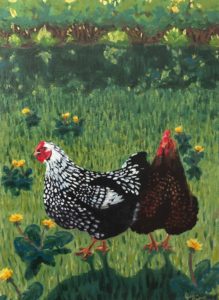
Fanny (RIP) & Hinie by Bill’s daughter, Jessica

FOR DISCUSSION:

What do you do to take care of yourself?


Bill Cameron BIO

Bill Cameron is the critically-acclaimed author of gritty, adult mysteries featuring Skin Kadash. His short stories have appeared in Alfred Hitchcock’s Mystery Magazine, Killer Year, Portland Noir, First Thrills, Deadly Treats, and West Coast Crime Wave. In 2012, his novel County Line received the Spotted Owl for Best Northwest Mystery. His latest book, the young adult mystery Property of the State, was named one of Kirkus Reviews Best Books of 2016: Teen.

Bill is currently at work on a mystery set in the Oregon High Desert.

Bill’s Books

Twitter

Facebook

First Page Critique: A Plan of Change

Happy Monday! Today’s First Page Critique is entitled ‘A Plan of Change’. I think this page provides a good illustration of some common challenges when it comes to foreshadowing. My comments follow.

A Plan of Change

Jenny Holland never intended to go through with her plan. Plotting revenge against them was just something to ease her anger and pain. Then she opened the newspaper, and a mini-headline on page two ignited a whole new round of hate:

“Dean Decker Honored at Banquet.”

She laid the paper on her work table.

Dean and a group of VIPs smiled in a photograph below the bold type.  All the men wore tuxedos, except Dean.  He had on a gray suit and striped tie.  He was the center of attention and yet he found a way to make himself stand out even more.  In another photo, Carolyn stood beside him, her head tilted demurely toward his. Her coyness made Jenny want to stab her in the throat.

Jenny read the article.  Each line of praise tightened the muscles in her neck a little more.  The last accolade was too much:

“Without him, our charity wouldn’t be able to help as many clients as we do.  Dean is so giving.”

Giving?

Her heart pounded double-time.

“He doesn’t give!  He steals!”

Remember, Jenny.  Dean’s only power is the one you grant him.

She sat back in her chair. “I know.”

She looked out the window of her home office as she tried to calm herself.

Under the maple tree a thrasher foraged for food.  It tossed dead leaves aside, again and again. Usually bird-watching made her smile.  Not today.  Dean killed any chance of that.

Soon the thrasher began hammering the ground with its bill.  She envied the way it jabbed and punched.  The only punching she ever did was in her imagination. It flew away when Mrs. Moon jogged up the sidewalk.  Sarah waved, like most mornings.  Mrs. Moon did the same.

Once their neighborly routine was over, Sarah dropped her hand on top of Dean and Carolyn’s photo.  Dean’s face peeked between her fingers.

It wasn’t right that Dean and Carolyn enjoyed life while Bobby couldn’t.  If she went ahead with her plan, neither would smile ever again.

Dean’s eyes said “I dare you, Jenny.”

It was like the words were whispered in her ear.

Comments:

Overall

Although I enjoyed reading this first page, I think one of the major issues is one of foreshadowing – namely too much is disclosed up front about Jenny’s plan when it comes to Dean and Carolyn. It’s a good example of how a little can go a long way, especially in the first paragraph where we are already told that she is plotting revenge. There is also a great deal of extraneous information in this first page which really doesn’t pull the reader in – like the observations about the thrasher (a little too heavy-handed) and the exchange of waves with Mrs. Moon (unless it provides a sharp contrast to Jenny’s current thoughts, do we really need to know the neighborly routine right here?).

There is also the question of who exactly is in the room on this first page. We start and end with Jenny Holland, yet about three quarters of the way into this first page we are suddenly introduced to Sarah ( “Sarah waved”, “Sarah dropped her hand”). I’m proceeding on the assumption that there aren’t actually two female characters in the scene, but rather the author changed the name of the protagonist from ‘Sarah’ to ‘Jenny’ at some point and that ‘Sarah’ is now a typographical error. Here at TKZ we’ve emphasized the importance of proof reading your first page to the nth degree – an error like this would turn off an editor immediately.

When it comes to the issue of foreshadowing, my recommendation would be to cut most of the explanatory sentences and leave the reader intrigued as to what Jenny is planning. This first page should set up the key questions the novel will address (why is Jenny so angry? What did Dean do? Who is Bobby and what happened to him?) and provide intrigue and tension (what exactly is Jenny planning – can she go through with it?). Telling the reader in the first paragraph that: “Plotting revenge against them was just something to ease her anger and pain” robs this first page of dramatic tension. Similarly, sentences like “If she went ahead with her plan, neither would smile ever again” seem unnecessary as well as cliched. Far better, I think to keep the reader in suspense about Jenny’s plan (as well as her mental state).

To this end I would also urge the author to reconsider the inner monologue/dialogue as it sounds confusing and a little childish at the moment (especially “He doesn’t give! He steals!”). While I don’t mind the idea of Jenny having an exchange that sounds like she’s speaking to a therapist that isn’t there – this would have to be executed with more finesse (and possibly raising the question of an unreliable narrator, which is tricky to pull off).

I suggest a rewrite that reduces the exposition/foreshadowing and removes the extraneous information that drains the page of dramatic tension. Here’s my initial suggestion (apologies for the presumption, but I think it illustrates the points I’m trying to make):

Jenny Holland never intended to go through with her plan, then she opened the newspaper, and the headline on page two ignited a whole new round of hate.

“Dean Decker Honored at Banquet.”

Dean and a group of VIPs smiled in a photograph below the bold type. Carolyn stood beside him, her head tilted demurely toward his. Her coyness made Jenny want to stab her in the throat.

 Each line of praise tightened the muscles in Jenny’s neck a little more.  The last accolade was too much: “Without him, our charity wouldn’t be able to help as many clients as we do.  Dean is so giving.”

Giving?

Her heart pounded double-time.

It wasn’t right that Dean and Carolyn enjoyed life while Bobby couldn’t.  But could she really go ahead with her plan?

Dean’s eyes said “I dare you, Jenny.”

It was like the words were whispered in her ear.

This is by no means a great rewrite but I’m hoping it illustrates my point. Overall, I think this page could work well with some heavy revision. TKZers, what advice would you offer our brave submitter?

First Page Critique: Dearest Executioner

By Elaine Viets

Today’s entry by an anonymous Brave Author has the intriguing title “Dearest Executioner.” Read this first chapter, and then I’ll give my critique. I look forward to your comments, readers.

Dearest Executioner

Mara sat atop the splintered bench between the oarsman and executioner, hysterical laughter bubbling in her throat. Her hands were bound behind her back, heavy rusted shackles rubbing her wrists raw. The moon hung low. Lights of the distant manor dwindling into darkness. Would the souls wandering those warm halls shudder at the echoes of screams? Or close the shutters, certain they heard nothing more than howling winds? As it was, no breeze rustled her hair.

Mist sat stagnant over the fetid bog. Insects hidden in the reeds chattered their solemn eulogy. The oarsman guided the decaying ferry through the thick muck with practiced rhythm. His rows slow, steady. As though allowing his passengers time for morbid reflection of their sins. Ought she contemplate her own? Perhaps no. No journey would be long enough. The urge to laugh intensified.

Her gaze flicked to the other man aboard. Shrouded in a fine black tunic and gloves, hood hiding his face. A grin split her chapped lips.

“Did someone tell you executioners wear black, or had you read it in a silly book?”

His shadowed visage angled away from her.

“Yes, surely the marsh is more fascinating than your soon-to-be victim.” She leaned closer to him, the wood creaking beneath her. “Don’t you wish to hear my crimes, dearest executioner?”

“Your crimes are against Lord and Lady Loch. That is all I need know.”

She nodded her head several times. “A sensitive family. Easy to offend. And quick to punish. Murder seems rather disproportional a sentence for honest speaking, but who am I to decide what’s fair?” She tipped her head. “How have you offended them?”

His attention snapped to her. Voice cruel. “I’ve done nothing.”

“Oh, but you have, you have. Perhaps murdering me is how you atone? A dark gesture of loyalty and all is forgiven? I think, no. Evil things haunt this marsh. Hungry things. Oh, dearest executioner, you’re as dead as I.”

He stared at her a long moment. “You’re mad.”

“Perhaps a giddy spirit has taken claim of my wits. They’re about in this unholy marsh, don’t you know? Others, too. Others dead, but not.”

“There are no unnatural beings here,” he said. “Only we three.”

The little bubbles rose, coming out as tremulous giggles. “You’re a sure man. A sure, sure man. A man who will not survive this night.”

______________________________________________________________________
Elaine’s Critique

You’ve done a fine job of setting the mood here, Brave Author. This is an impressive piece of writing. While you’ve painted an eerie scene, it doesn’t go anywhere. A first chapter is supposed to deliver three things: Time, Place and Point of View.
Your POV is quickly established: This is third-person omniscient, a good choice for storytellers. First-person would be too limiting.
But this first chapter is floating in time and space. What century are we in?
What season is it? I’m guessing, from the sounds of the insects, that it’s either summer or fall, but let us know.
Where are we? What country? I’m guessing it’s either Scotland or Ireland, but tell us.
Mara is a little too mysterious. What has she done that’s condemned her to this lonely death? Did she commit treason? Is she a witch? What she part of a plot?
Please tell us.
Who and what are Lord and Lady Loch? Are they powerful land owners? Rulers of the county? We need to know this.
These issues can be quickly fixed. Most of this information could be added in the third sentence. Something like:
“The witch (or traitor or rebel) watched the moon hang low over the Scottish highlands . . . .”.
There’s fine writing here, Brave Author.
The title immediately captures my interest.
I’m impressed that you didn’t need to tell us that Mara was in a boat. Instead you said:
“Mara sat atop the splintered bench between the oarsman and executioner, hysterical laughter bubbling in her throat.”
That not only says where she is and that she’s on her way to her death, it establishes her own mood.
I admire the death images in the second paragraph:
“Mist sat stagnant over the fetid bog. Insects hidden in the reeds chattered their solemn eulogy. The oarsman guided the decaying ferry through the thick muck with practiced rhythm. His rows slow, steady. As though allowing his passengers time for morbid reflection of their sins. Ought she contemplate her own? Perhaps no. No journey would be long enough. The urge to laugh intensified.”
One small quibble. It should be reflection “on” their sins, not “of.”
There’s foreshadowing, too, as Mara warns the executioner: “You’re a sure man. A sure, sure man. A man who will not survive this night.”
Good job, Brave Author. A few small changes and you’ll have a first-rate story. I can’t wait to read it. What about you, TKZers?

_________________________________________________________________

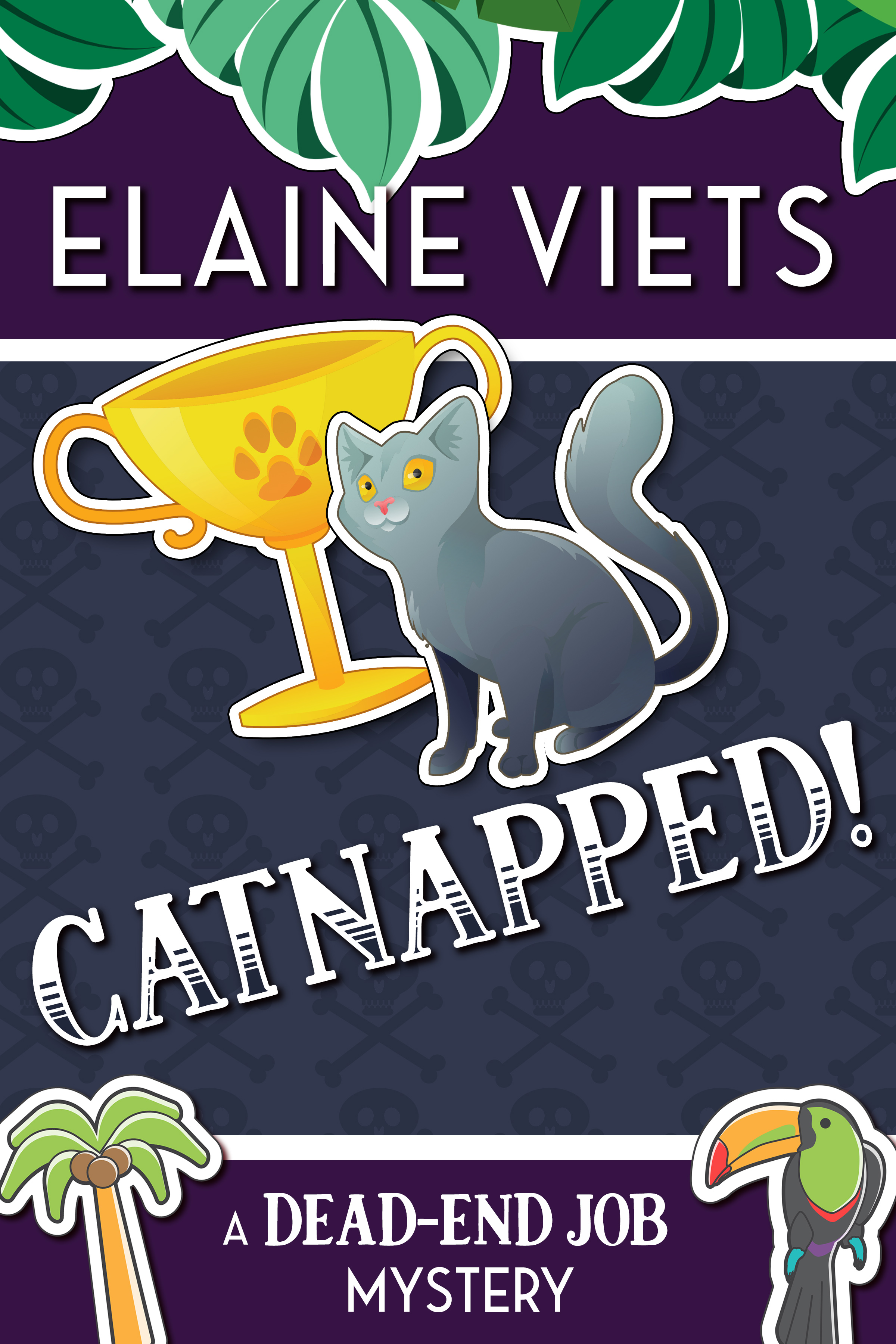
Win the new e-book version of Catnapped!, my 13th Dead-End Job mystery, set in the strange world of show cats. Click Contests at www.elaineviets.com 

First Page Critique:
Details, Details, Details…


By PJ Parrish

Sherman, set the Wayback Machine to 1940’s Switzerland for today’s submission. I won’t do my usual line edit here because I think the issues I have with this opening can be articulated better by analyzing each paragraph. I’m borrowing this technique from agent Jane Friedman, who sometimes analyzes openings. Check out her blog here. I don’t normally like to rewrite submissions, but maybe it’s helpful here. Thanks to our anonymous writer for letting us read, discuss, and learn.


The Stranger on Bahnhofstrasse

Jonas Shaw first feared someone tailed him in wartime Zurich on an overcast Sunday morning in late June, 1940. A church bell had sounded the hour of eleven, and he was admiring shoes in a store’s window on the fashionable Bahnhofstrasse when he noticed in the reflection a distinguished man the other side of the street gaze at him. With pedestrians strolling by and trams rumbling past, he couldn’t see the stranger clearly, but he was visible enough in a knee-length coat, gloves, and homburg hat, and gripping a cane to leave him feeling uneasy.

The stranger was a profiteer, wanting to lure into something illegal. A Nazi spy, hoping to enlist against the Swiss. Or an anti-Nazi, looking to coax into some conspiracy.

Or worst of all, an Englishman, and he had had enough of them. Jonas sensed with an ex-detective’s appreciation for trouble the man probably was up to no good. Ignore him.

He walked on, pausing shortly before the foreign exchange rates shown outside a bank and wished he hadn’t. The British pound had sunk further against the Swiss franc, and he worried how long he could hold out in that pricey city with his small inheritance. Again he caught in the window’s reflection the gentleman eye him the other side of Bahnhofstrasse. This wasn’t any accident, he determined. The stranger definitely observed him.

A tram, rattling down the thoroughfare towards the train station, blocked his view. When it had passed, he looked in the bank’s window. His pursuer had vanished. Alarm gripped Jonas. Where had that man gone? Yet his professional training prevailed. He’d draw out his nemesis, better judge the threat.

At the end of Bahnhofstrasse he wondered left onto Quai Brucke and onto a promontory overlooking the lake. He paused, as if to admire the view, but attuned to danger, considering his next move.

Footsteps on the gravel. Someone approached from his right. His pursuer, he saw when he turned, a man who doffed his hat in greeting, revealing a full head of white hair, and Jonas thought he had vaguely seen him somewhere before.

“Ah Switzerland, Mr. Shaw,” the gentleman noted. “Three things you can always say about it. You’ll always know the time. Always find a bank. Always enjoy its marvelous views.”

Jonas recognized him now and tensed…

______________________

Back to me in the present day. This is a fairly common opening we see in period spy/thriller novels or movies — a main character (we can’t tell yet if Jonas Shaw is our protagonist) being tailed by a mysterious stranger.  My first impression was that it reads okay, meaning I can tell what’s happening and there is a hint of intrigue. But the writing itself creates some unnecessary confusion here and there. Let me break it down graph by graph to show you what I mean.

Jonas Shaw first feared someone tailed him in wartime Zurich on an overcast Sunday morning in late June, 1940. A church bell had sounded the hour of eleven, and he was admiring shoes in a store’s window on the fashionable Bahnhofstrasse when he noticed in the reflection a distinguished man the other side of the street gaze at him. With pedestrians strolling by and trams rumbling past, he couldn’t see the stranger clearly, but he was visible enough in a knee-length coat, gloves, and homburg hat, and gripping a cane to leave him feeling uneasy.

Does the opening line grab you? Me neither. Why? I suspect it’s because of the line’s construction:  “Jonas Shaw first feared” implies there was a previous encounter, and that Shaw is remembering this. (flashback!) Adding the place and time makes it feel even further in the past. Also saying the church bell “had” tolled puts us in the past. We need to be firmly in the present with Jonas. I THINK the writer means to say Jonas first began to realize someone was following him at the moment when he caught sight of the man in the window.  I could be wrong. But if this scene is, indeed, set in present-time action, then it needs to be clear. Something like:

Jonas Shaw was sure now that someone was following him.

The feeling first hit him when he left his hotel on Fustliststrasse. It stayed with him when he dipped into the Tabak to get his morning copy of Der Volks-Zeitung. And it was with him now as he turned onto Banhofstrasse, using the bustling crowd as a shield to glance over his shoulder.

No one….

Still, the feeling was there, that same feeling he used to get when he worked as a detective back in London.

He stopped, newspaper under his arm, and pretended to look at the shoes in the window of Bally’s. 

But his eyes were fixed on the reflection in the window of the man across the street. Even through the bustle of trams and pedestrians, Jonas could see the man’s details — elegant black overcoat, gloves and a black cane. What he couldn’t see was the man’s face, hidden by the brim of the homburg hat.

The bells of nearby Fraumünster Church began to toll. Jonas counted each one, to eleven, trying to quell his unease.

What I tried to do here is put it firmly in the present. I used details of place (Bally, the famous old Swiss shoemaker, the Fraumunster Church) to hint at where we are rather than hit readers over the head with the clunky expository “wartime Zurich.”  You can easily find a way to insert the exact year soon after.

but he was visible enough in a knee-length coat, gloves, and homburg hat, and gripping a cane to leave him feeling uneasy.

More confusion here because of displaced modifier. “gripping a cane to leave him feeling uneasy” could refer to the stranger when it apparently refers to Shaw. Moving on…

The stranger was a profiteer, wanting to lure into something illegal. A Nazi spy, hoping to enlist against the Swiss. Or an anti-Nazi, looking to coax into some conspiracy.

Or worst of all, an Englishman, and he had had enough of them. 

I think we are in Shaw’s thoughts here ie intimate point of view. But again, the sentence construction creates confusion. Is Shaw speculating what the stranger COULD BE — is he a profiteer, or a Nazi-spy, or an “anti-Nazi”? (not sure what that is). “Or worst of all, an Englishman.” Also, not sure what this means, other than Shaw (whose name implies English or American) dislikes Brits. Also the verbs “lure” “hoping to enlist” and “coax” all need an object.  You lure someone, you enlist someone, you coax someone to do something. Not sure how this can be reworked, other than something like:

Was the man a profiteer, looking to move melted gold coins through Zurich’s black market? Was he a Nazi spy, running reconnaissance for Operation Tannenbaum? Was he a member of the Spiritual Defense?   

Or worse, was he a fellow Brit? Jonas had had enough them.

What I am asking the writer to do here is to be specific. And by doing so, he can make his setting and story feel more authentic. When you use generalized phrases like “anti-Nazi” or “profiteer” you miss opportunities to plant telling details, and you can’t write historical thrillers without such detail. Such as “Operation Tannenbaum” (a planned German invasion of Switzerland) or the name of the Swiss anti-war movement, Spiritual  Defense. Shoot, you can’t write contemporary thrillers without it. Ditto on the description, which is why I used the Fraumunster Church and Bally (a Swiss company since the 1800s.) Moving on…

Jonas sensed with an ex-detective’s appreciation for trouble the man probably was up to no good. Ignore him.

Earlier, Jonas felt a sense of unease. His detective instincts (nice way to drop in what he used to do but we need to know soon what he does now) are telling him the guy’s up to no good, so why the next thought?  Ignore him.  It makes no sense.

He walked on, pausing shortly before the foreign exchange rates shown outside a bank and wished he hadn’t. The British pound had sunk further against the Swiss franc, and he worried how long he could hold out in that pricey city with his small inheritance. Again he caught in the window’s reflection the gentleman eye him the other side of Bahnhofstrasse. This wasn’t any accident, he determined. The stranger definitely observed him.

A tram, rattling down the thoroughfare towards the train station, blocked his view. When it had passed, he looked in the bank’s window. His pursuer had vanished. Alarm gripped Jonas. Where had that man gone? Yet his professional training prevailed. He’d draw out his nemesis, better judge the threat.

I like the aside about the money exchange because it provides a detail about Jonas (so he’s British?) but it could be cleaner:  He paused again at a bank, but didn’t see the man’s reflection in the window. What he did see was an exchange rate chart that told him the pound had sunk further against the Swiss Franc, and he wondered how long he could hold on here. The rest of this graph should be condensed, since it’s already been said. Just say a tram momentarily blocked his view of the man’s reflection. When the tram passed, the man was gone. Then we have a problem: Jonas, who a moment ago told himself to ignore the guy, gets alarmed again. So he decides to “draw out his nemesis.”  First, he told us he doesn’t know who or what this man is, so he can’t be a nemesis yet.  And second, if the guy disappeared, how does Jonas think he’s going to draw him out?  And this vague reference to “professional training” is where you should tell us what the heck this “former detective” does for a living now.  Why be coy? Give us a reason to want to follow him.

At the end of Bahnhofstrasse he wondered left onto Quai Brucke and onto a promontory overlooking the lake. He paused, as if to admire the view, but attuned to danger, considering his next move.

If you’re writing about foreign places, you have to be accurate. “Quai” usually means a riverside walk or street. Quai Brucke is a bridge, and it’s spelled Quaibrücke. If you leave out the umlaut, you’re misspelling it. And this is a low-slung bridge over Lake Zurich.  So there is no “promontory.”  (a high point jutting over something) Unless you have him cross the bridge and climb a hill. Please, please, don’t play loose with foreign locales. Moving on to the end…

Footsteps on the gravel. Someone approached from his right. His pursuer, he saw when he turned, a man who doffed his hat in greeting, revealing a full head of white hair, and Jonas thought he had vaguely seen him somewhere before.

“Ah Switzerland, Mr. Shaw,” the gentleman noted. “Three things you can always say about it. You’ll always know the time. Always find a bank. Always enjoy its marvelous views.”

Jonas recognized him now and tensed…

Again, confusion here. From the minor — they are in bustling downtown Zurich, so where is this gravel? Did he maybe walk into a park. BE SPECIFIC.  “His pursuer” implies someone was following him. Is this the man in the homburg? Someone else? Be clear. If the former, I’d suggest handling this like so:

Footsteps on the gravel to his right. Jonas spun around.

The man in the black overcoat stopped and doffed his homburg. The sight of his thick white hair caused a ping of memory in Jonas. 

“Ah, Mr. Shaw,” the man said. His accent was German, maybe alsatian.

Jonas tensed. The man knew him. And he knew this man. But from where?

“Switzerland,” the man said. “There are three things you can always count on here — the clocks, the banks, and the beauty.”

I like this comment from the stranger but I almost wish you had added one more thing to up the ante and intrigue.  “There are four things you can always count on here — the clock, the banks, the beauty. And the fact that you can never turn your back.”

That’s corny — I was thinking about Three Days of the Condor when I wrote it — but you get the point.  If the stranger is a foe, give him a cool threatening line. If he’s a friend, give him a telling line that will make your reader want to turn the page. Details!  Even in the dialogue. Especially in the dialogue.

Okay, writer, it’s up to you. You’ve got a nice set-up and setting (Switzerland is much fresher than most wartime cities, rather like post-war Vienna in The Third Man.) Go take a deeper stab at it. Make Zurich come alive with telling details. And be aware that you are working in oft-tilled soil here (wartime Europe), so you must avoid cliches and find your own original descriptions. Make Jonas Shaw come alive by revealing a little more about who he is  and why he is here. Give us a reason, even if it’s just a good strong hint, to want to follow him.

Thanks for submitting and we’re open for comments now.


Even Sasquatch Needs Love – First Page Critique

Jordan Dane
@JordanDane

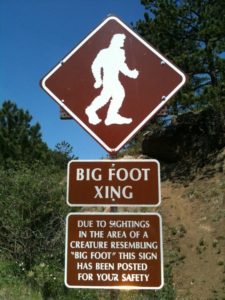
By Gnashes30 – Own work, CC BY-SA 3.0, https://commons.wikimedia.org/w/index.php?curid=15715649

The title of this anonymous submission is ISKOLA. I’m not sure if Sasq’ets is Sasquatch, but that’s how we dubbed it. It conjures an image of the “Skunk Ape.” If this isn’t the author’s intention, a character name change might be in order. Please enjoy this submission and I’ll have my feedback after.

*****

Sasq’ets can’t help staring at the swarm of people standing on the side of the road. There are so many of them, and they look so small from where he stands. He scans each person quickly, moving his eyes from body to body, face to face, until he comes to a woman with a black hood around her head. Then he stops, lifts his nose high in the air, and tries to catch her scent. He strains his ears to hear the faint echo of her voice. It’s difficult from so far away.

As Sasq’ets watches the woman, he notices her pointing at a man who appears to be climbing down the side of the road. It looks like he is headed towards the woods – towards him – but Sasq’ets can’t be sure, so he squints his eyes to try to get a better look. It doesn’t matter. He shouldn’t be so close to people anyway, especially not in the light of day and after what has happened. He needs to start moving, so he turns around and walks the other way, maneuvering his massive frame carefully through the trees, dangling his arms loosely by his thighs.

He walks deep into the woods and doesn’t look back until he reaches the creek that marks the beginning of the path towards home. He needs to turn right to follow the burbling water until it winds into the river, but before he changes direction he stands behind a cedar, his body shielded by its 5-foot trunk, and puts his hands on his hips, bending at his waist to relieve some of the pressure from the wound in his stomach. The bleeding has stopped – when he puts a cedar bough up to the cut and pulls it away, it comes out dry – but the injury is still painful, and it aches if he thinks about it too much.

Sasq’ets focuses his mind on taking long sips of air – in through his nose, out through his mouth, and starts to calculate how long it will take to get back to the cove. At least a day, he figures, if he goes the long way. Which he should, to be safe.

He moves slowly to his left and peers around the tree to make sure no one has tracked him into the woods. Sasq’ets is pretty sure he would have smelled them if they had, or heard their heavy footsteps through the brush. But still, he needs to be careful.

Nope. No one. They’re probably all still back on the side of the road, hovering over the girl’s body.

FEEDBACK

In full disclosure, when I was a kid, we had a neighbor boy we nicknamed Skunk Ape. He lumbered like a walking grizzly, had big feet and he smelled. He remained my brother’s friend and we still run into him (although he’s married and he doesn’t stink anymore), but I’m not a stranger to Sasquatch. There, I said it.

TITLE: A title like Iskola needs work. This might only be a working title, but this word would not mean something to most people.

CREATURE POV: I’m making an assumption Iskola is a creature, Sasquatch to be exact. He appears to be an outsider and a loner, hiding from people. Whether he’s a creature or not, the Point of View should reflect his cagey, wiry nature.

The narrative is too wordy for a cautious creature, afraid of getting noticed. He also knows words like “road” and “people” which seems odd to me. It would be a challenge to create a believable POV inside the head of a creature. The author would have to invent a world as seen through the eyes of a beast that has evaded mankind enough that it wouldn’t know what to call things in a man’s world.

Personally, I would tell this story through the eyes of another character who tries to reach out to the creature in an adventure plot. I would recommend more of an element of mystery on what is disrupting the town and leave clues that are ambiguous. Is it Sasquatch or someone living in town who wants people to think it’s a creature.

I’m not sure why the author chose to put the reader in the head of a creature from page 1. It would be a hard sell to an editor or agent. Even if this is not Big Foot and is maybe a loner who lives in the woods, I’m not sure I understand the point of hinting at Sasquatch with the name Sasq’ets either.

PICK A POV: In this scene, I want to know why these people are gathered and what’s happened? The author can’t provide this information if the POV is seen through Sasq’ets. In order for the reader to care about this creature/Sasq’ets and his world, the author might need to ground the reader into the town and the people first. What happened that threatens both their worlds? (A girl is hurt or dead.)

CREATE the CREATURE: Let’s start with POV. 3rd person narration for a creature would allow the reader to see the character’s movements and actions, without delving too much into the head of the creature like 1st person would. The way this intro is written, it’s in 3rd POV, but the author has put the reader very deep into the head of Sasq’ets. Some distance might make it more believable. The creature’s actions would SHOW the emotion without having to TELL the reader too much.

How intelligent is the creature? What senses would he use? It might help to do research on animals and how they react or operate when threatened. Service dogs are interesting to study – how they use their senses and their reactions to certain situations. I would recommend using real animals even if the author is creating a mythical creature. Put the reader into the senses of an animal the author thinks is closest to Sasq’ets.

How does a wild creature, that is part human maybe, survive in the woods? I like how the author brought in cedar boughs to stop the bleeding. Maybe survivalist research would be in order.

Even if the creature is a human being living on the fringes of society, it might still be interesting to keep the reader in suspense whether Sasq’ets is human or something else. Instincts and senses and animal reactions would help build on that suspense.

The author might consider how Sasq’ets lives when he is safe and home versus when he is threatened like a wild animal. What would he do? His wild nature, when confronted, should be explored. Can he ever live with humans? What would happen if he is forced into captivity?

ANOTHER START SCENE: If the author started with danger and a situation readers might be intrigued by, the creature’s POV might be brought in later, if that’s what the author wants. To make it read authentic, the creature must have his own world and manner of thinking and moving in obscurity. Below is a brief start suggestion – first from a Sheriff and a brief one in Sasq’ets POV. I didn’t spend a great deal of time doing this, but I only wanted to show a quick difference.

Another beginning with townspeople to start the action:

“There’s blood. I got him.”

With his chest heaving, Sheriff Jason Tate knelt near the base of a tree and stared at the tip of his finger, smeared with blood.

“It’s still warm.”

“I don’t like this.”

His deputy, Gloria Mendez, had her service weapon drawn as she stared into the deepening shadows of the dense woods.

“We need to get these people out of here. What if it comes back?”

Creature POV:

Sasq’ets ran into the darkness of the forest and kept to the deepening shadows. He followed a scent he knew well. Water. He needed water…and water would take him home if he followed the river.

His belly hurt and the bleeding hadn’t stopped. He didn’t mean to hurt the small female, but she had been scared of him and fell. He hadn’t touched her, but that wouldn’t matter. They would hunt him.

SUMMARY: I didn’t spend time working with what the author submitted, because I don’t see this as commercial unless changes are made. Normally I like to work with what the author submits and try to capture their vision, but I had too many other points to explore.

When I talked about service dogs, I had done research on them for another book and found it fascinating. The images of how dogs smell scent in layers and in a conical fashion influenced how I described the dog “working a scene.”

I think the author can still work with the challenges of creating a world for Sasq’ets, but maybe start with human beings that readers can relate to more.

DISCUSSION:

What comments would you have for this courageous author, TKZers?


The Fifth Floor: First Page Critique


Happy Wednesday, everyone! Another anonymous Dear Author is here to share some work today. Check it out…

The Fifth Floor

A kid rolls by on a skateboard. It’s old—maybe one he inherited from his father—and  layered with stickers bearing the logos of early-nineties ska bands. Streetlight Manifesto, Hepcat, Five Iron Frenzy, The Toasters, Reel Big Fish.

“Do you want to make twenty bucks?” I ask, amplifying my voice just enough for it to carry over the wind.

The kid looks behind him, startled, but doesn’t lose his balance. Impressive.

I’m sweating like a jonesing addict despite the sixty-degree weather. My hair, once thick and lustrous, feels like a dank rag draped over my head.

With a degree of coordination I’ll never master, the kid shifts his weight to reverse the skateboard’s direction and comes back toward me. The board skids to a stop on the sidewalk two feet from where I stand.

“You say twenty bucks?” In his eyes, I detect more curiosity than suspicion. If I were a man, standing on the sidewalk in this same middle-class neighborhood, he’d probably have kept going. Maybe called the police from the cell phone I’m sure weighs down one of his pockets.

“You heard right.”

“I don’t deal drugs.”

“Never thought you did.”

The kid’s trying to look like a street punk, with a ratty tee shirt and worn cargo shorts that almost slip off his narrow hips. I’d put him at ten or eleven. But he’s clean, his hair’s been recently trimmed, and braces puff out his thin, pale lips.

“What do I gotta do?”

“What do you have to do,” I correct automatically. Bad habits.

The kid snorts. “You a teacher or somethin’?”

“Hardly. Listen, all I need you to do is go with me to that public storage place across the street. See it? Just ride up the elevator with me to my unit, then use my code to go back down. That’s it.”

He studies me for a moment through intelligent brown eyes. Probably sussing out potential reasons behind my odd request. “What’s your name?”

“Roxie,” I reply.

Shit. I’m so not cut out for this. Why couldn’t I have told him Angela or Kate or Thomasina?

“I’m Kevin.”

“Nice to meet you.”

We shake hands. His grip is firm and perfunctory. Somebody’s taught him well—maybe the father who gifted him the retro skateboard.

“Ready?” I ask.

He shrugs. “Okay. When do I get the twenty bucks?”

“When you leave me on the fifth floor.”

“Deal.”

_______________________

Today Dear Author has made my job tough by writing so well. Let’s talk about all the things that are spot on with this gem of an opening.

Opening paragraph:

A kid rolls by on a skateboard. It’s old—maybe one he inherited from his father—and  layered with stickers bearing the logos of early-nineties ska bands. Streetlight Manifesto, Hepcat, Five Iron Frenzy, The Toasters, Reel Big Fish.

I wish I knew if this were an opening to a novel or a short story. It feels to me like a short story, but I wouldn’t wager money on it. Immediacy is critical to any written story, and this paragraph draws us right in. We observe the kid, with an extra added bonus of movement. He “rolls by,” rather than “goes by” or “passes by.” Nice. We know the kid is a boy, and that the narrator seems to have been waiting.

The narrator is observant, and even makes up a small story about the skateboard and the boy’s dad. We don’t know that it’s a true story, of course, but it tells us that the narrator likes to provide possible reasons and explantations for the things she sees. It’s a hint that she may be a bit of a fantasist. In truth, the kid could’ve just come from stealing the skateboard from another kid or a pawn shop. That said, she also seems to know about 90s ska bands, and this detail tells us that it’s probably a contemporary piece.

“Do you want to make twenty bucks?” I ask, amplifying my voice just enough for it to carry over the wind.

The kid looks behind him, startled, but doesn’t lose his balance. Impressive.

It’s dialogue that drives this opening page and keeps up the theme of immediacy. I do take issue with the word “amplify.” Technically it’s okay, but it makes the narrator sound old, and her word choice stilted. But she also uses the very casual word, “bucks.” One of those two words should be changed. I vote for losing the “amplify.” Also, does the wind show up again?

The next sentence is perfect. The kid has skills.

I’m sweating like a jonesing addict despite the sixty-degree weather. My hair, once thick and lustrous, feels like a dank rag draped over my head.

More description of the narrator. Ew. She’s seen better days. I’m curious! I can almost feel the dankness.

With a degree of coordination I’ll never master, the kid shifts his weight to reverse the skateboard’s direction and comes back toward me. The board skids to a stop on the sidewalk two feet from where I stand.

Does the narrator ride skateboards? It feels like that’s indicated when she speaks of a “degree of coordination.” Or is she just awkward in general? Maybe “heads back,” rather than “comes back.” That the kid stops the board so suddenly is interesting. He seems rather aggressive, which I didn’t get at first.

 “You say twenty bucks?” In his eyes, I detect more curiosity than suspicion. If I were a man, standing on the sidewalk in this same middle-class neighborhood, he’d probably have kept going. Maybe called the police from the cell phone I’m sure weighs down one of his pockets.

Okay. So they are in a middle-class neighborhood. I didn’t see that coming. I think I was picturing a busy street.  Are there public storage rental places in middle-class residential areas? Nice detail about the phone and the pockets.

“You heard right.”

“I don’t deal drugs.”

“Never thought you did.”

A telling exchange. I like that the boy is matter-of-fact, but cautious.

The kid’s trying to look like a street punk, with a ratty tee shirt and worn cargo shorts that almost slip off his narrow hips. I’d put him at ten or eleven. But he’s clean, his hair’s been recently trimmed, and braces puff out his thin, pale lips.

In his ratty tee shirt, and worn cargo shorts that threaten to slide from his narrow hips, he’s trying hard to look like a street punk. But he doesn’t quite pull it off. He’s clean, his hair’s been recently trimmed, and braces puff out his thin, pale lips. I’d put him at ten or eleven-years-old.

I’m a big fan of this piece’s short, declarative sentences, but you don’t want to start out too many of them with, “The kid…”

“What do I gotta do?”

“What do you have to do,” I correct automatically. Bad habits.

Funny. Do the bad habits belong to the narrator, or the boy?

The kid snorts. “You a teacher or somethin’?”

“Hardly. Listen, all I need you to do is go with me to that public storage place across the street. See it? Just ride up the elevator with me to my unit, then use my code to go back down. That’s it.”

Very clear. I’d go!

He studies me for a moment through intelligent brown eyes. Probably sussing out potential reasons behind my odd request. “What’s your name?”

“Roxie,” I reply.

Shit. I’m so not cut out for this. Why couldn’t I have told him Angela or Kate or Thomasina?

This is very telling about the narrator, and does make her sound young, and inexperienced at making weird requests of an eleven-year-old boy. She no longer sounds stiff.

“I’m Kevin.”

Charmingly proactive to introduce himself so boldly.

“Nice to meet you.”

We shake hands. His grip is firm and perfunctory. Somebody’s taught him well—maybe the father who gifted him the retro skateboard.

Also excellent. I like that she carries the her fantasy about the dad forward.

“Ready?” I ask.

He shrugs. “Okay. When do I get the twenty bucks?”

“When you leave me on the fifth floor.”

“Deal.”

Terrific cliffhanger here. They are off to the storage unit. What can be there, and why does she want him to leave her up there????

_____________________

Overall, I’m delighted with this piece and would like to read more. My comments are essentially line edits. We get a great picture of the boy, who seems to think he’s streetwise, but who also can’t get over having manners. The narrator, too, is interesting. With a little tweaking she can be more consistent and defined.

TKZers! I couldn’t find all that much to say. What are your thoughts?

Thanks for sharing this first page, Dear Author!