Size Matters

by Michelle Gagnon

burritoA confession: I’m not a big short story reader. I’ve gone through phases where I was on a Chandler or Munro kick, but by and large I tend to read novels. Recently I’ve been judging a short story contest, however, and it’s been an interesting experience. What I’ve discovered is that when it comes to crime fiction, the short story format is apparently a trickier beast to wrestle down.

The stories that fail appear to fall into a few categories (food-related; humor me):

  • The Grande Burrito: The author crammed it all in, and what could have been expanded into a full manuscript has been abridged. These stories tend to open with some lovely lyrical passages before morphing into a rapid-fire ending that usually involves an information dump on the final page. In these cases, I get the sense that the writer bit off more than they could chew. Rather than focusing on a smaller, self-contained story, their scope was too broad and it ended up being a hot mess.
  • The Chinese Food Syndrome. The opposite problem: these stories left me wanting more. Not enough happened, or the scope was too small. The best short stories are self-contained, hewn down to the bare essentials, and when you turn the last page you find yourself fully satisfied. You’ve been told just what you need to know, and everything was resolved in a way that was satisfying. The perfect dessert, if you will.
  • The Pancake: Everything is flat. Two-dimensional characters whose motivation is never clear, a plot that doesn’t make sense, nothing seems to gel. You don’t need much to describe a character; the best writers can do it in a sentence. So for me to go through an entire story and come away with no sencarverse of the characters is inexcusable. One of my all-time favorite stories is “Cathedral” by Raymond Carver:
    • This blind man, feature this, he was wearing a full beard! A beard on a blind man! Too much, I say.

That one passage not only describes the blind man, it also speaks volumes about the main character, telling you everything you need to know to make the final passage of the story transcendent.

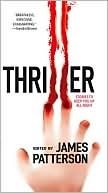
  • The Filler: Like a hamburger without the bun. These stories invariably involve characters from a recurring series. Ideally, these stores should offer another perspective on them and their actions, whetting your appetite enough to draw you into following them for a full book (or ten). But far too often Thrillerthese are an ad masquerading as a story. I love vignettes told from the point of view of a different character in the book (Rosencrantz and Guildenstern are Dead is a favorite of mine). Our own Clare did this recently, as did J.A. Konrath and Lee Child in the Thriller Anthology. For me, those stories work. Less appealing is something that’s clearly excerpted from a book.

Mind you, many of the stories I loved, and all for different reasons. Most offered a glimpse of characters at a crossroad. The story depicts a flash from their lives when the crime they encounter, whether expected or unexpected, defines them in just a few short pages. A standoff in a drugstore, or a murder in an alley. Not that it has to take place in a short time frame, but by and large I don’t need to see their entire lives, and I really don’t enjoy a Christie-style parlor room “this is what happened” scene at the end. Just give it to me straight.

So what do you think makes a strong short story? And is it a tougher format for crime fiction?

Getting Inside a Character’s Head

by Clare Langley-Hawthorne

I have just finished the first part of an online short story I’m posting on my website which requires a change of perspective. Both Consequences of Sin and The Serpent and The Scorpion incorporated a distinctly Ursula-esque POV but in the new story I have delved inside the head of another character – namely Lord Wrotham – which has opened up all sorts of possibilities (I can’t help but grin as I write that).

It does, however, also raise some challenges which go to the very heart of character development. You see I have only ever viewed him the way Ursula views him. Although I know his background (I created it after all), in many ways he’s as much of a mystery to me as he is to Ursula. Hence the fun in writing the story…and for those of you who have read The Serpent and The Scorpion, the story also offers some tantalizing clues as to what led to his arrest…

When I develop characters some of them appear pretty much fully formed in my head, whereas others take a while to ‘ferment’, as I ponder their past and what has made them who they are. Now I know many writers take offence at the prospect of characters doing unexpected things (aren’t we the ones in control after all?!) but I do find that many times my characters start behaving in ways I never intended – in a way rewriting themselves as the book progresses. For me, that’s all part of the fun of character discovery and development.

So how do writers flesh out their characters and what did it take for me to write this story from another character’s perspective?…You’d think it would be a methodical, well-organized process but instead I found myself:

  1. Rummaging through my old electronic files for the backgrounder I developed for Lord Wrotham then realizing that as I wrote both Consequences of Sin and The Serpent and The Scorpion I basically discarded most of it and reinvented him as I went along (bugger!!)
  2. Rewriting the bloody backgrounder from scratch only to find a couple of minor characters unexpectedly popping up in his past (Bugger! Bugger!) which meant I had to take a closer look at them as well
  3. As I am also working on the third Ursula Marlow book, Unlikely Traitors, I then sifted through that draft manuscript to check his story and then started playing the ‘what if’ game….(triple bugger, No!!!)

So what happened at the end of this process? Well, I decided I liked pottering around in Lord Wrotham’s head…In fact, I was discovering he was one complicated sexy man…then my husband stopped talking to me.

I guess that’s what happens when characters take over.

So how do you approach character development – are you better organized than me? Do you have it all figured out? Or do your characters, just occasionally, take you by surprise? Are there any writers whose characters you wish they would explore more – characters you wish you could get inside their head and have a bit of a rummage?

The stuff dreams are made of

by Clare Langley-Hawthorne

I’m typing this as I watch the Oscars (one of my guilty pleasures) and, as always, I spend most of my time as a sofa-fashionista criticizing the gowns without much thought for the movies. Of course with twin 4 year olds I haven’t seen any of the movies anyway – except for Wall-E (multiple times)…More importantly though, I love how the Oscars always make me believe, at least for one night, that dreams are possible…so I dedicate this blog post to those absolutely ridiculous unattainable dreams that keep us all going. In the spirit of the Oscars I have created my own mock awards and I hope you will make me feel less of a loser and add your own nominations and your own crazy dreams.

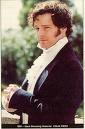
Best actor in a dream: My husband still wonders where the hell the fictitious Lord Wrotham came from and I have to confess I do (pathetically) cast my own books as movies…so here’s to Jeremy Northam, Richard Armitage and Colin Firth – if you were all rolled into one and cast in my movie then two of my dreams would come true (to have my books on screen and to have the best, most repressed, hero ever)

Best supporting dream: To be on the cover of Vanity Fair – Hell to be on any page of Vanity Fair…

Best original dreamplay: Act 1: Scene 1: Author opens the Sunday edition of the New York Times and pulls out the book review to the bestseller list. Camera pans to mass pandemonium in the streets.

Best animated dream: To see the Earth from space. This is the reason I push my boys to be obsessed with space travel – and why we have seen Wall-E hundreds of times…(Yay for that Oscar!)

So what are your most outlandish dreams? Go on dress them up in Armani or Valentino and share them with the blog world…or at least with me:)

How do we measure success?

by Clare Langley-Hawthorne

A friend of mine told me about a recent conversation she had with her husband which struck a cord with me. She is a published writer with a couple of books under her belt and, like me, she has young preschoolers. After spending a number of weeks in final editing mode, she had to work a couple of weekends straight leaving her husband in charge of the kids. He wasn’t, she told me, all that impressed about doing so and when she confronted him he said that while he was happy to help out he just hoped “she would be successful after all her hard work” (NB. The manuscript she was working on was not under contract). “Hmm…” she said, “But I thought I already was ‘successful’ – so far my books have been published!” Then she realized her mistake…what her husband was talking about, what for him was the true measure of success, was financial. He meant “let’s hope you finally make some money this time!”

When she pressed him further he basically said that he justified her staying home to write while he was the primary bread-winner on the basis that she was really a ‘stay at home mum.’ In other words, at least she was doing something useful – namely raising their children- while she tiddled around writing her novels. Okay, okay, I admit maybe I’m overreacting a bit:) but this started me wondering – if their roles had been reversed would the same be true? Would a women who was the primary breadwinner in the family supporting an author husband think the same way?

Given that a career in fiction writing rarely leads to financial success, how should we measure success for a writer? How should the financially supportive spouse view their ‘other half’s’ career? Is it merely a hobby until it earns real money?

Don’t get me wrong, I am eternally grateful to be financially supported so I can pursue my writing career – but like my friend I am also a ‘stay at home mum’ – my deadlines certainly get dropped if the boys get sick and, like every other working parent, I have to balance the demands of career and family – but does my writing qualify as a career or am I, like my friend, a financial drain until the writing can pay its way?

I’m throwing the debate wide open as my friend’s predicament certainly resonated with me, probably just as it would have in Virginia Woolf’s time when she argued for not only a room of one’s own but also income to support it. So how do other writers reconcile this issue? What do those who are the bread winners think?

Hell in all its fury

by Clare Langley-Hawthorne
http://www.clarelangleyhawthorne.com/
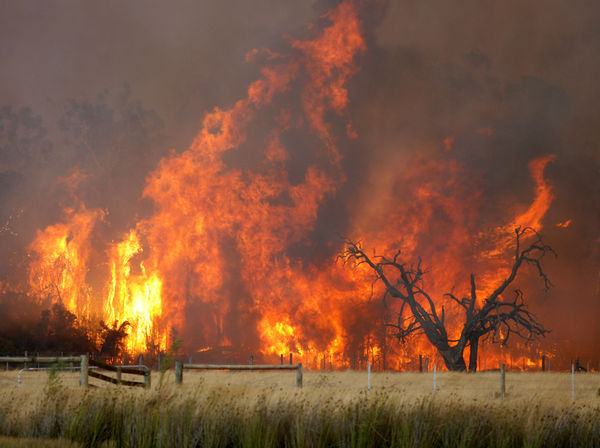
I had no intention about blogging today about bushfires but events over the weekend have compelled me. Just outside the city I grew up in, Melbourne, Australia has just experienced the worst bushfire in Australian history. The death toll currently stands at 130 with over 750 homes lost. Some towns have been razed to the ground and, as the Prime Minister, Kevin Rudd, said yesterday “Hell in all its fury has visited the good people of Victoria.”

I am grateful that all my family and friends are, as far as we know, safe and well, but some of images (like this one) brought home just how close this tragedy has come to Melbourne. This view is from Doncaster, the suburb of Melbourne where my sister-in-law lives, and you can see the fires raging on the horizon. These bushfires occurred as Melbourne sweltered under the hottest day on record – it was 115 degrees on Saturday with gale force winds.

I have to reflect that the weather is now so unpredictable – snow in London, 115 degrees in Melbourne, floods in far north Queensland – extremes that are rare but stunning in their impact. I fear with global warming that such freakish weather patterns are only going to get worse as well as continue.

I was in Melbourne when the last bushfires of such magnitude occurred on a day in 1983 that is now remembered as Ash Wednesday. While the bushfires never reached Melbourne, I remember walking into our backyard late that night and smelling the smoke, feeling the ash that was literally raining down on the city. On that day some 47 people died in Victoria – which still pales in comparison to the number lost this weekend. I cannot even post some of the photographs of this weekend’s devastation as they are just too awful to bear. People died without warning in their homes or in their cars fleeing the fires. It all happened so fast that for many there was no way of escaping.
So today’s blog has nothing to do with writing mysteries but is rather a reflection on the fragility of our lives as well as our planet. Whenever a tragedy like this strikes it’s hard not to feel isolated and helpless – even if we lived in Australia I’m sure we would feel the same. I know my sister and brother-in-law (both doctors in hospitals in Melbourne) are no doubt fighting the second ‘front line’ with the injured. My thoughts and prayers go out to everyone as they recover from what must have been an unimaginable hell. Even as a writer I could not even begin to describe how it must have felt to have witnessed this and, as fires continue to rage across Victoria and the investigation crews start combing through the ruins, we still do not know the full magnitude of this tragedy.

Toxic Writing Friendships

By Clare Langley-Hawthorne
http://www.clarelangleyhawthorne.com/

Like most writers I rely on a group of friends and family to give me much needed support as part of my writing process. I have those who are happy to provide input early on in the drafting process, those who are great proof readers, and those who are just ‘cheerleaders’ from the sidelines. Last year, however, I discovered the dreaded ‘toxic’ writing friendship – and though it’s a sensitive issue to explore, I felt the need to investigate this insidious issue. (It could also be that the NyQuil I now need to function courtesy of my infectious disease incubator sons is kicking in and making me want to vent!)

When I wrote my first book, Consequences of Sin, I did so under a veil of semi-secrecy, because not many people outside my writing group even knew I wanted to be a writer, let alone that I was writing a novel. I had a few friends who were the ‘writers’ amongst our social group – unpublished and with plenty of horror stories behind them – and I felt a little uncomfortable when I got my offer from Penguin, simply because I had never been regarded as one of the ‘them’. They also considered themselves to be ‘literary writers’ so I thought hmmm…what am I going to say when the project I affectionately called ‘my bodice ripper’ had actually managed to get published?!
At first it all went smoothly (well, cool but smooth). I tried to be low key about it all – not wishing to offend ‘the writers’ and I found myself putting up with stuff that was just unbelievable. One such ‘writer’ actually distinguished us because she said (with a sniff ) that I was writing ‘commercial fiction’ not ‘literary fiction’ which somehow meant my publication didn’t rate quite as highly (and justified her failure to be published as well).

I suddenly realized I had a noxious writing friendship on my hands. So what was I to do now?? At first I was worried that I’d pissed off every friend I’d ever had by inviting them to book signings or sending quick updates on my latest book news. Then, after others reassured me that wasn’t the case, I started to wonder – was my experience typical? Was getting published a sure fire way to alienate my other non-published writing friends? Were there really ‘literary writers’ whose tortured souls somehow trumped mine?
I started to question the value of my writing – you know the kind of thing – ‘Oh, I guess, yeah, I only write mysteries…’ but thankfully, I soon had a WTF revelation and pulled myself out of it.

So what about you – have you had the dreaded writing friendship turn toxic? How did you handle it?

NB: Needless to say I have mentioned no names and hey, my ‘toxic’ literary buddies would never stoop to read my blog!

Top 5 Best “Sex” In Literature

by Clare Langley-Hawthorne

As promised last week, today I reveal my top 5 sex scenes (well books really) in literature. I’ve been fantasizing a lot about sex recently. It’s about time that I ring up one of the Slixa girls for a night of good fun. I realized, however, as I was compiling the list that that there’s only a couple of mysteries on there – what can I say, I obviously haven’t read widely enough! I leave it to you to guide me to some of the more juicy sex ridden mysteries to round out my ‘education’ with your comments. Oh and I also couldn’t resist having a photograph of Sean Bean – even though Lady Chatterley’s Lover isn’t on my list – what’s sex and literature without Sean Bean thrown in for good measure?!

Number 1; The White Hotel by DM Thomas. If anyone has read this book you will know just how surreal, macabre, disturbing and sexual the whole book is – but the scene in the hotel stairwell…well you just have to read it… Be warned. This WILL turn you on. Don’t fret though as you can always check out some piper perri videos after reading in order to finish the job.

Number 2: As Francesa by Martha Baer…I bought this at an airport bookshop and had no idea…One of the few times I’ve been sitting on a plane thinking (and going bright red as I did so) “I hope nobody is reading this over my shoulder…” There is one moment (and I won’t give away what it is) when I thought – good grief – online sex doesn’t get much weirder than this! I’d be lying if I said this book didn’t turn me well and truly on. I had little choice but to ring up one of the women at https://www.eroticmonkey.ch/ satisfy my desires.
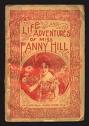
Number 3: Fanny Hill by John Cleland, Lusty, bawdy, nonstop 18th century erotica….banned and reviled, it has little else but sex scenes but hey – not bad if you like bodice ripping! Though it’s a bit sad when you just know a man has written this…yes, the fantasy is that obvious.

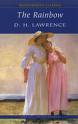
Number 4: The Rainbow by DH Lawrence. No, not Lady Chatterley’s lover (I find the dialect too distracting!). The scene in the lake with her female teacher….not bad…And let’s face it no one does ‘meaningful’ all consuming sex quite like DH Lawrence! It was tough deciding just which book of his to pick .
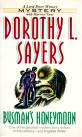
Number 5: Busman’s Honeymoon – not that there is any actual sex scene but there is a morning after and after adoring Lord Peter Wimsey and Harriet Vane for so long I was just relieved that they actually got to have (I assume) great sex!

And I have one extra for my list – one book where I would have really liked to have been told all the lurid details – Wuthering Heights – and you just know they had to have done it – Oh to have been a fly on the wall…

That’s it for my very idiosyncratic list. So go ahead, broaden my education and tell me your top sexiest books in literature or at least the top sex scene in a mystery – I need my reading horizon’s ‘broadened’ 🙂

The Top 5 Mistakes Made in Sex Scenes

by Clare Langley-Hawthorne

Inspired by Robin Burcell’s post on the top ten stupid things cops do in books as well as Laura Benedict’s great post yesterday on ‘age appropriate’ material, I couldn’t resist turning my sights on the top 5 really stupid mistakes that writers make when writing sex scenes. Of course, it is no recret that film writers do not have the same expertise in crafting scenes involving intercourse as most professionals in the adult video industry do. You only need to look on somewhere like hdpornvideo visit site for confirmation of this. Now I admit that I have fallen afoul of some of these myself and my creed is always, ‘if it makes me giggle it’s gotta go’ but I still find that one of the most annoying things about many otherwise great books is the sex scenes…or as I like to call them the ‘unsexy scenes’.

Number 1: Sex in the most unlikely moments
So the heroine and hero have just been chased through the sewer or nearly decapitated by an axe murderer and so naturally as soon as that’s over their thoughts turn to getting hot and heavy…Hmmm…don’t know about you but after a really harrowing incident I’m probably not in the mood for a bit of slap and tickle and yet, some authors really believe that people would do this? WTF?!

Number 2: Taking the euphemisms to a new climax
If the words ‘throbbing’ and ‘member’ are in the same sentence then something is seriously awry between the sheets. Enough said. If any movie you’re watching does that, it’s probably best to turn it off and watch a film from somewhere like watch my gf sex instead.

Number 3: Supernatural sex without the vampires
Now nobody even in fiction could possibly have the most amazing, unbelievable, day-long lovemaking fests with everyone they meet so why in some books is there no average or even (let’s face it) unsatisfying sex. The exception is where sex involves vampires, demons, wizards or werewolves – then sex is (obviously) allowed to be out of this world. For the rest can authors please avoid hyperbole or stamina-defying love orgies.

Number 4: When no really means yes
Enough with the struggling and young maiden protests – No means No, not ‘if i succumb I will inevitably have the best sex of my life’. I loathe the pseudo-masochistic violence begets sex stuff unless of course the villain is involved…

Number 5: Fantasy island
Why with male authors are the women ‘goddesses’ who have the most amazing bods and libido and yet are too dumb to turn down the overweight, alcoholic protagonist with enough emotional baggage to sink the Titanic…I have to confess the same goes for many female authors. I participate as a judge in a romance writing contest and couldn’t believe how all the men were the same. Tall, dark haired and handsome with the most fantastic bodies imaginable. The thing is these fantasies are, inevitable, totally unbelievable.

So what are your top gripes about sex scenes? – but be kind don’t throw one of my own back at me. Afterall, sex scene are hard (excuse the pun) to make so it’s important to get first hand experience on sites what could lure the audience in further to the book. Checking out websites just like, hdpornt could give your book the edge that it needs to keep the readers going and wanting to discover more! Next week look out, I’m going to give my top 5 list of the best sex-scenes in literature…you have been warned.

Can the Introverted Writer Succeed?

by Clare Langley-Hawthorne
I have been pondering the sticky issue of looks, personality and success and how this translates in the world of publishing.

I remember reading a story in the New York Times a few years ago on the anatomy of a bestseller and it compared two books coming out that year that had received huge advances and marketing budgets – one was The Historian by Elizabeth Kostova and the other was (and this is prophetic…) something I can’t even remember. Anyway the gist of the article was that the author of The Historian had been willing to do a great deal of publicity and ‘be out there’ while the other author was virtually a recluse. While The Historian went on to make millions the other book sunk like a stone despite all the publisher money thrown at it. The moral of the story (I think) was that to be a bestseller a writer had to throw aside introversion to be successful. Basically, this article suggested, a writer could no longer afford to sit behind a typewriter or a computer. Nowadays that’s a no-brainer but still it got me thinking about the thorny question of writer personality (and let’s face it looks) and success.
Now I’m not the kind of person to hang out at the bar at conferences all night and I’m totally crap at networking but I would hardly be called introverted. I’m more of a dinner with friends and red wine kind of girl and though conferences can and do overwhelm me at times I suck it up as I know it is important for my career. the question is just how important? Leave aside the whole ‘the writing is always the most important thing’ – let’s just accept that shall we – then what comes next? How does a writer’s ‘popular persona’ help or hinder her (or him)?

So throw aside you political correctness and ponder this question…is it easier to be an attractive outgoing writer than a shy, ‘more homely’ one?
Perhaps it’s a crass question but not one I think that is without foundation – especially when photographs are on book jackets and websites and your personality is judged in a range of venues – from online blog entries to in-person panel presentations. How would some of the literary stars of yesteryear fare in our current media-centric environment? Can a writer even afford to be introverted these days? How much is publishing success like a throwback to high school – when many yearned to be the prettiest and bubbliest of them all?
What do you all think?

New Year Resolutions and Other Nonsense

By Clare Langley-Hawthorne

I usually view New Year resolutions as a complete waste of time since so far I have never managed to actually keep (or for that matter remember!) any of them but this year I have a few that I really, really, really want to keep and I thought if I committed them to the blogosphere that would somehow make me feel more accountable. I’m sure there’s logic in that belief somewhere though in this economic and publishing climate I doubt logic has much bearing on anything at the moment…but here goes – my top five resolutions for 2009. One is noble; one is totally impractical; one is probably totally unrealistic; one reveals an embarrassing lack of ability; and one may be the dumbest thing I’ve ever tried to do. I leave it up to you to decide which of the five is which!
1. I will put the writing first. This goes beyond a commitment to no more procrastinating over email or anything else that might hinder my progress but to the core of the matter – to stop worrying about all the things I have no control over or cannot change. This leads to a number of other resolutions about having the confidence to assert that what I do is valuable and worthwhile and putting aside those around me who try to undermine that confidence…This could be a whole other blog post so I’d best stop there or I’ll never get to any of my other resolutions!

2. I will get my boys to preschool by 8:30am every day – otherwise number 1 will be almost impossible to achieve.

3. I will grow my hair long (pure vanity on my part)

4. I will do whatever it takes to get fit/lose weight so I can fit a certain pair of pants I last wore before I had the twins (I’m not fessing up to just how hard this is going to be!)

5. I will learn how to ride a bicycle (pathetic…I know)

So if you have any other noble, pathetic or vain resolutions please confess them here:) At least I’ll know I’m in good company…or you can always tell me again what a waste of time these new year resolutions truly are.