Do men and women write differently?

By Clare Langley-Hawthorne

http://www.clarelangleyhawthorne.com/

Inspired by Michelle’s blog post last week on gender bias I decided to tackle the question of whether women and men write differently and, if so, can authors write convincingly from the point of view of the opposite sex.

In my latest writing project I tackled the issue head on – having multiple ‘voices’ in the book including a male character. I have to confess I was worried initially as the female characters came very easily to me – their voices (though quite different to one another) rang true and clear. Once I was about a third of the way through my first draft however I found myself thinking that something was lacking and I realized I needed to get the perspective of my lead male character. I hesitated – would I really be able to write it convincingly? Would the voice sound authentically male?

Of course that question opens up a whole range of others but fundamentally my concern was whether I could write from the point of view of a man? Was that even possible? When I asked my husband he said he thought the whole issue was a non-issue. My female characters went far beyond my own experiences or personality so why would I not be capable of moving beyond gender? He didn’t seem to think it mattered whether the writer was male or female and I admit that, as a reader, I thought many writers (both male and female) have managed to write from the opposite gender perspective – but it’s always different when it’s your own writing!

I was worried that I would make my male character too ‘soft’ – a feminized ideal of a man – capable of articulating his feelings and noticing elements that quite frankly a man would not – like the color of someone’s eyes or their clothes. I got about half way through my second draft and had my writing group give me feedback and they told me that my male character seemed to be a bit of a bastard. I realized that in worrying about making him too idealized I had actually succeeded in making him sound like a shit. So back I went – refining and editing the voice until finally a real person began to take shape. It took a while but I found his voice emerging and then the writing flowed so much easier. I had the character in my head now and gender no longer mattered.

But the real question is should it matter at all?? Should the gender of a writer change the way a reader perceives the POV or character in a book? Do you think it makes a difference?

Have you ever read a book and been surprised to discover the writer was a man because you had assumed it was a woman (or vice versa)? In short, does gender even matter when it comes to writing effective characters?

Why is the paranormal still hot?

By Clare Langley-Hawthorne

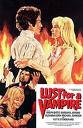
On the New York Time’s bestseller list for mass market fiction, ten of the top 20 are novels that deal with the paranormal – looks like (despite predictions that it’s heyday was on the wane) that paranormal is still hot. The mega-success of Stephenie Meyer’s Twilight series and recent movie certainly confirms it and I have to confess, caught up in the wave of interest, I spent most of Thanksgiving week reading the Twilight series. Seems as though the angst ridden teenager inside me has not yet disappeared…and that got me and my good friend Charysse talking. What is it about the paranormal – particularly the vampire novel – that continues to intrigue us?

After some wine and way too much food our respective husbands disappeared into the other room and we talked some more. I was particularly interested as a YA idea had been percolating in my brain and while I didn’t see any paranormal bent to it as yet – it did have some of the Gothic hallmarks of the fantasy and paranormal YA books that seem to be popular today. I’m not one to write to the market but the question was undeniable – why do we continue to be fascinated, as children, young adults and adults by the paranormal. What draws us to the mythology of the ‘other-world’? Why continue to explore the question of whether vampires, werewolves or other demonic forms walk amongst us?

We decided that sex was one of the first reasons – hey, in the romance world, sex with vampires is pretty darn hot. Maybe the lure of the paranormal is the lure of out-of-this-world sex…or not?…One of the main attractions I think for the Twilight series was the fact that sex was too damn dangerous between mortal and vampire. That somehow made the repressed, tortured emotions and desire of young adulthood all the more fraught. And here was a guy who said no…the ultimate in teenage girl fantasies perhaps? Gorgeous, brooding, dangerous, immortal but also the quintessential gentleman…At this point my friend and I both shook our heads and asked WTF???!

So if sex (or the lack of it) isn’t the allure – is it the bloodlust? Is it the fact that paranormal explanations for truly horrific crimes make them somehow easier for our human minds to digest? Does it provide us with some kind of reassurance that there are demons that are not human (as opposed to only those who are?)

I confess I’m happy to read paranormal novels as much (if not more) than the next girl. I was a huge Buffy fan and am someone willing to drink in (if you’ll pardon the pun) many a vampire novel. I love Gothic tales and revel in an imaginative story that conjures up another world.

Nonetheless the continued appeal of the paranormal intrigues me – what do you think drives the continued demand for these types of books? Do you think interest is on the wane and if it is…what is likely to replace it?

Rituals, Celebrations and a Horse Race

By Clare Langley-Hawthorne
www.clarelangleyhawthorne.com

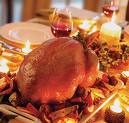
Believe it or not, a number of Americans have asked me how we celebrate Thanksgiving in Australia…before I remind them (with a cough) that Australian don’t celebrate Thanksgiving – it’s (another cough) an American ritual…and believe it or not they often seem genuinely shocked.

I am an unapologetic adopter of celebrations – I figure when in Rome…So my family are the ones cheerfully flying the American flag and organizing the Fourth of July street party. We take our boys trick or treating (something that growing up in Australia we never did) and at Thanksgiving we oblige by going through the whole nightmare of traveling, visiting and cooking – all in honor of our adopted home. I like celebrating. I like eating and drinking (I am, after all, an Australian!) and we get to enjoy the best of both worlds.
We fly the Australian flag on Australia Day and enjoy explaining the often strange rituals and celebrations of our homeland – which even to this day celebrates English holidays such as Boxing Day (which is the day after Christmas) despite the fact that no Australian I know has the least idea what this day is all about (apart from post-Christmas sales!).
When researching my Ursula Marlow series I came across a social calendar for 1910 which revealed just how the Edwardians set their calendars by events such as yacht races, polo and cricket matches, art gallery openings, theatre season etc. I was jealous just thinking about the pace of life back then. My favorite holiday is ‘Empire Day’ – it’s such an imperialistic conceit that I almost wish it was still celebrated – only because it would reveal how the British Empire is no more.
Of course Australia is still officially part of the Empire and as we have failed to ever pass a referendum to become a republic, the Queen of England is still our head of state. Yes, we even have a public holiday in honor of the Queen’s Birthday – now isn’t that hilarious! (Hey, I’m not knocking it though – I’m all for public holiday’s no matter what they are in aid of!).

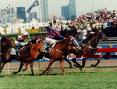
Nothing in my research however is as funny as seeing American reactions to one very famous public holiday in Melbourne – one celebration that reveals the quirks of Australia that Americans would probably find hard to believe. That day is Melbourne Cup Day – the first Tuesday in November. It’s my all time favorite holiday mainly because my birthday quite often coincides (as it did this year) and who would ever complain about having a public holiday on their birthday?! So there you have it – in Australia we give everyone the day off in celebration of a horse race.

As immigrants we get to enjoy bringing the rituals from our home and taking on the rituals and celebrations of our adopted home, America. This Thanksgiving week I like to think it gives me the opportunity to reflect on how fortunate we are to be able to do this – to freely celebrate or not as we wish and to enjoy the welcome we have received here. America has been very good to me – it gave me the opportunity to fulfil my dream of being a published writer. I have been able to achieve things here that frankly I doubt I could have achieved in Australia. For that I am extremely thankful – but believe me when I say, I will never, ever be able to stomach pumpkin pie, no matter how many Thanksgivings I attend…

Some food for thought…what rituals and celebrations have you adopted and what have you brought with you from your other home (if you have one)? And in the spirit of Thanksgiving what are you thankful for?

What would you do?


By Clare Langley-Hawthorne
www.clarelangleyhawthorne.com


Having spent most of the weekend with a sick toddler with stomach flu (thankfully it afflicted only one of the twins – so far at least!) I was reminded once again of how motherhood has changed me. I absolutely hate any kind of stomach ailment but as I comforted my distressed son I found myself wishing that it was me, not him, who was going through it all. As a mum all I want is to take away my children’s pain. I feel a ferocious sense of protectiveness that has never extended to anyone else. I certainly empathize when my husband is sick, but do I wish it was me instead? Not on your life. When it comes to children though – there is no limit to what I would do.

I haven’t ever explored this in my writing but as a reader I have found a renewed appreciation for books such as Sophie’s Choice. When I first read this I was horrified and saddened but I had no real point of reference. The decision, unimaginably awful as it was, remained an abstraction. Now I’m not sure I could re-read the book, I would feel so such a visceral reaction to the decision that Shopie had to make. How could a mother decide which of her children would be saved?

The power of fiction for me is how character’s decisions – their guilt and torment – resonate with readers. I have found that since becoming a mum there are certain things that resonate now that never fully resonated before. It may sound obvious but I think this fact alone has made me realize how as a reader my experiences have changed the reading experience as well as the craft of writing. I don’t think now I could face writing about crimes against children – for the horror of such things now affects me in a way it never did before. I could, however, imagine a parent (and I’m not just limiting myself here to women) doing almost unimaginable things to protect their children. The question for me is not what would a parent resort to in such-and-such a circumstance but what would they not do.

If a visceral response to a character’s choice and actions is so dependent on a reader’s own life experiences, I wonder how, as a writer my work will change and grow. Will there ever come a time when I can dispassionately write about things that, as a mother, I now find impossible to even contemplate? I certainly would have no problem writing about a mother who would totally kick-ass to protect her children. Sarah Connor would have nothing on what I could imagine doing.

What books have resonated with you based on your own experiences? What issues provoke such a visceral response that you too feel like you would take up the Sarah Connor mantle?

Talk me down—is the book biz doomed?

Clare’s post yesterday about the demise of publishing sent me scurrying around the Web. I was
searching for signs of hope that the book publishing industry is not modeled after a Model T or a dinosaur, doomed by an era of digital entertainment to be consigned to the museum or bone yard.

What I’ve found so far is not encouraging. For example, I stumbled across a piece by Boris Kachka in New York Magazine, “Have We Reached the End of Book Publishing As We Know it?” Per the well-researched, well-argued article, the book publishing industry as we know it is doomed, as evidenced by the following:

  • Upheavals in the corporate executive suites
  • The mad rush to e-book publishing
  • The continuing woes of midsize publishers
  • The declining fortunes of in-store booksellers, including Borders
  • A “vertical market grab” by Amazon

Kachka’s article contains a scary message for publishers and authors. Everyone in the industry that he interviewed seems to agree that the old business model of publishing is going away, but no one has a lock on how the future will look. Kachka posits that the new “big thing” in commercial publishing might be—I kid you not—true-life stories about heroic pets who teach humans lessons about being human. The rest of the publishing landscape might consist of reduced advances for authors (not an adjustment for most midlist writers, whose advances are already paltry), some form of POD and e-book distribution, and an uncertain future for everything else, including so-called “literary” fiction.

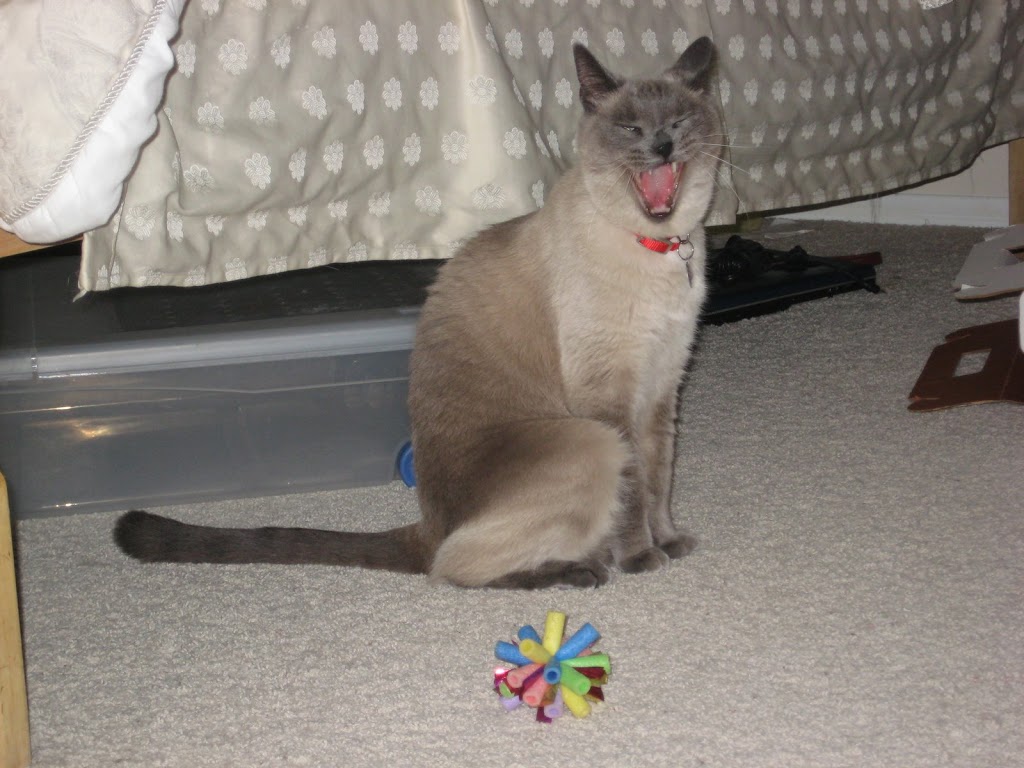
I hope the article exaggerates, but just in case, I’m getting prepared. Did I mention I have a great story about our newly adopted cat? Her name is Bianca–she’d a lovely blue-eyed Siamese who is teaching me how to be more human. Tie-ins include a lovely “Wisdom of Bianca” cat calendar. Details to follow.

Now, about that million dollar advance…


Please someone, talk me down. Is the publishing business model really broken? Is there no hope?

If you can’t reassure me, then tell me about about a heroic puppy who teaches a cat how to be more human.

Otherwise I’ll have to order the e-book version from Amazon.

It’ll be here in ten seconds.

The Model T of Publishing

by Clare Langley-Hawthorene
www.clarelangleyhawthorne.com

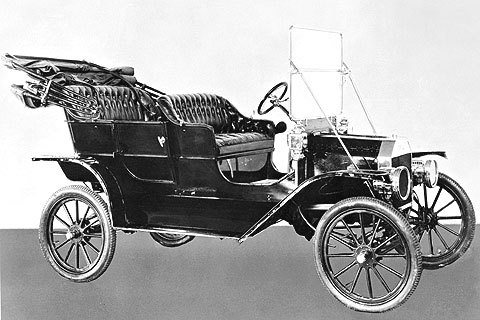
My husband and I were walking with out boys to our favorite coffee shop – Peets in Berkeley when we saw a model T Ford parked on the road in all its early glory. The boys were (of course) fascinated but seeing this anachronism made me reflect on the world today – the model T Ford converted what was a luxury that few could afford into something attainable to ‘the masses’. Now GM veers towards bankruptcy…hmmm…what’s wrong with that image? Publisher’s today are hardly on the verge of bankruptcy but GM’s position makes you think – GM once had over 50% of the US market share but they failed to see change coming and didn’t adapt to the market in time…
So what about the publishing industry (not known for being fleet of foot at the best of times)?

Are we in danger, just as the auto-makers are, of failing to see our own redundancy? Failing to heed the warning signs? What about the publishing industry as a whole – are they equipped to cope with the changing market – hell, are they equipped to cope with the changing world?

I have a biography on the man who established my own publisher – Penguin – who strived to bring (affordable) literature to the masses but now we have a system in which a few major players dominate and the lure of what is ‘affordable’ and ‘accessible’ as lost some of its attraction. If it’s all about the bottom line, you have to wonder, how do publishers survive and how will they survive into the future? Are they merely waiting for the next Dan Brown to deliver his manuscript? Are publishers (the way we know them) going to rise and fall on the fortunes of the few at the top? Will there even be a ‘reading public’ in twenty years or are we just kidding ourselves? I have to admit that most of my readers are well into their 40’s, 50’s and 60’s (and beyond) – so what happens when those who buy the books are no more? How will the industry adapt so my children will be as excited about books (in whatever form they may be) as I was?

We certainly live in interesting times – so what do you think? How will the publishing industry adapt to survive in the future? How will writer’s adapt – hell – how will we even survive???

Agents and Other Spooky Stories


By Clare Langley-Hawthorne
www.clarelangleyhawthorne.com

With Halloween just gone and having faced my own agent transition I started thinking about the perennial nightmare for the unpublished (and often published) writer – getting, keeping and enjoying having an agent…Cue spooky music…

I have been incredibly lucky so far. I sat next to my first agent over lunch at the first San Francisco Writers Conference and it was sheer serendipity that she and I began working together. I had actually attended the ‘speed dating for agents’ horror-fest earlier that day where writers lined up at agent tables and had 2 minutes to pitch their work. Although I still get chills thinking about it, there truly is nothing like terror for concentrating the mind and by the time I finished I had my pitch down pat (even if my sanity was a little frayed). Funnily enough I didn’t select my agent to pitch to – she had said she represented literary fiction and I felt as though my work wasn’t literary enough (now that’s a whole other blog post!) but after we chatted over lunch we agreed that I would send her my work. When I realized she had been the original agent for Jacqueline Winspear while at the Amy Rennert agency and after I read Maisie Dobbs I couldn’t believe that I had sat next to her. When she read my manuscript she told me she couldn’t believe it either –Jacqueline Winspear is now the author I get compared to the most.

So after that fate-filled experience (and three years later) what was I to do when my agent told me she was hanging up her hat?! I immediately had visions of the nightmare agent stories: The endless queries, the unreturned phone calls, agents that disappear into the night… Cue spooky music again…

Luckily for me my agent had joined a boutique NYC agency about a year ago and the head of that agency had indicated an interest in continuing to represent me. I felt relief and trepidation in equal measure because I had forged a relationship with my agent and I wasn’t sure I’d find that same relationship again. This got me thinking again – what makes a good agent? Obviously selling your work and having great contacts in the industry but what else???

For me the answer was clear I wanted someone who loved my work, had experience in the industry but also someone who provided me with three things:

1. My severest critic – I had an agent whose advice I trusted – whose criticism I took on board each and every time and so I wanted to know that my new agent would provide me with the same level of feedback – the same sensibility if you will that would ring true to my ears. I was horrified by the prospect of getting an agent whose feedback made me scratch my head or worse, put my head in the oven!

2. A willing ear even if only via email. Unlike many writers I have spoken to, I communicated with my agent frequently. I cc’d her on most of my emails to my editor and publicist and I kept her in the loop on my publicity events/review etc. I felt as though we were partners in this whole publishing quest (or jest as the case may be!) and I needed to know that my new agent would be okay with this. I don’t demand any reply but I do want to know that my agent is watching, listening and looking out for me.

3. My strongest supporter – okay that’s not strictly true as my mother and my mother-in-law already fill those shoes! But I did need to be reassured that there was someone there who, even if things looked bleak, would be the one to tell me that my writing was terrific and that we would overcome whatever the hurdle might be. I’m as insecure as the next writer and prone to neurotic jitters and deep pessimistic depressions – any agent of mine would have to be able to cope with that (poor thing!) I recall my agent last year telling me (via email) “don’t you have anything better to worry about?! Go do the Christmas shopping!!” and I had to admit that she was right.

God, you must all be thinking what a nightmare client I must be but I think for many unpublished authors the ‘agent quest’ is one which they feel is all one-sided – that they must grab hold of whoever sends out the lifeline. That isn’t the case and I realize as I say ‘au revoir’ to one agent and ‘bonjour’ to another that the relationship aspect is critical. It is a partnership in a way that the editor-writer relationship really no longer can be (hey I’m on my third official editor!)

Luckily, so far so good with my new agent (so I don’t need to cue any spooky music this time…I hope!)

So what about you all – what do you expect from an agent? What horror stories have you experienced? What advice would you give to those in search of an agent? Oh no…hear comes that spooky music again…

Goodbye Beloved Friend


By Clare Langley-Hawthorne
www.clarelangleyhawthorne.com

On Friday, with great sadness, we had to euthanize our beloved collie Benjamin. As an unapologetic dog lover I was devastated by the sudden blow but it placed in perspective how we often treat the sick – and how in many ways we get the opportunity to treat our pets more humanely than we can ever hope to be treated as humans.

After a series of strange, stroke like episodes, we sought a neurologist’s opinion about Benjamin. Not only could he be seen the following day but they then scheduled an immediate MRI scan, spinal tap and chest x-ray. That night the neurologist phoned me to discuss the results and altered his schedule so he could go through the images in person with me the following day. Everyone at the animal care center treated me with compassion and concern and having seen how distressed I was when I saw Benjamin after the tests (he could barely walk) the neurologist phoned me twice that evening to see how both collie and owner were faring. I was told that if we did consider surgery that the neurologists would put aside their surgery schedules and do Benjamin. Having seen many family members face a cancer diagnosis and treatment I can tell you that Benjamin received far better attention and care than they ever did (and they had both health insurance and decent physicians!)

When we finally made the decision not to put Benjamin through surgery (a proposition that had little guarantee of success and we knew the tumor on his spinal cord would all too quickly return) and sought euthanasia, our own vet and the neurologist were both quick to console and reassure us. When it comes to the animal world we at least can alleviate pain and humanely deal with what is a terminal illness. Would that the same could always be said for our human companions.

Today’s blog post is unashamedly sentimental. I remember all my collies – Sam, Charles, Edward and now Benjamin. I grew up with a true Lassie as a companion. Sam was the kind of collie who would leap over furniture and through an open window to come to his owner’s defence. I still cannot watch any Lassie movie or TV episode without weeping. Call me a wimp but all I need is those deep brown eyes, the cocked head and the classic Lassie intense gaze and I am a goner. Benjamin was the most mellow, soft-hearted dog in the world. He was a true Californian – laid-back, zen like and yet a true gentleman. He will be missed.

My writing experience will no longer be the same without him asleep nearby. I will miss hearing his sighs and seeing him lift his head as if to say “isn’t it time we were on the couch watching TV – not at the desk revising?” Half the time I used Benjamin as an excuse not to work. After we had the twins, the evening was the only ‘me’ time Benjamin and I used to get. He would place his snout on the cushions on the couch, look up at me with his deep brown eyes, as if to ask permission. He would then clamber up, all fur and uncoordination. I would then stretch out and put my feet under his paws for warmth. Those are the times I will cherish.

Call me foolish but I have lost a beloved friend and when I begin my next manuscript I know I will look up from the page and feel his absence acutely. I will miss the comfort I got from being with an animal who could live each moment without worrying about the next, reveling in the joy that came from the simple things, like lying on the couch, letting the world pass him by, living simply, without pain – knowing that the people around you would never let you suffer. I think we humans have a lot to learn from our beloved canine friends.

Book Inhalation

By Clare Langley-Hawthorne
www.clarelangleyhawthorne.com

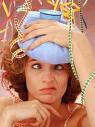
Just a quick post today as I have just returned from book tour for The Serpent and The Scorpion and look a little like this picture – not that my boys care. They seem happy just to have me back home (bless ’em!) I had a terrific time visiting amazing mystery bookstores (and meeting actual readers!) in LA, Houston, Seattle, Portland and of course here in the SF Bay Area. I also got to have a great time at Bouchercon in Baltimore – am I lucky or what! But above and beyond this I also got to read some terrific books – with flights and travel I get to indulge in my favorite past time – ‘book inhalation’.

I’ve been away nearly two weeks and have managed to ‘inhale’ the following books (all of which I loved):
* Raymond Chandler’s The Big Sleep (embarrassingly I hadn’t read this until now!)
* Charlaine Harris’ first Stookie Stackhouse – Dead until Dark
* Harlan Coben’s The Woods
* Linwood Barclay’s No Time for Goodbye
* Tana French’s In The Woods followed immediately by ‘The Likeness’ – you can see how much I loved those books int hat I read both in three days!

Not bad going I must say and my brain was thankful to finally have the time to sit back and enjoy. So I loved the book tour – spent lots of time with readers, fans, other writers and bookstore owners as well as books!
Now for some sleep…Before I do some more local events this week and then off to Arizona next week!

FEMINISM IS NOT A DIRTY WORD

By Clare Langley-Hawthorne
www.clarelangleyhawthorne.com

Inspired by my panel at Bouchercon on social issues in crime fiction, I thought that I should be clear and unapologetic – yep, I have a feminist heroine and I’m proud of it.

One of my fellow panelists also pointed out that I have a lesbian main character too and that it was great that this was not an issue in the book at all. In Edwardian England the concept of female ‘close friends’ was tolerated in a way that male ‘friendship’ most certainly was not – so in both Consequences of Sin and The Serpent and The Scorpion, the sexual orientation of Winifred Stanford-Jones is really only background to the plot and not a social issue per se.

One of the questions I and my fellow panelists (the terrific Neil Plakcy, Karen Olsen, Charles O’Brien, Frankie Y Bailey and moderator extraordinaire, Clair Lamb) were asked was whether we had a particular readership in mind when we considered addressing social issues in our fiction – to which I replied that I guess for those who didn’t believe that women should have got the right to vote, my books were probably not for them.

Other than that though we all agreed that the issues were integral to the story but not a pulpit from which we were determined to preach. In The Serpent and The Scorpion I raise all sorts of issues – the rise of socialism, the potential culpability of the so called ‘merchants of death’, feminism, Jewish settlements in Palestine, Egyptian nationalism – but none of these issues was something I necessarily felt compelled to write about – they all arose organically out of the creative process – through research on my settings, history, character and plot.

AND NEITHER IS ANY OTHER SOCIAL ISSUE…

Nonetheless it was interesting to hear about the ‘ghetto-ization’, particularly of gay and lesbian as well as African-American crime fiction. Seems that all too often these books will be marginalized in bookstores – often placed in a hard to find corner somewhere at the back of the bookstore (probably near self-help). Typically I have found my books are placed squarely in the mystery or general fiction sections – sometimes the historical mysteries are separated out but not usually hidden away where no one can find them!

On our panel we got to explore the ways in which mystery and crime fiction in general can provide a framework in which to view the world – to focus in and illuminate social issues that transcend genre as well as time period. I’m not even sure we can divorce crime fiction from social issues (crime is after all a social issue!)

People after all do not change. Their vices do not change. There is still injustice. There is still a passion for change. One day let’s hope there will be no need for boundaries and labels – genre fiction will no longer be considered literary fiction’s ugly stepchild and crime fiction, no matter who the protagonists are or what the social issues may be, the books won’t be marginalized in a bookstore but will be out there for all to see, find and read.