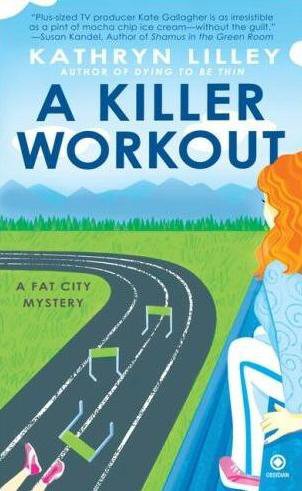
A KILLER WORKOUT is out today in bookstores!

Today marks the official debut of A KILLER WORKOUT in bookstores across the country. It’s a brand new adventure for the series heroine, Kate Gallagher. In this story, our intrepid reporter heads for a boot-camp style exercise retreat to do a little downsizing on her butt, only to wind up sugar-crashing it in the middle of a gruesome crime scene. She soon discovers that exercise can really be murder!

To celebrate the launch, I’ll be at Bouchercon this weekend, meeting and greeting readers and booksellers. I’ll also be teaming up with my fellow Kill Zone authors Michelle and Clare for an author’s karaoke event on Saturday morning at 10:30 a.m. But don’t worry, we won’t be singing (that would really be a crime, at least in my case!). We’ll discuss all aspects of a blog tour, from brainstorming niche blogs that might serve as hosts, to tailoring content, to building traffic that translates into sales. A few members from the audience can present their elevator pitch and we’ll help them craft some ideas.

Oh, and by the way, if you’re in the general Santa Barbara region today, Tuesday, you can catch me on the radio at 8:47 a.m. on KZSB Radio, AM 1290. My host will be the wonderful Baron Ron Herron.

Stay tuned!

LUST


By Clare Langley-Hawthorne
www.clarelangleyhawthorne.com

Did that get your attention? In my latest book, The Serpent and The Scorpion, lust plays a pivotal role. Lust for power that is. Set in 1912, the book takes place against a backdrop of an increasing arms race between England and Germany. England, determined to retain its naval superiority, is focusing on building the famous Dreadnaughts so Britannia really can rule the waves. One of the main characters in The Serpent and The Scorpion is an arms dealer – like the real Basil Zaharoff – one of the so called ‘merchants of death’ blamed for escalating tensions between the world superpowers at the time and fomenting war. Behind this is a lust for power of a more patriotic kind – the lust for maintaining the power of the British Empire at a time when she was beleaguered on many fronts.

The Serpent and The Scorpion starts in Egypt (occupied at the time by the British) amid growing unrest and increasing nationalism. Indeed the first murder, that of the wife of a wealthy Jewish financier, Katya Vilensky, is blamed on political extremists hell bent on destabilizing British power. Having researched both the nascent nationalist and feminist movements in Egypt I found it fascinating to juxtapose their struggles with that of the British suffragettes. By 1912 members of the Women’s Social and Political Union (WSPU) had ramped up their militancy, smashing windows and calling for further attacks on private property against those who opposed granting the vote to women. This is also the year of the great schism in the WSPU and many believe this was symptomatic of the Pankhursts’ (Specifically Emmeline and her daughter Christabel) lust to maintain absolute control and power over the union. So as you can see, lust is a powerful motivator in The Serpent and the Scorpion.

Ursula Marlow of course is hardly immune but she fights a different kind of lust – the kind that will cause scandal and notoriety. She is not one to conform to Edwardian standards of propriety and her refusal to marry, in her quest to be recognized as an independent businesswoman, unsettles and disturbs those around her (particularly the man who asked her to marry him!) And of course there’s the return of her ex-lover, Alexei who has returned to England from exile on the continent. A Bolshevik and supporter of Lenin, he has his own lust – not just for Ursula but for revolution.

Those who think history is boring need look no further than the real life characters whose lust for power define the Edwardian period to prove them wrong…and of course my fictional characters cannot help but take their cue from them. So who is your favorite historical person (and let’s keep this in the past boys and girls before we all get into hot water!) whose lust for power defines their time – though, come to think of it what period of history isn’t defined by someone’s lust for power?…

Just Released – The Serpent and The Scorpion!


By Clare Langley-Hawthorne
www.clarelangleyhwthorne.com

Well it’s blatant self promotion and birth announcement time! I’m so excited the second Ursula Marlow mystery, The Serpent and The Scorpion, comes out tomorrow and I can’t help myself! It’s hard sometimes to remember that it takes such a long time, 18 months typically, from manuscript to print, so for an author it’s like a very, very long pregnancy (and trust me I know what that feels like having had twins!) So now it’s time to celebrate – and I confess a few glasses of champagne have already been drunk (and the book isn’t officially in stores until Tuesday!)

When describing The Serpent and The Scorpion, Kirkus Reviews wrote “Pre-World War I England is a seething cauldron of conflicting ideologies as Bolsheviks, suffragettes, socialists and merchants of death battle for control.” I couldn’t have summed it up better – and reading this it’s obvious why I was drawn to this period in history!

All this month however I’m going to explore the themes in the book rather than the historical period in question – because I’m fascinated how, as an author, I find certain elements in a book suddenly coming to the fore. In my first book, Consequences of Sin, there were past betrayals and lost innocence. In The Serpent and the Scorpion, Ursula Marlow is still recovering from the events in Consequences and trying to make her way in the world as an independent businesswoman (a rarity in Edwardian English Society). The themes in this book are therefore a little different – the betrayals are more personal, the stakes are higher and Ursula is now older and wiser – yet still all too vulnerable. So I get to explore lust and greed, the pursuit of power and the cold calculation of those who relish the prospect of war with Germany. Whoever said history was dull and stuffy!

Next week I will be focusing on the theme of lust in my books: not just lust for another person but also lust for power, independence and revolution. The Serpent and The Scorpion is set in 1912 against a backdrop of socialist activism, militancy amongst the suffragettes and an escalating arms race. Oh and there are a couple of murders thrown in for good measure. My mother-in-law advised me when I started the manuscript for The Serpent and The Scorpion that I also needed “more sex…tastefully done of course!” and I’m pleased to say this aspect of lust is also taken care of. Ursula Marlow is named after a DH Lawrence character after all…

October is a big month for my fellow Killzone authors with Joe Moore and Kathryn Lilley having new books released as well, so it will be ‘champers’ all round for us here! Over the next few weeks I’ll be traveling on tour so I hope to meet some of you in person as well as in the blogsphere. For all the details about events, locations and times please visit my website at: www.clarelangleyhawthorne.com

Why I Never Read Nancy Drew or The Power of Enid

By Clare Langley-Hawthorne
www.clarelangleyhawthorne.com

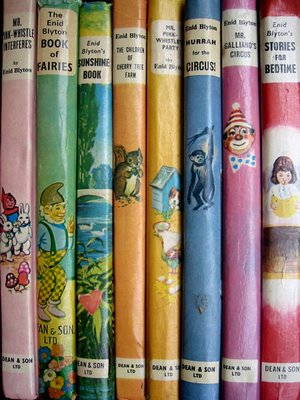
Perhaps Michelle’s blog post last week has put me in a confessional mood but I feel I ought to admit that I have never read a Nancy Drew book or a Hardy Boys’ mystery. Not one. Not ever. And you know what – I’m not going to either. Sure when I’m on a panel discussion I sometimes I feel a wee bit embarrassed by this perceived lack of education but to be honest, I don’t really care. I’m Australian. My parents are British. We read Enid Blyton. Deal with it.

But then of course I get the blank stares – who the hell is Enid Blyton? So I think it’s about time to celebrate the power of Enid.

Even when I started reading her books in the late 1970’s she was old fashioned – full of bizarre references to Tongue sandwiches, anchovy paste, macaroons and orangeade. I had little idea what these were and I certainly never had midnight feasts at boarding school or discovered German spies on an offshore island – but still I was hooked.

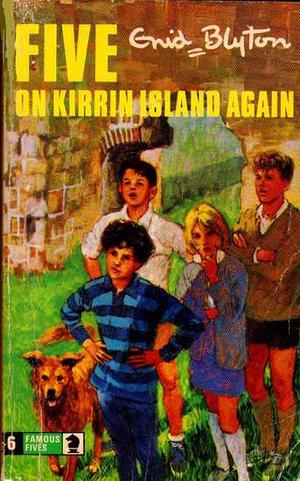
The Famous five were early favorites: Julian, Dick, George (the tomboy), Anne and Timothy the Dog – constantly finding themselves in trouble with gypsies, circus folk, mad scientists and smugglers. I was never very keen on the Secret Seven – they were ‘dags’ (Australian for nerds). My other favorites, however, included the ‘Secret Series’ (such as The Secret of Spiggy Holes and The Secret of Killmooin) and The ‘Mystery series’ (such as The Ring O’Bells Mystery, The Rubadub Mystery). But my all time favorite was the ‘Adventure’ series – The Island of Adventure, the Castle of Adventure, The River of Adventure – you get the picture. Enid was never what you’d call innovative with her titles.

What was the enduring power of these books? I think the Harry Potter phenomenon captures something very similar – the ‘derring-do’ of the British child. I’d even go as far to call it an archetype – and I fell for it hard. How I wanted to go for holidays in a horse drawn caravan and encounter circus folk, or have famous aviator parents who flew you to mythical lands. Why couldn’t I get mumps and recuperate in an English village full of mysteries? Why wasn’t I allowed to sail to my own secret island?!

Believe it or not I think kids are still reading Enid Blyton – despite the fact that they are a product of a bygone era in which racial stereotypes and British imperialism is rampant. Despite all this, however, I’m happy to stand proud by Enid – and I bet that George (really gender confused Georgina) and Timmy the dog would whip Nancy Drew’s butt any day of the week.

You’ve got to be Brave. The Revision Process at One AM.


By Clare Langley-Hawthorne
www.clarelangleyhawthorne.com

I’ve spent the whole weekend knee deep in revisions for my latest manuscript and I believe me, this aspect of writing is as challenging as writing the first full draft. Granted I forced my husband to be on twin duty the whole time, so he’s probably still recovering too, but it made me realize how much the writing process really is just that – a long and detailed (often arduous) process.

Writing historical fiction means that I have to incorporate a sense of time and place that is backed up by significant amounts of research. It also means that at every point in the revision process I find myself second-guessing historical accuracy. Not just the big stuff like making sure my characters aren’t jumping aboard the Concorde in 1912 but the little stuff, like the nuances of speech, use of slang, and the way people perceived the world around them. Sometimes I have to confess, if I don’t know and can’t find the answer I just go with my gut and make it up. Hey, this is fiction after all.

I view revising as adding the second and third coats of paint to a project – each layer adds a subtly and a depth to the characters, to the setting, and to the themes that swirl around the plot. What I find the biggest challenge is avoiding what I call ‘tinkering’ – changing my mind over a minute plot point only to find it has rolling ramifications and then (in total disgust) I find I have to go all the way back and return it all to the way it was. I guess this is what people call a ‘learning process’ but I seem to be a bit ‘learning challenged’ when it comes to this – and still find myself adding complexity where NO MORE is needed! ‘Keep It Simple Stupid’ is a motto I need to have branded to my forehead.


Those who want to see the writing process in action can find me sitting in my writing studio, a converted garage in the back of our house, bleary eyed at one o’clock in the morning, determined to finish the next chapter as I’m ‘on a roll’. I might be on the internet checking on a historical reference, looking up the architecture for a historic home or searching The Times database for an event the latest fashions for that year. I might even be using the delete key to liberal advantage as part of the revision process involves getting rid of all the extraneous stuff that I find stops the flow of the narrative (sometimes bringing tears to my eyes if it was a point of historical research I spent hours on!)

Yesterday I deleted a whole chapter – painful but necessary. I then merged two minor characters to streamline the plot. I decided one scene moved like molasses and I got bogged down in worrying whether the house should have gothic archways or not…Time passed. It was one am…Time to call it quits till the red pen, the axe and the delete key were brought back out to do it all again.

Ah the joys of revision. You just got to be brave…

Oh, The Glamour of it all

By Clare Langley-Hawthorne
www.clarelangleyhawthorne.com

How I wish that air travel was like it used to be – glamorous, exotic, even adventurous. Now it is a grueling ordeal which, after the recent long haul flights to and from Australia, makes me wonder why I even bother to fly at all (probably because I have no choice).

Our flight to Sydney was actually good – we had two rows of four seats for us all risking that no one would, in their right mind, want the middle two seats in the final two rows in economy if they knew there was a three and a half year old sitting on the aisle. Our plan paid off and the boys got to stretch out, so we actually got a fair amount of sleep on the 15 hour flight over. But landing in Sydney in the middle of a thunderstorm,with each twin threatening to throw up and crying the eternity it took for us to land amid the lightning and rain, soon brought home the realization that flying is no fun at all.

Once on the ground we also had to wait on the tarmac as lightning prevented any of the ground crews from operating the jetways with the result being that four jumbo jets (at the very least) all deplaned (a word which I never thought existed) at the same time once the storm passed. Two hours getting through customs and immigration – and we’re bloody Australian citizens – meant that we missed our connection to Melbourne and could not get on another flight for four hours. Great, four hours in Sydney airport with three and a half year old twin boys after a 15 hour flight. The thing that got to me the most was that no one seemed to give a shit. Not at the airlines, not at customs. That’s what flying is all about now – endurance.

Can you put up with the power play of the customs guy who refuses to let you go in the shorter line because (and I quote) “Just because I said no” (bastard!) despite two little boys in tow.

Can you put up with the Qantas staff who shrug and say ‘oh well’ when you are faced with a four hour wait after a long flight mainly due to the fact that Qantas had originally cancelled your international connecting flight (without telling you) forcing you on to a domestic flight which meant clearing customs etc. in Sydney – which meant you were screwed.

On the return flight, there were no spare seats so the boys got to sprawl over us instead (I was in a mini Yoga session trying to contort my body so I could sleep amongst the toddler heads, feet and arms). Qantas flight staff appeared maybe three times the whole flight and couldn’t even be bothered handing out a kids activity pack (good thing I always have about 100 hours worth of entertainment packed into a backpack and miracle of miracles our in flight entertainment did work – the family behind us had none that worked!) I guess at least the return flight was smooth but still the food was lousy, the service (if you can even call it that) was indifferent and this was on an Australian airline – which used to be a safe haven – an expensive but welcome change to the American flying experience.
No more.

So as I gear up for my first ever book tour which my publisher, Penguin, is actually paying for (!) for The Serpent and the Scorpion my excitement is tinged with trepidation. Because lets all face it – flying today is not what it used to be. Flying even in Australia is not what it used to be and that’s damn depressing.

So much for jet-setting to glamour and fame.

TOTALLY ARBITRARY AUSTRALIANA

By Clare Langley-Hawthorne
www.clarelangleyhawthorne.com

As I was in Melbourne Australia last week and am now sunning myself in Queensland (well, given my complexion, hiding from the sun beneath a layer of sun cream and a wide brimmed hat) I’ve been thinking a lot about what I love (and hate) about Australia. Here’s my list – totally arbitrary mind you, so feel free to chime in and let me know what you love and hate about the place!

TOP 5 THINGS I LOVE ABOUT AUSTRALIA

1. The beaches

Of course my number one has to be the natural environment. Australia is a beautiful and terrifying country – amazing beaches, stunning scenery in both the outback and the bush, and of course awe-inspiring desert landscapes. However, if I was to narrow it down to just one thing it would have to be the beaches. I haven’t seen anywhere in the world that can compare.

2. Pavlova (the best dessert ever!)

Next on my list is pavlova – a meringue desert which is sublimely sweet, sticky and delicious! Whenever I come back to Australia I always put on at least five pounds reliving my childhood by eating my way through all the foods I love and miss. Pavlova tops the list but I haven’t even had a sniff of one as yet – and I’m getting desperate!

3. Cadbury Chocolate

Bugger the Swiss chocolate, I’m all for the good Australian Cadbury milk chocolate. Originally from England, the local version has some fabulous Australian favorites- Caramello Koalas and Freddo Frogs to name just two. I seriously haul pounds of this stuff back to America (aside from what’s already padding my derriere!)

4. Trams

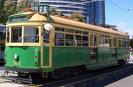
Coming from Melbourne I have to include trams on my list – the ubiquitous mode of public transport in Melbourne. I rode a tram to school and the old green and yellow rattlers hold a special place in my heart. I think there’s one that trundles up and down the embarcadero in San Francisco but I love the old ones in Melbourne where kids used to hang out of doorways and which, in winter, would be freezing inside as the open doors let in the cold air.

5. The irreverent and colorful sense of humor (no-holds barred, no political correctness just ‘saying it like it is’)

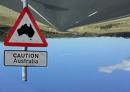
Finally, the most refreshing thing about being back in Australia is the totally irreverent sense of humor that is on display every where you go. This is the hardest to explain to non-Aussies but you just know you’re back in Australia when you see something like this.

WHAT I HATE ABOUT AUSTRALIA

This is where I will get into trouble…

1. The accent

Okay, I know I’m going to get comments on this but after 13 years living in the US the full frontal Aussie accent when I arrive can be truly horrific! There are degrees of ‘ockerism’ as we call it but still, when it’s bad…it’s bad.

2. Australian Rules Football (‘Footy’)

Melbournians obsessive love of Australian Rules Football is enough to make me get back on a plane and leave immediately. I grew up with all the ‘footy’ madness and now, even after just one week in Melbourne, is enough to make me scream!

3. Racial intolerance

Although Australia has come a long way I still sense an underlying intolerance particularly towards the aboriginal people that I still find disturbing. It is often veiled in humor but it is inescapable.

4. Chiko Rolls

I have only one food item on my list and it is peculiarly Australian – the chiko roll – it’s like a deep fried egg roll filled with some gross concoction of mutton, rice, cabbage and God only knows what else. Just describing it turns my stomach!

5. Being a 15 hour plane ride from bloody anywhere else!

My final ‘whinge’ about Australia is its location – I mean seriously it’s a bloody long way from anywhere else…so I’d better enjoy sunning myself on the beach at Palm Cove while it lasts!

Where Evil Lurks Beneath the Sun or Picnic at Hanging Rock

By Clare Langley-Hawthorne
www.clarelangleyhawthorne.com

As I’m in Australia at the moment, visiting relatives and friends, I thought it was about time I discussed some home-grown Aussie mystery. If you’re thinking I’m sunning myself on the beach somewhere you’d be wrong – Melbourne is in the depths of winter so think rain and lots of it! Since I’m in the cultural capital of Australia (sucks to Sydney – you can see where my allegiances lie!) I have to talk about one of my all time favorite mysteries – Picnic at Hanging Rock.

I read the book by Joan Lindsay when I was about twelve and I was convinced it was based on a true story – the eerie mystery surrounding the fate of a party of schoolgirls who visit Hanging Rock was deliciously fraught. Then along came Peter Weir’s film and the whole ambience and sexually charged atmosphere came to the fore. There are even hints that the events in the book may have been based on events in Joan Lindsay’s own life but there has never been any record found of anything similar happening. Yet the mystery endures today, probably because it remains unsolved (although there is a missing final chapter which Lindsay wrote that apparently solves the mystery. It was excluded in the original book and, to be honest, I don’t want to even know what it says).

I’ve visited hanging rock (Mt. Diogenes) and each time I was struck by the strange energy of the place. It is located just outside Melbourne, where I grew up, and is now forever associated with those haunting few words :
“On St. Valentine’s Day in 1900 a party of schoolgirls went on a picnic to Hanging Rock. Some were never to return…”

Hanging rock is a place where anything is possible and there is a distinct evil vibe that is hard to ignore. When you climb the rock, your sense of perspective and time becomes confused. I think that’s what makes Peter Weir’s film so incredible. He captures the essence of a summer day at the turn of the last century, its drowsy, erotic overtones as well as the heady sense of foreboding – that evil of an unknown nature might have taken the girls forever.

The place itself was the most important character in the book as well as the movie. What places have inspired the same fear within you?

The Ideal (Fictitious) Villain

By Clare Langley-Hawthorne
www.clarelangleyhawthorne.com

John Mortimer, creator of Rumpole, wrote that “most of the interest and part of the terror of great crime are not due to what is abnormal, but to what is normal in it; what we have in common with the criminal rather than the subtle insanity which differentiates him from us.” I couldn’t agree more – for me, it is the commonality rather than the abnormality that makes a villain truly villainous.

Take Doctor Crippen – an unremarkable man in real life, the least likely man perhaps to have poisoned and dismembered his wife or to have been pursued across the Atlantic with a young mistress in tow disguised as a boy. Part of the fascination with this case is the sheer ordinariness of the supposed murderer – and now, with DNA evidence casting doubt on whether the woman whose body was found was that of Doctor Crippen’s wife, Cora, the mystery of what actually happened may never be solved.

In fiction of course, some of the most fantastical crimes that occur in real life can never be used simply because readers would never believe them. Take for example the man who murdered his wife over an affair that happened 40 years before and then left her body as a gift beneath the Christmas tree. Writers have to walk a fine line with villains too, making them both believable as well as intriguing. Are they merely the flip side of the protagonist? Are they an ordinary person pushed to the brink? Or does some deep psychological wound create the monster within?

As a historical mystery writer and fan, I have a preference for the enigmatic ‘villain or not’ character. I still recall the terror I felt as a twelve year old reading Daphne DuMaurier’s Rebecca late one night when I realized Maxim de Winter may have murdered his wife.
Part of the pleasure of reading Dickens, for me, is his rendition of such memorably odious characters as Mr. Murdstone, Uriah Heep and Steerforth (and that’s just in David Copperfield!)

As for female villains, I love Annie Wilson in Dorothy Sayers’ Gaudy Night. Even though no murder is committed her vitriolic outburst and her ability to mask her hatred beneath sheer ordinariness and subservience made her a perfect villainess in my book. Then of course there’s Mrs. Danvers in Rebecca and that other Annie in Stephen King’s Misery…now they’re just downright bloody terrifying.

So what makes the ideal ‘fictitious’ villain for you?
Please also join me as I guest blog at Good Girls Kill for Money where I discuss what makes the ideal ‘fictitious’ husband…which is in no way inspired by my musings on villainy…

There’s No Place Like Home?

By Clare Langley-Hawthorne
www.clarelangleyhawthorne.com

I did a radio interview on Friday and the host asked me “you were born in Canada to British parents, grew up in Australia and now live in America, so where’s home?” It took me just a few seconds to answer because as my children were born in America, for me, wherever they are is home. Yet the question has a deeper resonance in many respects. As a writer I get to determine where my characters live and what their heritage is. I get to decide whether, for them, they ever find ‘home.’

My parents and I arrived in Melbourne in 1973 when Australia was a far cry from the cosmopolitan place it is today. My mother thought it parochial and frightening. In many respects it was as alien to her as the moon would have been. A clear vaulted endless sky to her beloved green England that was (more often than not) shrouded in cloud and rain. I grew up with the image of England firmly entrenched in my head. Canada (which I left when I was a year old) was little more than a place on a map, but England – that was the place of my ancestors, the place of all my parents’ memories and the stories I read as a young child. When I left Australia to come to America I didn’t really have any misgivings and since living here I have had few hankerings for the place – preferring to make my home wherever I lay my hat. For my husband, however, Australia remains firmly rooted in his consciousness. There will never be another place that’s home for him.

I found it intriguing that as soon as I started to write my first novel, Consequences of Sin, I knew it would have to be set in England and I knew I would be drawing upon my parents’ experiences, in both the North and South, rather than my own. I also found that my main character, Ursula Marlow, was in a similar predicament to me – she was effectively homeless. Lancashire, the place of her childhood, was no longer home. Her father, having made his fortune, moved to London to show the world that he had finally made it. Yet London was not her home either. Not being a member of the aristocracy (her father is bourgeois ‘new money’ after all) she has an entrée into society only by virtue of his money and she will never be truly one of them. Essentially, she roams the earth as a perpetual outsider.

If you look up the word ‘home’ in the dictionary you will find a myriad of definitions – concepts which I get to toy with in my books to keep my characters off guard. At least my characters haven’t started to complain about my treatment of them like they do in Spike Milligan’s hilarious book Puckoon – well, not unless I’ve had one too many glasses of red wine (drinking, now there’s an Aussie trait if ever there was one!)

I’ve been doing a number of library panels this summer and most of the authors seem to agree that their characters are outsiders. More often than not, this is what provides them with the ability to observe and solve a mystery in ways that those characters who are at home within themselves and society cannot. I like the idea of the homeless character constantly searching either for a sense of self or reconciliation with their own past. I wonder, though, how much I am projecting my own search for home in my books. Perhaps it provides a unique perspective as, being essentially nomadic, I am just as happy to immerse myself in researching another time and place as I am to board a plane and go live in another country.

Will my children feel the same? Will America be their home or not? Will I ever let my fictitious children find that comforting ideal? In short, will Ursula Marlow find her home before me?