Out Damn Block!

by Clare Langley-Hawthorne

http://www.clarelangleyhawthorne.com/

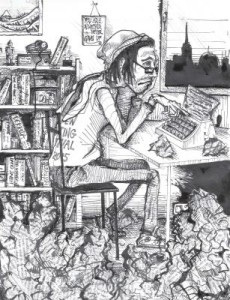
We at TKZ had a mini writing school yesterday for our Sunday post and one of the questions posed was about how to deal with writer’s block. At the moment I’m on the final, final, final edits (that’s when even I am totally sick of the manuscript!) and what I am struggling with is what I call ‘final editor’s block’.

I’m not talking about the big stuff like plot or character – I’m talking about those small, yet irritating things that you start to notice when your on the homeward stretch. For me the things I particularly notice are:

  • Overuse of the em-dash: I used to overuse the ellipse…but now, I’ve gone and got married to the em-dash and – just to interject here – I’m seeing those damn dashes everywhere!
  • Repeated words: It drives me nuts that even after all these iterations I still find myself repeating the same words and images. In my current WIP my writing tics include too many ‘sharp’ or ‘brittle’ replies and dry mouths. I mean there’s only so many times people can swallow, lick their lips or have their mouths feel like glass-paper (the precursor to sand paper in case you were wondering).
  • Boring dialogue tags: I try (I really do!) not to use so many adjectives but ‘said’ and ‘asked’ get really boring and when in edit mode trying I try to balance the boring with the slightly more interesting repertoire of ‘replied’, ‘responded’ or ‘queried’ tags without becoming ridiculous (like having people ‘exploding’ or ‘exclaiming’ all over the place!)
  • Flat writing: When there are still tiny pockets of sagging, flabby writing…shit, why are they still there?!

The problem I find is that when in final edit mode I often experience ‘editor’s block’ – when I’ve lost the ability to know what should be changed and what should not, when I’m afraid I’ll start buggering up the good bits and when I’m down to the last persnickety edits and I can’t think of how to improve the manuscript without someone else’s ‘mouth going dry’.

It drives me a wee bit crazy but as much as I read Dickens (far more inspiring than the thesaurus); listen to tortured 80’s music; and brainstorm ideas, I still feel, well, ‘blocked’.

For me writer’s block per se hardly ever happens and when it does I have lots of strategies (mostly driven by panic) that help me overcome the fear of the blank page. It’s another skill entirely, however, for me to overcome the inner ‘editor’s block’ I get when gazing at the page crowded with words – words that I have already combed and preened over many iterations…

So any ideas on how I can tackle the dreaded ‘editor’s block’? How do you manage the homeward stretch edits and, let’s face it, do you ever know when you are really, well and truly ‘done’?

~~~~~~~~~~~~~~

Coming up on our Kill Zone Guest Sundays, watch for blogs from Sandra Brown, Steve Berry, Robert Liparulo, Paul Kemprecos, Linda Fairstein, Oline Cogdill, James Scott Bell, and more.

Sunday Writing School

We’re having another one of our periodic Sunday Writing Schools today at the Kill Zone (See the link to our inaugural school).

Here’s how it works: We post a couple of writing-oriented questions that we’ve collected over the weeks, and do our best to answer them. Readers can post more questions in the comments. Feel free to chime in with your own opinions, including snarky ripostes to our advice. This is basically intended to be a free-for-all exchange of ideas about writing, not a serious-minded Fount of Wisdom.

We’ll just have some fun.

The first question in the mail bag is from Win Scott:

Q: I know some writing books say not to use prologues, but I need to open my story with an event that precedes the main story. This event is also much more dramatic than my first chapter, and it lays the groundwork for everything that comes next. Can I use a prologue in this case?

A. [From Kathryn]: I’ll admit my bias here–I don’t like prologues. I think they’re old fashioned, and you risk turning off screeners if you use them. Readers don’t care when you start your story, so why not make your Prologue your “Chapter One,” and then turn what was your first chapter into a “forward flash” in time? You can add a date-anchor at the beginning of the chapter to orient the reader in time. I’ve seen many thrillers use this technique, and the effect is much more immediate and dynamic than if you use a prologue.

But that’s just my two cents. I’ll let the other Killers chime in.

Here’s a question from Joy F.

Q. What are some methods of getting over writer’s block?

A. [From Joe] Getting the juices flowing can be tough sometimes. We all experience it. Here are a few tips that might help. Try writing the ending first. Consider changing the gender of your character or the point of view. Tell the story or scene from another character’s POV. Just for grins, switch from third person to first or vice versa.

You don’t have to keep the results of these exercises but they might boost your imagination and get you going again.

(If you would like to ask other questions today, feel free to add them in the Comments. We’ll answer them there.)
~~~~~~~~~~~~~~
Coming up on our Kill Zone Guest Sundays, watch for blogs from Sandra Brown, Steve Berry, Robert Liparulo, Paul Kemprecos, Linda Fairstein, James Scott Bell, Alexandra Sokoloff, and more.

How Technology Will Change The Way We Read And Write

by Clare Langley-Hawthorne
http://www.clarelangleyhawthorne.com/

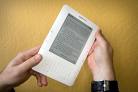
Last week my husband forwarded me an excellent article in the Wall Street Journal (http://online.wsj.com/article_email/SB123980920727621353-lMyQjAxMDI5MzI5MTgyMDE5Wj.html) on how e-books will change the way we read and write and it sparked a great deal of enthusiastic debate between us. The author of the article, Steven Johnson, basically had his ‘Aha’ moment when he bought, on sheer impulse, a copy of Zadie Smith’s book ‘On Beauty’ on his Kindle. His ideas about how technology can revolutionize not only the book publishing industry but the act of reading itself are, I think, intriguing as well as exciting.

There were three aspects of his article that immediately caught my attention:

The way that technology will transform the essentially solitary, linear act of reading into a community, interactive activity;

The possibilities that technology open up for the e-book-world from hypertextual, searchable books to global book groups;

The revolutionary way e-books will alter the way people buy books from pay per chapter options to the reemergence of ‘forgotten’ books that are now being rediscovered.

Imagine your home library transformed into a virtual, searchable repository of knowledge…

Imagine being able to drill down into the backstory of a book just by clicking on hypertext links embedded in the e-book (as a writer of historical fiction this opens up all manner of possibilities to help inform and deepen the reading experience for my books)…

Imagine being able to highlight a paragraph in the book you’re reading and make comments that will be accessible to both the author as well as the community of readers who are looking at the same e-book…

After reading this article, I was like, wow, the possibilities are endless…and when I look at my four year old boys I can’t help but wonder – what will the world of ideas and books be like for them in the future?

So what do you think about Steven Johnson’s take on the future of e-book technology? What do you imagine that future will be like? What excites you the most about the way technology can revolutionize both the way you read and/or the way you write?

Dinner Party for Six

by Clare Langley-Hawthorne

So after battling two bizarre bouts of benign positional vertigo (who knew there even was such a thing?!) and a case of Laryngitis I have to say inspiration is a bit thin on the ground at the Langley-Hawthorne house, so I thought ‘who would I want over for dinner to help liven things up?’ To limit myself I went for ‘dead writers’ only – much more fun (and, hey, I am the historical author after all). Although the choices are vast, I also wanted to focus on those who would inspire me the most as I try (once the world stops spinning) to finish the third Ursula Marlow book.

Voila! Here’s my list for my ‘dinner-party-for-six’ (my husband gets to go out and eat with the boys while I entertain the spirits of writers past):

  • D.H. Lawrence – so I could get the low down on use of flowers as sexual imagery:) and ask how to really write a good sex scene
  • Daphne Du Maurier – to feed off her Gothic vibe
  • Jane Austen – so I could ask her (a) is she a vampire? and (b) how does she feel about Pride & Prejudice becoming a new bestseller as a ‘monster mash’ with the living dead? I could also do with her as a muse for some really good one-liners
  • Nancy Mitford – because she must have been such a savage wit and I need more of that in my life
  • Ted Hughes – tragic, hunky, talented poet – I can always use that kind of help (really, need I say more? – though I spent my adolescence despising and blaming him for Sylvia Plath’s death)
  • And me…of course!
There are many other ghosts-of-writers past whom I would dearly love to entertain, but this is the list of those I feel I need the most right now…

When you lack for inspiration who would be your ‘dinner-party-for-six’ picks and what would ask them?

What If?….

By Clare Langley-Hawthorne
http://www.clarelangleyhawthorne.com/

I confess to being a total research junkie when it comes to my historical mysteries and I get excited by the smallest things – the surprise dedication and signature in the used book I just bought on the Ulster Crisis of 1912-1914 of the Reverend Ian Paisley (who, no matter what your politics, was a towering unionist figure throughout the 1970s and 1980s); the amazing trove of Kali books I discovered in a second hand bookstore in Omaha, Nebraska; the thrill of reading an original Baedeker guide to Palestine in the British Library….the list goes on.
I confess I get a buzz from delving into history – but I also love playing the ‘what if?’ game. Fiction is, of course, all about the ‘what if’ game but with history you can have even more fun. I don’t usually go in for the major things like what if Germany won the First World War – that’s certainly interesting but a little too much like fantasy for my sake – no, I like to play the ‘what if’ game at a personal, character driven level about more minor historical events. In my current WIP (the third Ursula Marlow book) I am playing it out on a major character and using the Irish Home Rule crisis of the 1910s as my backdrop. For many months I’ve been poring over the history books looking for minor references to activities that ultimately led to the hanging of Roger Casement in 1916 for trying to secure an alliance with Germany (and a supply of armaments) for an Irish uprising. I can’t say any more (and besides I don’t want to bore you senseless on a Monday morning!) lest I spoil the plot – but the key is the thrill of the ‘what if’ game.
I was asked by an audience member at one of my panels at Left Coast Crime whether there were other periods of history I would like to explore, to uncover ‘the hidden history’ or perhaps even the ‘alternate’ history…I found this question a great challenge. I mean where to start?! At the time, however, I think I answered something particularly lame but for me, apart from the Edwardian period, I would love to explore and play the ‘what if’ game across the centuries.
I’d love to explore the stories of the women spitfire pilots in World War II, the spiritualist movements of the early 19th century England, the phrenology and mesmerism movements in Europe, and encounters between the British and the aboriginal people in Australia in the early days of colonialization (just to name a few ideas!). I have about four proposals already whizzing around my head with some ‘what if” scenarios for my characters against these backdrops… but I’d be spoiling all the fun if I divulged anything further – so I’m going to pass on the challenge to you – is there something in history (recent or ancient) that you would like to explore, ‘rewrite’ or play the ‘what if’ game? If you could go back and be a fly on the wall – when would you chose?

So much for the Glory Days

by Clare Langley-Hawthorne

Just a short blog today as I’m on the road – the railroad that is. My family and I are riding the California Zephyr from Emeryville to Denver for Spring Break (who knew preschools had Spring Break?!) While jostling along enjoying the magnificent scenery I couldn’t help but reflect that the glory days of the American railroad are well and truly gone. Though I could just about pretend at night in the sleeper (when I closed my eyes) what it must have been like in the 19th century to travel this way (in much more luxurious surroundings – sigh!) the pathetic ‘amenities’ and airline quality food soon dispelled any imaginings I may have had. So this got me wondering – how does a writer successfully evoke the past when so much today has abandoned any notion of respect for it? This then led (as my muse often does) to more immediate issues at hand as I write the third Ursula Marlow book – how does an author balance action and atmosphere when the book must get people turning the pages as well as evoking the past?

It’s a tough balance to achieve – especially when I want to utilize all the senses to help modern readers get a whiff of how Edwardian London must have smelled, sounded and felt. It’s easy when I’m in London where the past shadows every footfall down the streets and alleyways – but here in America? – in some of the towns I passed on the train? – how to make the past accessible to them? How to recreate life as it then was while also telling a thumping good story?

Who do you think achieves this balance successfully?

I can tell you one thing – I won’t be using Amtrak as my guide…

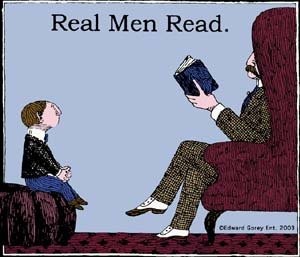
Real Men Read Fiction

by Clare Langley-Hawthorne

As I rushed to finish my current book club book over the weekend (which is, by the way, the terrific Snow Flower and the Secret Fan by Lisa See) I could sense my husband getting antsy – he kept asking me what I had to ‘do’ each day and, when I remained vague, he catalogued all the errands and chores that he would be doing. I felt I could hardly confess that apart from playing with the boys, cooking and the like my only plan was to read…because let’s face it in my husband’s world that was tantamount to doing pretty much ‘bugger all’.

So what is it with men and reading?! I did a quick google search before writing this blog and the statistics were depressing – basically the death knell for the male fiction reader has well and truly been rung. I only have to look at most of the men I know to be convinced of this- sure they read (well sometimes) but when they do it’s usually non-fiction, and the mere suggestion of forming or joining a book club is met with stony-eyed suspicion. As all the surveys indicate, women are the major purchasers of fiction, they consistently read more books and participate in book groups to the almost complete exclusion of men. So what does this mean for the publishing industry and, is it in part the fault of the industry that men don’t want to read much fiction anymore?

The exception to the fiction-free zone for men is (apparently) what some of the articles termed ‘manfiction‘ – you know, the full blooded male adventure thrillers by the likes of James Patterson, Clive Cussler or John Grisham – the kind of stuff that some of my fellow bloggers might write (though I have to confess I doubt any of my stuff would ever be called ‘manfiction‘ by any stretch of the imagination…) When it came to most other forms of fiction, however, (particularly that written by women) the gap soon widens up and this started me wondering: who failed whom? Was it the industry? Writers? Or was it just all the men’s fault :)?

I certainly know that when it comes to historical fiction everyone in the industry always says that a strong female protagonist is essential unless you are writing military historicals…Romance, which commands a whopping percentage of the market is pretty much solely for women and when it comes to that dreaded term ‘literary fiction’ , I think women are also the primary target – for they rule when it comes to book groups (and book groups are probably the only way literary fiction can become commerically successful). So what are you blokes out there going to do about this situation? Do you even care?

If you are a writer, does the fact that so few men read fiction affect your writing? For me I confess I have always assumed that women will be my main readership base (I’m always amazed when I get an email from a male reader who loves my books!) and I probably (though not deliberately) write accordingly. But it depresses me nevertheless – so will one of you endangered male fiction readers out there try and explain to me why you think this is the situation and tell me (reassure me perhaps?) – do you think it’s ever going to change?

Too Close for Comfort?

by Clare Langley-Hawthorne
http://www.clarelangleyhawthorne.com/

I was a little disconcerted when I read in my old local paper from Melbourne Australia, The Age, online about the weekend’s shootings of four police officers in my current home town of Oakland, California. It wasn’t the incident (tragic though it is) that was the cause of my disquiet- sadly Oakland is all too frequently associated with violence and crime these days – it was the fact that the news had travelled thousands of miles across the Pacific to become a headline there. No doubt we will have to fend off worried phone calls from family in Melbourne as they lament (as they always do) the current state of America…but it also reinforces the global reach of news these days and how fear, like tragedy, is imported day after day till it’s firmly embedded in our psyche to the point that we become either overwhelmed or inured to it. This made me consider why I write what I write and what is for me ‘too close for comfort’.

Why, for instance, do I write a historical series rather than a modern day crime series dealing with the very real fears we all face? On one level I like the sheer escapism of writing about another time and place and I love immersing myself in historical research but on another level I think perhaps I’m also avoiding writing about things that cut too close to the bone. Call it ‘dread avoidance’ – the art of skirting around the very essence of fear itself. Stephen King I believe once said that he wrote ‘horror’ because at some level writing it protected him and his family from it ever happening to them. I think for me the opposite is true – not writing about it a kind of protective measure (which seems a slightly pathetic admission doesn’t it from a mystery writer?)

There is obviously plenty of room in the world of books for stories that both confront fear and those which provide a heady escape from those fears. For the development of my own craft, however, I know that one day I will have to set aside my inhibitions and face ‘the darkest dread’ in my stories. What I want to know is how you as a reader or a writer feel? Are there some things too close for comfort that you could neither read nor write about? How do you face the challenge of confronting these issues as well as these fears? If you write about them does it make it easier or harder to confront?

New Characters Wanted

by Clare Langley-Hawthorne
http://www.clareangleyhawthorne.com/

Jane Austen was a vampire…Pride & Prejudice meets Zombies or Predator…

What next – Charles Dickens as a serial killer? Charlotte Bronte as a transgender PI? I’ve had enough of people ripping off famous authors, famous characters and famous historical figures. Create your own bloody characters I say!

Inspired by yesterday’s blog post on creating powerful characters that jump off the page I simply had to vent today (yes, it’s my Monday rant!) about the use of what I call gimmicks rather than characters. I know that in today’s commercial environment, the publishing industry (just as the movie industry) wants name recognition but really…WTF???

In Australia we used to have a segment called ‘what cheeses me off’ – and here’s mine for today – a list if you will of character gimmicks that drive me nuts.

  1. The rehash of past literary detectives – enough with Sherlock Holmes already! The only one who has pulled this off (in my mind) is Laurie R King and she created her own terrific character in Mary Russell on top of pulling off the aged beekeeping Holmes with aplomb…but for everyone else – enough!
  2. The ‘other perspective’ gimmick – Does the world really need Mr Knightly’s diary? What next – Uriah Heep’s peeping tom memoirs? Confessions of a rake by Mr Willoughby?
  3. The never ending sequel – Once a classic is done, it’s done as far as I’m concerned – so I don’t need to read Mr. Darcy’s Daughters or Pemberley the sequel (the latter was particularly bizarre I felt, though I confess I did read it!). The only ‘sequel’ I appreciated was the two books written by Jill Paton Walsh based on Dorothy L. Sayers unfinished notes.
  4. Real life historical figures as sleuths….I’m just not buying the King/Queen who can sneak out of court and go sleuthing…

Now don’t get me wrong, some people have managed to pull off these things and more power to them if their book sells. Jasper Fforde has a hilarious series featuring Thursday Next that spoofs all sorts of literary figures (I particularly loved the therapy session for the cast of Wuthering Heights in which Healthcliff [now a porn star known as the Black Stallion] arrives and then the session is disturbed by a bomb thrown by the pro-Catherine faction) – but unless you can achieve that level of sublime satire, I say, leave well alone.

In this environment, however, everyone seems to want the easy fix – the ‘hook’ that will draw in the sales without having to do the hard work of creating new ‘jump off the page’ characters. Call me old fashioned but the classics of tomorrow are not going to be reheated leftovers from previous classics – or are they? I sometimes wonder and despair…

So what ‘cheeses’ you off when it comes to rehashed characters…any others to add to my list?

What makes you stop reading?

by Clare Langley-Hawthorne
http://www.clarelangleyhawthorne.com/

Aloha from rainy Hawaii! Waiting for the sunshine and inspired by a panel I attended on the weekend at Left Coast Crime on ‘things that make me stop reading’, I thought I’d offer my top 5 reasons for putting a book down (or throwing it against a wall!) and find out from you what, as readers (and writers perhaps), you consider ‘deal breakers’ – when you just cannot continue with a book.

The panelists (Hallie Ephron, Mysti Berry, Kate Stine, and Sue Trowbridge) mentioned a number of things which caused them to put down a book and not read further. Here’s some of their (abbreviated) list:

  • Stereotypes
  • Lack of clarity – where the hell are we, when are we, who is talking etc…within the first few pages.
  • Gratuitous violence, sex or animal cruelty
  • Lack of character pull – the character fails to draw them in
  • Geographical inaccuracies (like someone flying all the way from San Jose to San Francisco!)
  • Prologue that seems gratuitous, manipulative or contrived

Reducing these issues to a list always seems to lessen the impact of the discussion but I agree with all that was said and with the panelists’ assertion they will forgive almost any of these if the writing is sufficiently compelling to keep them interested.
As for my top five list – well here goes:
  1. Characters that make me a yawn- if I’m not drawn in by them then I’m not going to keep plowing through the book.
  2. Set up requires more than just a suspension of disbelief but putting aside all reality.
  3. Clunky, awkward writing that requires way too much concentration – I want the story to flow, to draw me in – I don’t want to have to take out the paddles and brave the rapids to get there.
  4. A sense of manipulation or self-awareness – if I sense the author pulling the strings I’m taken out of the story (and I’m pissed off).
  5. Blatant inaccuracies that make me doubt the writer. I think when you start a book you place a great deal of trust in an author and if that trust is broken too quickly by inaccuracies or false steps it’s hard to regain it and keep reading
So what are the deal breakers for you – what makes you stop reading a book? What about in a series – when does an author ‘blow it’ and stop you from continuing? For me bringing back dead characters (Patricia Cornwall anyone) is a deal breaker – If I want that kind of plot twist I’ll tune in to General Hospital…What about you?