
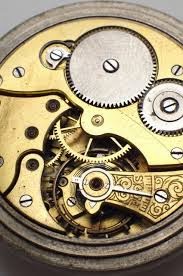
 Over the last couple of months I witnessed first hand the power of order and ritual in my writing – or, more correctly, I witnessed what happens when order turns to disorder and the ritual of planning and creating disappears. All this because I agreed to step up and volunteer to be president of my sons’ elementary school parent teacher organization and in a giant ‘poof!’ of hot air all my creative order and energy disappeared with it.
Taking stock after a couple of months I now realize just how important order, routine (and time!) is to my creativity – and how I have to reclaim them all, in order to re-establish the balance we all struggle to maintain between our writing life and our ‘other life’.
This fact was solidified when I read David Brooks’ op-ed in the New York Times entitled ‘The Good Order‘ – though this opinion piece veers into politics – it was the idea that creative people need to build and maintain their own order and routine that resonated with me – as well as the fact that doing so can be surprisingly hard (which the last few months have certainly demonstrated!). This op-ed piece also referenced a book entitled ‘Daily Rituals: How Artists Work” complied by Mason Currey (whose website on creative people’s daily routines I encourage you all to visit – if only to read first hand how many artists face their work with deliberation, ritual and routine).
Many writers establish very strict routines in order to get their writing done. Anthony Trollope was at his writing desk by 5:30am and insisted on completing 250 words every fifteen minutes for the few hours he had before his day job started at the post office. Trollope produced a staggering 49 novels in 35 years writing this way. Stephen King gets up at the same time each day, has a glass of water and his vitamins, and sits at the same seat at his desk, where his papers are arranged in the same way each day, before he starts to write. King says this helps tell his mind this is time to start dreaming (a sentiment I love by the way!). When John Grisham was first starting out, he would arrive at his legal office by 5:30am each weekday to write with a goal of completing a page a day. He says his rituals then were “silly and brutal but very important”.
Since volunteering my time and seeing it evaporate just as quickly, I now need to reestablish a new set of writing rituals and routines. I’ve never been one to have any real ritual beyond what I call the art of showing up with my bum in the seat and my fingers on the keyboard each day – but now I need to establish a new order and a renewed sense of discipline. I’m even contemplating setting my alarm clock so I won’t be able to let my volunteer time bleed into my creative time.
So I’m turning to you my TKZers – how do you set your writing routine? Have you had to ‘reset’ that routine when circumstances changed and you suddenly found your writing time being eroded? If so, how have you gone about establishing a new routine or order?
Category Archives: Clare Langley-Hawthorne
What’s in a List?
 Last week Publisher’s Weekly reported that the New York Times was going to revamp its bestseller lists (see article here) to include reporting on niche markets including travel, humor, family, relationships and animals as well as (on a rotating basis) other niche lists such as Politics, Manga, Graphic Novels, Food and Fitness.
Now, I’m just as happy as the next person to see books I love listed on bestseller lists – but isn’t this all going a little too far? I mean already have to read Facebook posts from authors about hitting every conceivable niche bestseller list for that day or hour on Amazon but now I have to puzzle over what it means to be a NYT bestselling animal book (which is, I assume, by topic rather than author – though I suspect my collie Hamish would love to be on this list!).
Isn’t our obsession with term ‘bestseller’ getting to the point where it is no longer meaningful?
Apart from the obvious kudos, I’m starting to wonder what many of these lists actually mean (especially since many don’t necessarily reflect what you think they reflect). The NYT list, for instance, has a fairly secretive methodology based on weekly sales from a sampling from selected retail outlets. Although this methodology been the subject of controversy, nonetheless, I think it’s safe to say that the NYT list is pretty influential! The mantle of ‘New York Times Bestseller’ is a much coveted title – even though many of us aren’t exactly sure what it means.
As I said before, I love seeing books from authors I admire on bestseller lists and I admit I can be influenced by said lists in terms of deciding which book to purchase. But I am getting a little jaded by these lists too – and the thought of having niche lists for topics such as fitness and family, seems too much. I would be far more interested in seeing a list that breaks down mystery, romance, science fiction genres – but even then it could get so niche market driven that that the list becomes less meaningful to me as a reader (though we could have as much fun as this Melville House blog post in coming up with our own possible lists)
So what about for you? What do you think about niche bestseller lists like the ones the NYT are proposing? Does it make sense to you? Does the NYT bestseller list even resonate with you any more? Or do you think in the age of indie publishing, that Amazon or Nook sales matter more?
As a reader, how much influence do bestseller lists have? As a writer I’m assuming, like me, you would have no qualms appearing on any of them…
Don’t Belabor Your Prose
Today, in honor of Labor Day, I wanted to cover something that has been bugging me all week. It began last Monday when I started a new book and within pages the prose was already starting to annoy me. The words, or at least the author’s choice of long, lugubrious, often archaic words were already getting in the way of the story – and I wasn’t even at Chapter 2! As soon as I started to read I got the impression that the author was trying way too hard to impress the reader, rather than focusing on creating a compelling story. In some ways the writer was confusing style with content and in so doing, this reader at least, was no longer interested in reading. It had become too laborious. The words themselves had got in the way.
So why was this? I think in this instance it was the result of a naive writer hoping to show-off their linguistic prowess (or something like that – it felt like dictionary gymnastics at times!) and hoping perhaps that this somehow created an aura of literary validity (it didn’t!). What frustrated me the most was that the word choices detracted from what could have been a pretty strong start to a cozy mystery. It got me thinking about why – for someone like me who is drawn to perhaps the more wordy novels anyway (I love Dickens!) – was the prose was so off-putting? I decided it was simple – it was because it was unnecessary. And this at the heart of most things that go wrong with the start of a novel. Anything that feels unnecessary to the reader creates a barrier between them and the page. It stops them from wanting to keep turning that page. Instead, I like to think that a writer should go through a checklist, when reviewing their work, asking themselves a series of questions – something a little like this:
- Can I use a simpler word, phrase or description? When I substitute that, does it propel the story forward, or dilute it? (If it dilutes the power of what is being described or being said, then maybe the original word, phrase or description should stay).
- What is my reason for using a long/obscure word instead of a more straightforward one? Does it serve as mere affectation, or provide something more nuanced and appropriate in the circumstances? Am I using it because I think it makes me sound more erudite or because it’s the right word to use?
- Would most readers have to look the word up? (if so, why use it? It only stops a reader dead in their tracks).
- Does my writing sound like I just ingested a thesaurus? (If so, edit now!)
- When I read my writing aloud does it flow or do I find myself stumbling over the word choices I’ve made? (I find this an invaluable tool – because if I find myself tripping over the words I know I reader will find it hard to read the piece too).
Basically, don’t belabor your words. Let them flow, simply and easily. Readers will thank you.
So TKZers, tell, me what was the last book that you felt the author belabored their words? Any of your own advice to add to the checklist?
Thursday’s First Page Critique
I’m filling in for Jordan today and we have another first page critique. This one’s entitled ‘Discovering Aberration’ – my comments follow.
DISCOVERING ABERRATION
I stood before the lectern in the Grand Literature Hall clutching my mangled copy of Draganvich’s The Lament of the Beggar. Though I had the intention of reading a selection aloud, I found myself fixated on a note in the margin which caught my eye and caused me to pause. “I’m always homesick for the journey,” I had once written in ink speckled script, adding almost as an afterthought, “…no matter what it might hold.”
“No matter what it might hold,” I whispered absorbed in remembering.
It had been two years since my extended journey to the orient. Two years spent writing and searching for employment, poor as Job’s turkey. And then, six months ago everything simply seemed to happen on its own accord. The Oriental Adventure, the book I had written and published under the name Franklin P. Fitzgerald became a rousing success. I was honored by the Tetraelly Academy with a grant and a residency on condition that I teach. And then as suddenly as it all began I found myself, for lack of a better phrase, fantastically bored. Not weary, nor depressed, nor any other such nonsense. Bored, standing in front of a crowd of affluent students (any one of whom had inherited more than I had earned in my entire life), fumbling though the teaching process, and now lost in thought, remembering.
“Professor Fitzgerald?” came a voice from the young lady in the front row. “Professor, are you not feeling well?”
“Hm,” the sound carried almost unnaturally clear through the vast auditorium and over the sea of students. Even those in the back sitting elbow to elbow could hear the slightest of whispers, such were the acoustics. I looked at the book in my hands to the fog of young and wealthy sons and daughters, most wearing ridiculous collections of posed taxidermy. As was the growing fashion among the young and wealthy, they wore the corpses of beasts of the air upon their hats or beasts of the land slung over their shoulders, but never both. Strange, to have all these eyes on me, the eyes of the students and the threaded eyes of the animals.
It still holds true, thought I. Homesick for the journey once more, eh old boy. I fumbled to find myself again, seeking out my originally intended selection. “Yes,” I replied to the girl sitting directly before me. “I’m quite alright.”
MY COMMENTS
I have grouped my comments by heading, to make things a little clearer.
Setting? Genre?
Overall I had the sense from this first page that I was getting a lot of information I didn’t really need, and not enough of the information I did need. From the outset it felt like we were entering the fantasy realm (the Grand Literature Hall, Draganvich’s The Lament of the Beggar, Tetraelly Academy) and yet the reference to the orient and Job pulled me out of this and I was left wondering about what world and what time period I was supposed to be in. Was the main character a religious man? It sure sounded like he was about to give a theology lecture and his use of the expression ‘Job’s turkey’ made it sound 19th century – so I was a little confused from the outset as to whether this was fantasy or history (or both).
Nothing in this first page gave me much of a grounding for the world I was entering and, without this, I found it hard to get excited about the story. To be honest this first page left me wondering why I should care about Professor Fitzgerald, or his memories of his trip to the orient. I did like the idea of him being up on the lectern, suddenly gripped by memories of the past, and unable to present his intended lecture – but I needed a higher level of tension to become fully engaged and invested in the story from the outset.
Character?
I couldn’t really visualize Professor Fitzgerald. At first he sounded elderly, mulling over the past. Then it sounded like he was slightly younger and bored. Then he went back to sounding old again (particular when he thinks ‘eh old boy’). As a character he was too amorphous for me. I needed less details about the audience and more about him. I also don’t think a character who is merely bored (even if it is ‘fantastically’) generates a lot of narrative drive. I would prefer him to be haunted by his experiences in the orient and so when the memories return, they overwhelm him.
Redundancies?
So what makes it hard to critique this first page is that the details we do get don’t really seem drive the story forward. We get some background regarding Professor Fitzgerald’s journey to the orient but all we know is that he went poor, wrote a book that was a ‘rousing success’ and them ended up teaching. (As a side note why was the book ‘published under the name Franklin P. Fitzgerald’ – which makes it sound like this was an alias – when it appears that it is actually his name?) This information didn’t really compel me to care about Professor Fitzgerald.
Instead of piquing the reader’s interest with details of his journey to the orient, the author provides more details instead about the students. So we know they are affluent (this is repeated – we get told twice more that they are wealthy which is unnecessary repetition in the first page) and that they make strange taxidermic fashion statements. But even this makes it hard for me as a reader to visualize the world we’re in. Is it a historical setting in an alternative world? Or is it in our real world? Again, I’m left without any real sense of where the story is set in terms of time or place. I also found it strangely redundant to know that the students wear ‘corpses of the beasts of the air upon their heads or beasts of the land slung over their shoulders but never both’ – and are these beasts ones we would know or are they fantastical? I think the fashion provides plenty of scope to be intriguing but instead it seems stilted and too generalized. In a first page a reader wants to have the world evoked in a dramatic and sensory way.
Voice
So the author’s voice in this piece seems old fashioned and a little stifled at times, as if designed to evoke the past. This can work if used to good effect but at the moment the first page isn’t grounded enough in a vivid world/time period for this to be all that effective. Instead, this voice creates distance between the reader and the story.
Punctuation/POV issues
There is some lack of punctuation but, as it didn’t detract from the story, I’m not going to focus on this – except to point out that the internal monologue ‘eh old boy’ needed a question mark. When the professor is supposedly lost in his memories, staring at his book, it was also hard to understand how he knew that the voice was coming from the young lady in the front row.
Recommendations
I would recommend refocusing this first page on getting the reader intrigued about Professor Fitzgerald and what happened on his journey to the orient. I would ensure enough detail is given so the reader is well grounded in the world that he inhabits. I’d also do away with redundant details about the acoustics of the auditorium or the wealth of the students. The author needs to make it clear from the outset what kind of disturbance or event is going to provide the narrative drive to this story. Even the title ‘Discovering Aberration’ is ambiguous and I’d like to get some sense of where this story is headed…is it about species aberration? Does the plot turn darker and more ‘thriller-esque’ or is it going to be more of an alternate history or fantasy novel? It’s really hard to tell at the moment.
Finally, readers need a reason to turn the page and at the moment there isn’t enough happening to do this. Everything seems to hinge on the main character’s ‘ruminations’ which isn’t really enough (especially when they offer little in terms of drama).
So TKZers what feedback do you have?
Finding Your Voice
Yesterday I read a great piece by Lev Grossman (author of the Magicians trilogy) on finding his author voice through writing fantasy fiction (‘Finding my Voice in Fantasy‘). He admitted that he felt something was missing in the two ‘literary’ novels he had published and that, when he was producing those works, the writing came slow and hard as if he hadn’t quite found his ‘voice’ yet. For Grossman it was writing fantasy, and the liberation of writing against the literary expectations he had imposed on himself, that gave him the chance to discover his true ‘voice’ in his writing.
For Grossman “it was the most profound, intense writing experience I’d ever had. The icy grip of reality on my fiction cracked, and a torrent of magic came rushing out”. I love that line – for it encapsulates beautifully the experience of truly being in the writing ‘zone’ when your author voice takes over and allows the story to emerge.
I’ve recently delved into the writing world of YA and middle grade fiction and what occurred to me was most surprising. I expected my YA voice would be an easier one to access (I still feel most days like I’m 16 after all…) but instead, it was the middle grade world that set my voice free. Maybe it’s because I feel attuned to my nine year old twin boys’ world, perhaps it’s because I still read aloud to them each night and these books tend to be for the most part middle grade fantasy novels…who knows? Whatever the reason I felt the exact sense of liberation that Grossman describes.
I remember when I was writing my first book, Consequences of Sin, I certainly felt as if I was channeling the voice of my heroine Ursula Marlow – and when I returned to writing the third book in the series, Unlikely Traitors, that voice was inside me, ready to be channeled once more. I hesitated before deciding to write a middle grade book because I wasn’t really sure I’d be able to access that kind of ‘voice’ within me. To my surprise the voice that emerged was just as strong as Ursula’s.
The upshot of all this, is that I think many writers need to dabble in different genres to explore aspects of ‘voice’ which they may never have expected. I know plenty of writers who consider themselves ‘literary’ and, by default, superior to those of us who write commercial or genre fiction. For many of them the act of writing is a struggle (sometimes I wonder if they feel that the angst of it all somehow adds to the mystique). I wonder, if they allowed themselves the freedom to explore other genres, whether they would discover a new and more accessible ‘voice’ within them. I can only hope that others take Grossman’s lead and realize, as he did that:
“Writing about magic felt like magic. It was as if all my life I’d been writing in a foreign language that I wasn’t quite fluent in, and now I’d found my mother tongue. It turned out I did have a voice after all. I’d had it all along. I just wasn’t looking for it in the right place.”
Isn’t that great?!
So tell me TKZers how did you discover your writer’s voice?
The Day the Lamps Went Out

It seems auspicious that today should be my blog day since it’s the commemoration of an event that defines the end of the period I have written so much about. Today marks the 100 year anniversary of the declaration of war by Britain on Germany on August 4th 1914. As Sir Edward Grey is famously quoted as saying ‘the lamps are going out all over Europe, we shall not see them lit again in our lifetime’. To commemorate the anniversary the British Prime Minister, David Cameron, and the British Royal Family have proposed that all of Britain turn out their lights between 10pm and 11pm tonight, in remembrance of that tragic day.
I’ve written quite a bit on this blog about the importance of history and how, as a historical novelist, I try to evoke the past in my books. I think one of the most evocative periods of history for many people is the First World War. It seems to touch us on so many levels – from the loss of a generation of youth, to the visceral horrors of trench warfare that saw hundreds of thousands killed in an effort to claim often less than a mile of no-man’s land. We also have access to some incredible beautiful and poignant first hand accounts that capture a sense of the end of an era of empires and the beginning of a much altered ‘modern’ world. For many it is the lasting impact the First World War that elevates its significance in our collective psyche – from creating the conditions which would lead, tragically, to the second world war, to the genesis of many of the boundary and geopolitical issues that remain ruinously contentious to this day. The First World War saw the collapse of empires, the murder of a royal family, the creation of the Soviet Union, and the birth of a global movement to try and secure peace (sadly, The League of Nations could not prevent a second world war but it was the precursor to the present day United Nations).
I write about the Edwardian era, that supposed ‘golden sunlit afternoon’ before the Great War changed everything. Part of the challenge in writing about this period is to create a distance between what we know is to come and what the people in England actually felt, believed and feared at the time. They certainly feared a German invasion and distrusted Germany’s military build up – (Britain’s paranoia on this created the the era’s own mini arms race). To get a sense of what it was like in Edwardian England I rely mainly on primary sources to try and ensure I don’t create characters who have some kind of omnipresent ability to predict the horrors that were to come. I don’t think anyone at the time had any conception of the type of war that would end up being fought – or the destruction that warfare would bring (not just in physical terms but psychological). For me, Vera Brittain’s memoir, Testament of Youth, is still the most devastating portrayal of both the golden days before the war and also the impact of the war itself. So I thought I’d end this post one of Vera’s poems, entitled August 1914, which seems appropriate given what happened this day 100 years ago.
AUGUST 1914
God said, ‘Men have forgotten Me;
The souls that sleep shall wake again,
And blinded eyes must learn to see.’
So since redemption comes through pain
He smote the earth with chastening rod
And brought Destruction’s lurid reign;
But where His desolation trod
The people in their agony
Despairingly cried, ‘There is no God.’
Vera Brittain
I also leave you with a photograph of the powerful memorial produced by the Tower of London. It’s entitled Blood Swept Lands and Seas of Red and has 888,246 scarlet poppies on display, representing WWI’s British and Commonwealth military dead.
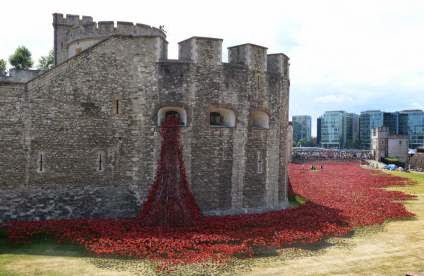
Lest we forget.
London Calling
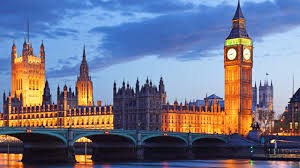
I’m on vacation this week in my favourite city – London. It’s a place I love to visit and also a great place to get some research done:)
I will have only sporadic Internet access but will report back when I return.
In the meantime, I’d love it if you’d share the ‘dream’ city you want to visit to do research for your current (or future) WIP. Mine is St. Petersburg – one day I hope to visit and maybe even ride the Trans-Siberian railway…hey, a girl can dream!

Release of Unlikely Traitors
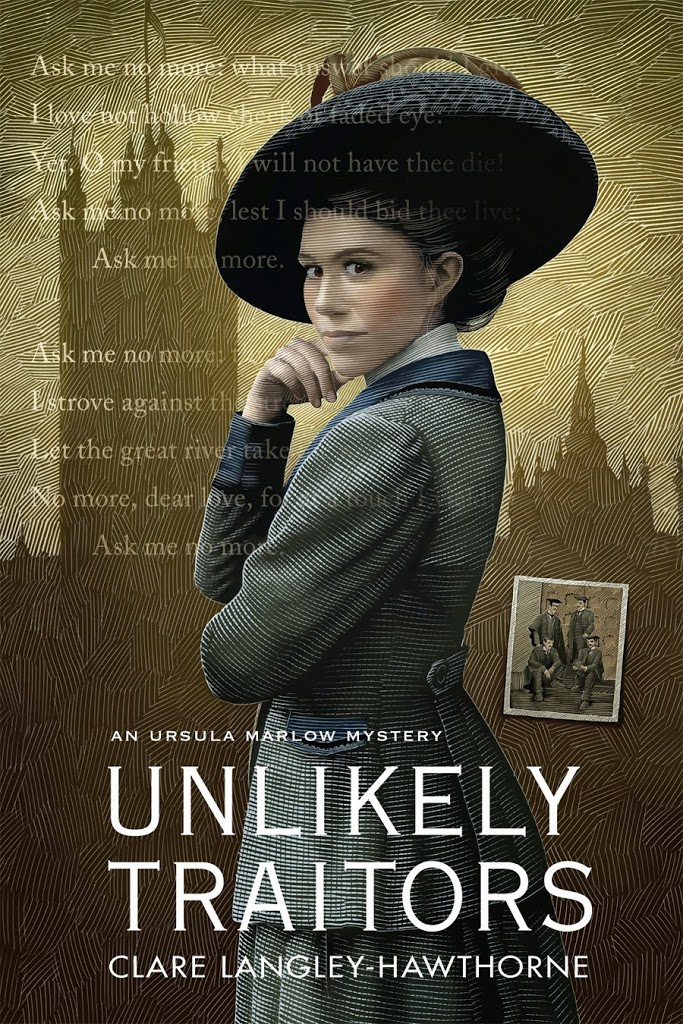
It’s an exciting week for me with the release of Unlikely Traitors, the third in my Edwardian mystery series featuring Ursula Marlow. It’s been a long time coming and I’m thankful my readers no longer have to wait to find out what happened after the unexpected ending to The Serpent and The Scorpion (but don’t worry I’m not going to give it away – no spoilers here!)
The inspiration for Unlikely Traitors was a classic ‘what if’ scenario that came out of my research on Irish history. Ever since I was a teenager, I’ve been obsessed with the history of ‘the troubles’ in Ireland (I certainly disconcerted the librarian at our local library by asking for a copy of Bobby Sands’ poetry when I was ten years old…)
While researching the issue of Home Rule for Ireland (which was, not surprisingly, an ongoing controversy in Edwardian England) I found references to Sir Roger Casement and was immediately intrigued. Casement was an Irish born diplomat who was knighted by King George V in 1911 and hanged for treason in 1916.
Prior to the war, Casement was most famous for having exposed illegal slavery in South America and the Congo but when he returned to England (and despite his Protestant roots) he became a fervent supporter of Irish Independence. The outbreak of the First World War only cemented that fervour and, after traveling to Germany to secure aid for an armed Irish uprising against Britain, Casement was arrested and subsequently executed for treason.
Immediately I wondered – what was therefore happening in Ireland before the outbreak of the First World War? What if people had been attempting to get armaments and aid from Germany in support of an Irish Republic before war broke out? Turns out my “what if?” scenario wasn’t too far from the truth.
By 1912, Ulster was a powder-keg. Divided between the protestant pro-Ulster forces and the Irish Republicans, both sides were seeking to arm themselves to defend their opposing political positions. Within the pro-Ulster movement there already was a secret committee established to buy arms from abroad to resist any moves toward home rule or Irish independence. On the Irish Republican side, the Edwardian era provided fertile ground for resistance, rebellion and frustration over stalled Home Rule efforts. By the time I had finished my research, I knew that my third Ursula Marlow book would deal directly with tensions over Home Rule and the murky past of some of Ursula’s closest friends (particularly when it came to support for Irish Independence). I also knew that in the third book, the stakes for betrayal had to be higher than they’d ever been before.
So an exciting (and, I confess nerve-wracking) time for me as Unlikely Traitors is released into the world (first as an ebook then in print on August 12th). For me it’s the culmination of a “what if?…” scenario.
I wonder, how many “what if?” questions have led you, TKZers, to a new book or work in progress?
Your Brain when Writing

A recent article in the New York Times describing a study on the neuroscience of creative writing (‘This is Your Brain on Writing‘) provides an intriguing glimpse of what happens to your brain when writing fiction. I guess it wasn’t something I’d ever thought about in scientific terms at least – but, if this study is correct, there appears to be a number of similarities (in terms of brain function) between writers and people who are skilled at other actions such as sports or music. The study also found differences in brain activity between professionally trained writers and novice writers who were asked to continue a short piece of fiction after a few minutes of brainstorming. What were these differences?
Well, for starters they found that during the brainstorming section of the study, novice writers activated their visual centres of the brain, while the brains of expert writers showed more activity in regions of the brain involved with speech. The researchers concluded that novices ‘watched’ their stories like a film inside their heads while the ‘experts’ were narrating their stories with an inner voice.
Secondly, when the writers started to actually write their stories, areas of the brain crucial for retrieving factual information and holding multiple pieces of information (possibly characters and plot lines) became active.
Finally, they also found that in the expert writers the caudate nucleus (the region of the brain that plays a vital role in how the brain learns and which activates as a skill becomes more automatic with practice) ‘lit up’ in a similar way to that observed in people who were experts in music or sports.
Now, creative writing is a notoriously difficult thing to study in the brain – for a start, you don’t usually perform the creative process while lying still inside an MRI machine – and it also sounds from this article like some experts believe the results of the study are too crude to be all that meaningful. Others however feel the study provides some real insight into the regions of the brain that ‘light up’ when a person is involved in the writing process.
For me, the most intriguing aspect of this study was that a researcher even attempted to look at what the brain does when a person is being ‘creative’ – although I so wonder whether we can ever really understand how creativity works in terms of the brain (for a start it seems to me that many writers access their creative process in very different ways). To be honest, I was also a little depressed by the novice versus expert results. I tend to be a very visual person and so I fear, had I been included in the study, my brain would have acted like the ‘novice’ during the brainstorming sessions at least (after my years of writing practice that seems depressing!)
Who knows, maybe one day neuroscientists will be able to use their studies to create a designer drug that will make us all awesome creative writers…or maybe they’ll identify the crucial area of the brain that needs to activate in order to become a bestselling author…Then again, perhaps delving too deep into the brain of a writer isn’t exactly a good idea (we can invent just too many ways for this research to be used for evil…)
So what research would you like to see in the science of creativity? I think it would be cool to see whether the brains of brilliant writers work differently to mere mortal folks like me and (as brilliance so often comes with madness) whether mental illness has an impact on the creative process.
What about you? If you could be included in a study on the neuroscience of writing, what kind of study would it be?
Your Brain when Writing

A recent article in the New York Times describing a study on the neuroscience of creative writing (‘This is Your Brain on Writing‘) provides an intriguing glimpse of what happens to your brain when writing fiction. I guess it wasn’t something I’d ever thought about in scientific terms at least – but, if this study is correct, there appears to be a number of similarities (in terms of brain function) between writers and people who are skilled at other actions such as sports or music. The study also found differences in brain activity between professionally trained writers and novice writers who were asked to continue a short piece of fiction after a few minutes of brainstorming. What were these differences?
Well, for starters they found that during the brainstorming section of the study, novice writers activated their visual centres of the brain, while the brains of expert writers showed more activity in regions of the brain involved with speech. The researchers concluded that novices ‘watched’ their stories like a film inside their heads while the ‘experts’ were narrating their stories with an inner voice.
Secondly, when the writers started to actually write their stories, areas of the brain crucial for retrieving factual information and holding multiple pieces of information (possibly characters and plot lines) became active.
Finally, they also found that in the expert writers the caudate nucleus (the region of the brain that plays a vital role in how the brain learns and which activates as a skill becomes more automatic with practice) ‘lit up’ in a similar way to that observed in people who were experts in music or sports.
Now, creative writing is a notoriously difficult thing to study in the brain – for a start, you don’t usually perform the creative process while lying still inside an MRI machine – and it also sounds from this article like some experts believe the results of the study are too crude to be all that meaningful. Others however feel the study provides some real insight into the regions of the brain that ‘light up’ when a person is involved in the writing process.
For me, the most intriguing aspect of this study was that a researcher even attempted to look at what the brain does when a person is being ‘creative’ – although I so wonder whether we can ever really understand how creativity works in terms of the brain (for a start it seems to me that many writers access their creative process in very different ways). To be honest, I was also a little depressed by the novice versus expert results. I tend to be a very visual person and so I fear, had I been included in the study, my brain would have acted like the ‘novice’ during the brainstorming sessions at least (after my years of writing practice that seems depressing!)
Who knows, maybe one day neuroscientists will be able to use their studies to create a designer drug that will make us all awesome creative writers…or maybe they’ll identify the crucial area of the brain that needs to activate in order to become a bestselling author…Then again, perhaps delving too deep into the brain of a writer isn’t exactly a good idea (we can invent just too many ways for this research to be used for evil…)
So what research would you like to see in the science of creativity? I think it would be cool to see whether the brains of brilliant writers work differently to mere mortal folks like me and (as brilliance so often comes with madness) whether mental illness has an impact on the creative process.
What about you? If you could be included in a study on the neuroscience of writing, what kind of study would it be?