New Year, New Goals, New Look?

by Clare Langley-Hawthorne


Welcome to 2015! 

I greeted the new year in with a literal ‘bang’ as we had heating problems in our newly renovated basement and three water pipes froze and burst – so as far as I’m concerned this year can only get better:) 

Here at the TKZ, we are looking forward to a wonderful, productive, challenging year ahead for all our writing. We are also constantly looking forward to ways we can improve our blog to meet our growing readership. There have been many changes in the publishing industry since our blog’s inception in 2008 and we have been thrilled to see our readership continue to climb over the years. 

Given these changes, however, it is important for us to take a moment to reflect on our blog’s mission and the direction TKZ should take in the years ahead. 

So we thought we would take this opportunity to ask you for feedback on our blog’s direction in 2015. We know that to keep current, relevant and useful, we need to continually assess and refine both our mission as well as our content. So we’d love your thoughts and feedback on:

  • Our mission, focus and posts: We’ve noticed a shift in the blog’s direction towards focusing on the craft of writing and the issues facing aspiring as well as professional writers. Typically our blog posts focus on practical advice on writing craft as well as providing personal accounts and experiences that touch upon our writing.  Would you like to see us delve more deeply into other areas or industry trends? Would you like to see more on promotion, marketing, editorial advice or ‘indie’ publishing? 


  • Further blog contributions/guest posts: Since we now have a professional editor (thanks Jodie!) in our midst as well as professional writers spanning many genres, we were thinking about adding other professionals into the mix. Would you be interested in hearing from other perspectives (a literary agent perhaps?) on a more regular basis? Are there any other people you’d like to see providing guest posts? 


  • Other TKZ offerings: It would be great to also receive feedback on the value of critiques and other participation offerings we could potentially provide. Are our first page critiques helpful? Would you like to see more or less of these kind of offerings on our blog?


  • The ‘look and feel’ of the TKZ: We are tossing up alternative templates to give the blog a better ‘look and feel’ and any feedback on this would be greatly appreciated. We are definitely hoping to create a new look and feel for 2015, so keep a look out for the changes ahead!
Thank-you TKZers for all your comments, feedback and support over the last six years. Here’s to many more!

Seasons Greetings

AWREATH3It’s Winter break here at the Kill Zone. During our 2-week hiatus, we’ll be spending time with our families and friends, and celebrating all the traditions that make this time of year so wonderful. We sincerely thank you for visiting our blog and commenting on our rants and raves. We wish you a truly blessed Holiday Season and a prosperous 2015. From Clare, Jodie, Kathryn, Kris, Joe M., Nancy, Jordan, Elaine, Joe H., Mark, and James to all our friends and visitors, Seasons Greeting from the Kill Zone. See you back here on Monday, January 5. Until then, check out our TKZ Resource Library partway down the sidebar, for listings of posts on The Kill Zone, categorized by topics.

Lessons from 2014

by Clare Langley-Hawthorne

It’s hard to believe that this will be my last blog post for 2014 – the year has gone way too quickly! At this time of year I always find myself ‘ruminating’ over the year in terms of my writing and realizing (yet again) that I never do achieve all the goals I set in January. I didn’t ever reach my ‘words per day’  writing quota and, although I have a new book out on submission with editors, I didn’t manage to write two books this year – more like fragments of about 1 and 3/4:) 

But taking my cue from Jim’s post yesterday on his Nanowrimo  experience, I thought I’d take stock of the year that is almost past and think about what I learned (rather than setting off 2015 with a whole new set of unrealistic goals!)

So….what did I actually learn this year?

  1. I write the way I write. No point trying to impose early morning regimes or daily writing quotas – I just have to make sure my bum hits the seat each day and let myself go where the writing takes me. Some nights I’m going to write into the early hours of the morning, others I’m going to binge watch ‘The Good Wife’ instead…that’s just how I roll…
  2. That being said, I’m a planner and outlines are critical. For every book I start I now draft an outline, a proposal and sample chapters to run past my agent. This not only helps focus my work but also enables me to get valuable input before I become too enmeshed (and perhaps too enamored) with an idea.
  3. Scrivener is an awesome tool but I still somehow find myself copying the manuscript over into Word at the end for final revisions…maybe I still need to work on weaning myself off the old ways:)
  4. Deadlines are necessary. Self-imposed deadlines are mandatory – ditto for conference calls and face-to-face meetings with my agent. 
  5. I have to respect my creative process – and recognize that extra volunteer work (like being the PTCO president at my twins’ elementary school) seems to sap me of creative strength – so I need to impose limits on this (otherwise I have nothing left to put into the writing). Not sure why that is – but that’s just the way I am and I have to accept that.
  6. I also have to accept that I will never be satisfied with my output – I always want things to be finished faster or achieved quicker. I now have to set that aside and honor the work that has been completed rather than constantly berating myself for what hasn’t. 
  7. There really is no point in worrying about all the elements you cannot control (so why do I still try?!)
  8. And finally, I learned this year that my best writing happens when I relax and have fun. That’s when my true creative voice shines through:)…You’d have thought I would have realized that by now…but no:)…

So, as 2014 draws to a close what have you learned about your writing process?


The Kindness of Strangers

by Clare Langley-Hawthorne


For any of you who are on Facebook with me, you will know that last week I had a great deal to be thankful for, especially as a result of the kindness of strangers. 

The drama occurred last Wednesday when one of my neighbors (1st stranger really, as I don’t know him very well) knocked at my door around 7:30 in the morning to tell me that he had just seen our beloved collie, Hamish (as shown in photo above), being lured up the road by two coyotes. I rushed outside (very glamorous in my PJs and dressing gown) to see the most surreal scene –  two coyotes nearly at the end of our street cunningly leading my dog along to what I have no doubt would have been a nasty end. I never truly believed all the stories about coyotes working together to lure large dogs away to be attacked by the pack – but I do now. 

In a panic I called out after Hamish, who initially looked back at me with a face that said “are you kidding me, I’m having way too much fun!”. By this time my neighbor was running to his car, ready to help – because we both could see that Hamish was way too far away for me to get to him. It took me four attempts (and a lot of willpower not to scream at my dog) before Hamish turned reluctantly to come back to me. That was when the next stranger came in – running down her driveway to help coax Hamish and grab his collar. I’d never met her before, and although it was a little weird meeting in the circumstances (both in our PJs – saving my dog from coyotes!) I was touched by her concern. She was already on the phone to animal control telling them to send a patrol – having not only seen the amazing sight of two coyotes ‘playing’ with a collie but also making the decision to actively come outside and help rescue him.

So as you can see I have a lot to thank two relative strangers and this got me thinking, especially as this is Thanksgiving week, about the difference strangers can make. In my writing career I have been amazed how people who I’ve often never met, have gone out of their way to help me – be it booksellers, readers, conference organizers, blogger or reviewers. Although I’ve always tried to thank each person individually, I would also like to take this time to acknowledge how much we, as writers, rely on the kindness of strangers. I don’t mean that in a ‘taking pity’ kind of way – I mean those active, ‘go out of your way’ actions that can often make all the difference to a writing career. All too often we have no way to repay these acts of kindness, except (I hope) by following their example and helping other writers in our midst.

So, in the spirit of Thanksgiving, which ‘stranger’ would you thank if you could? Have you ever experienced a moment such as mine, where the kindness of strangers really made all the difference (and there is no doubt in my mind that without them Hamish would have been lost forever)? Well, now is the time, to acknowledge those moments. We should also aspire to be these sort of strangers – the ones who don’t stand idly by – but who rush in to help when help is needed. 

Oh, and as a side note, this morning we received a ‘coyote’ calling card in the form of someone’s dead chicken disemboweled on our lawn. I swear I feel like I’m suddenly in some kind of ‘coyote godfather’ movie…thank goodness we have strangers looking out for us!

A Writer’s Inner Voice?

by Clare Langley-Hawthorne

I’ve just returned from a ten day trip to Australia and, apart from a vestiges of jet lag, I’m also suffering from what I like to term ‘character withdrawal’. This has occurred because, despite my good intentions, I didn’t manage to get any writing done while I was away (my laptop remained firmly ensconced in my backpack, never to be opened). So now, as I hazily return to normality, I face a temporary silence – the voices of my characters have been mute  for too long (and, I suspect, they’re a bit miffed about this…so they may actually be ignoring me). Oh, I’ve had the occasional glimpse of a scene, and a fragment of conversation maybe, but by and large I forgot my characters amidst the whirl of a family wedding and reunion.  Now I’m going to have to listen hard to let these characters voices be heard once more.

So I was intrigued by a project conducted at the Edinburgh International Book Festival this year in which writers were asked about how they found their characters’ voices. More than 100 writers have so far participated in the project, responding in terms of how they experience their characters’ voices, and how this process had changed over their careers.  A short summary of some of the initial findings of the study can be read here

The most interesting finding for me (at least) was that many writers have different experiences when it comes to their primary and secondary characters. For primary characters/story protagonists writers reported that they tended to see the world through this character’s eyes, inhabiting that character’s interior life. They often found, at least early in their careers, difficulty in distinguishing their own ‘author’s voice’ from that of their main character. These writers felt as though the main character was formed through their own voice, often expressing what they, as the author, felt but could not express in real life (hmm…interesting…) 

For secondary or minor characters, writers reported that they ‘saw’ them more visually rather than hearing (or being a conduit for, perhaps) that character’s voice.  Many writers in the study also reported that as their writing careers progressed they found they were able to distance their own ‘author’s voice’ from the character’s voice and thus create primary characters that were no longer versions of themselves.

I’ve often wondered how other writers access their characters’  voices  For me it tends to be a visual as well as an auditory experience – but it is true that often I cannot picture my main character as clearly as I can visualize the other characters, because I am, in many ways viewing my fictional world through the eyes of that main character. 

So as I spend the next few days listening once more to my ‘inner voices’ and coming back to my writing, I wonder…how do you access your characters? Do you ‘hear’ their voices? Do you experience the process differently when it comes to your protagonist versus your secondary characters?

Choosing Character Names

by Clare Langley-Hawthorne

I’m winging my way to Australia today so apologies that I won’t be able to join in the discussion. I will, however, be trying to do a little writing on the way (although you all know how hard I find it to write ‘in public’!). I started a new project last week and have been enjoying coming up with my new characters’ names – something I always have a lot of fun with and yet also suffer way too much angst over…

A character’s name can be critical to establishing the voice and feel of that person in the world that I am creating, and I often spend a considerable amount of time tinkering with main character names until they feel and fit the character exactly right.

Since I mainly write historical novels, I have a number of resources at my disposal to help me come up with names. These include lists of popular boys and girls names for  the time period I’m writing about as well as handy British last name resources like census data, historical records, newspapers, magazines and even Debrett’s (I often write about aristocrats, after all!). I’m like a sponge at first, soaking in all the details about names and then I play around with combinations until I find the right fit. Since I’ve also been writing with a renewed sense of appreciation for the humor in certain names, I have also been rereading Charles Dickens. He is, in my opinion, one of the cleverest ‘namers’ in literature (who can forget names like Uriah Heep, Ebenezer Scrooge or Mr. Pumblechook!). I recently discovered the often hilarious Dickens name generator and have spent many an hour or two concocting my own ‘Dickensian’ type names. 

So how do you come up with your character names? What resources do you use and how much time and effort do you spend? Is it something you agonize over, trying to make sure the name ‘fits’ the character or do you find the names just come to you and slide on your characters as easily as a silk glove? Apart from Dickens, who do you think has come up with some of the greatest, most memorable character names? 

Do you need a rock?

by Clare Langley-Hawthorne


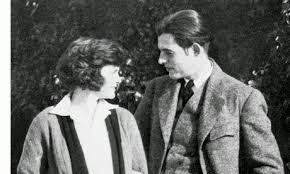
My book group just read A Paris Wife by Paula McLain, the fictionalized account of Ernest Hemingway’s first wife Hadley Richardson, and we all agreed to having mixed feelings about Hadley and her role as Hemingway’s ‘rock’  during his early career in  Paris. 

The book evokes the bohemian world of 1920s Paris and name drops a lot of literary giants but at its heart is the relationship between Hadley and Hemingway. The book made me question the extent to which Hemingway relied upon and needed Hadley’s stolid support during those early days. 

I wondered how many writers feel they need someone close to them to be that kind of ‘rock’  – to provide emotional as well as (often) financial support (although Hadley certainly didn’t appear to contribute financially). Then there’s the more mundane  support in terms of housekeeping and family duties (Hemingway could, after all, leave Hadley and his child at home while he went to a cafe to write without being bothered by any of those pesky fatherly duties!). In this day and age, I’m not sure anyone quite gets that kind of all round, ‘solid as a rock’ support – we are all juggling so many work/life issues that we usually have to find that support from within, rather than from someone else. 

Hemingway also found mentors for his work in Paris (most notably Gertrude Stein) so it’s not entirely clear the extent to which he fed off Hadley’s unwavering (if unimaginative) support for his writing (although he certainly seemed to feed off adulation and praise of any kind!). Hemingway also never lacked self-confidence or the belief that he was destined to be a ‘great’ writer – but how many of us can say the same? 

So how many of us writers feel we need a ‘rock’ in our life to reinforce our confidence and help propel our careers forward (especially early in our careers when we are still finding our literary feet)?  Do we require a ‘rock’ of unwavering support? Or a mentor who respects and promotes our work? Or do writers really only need a ‘room of one’s own’ in which to flourish?

In my own career I’ve certainly had very supportive friends and family, but I don’t think I’d classify any of them as a ‘rock’ in the vein of Hadley Richardson. Most of the time I feel I have to rely on myself more than others to keep the writing going. Likewise, I’ve some terrific writer friends who I turn to for much-needed support but none of them have ever really acted as a mentor for my own work. I’m not sure in this modern age whether the same kind of ‘mentoring’ really exists like it did in say 1920’s Paris. But then again, maybe I just don’t hang out in literary enough writing circles!!

So TKZers what do you think? Do you have, or indeed need, a ‘rock’ in your writing life? Have you been lucky enough to have a mentor for your career? And if you were to give advice to someone contemplating the writing life, what would you tell them regarding having either of these? 

Writing Rituals, Order and Routine

by Clare Langley-Hawthorne

Over the last couple of months I witnessed first hand the power of order and ritual in my writing – or, more correctly, I witnessed what happens when order turns to disorder and the ritual of planning and creating disappears. All this because I agreed to step up and volunteer to be president of my sons’ elementary school parent teacher organization and in a giant ‘poof!’ of hot air all my creative order and energy disappeared with it. 

Taking stock after a couple of months I now realize just how important order, routine (and time!) is to my creativity – and how I have to reclaim them all, in order to re-establish the balance we all struggle to maintain between our writing life and our ‘other life’.

This fact was solidified when I read David Brooks’ op-ed in the New York Times entitled ‘The Good Order‘ – though this opinion piece veers into politics – it was the idea that creative people need to build and maintain their own order and routine that resonated with me – as well as the fact that doing so can be surprisingly hard (which the last few months have certainly demonstrated!). This op-ed piece also referenced a book entitled ‘Daily Rituals: How Artists Work” complied by Mason Currey (whose website on creative people’s daily routines I encourage you all to visit – if only to read first hand how many artists face their work with deliberation, ritual and routine). 

Many writers establish very strict routines in order to get their writing done. Anthony Trollope was at his writing desk by 5:30am and insisted on completing 250 words every fifteen minutes for the few hours he had before his day job started at the post office. Trollope produced a staggering 49 novels in 35 years writing this way. Stephen King gets up at the same time each day, has a glass of water and his vitamins, and sits at the same seat at his desk, where his papers are arranged in the same way each day, before he starts to write. King says this helps tell his mind this is time to start dreaming (a sentiment I love by the way!).  When John Grisham was first starting out, he would arrive at his legal office by 5:30am each weekday to write with a goal of completing a page a day. He says his rituals then were “silly and brutal but very important”.

Since volunteering my time and seeing it evaporate just as quickly, I now need to reestablish a new set of writing rituals and routines. I’ve never been one to have any real ritual beyond what I call the art of showing up with my bum in the seat and my fingers on the keyboard each day – but now I need to establish a new order and a renewed sense of discipline. I’m even contemplating setting my alarm clock so I won’t be able to let my volunteer time bleed into my creative time. 

So I’m turning to you my TKZers – how do you set your writing routine? Have you had to ‘reset’ that routine when circumstances changed and you suddenly found your writing time being eroded? If so, how have you gone about establishing a new routine or order?  

What’s in a List?

by Clare Langley-Hawthorne

Last week Publisher’s Weekly reported that the New York Times was going to revamp its bestseller lists (see article here) to include reporting on niche markets including travel, humor, family, relationships and animals as well as (on a rotating basis) other niche lists such as Politics, Manga, Graphic Novels, Food and Fitness. 

Now, I’m just as happy as the next person to see books I love listed on bestseller lists – but isn’t this all going a little too far?  I mean already have to read Facebook posts from authors about hitting every conceivable niche bestseller list for that day or hour on Amazon but now I have to puzzle over what it means to be a NYT bestselling animal book (which is, I assume, by topic  rather than author – though I suspect my collie Hamish would love to be on this list!). 

Isn’t our obsession with term ‘bestseller’ getting to the point where it is no longer meaningful?

Apart from the obvious kudos, I’m starting to wonder what many of these lists actually mean (especially since many don’t necessarily reflect what you think they reflect). The NYT list, for instance, has a fairly secretive methodology based on weekly sales from a sampling from selected retail outlets. Although this methodology been the subject of controversy, nonetheless, I think it’s safe to say that the NYT list is pretty influential!  The mantle of ‘New York Times Bestseller’ is a much coveted title – even though many of us aren’t exactly sure what it means. 

As I said before, I love seeing books from authors I admire on bestseller lists and I admit I can be influenced by said lists in terms of deciding which book to purchase. But I am getting a little jaded by these lists too – and the thought of having niche lists for topics such as fitness and family, seems too much. I would be far more interested in seeing a list that breaks down mystery, romance, science fiction genres – but even then it could get so niche market driven that that the list becomes less meaningful to me as a reader (though we could have as much fun as this Melville House blog post in coming up with our own possible lists)

So what about for you? What do you think about niche bestseller lists like the ones the NYT are proposing? Does it make sense to you?  Does the NYT bestseller list even resonate with you any more? Or do you think in the age of indie publishing, that Amazon or Nook sales matter more? 

As a reader, how much influence do bestseller lists have? As a writer I’m assuming, like me, you would have no qualms appearing on any of them…

Don’t Belabor Your Prose

by Clare Langley-Hawthorne

Today, in honor of Labor Day, I wanted to cover something that has been bugging me all week. It began last Monday when I started a new book and within pages the prose was already starting to annoy me. The words, or at least the author’s choice of long, lugubrious, often archaic words were already getting in the way of the story – and I wasn’t even at Chapter 2!  As soon as I started to read I got the impression that the author was trying way too hard to impress the reader, rather than focusing on creating a compelling story. In some ways the writer was confusing style with content and in so doing, this reader at least, was no longer interested in reading. It had become too laborious. The words themselves had got in the way.

So why was this? I think in this instance it was the result of a naive writer hoping to show-off their linguistic prowess (or something like that – it felt like dictionary gymnastics at times!) and hoping perhaps that this somehow created an aura of literary validity (it didn’t!). What frustrated me the most was that the word choices detracted from what could have been a pretty strong start to a cozy mystery. It got me thinking about why – for someone like me who is drawn to perhaps the more wordy novels anyway (I love Dickens!) – was the prose was so off-putting? I decided it was simple – it was because it was unnecessary. And this at the heart of most things that go wrong with the start of a novel. Anything that feels unnecessary to the reader creates a barrier between them and the page. It stops them from wanting to keep turning that page. Instead, I like to think that a writer should go through a checklist, when reviewing their work, asking themselves a series of questions – something a little like this:

  1. Can I use a simpler word, phrase or description? When I substitute that, does it propel the story forward, or dilute it? (If it dilutes the power of what is being described or being said, then maybe the original word, phrase or description should stay).
  2. What is my reason for using a long/obscure word instead of a more straightforward one? Does it serve as mere affectation, or provide something more nuanced and appropriate in the circumstances? Am I using it because I think it makes me sound more erudite or because it’s the right word to use?
  3. Would most readers have to look the word up? (if so, why use it? It only stops a reader dead in their tracks).
  4. Does my writing sound like I just ingested a thesaurus? (If so, edit now!)
  5. When I read my writing aloud does it flow or do I find myself stumbling over the word choices I’ve made? (I find this an invaluable tool – because if I find myself tripping over the words I know I reader will find it hard to read the piece too).

Basically, don’t belabor your words. Let them flow, simply and easily. Readers will thank you.

So TKZers, tell, me what was the last book that you felt the author belabored their words? Any of your own advice to add to the checklist?