Marathon Effort

unknownA couple of weeks ago the boys and I were in New York City to watch hubby run the New York City marathon. It’s been almost twelve years since he last ran a marathon(!) and, to be honest, we just wanted him to finish without injury, incident, or trauma…Thankfully, he finished well and was even able to board a flight to India the next day(!)

Naturally, the whole marathon thing (coupled with November being NaNoWriMo month) made me think of the similarities between writing a novel and running a marathon. When people ask me for advice, I usually say writing and getting published is like a war of attrition where the last one still seated and writing usually wins, but running a marathon is a more apt metaphor (and one closer to my heart, having seen my husband train for five of them!)

Like a marathon, writing a book requires training. Just as my husband had to build up the miles, so too do writers. There are very few of us who can sit down for the very first time and pump out a novel or two – the majority of us have had to spend a number of years honing our skills, enduring false starts, half-written attempts, lousy drafts as well as set-backs. The key, just as in marathon training, is to keep going.

In order to avoid injury, part of any marathon training should involve something other than just running (cross-training, weight training, Pilates, yoga etc.). Similarly, writers need to read widely as well as write. Depending on the type of fiction you want to write, you should explore different writers in your genre, learn the implicit ‘rules’ that function within that genre and then also read outside that genre to become a more ‘well-rounded’ writer.

Just like in a marathon, a key aspect to writing a novel is pacing. You have to keep churning through the miles, but still understand how your writing process works so you keep a steady pace, don’t burnout, and have the strength to finish. As with any long race (and let’s face it that’s what completing a novel can feel like!), it also always helps to have someone cheering you on, especially when you hit the wall at mile 21… All too often I meet people who claim to want to write a novel but fail to understand the sheer stamina required to complete and revise (and revise again) a novel until it’s the very best it can be.

And finally, just as with any marathon, all your skills need constant refinement. While in running you usually focus on issues of technique, breathing and pacing – in writing the focus is more on honing skills (characterization, plotting, dialogue etc.) as well as editing and revision. When aiming to complete a novel that is publication worthy, there’s no place for sloppy skills.  I usually find those final miles of revision feel just as long (if not longer) as the ‘completing-the-first-draft’ marathon (perhaps I should tell my husband that writing a novel is worth running at least two marathons…!)

So what do you think? If you were to describe writing a novel as an endurance sport, what would it be?


“Real World” Problems

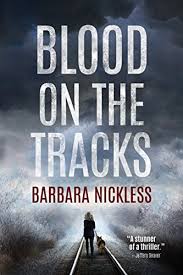
imgresToday we welcome Barbara Nickless as a guest blogger. Her new novel, Blood on the Tracks, has just been released and today she talks about some of the real problems involved in researching this great book. I’ll be on the airplane home to Denver after cheering my husband on in the NYC marathon so I hope you give Barbara a great TKZ welcome and lots of comments!

“Real World” Problems

As soon as I decided to write a police procedural about a modern-day railroad cop in Colorado, I knew I had to set my thriller in the very real city of Denver. Denver is a major hub for western railroads, which have large operations there. As a railroad cop, my protagonist’s territory would cover 35,000 miles. But she—like her railroad—would be based out of Denver.

The problem? Even though I live only 60 miles away, Denver might as well be on the other side of the world for all I knew about it. To write a believable book, I had to go beyond geography. I needed to understand the workings of the Denver Police Department, the ins and outs of the railroads operating out of Denver, and Denver’s history, demographics, economy, and government. I had to get a feel for where my heroes would dine, work, study and live. Just as important, I had to know where my villains would lie, cheat, steal and murder.

Unsure whether to use actual settings for your novel? Here are some dos and don’ts if you decide to play it real.

Do get your facts straight. Errors will jolt your readers out of their willing suspension of disbelief. Start by learning as much as you can about your locale upfront. Online resources like Wikipedia and Google Earth provide everything from weather conditions to street views. There are websites for businesses and institutions where your characters might work, as well as information on museums and restaurants where they can conduct meetings or relax. Additional digging can turn up articles written by the locals, which will give you a feel for the local lingo and tell you what about their city makes them proud (or ashamed). Look at online magazines and newspapers, too, and consider subscribing. When I needed a swanky home in a swanky neighborhood for one of my characters, the Denver magazine 5280 told me the best areas of town, while Zillow offered maps, prices and photographs. And speaking of maps! I bought a large city map, a Denver street guide, a railroad map and a police precinct map. Hang them on your wall and add satellite or street-level photos. Or use pushpins to mark where the bodies are buried.

Don’t think everything has to be real-world. Feel free to make up some locales, especially if bad things happen there and you want to avoid a lawsuit. For my thriller, I took real neighborhoods, gave them the twist I needed, then sometimes renamed them. Denverites who’ve read my novel tell me it’s been fun trying to pinpoint neighborhoods and separate fact from fiction. Another huge part of my setting is the railroad my cop works for. Since railroads are privately owned and I didn’t want to risk offending the actual businesses, I created my own. While I’ve done my best to get general railroading facts straight, I’m free to make up the details.

Do travel there if you can. Nothing beats on-the-street research. For my novel, I was fortunate to find a retired Denver PD detective who also loves trains. Not only did he take me on tours of the Denver Crime Lab and police headquarters, he helped me pinpoint train track locations and find hobo camps. The railway cop who provided invaluable information for my book told me where hobos “catch out” (hop a freight train) and gave me a tour of the yards. He also banished my preconceived notion that railway police, like a lot of traditional police, have partners to help shoulder the load.

Don’t worry about getting it perfect. In Blood on the Tracks, I added a disclaimer at the end of the book stating that I’d taken a few liberties not only in the layout of my settings, but also in the institutions I portrayed such as the Denver police and the U.S. Marines.

What about you? Does your book take place in a real setting or a fictional one? And what are some of your tricks for handling either situation?

First Page Critique – Tree of Heaven

Happy Monday!

Today we’re reviewing the first page of a book entitled ‘Tree of Heaven’. My comments follow.

Tree of Heaven

18 September 1833, Zoar, Ohio

“I’ll get what’s coming to me, I will!”

The bellow of a man’s voice punctured the late morning’s peace and brought Adelaide Bechtmann to a standstill outside Josef’s log cabin.

She ducked under the low-hanging branches of an apple tree, snagging a bonnet tie on a leafy twig. She jerked it loose. What should she do? Call out? Had they seen her? Heard her?

A glance through the open door of the cabin allayed her concern. Engrossed in their argument, the men saw none but each other.

The Separatists’ leader faced the stranger across the table that centered the one-room cabin. His face flushed, and his fists tightened on the edge of a chair. “I owe you nothing, nothing.”

“You signed her indenture.”

What? Indenture? What did he mean?

Adelaide studied the man stylishly dressed in gray and white striped trousers, checkered waistcoat, and long-tailed black coat. Whatever was he doing in Zoar? Plain-dressed and plain spoken, the Separatists seldom saw such finery, though Adelaide had encountered men so adorned in Bolivar when she’d gone to the city for a birthing.

The man shook a paper in Josef’s face. “You owe me for—”

“She died, you fool.” Josef batted the paper away. “You can’t collect from a dead woman.”

Dead woman? Who’s dead? And what’s an indenture?

The man’s chin jutted. “You signed for her.”

“I signed for them all. I was, am, their leader. And I settled all my debts before I left Philadelphia.”

The stranger waved toward the outdoors, and Adelaide scooted back against the tree. “All this land, this industry, this prosperity that you’ve built on the backs of these people. You’ve the money to pay.”

They did indeed. Pride rushed through Adelaide. Only ten years old when they’d arrived, she’d watched her fellow Separatists work hard to carve their village out of the wilderness, helping as she could, totting baskets, buckets, and boxes to waiting workers. By their efforts, tenacity, and, Josef would say, the grace of God, they’d prospered in this new land.

My comments

Overall, this first page successfully sets a scene of a conflict in what I assume is a straightforward historical fiction novel (at least on the first page I don’t see the signs of either a mystery or thriller to come). I liked the way that Adelaide stumbles upon the argument and how we get, quickly and easily, a sense of the conflict to come. The speech and inner voice sounds authentic for the time period and I like the immediacy of the situation. My main quibbles really come down to two main areas: Historical grounding and voice.

Historical grounding

I admit I am not well versed in American history, so I did look up Zoar and Bolivar in Ohio and the early 19th century German separatists who settled there. However, the key to any historical novel is that a reader shouldn’t have to have (1) any prior understanding of the historical period; or (2) have to look up the historical references to understand what is going on. I do think, even on this very first page, we need more grounding in the historical period. One option, if the author doesn’t want to interrupt the flow of the first page, is to have a brief summary in either a prologue (yes, the dreaded prologue) or another hint – say a newspaper or historical excerpt that gives the reader a quick ‘heads up’ before the story begins. For example, if I’d had a quote from one of the German separatist leaders about their reasons for coming to Ohio, their journey, and settlement then I would have been able to place everything on the first page in better context (rather than having to do an internet search to see who the separatists were and why they had come to America).

I do like the paragraph about her noticing the stranger’s clothes – especially the old-fashioned use of words. This definitely felt authentic. Th page could have done with more description to be able to visualize the setting and the characters. In historical fiction, you have a little more leeway to introduce exposition like this early on as it helps ground a reader in the time period (particularly for readers who have no real sense of what the 1830s would have been like in America). More sensory information would have been great to really make a reader feel like they were there (the smell of smoke from the fire, maybe cooking (?), the stranger’s cologne or other elements to make us feel we are right there with Adelaide looking on at the scene).

That being said, I liked that we didn’t get a huge historical data dump, and that the author led with action and character interaction in this first page. This, however, leads to my second comment, which is a question of voice.

Voice

In this first page we don’t really get a strong sense of voice from Adelaide yet. Her inner questions suggest someone young – maybe a teenager or young adult – and yet we aren’t entirely sure why she seems to have no idea what indenture meant. Again, not being an expert on American history, I don’t have a strong handle on this time period, but based on what I have read it sounds like indentured servitude was a common practice given the need for labor at the time. So my question would be, why would she not know the word? Also when Josef speaks of the woman being dead I would assume in a small knit community Adelaide might be able to make some guess as to who the dead woman might be – rather than thinking ‘what dead woman’, I would expect her to think ‘did he mean X?’ or perhaps she knows Josef is lying…again, that isn’t clear on this first page.

Voice is critical to any first page – it’s what sets a book apart and what draws a reader in from the start – so my key recommendation is to make Adelaide’s voice stronger and unique. If she is a young adult then make sure the reader knows her age and understands her confusion. At the moment she sounds hesitant (doesn’t want them to know she’s there) and naive. This is fine but sometimes a stronger, more interesting voice can intrigue a reader. I, for one, wanted two girls to be there – one (Adeliade) who was quite prepared to go striding in there and demand to know what was happening and the other a girl holding her back (representing the more historically ‘appropriate’ type of young woman). At the moment there’s nothing about Adelaide yet that makes me want to keep reading her story (and because it is her POV as a reader I’m assuming it is her story).

Overall, I think this first page had a lot of appealing elements. It sounds like an intriguing time and place for a novel and I would love to read more about the separatists’ experience in America. With some fine tuning I think this first page could start a compelling historical novel – with the focus being on historical grounding and strength of voice.

So TKZers what do you think? What constructive comments would you give our author?


Character and Conflict

Now that they are in middle school (OMG!) my boys have begun analyzing books in their language arts classes in terms of the classic three-act structure. As part of this they have been identifying and discussing the nature of character and conflict. Now, we here at TKZ have often talked about the need for characters to be placed in conflict to give a book both momentum and purpose. In the mystery and thriller genre usually the nature of the conflict is critical to the plot (without conflict there’s no rising tension or action). Nonetheless, it’s been interesting to observe my own kids analyzing their class book in terms of the nature of the character conflict involved. They have to categorize this conflict in terms of:

  • Character vs. character
  • Character vs. nature
  • Character vs. society/community
  • Character vs. self

In many books a degree of conflict may exist on all of these levels, but I realized, while discussing these elements with my boys, that it would be a useful exercise for me to undertake on my own WIPs – mainly because, if I couldn’t nail down the conflict in my own draft yet, perhaps I didn’t really have as good handle on my character or the plot as I thought.

Even though I am an outliner, I rarely I go through the exercise of analyzing my own book in terms of the character conflict involved – I just assume I know what it is as I piece all the elements together. It’s only when something goes wrong, that I take a step back and try to analyze where things may have gone adrift. Sometimes the issue/problem is that I haven’t articulated in my own mind the true nature of the character conflict involved. Luckily, taking that step back means I can usually resolve the problem:) However, I do think when beginning any new project it doesn’t hurt to ask the question in the first place.

So TKZers, what about you? Do you take the time to identify and analyze your character conflict while your writing or do you go with the flow? How would you characterize the  conflict for your main character in your current WIP?

Journeys into the Past

Not too long ago, my husband learned that his great grandfather had travelled the Trans-Siberian railway at the turn of the last century (just before the Tsar was deposed by the Russian Revolution) to observe birds who made the arduous journey from Russia to Australia as they migrated each year. As a writer of historical fiction, I can only imagine what it must have been like to make this journey at such a pivotal time in Russian history. Not only do I wish I had met Tim’s great grandfather, or that someone had recorded his memories (no one did, unfortunately), but that I also somehow had the ability to go back in time and experience a journey such as this first-hand.

Anyone who’s read my books, knows that I think the early 20th century would have been a fascinating era to live through. On the cusp of what we would consider a ‘modern’ way of life, you would have been able to witness the end of the ‘Belle Epoque’ and the dawn of an era that was both transformative as well as tragic (at the time you could never have  imagined the tragedy of two world wars). When I write I try to immerse myself in first hand accounts so I can get the full sensory experience – but those (obviously) cannot compare to actually living through it.

Part of why I love writing historical books is the opportunity to vicariously experience history and I have an exceptionally long list of ‘journeys’ from history I would have loved to have witnessed/been a part of. These include traveling the Trans-Siberian railway in the early 1900s. I would also love to enjoy the luxury of a first-class ocean liner voyage from England to America in the 1910s (though not aboard the Titanic, obviously!). A train journey across India at this time would have also been fascinating.

Even if you don’t write historical fiction I’m sure most of you have dreamed of taking some voyage in the past – something that captured your imagination – something that would have been so unlike the travel we undertake today. So TKZers, if you had the chance to go back in time and make a journey, what kind of journey would that be and why?


Revisiting the Middle

Thanks to my fellow TKZ blog mate, Larry Brooks, who provided me with his ebook ‘Stuck in the Middle: Mid-Draft Saves for your Story‘, I thought we should revisit the saggy middle and look specifically at some great questions to ask before addressing the dreaded mid-draft slump.

Larry outlines some key issues that I think all authors should consider when they are mid-way through their draft novel. He poses these as a series of questions that highlight some of the critical issues that can plague a book and which can lead to a slump in the middle. I encourage TKZers to check out the ebook which goes into greater depth that my blog summary, but in the meantime, here are some of the key questions Larry raises (hopefully I’m not misquoting Larry here with my summary version!)

  1. First off, authors should take a step back and ask themselves whether the premise of the book itself is sufficiently strong to sustain a reader’s interest for an entire book – often times the premise is simply too weak dramatically, either because there isn’t enough of a dramatic arc to the book, or because the key characters don’t have enough to achieve/do for a reader to root for them.
  2. Second, an author should also check that their core story is sufficiently well defined. Is there a compelling dramatic question being asked and answered in the book? Often the middle sags simply because it doesn’t enhance or advance the overall dramatic arc of the story.
  3. Do you have sufficient plot points that keep the story moving along, providing sufficient tension to engage the reader throughout the book? Sometimes the middle drifts because the plot points to the story haven’t been spaced or placed appropriately.

As Larry points our the middle chapters of a book should continue to ‘elevate, escalate and surprise’. They should also provide a critical transition between plot points as the key characters move through the overall story arc.

Hopefully, I haven’t misquoted Larry’s key questions to much, but I encourage all writers to step back and consider these kind of issues when diagnosing what isn’t working in their own work. All too often we focus on the mechanics rather that the overarching questions of premise, core story and plot that need to be addressed to ‘fix’ the problem.

Handling Reviews

An article in the New York Times last week got me thinking (again) about reviews (hey, I bet most authors have a small part of their brain devoted to the ever-present background angst about past or future reviews/criticism of their work). The article (which you can find clicking on this link) is an interview with the author Curtis Sittenfield on the thorny issue of how professional authors handle criticism.

Now we’ve all heard of the unfortunate instances where authors have directly responded to negative reviews or criticism – usually through an ill-advised rant on twitter or a hot-headed response on Goodreads or Amazon. If you’ve forgotten or unsure of what some authors have stooped to doing, I recommend reading some of The Guardian’s book blog posts on the matter (see: how not to handle reviews; how not to respond to a bad review for example).

Curtis Sittenfield provides a useful quadrant tool that many authors could use. Basically she divides up reviews into four quadrants: smart and positive (definitely read!); smart and negative (still read); dumb and positive (read for the ego’s sake); and dumb and negative (do not read!). Many authors get into the greatest hot-water when they allow themselves to get embroiled in a debate over what they consider to be ‘dumb and negative’ reviews. Now, maybe it’s too hard to resist the temptation to read these kind of reviews but it’s up to every professional author worth their salt to resist the temptation to respond to them. You just can’t take it all so personally (being a professional writer means recognizing this is a business after all). As Curtis Sittenfield notes: ” I literally don’t think I’ve ever read a letter from a writer complaining about his or her negative review that made the writer look good. You’re better off just biting your tongue.”

Too true!

But, as Curtis goes on to point out, there are many instances in which harsh criticism can identify a real weakness in a book or an author’s approach to their material that, while humiliating, can all be part of the process of learning to be a better writer. Even in these instances though, the best response from a writer is no response at all. For Curtis, her nightmare reviewer is one who has an agenda that precludes them from responding sincerely to the book – and I think this is (again) where many authors come unstuck. There’s a lot of mean people on the internet who have their own agenda when it comes to reviewing a book or adding comments on a thread regarding someone’s work. Sometimes they are angry and bitter, sometimes they may be jealous, sometimes they want to indulge in a personal attack just for the hell of it (some are just plain trolls after all). But there can be nothing gained from responding to a scathing comment or a harsh review regardless of the reviewer’s real (or imagined) motive. Anyone who’s been on Facebook or other social media recently can attest to the fact that you are never going to change someone’s mind through an ill-advised post, comment or flamewar!

As professional author, how should we behave when it comes to the question of negative reviews or criticism (no matter whether they fall in the ‘smart and negative’ or the ‘dumb and negative’ quadrant)? By biding our time, biting our tongue, retaining our dignity and ignoring them (maybe the ‘smart and negative’ can inform our development as better writers but even so, that doesn’t mean anyone has to know this!).

So what do you think TKZers, how should authors approach the issue of reviews and criticism? As  a writer do you also review books and if so, how do you approach the issue from the other side? What are your expectations as to how an author should (or should not) respond? And if you have any horror stories from the tenches  feel free to share (hey, it might be be cathartic!)…


Mob Rules?

Two recent articles in the New York Times  caught my attention – not just because they highlight the frenzy of vitriol that so often explodes on social media but also  because they point to a disturbing ‘faceless mob’ mentality permeating our digital lives. As a writer, an active presence online (to both market and publicize my work as well as create connections with my readers) is, however, a necessity but one which, especially after reading these articles, I increasingly view with trepidation.

The first article “Feed Frenzy‘ details the misery of online ‘shaming’ victims – people like Lindsey Stone and Justine Sacco who, because of inappropriate and ill-advised jokes/tweets, were subject to relentless (and I mean relentless) Twitter attacks that all but ruined their lives. I have always been cautious about what I tweet but after reading this article I’m not sure I want to tweet anything ever again!

The second article entitled ‘The Epidemic of Facelessness‘ points to the dissonance between the world of faces (the real world of interpersonal communication) and the world without faces (our increasingly ‘anonymous’ digital lives). Apart from the disturbing number of ‘troll’ incidents reported with varying degrees of threats of person violence against actual people, there is also the basic lack of humanity and compassion that we now see spreading across the digital world. The article highlights a few key rules we need to adopt when ‘conversing’ through Twitter, Facebook and other social media. One is ‘Never say anything online you wouldn’t say to someone’s face’ (something you’d think would be pretty obvious) and the other is ‘Don’t listen to what people wouldn’t say to your face’ (a much harder proposition I think for most of us).

Now I’m pretty sure I’ve never said anything on social media that I wouldn’t say to someone in person. Likewise, however, there are many things I won’t say on social media that I would say to someone’s face – and that self-censorship is starting to make me feel disheartened. It’s hard to be a writer in this digital age and not engage online with readers across a range of social platforms and media – but  often I feel that I cannot really present myself authentically on social media because of the risk of trolls, flame-wars and all the other horrible reactions seemingly innocuous posts or tweets can inflame (as anyone who’s ever been on any social media has witnessed). I find myself refusing to comment not just on political or social issues that I would otherwise freely discuss, but also hesitating to post or comment on a range of issues that in my ‘real world’ I wouldn’t even think twice about talking about. It’s become an issue not just about professionalism versus personal disclosure but about censoring my online ‘appearances’ to the extent that I fear I must be very boring indeed!

So what do you TKZers think about the current state of our ‘faceless’ digital world? How do you navigate the treacherous digital waters?

Have you ever been the subject to the kinds of ‘faceless’ attacks these articles discuss? Do you, like me, censor how you appear online (not just out of professionalism, but also out of fear?). Does the current ‘faceless mob’ mentality affect how you market and publicize your work online? What about what you actually write? Are you even hesitant to deal with controversial political or social issues in the work itself?

How would you like to be remembered?

By Clare Langley-Hawthorne


Last week’s death of Colleeen McCullough (bestselling Australian writer of The Thorn Birds amongst others) – was not only extremely sad but also, surprisingly, the catalyst for controversy over alleged gender bias in the literary world. It wasn’t her death per se that prompted this controversy, but rather the obituary written in one of Australia’s most prominent newspapers ‘The Australian‘.  How’s this for a first paragraph…

“COLLEEN McCullough, Australia’s best selling author, was a charmer. Plain of feature, and certainly overweight, she was, nevertheless, a woman of wit and warmth. In one interview, she said: “I’ve never been into clothes or figure and the interesting thing is I never had any trouble attracting men.”

So much for mentioning that she was a bestselling author of 25 novels or that she had also been a neuroscientist at Yale Medical School…

The fact that a newspaper such as The Australian would even print such an obituary made many Australians (including myself) cringe at the specter of a female writer being judged, not by the quality of her work or her books sales, but by her appearance and her weight. 

At least the publication of this obituary has generated some valuable debate over perceptions of women in creative and ‘entertainment’ spheres. The controversy that erupted has provoked some great mock obituaries as well. On Twitter there is even the hashtag #myozobituary (Take a look at some of these – I think the the author Neil Gaimon’s mock obituary is particular good).

Apart from the obvious idiocy The Australian’s obituary demonstrates, it nonetheless raise concerns about how gender factors into society’s assessment of writers – and I wonder how much we, as readers and writers still tend to make judgements based on ‘appearance’ as well as talent.

So TKZers have you ever encountered moments where your gender, appearance, weight or other physical factors were judged rather than your writing?

Do you think appearance matters in this very visible age of book marketing? Do you think it affects women and men differently?

If you write darker thrillers and mysteries have you considered using a pseudonym or initials so that your gender isn’t a factor in how a book is perceived?

And finally, if you feel brave, feel free to share what your mock ‘oz obituary’ would be…

Do we need Gatekeepers?

by Clare Langley-Hawthorne

Recently the concept of a ‘gatekeeper’ seems to have become a pejorative term for the agents, editors and other players in the traditional publishing world. With the advent of ‘indie’ publishing we’ve seen a lot of negativity surrounding the concept of ‘gatekeeper’ and for some, I think, the concept itself seemed outdated and irrelevant. 

I’ve come across two recent posts, however, defending the ‘gatekeeper’ – one by author Chris Pavone (see In Praise of Editors, Agents and every other Gatekeeper in Publishing) and the other by book editor Daniel Menaker (see The Gatekeeper. In praise of publishers who move readers and units) and they raise some interesting points in praise of the profession. I do believe that my own books benefited from the rigour imposed by this ‘gatekeeper’ model (both in terms of books acquired and not acquired:)). Along the way I always felt my writing improved from each round of revision and feedback. That of course, doesn’t have to happen within a traditional model – there are many fine independent editors who can apply just the same level of rigour to an author’s work (I just haven’t used them so I can’t really speak to this experience). 

I thought it would be interesting to get your take on both these ‘defences’ of the gatekeeper model and to see how TKZers felt the current state of the industry helps or hinders authors in terms of both curating the best work possible and getting readers to connect with writers (and books) that they might enjoy. There’s no doubt in my mind that the book world is now an incredible crowded one – one that I personally find hard to navigate as both a reader and a writer.

So what do you think?
Is there still a place for the traditional gatekeeper model?