Jodie Renner, editor & author
It’s with mixed feelings that I bid a fond farewell to The Kill Zone. I started guest blogging here in November 2012, then officially joined the team in early October 2013. It’s been a lot of fun and a real honor to be part of this talented team for the past few years, and I hope I’ve made some meaningful contributions, including setting up the TKZ library. (Click on the TKZ Library link above to check out many TKZ posts, categorized by topic.)
I’m also pleased to have brought in as guest bloggers several friends who are also bestselling authors, including Robert Dugoni, Steven James, Allison Brennan, LJ Sellers, and Allan Leverone, as well as award-winning blogger and humorous fiction writer, Anne R. Allen.
Scroll down to see links to my most popular TKZ posts.
I’ll continue to follow this excellent, award-winning blog, and have been told I’m welcome as a guest blogger any time, so you may see future posts by me here occasionally.
Below you’ll find links to many of my posts from this blog, listed from oldest to most recent. And at the bottom you’ll find links to my books, my websites, and my own little blog, where I will continue to post occasionally.
LINKS TO MANY OF JODIE RENNER’S CRAFT-OF-WRITING POSTS HERE ON TKZ:
~ Writing Tense Action Scenes
When your characters are running for their lives, it’s time to write tight and leave out a lot of description, especially little insignificant details about their surroundings. Characters on the run don’t have time to admire the scenery or décor, start musing about a moment in the past, or have great long thoughts or discussions. Their adrenaline is pumping and all they’re thinking of is survival – theirs and/or someone else’s. …
~ Impart Info with Attitude – Strategies for Turning Impersonal Info Dumps into Compelling Copy
As a freelance fiction editor, I find that military personnel, professionals, academics, police officers, and others who are used to imparting factual information in objective, detached, bias-free ways often need a lot of coaching in loosening up their language and adding attitude and emotions to create a captivating story world. Really need those facts in there? Rewrite with attitude! …
~ Checklist for Adding Suspense & Intrigue to Your Story
 Here’s a handy checklist for ratcheting up the tension and suspense of your novel or short story. Use as many of these elements and devices as possible to increase the “wow” factor of your fiction. …
~ Phrasing for Immediacy and Power
Have you ever been engrossed in a novel, reading along, when you hit a blip that made you go “huh?” or “why?” for a nanosecond? Then you had to reread the sentence to figure out what’s going on? Often, it’s because actions are written in a jumbled-up or reversed order, rather than the order they occurred. Do this too often, and your readers will start getting annoyed. …
~ Immerse Your Readers with Sensory Details
… In order for your story and characters to come to life on the page, your readers need to be able see what the main character is seeing, hear what he’s hearing, and smell, taste and feel along with him. …
~ Don’t Stop the Story to Introduce Each Character
Imagine you’ve just met someone for the first time, and after saying hello, they corral you and go into a long monologue about their childhood, upbringing, education, careers, relationships, plans, etc. You keep nodding as you glance around furtively, trying to figure out how to extricate yourself from this self-centered boor. You don’t even know this person, so why would you care about all these details at this point? …
~ 10 Ways to Add Depth to Your Scenes
… Besides advancing the storyline, scenes should: reveal and deepen characters and their relationships; show setting details; provide any necessary background info (in a natural way, organic to the story); add tension and conflict; hint at dangers and intrigue to come; and generally enhance the overall tone and mood of your story. …
 ~ Using Thought-Reactions to Add Attitude & Immediacy
… Showing your character’s immediate thought-reactions is a great way to let the readers in on what your character is really thinking about what’s going on, how they’re reacting inside, often in contrast to how they’re acting outwardly. …
~ Fire up Your Fiction with Foreshadowing
… Foreshadowing is about sprinkling in subtle little hints and clues as you go along about possible revelations, complications, and trouble to come. It incites curiosity, anticipation, and worry in the readers, which is exactly what you want. …
~ Nail it with Just the Right Word
To set the mood of a scene in your story, bring the characters to life, and engage readers in their world and their plight, it’s critical to choose just the right nuance of meaning to fit the character, action, and situation. …
~ Looking for an editor? Check them out very carefully!
An incident happened to me recently that got me thinking about all the pitfalls that aspiring authors face today when seeking professional assistance to get their books polished and ready to self-publish or send to agents. …
~ Tips for Loosening up Your Writing
As a freelance editor, I’ve received fiction manuscripts from lots of professionals, and for many of these clients, whose report-writing skills are well-researched, accurate and precise, my editing often focuses on helping them relax their overly correct writing style.
 ~ How to save a bundle on editing costs – without sacrificing quality
… below you’ll find lots of advice for significantly reducing your editing costs, with additional links at the end to concrete tips for approaching the revision process and for reducing your word count without losing any of the good stuff. …
~ Pick up the Pace for a Real Page-Turner
… Today’s readers have shorter attention spans and so many more books to choose from. Most of them/us don’t have the time or patience for the lengthy descriptive passages, long, convoluted “literary” sentences, detailed technical explanations, author asides, soap-boxing, or the leisurely pacing of fiction of 100 years ago. …
~ 15 Questions for Your Beta Readers – And to Focus Your Own Revisions
…To avoid generic (and generally useless) responses like “I liked it,” “It was good,” or “It was okay,” it’s best to guide your volunteer readers with specific questions. …
~ Dialogue Nuts & Bolts
The basics of writing dialogue in fiction: paragraphing, punctuation, capitalization, etc.
~ 12 Essential Steps from Story Idea to Publish-Ready Novel
… If you want your novel, novella, or short story to intrigue readers and garner great reviews, use these 12 steps to guide you along at each phase of the process: …
~ 12 Tips for Writing Blog Posts That Get Noticed
Blogging is a great way to build a community feeling, connect with readers and writers, and get your books noticed. …But if you’re just getting started in the world of blogging and want to build a following, it’s all about offering the readers value in an open, accessible style and format.
~ Creating a Scene Outline for Your Novel
… The outline below will help you organize your scenes and decide if any of them need to be moved, revised, amped up, or cut. …
~ 25 Tips for Writing a Winning Short Story
Writing short stories is a great way to test the waters of fiction without making a huge commitment, or to experiment with different genres, characters, settings, and voices. And due to the rise in e-books and e-magazines, length is no longer an issue for publication, so there’s a growing market for short fiction. …
Three articles on point of view in fiction, with an emphasis on close third-person viewpoint (deep POV). Includes examples.
~ POV 101: Get into Your Protagonist’s Head and Stay There (for most of the novel)
~ POV 102 – How to Avoid Head-Hopping
~ POV 103 – Engage Your Readers with Deep Point of View
~ Basic Formatting of Your Manuscript (Formatting 101)
How to format your manuscript before sending it to an editor or publishing.
 ~ Just the Right Word is Only a Click Away
How are your word usage and spelling skills? Try this quiz to find out. …
~ Tricks and Tips for Catching All Those Little Typos in Your Own Work
Tips for fooling your brain into thinking your story is something new, something you need to read critically and revise ruthlessly before it reaches the demanding eyes of a literary agent, acquiring editor, contest judge, or picky reviewer.
~ Don’t Muddle Your Message
… Wordiness muddles your message, slows down the momentum, and drags an anchor through the forward movement of your story. It also reduces tension, anticipation, and intrigue, all essential for keeping readers glued to your book. …
~ How to Reach More Readers with Your Writing –
15 tips for clear, concise, powerful writing.
~ Make Sure Your Characters Act in Character –
Do your characters’ decisions and actions seem realistic and authentic? …
~ Create a Fascinating, Believable Antagonist –
For a riveting story, be sure to challenge your hero – or heroine – to the max. …
~ How are short stories evaluated for publication or awards?
What are some of the common criteria used by publications and contests when evaluating short story submissions?
~ Critical Scenes Need Nail-Biting Details
… for significant scenes where your character is trying to escape confinement or otherwise fight for his life, be sure you don’t skip over the details. If it’s a life-or-death moment, show every tiny movement, thought, and action. …
I look forward to connecting with you all again here, as well as on Facebook and Twitter — and maybe at some writers’ conferences! Keep on writing!
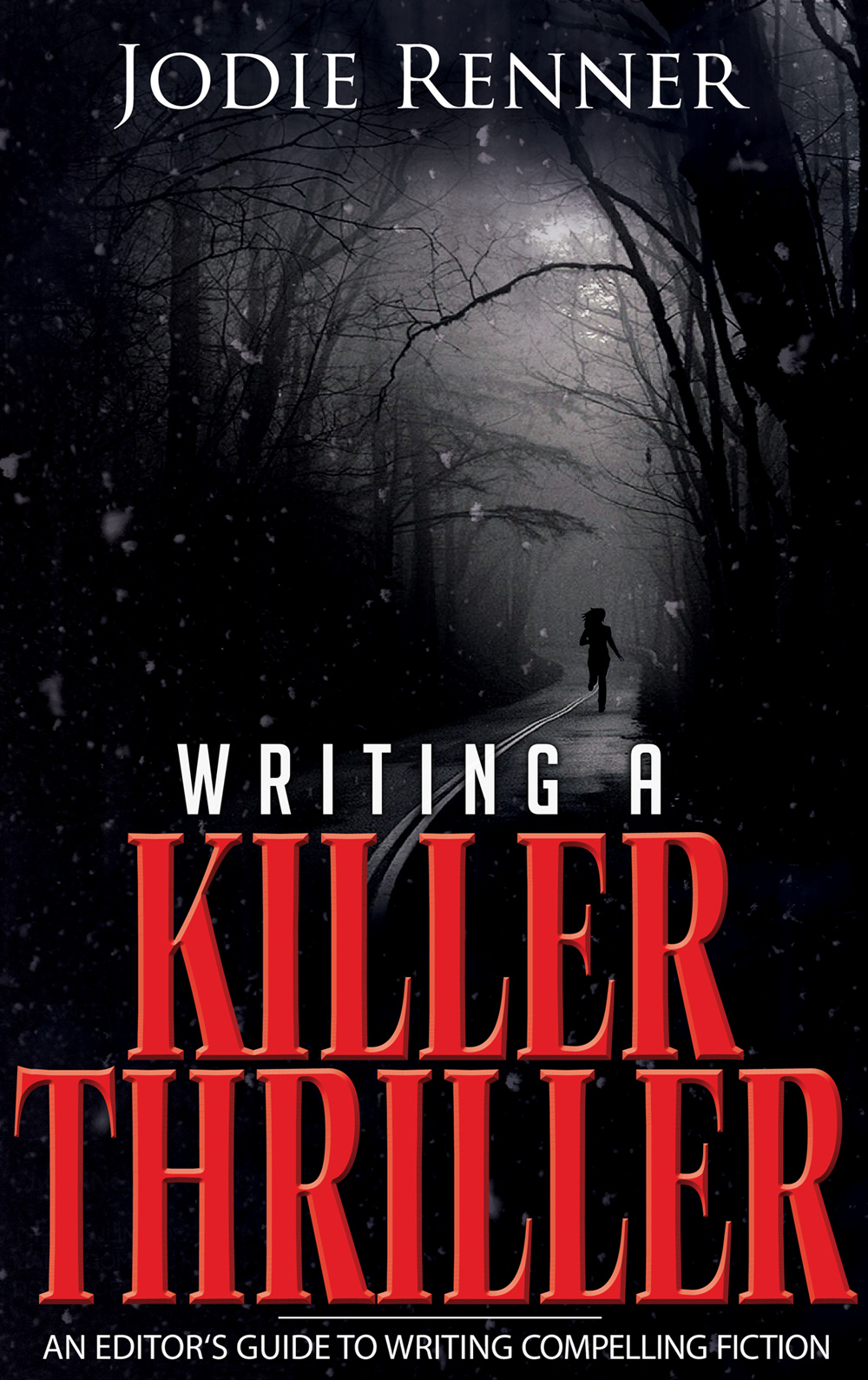
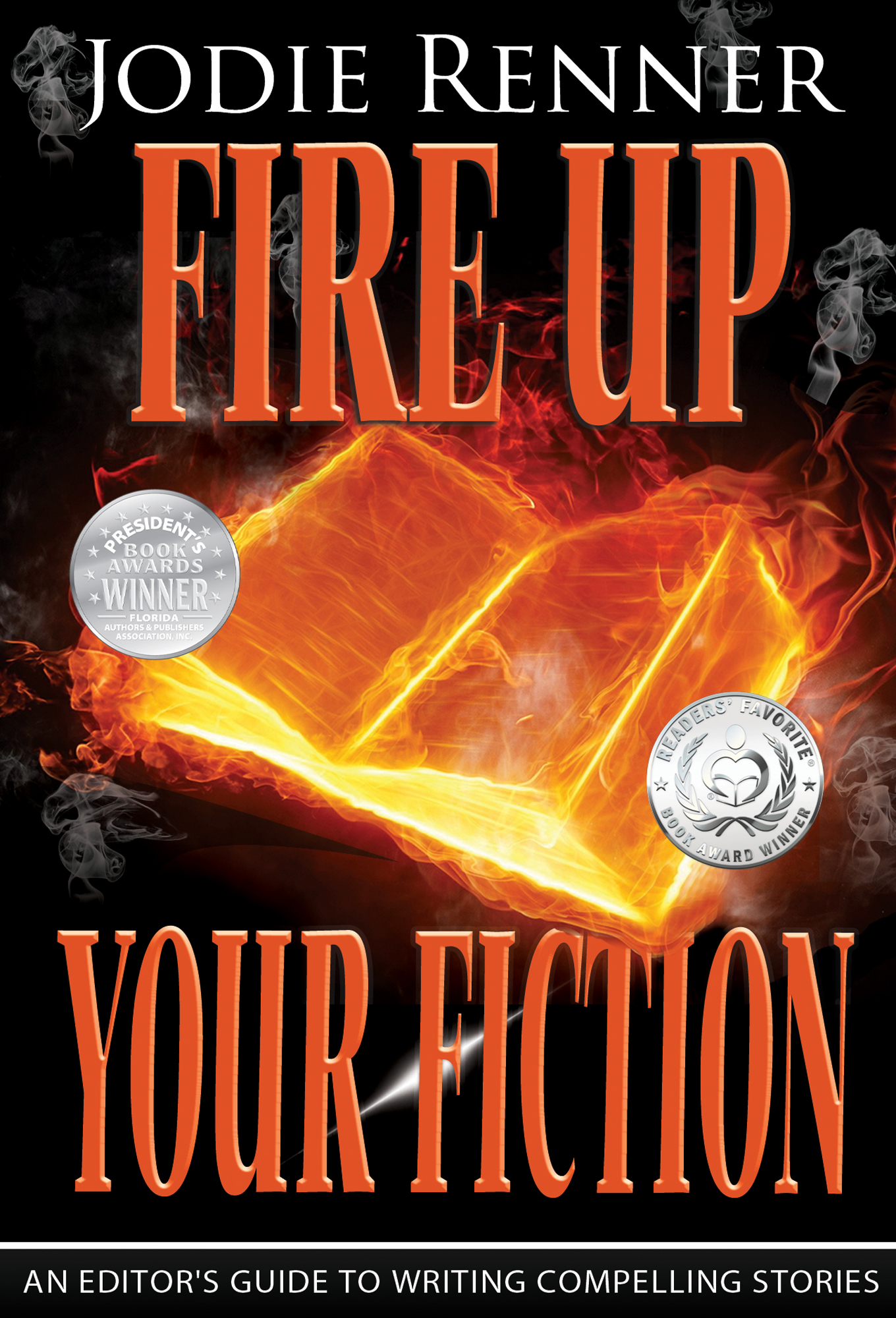
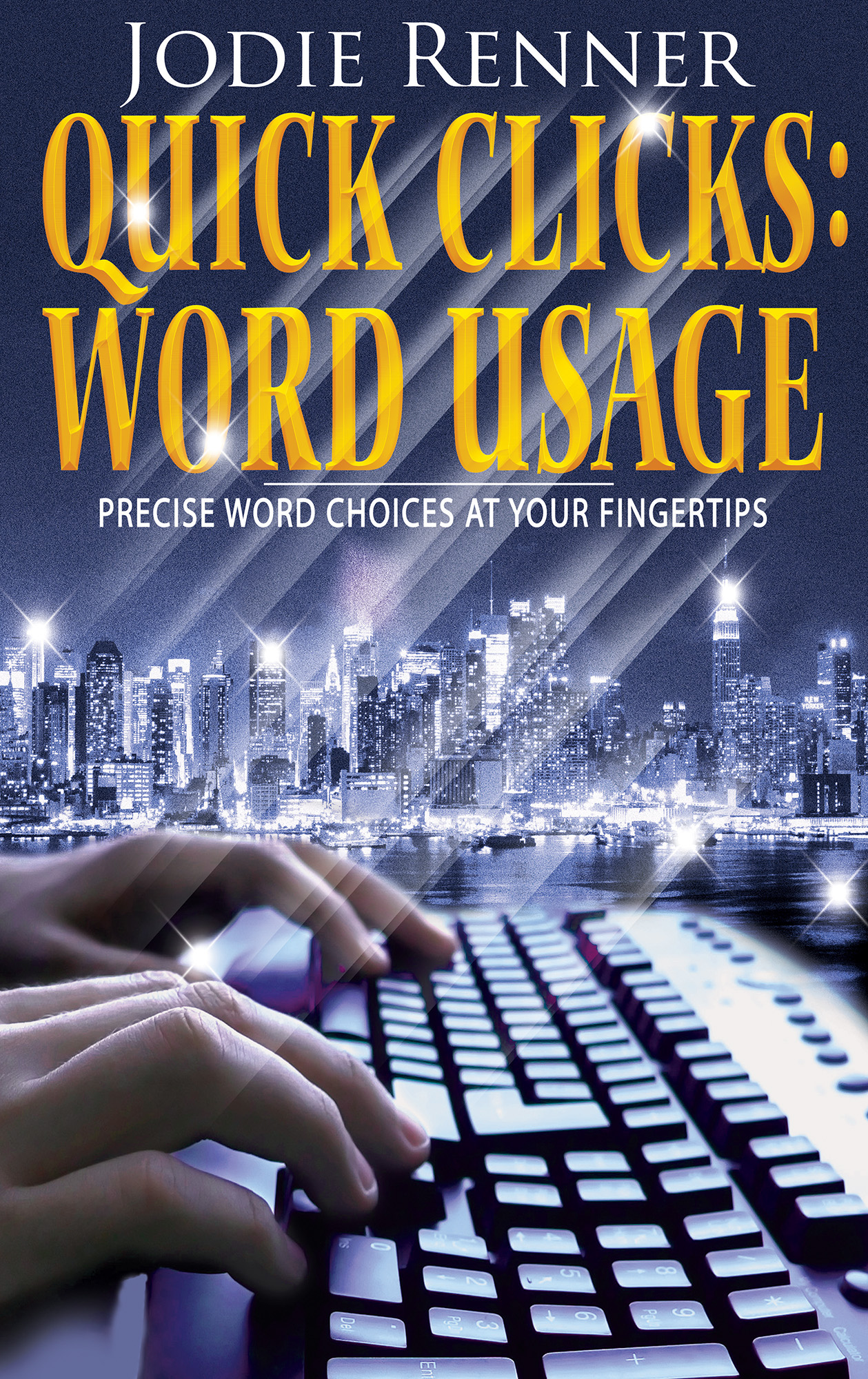
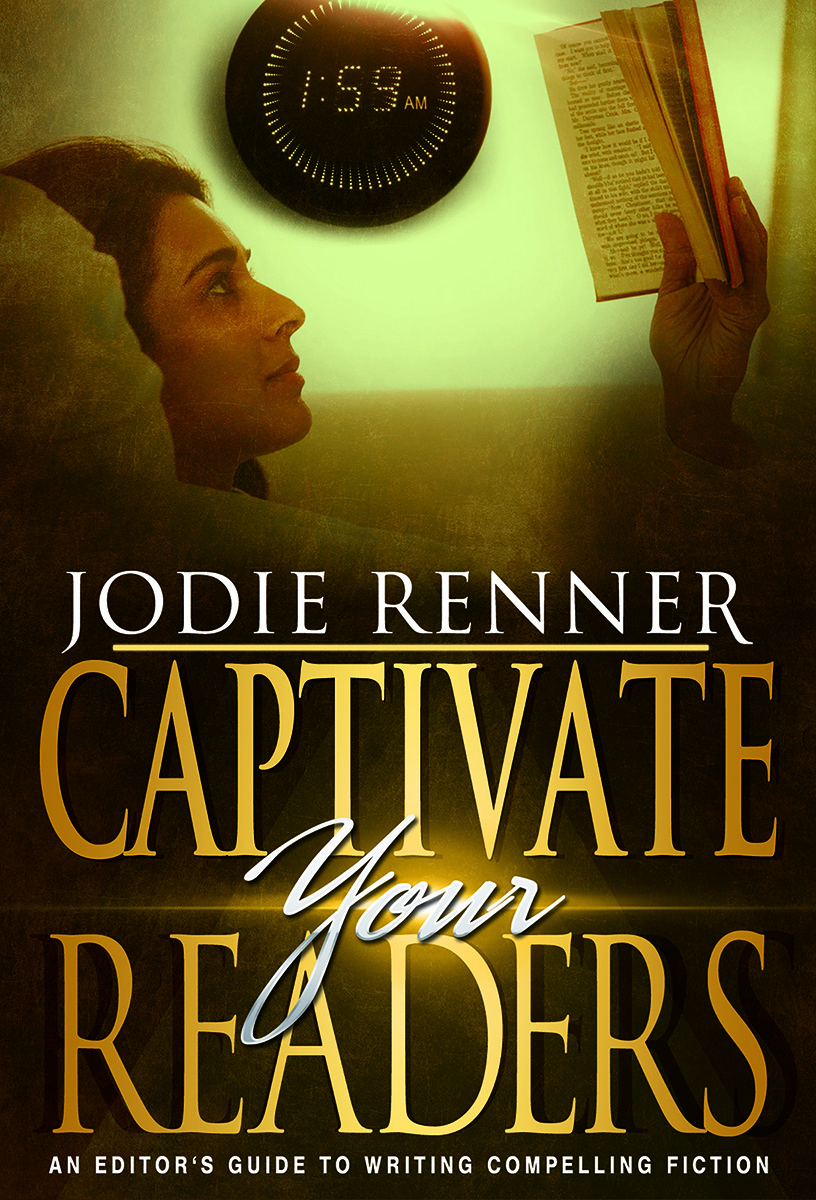
Jodie Renner, a former English teacher and school librarian with a master’s degree, is a freelance fiction editor and the award-winning author of three craft-of-writing guides in her series An Editor’s Guide to Writing Compelling Fiction: Captivate Your Readers, Fire up Your Fiction, and Writing a Killer Thriller. She has also published two clickable time-saving e-resources to date: Quick Clicks: Spelling List and Quick Clicks: Word Usage. You can find Jodie at www.JodieRenner.com, her blog, http://jodierennerediting.blogspot.com/, and on Facebook.





 Inspired in part by this week’s New York Times ‘Bookends’ article (