It seems to me there’s been a lot of talk recently about writing for love. Over at Writer Unboxed, for example, Bruonia Barry recounts a harrowing journey toward her third novel. She missed her deadline—by two years! She went through “publishing hell” and some life challenges, but the real issue was the book itself.
I couldn’t go forward with what [the publisher] wanted me to write, and I couldn’t go back. I began to hate writing. It had become about product not process. It was no longer a passion, it was a job. I felt chained to my desk. My family’s livelihood depended on it. I was resentful. And growing to hate the career I’d longed for all my life. I told myself, I’d finish the book, but it would be my last.
A new agent and a talented freelance editor came into Barry’s life and helped her see the story was “better than I thought.” And she found a way for the book to take on “a life of its own” again.
The book is arguably the best I’ve written so far. It sold in two days to a better publisher who offered (ironically, I think) an even better deal. I am now a hundred pages into my fourth book, and I’m once again loving the process. But I will never again elevate the deal over the work. Or pitch a story I’m not yet sure of just for the sake of fulfilling a contract or receiving an advance. Lesson learned. For me to write anything I’m proud of, it can only be for love.
Good for her and her writing.
Though I sometimes wonder what the great pulp writers of old would have thought of this notion of writing for love. I’ve read a number of biographies of writers like Hammett, Chandler, Erle Stanley Gardner, Robert E. Howard––and they never thought in those terms. What they thought about was their next meal. They wrote for money. They wrote during the Depression. They wrote for markets, like Amazing Stories and Dime Detective and Black Mask. At a penny a word, they didn’t have the luxury of waiting for the muse to tickle their fancy. They had to type and type fast.
Back then, it seems to me, most writers who made a go of it thought of writing as a job, which required certain skills, just like bricklaying or carpentry. They got good at what they did and when they finished a solid story they felt satisfaction, for a job well done.
They felt even better when they got the check.
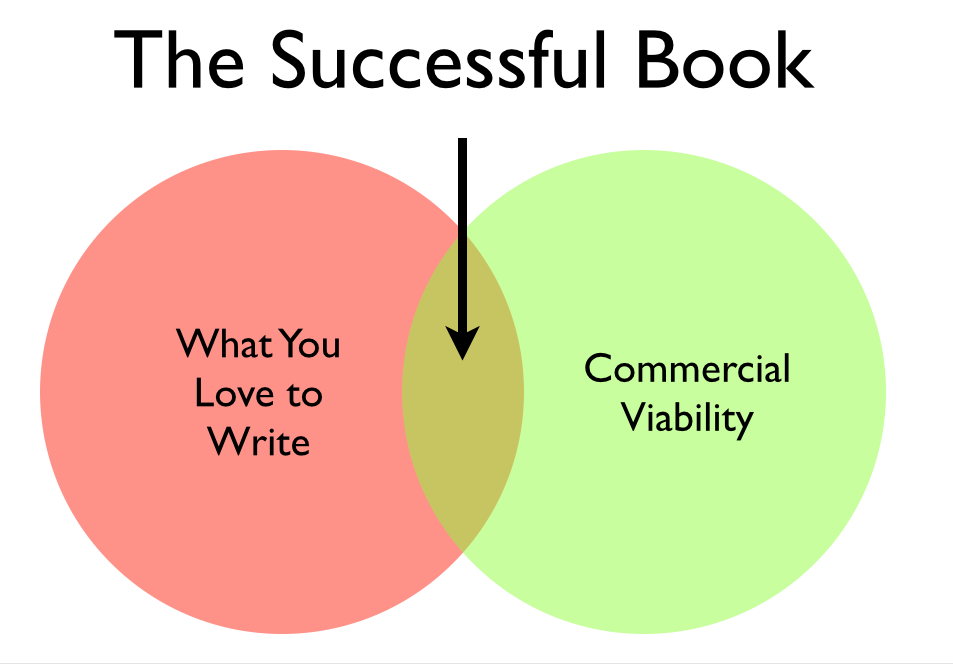
These days the debate seems to come down to an either/or exchange.
You should only write for love. That’s what makes your writing great.
No, you should write for money. That’s how you get to make a living at this.
I touched on this issue last month in my post “The Writer and the Market Should Be Friends.”
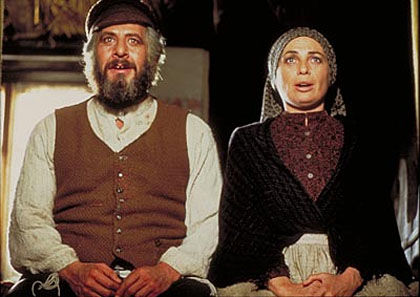
Today I want offer an analogy that hit me after I watched a bit of Fiddler on the Roof the other day.
My favorite song from that show is the little duet in the middle. Tevye and Golde have been married twenty-five years. It was an arranged marriage. Tevye now asks Golde, “Do you love me?”
She sloughs it off at first. Why is he asking now? Maybe it’s just indigestion. But Tevye persists. “Do you love me?”
Golde: Do I love him?
For twenty-five years, I’ve lived with him,
Fought with him, starved with him.
For twenty-five years, my bed is his.
If that’s not love, what is?
Tevye: Then you love me?
Golde: I suppose I do.
Tevye: And I suppose I love you, too.
Tevye and Golde: It doesn’t change a thing, but even so,
After twenty-five years, it’s nice to know.
A writer who is writing for a market is getting into an arranged marriage. He studies what’s being done, gets ideas, shapes them to fit. Eventually he gets married to one and sets off to write the book. He brings his skill set to it, does the best he can.
There are challenges along the way. Every book has them. It’s never all lollipops and roses. There may even be knockdown, drag-out fights.
But in that struggle the professional writer begins to feel something a little like love. For the characters, for the plot, for that next scene. And certainly he’s going to keep on to the end, and fix things when he gets there.
If that’s not love, what is?
It doesn’t change a thing, but even so, after twenty-five chapters, it’s nice to know.