About James Scott Bell

International Thriller Writers Award winner, #1 bestselling author of THRILLERS and BOOKS ON WRITING. Subscribe to JSB's NEWSLETTER.

Put Some Snap in Your Style

by James Scott Bell
@jamesscottbell

We’ve talked before about not settling for mere competence in your writing. We’ve already got plenty of that. The “tsunami of content” available for the consumer of fiction today is made up largely of a spectrum that ranges stink bomb to okay, with the scale tilted decidedly toward the former. It has ever been so, according to Sturgeon’s Law.

So if you want word-of-mouth, and delighted readers, you’ve got to bring something extra to the page. Today I want to talk about adding snap to your style.

As an example of how to do it, I turn us back to another tsunami, the boom in mass market paperback originals from the 1950s. The public, just beginning their addiction to television, was still voracious in its reading habits. Drugstore spinner racks had to be replenished daily with new titles from such publishers as Gold Medal and Pocket Books.

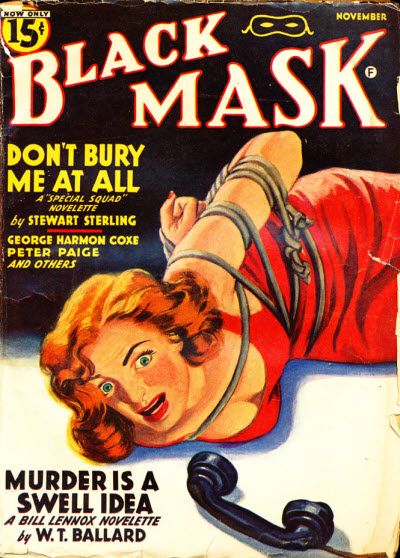
As a result, noir and crime and mysteries were cranked out by scores of writers, accompanied by racy covers and taglines such as: An isolated mountain lodge—and open season on SIN! and She had the face of a madonna and a heart made of dollar bills!

Most of this fiction was serviceable. It did its job and was soon forgotten. But within this market there emerged some fine, even great writers. The ones who stood out always gave their fiction something extra, usually in the style. John D. MacDonald was one. Another was Gil Brewer.

Brewer’s life was writing and writing was his life. Unfortunately, when he wasn’t writing he was drinking. Sadly, the bottle killed him. But before his decline he wrote some of the leanest, meanest noir on the market. You can read about Brewer in this tribute by Bill Pronzini, wherein he writes:

Despite some lurid titles – Hell’s Our Destination, And the Girl Screamed, Little Tramp, The Brat, The Vengeful Virgin– Brewer’s fifties GM [Gold Medal] and Crest novels are neither sleazy nor sensationalized; they are the same sort of realistic crime-adventure stories John D. MacDonald and Charles Williams were producing for GM, and of uniformly above-average quality. Most are set in the cities, small towns, waterways, swamps, and backwaters of Florida, Brewer’s adopted home. …The protagonists are ex-soldiers, ex-cops, drifters, convicts, blue-collar workers, charterboat captains, unorthodox private detectives, even a sculptor. The plots range from searches for stolen gold and sunken treasure to savage indictments of the effects of lust, greed, and murder to chilling psychological studies of disturbed personalities.

Hard Case Crime has re-published The Vengeful Virgin. I picked it up based on Brewer’s name. And as you can see from the original cover and marketing copy, it was one of those lust-and-greed-leads-to-murder tales. But it stands out from so many others because of the snap in Brewer’s style.

The book is about Jack Ruxton, who runs a TV sales and repair shop. He makes a housecall one day to the home of Victor Spondell, an old invalid who is being cared for by his eighteen-year-old stepdaughter, Shirley Angela.

It doesn’t take long for Jack and Shirley to fall in lust. Then try to figure out a way to murder Victor so Shirley can lay claim to the three-hundred grand he’s left to her.

The book is written in First Person POV. At one point, with the plan underway, Jack is alone in his store, feeling like a caged animal. He needs to get something to eat. A competent writer might have written the following paragraph:

After awhile it was time to eat something again, so I walked down to the drugstore and had a ham sandwich and a glass of milk. It was dark outside. There was some light from the street. Cars went up and down, maybe to parties and good times, or just home to TV and the evening paper.

That’s fine. It’s competent. But Brewer is more than that. He wrote it this way:

After awhile it was time to eat something again, so I walked down to the drugstore and fooled around with a ham sandwich and a glass of milk. It was dark outside. Neon glowed in the streets. Cars hissed up and down on their way to parties, maybe, good times, or just home to the one-eyed monster, and the evening paper.

That right there is the elusive thing called voice. It’s a symbiosis of writer and character rendered with craft on the page. Look at the verbs—fooled around, hissed. And the specific nouns—Neon, one-eyed monster. That’s how Jack Ruxton would talk, pressed through the gauze of a skilled writer’s imagination.

So our lesson today is simple:

  1. Know your character’s voice intimately
  2. Look for more descriptive verbs consistent with that voice
  3. Be specific with the nouns

Go ahead and use a thesaurus. I wrote this sentence: I ate a hamburger. Just for laughs, I opened my Mac dictionary, entered “eat” and went to the thesaurus. There I found: devour, ingest, partake of; gobble (up/down), bolt (down), wolf (down); swallow, chew, munch, chomp; informal guzzle, nosh, put away, chow down on, tuck into, demolish, dispose of, polish off, pig out on, scarf (down).

In about ten seconds I decided on: I demolished a hamburger.

The best time to do this, in my experience, is by looking over your previous day’s pages. That’s not the time for major changes in plot or character. Just use it to put some snap in your style. Readers will notice.

What is your approach to style? Do you think about it as you write? Is there an author you’d like to emulate (not copy)?

Keep on Clacking Till Your Soul Goes Packing

by James Scott Bell
@jamesscottbell

We writers have a great gig, don’t we?

We get to play in our imagination every day. We bring characters to life or—even better—watch as characters come to life while we write. We dream. We create plots and scenes and twists and turns.

Some of us have day jobs (or, as Brother Gilstrap used to put it, “my big-boy job”) and write when we can. Others do this for a living. Still others occupy a middle position where they have some days they can dedicate to clacking away at the keyboard. (As a Southern California boy, I have to admit I love being able to “go to work” in shorts, flip flops and a Hawaiian shirt. I enjoyed practicing law but didn’t like having to wear a suit and tie every day!)

But maybe the thing I love most about the writing life is this: I can write as long as I’m a sentient being. I never have to quit. And I can effortlessly slide into the role of crusty but benign eccentric who mumbles aphorisms—even to other people—and still hits the keyboard each day.

In fact, I know how I want to look when that time comes. Like this:

Donald Hall, photo by Gary Knight, www.garyknight.org. Used by permission

That’s writer Donald Hall as posted by The Paris Review. In the accompanying essay, Hall (now deceased) reflects on the approach of his 90th birthday. There he is in comfy pants and T-shirt, a favorite chair, hair a bit mussed, surrounded by books, some of which are on the floor as his active reads. Perfect! (I’ll have to check with Mrs. B about the beard, and I’ll probably be barefoot much of the time.)

On Hall’s wall is a print of the famous Andy Warhol painting of Elizabeth Taylor, which got me wondering what one picture or painting I would like to have hanging over me as I approach 90. Something noir-ish, I suspect. Heck, I already have it—a movie poster from the 1953 re-issue of Out of the Past starring Robert Mitchum.

Trivia note: The original poster for Out of the Past from 1947 has Mitchum with a cigarette. So why not in the re-issue poster? Because 1953 was after Mitchum’s infamous bust for smoking reefer. He did two months in the jug for that, and most people thought his career was over. But Howard Hughes, who owned Mitchum’s contract, figured out Mitchum’s “bad boy” image was catnip for the bobby-soxers. Mitchum became more popular than ever. But when Out of the Past was re-issued, there was no need to remind people of the arrest by sticking what could have been a joint in his mouth!

Back to Donald Hall. He ruefully compares his earlier writing life with his present:

Back then, I wrote all day getting up at five. By this time, I rise scratchy at six or twitch in bed until seven. I drink coffee before I pick up a pen. I look through the newspaper. I try to write all morning, but exhaustion shuts me down by ten o’clock. I dictate a letter. I nap. I rise to a lunch of crackers and peanut butter, followed by further exhaustion. At night I watch baseball on television, and between innings run through the New York Times Book Review. I roll over all night. Breakfast. Coffee.

Of course an octogenarian scribbler is going to be a tad slower than his thirty-year-old former self. But Hall did something each day, and that’s the point—not stopping.

Printed newspapers will probably be gone by the time I’m 90, but coffee will remain. Coffee is forever. And so is storytelling.

So, TKZ friends, imagine your ninety-year-old self. How do you look? What are you doing? What picture is hanging on your wall?

From My Bookshelf: Early Writing Lessons

by James Scott Bell
@jamesscottbell

Back when I decided I had to try to become a writer (even though I’d been told you can’t learn how to do it, that you’re either born a writer or not, and sorry, bud, if you’re not) I joined the Writer’s Digest Book Club. I had to see if I could learn, because the desire to write had come back into my life like a long, lost love.

Behind me in my office is a floor-to-ceiling bookshelf stuffed with my beloved writing books, a goodly portion of them purchased from WD. I thought it might be fun, from time to time, to look back at the early lessons I picked up during my unpublished days. I’ll look not only at the books, but also the several binders of Writer’s Digest magazines which I devoured each month. The underlines, highlights and sticky notes are like an archaeological dig into the formation of one writer’s mind.

One of the first books I got from WD was Dare to Be a Great Writer: 329 Keys to Powerful Fiction by Leonard Bishop. Bishop was an old-school fiction writer in the naturalistic style of James T Farrell. He also did a lot of teaching and editing. I ordered the book because I thought, Wow, 329 keys! I better get cracking!

Something funny about the book—there is no order in the material. It’s a collection of short selections that hop around between plot and characters and scenes and openings and point-of-view and the publishing business and so on. There’s an index which categorizes the subjects for you, but I happily got out my highlighter and sticky notes and read the thing from cover to cover.

It’s so much fun to look back to see what stuck out to me. For instance, on page 39 I highlighted the section called Details of Setting, wherein Bishop writes, in part, “Details of setting should be incorporated into the activity of a character. When details are put down separately from the character, they either intrude, slow the pace, or take the focus away from the character.”

Bishop then, as he does throughout the book, gives examples of how to do it, and how not to do it. And boom! I had learned something about the craft of fiction that I could immediately put to work to make my stuff better. I learned it because someone taught it to me in a book.  

Take that, skeptics!

In the middle of Dare to Be a Great Writer I have a sticky note next to the heading Avoid Repetitious Settings. Bishop says, “When rewriting, be alert for a repetition of setting. This repetition quickly reveals that the writer has been lax in his use of invention or is uninformed about the time in which the characters are living. To avoid this, list the settings you have already used and determine how often you have used them.”

Apparently I got the message, because just the other day I was writing a scene in a restaurant. I moved the characters outside to a hot dog stand where there is more activity going on. And now I realize that move was probably put in my head thirty years ago by Leonard Bishop.

But even more interesting, to me at least, are my own notes scribbled on the blank flyleaves of Bishop’s book. I added 14 more “keys.” These were things that occurred to me as I wrote my own pages or when I noticed what another author did in a novel.

I even numbered them according to Bishop’s scheme. For instance, #330, my first note, says Turn the Cliché 180°. I jotted an example of a man and woman going fishing, with the man being skilled and the woman being clumsy. Switch the roles, I wrote.

#332 is Close Your Eyes When Typing. Especially good for description. Capture the scene.

My last note , #343, says: In first rewrite, take out as much info in opening chapters as you can, in order to make it move and be more mysterious. Fill in the info later. TKZ regulars will recognize this as my later formulation, Act first, explain later. It first occurred to me back around 1990!

What I remember most about Dare To Be A Great Writer is the excitement I felt every time I opened it up. I wanted to be a great writer. Here was a book that was filled with the how. I’d wasted ten years believing the Big Lie that you can’t learn to write fiction. This book dared to tell me I could.

So I did.

What is one of the earliest writing lessons you picked up? Where’d it come from?

I Could Have Been Alex Trebek

by James Scott Bell
@jamesscottbell

What is the greatest gig in the history of gigs?

**cue Jeopardy music**

Did you guess being the host of Jeopardy? You should have. I mean, Alex Trebek works two days a week in an air-conditioned studio, making millions of dollars for reading some cards and saying, “No, sorry” to people.

And he’s done this since 1984! He’s a fixture of our popular culture. For many years, so was his mustache. It made national news when Trebek shaved it off back in 2001.

Alex Trebek is very good at what he does. He’s got a pleasant voice and cool demeanor. (Although I can’t think of him without hearing SNL’s parody. Will Ferrell as Alex, and Darrell Hammond as Sean Connery. Alex: “No, no, that’s The Pen is Mightier.” Sean: “Gussy it up however you want, Trebek. What matters is does it work?”)

And I, your humble scribe, could have been Alex Trebek. Or a facsimile thereof!

I take you back to JSB just after graduating college. I was living with the folks in the old homestead before setting off for New York to pursue an acting career. To make a few bucks I did close-up magic in a couple of bars and for an occasional party.

And once for a local Boy Scout troop. They were having a meeting in the auditorium of St. Mel’s Catholic School and one of the parents knew of my facility with legerdemain. (In those days I billed myself as “Jim Bell, Master of the Amazing.”)

So there I was in front of a bunch of scouts and their parents. And in the front row was a face I recognized. Most people in the 1970s would have, too. It was Larry Hovis, one of the stars of the hit comedy series Hogan’s Heroes.

I went into my act, and did the color-changing scarf trick. That’s where I stuff a red scarf into my fist and it comes out yellow. Then the yellow comes out black. Then they all disappear.

I remember vividly the approving expression on Hovis’s face. I had impressed a television star!

After the show Hovis came up to me and told me I had a very nice presence. He gave me a card for a company he was working with, Ralph Andrews Productions. That outfit was known for producing game shows, such as Celebrity Sweepstakes and It Takes Two.  

“You have what it takes to be a game show host,” Hovis said. “Call us and let’s set up a meeting.”

Harrumph, I thought. Game show host? Are you kidding? I wanted to be Brando. I wanted to be Newman. I wanted to stun them on the New York stage and be offered a leading role in a movie that made me a star. Then I could have a career like Hoffman or Pacino or Redford.

Game show host? Bah!

Needless to say, I never made the call. Who knows what might have happened if I had? But on I went to New York, then later back to Hollywood, then married an actress and decided we needed one steady income and went to law school, then joined a big Beverly Hills firm and started putting in 50-60 hours a week.

One night after a long day, I was at home zoning in front of the TV when Jeopardy came on. There was Alex (with mustache and big hair) and I said to Cindy, “I could have been him.”

When she inquired about this further, I told her the story. And we both let out wistful sighs.

Who knows what would have happened had I followed Larry Hovis’s advice? We can play that game all day long. Yes, being a host like Trebek or Sajak would have been a pretty nice deal.

But I’ve got a nice deal right now, and if TV stardom meant I wouldn’t have met my wife that one glorious night at a party among a lot of struggling actors, I would not wish to go back even for a second.

Plus, as it turns out, I’m doing what I’ve wanted to do ever since I started reading Classics Illustrated comic books as a kid—write fiction, tell stories, give readers a ride on a dream.

So I’ll take Happy and Grateful for $1,000, Alex.

Do you have a “road not taken” moment? Has it made all the difference?


Huckleberry Finn’s Transformation

by James Scott Bell
@jamesscottbell

Hemingway famously declared that all of modern American literature comes from one book, Mark Twain’s Huckleberry Finn. The novel, however, was controversial from the jump. In 1885 the Concord Public Library banned it from their shelves for being “the veriest trash, suitable only for the slums.”

In recent years Finn has been removed from reading lists for its copious use of the N word, though Twain was portraying a slice of 1840s America in order to expose and shame its prejudices. But this is not a post about that controversy. The interested reader can find a good overview of the dispute in this article.

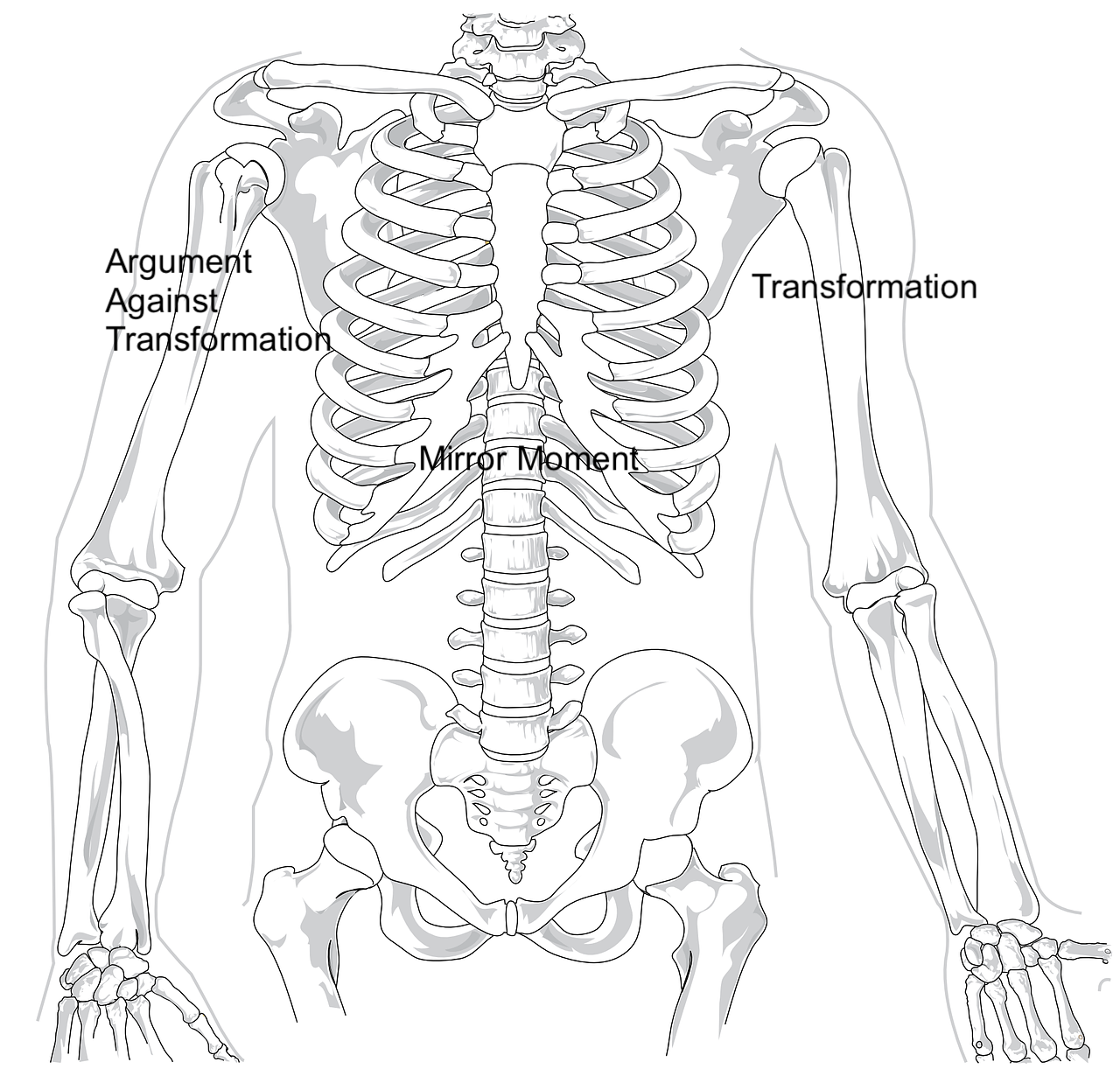
What I want to focus on is Twain’s use of the mirror moment, and the transformation of Huck. In my book on the subject I assert that knowing the mirror moment tells you what your book is really all about. And that’s certainly true of Huckleberry Finn. (How Twain managed to read my book long before I was born is still a mystery.)

In the middle of the novel Huck has the opportunity to turn Jim over to some slave trackers, for a reward. In the culture Huck is part of this is the “right” thing to do. A slave is someone else’s “property.” Thus, helping Jim escape is stealing. And since stealing is agin’ the Good Book, Huck is in danger of hellfire. So he’s been taught.

But something makes Huck hesitate. He tells the trackers that he and the fellow on the raft (Jim in hiding) have small pox. The trackers make a quick exit.

All this causes Huck to reflect:

They went off and I got aboard the raft, feeling bad and low, because I knowed very well I had done wrong, and I see it warn’t no use for me to try to learn to do right; a body that don’t get started right when he’s little ain’t got no show—when the pinch comes there ain’t nothing to back him up and keep him to his work, and so he gets beat. Then I thought a minute, and says to myself, hold on; s’pose you’d a done right and give Jim up, would you felt better than what you do now? No, says I, I’d feel bad—I’d feel just the same way I do now. Well, then, says I, what’s the use you learning to do right when it’s troublesome to do right and ain’t no trouble to do wrong, and the wages is just the same? I was stuck. I couldn’t answer that. So I reckoned I wouldn’t bother no more about it, but after this always do whichever come handiest at the time.

So here is Huck asking himself who he is, who he is supposed to be, and deciding for the moment that the best thing is to just not think about it. But he’s teetering toward a transformation of some kind. He doesn’t have the capacity (yet) to completely understand what’s happening inside him. But we know whatever it is it’s at the heart level.

Here is Huck’s transformation late in Act 3. His inner struggle is too much to bear. He wants to feel cleansed, once and for all, so he won’t go to hell. He writes a note to Miss Watson—Jim’s “owner”—and says he’s got her slave and to send the reward money. He feels good for a moment because he’s not going to go to hell now. But then he starts thinking about all that he and Jim had been through:

I’d see him standing my watch on top of his’n, ‘stead of calling me, so I could go on sleeping; and see him how glad he was when I come back out of the fog; and when I come to him again in the swamp, up there where the feud was; and such-like times; and would always call me honey, and pet me and do everything he could think of for me, and how good he always was; and at last I struck the time I saved him by telling the men we had small-pox aboard, and he was so grateful, and said I was the best friend old Jim ever had in the world, and the only one he’s got now; and then I happened to look around and see that paper.

Huck takes up the letter and suddenly freezes,

because I’d got to decide, forever, betwixt two things, and I knowed it. I studied a minute, sort of holding my breath, and then says to myself: ‘All right, then, I’ll go to hell’—and tore it up.

One of the most powerful transformations in all of literature. Indeed, the esteemed Prof. Arnold Weinstein of Brown University calls it “[a]rguably the greatest moment in American fiction.” By ripping up the letter Huck proves his transformation, his breaking free from a false moral prison into nascent humanity. It finds completion in the famous last lines:

But I reckon I got to light out for the Territory ahead of the rest, because Aunt Sally she’s going to adopt me and sivilize me, and I can’t stand it. I been there before.

That’s how you make a classic. A moral dilemma, a mirror moment, a crisis of conscience, a final decision, proof of transformation, and a resonant last line.

Easy, right? Ha!

But, truly, these things can be done in any genre, and will elevate any book. There is plenty of competent fiction out there. But why settle for mere competence?

I’m sure each of you can recall a powerful, transformative ending in a book or movie, one that you’ve never forgotten. Tell us about it.


Reader Friday: Moody Writers

Jack Dann

Writing is about putting words on paper, especially during those times when you’re not in the mood. — Jack Dann

What are our writing moods like? Are they variable? Predictable? How do they affect those around you? Can you write when you’re moody, or do you have to wait for the right feeling?

It Helps If You Can Write

by James Scott Bell
@jamesscottbell

“For a long time now I have tried to simply write the best I can. Sometimes I have luck and write better than I can.” – Ernest Hemingway

There’s an old joke about a guy who gets paired with a priest for a round of golf. They hit the first green in regulation. The priest has a thirty-foot putt with a big break. He crosses himself and drains the putt.

The guy misses a five-footer.

On the next green, the priest crosses himself and nails a fifteen footer. The guy misses his.

Same story on the third green.

As they’re about to tee off on the fourth hole, the guy says, “Father, I noticed what you do before you putt. You think if I crossed myself I’d start making mine?”

The priest says, “It couldn’t hurt, my son.”

On the fourth hole the guy has a straight ten footer. He crosses himself, putts, and misses.

“So what happened?” he asks the priest.

And the priest says, “Well, it helps if you can putt.”

Which is how I feel about the whole how do I sell more books issue.

For many writers out there, unleashing a plethora of fancy marketing tricks is like crossing yourself. It can’t hurt. But to sell and keep selling, it helps if you can write.

The data backs this up. For example, BookBub recently put out an infographic based on a survey of their subscribers. Natch, most of them use BookBub to select new titles. But from there, two old reliables assert themselves as the largest slices of the book-buying pie.

The biggest factor is word of mouth. Overwhelmingly (and it has always been thus) people buy books they hear about from trusted sources. This usually means someone they know and can rely on, but also includes online communities such as Goodreads and well-trafficked blogs.

The other big slice is when an author someone has enjoyed in the past comes out with a new title. Once this happens a couple of times, the author has made a fan.

And how are fans created? By really good reads.

The $64,000 question (for those of you who remember the cultural derivation of that term) is this: What constitutes a really good read?

I am going to tell you.

It depends.

Thanks for stopping by!

Okay, here’s what I mean: It depends on your genre, your voice, your professionalism. It means you are able to write a book that not only meets expectations, but in some way exceeds them.

In other words, not just the “same old.” Because we’ve got too much of that. It means adding your own special something to the story.

I think of the old pulp writers. Who were the ones who caught on and were able to sell issue after issue, book after book?

Raymond Chandler, who could write description and dialogue like a trench-coated angel.

Erle Stanley Gardner, who could create twisty-turny plots featuring the smartest lawyer in the world.

Robert E. Howard, whose voice was as big and bold as the Texas winds that raised him.

Max Brand (real name: Fred Faust), the most prolific of them all, who elevated the standard Western into something that reaches into the soul.

I could go on, and we all can create our own list of favorite writers. What they will have in common is storytelling ability and “something more” that resonates with us.

Marketing only gets you an introduction. It’s your writing that does the heavy lifting. Which is why I offer a free novella to those who want to sample my wares. That’s a fair exchange. It’s like an arranged lunch date. As long as I don’t have broccoli in my teeth, maybe a reader will want to read more of my stuff.

So to you writers just starting out, or are trying to get a foothold in the market—keep learning and growing. Yes, you’ll need to lay a marketing foundation (e.g. a website, a bit of social media presence).

But keep the main thing the main thing: Always strive to write your best and sometimes you’ll have good luck and write better than you can!

Creating Tension Between the Lines

by James Scott Bell
@jamesscottbell

Another first page for us to analyze today. Note: Davina is not the title of the book, but the name of a first-person narrator. The author intends to switch POVs with other characters, and put the name at the start of each chapter.

Davina

      Someone once said nothing good happens after two am

      I try the familiar number at 3:10.

     Where was she? My sister’s an insomniac like me. She promised to call, the big move slated for yesterday. Pick up, damn it. Six rings, seven. I click off and pace, picking up and replacing my hairbrush, the phone, a bottle of baby aspirin, an inch-high silver tree with roots spreading out so it will stand. That one I keep hold of, cradling it in my palm, where the lines resemble roots.

   At 3:30, I try again.

   She answers on the sixth ring. “I didn’t,” she says. “I don’t think I did. I wanted to, but I wouldn’t. Would I?”

   Click, connection broken. What has she done or not done? I call again, get the annoying voice telling me the subscriber is unavailable.

   Off and on for four hours, I call, no answer. The little tree’s still in my palm, I can’t seem to put it down. The last present my father gave me, before he died and left Marissa and me alone with Mother. All these years and no sign of tarnish.

   At 7:30 I call Nate. He lives in the cabin next to ours. “Marissa hung up on me. She sounded weird. You have any idea what’s up?”

  “Trudy’s dead and the sheriff thinks Marissa killed her.”

  I drop the phone, the silver tree, clutch my hair in both hands. Marissa, what have you done? My hands shake, two tries to tap the speaker icon. “How, why?”

   Where’s my tree? Must have fallen on the floor.

    “Trudy went on the deck. The rail gave way where the porcupines gnawed the post. Last night, early morning, I guess.” Nate’s voice swells, an announcer who’s come to the juicy part. “I heard the sheriff talking to the ME. He thinks Marissa made the porcupine’s damage worse, or maybe just pushed her.”

     “Mother was deaf, mostly blind. had trouble walking. An accident waiting to happen.” I hear my voice rising, but can’t stop it. “She probably just fell.”

 “Not what the sheriff thinks,” Nate says. “You should come.”

***

JSB: The author has begun with a disturbance, which automatically puts this page into the “highly promising” category. Over the course of time here at TKZ we’ve seen two common errors popping up on these first pages: openings with characters alone, thinking or feeling; and loads of exposition and/or backstory.

But this page starts with the narrator, Davina, trying to get hold of her sister late at night. When she does, the sister sounds “weird.” Then she finds out the very bad news. Bad news is a good choice for an opening!

Now let’s render it in the most effective manner.

The first line seems superfluous to me. The second line is action, and I’d start there. Tweak it a bit. It’s 3:10 a.m. when I try the number again. 

I like the details of the next paragraph. It helps us feel what the narrator feels. The pacing, the anxiety. Specificity of small details is something many new writer’s overlook. Not so this author.

Next, the sister answers and gives her odd response. To this point, I’m right with the author.

Then:

Click, connection broken. What has she done or not done? I call again, get the annoying voice telling me the subscriber is unavailable.

Here is where a little craft will pay off with large dividends. Cut this line: What has she done or not done? We don’t need it. It’s explanatory. Never explain when what’s actually happening on the page. We know this is what the narrator is thinking; we don’t have to be told.

Off and on for four hours, I call, no answer.

This is a good use of narrative summary. It moves us along quickly to the next point in the scene. There are times when you should “tell” in just this way. Usually it’s to transition between scenes, but sometimes, as here, you do it jump ahead in time to get to the meat of a scene.

I like the one line of backstory: The last present my father gave me, before he died and left Marissa and me alone with Mother. My rule of thumb for new writers is three lines of backstory in the first ten pages, used together or spread out. This is one such line.

Then we come to the phone call to Nate. I have some concerns about the dialogue.

When the narrator asks what’s up, Nate immediately says, “Trudy’s dead and the sheriff thinks Marissa killed her.”

Is that the way a neighbor would give such horrible news? And he uses the name Trudy instead of Your mother. Maybe there’s something odd about him (no social skills?) but that doesn’t come through here. I think it would be more impactful if he prepared her a bit, and didn’t use Trudy to break it to her.

Let’s look at this passage:

I drop the phone, the silver tree, clutch my hair in both hands. Marissa, what have you done? My hands shake, two tries to tap the speaker icon. “How, why?”

Where’s my tree? Must have fallen on the floor.

Again, there are two lines in here that are explanatory. Can you spot them?

Look how much crisper it reads when those lines are removed:

I drop the phone, the silver tree, clutch my hair in both hands. My hands shake, two tries to tap the speaker icon. “How, why?”

Where’s my tree?

Then we get some exposition “slipped in” for the reader:

“Mother was deaf, mostly blind. had trouble walking. An accident waiting to happen.”

Always be aware of dialogue where one character tells another something they both already know. Chances are you’ve done that primarily to give the reader expository info you think they need to understand the scene.

Resist that urge. You can wait until a more natural time for this info, such as the narrator being questioned by the police or some such.

Try ending the page this way:

I hear my voice rising, but can’t stop it. “She probably just fell.”

“Not what the sheriff thinks,” Nate says. “You better come.”

(I changed should to better.)

In sum: this is a scene that has the natural tension of an opening disturbance. Cutting the lines of needless explanation will allow the tension to be felt more directly by the reader. And some simple cuts in the dialogue will render a more natural sound.

Well done, writer.

Okay, I’m in travel mode today, so I leave our author in the hands of the TKZ community for further comment!