About Joe Moore

#1 Amazon and international bestselling author. Co-president emeritus, International Thriller Writers.

Reader Friday: Which literary character would you be for Halloween?

It’s mid-October, and we’re getting in the mood for Halloween….

So, which literary or thriller character would you choose to be for  Halloween? Jack Reacher? Jack the Ripper? Jacqueline de Bellefort from Death on the Nile? 

To get your inspiration engines started, here’s a link to some literary character costumes squidoo.com


And some more female characters…

http://sweet-green-tangerine.blogspot.com/2012/10/thebookchat-literary-costume-ideas.html?showComment=1350347463066


Here’s a challenge–let us  know which literary character you choose for Halloween! And of course, you’ll need to send us pictures! You can send your photos to Killzoneblog at gmail dot com.

Et Tu, Amazon?

by Michelle Gagnon

So I just emerged from my editing cave (my second draft of book 2 for the PERSEF0NE trilogy is done- whew) to some disturbing news. Digging through a backlog of emails, I came across a few from fans that were extremely troubling. Apparently these fans tried to submit reviews of my book on Amazon, and their reviews either a) never appeared, or b) were abruptly taken down.

Two of the fans send transcripts of the reviews, and they were standard (and positive, thankfully): nothing offensive at all in terms of content.

One of the fans took the time and trouble to write to Amazon, asking why his review was removed. He received this form letter reply:

I’m sorry for any previous concerns regarding your reviews on our site. We do not allow reviews on behalf of a person or company with a financial interest in the product or a directly competing product. This includes authors, artists, publishers, manufacturers, or third-party merchants selling the product.

We have removed your reviews as they are in violation of our guidelines.  We will not be able to go into further detail about our research.

I understand that you are upset, and I regret that we have not been able to address your concerns to your satisfaction. However, we will not be able to offer any additional insight or action on this matter.

Now, I’ve known this fan for years–he’s read (and reviewed!) all of my other books. And he has no financial stake in my work. He also doesn’t sell anything on Amazon, ever–never mind competing products (which would be what, exactly? Other books? Does this mean that I’m no longer allowed to review thrillers by my contemporaries?)

From there, it became even more disturbing. When the fan wrote back and pointed out that he’s never sold anything on Amazon, and doesn’t have any financial interest in my books, they sent another letter–and in this one, the powers that be declared that if he tried to contact them again about reposting, they would REMOVE MY BOOK FROM THE SITE.

That’s right, remove my book. Even though, had he not written, I wouldn’t have a clue that any of this was transpiring.

Hello, Big Brother.

Needless to say, I found this very disturbing, particularly since it doesn’t appear to be an isolated case. After all, two other fans sent similar messages; and I can only wonder how many others had the same experience, but didn’t write to let me know.

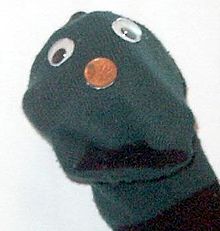
All I can think is that this is some sort of misguided attempt by Amazon to try and remedy some of the abuses that came to light in the recent sock puppet debacle (and if you missed all that drama, here’s a link to catch you up). But if so, it’s overkill. These days, with fewer review outlets available to writers, those Amazon reviews can be worth their weight in gold. And on what basis is Amazon is deciding that some posts should be barred? It’s very disturbing.

Thoughts?

Et Tu, Amazon?

by Michelle Gagnon

So I just emerged from my editing cave (my second draft of book 2 for the PERSEF0NE trilogy is done- whew) to some disturbing news. Digging through a backlog of emails, I came across a few from fans that were extremely troubling. Apparently these fans tried to submit reviews of my book on Amazon, and their reviews either a) never appeared, or b) were abruptly taken down.

Two of the fans send transcripts of the reviews, and they were standard (and positive, thankfully): nothing offensive at all in terms of content.

One of the fans took the time and trouble to write to Amazon, asking why his review was removed. He received this form letter reply:

I’m sorry for any previous concerns regarding your reviews on our site. We do not allow reviews on behalf of a person or company with a financial interest in the product or a directly competing product. This includes authors, artists, publishers, manufacturers, or third-party merchants selling the product.

We have removed your reviews as they are in violation of our guidelines.  We will not be able to go into further detail about our research.

I understand that you are upset, and I regret that we have not been able to address your concerns to your satisfaction. However, we will not be able to offer any additional insight or action on this matter.

Now, I’ve known this fan for years–he’s read (and reviewed!) all of my other books. And he has no financial stake in my work. He also doesn’t sell anything on Amazon, ever–never mind competing products (which would be what, exactly? Other books? Does this mean that I’m no longer allowed to review thrillers by my contemporaries?)

From there, it became even more disturbing. When the fan wrote back and pointed out that he’s never sold anything on Amazon, and doesn’t have any financial interest in my books, they sent another letter–and in this one, the powers that be declared that if he tried to contact them again about reposting, they would REMOVE MY BOOK FROM THE SITE.

That’s right, remove my book. Even though, had he not written, I wouldn’t have a clue that any of this was transpiring.

Hello, Big Brother.

Needless to say, I found this very disturbing, particularly since it doesn’t appear to be an isolated case. After all, two other fans sent similar messages; and I can only wonder how many others had the same experience, but didn’t write to let me know.

All I can think is that this is some sort of misguided attempt by Amazon to try and remedy some of the abuses that came to light in the recent sock puppet debacle (and if you missed all that drama, here’s a link to catch you up). But if so, it’s overkill. These days, with fewer review outlets available to writers, those Amazon reviews can be worth their weight in gold. And on what basis is Amazon is deciding that some posts should be barred? It’s very disturbing.

Thoughts?

The role of the publicist

Today, my guest is Tom Robinson, an independent publicist (as opposed to an in-house publicist at a publisher) based out of Nashville, TN and representing such great authors as Tasha Alexander, CJ Lyons, Laura Caldwell, and JT Ellison. Tom and I not only share a great love of writers and the art of writing, but we share the same hometown: Pensacola, FL. When we’re not chatting about the state of the publishing industry, we’re comparing lists of favorite places to eat along the Gulf Coast. I asked Tom to cover the basic question of the role of a publicist, a question that continually comes up in the discussion of writing and publishing.

———————-

By Tom Robinson
Independent Publicist

tom-robinsonSo what does the independent publicist do for an author?

It’s a question which gets asked up front when I talk with an author for the first time. It should always be the first question.

The objective is to promote the book (assuming I’m approached when the author has a new release on the horizon) and the author’s branding so that the name has recognition beyond the new book. Those are the important goals. I said “assuming” the author has a new release. I’m also seeing authors who want to continue publicity efforts while they are between books to stay in front of readers.

But let me get back to authors with a new book.

In a nutshell: from meeting with the author the publicist develops a plan to work from that will outline the use of press material, the engagement of blogs, interviews, reviews, social media, online advertising all geared to the author’s targeted audience. Social media has opened up the publicity avenues by leaps and bounds. It is an extremely successful messenger when used correctly.

The independent publicist is often extending the efforts of the publishing house. In-house publicists are usually juggling several titles. They are often understaffed and burning up long work weeks.

Beyond the plan implementation, it’s essential for the publicist to make follow up contact with targeted media outlets. That’s where so much effort is spent.

When the project is completed there should be a cross section of media coverage.

My job has seen incredible change since I first worked exclusively with authors seven years ago. I think it will continue to change, just as the publishing industry changes. But the goals will remain the same—promote the new book and the author brand.

Tom Robinson is an independent publicist for authors. Located in Nashville, TN. Robinson, a media veteran of more than three decades, works with authors of mysteries, suspense, and thrillers as well as authors of non-fiction and children’s books. He now also has his first cookbook author which is resulting in an expansion of his culinary attempts. You can find him at www.authorandbookmedia.com

Ghosts and gremlins on the road

I love soaking up ghost legends and local lore when I’m on the road. The family and I spent most of last week at the gorgeous  Hotel Del Coronado in San Diego, which is known for its resident ghost: Kate Morgan, aka “Beautiful Stranger.”

Evidently Kate checked into the hotel in 1892, and committed suicide by shooting herself in the head five days later. Presumably the cause was a failed love affair (is there ever a better reason?) Ever since Kate’s passing there have been repeated sightings of her ghost, plus numerous mishaps and phenomena attributed to her restless spirit.


We may have had our own run-in with Kate’s ghost last week. At the end of a musical show in the main ballroom, the sound system mysteriously went out just as the chorus was reaching the climax  of their  finale. Someone said a drunken salesman had tripped over a cable, but the rest of us suspected Kate was a music critic.

Is your hometown the source of any local legends or ghost stories? Have any of them made their way into your fiction?

Note: I had a devil of a time getting this post done on my iPad–I battled gremlins galore, plus the one picture I had of Kate Morgan mysteriously failed to display in the post. You draw your own conclusions.

On the Move

by Clare Langley-Hawthorne

So my family and I are about to embark on yet another adventure – just two years after coming back to Australia (after 15 years away) we are now heading back to the USA – to Denver this time – and I am up to my eyeballs in organization and packing (which may or may not explain my current dazed state!). Thankfully final revisions to my manuscript are done and have met with my agent’s approval so, at least on the writing front, things are more or less out of my hands. Apart from that, however, chaos reigns! 

We are all very excited about the move and I’m especially looking forward to getting back into the writing community and attending some writing conferences next year. So my question for you all (as I raise my head above the parapet of boxes) is which conferences do you think are the most worthwhile? I’ve attended many in the past but I confess I’ve lost track of most of them by now and it would be great to get feedback from you all on which you attended, which you thought were great (or not so great…), and why. 

I’ve already got Bouchercon down on my list – though I do find it a little large and overwhelming – but other than that I’m wide open as to options. My current manuscript is a YA one with a historical/fantasy bent but I also hope to have a traditional mystery out by early next year too.

So I’d love you all to weigh in on some of the conference options – then I can get even more excited about my return to the USA!

How to Write a Novel in a Month

Next month is the annual writing frenzy known as National Novel Writing Month, or NaNoWriMo for short. It’s not without its critics, and my blogmates and I have covered this action before.  
I extol the virtues of NaNoWriMo. The novel I wrote in November of 2010 was one I had under contract. It became, after editing of course, THE YEAR OF EATING DANGEROUSLY.
There are similar stories. Hugh Howey wrote his novella WOOL during that same NaNo year. The dang thing has sold in the hundreds of thousands as an ebook, and got optioned by Ridley Scott.
That’s a lightning strikes once or twice kind of thing, and most writers are not going to have that kind of out-of-the-gate success, but that’s almost beside the NaNo point. The point is to get you to get your story down, fast and furious (I wish that term hadn’t been purloined by political culture), and unleash the writer within. It’s to give you a sense of the value of finishing an entire novel (even though it will need massive editing).
As the great Robert B. Parker said, “A writer’s job is to produce.” NaNo is one month of pure production.
Here are ten tips to help you get the most out of it this year:
1. Take a week to plan
Use one week for creative brainstorming and organizing. I don’t mean you have to have a complete outline. In fact, it’s probably better that you don’t. NaNo works best when you let the book breathe and dance on its own.
But you also shouldn’t start out with a blank slate. A few, simple steps will get you to a much stronger story. Use my LOCK System (explained more fully in Plot & Structure).
LEAD. Spend a day brainstorming about your Lead character, backstory, goals and dreams. What is it about your Lead that will make readers want to keep reading?
OBJECTIVE.Be sure that the story objective involves some form of death: physical, professional or psychological. That is, your second act (the bulk of your novel) has to have the highest stakes possible. Take a day to brainstorm reasons your Lead will have to be involved. Think about moral or professional duty as a possible motivation.
CONFRONTATION. Now spend just as much care with your opposition character as you do with your Lead. Remember, the opponent does not have to be evil, just have an oppsoing agenda (think Tommy Lee Jones in The Fugitive).However, if you do want to use a villain, be fair to him. Justify his actions (at least in his own mind). Don’t create a stereotype.
KNOCK-OUT ENDING. This will no doubt be subject to change, but it’s good to have a destination in mind. How do you want the reader to feel at the end? Will your Lead be victorious? Sacrificial? Spend a day messing around with actual scene possibilities for the climax. Choose one as your “go to” scene, knowing you can toss it out as the novel progresses.
Then spend a day planning your TIME. Look at your schedule and block out every free chunk you can. Determine to cut as many distractions as possible during November. DVR favorite shows. Put an auto-responder on your email. Explain to friends that you’re taking time off. Go on a “social media” diet. 
2. Choose mood music
Get your iTunes list together, with soundtracks and songs that create the right mood for your story. Make a playlist for different moods. I have an “Energy to Write” list that is full of upbeat rock and movie music. I blast that sometimes to get my blood racing to write.
3. Watch a “movie in your mind” the night before NaNoWriMo begins
On October 31, plan to get a good night’s sleep. Before you do, get to a quiet spot, a comfortable chair. Put your mood music on softly and close your eyes. Now let a “movie” happen in your mind. Watch your story unfold. Don’t force anything. Let scenes happen, nudge your characters but never push them.
When you go to bed, tell “the boys in the basement” to work hard while you snooze.
4. Kill that first day
Make the very first day the most productive day of your writing life. NaNo works out to an average of just over 1600 words a day. Try to blast past it on Day 1. It will give your confidence a boost.
5. Make it your goal to begin each day with a “furious 500.”
Try getting 500 words down the very first thing in the morning (or second, after you start the coffee brewing). If you have to get up half an hour earlier, so be it.
6. Jot down notes just before you go to sleep
Take five minutes (that’s about all you’ll need) before you go to sleep to put down a few notes about what you might write the next day. Think one or two scenes ahead. If you’re feeling stuck, ask this key question: “How can I make things harder on my characters?”
7. Stick to the knitting
By that I mean the main plot. Make this your focus of attention. At 50,000 words, a NaNo novel is short, and cannot support multiple plotlines.
If you find yourself coming up with a subplot idea, jot a few notes and set it aside for a day or two while you’re on your main plot. If another idea occurs to you, jot that one down, too. After a few days, assess the subplots and choose one, only one. The best one. The one with the most possibilities for conflict. Integrate a scene or two. Then press on.
If you use Scrivener, you can color code the subplot scenes to keep track of them. One subplot only!
8. Write a 200 word nightcap
That is, find some time in the evening to write at least 200 more words. That’s not many. This is in addition to the words you write during the day. If you do a furious 500 first thing in the morning, and a 200 word nightcap, you’ve done almost half the words you need for your daily quota.
9. Break off in the middle of sentence
That’s an old Hemingway trick. And he won the Nobel Prize. Stop your writing stint right in the middle of a sentence. When you sit down to it the next day, you’ll be in flow.
10. If you get stuck
You will probably come to a few points where you don’t know what to write next. Fear will grip you like the cold hands of clumsy proctologist. You don’t want to waste too much time fretting over this, so: open a dictionary at random. Find the first noun you see on the left hand page. Start writing something, anything, based on what the noun brings to your mind.
If you’re still stuck, re-watch Misery and imagine that your number one fan insists that you finish by the end of the month.
And through it all, enjoy the vibe. NaNoWriMo is about community as much as it is about seclusion. It’s about ritual as much as product. It’s a month-long vibe and celebration of being a fiction writer. So enjoy it like you’re in some Hindu festival of colors, or at an Oakland Raiders football game. You don’t have to paint your body (though I’m not saying it’s illegal), but it’s fine to put up a NaNo poster or get a tee-shirt, and to interact online with your fellow NaNos. Check out the community website here.
And now, get ready to rock. November is almost upon us. 

Cleveland, City of Lights

When we last met  two weeks ago I was in New Orleans. In the interim I returned home for a couple of days, put out some fires, and then travelled up I-71 North for two hours to attend  Bouchercon 2012 in Cleveland. Bouchercon is an assembly of mystery writers and fans of same, so, like, how could I not go, with it being so close and all?
I was glad I did. If I had stayed home for three days, I would have done nothing but work. I worked at Bouchercon, too, but also 1) reconnected with friends I had not seen for a few years; 2) made some new friends; 3) became better friends with some folks; 4) reconnected with a guy that I worked with some forty years ago; 5) took award-winning author Kelli Stanley and British crime journalists Ali Karim and Mike Stotter — three of the finest folks you will find on this earth —to Mike the Hatter in Broadview Heights, where they each and all found lids that looked wonderful on them; 5) visited the Rock ‘n’ Roll Hall of Fame; 6) had breakfast with my editor and BFF Carol Fitzgerald, and three members of the original Bookachino internet chat room from way back when the internet was in its cradle; and 7) was the target of  an attack by a drunken troll in the men’s room of a theme restaurant near the host hotel. And how was your weekend?

I have to tell you though that one of the best parts of Bouchercon was beginning it and ending it with fellow Killzoner Jordan Dane. If Jordan ever raffles off a dinner with herself, buy up the tickets. She is wonderful company. We had dinner with author Bev Irwin Wednesday night, before the conference really got rolling, and Jordan is unbelievably funny. She was even funnier after dinner, when I was back in my hotel room, and she began texting observations about this, that and the other to me. Hilarious. And yes, Jordan, you can borrow my gun any time you want; just leave me a bullet so that I can take a shot as well.

Saturday night I was blessed by joining Jordan for dinner once again. I found myself seated with about ten million dollars’ worth of talent in the form of Jordan, Rick Mofina, Linda Castillo, and Julie Kramer. It was a celebration of wonderful news for Rick and Linda: they announced their engagement that evening. Just kidding. What was their news, really? Rick that morning had just received the news that his wonderful new novel, THEY DISAPPEARED, entered the Canadian book lists at Number Two. He learned of this from Linwood Barclay, whose own book, TRUST YOUR EYES, remains at Number One on Canada’s list. There is excellent taste up north, all the way around. As for Linda, her Kate Buckholder series, set in the Ohio Amish country about an hour’s drive from me, is on track to be a television series. Linda, if you hear that the producers are looking about for someone to play a rotund English, please tell them that Sweet Joseph is available.

Seeing Wonderful Jordan, however, was not my only encounter with Kill Zone participants. San Francisco’s Michelle Gagnon was in the house for the William Morrow party. Michelle, besides being an incredible wordsmith, has a fashion sense that any and all would envy. I don’t know anything about such matters, but she somehow always seems dressed to the nines without even trying. Everyone gravitates toward her, and rightfully so. It was wonderful to see her again and to get to spend a little time with her. And what conference would be a conference without Kill Zone alumnus John Gilstrap? John, who is always worth being seeing with and listening to, was in the “Cool Kids Corner,” outside of the hotel with the smokers, even though he doesn’t smoke. I was privileged to spend some quality time with him and Matthew Clemens and get several updates and down dates on the state of the industry. I also hear that Kill Zoner Boyd Morrison was in the House, but somehow failed to meet up with him. Boyd, you evaded me this time, but your luck will not last forever.
There’s more, of course, but that should be more than enough to persuade you to attend Bouchercon the next time it’s in your area. It will be in Albany, NY in 2013; Long Beach, CA in 2014; and Raleigh, NC in 2015. You gotta go. And if you do, say hey.


Reader Friday: Health Insurance and the Self-Employed Writer

Many in the thriller writing community are aware that writer Tom Piccirilli is battling brain cancer. Surgery to remove a tennis ball-sized tumor was successful, and now a long recovery and ongoing fight are in store. So are medical costs. Which brings up the issue of health insurance for the self-employed writer. Thanks to frequent commenter Terri Lynn Coop for suggesting this as a Reader Friday topic. Let’s start a discussion on strategies for writers who must find their own health insurance coverage. 

[NOTE: This is not a political forum, so let’s keep partisan politics out of it. This is about what to do right now with options currently available.]

Meanwhile, if you’d like to help Tom out, here are some options

Is Cutting More Important than Adding?

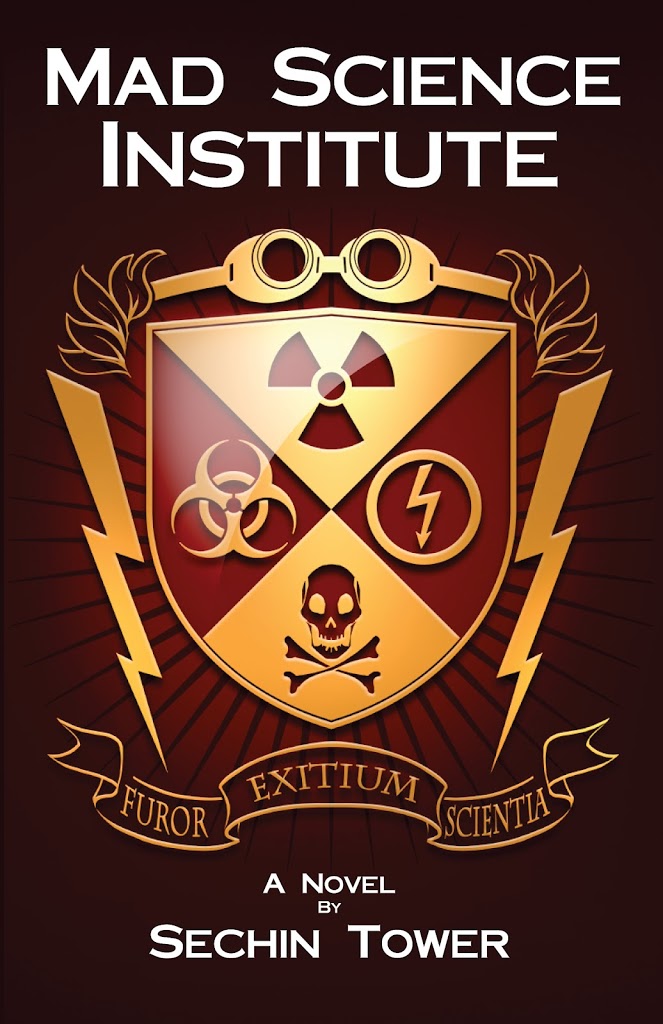
Today I have a guest post from Sechin Tower, author of Mad Science Institute (MSI), a highly unusual yet thoroughly entertaining young adult suspense novel. I met Sechin on Twitter. Once I saw that he was a game developer, I asked for his help on my next proposal, a near future YA techno thriller that involves gaming and he helped me fine tune my game world. I also downloaded his book and found a real gem. Since he’s a teacher, he incorporates science into the plot to make learning fun for young readers. I absolutely fell in love with his YA voice, his characters and his humor. I’m looking forward to his next book. Below is a summary of Mad Science Institute.

Sophia “Soap” Lazarcheck is a girl genius with a knack for making robots-and for making robots explode. After her talents earn her admission into a secretive university institute, she is swiftly drawn into a conspiracy more than a century in the making. Soap is pitted against murderous thugs, experimental weaponry, lizard monsters, and a nefarious doomsday device that can bring civilization to a sudden and very messy end.

Welcome, Sechin!

I had a professor who insisted that the best way to write a two-page paper was to write a 10 page paper, throw it all away, and then hand in pages 11 and 12. When I tell the same thing to my students, they don’t buy it. I can’t blame them: I didn’t really buy it either, not until I started writing novels.

My professor’s point was that not all pages are created equal. Of course it takes more effort to write 10 or 12 bad pages than two bad pages, and maybe even more than two mediocre pages. But good pages require time and effort, as well as research, experimentation, structuring, restructuring, and a nearly endless amount of general fussing. At the very least, good pages require two steps: adding and cutting.

I teach two discrete groups of students and I’ve found that each needs this advice for different reasons. One of my student groups consists of the crème-de-la-crème of our school’s scholars, students who take the most challenging courses, maintain the highest GPAs, and participate in every extracurricular activity that might sparkle on their college applications. My other group consists of at-risk kids in an alternative school program. Many of these students are extremely intelligent, but for a dizzying array of reasons none of them has had much success in school.

The advanced students always want to build up their writing until it overflows. They do the research, they know the issues, they have the facts, and they want to pile it all in without any thought to purpose or readability. The bigger the better: if the assignment calls for two pages, then they assume 10 ought to get a better grade. If they run out of things to say, they resort to inflated words and ponderous sentences. Their writing often becomes a cluttered, colorless hallway that never leads anywhere.

My alternative high-schoolers, on the other hand, bring a great deal of passion about anything they see as relevant to their lives. They are lively, colorful, and outspoken, but even on their favorite topics their writing is terse. For them, it’s about getting to the point. Why wade through the muck of evidence and logic when you can gallop right to the exciting conclusion? Why bother explaining anything if you feel like you already understand it?

Although I didn’t know it at the time, I built a composite of these two groups when I wrote Mad Science Institute. I started by combining all the drive and technical know-how of the advanced students with the vitality and quirkiness of the alternative school kids. I crammed a lot into each character and just as much into the plot and setting, but in the cutting phase I eliminated everything that failed to accelerate the story or develop the characters. It meant cutting some perfectly good ideas, but that was okay: true to the mad science theme, I knew I could stitch them together and give them a new life whenever I was ready. Right then, all that mattered was pruning back and boiling down until the book became balanced and lean.

Being a teacher helped me write a better novel, and writing a novel helped me become a better teacher. I’m not trying to teach my students to become novelists—I wouldn’t push it on them any more than a P.E. teacher would urge all of his students to aim for NFL careers—but what works for crafting a novel applies to essays, letters, and other forms of writing as well. By the end of each year, I’m gratified to see that those students who tended to add too much have learned to accomplish more with fewer words, and the ones who want to start too small learn that they need to build up before they can trim down.

Despite what some students claim, the art of writing is nothing that can be mastered with a mere 16 or 17 years of practice. If I’m any better at it than a student, it isn’t because of what I’ve written but because of what I’ve un-written. Deleting the thousands of pages of rough drafts and practice novels was the only way I could learn what should stay and what just gets in the way, and by the time my students delete that many pages they’ll be better writers than I am.

It seems to me that what you cut is as important as what you add, but maybe that’s just my process. I’d love to hear your opinions on the matter.

How about it, TKZers? Are you more of a cutter or adder?

Sechin’s website & Twitter