About Joe Moore

#1 Amazon and international bestselling author. Co-president emeritus, International Thriller Writers.

Writing Tense Action Scenes

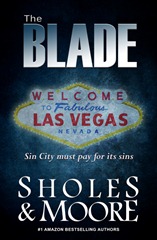
blade-cover4-smallI’m pleased to welcome to TKZ my guest, Jodie Renner, freelance fiction editor and craft writer. Jodie is currently editing my next thriller THE BLADE (co-written with Lynn Sholes), soon to be released as an indie published e-book. Not only is she doing a great job of finding all our line and copy edit stumbles, but she’s got a keen knack for suggesting just the right content tweaks to help tighten the story. I asked Jodie to put together some thoughts and tips for writing action scenes. Here’s her terrific post. Enjoy!
————-
Thanks, Joe! Great to be here.
by Jodie Renner, editor, author, speaker

P1070629_Closeup

I specialize in editing thrillers, and I sometimes get asked how editing suspense fiction is different from editing other genres. That’s a huge topic, too long for one blog post, and would include specific approaches to various elements like premise, plot, characterization, pacing, word choice, and writing style.

For this post, I’ll just talk about writing effective action scenes, which can appear in many other genres besides thrillers.

When your characters are running for their lives, or your hero is in a race against time to save innocent lives, it’s time to write tight and leave out a lot of description, especially little insignificant details about their surroundings. Characters on the run don’t have time to admire the scenery or décor, start musing about a moment in the past, or have great long thoughts or discussions. Their adrenaline is pumping and all they’re thinking of is survival – theirs and/or someone else’s.

Of course, if the details of the setting are significant or would somehow help or hinder your protagonist, then definitely include them. Basically, put yourself in the head and body of your character under stress, fighting for her life, and see/hear/smell/feel what she does, then react as she reacts.

SOME QUICK TIPS FOR WRITING STRONG ACTION SCENES

~ Show, don’t tell (of course!). Play the scene in real time, with actions, reactions, and dialogue.

~ Use deep point of view. Stay in the POV character’s head and body.

~ Avoid info dumps. Keep the readers right there in the scene with the characters. Don’t intrude as the author to clarify anything. If details need explaining, fit that in somehow before the tense scene starts.

~ Evoke the senses. Show your viewpoint character’s vivid sensory impressions, so the reader sees, hears, smells, tastes, feels what he does.

~ Amp up the imagery. Use the most concrete, suggestive nouns and the most powerful, evocative verbs you can find.

~ Show inner reactions. Reveal your POV character’s emotions, brief thoughts, and physical reactions, starting with their visceral responses.

~ Use tight, staccato thinking. Avoid long, involved thought processes, which deflate tension and slow things down.

~ Describe physical actions succinctly, for fast pacing and high tension. Don’t get into distracting minor details about which hand or finger or foot and exactly how high or low, unless it’s important for some reason.

~ Show other characters’ threats and reactions through their words, tone of voice, actions, body language, and facial expressions.

~ Use rapid-fire dialogue. Avoid complete, correct, thoughtful sentences and lengthy discussions among characters.

~ Write tight. Cut out any little unneeded words that are cluttering up sentences and slowing down the pace.

~ Use short sentences and paragraphs, for a tense, breathless, staccato effect. – Writers and readers – do you have any tips to add to this list?

SOME BEFORE-AND-AFTER EXAMPLES OF EFFECTIVE ACTION SCENES

(Well-disguised from my editing. The “after” examples are of course only one possibility among many.)

Before:

Fortunately for Jennifer, the attacker was far enough away that when he attempted to grab her she sidestepped him and delivered a sharp kick to the outside of his left knee. He grunted and fell back against the stack of wooden crates. He then got up clumsily, rubbing his arm, showing his anger at how easily Jennifer had dodged and hit him.

After:

The attacker lunged at Jennifer. She dodged to the side and delivered a sharp kick to his knee. He grunted and fell against the stack of wooden crates. He scrambled up, rubbing his arm, eyes full of hate.

Before:

His facial expression changed from one showing loathing to one communicating unrestrained joy. Jennifer realized at that moment that she had made a fatal mistake. She looked to her right. The door leading out of the warehouse was about fifty feet from where she was standing.

After:

His expression changed from loathing to amusement. Jennifer knew she had made a fatal mistake. She searched for the exit door. It was to her right, about fifty feet away.

Before:

An inline skater came careening around the corner and skated fast towards them, shouting loudly. Josh shot a look back at Amy as he grabbed her arm and pulled her bodily to the edge of the street out of the path of the oncoming skater.

After:

An inline skater came careening around the corner and barreled towards them, yelling. Josh grabbed Amy’s arm and yanked her out of the way.

Writers – feel free to add a before and after example of your own in the comments!
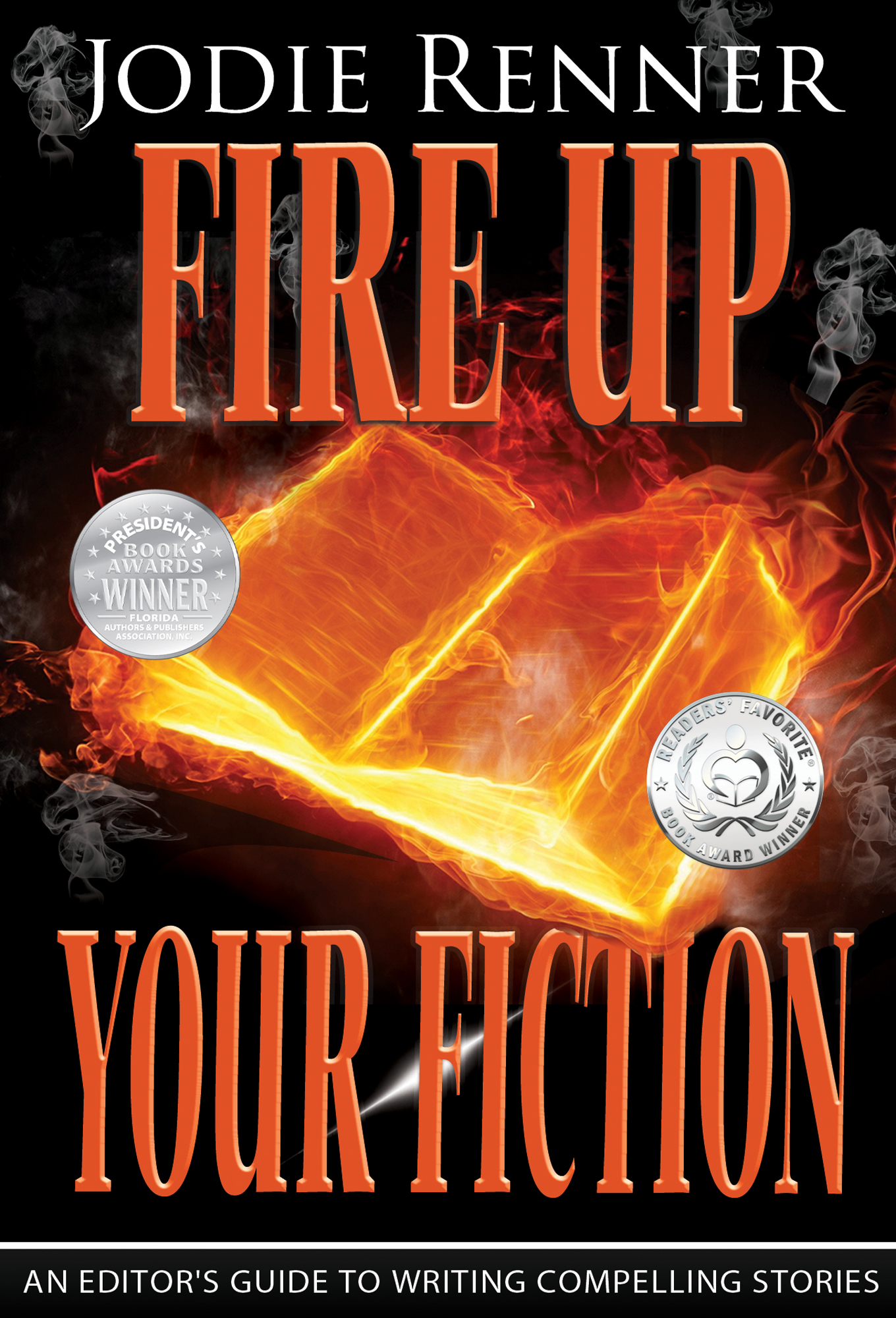
Fire up Your Fiction_ebook_2 silversFor more on this topic and on writing tighter, see Jodie’s book, Fire up Your Fiction.

Jodie Renner is a freelance fiction editor and the award-winning author of three craft-of-writing guides in her series An Editor’s Guide to Writing Compelling Fiction: Captivate Your Readers, Fire up Your Fiction, and Writing a Killer Thriller. She has also published two clickable time-saving e-resources to date: Quick Clicks: Spelling List and Quick Clicks: Word Usage. You can find Jodie at www.JodieRenner.com, www.JodieRennerEditing.com, her blog, http://jodierennerediting.blogspot.com/, and on Facebook, Twitter, and Google+.

Admitting defeat on local flavor

Our stay in Hong Kong and Taipei has been wonderful (We didn’t end up going to mainland China, because the jittery authorities there denied one of our party a visa);  my attempts to absorb the local flavor including the cuisine, however, met an abrupt and decisive defeat. 

On the final day of the stay we were treated to lavish meals including pigeon, fungus, sea cucumber, soup with the innards of some unspecified creature, duck feet (they might actually have been goose feet, they were so large), plus a dessert of curdled whey with mango chunks, which looked like something an orangutan might have yarped up. I tried to sample everything to avoid insulting my hosts. Three hours later, I was doing my own share of yarping back in the hotel bathroom.  By the time this post is published I’ll be in the air on the way back to Los Angeles– if I make it past the airport health monitors in Hong Kong, that is. In Asia they come at you wearing masks and waving handheld thermometers as you walk past cameras that show you in infrared.  I’m afraid they might mistake me and my husband, who is also sick, for a pair of Patient Zeroes. If we do get quarantined, at least it’ll be fodder for a story.

Either way I’ll be out of pocket on tuesday, so I’ll leave you with a question–what’s your favorite medical malady thriller of all time? Mine have got to be COMA and THE ANDROMEDA STRAIN. I’ll never forget that image of the human bodies suspended from wires. 

See you all stateside!

Shaken not Stirred

by Clare Langley-Hawthorne


I’m chomping at the bit to see the latest James Bond movie, Skyfall, and hoping that through the fog of moving preparations and children illnesses I’ll get a chance to see it before it goes to DVD (sadly I only get to see most movies after this fact!).  

Although I remember being taken to  the Roger Moore movies as a child, I really didn’t fall in love with James Bond until I read the original Ian Fleming books. These were true Cold War classics – taut and tightly plotted – they were vastly different to the slightly-camp, bloated movies that peppered the 1980s. 

That was when I went back and watched the Sean Connery Bond movies which were closer to the feel of the books. Now, with the emergence of Daniel Craig as Bond I feel the tone is returning to the original Fleming ideal (though I’m sure some of you will disagree:)) and I have the urge to re-read the books. My only fear is that they will suffer from ‘re-reading fatigue’ (you know, when you read something you loved and realize it’s not as lovable second time round – I had a severe case of this with John Fowles’ The Magus…)

So who amongst you have read the Ian Fleming books? What do you think – should I risk picking them back up? Will they seem merely dated and dull, given the current calibre of thrillers and spy mysteries out there? 

In the Bondian spirit of things, I have to confess Daniel Craig is my favorite Bond, followed closely by Sean Connery. Timothy Dalton was probably the most akin to the Bond of Ian Fleming’s books but it didn’t seem to resonate on film as it should have. My least favorite Bond was Roger Moore  (And boy was Moonraker a dud!). The best movie for me is Daniel Craig’s version of Casino Royale followed by Dr No

So what about you? What’s your favorite Bond actor and movie?Also what about villains? ( I have to confess the ‘Jaws’ guy is mine – just for sheer novelty value!) Why do we think after so many decades, James Bond can still pull a crowd (not to mention the girl)?

Will Immersive Reading Save Publishing and Kill the Traditional Novel?


In the digital book world these days most of the talk is about whether the big publishers will survive, and what the relative merits (or demerits) of self-publishing are. But simmering in the background is another issue, one that could affect all fiction writers forever. And that is whether the simple reading experience itself is on the way out.
I’m talking about “immersive reading.” Recently PW reported on Apple’s iBooks Author development initiative. This is a program intended to produce multi-media and interactive reading experiences, primarily for tablet users and the educational market. But its reach is potentially far greater than that. As the story reports:
Since iBooks Author was released, hundreds of books created with the authoring tool are being sold through the iBookstore in a variety of categories, including travel, children’s, cooking, music instruction, gaming strategy, biography, entertainment and other categories. The books are coming from a variety of sources, including big six publishers, self-published authors, small publishers, app developers and TV networks.
Thus, publishers are using iBooks Author to create “an impressive selection of enhanced e-books with everything from photographs, sound, and animation to video footage.”
Meanwhile, Hachette announced it is committing to the EPUB3 format, which allows “greater flexibility in representing enhanced content, including interactive covers, embedded multimedia and interactivity, pop-up screens for end-notes, and melded audio and text, as well as improved navigation of reference content, creating a high-quality digital reading experience.”
A few thoughts here. First, this may be the salvation of the big publishing corporations. Why? Because they are the ones who have the resources to do immersive to the max. They will become like mini-studios, putting together multi-media experiences of all types. Or becoming a content partner with other media companies.
Second, this will be an increasing challenge for indie authors, who may have to become what Hollywood calls “hyphenates,” that is, producers who do more than one thing. Which requires skill sets most writers don’t have and don’t care to learn. They want to tell stories. They don’t want to have to shell out big bucks to get a hyper-enhanced “book” out there. But will they have a choice if they want to make new readers?
The cost of producing a book that can compete in an immersive world is daunting. A new start-up specializing in enhanced books, Orson & Co., is spending 20k on its first app! How can an indie author afford to do anything like that?
Which brings up the third, and perhaps most disquieting issue: what about the future of the plain old novel? As kids grow up fully immersed, will they have the patience for a simple black-on-white book anymore (Joe Hartlaub’s wonderful granddaughter notwithstanding)? Will future generations expect some kind of multi-layered sensory experience?
I was in Best Buy the other day and saw a four-year-old pounding away at an iPad, his little gaming soul oblivious to his mother telling him they had to go. Is this our future audience?
Think about it: how many live, black-and-white TV shows do you watch? We moved from B&W to color, from live to tape, from scripted to reality, from 2-D to 3-D. 
Once immersive reading becomes the norm, at home and in schools, will the very notion of what a book is be changed forever? Will the simple reading of ordinary text go to the elephants’ graveyard?
It’s like when I try to tell young people about great films of the past, and they say they just don’t like black-and-white movies that move so slow. Ahhhh!!!
The buggy whip industry did not disappear overnight. But certainly many a tanner looked at the sputtering fruit of Henry Ford’s assembly line and began to lament the passing of the old ways.
So, novelist and reading friends, I ask you: Will there be any such thing as the simple, traditional novel in fifty years? And if so, who besides the monthly book group at Leisure Village in Boca Raton will read it? 

A Thanksgiving Birthday

I started fulfilling my Saturday obligation by writing a post about an experience which I had with an order fulfillment company. I hit page six before I realized that no one wants to read six-plus pages of a story of little interest to anyone other than myself, particularly over Thanksgiving Day weekend. Accordingly, I herewith present a much shorter story and a much better one.

Thanksgiving Day landed on my granddaughter Samantha’s sixth birthday this year. We accordingly had the traditional holiday dinner but wrapped it around the context of her special day. That meant turkey, stuffing, pumpkin pie, and the like served out on a Spongebob Squarepants tablecloth with paper plates and napkins to match. She loved it, but enjoyed her presents even more. Her requests were somewhat outside of what one might expect from someone who regards kindergarten as a police state and has become a person of interest in the principal’s office. Samantha wanted “stuff to paint with.” Stuff, she got. Such stuff consisted of an easel with a dry erase board on one side, a blackboard on the other, a paper roller and cutter, shelves for paint cups, brushes, and of course more tempura paints than I can identify (I am colorblind, so that’s not a major deal, but she still received lots of paint). She painted all day long, and now every wall on the first floor of our house is covered with artwork, two or three layers deep, in some places.
Samantha asked for something else, however, which she also received: notebooks. Spiral notebooks, of all shapes and sizes. Done. I never thought to ask her why until she opened them. “I want to think of stories and write them down,” she said. What can you say to that? If I was physically capable of turning cartwheels I’d still be doing them. I don’t need to tell this group why, but I will: you can take all of the videogames and YouTube shorts and Facebook pages and all of the minutes that people spend with them and despair of the total, but if six year-old girls still dream of writing then there is hope for the future. And that made my holiday.
I certainly don’t think that I was the only one who had an uplifting and defining moment the Thursday last. What was yours? Or — unlikely as it might seem — did you witness or experience something on Black Friday that warmed your heart, or gave you hope? We’d love to read your story. Some of us might even need to. Please share.

Turkey Kill Zone (TKZ)

By Jordan Dane
@JordanDane


It’s an excellent day NOT to be a turkey…or my pants. If I had been thinking, I would have stocked up on pajama jeans last year. Maybe I’ll correct that blunder on the most sacred day of the year – Black Friday. (For those who don’t know I come with a “prone to cynicism” warning label, I’m totally kidding.)

My sister Denise and her husband Chip are the brave souls who are hosting our family’s Thanksgiving dinner. So the first thing on my “What are you thankful for” list is that I’m not Chip and Denise. I dutifully made our family traditional recipe for Cranberry Chutney (Yummo) and made Dulce de Leche Cheescake bars for dessert – one of MANY we will have. (We all make desserts so none of us have to eat Dad’s undercooked pumpkin pies. Looooong story.)

I’ve been crashing on deadline, trying to get as much written before promo begins for my next release, Indigo Awakening, in December. But I am determined to take some time off to enjoy the holidays and replenish the creative well. If there is any “writerly” advice I can share today, it’s that you should embrace all people and things. Enjoy them as if you were a child seeing everything for the first time.

So here is my game plan to make the most of my time off with the people I love and laugh with every day:

1.) I will turn off my cell phone. (See Nancy Cohen’s excellent post yesterday on Cutting the Cord if you need an intervention.)

2.) I will spend a leisurely breakfast with my husband, John, and watch the Macy’s parade on TV with him. For whatever reason, he inherited a “parade” gene and I think it’s contagious.

3.) The minute I walk into Chip and Denise’s home I will thoroughly enjoy the amazing smells coming from the kitchen. They are making THREE turkeys. (Yes, it sucks three times as much being a turkey at their house.)

4.) I’m going to hug absolutely everyone I see and take my time doing it, including One-eyed Jack, her visually challenged pug that snorts when you squeeze him.

5.) My ears will be tuned into every story and my chuckle box will be fully engaged because if there is another year ‘round tradition in my family, it is laughter.

6.) In my family, we have designated BUZZARDS. These are the few, the proud, the first at the bird. I don’t know who started this (totally ME), but the movement has been passed down to future generations. My nieces and nephews have learned the fine art of swooping in for the choice pieces (without leaving fingers behind) while my dad and Chip slice the turkey. First strike earns you a bonus round and crispy skin is double points, especially if you add in a degree of difficulty.

7.) I WILL NOT, under any circumstances, eat my meal in under 30 minutes. What is up with the rush, people? It takes hours to make (days even) and we finish as if there is a race & there’s a prize for being first done. (Of course, if there IS a prize, forget what I said.)

8.) And an addendum to this pledge, I am extending these commitments to Saturday when my Dad is hosting a tailgate party for the Aggie game, a cabrito mexican dinner gorgefest. (It will suck to be a goat on Saturday. Spread the word.)

Okay, so that is my plan. What’s yours? How did you spend your day, TKZers? I’d love to hear your turkey day traditions and any family stories you’d like to share with your other online family.

And know that at the top of my list for things to be thankful for is YOU. Write on!

Cutting the Cord

Do you feel jittery if you’re away from your cell phone or computer more than an hour? Get withdrawal symptoms if you haven’t checked your email recently? Find yourself longing to get back to work when out with friends? If so, you need a vacation.

I approached our recent ten day cruise with trepidation. How would I exist without the computer? Could I go without checking my email for even one day? What would I do with all that leisure time? I’d get bored out of my mind during four days at sea. Oh yes, I had books and newsletters on my iPad and Kindle to bring along, but how long can you sit and read without getting antsy?

If you share these concerns, believe me, they will evaporate once you’re out on the high seas, ski slopes, beach, or wherever you choose to go. Out of sight is out of mind. As soon as we set sail, I powered down my iPhone and locked it in the cabin safe. No more email, until I signed on to the ship’s WiFi for quick checks later during the week. I found enough to do that I didn’t miss my inbox.

I had to make myself go online to use up the minutes I’d purchased. Even reading newsletters became too much like homework. I stuck to the fiction I’d loaded onto my Kindle and vegged out on a lounge chair to read, or otherwise I spent my time chatting with other guests, eating, walking around the decks, eating, climbing stairs to wear off the calories, sipping cocktails, eating, watching a couple of movies, and—wait for it—relaxing.

Is the “R” word not in your vocabulary? Then you definitely need to take a break. Just make sure your vacation is sufficiently long to give you time to unwind, play for a few days, and then prepare to reenter reality. And who knows, inspiration might hit along the way.

I got inspired by one lady on a prior cruise. Based on her elegant appearance, I created the countess in Killer Knots, my cruise ship mystery. This time was no exception. When my husband and I both saw this woman, the word “witch” came to mind. Likely she’ll end up in one of my paranormal romances. But even better, the cruise ship captain was a woman. Change her to a spaceship captain and we’re off and running with another story. So give your brain a rest and take a trip away from home. You’ll come back relaxed, refreshed, and inspired.

If you’re the type who loves to hang out and avoid work entirely, this article isn’t for you. You’re the one who needs a kick in the pants to sit down and write. But that’s another topic.

When you find  yourself (if you do) glued to your electronics, how do you break away?

And since tomorrow is Thanksgiving, let’s be grateful for friends and family and things that enrich our lives that don’t depend upon electricity. Including you, dear readers. Thank YOU for visiting our blog throughout the year!

Are you thrilling or merely mysterious?

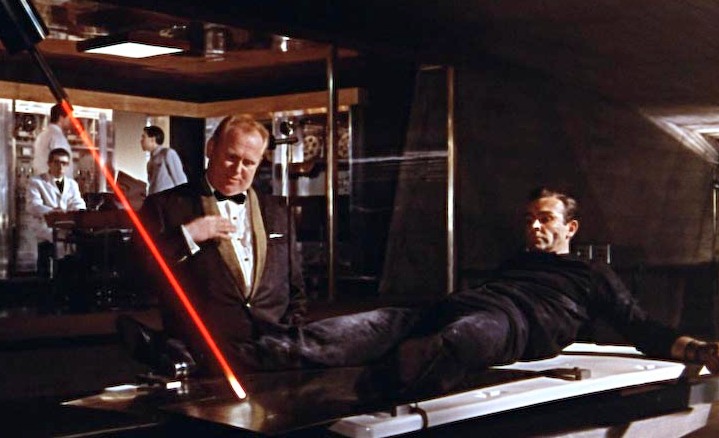
Bond: Do you expect me to talk?
Goldfinger: No, Mr. Bond, I expect you to die.
By P.J Parrish
Isn’t that the best two lines of dialogue you’ve ever read?
I have been thinking about James Bond — and his creator Ian Fleming – a lot lately. Partly this is because I just saw “Skyfall” (terrific flick!) but also because I’m correcting the galleys of our next book HEART OF ICE and I realized it isn’t a thriller.
I’m supposed to be a thriller writer. Yet this new book is really more of a true mystery. Which has me noodling about about the differences between the two and how all the sub-genres in crime fiction are criss-crossing each other faster than panicked chickens.
Years ago, I was a judge for the International Thriller Writers first contest and our First Novel committee had a devil of a time trying to decide which books qualified as thrillers and which did not. You can’t limit the definition, as some still insist on doing, to the hoary formula: A common man thrust into extraordinary circumstances in (insert exotic locale here) faces down a (insert monster or menace here) with the help of the beautiful and mysterious (insert female stereotype here) to save (insert organization, country or world here) before the clock ticks down to the final second.
So what IS a thriller?
Beats me. And we won the ITW Thriller Award with our book AN UNQUIET GRAVE (which to my mind is not a thriller but a classic whodunit with a creepy grave exhumation). So while I try to get out of the weeds this week with my overdue galleys, I thought I’d turn over the thriller question to someone with a higher pay grade than mine – Ian Fleming. He wrote this essay in 1962 but it’s still got some really good advice in it for us all — especially that bit about rewriting –- no matter if you’re thrilling or merely mysterious.
HOW TO WRITE A THRILLER
By Ian Fleming
People often ask me, “How do you manage to think of that? What an extraordinary (or sometimes extraordinarily dirty) mind you must have.” I certainly have got vivid powers of imagination, but I don’t think there is anything very odd about that.
We are all fed fairy stories and adventure stories and ghost stories for the first 20 years of our lives, and the only difference between me and perhaps you is that my imagination earns me money. But, to revert to my first book, CASINO ROYALE, there are strong incidents in the book which are all based on fact. I extracted them from my wartime memories of the Naval Intelligence Division of the Admiralty, dolled them up, attached a hero, a villain and a heroine, and there was the book.
The line between fact and fantasy is a very narrow one. I think I could trace most of the central incidents in my books to some real happenings.
We thus come to the final and supreme hurdle in the writing of a thriller. You must know thrilling things before you can write about them. Imagination alone isn’t enough, but stories you hear from friends or read in the papers can be built up by a fertile imagination and a certain amount of research and documentation into incidents that will also ring true in fiction.
Having assimilated all this encouraging advice, your heart will nevertheless quail at the physical effort involved in writing even a thriller. I warmly sympathise with you. I too, am lazy. My heart sinks when I contemplate the two or three hundred virgin sheets of foolscap I have to besmirch with more or less well chosen words in order to produce a 60,000 word book.
One of the essentials is to create a vacuum in my life which can only be satisfactorily filled by some form of creative work – whether it be writing, painting, sculpting, composing or just building a boat. To give my hands something to do, I decided one day to damned well sit down and write a book.
The therapy was successful. And while I still do a certain amount of writing in the midst of my London Life, it is on my annual visits to Jamaica that all my books have been written.
But, failing a hideaway such as I possess, I can recommend hotel bedrooms as far removed from your usual “life” as possible. Your anonymity in these drab surroundings and your lack of friends and distractions will create a vacuum which should force you into a writing mood and, if your pocket is shallow, into a mood which will also make you write fast and with application. I do it all on the typewriter, using six fingers. The act of typing is far less exhausting than the act of writing, and you end up with a more or less clean manuscript.
The next essential is to keep strictly to a routine. I write for about three hours in the morning and I do another hour’s work between six and seven in the evening. At the end of this I reward myself by numbering the pages and putting them away in a spring-back folder. The whole of this four hours of daily work is devoted to writing narrative.
I never correct anything and I never go back to what I have written, except to the foot of the last page to see where I have got to. If you once look back, you are lost. How could you have written this drivel? How could you have used “terrible” six times on one page? And so forth. If you interrupt the writing of fast narrative with too much introspection and self-criticism, you will be lucky if you write 500 words a day and you will be disgusted with them into the bargain. By following my formula, you write 2,000 words a day and you aren’t disgusted with them until the book is finished, which will be in about six weeks.
I don’t even pause from writing to choose the right word or to verify spelling or a fact. All this can be done when your book is finished.
When my book is completed I spend about a week going through it and correcting the most glaring errors and rewriting passages. I then have it properly typed with chapter headings and all the rest of the trimmings. I then go through it again, have the worst pages retyped and send it off to my publisher.
They are a sharp-eyed bunch at Jonathan Cape and, apart from commenting on the book as a whole, they make detailed suggestions which I either embody or discard. Then the final typescript goes to the printer and in due course the galley or page proofs are there and you can go over them with a fresh eye. Then the book is published and you start getting letters from people saying that Vent Vert is made by Balmain and not by Dior, that the Orient Express has vacuum and not hydraulic brakes, and that you have mousseline sauce and not Bearnaise with asparagus.
Such mistakes are really nobody’s fault except the author’s, and they make him blush furiously when he sees them in print. But the majority of the public does not mind them or, worse, does not even notice them, and it is a dig at the author’s vanity to realise how quickly the reader’s eye skips across the words which it has taken him so many months to try to arrange in the right sequence.
But what, after all these labours, are the rewards of writing and, in my case, of writing thrillers?
First of all, they are financial. You don’t make a great deal of money from royalties and translation rights and so forth and, unless you are very industrious and successful, you could only just about live on these profits, but if you sell the serial rights and the film rights, you do very well. Above all, being a successful writer is a good life. You don’t have to work at it all the time and you carry your office around in your head. And you are far more aware of the world around you.
Writing makes you more alive to your surroundings and, since the main ingredient of living, though you might not think so to look at most human beings, is to be alive, this is quite a worthwhile by-product of writing.

Same Book, Different Title

When my book The Tsunami Countdown came out in the UK last week, some of my Facebook fans were initially confused. They had already read a book of mine about tsunamis called Rogue Wave, so they asked me if The Tsunami Countdown was a sequel or a new book. In reality, Rogue Wave and The Tsunami Countdown are the exact same novel. The only differences are the title and cover.
Readers who have encountered this phenomenon before wonder whether it is a cheap trick to get people to buy the same book twice. They’re frustrated because they’ve already purchased Rogue Wave on Amazon UK and now Amazon is selling The Tsunami Countdownunder a totally different listing. Or perhaps they bought Rogue Wave on a trip to the US and now they’ve picked up The Tsunami Countdown thinking it was a new book, only to be disappointed to find out they’ve read it already.
So how does this happen? The problem stems from the fact that Rogue Wave is published by Simon and Schuster for the American market and The Tsunami Countdown is published by Little, Brown UK for the British and Australian markets. According to the contracts, Simon and Schuster has exclusive rights to the North American market, and Little, Brown UK has exclusive English-language rights to the rest of the world.
These two completely separate companies have their own ideas about what titles and covers work best for their markets. Technically, residents in each market should never see the other version. However, because of the Internet and jet travel, readers can encounter both versions of the book quite easily. Although the ebook version of Rogue Wave is not for sale in the UK, Amazon stocks used copies of the print version. And because Rogue Wave came out in 2010, some of my UK readers decided not to wait and hunted down a copy, even though contractually it shouldn’t be for sale in the UK.
Little, Brown UK certainly doesn’t want to dupe readers into buying my book. That’s not a good way to build long-term readership. They simply felt that The Tsunami Countdownwas a stronger title than Rogue Wavefor their market.
Readers then ask why I went along with this plan. Why didn’t I settle on one title or the other and do away with the confusion? One reason is that I, like most authors who aren’t named Stephen King or John Grisham, don’t have the final say on the title. Many readers don’t realize that publishing contracts typically give title decisions to the publisher. I will certainly object if I feel that a title is bad, but the final decision is out of my hands. In this case, I liked both titles, and I trusted the publishers to know their markets better than I do. I’ve had readers say they like one title over the other, but it hasn’t been a landslide in either direction.
For my book The Roswell Conspiracy, which I’m self-publishing in North America but which is published by Little, Brown UK everywhere else, I decided to stick with the same title and cover they chose to minimize confusion. It was a tough decision because I loved the title Silent Armageddon for that book. I think it’s evocative and captures the high stakes in the novel, but it would have meant developing a completely new cover and responding to repeated questions about why the titles were different. In the end, I decided my favored title wasn’t worth it, though I still miss it.
The irony in all this title confusion is that I originally self-published Rogue Wave/The Tsunami Countdown under a completely different title: The Palmyra Impact. If my original title had stood, none of this would be an issue, but neither of my publishers liked The Palmyra Impact because it was deemed to be too esoteric.
I understand the readers’ frustration. I try to make it clear on my website that my books with multiple titles are actually the same book. It helps, but it doesn’t solve the confusion for people who only see the book in the store. Unfortunately, it’s an idiosyncrasy of the publishing world. Just ask JK Rowling. When her first book came from the UK to the US, Harry Potter and the Philosopher’s Stonewas re-titled Harry Potter and the Sorcerer’s Stone. Even if my situation isn’t optimal, at least I’m in good company.