
What are you reading this week? Enjoying it?
Author Archives: Joe Moore

First Page Critique – The Good Guys
A brave author/follower of TKZ has anonymously submitted the opener to a book entitled – The Good Guys. My critique will be on the flip side. Enjoy!
 |
| Purchased from Fotolia by Jordan Dane |
I should’ve let the cops arrest me. After all, it was just a drug deal in a neighbourhood park. A much smaller crime than taking a hostage at gun-point. I’d have most likely just got a date with the Magi and been home in time for lunch. A lot less trouble that I was in now. But it was a stressful situation, and in the heat of the moment, I panicked.
“Are you a fucking retard, Tay?” Si yells. “I told you to get the money, hand over the shit, return. How the fuck did you manage to come back with no money, no drugs and this son-of-a-bitch?”
His fist strikes my jaw and I fly backward. A dull moan comes out before I can stop it. I’m fucked now. Even though I’m a chick, Si likes people to take their beatings ‘like men.’ Before I hit the floor he grabs my by the front of my jumper and pulls me back to my feet. Then he appears in my face, so close I can smell the sausage on his breath.
“Say it.”
“Say what?”
“Say: I’m a fucking retard.”
“I’m a fucking retard.” I speak slowly and clearly, holding his gaze.
He smiles. “Good.”
I start to exhale, praying it’s over, but then he grabs my ponytail and the air whooshes past my face. The room blurs. At first, it feels like someone is attacking my scalp with a thousand tiny needles, then it’s more like half a dozen thick, sharp blades. White noise is all around, but in the background, the far, far, background, I hear a husky voice.
“Leave her alone.”
Suddenly released from Si’s grip, I slump to the floor and stare at my hostage. Did he just say that? Fuck me. He hold Si’s gaze, but I see fear in his eyes. Fear and something else. I can’t quite place it. There’s a scent of familiarity about him. Must have done a drop to him before.
“Sorry, man, are you feeling left out? Don’t worry. It’s your turn now.”
Si cracks his huge, mangled knuckles then pulls a shiny, black handgun out of the back of his jeans. He points it at my hostage. I now know what I saw in his eyes. Hope. I know, because now it has been extinguished.
My Critique:
A.) First thing I want to point out are the typos. I’ve bolded and colored the ones I found in red. There are 3. This is where reading your work aloud would’ve helped, but typos are a big NO NO, especially with such a short excerpt. An editor or agent would see these and think the rest of the book is riddled with them. Submitting work for publication or representation is competitive. Don’t give them a reason to turn you down. Beta readers checking your work might catch these too.
B.) The intro starts with a bit of back story set up that is written in past tense before it propels the reader into the present. It might’ve been more effective to keep the reader in the moment as the story unfolds, without the set up that doesn’t tell much anyway. I would almost rather have read THAT scene (of how the whole thing went wrong and how she was stuck with this hostage). Seeing the aftermath is less interesting to me.
C.) When Si first mentions that she “comes back with this son of a bitch,” it might be more effective to draw the reader’s attention to who he is referring to. Since this is in her POV, you could have her look at the guy and show the reader what she sees. Instead we have to wait until the end to realize who this guy might be and know he’s in trouble. The author has created a mystery at the beginning, but not capitalized on this hostage or teased the reader with who he is until after the fact.
D.) The use of profanity so heavy in the beginning can not only be a turn off to readers, but editors/agents too. Here the word fuck is used 4 times in such a short segment. There are times when this word can be effective and I’ve certainly used it before in my books, but I use it sparingly and in the body of the work. We’ve chatted about the use of profanity on TKZ before, but I wanted to point out that using it so heavily in this intro can be another red flag for an industry professional reading this as a writing sample.
E.) One of my editors asked me to change a word ‘spaz’ or spastic because it had the derogatory meaning of retarded in the UK and she didn’t want to risk using the word if it turned off that market. But in this intro, we see the word ‘retarded’ used several times, and coupled with profanity. I’m not sure how this would be received, but I wanted to point out what my editor found necessary to change.
F.) In the description of Si hitting her, it reads at a distance as if the author (or the character) is watching it from faraway. If I got hit in the face, I would not know what happened. I’d ‘feel’ more. My eyes would water, my jaw would throb, the pain would radiate through me, and I’d see stars and be dizzy. I’d feel embarrassed, hurt, and many other things, but the writing in first person has to come inside the character, using the senses.
G.) This is a nit pick, but the name of Si forced me out of the writing for a bit. It seemed like a typo. I’m Hispanic and the word “Si” with an accent mark means YES in Spanish. I thought it might be a typo for the word SO as well. If you have a nickname for your character, I would make sure it is more distinctive and not too similar to another word that would trip up the reader.
H.) The use of the word MAGI (for magistrate) sets this book possibly in the UK, but definitely not the US (not that it has to be). The spelling of ‘neighbourhood’ gives a hint of this too. If this story takes place in a specific country, I would be tempted to use a tag line to establish that with the reader right away.
I.) In addition, and my biggest point, the writing of this author is very sparse. It is quick snippets into the mind of our girl, Tay, but little else. I would like to get a feel of the setting and put the reader into the scene using the reader’s senses. Writing in a sparse style can move pace, but it shouldn’t at the expense of a richer character voice. That’s what would make this piece more memorable. So what would add color and ‘voice’ to this work? Try answering these questions and incorporate those thoughts into this intro to add flavor.
Questions to build what we know about Tay:
- What has driven Tay to be a mule for a drug dealer? Does she have a roof over her head? Where did she sleep last night? Is she doing criminal acts for money to survive or is she desperate to take care of someone else? Or are her motives a secret?
- What is she wearing? Is she cold? Hungry? Needing a shower?
- How does she feel about other people she sees at the park where the drug deal goes down? Is she an outsider to the normal people who are there for other reasons? Does the scene remind her of her past? How so?
- When she’s at the park, what does she smell? Does the hot dog vendor make her hungry? Does she see people with money, paying for things, and resent it?
- Who is the hostage and why does she take him? She knows she’s in trouble with Si, but bringing a hostage will put him in harm’s way too. Why does she do it?
These are just a few questions—and you certainly don’t have to answer them in the intro—but if you back up where you start and take it from where things start to go wrong for Tay at the drug deal, you could incorporate some of her feelings with a touch of her motivation and what she sees, hears, tastes, etc to make her more sympathetic by the time Si punches her for screwing things up.
The author could have a big mystery going as to why this out of place street kid is in the park in the first place–the furtive glances, the tension–until the drug deals goes down and everything unravels. She would come off as a criminal, take a hostage, but the reader might be compelled to read on if she comes across as vaguely sympathetic with hints of her motivation (without giving too much away).
Writing in first person present tense is a great way to bring the reader into the heart of the character, to really know what is in her head, but that doesn’t happen in this sample.
To make Tay more interesting, the author must give her opinions of her surroundings and her situation, and enough insight that will allow the reader to know why Tay deserves a starring role in this book. I want to care more about her and her hostage, but I’m not vested in them yet. Back up the time frame of this intro, and make us care about Tay and the poor guy who gets drawn into her mess, and you would have a more compelling start.
What do you think TKZers? Anything to add that might help this brave author?

Jordan Dane’s BLOOD SCORE now available in ebook at Amazon for the discounted price of $2.99 – Buy at this LINK.
A dangerous liaison ignites the bloodlust of a merciless killer
Keeping it Real
By Joe Moore
Before we begin, a bit of self promotion. For one day only, Saturday, August 24, Amazon is dropping the price of two of my thrillers (co-written with Lynn Sholes): THE GRAIL CONSPIRACY and THE PHOENIX APOSTLES. TGC is an international bestseller, and both are previous #1 Amazon bestsellers. Download each for only $1.99. Don’t miss reading the first installment of the 4-book Cotten Stone saga (TGC) or how far one man will go to live forever (TPA). Enjoy!
———————-
Today is my lucky day. It started right after I poured my first cup of coffee and launched my e-mail. I couldn’t believe my eyes when the first message popped up. It was from an exiled Nigerian king who escaped his country  with a fortune in the bank but no way to get to it. Somehow he had found me and asked that I help him get his family’s money; and amount he estimated to be over fifty million dollars. For my assistance, he was willing to give me twenty percent of the funds: a cool ten million.
As you can imagine, I was speechless. But then things got even better. My second e-mail was from none other than the Official International Lottery (you’ve heard of it, right?). Believe it or not, my personal e-mail had been randomly chosen from among all the e-mail addresses in the world as the sole winner: a lump sum of $500k. Considering that there are hundreds of e-mail addresses out there, perhaps thousands, I felt like the luckiest guy on my block. I was whooping and hollering when my wife walked in and asked what all the excitement was about. I told her that minus some small administrative fees I needed to wire transfer to His Majesty and the lottery guys, we were rich beyond our wildest dreams.
Now I know what you’re thinking: Joe, you’re one lucky guy. You might also be thinking that all this good fortune is hard to believe. After all, winning the International Lottery is one thing, but on the same day getting this incredible opportunity to help the Nigerian king is, well, an amazing coincidence. I bet there are even a couple of you that flat-out don’t believe it could happen. You think it’s just too much of a coincidence.
If this were a novel, chances are the reader would be kicked right out of the story. That’s because coincidence, if used improperly or overused, can be considered nothing more than a cheap trick. Using it can lower the writer’s credibility and believability. And if it comes as a blatant trick to solve an unsolvable problem, it could cause the reader to close the book and move on.
Coincidence is defined as something that happens by chance, was never intended to take place, and is usually considered an accident. Improper use often occurs when a writer paints himself into a corner and there’s no way out except to turn to an unbelievable event or the introduction of a new element “out of the blue”.
Don’t get me wrong, coincidence is a legitimate writing technique if it’s properly setup and foreshadowed. The key is to make it realistic. Example: on a given day, running into someone you know at JFK is not realistic. Considering an international airport like JFK has multiple terminals, dozens of airlines, and hundreds of thousands of passengers passing through it daily. How often have you run into someone you know at a big airport like JFK? Not too often, I’ll bet. If it doesn’t happen to you, why should it happen to a character in your story? It’s not realistic.
But let’s say two people are in the same industry. Each year they attend an industry tradeshow. They always stay at the same hotel. You’ve established this somewhere previously in the story. What are the chances of them running into each other in the hotel bar? Pretty good. That’s a realistic coincidence. You’ve already foreshadowed enough information to the reader that when it happens, the reaction is Aha, not No Way.
The secret to using coincidence is to narrow down the chances of it not happening beforehand so that when the event takes place, you don’t make the reader roll her eyes.
A nasty form of coincidence is what’s called deus ex machine, Latin for god in the machine: a seemingly inextricable problem is suddenly and abruptly solved with the contrived and unexpected intervention of some new character, ability or object. Your character suddenly has the ability to fly a jumbo jet without any prior flying experience, or a new character appears just in time to perform a life-saving rescue, someone that up until this point was never mentioned in the story. Don’t go there. It will make your writing weak and lacking in integrity. And it could cost you readers.
So how do you avoid coincidence and deus ex machine? Plan ahead. Take time to foreshadow so your reader doesn’t get blindsided. Map out the story in advance, drop hints, and keep things realistic. And as a last resort, if you must use coincidence, take the time to go back and insert the foreshadowing and hints. Doing so will make you look clever in the eyes of the reader. Lastly, placing your character into hot water by coincidence is forgivable. Getting her out is not.
BTW, one more thing about my fabulous luck with the Nigerian king and the International lottery: according to stats, U.S. citizens lose more than $550 million a year as a result of Internet fraud. I sure hope His Majesty isn’t trying to put one over on me.
Cardboard men and the women who love them
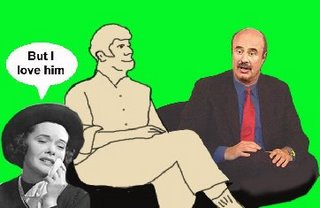
Men characters…can’t control ’em and can’t shoot ’em.
Actually, I guess I could do the latter. And that is just about where I am right now with one of the guys in my work in progress. His name is Josh. Or sometimes Matt. Before that his name was Alex. The fact that I can’t even settle on a name for this guy shows you where I am with him right now. He’s the husband of my heroine and while SHE doesn’t really need him — in fact, that’s part of her character arc — I do need him. He’s important to the plot.
It’s my fault. I gave birth to this creep. I can’t even blame my co-author sister Kelly because when we plotted this book out, I was the one who drew duty on Josh. I put him on paper, I got him up and walking around. So now I have to find a way to deal with him. I thought I was doing okay with him until I ran his introductory chapter past my critique group. They tore Josh to shreds.
Josh, it seems, is a cipher. In creating him, I committed one of the biggest sins of writing, something I preach about to every new writer I encounter. Namely:
Your villain must not stupid, dull, or incompetent. He must be a worthy opponent for your hero.
Wait, you say, Josh is the villain? I thought he was the husband. (Actually, he might be the villain; I haven’t really decided). Regardless, the same commandment applies to love interests as well as villains. If you expect readers to buy into a romantic relationship, the man you pick for your woman must be worthy of her affection.
Josh, alas, is made of cardboard. He’s not the sexy UPS man. He’s the UPS box.
I haven’t taken the time or energy to flesh him out. I neglected to give their relationship enough back story to make it believable. I didn’t give enough thought to his motivations. I have been so busy lavishing love and words on my heroine, the cast of fabulous secondary characters — shoot, even the frickin’ scenery — that I just plain forgot about flaccid Josh.
I know why this happened, though I hate to admit it.
This book is not a Louis Kincaid book, so I can’t depend on my deep “friendships” with old characters. I don’t know these new characters yet so it’s harder to plumb their depths. This book is also not a strict thriller like we have written before. It’s closer to psychological suspense, which for me at least requires some stretching. It is still dark in tone as our other books but it is more dependent on relationships and all the shadows, ambiguities and difficulties that presents.
I think when writing Josh I had flashbacks to my romance writing days, when relationships were the backbone of my stories. There wasn’t the convenient conveyance of violence or an unsolved case to propel the plot forward; you had to build suspense solely through how the characters related to each other. Plus there’s the sex thing. In romance, if you didn’t have sex every four chapters or so there was something wrong with you. But that was a long time ago. I haven’t had to have sex since…well, never mind.
Friends, I am here to tell you. It is not just like riding a bicycle.
The lesson here is: Pay attention to every character and don’t take shortcuts. Go deep and then even deeper when you think about their motivations. I didn’t do my job as a writer with Josh the first time around. I thought I could get away with giving him less than my best. So now, here I am, struggling with rewrites way too early in the first draft.
This is not a good place to be because first drafts, as I have said often, should be just that — drafts. If you stop and go back for intensive surgery too early in your book’s life you lose your forward momentum. But I have no choice because I know the rest of the book will not fall into place the way it needs to until I go back and fix Josh. So today I will transfuse Josh with some blood, jolt him with the heart paddles, and try to make him come alive on the page.
I should have killed him off in chapter 4. It would have been easier.
Go with the Flow
I almost always write to music. It’s usually movie scores that get me in the mood for dramatic action and suspense. Some of my favorites are the soundtracks from Aliens, Inception, TRON: Legacy, The Dark Knight, Battlestar Galactica, and anything by John Williams. The music can’t have any words or I find myself singing along and typing those words into my manuscript (“Without a word, the convict drew the shiv and plunged it into the Honky Tonk Women!!”… Damn you, Rolling Stones!).
I know things are going well with my writing when I suddenly realize that fifteen songs have gone by and I don’t remember hearing them. That means I was in a flow state, and that’s when the writing process is really fun.
Flow is a concept first proposed by psychologist Mihaly Csikszentmihalyi. Flow describes a state of euphoria and intense focus that is achieved when you are fully immersed in the task at hand. You tune out the world because you’re so absorbed in what you’re doing. For me it’s easy to remember times when I was reading a good book or playing an immersive video game and my wife had to call my name several times before I could pull myself out of the experience. It was like I was really there. I was in flow.
Writing can produce the same experience for me, but it’s more challenging to produce the flow state. However, when it happens, it’s a sweet feeling. For musicians it’s called being “in the groove.” Athletes talk about being “in the zone.” You’re in the flow state when you’re teetering on the edge of competency, when your ability is perfectly matched to the challenge.
Flow has three prerequisites:
1) The goals must be clear. – I think this is why it’s so hard for writers to get started on a book. My characters’ goals aren’t clear to me at the beginning, so it’s hard for me to write down what’s happening to them. On the other hand, at the end of the book I usually get in the flow and write very quickly because I know where the characters are going.
2) The feedback must be immediate and clear. – I’m also a stage actor, and the feedback when I’m performing couldn’t be more immediate. You can sense how an audience is perceiving you, particularly with a comedy. But with writing the only feedback we get is from our editors and online reviewers days, months, or years after we’ve typed the last word. That’s why the feedback writers require to continue is not the readers’ kudos, but their internal drive to find out what happens in their own story. I often hear that concept expressed as someone’s “need” to write.
3) You should have the proper balance between the perceived high challenge of the task and your perception that you have the high skills to complete the task. – This prerequisite could be the problem for many new writers; the challenge often exceeds the perceived skill level for a newbie. Writing a 100,000-word novel is a daunting task if you’ve never done it before. That’s why I think in terms of scenes instead of a whole book when I’m actually writing. If I know what’s happening in that one scene, I can get in the flow.
It’s not surprising to hear that the list of character traits Csikszentmihalyi lists as most important for achieving flow are the traits you’d expect to find in successful writers: curiosity, persistence, low self-centeredness, and a high rate of performing activities for intrinsic reasons only.
If you can find the flow when you are writing, you probably won’t have any problem producing novels. The key is setting up your environment so that you minimize distractions that will keep you from entering the flow state. Checking email and Facebook will take you out of flow, so turn those apps off or write somewhere where you can’t access them. And I highly recommend listening to wordless music.
The flow concept has many components to it, so if you want to find out more, you can watch Csikszentmihalyi’s TED talk about it. And if you want to learn about the oxymoronic characteristics that the most creative people have, check out his article in Psychology Today.
Do You Know What You Want to Say?
by James Scott Bell
@jamesscottbell
“If you want to send a message, try Western Union.” – Samuel Goldwyn
Do you send a message in your fiction? Nothing wrong with that. You can’t read Atlas Shruggedor On The Road or To Kill A Mockingbird without picking up that the writers had something on their minds that drove them in the writing. And each of those books still sell tens of thousands of copies per year.
But good old Sam Goldwyn knew that if you get too didactic, the story suffers. You have to let the characters live and breathe and act like real people in response to the story elements. You don’t want to manipulate them so much that the reader thinks you’ve moved from storytelling to sermonizing.
Still, at the end of any book or story, an author will have left something for the reader to think about. It can’t be helped. That’s the nature of story.
Which bring us to Theme. Theme (or as I call it, Meaning) is the “big idea.” It is what emerges once the central conflict is resolved. The famous writing teacher William Foster-Harris believed that all great stories could be explained in a “moral formula,” the struggle between sets of values:
Value 1 vs. Value 2 => Outcome.
You plug in your values thus:
Love vs. Ambition => Love.
In other words, the value of love overcomes in the struggle against ambition. If one were writing a tragedy, the outcome would be the opposite, with ambition winning, but at the cost of lost love.
Writing teacher Lajos Egri posed a similar idea in The Art of Dramatic Writing. He called it the “Premise.” It is expressed in a moral formula as well, as in Justice overcomes deceit.
The question today, writer, is whether you are being intentional about your theme.
Not all writers know their theme when they start writing. They have characters and a plot idea, and they let the writing unfold as it will. They may not think about theme at all. They may simply write about characters involved in the struggle of the plot, knowing that struggle will eventually end. Most of the time that’s how I approach it in my own writing. But I do, at some point, identify what it is my emerging story is trying to say—because, of course, it’s really mein there somewhere.
But even writers who say they never think about theme end up saying something. It can’t be helped. All stories have meaning, whether the author is purposeful about it or not. Why? Because readers are wired for it. We are always looking for meaning, trying to make sense of the world. Indeed, one of the reasons we have storytellers is to help our fellow creatures through the mythical dark forest, otherwise known as life.
Perhaps, then, it would be wise to be a little more conscious of your theme. Whether you start out with one or find it along the way, try to identify the unifying message. Then you can go back in the revision process and weave symbols, metaphors and thematic dialogue into the tale.
It also helps to know your theme in case you get questions. I wrote a short story that stoked some controversy among a section of my reader base. I got a few emails, and one consternated face-to-face query, asking why I wrote such a disturbing and eerie tale.
I responded that I was actually trying to write a profoundly moral tale. One that had a very clear meaning (to me, at least). I shaped the plot precisely to be disturbing (think Twilight Zone or Alfred Hitchcock Presents) because the theme would not be as powerfully presented otherwise.
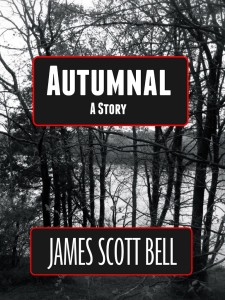 I would be very interested in seeing if you find the meaning I intended. That’s why I’ve made the story, “Autumnal,” free on Kindle today through Wednesday. I’d love it if you got it, read it, and told me via Twitter what you think the meaning is. Use #Autumnal for the discussion.
 As for you, dear author, talk about this in the comments: Do you know what you want to say when you start a story? Are you a “theme-first” kind of writer? Or do you prefer to let the characters duke it out and leave it at that?
Happy Birthday, Hank
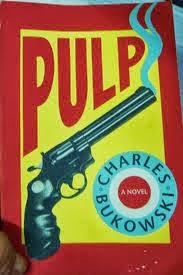
Author Charles Bukowski would have been 93 yesterday. That would be a ripe old age even for the best of us but would have been well-nigh impossible for Bukowski, who probably never had a healthy day in his life and compounded his miseries with his alcohol-fueled lifestyle which in turn provided the frank fodder for his prose and verse. Bukowski, the poet laureate and prose prince of the down and out, was capable of inducing laughter or tears from readers within a sentence or two or on many occasions within the same sentence. I attended a reading of his in the early 1970s during which he got me to laughing so hard that he had to stop the proceedings until I fully recovered. Actually, I never really did. Reading Bukowski, let alone listening to him, was and is a life-changing event.
My introduction to Bukowski in was accomplished through a great guy named Mark Clayman who in the 1970s was the owner and operator of “Upstairs Books.” It was a wonderful hole in the wall located at the top of two short staircases in a brick building in the Spicertown neighborhood adjacent to the University of Akron. One rainy afternoon Mark thrust a trade paperback book (I am deliberately omitting the somewhat scatological title) into my hands and said, “Have you read Bukowski? I swear by him.” He was so sure that I would like the book that he offered me a full refund if I didn’t like it. His money was safe. I have gone through five copies of that book over the years, the replacements occasioned by coffee spills and ill-advised lendings to the wrong people and get-out-of-Dodge moves subsequent to divorce. I’m still reading and re-reading it, as well as other Bukowski short story collections, his novels, and even his poetry collections (and I NEVER read poetry anymore) some forty odd years later.
It took a while for the public to catch up with Bukowski. His writing was stark and his subject matter was ugly. His books throughout most of his life were only available through small presses, most of which have since gone out of business. He eventually hit the big time; HarperCollins is his publisher now, and it even has a website set up to commemorate his birthday at http://happybirthdayBukowskidotcom. The subject matter remains the same, however. If you drive hurriedly through impoverished neighborhoods where the only going concerns are sad-looking taverns strategically placed every half block or so, the folks propped up on bar stools inside are the stuff and substance of Bukowski’s work. They would include the author himself, who wrote several autobiographical novels featuring Hank Chinaski, his fictional alter ego.
Bukowski may have been an unapologetic drunk and a failure at conventional work, but he had no illusions about himself and no reservations about baring his soul for the world to see in prose shot through with an angry but resigned weariness fueled by his near-constant intake of whatever alcohol he could get his hands on at any given moment. At the end of the day, however, he described the ugly beautifully, as well as the frustration and difficulty of writing, the only occupation at which he attained some level of success, and that in spite of himself.
Pulp, Bukowski’s last novel, was completed and published shortly before his death. It is a vicious sendup of the hard-boiled detective genre, containing exaggerated clichés and stereotypical situations which stand as a deliberate textbook example of how not to write a genre novel, and should therefore be read by anyone who intends to write one. As always, no punches are pulled, so that at times one is tempted to look away from the page even as the pull of his words makes doing so impossible. It is also however, infused with Bukowski’s knowledge and frustration over the fact that time for him was running out. Despite his prodigious output, the man had so much more left to say.
If you’re unfamiliar with Bukowski, check out the website I mentioned earlier and sample a book or two. If you have read his work, pull a volume down from your shelf and revisit a stark example of how the job of writing is fittingly and properly done.
Reader Friday: Which indie publishing resources do you recommend?
We started talking in the Comments on Tuesday about indie publishing resources we have found to be useful, or could recommend to others. Let’s use today to swap useful resources for publishing! (And thanks go to our friend Basil Sands for suggesting today’s topic).
Life and Death: Proofreading Your Novel
By Elaine Viets
Are there more typos in novels these days?
Readers complain about “it’s” instead of “its,” “grizzly murders” (beware of those killer bears), and plain old misspellings.
Yes. There are more typos, in my professional opinion.
I’m speaking as a professional proofreader. I worked my way through college proofreading everything from phone books (snore) to medical journals, including The Journal of Obstetrics and Gynecology, along with Allergy, Surgery, and more. Reading medical journals gave me a lifelong distrust of doctors.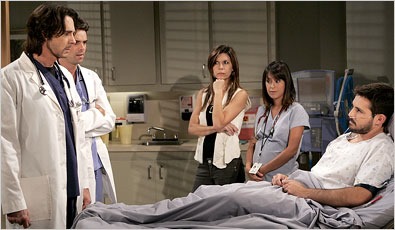
I’ve never forgotten proofing that stirring editorial in The American Journal of Surgery, reminding doctors to count their sponges and surgical instruments before sewing a patient back up.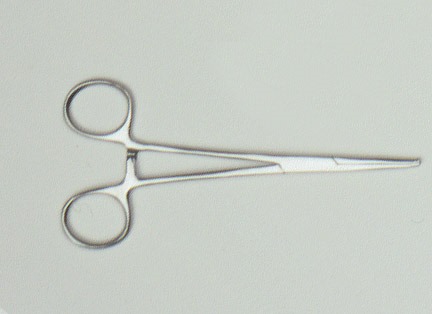
I proofread from 1968 to 1972, and made $1.59 an hour, forty cents more than the minimum wage. Each medical journal was proofread three times, by three different people. They were nearly flawless.
Publishers can’t afford to do that any more. Now you’re lucky if your book is read once. It’s your job to catch those typos.
Betty Wilson, a master proofreader, taught me the trade. She believed hunting typos was a matter of life and death – and for medical books she was right.
It’s harder to proofread your own books. Your mind substitutes the right word for the mistake that’s there.
But Betty’s three-step method will help you catch more. If you’re like me, you’re better at catching typos on paper than on a computer screen, so if you aren’t reading page proofs, print out the manuscript.
Here’s how I read my page proofs:
(1) Read the novel through once.
Find a quiet spot with good light. Then turn off the TV, CD player and other distractions, and pour yourself some caffeine. 
If I’m reading a 320-page novel, I break it into 70 to 80 pages a day. Take short breaks every two or three chapters. Pour more caffeine, scratch the cat, stretch, rest your eyes, then go back to reading.
(2) Read your book again, holding a piece of plain white paper under each line.
You will be surprised how many typos you missed the first time.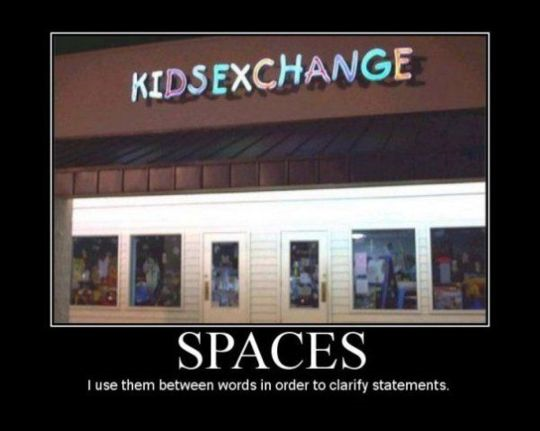
When you’ve finished with the white paper read, you’ll be sure you’ve caught every single mistake. Boy, are you in for a surprise. It’s time for Step three.
(3) Read your novel out loud.
You don’t need to shout it out. You can mumble quietly in your chair. Your family’s used to that. But reading your novel out loud is crucial. Also, crushingly boring. And hard on the throat.
This time, skip the caffeine. It dries out your throat. Drink water. Cold will do, but I use the radio announcer’s trick for scratchy throats. I drink hot water with a slice of lemon. It works.
So does reading your book aloud. You will be shocked to find still more typos. I guarantee you’ll catch at least four more this way.
Will you get them all? Not this time.
But you will see the last few typos – when your finished novel arrives.
***
DEAD-END JOB FANS: Enter for a chance to win an autographed copy of BOARD STIFF, the ultimate beach book, in time for Labor Day. Hope you get to take my 12th DEJ book to the beach. Hurry! Sweepstakes ends tomorrow, August 16. Click on
http://elaineviets.com/new/Contests/Contest_Enter.asp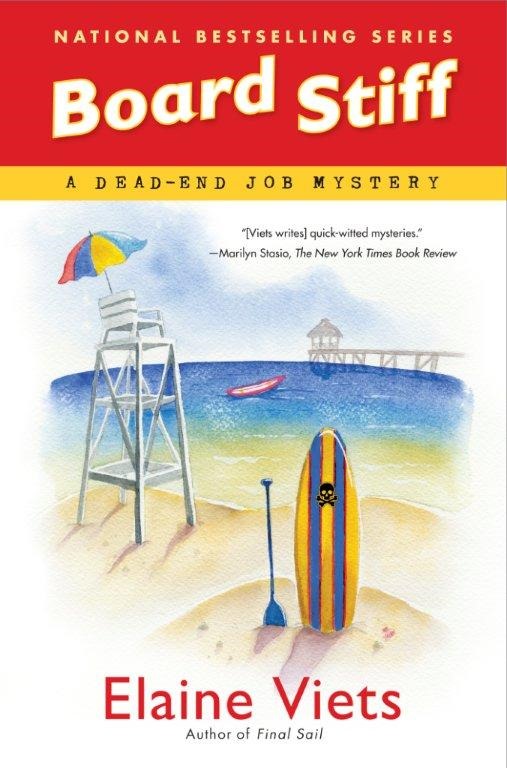
Broadchurch
Are you watching the British crime drama, Broadchurch, on BBC Wednesday nights? It’s a limited episode series that started last week, so you’re not missing much if you pop in tonight. As a mystery writer, I can’t help analyzing the story structure.
Episode one presents the scene of the crime. A young boy is found murdered on the beach. The time and method of death are established. We meet his family, some of whom are keeping secrets. The boy may have been killed between 10:00 pm and 2:00 am last night. Where was the father? Supposedly out on an emergency plumbing call. Oh, really? How lame is that alibi?
Yet not once does the lead detective suggest verifying the plumbing job. This handsome bloke, by the way, is David Tennant of Dr. Who fame. I like him with his scruffy beard. But someone needs to clue him in on finding the facts. Will it be the ambitious reporter? Or did he have a hand in this horrible event to create a story for himself?
And where was the victim’s father the night of the murder? Is he having an affair? Involved in a smuggling scheme? The rugged coastline may have been the site for smugglers in historic times. Perhaps there’s a new gang at work and the boy became a liability.
And how was the boy involved? His best friend isn’t so innocent. The kid erases all his computer and cell phone files after his mum, a detective on the force who’s been passed over for promotion, tells him he’ll be questioned about what he knows. What’s the kid hiding? Could he and the victim have been involved in a shady scheme with the victim’s father?
Then again, the father seems too easy a mark. Maybe he’s the red herring.
As the show progresses, we’ll see more townspeople guarding secrets. Eventually the detective will unravel them until he exposes the killer. And what about his own past? He was sent to this little hamlet after something scandalous occurred in his career. He couldn’t have created a murder to boost his own reputation, could he?
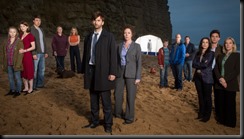
Everyone in this village is a potential suspect. It’s a juicy story in that respect, and I’m eager to see how it plays out. This is why I like whodunit mysteries. We are guessing along with the detective. The small town atmosphere becomes a character in its own right as we learn that not all of the inhabitants are as innocuous as they seem.
So are you going to watch the show tonight?