About Joe Moore

#1 Amazon and international bestselling author. Co-president emeritus, International Thriller Writers.

Don’t We Have Enough Books Already?

By Boyd Morrison

A couple of years ago, as part of Google’s effort to catalog every single book ever written, the company tried to figure out how many books that would encompass. After surveying the list of books in the Library of Congress, Worldcat, and numerous other book databases, they came up with a figure: 129,864,880.

How they could be so exact when new books are released every single day is a puzzle to me, so let’s just round up to 130 million books. And since that was in 2010, the number is now too low. Every year about 2.2 million books are published worldwide. So that’s about 135 million total in the world, with six thousand more published every day. You can even find a real-time counter here.

I don’t know about your reading speed, but I can read about 50 books a year. If I kept that average up for my entire adult life, that’s about three thousand books in an eighty-year lifetime (maybe upping it to four thousand if I have a lot of spare time in retirement).

I think you can see that four thousand books is somewhat less than 135 million. It would take me over three hundred lifetimes just to read one percent of the books in the world. Even the contents of a typical Barnes and Noble would be too much. And that’s not including the more than 88 million additional books that will be written before I die.

Which begs the question: why do we need more books?

I can see why new nonfiction makes sense. The world changes all the time, and nonfiction is a way we try to understand our world. But fiction accounts for about thirty percent of books, or approximately forty million volumes. Isn’t there enough fiction already?

Of course, as a novelist myself I would say no, but why? What new stories could be written that haven’t been told a hundred times before?

It’s been said that there are only seven or twelve or twenty basic plots out there, depending on who you ask. Because a story is much more than just plot, it’s the virtually infinite diversity enabled by a complex language and the passage of time that makes new stories possible. A detective story told in my present will have similarities to ones from Arthur Conan Doyle’s present, but the time elapsed between then and now has made new stories different enough that they provide unique takes on crime solving. In addition contemporary stories help us understand the world we now live in, whereas older stories show us where we’ve come from.

Being a writer, I constantly ask myself if what I’m coming up with is unique. If the answer is no, there’s no point in writing it. However, I haven’t read every book out there, so it may be similar to something that’s been written before, but as long as it’s unique to me, I’ll keep going.

Most new stories are modest variations on tales told previously, maybe told better. But occasionally we’ll find that ground-breaking plot or character or style that’s never been seen before, and we’ll fall in love with the discovery process of reading all over again.

That’s what will keep us writing and reading forever, no matter how many stories have already been told.

Why do you think we need more fiction?

Don’t Let Your Characters Act Like Idiots

by James Scott Bell
@jamesscottbell


The other day I watched a thriller, and was enjoying it. Until the last act.
You know what I’m talking about. You get wrapped up in a neat premise until, like a soap bubble, it pops at the end through a series of missteps. Like these:
The lead character—a smart, good-looking but otherwise normal young woman––suddenly becomes a NASCAR-skilled driver, and plows her car into a bad guy who is shooting at her. Then she slowly gets out of her car and walks over to the splayed body and . . .leaves him alone . . .does not pick up his gun . . .does not make sure he’s dead or completely incapacitated! I mean, wouldn’t you think that a smart, good-looking, normal young woman would have seen a hundred thrillers where the hitman who is supposed to be dead suddenly shows up alive?
But: by not picking up the hitman’s gun, the young woman is left completely vulnerable should the main bad guy suddenly appear. Which, wonder of wonders, he does (complete with suspense-movie bumper music). He has shocked and surprised our smart young woman, and can now kill her instantly. But because over the last fifteen minutes this deadly, perfect-moves-each-time bad guy has for some reason been transformed into a doofus, she gets away. He chases her. He corners her. But he does not finish the job because he spends valuable screen time talking to the young woman about how he is going to finish the job (“Overtalkative Bad Guy Syndrome,” or OBGS).
Allowing, of course, good-looking but otherwise normal young woman to triumph! 
There is, for thriller writers, no more important RULE (yes, I said it, it’s a RULE, and if you violate this rule you get taken to the craft woodshed and flogged with a wet copy of Plot & Structure) than this:
Never allow any of your main characters to act like idiots in order to move or wrap up your plot!
Yes, characters can make mistakes. Characters can make a wrong move. Just don’t let it be an idiot move.
Here’s a simple technique to avoid this issue:
Before you write any scene, pause for a couple of minutes and ask yourself these two questions:
1. What is the best possible move each character in the scene can make?
Every character in every scene must have an agenda. Even if it is only (as Vonnegut once said) to get a glass of water. That’s how you create conflict in a scene, after all. Then, after noting the agendas, determine the best move each character would make in order to get their way.
2. What is the best possible move being made by the characters “off screen”?
Remember, while you are writing a scene there are other characters who are alive and kicking somewhere else. What are they doing? How are they advancing their agendas? This question will provide you with some nice plot twists, turns and red herrings. 

But if you get backed into a corner at the end, and just don’t know what to do, you can always have the main character wake up and realize it was all a dream. Works every time!

Or perhaps that’s an idiotic suggestion. How do you keep your characters in the smart line? What bad moves drive you crazy when you see them? 

Kindle Dementia

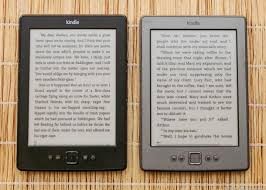
Let’s talk about “Kindle Dementia.” I have it. Do you? Kindle Dementia is manifested when the owner of a Kindle finds a book to purchase, often at a reduced price, and utilize Amazon’s “buy now with one click” feature only to be informed that they have purchased the book previously. Amazon — in the event that the purchaser doesn’t already feel foolish enough — also advises the date that the book was previously purchased, said date being a year, or a few months, or even a few days prior to the current effort to purchase the same book twice. There is no doubt in my mind that at some point in the future the software or algorithm or whatever in heck it is called will be able to tell you what you were doing when you first bought the book and what other books you’ve bought and read instead of the one which you want to read so much that you’re trying to buy it again just so you don’t forget. What bothers me is that this has happened to me twice in the last three weeks, with different books. I think. Obviously, this isn’t just happening to me; I say “obviously” because although I have been known to think highly of myself (ask my family) my narcissism hasn’t progressed so far that I think that Amazon devised this feature just for me, or a few other people of my age and station. So I ask: has the heartbreak of Kindle Dementia manifested itself in your world? Have you accidentally tried to purchase a book for your Kindle twice? Have you done it often?      

First Page Critique

by Clare Langley-Hawthorne


Today’s first page critique is for what I think is a sci-fi thriller. It’s called DEALBREAKER. My comments are at the end. Enjoy!


Mackenzie stood upright with his arms folded, concentrating on the sound made by the wheat on the planets surface far below as it gently swayed in the artificial wind. He cleared his mind of the constant flow of information from his implants, willing the augmented reality overlay to dissolve from his vision. Next he closed his eyes, allowing his arms to fall by his sides as he took cognisance of his own breathing. Finally his mind and body could relax.

Opening his eyes he looked into the distance, his view partially obscured by the huge hexagons of the domed superstructure protecting the buildings and land around him. The eastern horizon was dominated by a wall of dark cloud that blocked the view of the stars beyond. Already the very highest altitudes were tinged with crimson, hinting at the vivid reds and oranges that daylight would soon ignite. By the time the storm reached Dunvegan the sky would be a violent tempest of dust that would shred an EVA suit from anyone caught in the open.

Under normal circumstances the effort to secure all personnel and assets from the deadly weather front would be the companies top priority. Dealing with extreme weather was just part of the way of life on Demeter. It enabled junior operators to prove their worth to the company, and more seasoned figures the chance to prove they were still worth retaining. Mackenzie would rather have been coordinating the effort, ensuring the long range operators had taken sanctuary in the nearest survival dome, that those closer to base had made it back to the safety of Dunvegan. But today wasn’t normal. He’d initially queried the decision to delegate all surface operations to a relatively junior team, but Mackenzie had learned to trust Munro’s judgement during a crises, and had spoken no more about it from that point on.

He allowing his implants to interact with his mind and body again as he lowered his gaze from the horizon to the rest of the city. Calling up a tactical overlay, the numerous dome structures now appeared to take on different colours against the dusty reds and oranges of the planets surface. Most were now either white, to indicate no known disturbance, or a deep blue for those where order had been restored. The majority of red areas were dotted around the civic government quarter in the south of the city. He shook his head slowly and allowed himself a smile. When would they ever learn?


MY COMMENTS:


First of all there are numerous grammatical errors/typographical errors that detracted from the story. These include planets instead of planet’s, companies instead of company’s (or companies’ if there are multiple companies involved); crises instead of crisis, allowing instead of allowed. When it comes to an editor, these kind of errors can be fatal. I can’t stress this enough – the occasional typo is forgivable but wholesale grammatical errors are more than likely going to doom your submission. 


That being said, I thought the writer did a great job of providing an atmospheric, intriguing set up to his/her story. My main issue with this as a first page, however, is that it is all set up. There’s only exposition and very little in the way of action to draw the reader in immediately. Now, I am not an avid reader of science-fiction but I expect a writer in this genre needs to balance world-building with action/tension and pacing from the get go. I feel that the book needs to start in a different place – perhaps in the midst of a ‘disturbance’ in one of the domes where order hasn’t been restored and where we (as readers) encounter Mackenzie trying to juggle re-establishing government order while worrying about security and safety given the approaching dust storm.


Although this first page has a definite post-apocalyptic feel I think we need more immediacy to the crisis rather than just background. I also felt that there was too much repetition in terms of color. We have the vivid red which will be ignited once the dust storm arrives and we also have red areas where (I assume) disturbances are occurring within the domes. Though we get the feeling Mackenzie might be in law enforcement we aren’t entirely sure what his role is (does he work for the company? for the government? Who is Munro? Why is today not a normal day?) Most of this can be dealt with later in the first chapter but because this page has so much exposition it feels a little ungrounded without more specificity about Mackenzie and why we should (as readers) care about him as a character. I was also unsure about the significance of the last line or why Mackenzie ‘allowed himself a smile’.


What do you think? 


When is “Dark” too dark?

Nancy J. Cohen

One of the words I’ve been repeating in my works lately has been “dark”. You know, the man swung his dark gaze her way. He wore a dark suit. He had his dark hair brushed back over a wide forehead. Shadows darkened in a corner as he gave her a dark scowl.

Ouch.

This can be considered lazy writing, except I hadn’t even been aware of this fault until I ran one of the self-edit programs described in my personal blog at http://bit.ly/12iU9nZ. I embarked on a search and find mission to replace as many of these weak terms as possible.

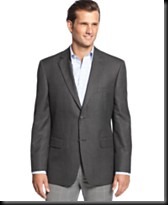
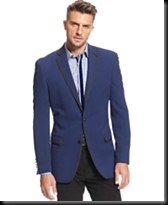
Let’s start with clothes. Face it, men wear dark suits. To get a better idea of colors, I accessed this website: http://lawyerist.com/suit-colors-for-the-clueless/. Ah, now it became clear which colors are popular for men and suited to business. My descriptions of dark suits changed to black, charcoal, slate or navy. That’s a lot better than “dark”, isn’t it?

charcoal blazer

If you want to get even more particular, go online to a department store site like Macys.com and put in the search feature “suits, “blazers”, or “sportcoats” and you’ll get a wide variety of colors.

navy blazer

What about the character who has dark hair? Is it black or dark brown? Check this reference:
http://en.wikipedia.org/wiki/Human_hair_color. Instead of black hair, give your character raven, ebony, or onyx hair. Varying the descriptions adds spice to your story.

Jen4

Also watch out for redundancies like dark shadows & dark scowl. Both of these work well without the “dark” element.

Despite its ambiguity, this word is popular for movies. Witness Batman’s The Dark Knight; Thor: The Dark World; and Star Trek into Darkness.

The filmmakers can get away with it, but as a writer, you cannot. What other ambiguous words like this might you want to change?

Five online mistakes writers should never make

Clare’s post yesterday about social media has inspired me to add my own two cents about social media. Specifically, I’d like to discuss some of the language errors I see online at many sites (Fortunately, I don’t notice these mistakes here at TKZ, which reinforces my already high regard for this community). 

Anyone can make a typo or a mistake when they fat-finger something in haste or after consuming too many Singapore Slings. But there are a few gooflaws which seem to reflect a lack of understanding about the use of language. 

Here, in no particular order, is a list of the five language mistakes that have been driving me absolutely bat poop crazy lately, especially when they’re made by people who claim to be writers:

  1.  Loose/Lose: Perhaps because my series deals with body image issues, I lurk at a few sites where people discuss their need to lose weight. Too often, someone will say she needs to “loose” weight. Whenever I encounter this error, I have to control my itchy typing finger to keep from replying with a snarky correction. Nobody likes snark.
  2. Its/It’s: This is the mistake I see the most. People often use “it’s” when the correct form should be “its”. “It’s” is used as a replacement for “it is”. “Its” is a possessive pronoun, as in, “This post has got its dander up.” When unsure, try replacing the word with “it is”, and see if it makes sense,
  3. Your/You’re: Sigh. I don’t think I even have to explain this one to our readers. This offense seems to be committed mostly by Millennials, including some who claim to be writers. These people make me despair of the current state of English teaching in America. On the other hand, I don’t have to wonder how their literary ambitions will pan out.
  4. Their/There/They’re: These words seem to get misused on news sites a lot, mostly by online bloviators who use anonymous IDs and savagely attack the opinions of other people, no matter how benign those comments are. So, to recap: “Their” is used when you are referring to more than one person and something they possess. “There” is the word that is most often misused in place of the other forms. “They’re” is a contraction for “they are.”
  5. Compliment/Complement: “Compliment” is something nice you say to someone. “Complement” is something that adds to, enhances, or completes something else. It can also be used as a verb with an object.

 So that’s my rant for today. Do you have a pet peeve about language you’d care to add to my list?

Social Media for Authors

by Clare Langley-Hawthorne

We’ve blogged a lot about the need for authors to be savvy marketers, as well as great writers, and to use social media wisely and effectively to promote their books. At the Willamette Writers Conference I attended a few weeks ago this was evident in all the presentations provided on publishing and marketing ebooks. 

As someone who has only used social media sporadically in relation to my books, I was interested in how many of the presenters viewed the social media world as a fragmented one – with options such as Facebook and Twitter having, in their view, only limited reach and effectiveness in terms of actual marketing. I have certainly noticed a real uptick in the number of Facebook posts I receive that are little more than either blatant self promotion or thinly disguised marketing (To be honest I’m getting pretty sick of hearing what # on Amazon’s rankings certain author’s books are – does it mean I’m more likely to buy their book because I read a Facebook post on this – short answer, no). Most of the time it doesn’t bother me though – I’m always interested if it’s a post on a one-day sale or some special event/signing etc. – but I remain unconvinced that Facebook is a tool for actual marketing. In my mind it’s more of a tool to connect with people who have already opted to be your ‘friend’ (either on your author page or for you as an individual). I’m not sure it necessarily gains an author new readers.

After digesting what many of the presenters at the Willamette Writers conference said on the use of social media, I thought I’d get some feedback from the TKZ on their views. It will be interesting to get your take on the issues raised. So…here goes… 

  • When mapping out your own marketing plan (or author platform development) how do you view Facebook, Twitter, Linkedin, Google+, Pinterest, Instagram, or Tumblr etc. 
  • Do you adopt a different approach and have different expectations in terms of using these? 
  • Do you use all or only some of them? 
  • Are there any you just don’t bother with?
  • Do you replicate content across social media or do you produce discrete, original content/posts for each?

In short, how are you navigating the social media world when it comes to marketing and promoting your books?

The Best Way to Market Your Books

by James Scott Bell
@jamesscottbell


Every writer is looking for that secret marketing weapon that works every time. Or a palette of possibilities that virtually guarantees success. But reality keeps affirming the old adage: We know that 20% of marketing works; we just don’t know which 20%.
But of course we all have to market our books. This applies whether we’re self-pubbing, going traditional or doing a bit of both. The author is expected to work the social media circuit, build a platform, get the word out any which way he can. Sometimes it all feels like loading mercury with a pitchfork.
Comes now the marvelous Joanna Penn with the new go-to

book. Joanna already runs one of the most helpful websites for indie writers, The Creative Penn. Go there and hang around awhile. You’ll find material aplenty, including a podcast with a certain author of note (at least, of note to himself).

In How to Market a Book, Joanna approaches the whole enterprise by way of a skiing metaphor. Marketing a book is like hitting the slopes on a fresh pack of snow, and so:
Your path is not a straight line. You have to zigzag
“Even though you know the general direction you want to head in,” Joanna writes, “you can’t direct yourself straight down the mountain, or you will certainly have an accident. Even pros have to change direction and turn their skis across the slope. There is no direct path, so don’t expect there to be.”
While you don’t want to fall victim to “Obsessive Promotion Disorder” (OPD), you do have to be aware and watch the terrain. One of the great advantages an indie writer has is the ability to change direction quickly via price pulsing, new cover designs, paid promos, or simply adding more product.
It’s easier to turn once you’re moving
“You need some momentum in order to turn on skis, so you actually have to get moving before you try. In the same way, you actually have to start writing in order to have something to edit and improve . . .You have to start marketing somehow so you can learn what works for you and improve over time.”
One of the benefit’s of Joanna’s book is that it is a menu of options. You can pick and choose what appeals to you, get started right away and establish some Mo.
You can’t learn it all from books: you have to get on the slope 
“You can’t be a great skier by reading about it or going to seminars or watching YouTube videos. You have to actually put in the hours skiing. The same applies to writing, publishing and marketing.”
There is a time for study. It should be part of your ongoing self-improvement program, as both a writer and marketer. But at the same time you must act. As a writer, you must produce the words. As a marketer, you must toot the old horn. Even if that horn makes barely a peep at first, at least you’re learning.
You’re going to fall over and it’s going to hurt
“But you get better over time. If you’re afraid of falling over, you will never be a good skier. Because you will fall, it happens a lot and it has to happen if you’re going to push yourself to get better and go on more advanced runs. So be prepared to fall, to fail, and to just get up again. Keep writing, keep putting your words out and keep experimenting with marketing.”
The writing life is so much about overcoming setbacks and challenges and perceived failures. The only way through it is to never stop, ever. The benefit is you get stronger that way.
Some days, the weather is perfect and you can see for miles and the sun is shining and it’s amazing!  
“This is meant to be fun! Yes, it’s a career and an income, but it’s also a passion. The reason we keep going back to skiing, keep going back up the slope, is that there is exhilaration and joy in the process, not just the outcome of getting to the bottom. Some days, the weather will be perfect and we will have amazing runs on pristine, soft snow. Other days, the

icy cold will make us grit our teeth to even manage one run. But we keep going back because we love it.”

You gotta love it to get through the hard times. And if you’re a real writer, you wouldn’t have it any other way. You take your shots because you know the joy of writing “in the zone.” You know how your writer’s soul whoops when you nail a scene. Even when that whoop is out loud at Starbucks.
So what’s the best way to market your books? Your way. Select from all the modes and means out there, doing as much as you want without taking away from the most important thing of all—your actual writing. Write well, write often, and then tell people about it. Master the five fundamental laws in Self-Publishing Attack! and build your personal marketing plan with the help of Joanna Penn and How to Market a Book.
If you’re a published writer, what are your favored means of marketing? What walls have you run into? What would you advise writers to avoid?  

Going Places

By Mark Alpert

I’m going to a wedding in Vermont this weekend. I know the state fairly well; my first job (almost thirty years ago!) was at a newspaper whose coverage area straddled the border between New Hampshire and Vermont. I went back and forth between Claremont, New Hampshire, and Springfield, Vermont, almost every day, and at night I often ventured to a bar called Bentley’s in Woodstock and a place in Proctorsville whose name I can’t remember. (The Station? Maybe that was it. I do remember that last call was at 12:30 am, which seemed ridiculously early.) I’ve skied at Killington, Okemo, Mount Snow and Stratton, and I went to the state fair in Rutland and the inaugural ball of former governor Madeline Kunin. But the wedding this weekend will take place in the fabulously picturesque northeastern corner of Vermont, which is so different from the rest of the state that it’s called the Northeast Kingdom. I’ve never been there, so this is going to be a real treat.

And I’ll be checking out the place as a possible setting for future novels. I’m always doing that. I don’t feel comfortable writing about a place unless I’ve been there.

In my upcoming novel The Furies (to be published in April, right after the paperback of Extinction comes out) I decided to set a gunfight in Bushwick, a neighborhood in Brooklyn I’m not so familiar with. I wanted to put the scene in a neighborhood that was gentrifying but still kind of dicey, and that’s what everyone says about Bushwick. But I was feeling a little uneasy about the choice, so I decided to take a stroll down Bushwick Avenue the other day. I started at the gentrifying western edge of the neighborhood, and I did indeed see many hipsters and artist types hanging out at newly renovated cafes carved from the ground floors of former warehouses. And as I walked a couple of miles east, the hipster percentage gradually decreased and I started to see abandoned buildings and lots of graffiti, and I definitely got the sense, “Yeah, this is dicey.” On the plus side, I felt a lot better about the choice of neighborhood for my book, but on the minus side I began to worry about wandering into a real gunfight. So I cut the expedition short and found a great little deli and bought a bottle of Jarritos fruit-punch soda. It’s delicious stuff, incredibly sweet. Then I climbed up the stairs to the elevated track of the J subway line and headed back to Manhattan.