About Joe Moore

#1 Amazon and international bestselling author. Co-president emeritus, International Thriller Writers.

GRIT IT BABY!


John Ramsey Miller

On my mind.
Films this week.

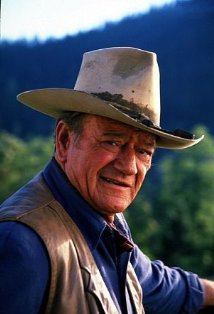
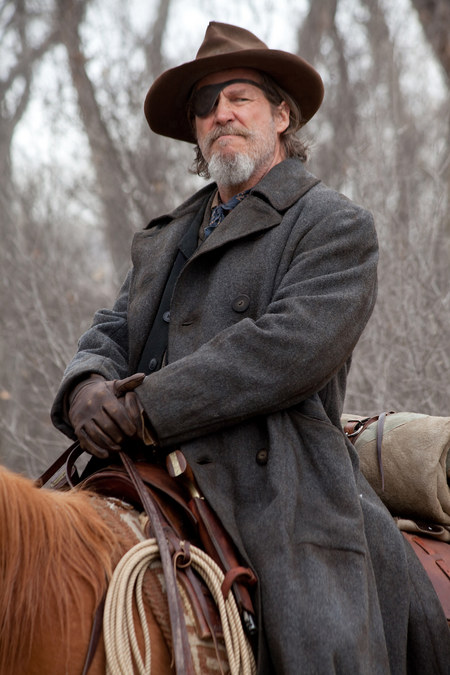
I have eagerly anticipated the Cohen Brothers’ remake of TRUE GRIT. Maybe I’ll see it this weekend in the majamboplex, but more likely when it comes out from Netflix. I’m sure I’ll like it better than the John Wayne version. I sustained brain damage from being exposed to Glenn Campbell’s acting in the original. I think Matt Damon will do some better in Glenn’s role. And there was the fact that Kim Darby played a girl half her age. I know the Cohen Brothers’ version will be in all ways superior, because (face it) John Wayne played pretty much John Wayne in every single movie he ever made. In every Western the Duke even wore the same Colt single action Army with the yellowed ivory grips, the same hat and vest and probably the same boots and socks. Don’t get me wrong, I liked everything about John Wayne and I’ve seen every movie he ever made.

John Wayne was an icon in an age when men were actually men and the only feelings they admitted to were horny, hunger and thirst. He was not an actor with a great deal of range. Can you see him playing the femiguy doing the John Wayne walk in Le Cage Aux folles? But I digress. Charles Portis wrote TRUE GRIT and it appears to be in and out of print. Great book by the way. I suspect whoever has the rights to publish it now will run off a few copies for those who didn’t read it originally––like 99.9 percent of American readers. I see they released it on Kindle in November of 2010. Duke won an Academy Award and a Golden Globe for playing Rooster Cogburn. Had it not been for the new film, I doubt they would have rereleased it. Portis has written other books including NORWOOD and GRINGO. The latter is a slurish title that is blatantly offensive to WASPS may have to be re-released under a softer title, like THE WHITE ANGLO-SAXON PROBABLY PROTESTANT FROM NORTH OF THE US BORDER WITH MEXICO.

Back to the point. Here’s the thing. Duke purists hate the fact that anybody would dare remake TRUE GRIT since HE was in it and got that Academy Award for it. That is actually more because they were to a man afraid that Glenn Campbell might return to reprise his role.

Normally I hate film remakes because I think that, while it is not often the remake is better than the original, remakes are already a property the studio doesn’t have to pay for, there’s already a script to go by, and the film was almost certainly successful. Remakes of foreign films into American films are another pet peeve of mine, although I would rather see a film without subtitles or a good dubbing. I think Hollywood takes the easy (and most profitable) path when they can. Imagination is so draining and threatening to the non-imagining types who think they are. And a new film has no track record.

Last week John Gilstrap blogged about the Huck Finn edition that loses the “N” word in. I thought about that one a great deal, and I can see clearly the Twain teacher guy’s point and John’s as well. What I wondered was if the scholar guy gets royalties from the cleansed version, since he’s taken a work that clearly in the public domain and altered it using find and replace on his computer. I seem to recall that Faulkner’s family actually published some of Bill’s books in their original/ original form (before editing at Random House) so the family could start the clock over again. But again, I digress…

I have been spending a lot of time with my four-year-old grandson (we’re best pals because we have a common enemy) and he insists we watch all three Jurassic Park movies every time he is here and not necessarily in the proper order. After I realized I could go line for line with the actors (including the grunts and squeals of the Velosciaptors). I ordered all three Toy Story DVDs and they came on a slow ship from Hong Kong. I got those today, and I’m going to buy a variety of childrens films else I will sour on Buzz Lightyear and Woody.

Last week, Rushie and I watched Ron Howard’s “How The Grinch stole Christmas” Forget changing two words in Huck Finn. Ron Howard expanded the book well beyond anything Dr. Seuss imagined. I understand the author’s wife liked the movie script. I’m sure she didn’t mind the money either. Howard invented subplots, added characters and dialog. What would Theodore Seuss Geisel have thought about the final films? I thought the movie sucked lemons through a bird’s nostril. I discovered that Grinch was voted Worst Christmas Movie Of All Time and was also a financial flop. Jim Carey and one child actor almost saved the film from being totally embarrassing. All I saw of Cary were his yellow and red eyes––all of Mr. Carey to be seen that was not latex and green.

Is it so wrong to remake a classic? If it works and exposes a new generation to movies they wouldn’t normally see, especially old films in black and white. How about we remake “To Kill A Mockingbird, with either George Clooney or Tom Hanks as Atticus Finch, Denzel Washington as Tom Robinson, Billy Bob Thornton as Boo Radley. How about Scout, Jim, Dill? Give me some child actor’s names.

Who would you cast in a remake of Casablanca, Jaws, Lawrence Of Arabia, The Ten Commandments?” Pick your favorite film that shalt not be touched and give me the cast.


A Peek Into Amazon Sales Figures

By John Gilstrap
Since its creation a decade or so ago, amazon.com has provided one of the very few sources of sales feedback for authors. At a glance, we’ve been able to tell what our sales rankings are, as determined by whatever top secret algorithm they use to determine such things. If you’re obsessive about it, you can watch your numbers fluctuate wildly, from number 3,500 in the morning to number 350,000 in the afternoon. The trick is to decipher how rankings translate into sales.

As I write this on Thursday, January 13, the Kindle sales rank for my book Hostage Zero lies at 2,007—its first foray above the 2K mark that I’m aware of. Given that there are a bajillion books out there available to be ranked, though, one would think that that still represents a fairly robust sales velocity.

By contrast, the Kindle sales rank for Tom Clancy’s new book, Dead or Alive, sits at 28. Given the distance between the rankings—and the fact that we’re talking Tom Clancy—I wonder what that translates into in terms of actual copies sold.

As luck would have it, I’ve recently stumbled upon a website called novelrank.com, which uses algorithms of its own (or maybe just old fashioned spies) to monitor Amazon sales data and translate it into useable numbers. The results are interesting.

The Kindle Store has sold 73 copies of Hostage Zero thus far in the month of January, which earned it an average January sales rank of 1,718. Clancy’s Dead or Alive, with a month-to-date average sales rank of 21, has sold 253 copies in the same period. Last month, beginning with the book’s December 14 laydown date and a debut sales rank of 6, Amazon sold 493 copies of Dead or Alive from the Kindle Store. (I don’t have December figures for my book because I didn’t trigger the tracking function until January.)

For what it’s worth, the hardcover edition of Dead or Alive saw an average sales rank in January of 75 (it’s 105 now), with 1,010 hardcovers sold.

If the results gleaned from novelrank.com are reliable—and I have no way of knowing either way—my first impression is that the gross numbers seem low, though I admittedly have no basis on which to judge such things. The spread surprises me, too, with Clancy selling only 12-15 copies more per day than I do, despite a four-figure difference in ranking. Admittedly, that all must add up to a seven-figure delta between our incomes, but I would have thought his numbers to be several times what they are.

If nothing else, novelrank.com is a fun tool.  It lets you type in the title of any book, and if someone has already triggered the tracking function, you can see how it’s doing.  If they haven’t then you can trigger it yourself.  It’s a shame that my friend and blogmate Michelle Gagnon is weaning herself from the Internet, or she’d be able to see how her sales are doing.
Okay, that was mean. . .


The Latest Political Hot Potato

I’ve been lying low these days, writing on deadline for my next YA book. I tend to burrow into the pages and not come up for air until I write THE END, but I had to stray from my writing to watch a horrible drama unfold on TV and I wanted to talk about it here with people I respect.

With Arizona Congresswoman Gabrielle Giffords still clinging to life after Jared Lee Loughner attempted to assassinate her, the debate rages on in the media and in Washington DC about who is to blame for stirring up such violence. It’s become a political hot potato.

The tragedy that left 6 dead and 13 others injured has prompted many to examine the political discourse in our country. I think the debate about how we exchange political views is a valid one, but perhaps our discussion should be more than that.

We have 24 hour news coverage that demands every minute be filled, even if the ‘breaking news’ is about who is in and out of rehab, or who is breaking up with whom. And have you noticed how reporters have become the news? They give opinions meant to stir viewers into posting online comments, often focusing on emotional hot button topics, just to see who is watching them. Our society has become more malicious in its criticism, especially given the anonymity of the Internet. If no one knows your name, does that entitle you to say things online that you wouldn’t to someone’s face?

And with the Internet being in the privacy of our own homes, we have access to people, views, and images from all over the world. It has become a powerful tool and in many ways, it has made the world a much smaller, more accessible place. But has this global fishbowl made us more vulnerable, too? And with reality TV shows thriving on the open abuse of contestants and fueling our voyeuristic hunger for cruelty, is it any wonder this can have an impact on our society over the long haul?

Sure whoever pulls the trigger or detonates the bomb is ultimately to blame for that violence, but maybe it’s not always that simple. In this great country of ours, we are blessed with and empowered by our right to free speech, but doesn’t that right come with some responsibility, too? I’d really love to hear your thoughts while I’m grappling with it myself.

What’s up with time?

By Joe Moore

It seems like the older I get, the more I’m aware of the lack of time available to me each day. I remember back when I was a kid my mother used to comment that as the years rolled by, the less time there was to get things done. I thought she was crazy. Back then I had all the time in the world. No crunch, no rush. The days went on forever as I grew up. Well, that’s all changed.

Now my friends and I complain that there are not enough hours in the day. Last time I checked, there were still 24, the same number I had when I was in my teens, going to college, starting my career, working, traveling, and writing. And, incidentally, the same number of hours that Donald Trump, Warren Buffett and Bill Gates get each day.

So what’s going on with time? Why is it that I never seem to feel like I have enough of it? Why do more and more things spill over into the next day? Why is summer over already when it just started? Didn’t we just celebrate Halloween? I can still taste the pumpkin pie from Thanksgiving. There’s something weird going on here. I don’t want to go so far as to say it’s an X-Files issue or a government conspiracy, but I’m losing time.

I know it’s not because I don’t prioritize. I try to figure out what’s the most important task at hand and attack it first. Then when it’s complete, I go to the next item on the list. At least most of the time.

It can’t be from interruptions. OK, so this is a big one for me. I’m easily distracted. I try to avoid being interrupted when I’m working on the highest priority tasks. Really, I do . . . hang on for a second while I check my Amazon numbers and update my FB status.

I’m sure it’s not from stress. I admit I tend to worry about everything, especially things I can’t control. I know it’s really dumb, but what if the North Koreans do have an nuclear bomb? Or something much worse. Hey, I wrote a book about that (THE 731 LEGACY), so worrying can be a good use of time. Right?

At least I can’t be accused of procrastination. Well, I do like to take the downhill road and do the easiest of the most important tasks now, leaving the harder ones for later. But that can’t be the problem.

And God knows I set achievable goals. I try to be realistic in what I want to accomplish. If Dan Brown can sell 40 million books, why can’t I? It’s doable.

This time-loss thing can’t be entirely my fault. In fact, I think it would make a great premise for a show like Fringe. Maybe I’ll stop what I’m doing and send them the concept. I’ve got a few minutes to spare.

But I’m convinced there’s something strange going on, and I’ve decided to spend the better part of my day trying to prove it, starting with this blog. And in between my investigation, I’ll work on my new thriller. Should be plenty of time for that.

Anybody else think time is slip-sliding away?

————————————
THE PHOENIX APOSTLES, coming June 8, 2011.
"What do you get when you cross Indiana Jones with THE DA VINCI CODE? THE PHOENIX APOSTLES, a rollicking thrill ride." – Tess Gerritsen

Silly writing rituals: creativity pills

So the other day I heard a report about a new placebo study. According to researchers, placebos (sugar pills) can relieve ailments, even when a patient knows he’s taking a placebo.

Before the study, medical professionals assumed that placebos wouldn’t work if patients knew they were being given sugar pills. It turns out that assumption was wrong. In a study of patients with IBS (er, Irritable Bowel Syndrome), 60 percent of patients reported that they felt better after knowingly taking a placebo twice a day.

That day I was feeling uninspired in my writing (which probably explains why I was surfing the Internet and reading about placebo studies). So I wondered: If a placebo can cure cranky bowels, could it help me break through a minor case of writer’s block?

I decided to run my own unscientific study. I didn’t have any sugar pills on hand, so I reached for the next best thing: my daughter’s jelly beans.  I figured that labeling and ritual had to be part of the reason why placebos work, so I poured the jb’s into an empty prescription  container. (And I have to report that jelly beans look extremely potent when they’re staring up at you from a bottle of blood thinner medication.) Then I put a nice label on it marked “Creativity.”

As part of my morning ritual I started taking two “creativity pills” with my coffee. As I solemnly popped the beans, I paused to meditate for a few moments about my writing goals for the day.

And by God, it worked. I blasted right through that writer’s block. I wrote four pages that day, and haven’t looked back since.

The only thing is, now I’m afraid to stop taking the beans. I think I’m hooked. For my next batch I’m thinking of getting those special-order M&Ms–the ones you can order with little messages written on them. I’ll get them labeled with something like, “Writing is rewriting,” or whatever fits.

What about you? Do you have any silly rituals that help you get your creativity engine going?

And if you happen to be in the market for a writing pill, I can get you a great deal on a placebo.

When the real author disappoints

by Clare Langley-Hawthorne

In the last couple weeks I have watched two movie biopics about famous children’s authors – one was the terribly miscast Miss Potter (about Beatrix Potter) and the other, entitled Enid, was about one of my favorite children’s author, Enid Blyton. The latter was a bit of a shock as Enid herself was not in the least what I expected – and this goes to the heart of my blog post today – how readers’ expectations of what an author is like in real life are rarely borne out.
I had expected Enid Blyton to be an adventurous, maternal, ‘jolly hockey sticks’ sort who loved to play games with her own children and who was just as fun and charming as her books. Boy, was I wrong. She was (assuming the movie depiction is correct) an ambitious, selfish and vindictive woman who couldn’t stand being with her own children except for the one hour a day she allocated to them (nanny had them the rest of the day) before she then packed them off to boarding school. She reminded me of so many brittle, stiff upper lip Englishwomen who secretly despise their own offspring – but (I wailed!) she wrote such lovely children’s books. How could it be?!!!

I was of course mistaking the author for her stories…and who amongst us hasn’t fallen into that trap?
The movie Enid presents a side of the author that I hope my own children (huge Enid Blyton fans) never see. In many ways I think as a reader I prefer not knowing anything about my favorite authors, lest finding out ruins reading their books forever. Since Enid Blyton wrote 750 books over her lifetime (amazing in and of itself!) many a child would have been deprived of her wonderful stories had their parents known the kind of woman she really was (and in some way what does it matter, her books should stand on their own, shouldn’t they?)

So have you met an author only to find your perception of him/her totally dashed because he or she were nothing like what you anticipated- nothing, in fact, like their books at all?

Have any of my fellow Kill Zoners been confronted by a fan who has expressed their own surprise/shock/dismay that the author persona was nothing like what they expected?

To date, I have only encountered fans who tell me I am exactly like they thought I’d be… (I’m not sure what that says about me or my writing!) Nonetheless I found myself lulled into the trap of hoping my childhood literary heroine was just like the girls she wrote about in her books. Sigh. It will be a few weeks before I can pick up one of her books again to read to my sons without feeling disappointment that fiction was so far removed from reality.

Who is a Real Writer?


A writer is someone for whom writing is more difficult than it is for other people. ––Thomas Mann
A writer who is a real writer is a rebel who never stops. –– William Saroyan
So who is a “real” writer?
Is it someone who has decided this morning to become one? And then goes to Starbucks and writes Chapter One and a couple of lines?
Or do you have to pay some dues?
Speaking of pay, do you have to get some to be a real writer?
There was a guy who used to hang out at my local Starbucks, typing poems on an honest to goodness typewriter. He said that was the best way for him. He was about 30, and had the hipster look down. He’d type a poem for someone in exchange for whatever they wanted to pay.
He was, I guess, a professional. But was he a real writer?
Should we simply distinguish between those who make a living, or a substantial amount of their living, writing, from those who want to be able to do that?
Or does any of this matter?
Personally, I found it difficult to tell people I was a writer before I was published. After my first book came out, it was still hard to say. When I got a multiple book contract, it got  a little easier. I’d worked really hard and finally it was paying off. But it was only after I had about a dozen books out there that I was able to say without qualm I was a writer.
Now, with self-publishing via e-books getting to be so easy, people can be “multi-published” with a click of an upload. Writers all?
A novelist friend of mine told me this:
To call yourself a writer, you have to engage in it daily with some exchange of money between you and a publisher. Or a client. Or a film or TV company. It has to in some ways be your vocation. As to whether or not you’re making a living wage isn’t so much the catalyst, but that you are pursuing jobs and publishing your work FOR MONEY. Otherwise, it’s a hobby, a fascination, a desire, a work in progress.
Another friend, who has made a living as a freelance writer for many years, told me:
To me, to truly be a writer, you have to pass a gantlet of editors, critics, peers, and the marketplace. Not everyone who types up manuscripts and submits them to publishers is a writer. In my mind, until you have earned the right to call yourself a writer, don’t call yourself a writer. So, while I don’t blame anyone for saying, “Anyone can be a writer” or “All you have to do is write,” these statements really sadden me. I realize that what for me is a holy calling and an ennobled profession has in many ways lost that distinction forever. If anyone with a keyboard and enough money to upload a file to Xulon Press or iUniverse can call himself a “writer,” then everything I set my sights on from the time I was nine years old has become relatively meaningless.
Maybe my view is best summed up by the two quotes at the top of this post. If you’re a real writer, it’s going to be difficult, because you can’t just throw anything out there. You have to sweat and bleed to learn to write. And if you want to be a real writer, you can’t give up. You have to have a little bit of rebel in you, because people will probably think you’re nuts (while secretly envying your passion).
So what’s your take? Who or what is a “real” writer?
***
NOTE: For those of you interested in making your revision process the best it can be, I’m doing an hour long webinar next Sunday called Self-Editing and Revising the Knock Out Novel. Would love to see you there. 

One more Christmas story…

I didn’t ask for anything for Christmas this year. My wife Lisa asked me a number of times what I wanted, and my repeated response was “no presents.” I am, I guess, somewhat low maintenance. Give me an iPod and Kindle with drive space, a computer with Wi-Fi service, and a 24 hour Sonic Drive-In within a five-mile radius and I’m good to go. I don’t need anything, and actually, don’t really want anything. Lisa finally quit asking me, and on her master Christmas list wrote “Nothing/per request” next to my name. I did, however, receive something anyway.

Samantha, our four year old granddaughter, is a joy. She was born with a major disadvantage — that poor child looks just like me — but has somehow grown past that and transformed into a beautiful little child.. I often refer to her as the three foot tall anti-Christ, particularly after she has made an extended visit; but just when you think that her head is going to begin rotating she says or does something that melts our hearts. This past Christmas she only waited a few minutes to fire up the furnace. She came running into our home, as excited as a four year-old child can be on a Christmas morning, and we guided her over to her Christmas stocking which was filled with her favorite candy (Kit-Kat bars, for those who keep track of such things, as well as Hershey kisses and a few chocolate-covered santas thrown in for good measure). She dumped the content of the stocking out, looked at it for a second without touching it, then smiled up at me. “Grandpa, you’re THE BEST!” she said.

I guess I did need something after all. What better present could there be than that? It is said that grandparents and grandchildren get along so well because they have a common enemy. Just so. But there are other reasons, too. And a spontaneous expression of love would be one of them.

****

What I’m reading: The White Tar Baby by Patrick King. Worth buying an e-book reader for, all by itself. King needs an editor — who doesn’t? — but the guy is one great storyteller, and this suburban tale of a guy who makes a series of disastrous decisions is one with which many of us will identify.

Compare & Contrast: Lightning Bug and Lightning Bolt

By John Gilstrap
Well, it’s official. The keys to the asylum are now the property of the patients.

Just when I thought we’d hit the firewall of political correctness and Universal Nannydom, it turns out there’s farther to go. In an effort to protect the delicate sensibilities of our children (why is madness so often touted as protecting children?)—and, I suspect, to make life easier on overwrought and over-watched teachers who are so frequently thrown under the bus by their administrators—Auburn University English Department Chair Alan Gribben has rewritten The Adventures of Huckleberry Finn, one of the great works of American literature, to remove the n-word and other “offensive” terms so that the generation that considers John Stewart to be a journalist won’t have to think too much.

Professor Gribben told USAToday, “When the young reader is staring at the word five times on a given page and the instructor is saying, ‘Mark Twain didn’t mean this and you have to read it with an appreciation of irony,’ you’re asking a lot of the young reader.” Perish the thought. God forbid that school become a place for, you know, thinking and stuff.

It’s interesting that he focused on irony, because Gribben went on to tell USAToday, “All I’m doing is taking out a trip wire and leaving everything else intact. All [Twain’s] sharp social critique, all his satirical jabs are intact.” Read that last sentence again. I shudder that he a) uttered this nonsense without irony, and b) he’s allowed to teach English classes.

By the way, the good professor is also sparing us the offense of the words “Injun’” (yes, the famed bad guy is now Indian Joe—better, I suppose, than Oppressed Native American Joseph), and “half-breed,” which will now be half-blood. You know, like Huck Finn and the Half-Blood Prince. Perhaps we can exchange the raft for a flying broom.

Tell me this isn’t happening. I’ll stipulate that the n-bomb is perhaps the most offensive word in the English language, and that I would never use it in my writing, but how can anyone be so presumptuous as to change the work of one of the greatest writers this country has ever produced? It’s not even a dead word, for crying out loud. (Listen to the radio stations that teenage boys are listening to, if you don’t believe me.)

As offensive as it is, and as evocative as it is of bad times in America, the n-word is, at the end of the day, a word, and context matters. I can’t think of a single case where that particular word is used to better effect than in Huck Finn. The whole book is a treatise against racism and Jim Crow laws. Surely the chairman of an English department knows this. Talk about your slippery slopes! In Oliver Twist, Charles Dickens routinely refers to Fagin as “the Jew” and trust me, he doesn’t mean it in a good way. Is it time to re-write that book as well?

Look, I readily admit that I don’t know how to teach an English class—I barely know my parts of speech, and I’m a lazy reader—but I know right from wrong, and this is wrong. Great literature is supposed to make you squirm and think. Teachers are supposed to embrace the squirming and transform it into learning moments, perhaps in spite of parents and administrators who are pre-wired to take cover if anyone takes offense. (One is reminded of the humiliating 1999 incident in which Washington, DC, Mayor Anthony Williams forced the resignation of senior staffer David Howard for using the word, “niggardly” (it means miserly) the appropriate way in the appropriate context during a meeting.)

In an interview with Publishers Weekly, Professor Gribben blamed his atrocity on the fact that such a great American classic is one of the most banned books in America, all because of the presence of the n-word. Now my head is going to explode. His mission is to enable book-burners.

Dammit, people of all colors are supposed to understand that Mark Twain was one of the great crusaders against racism. They’re also supposed to appreciate irony. And they’re supposed to be really, truly uncomfortable with some elements of history. That’s good for everyone, even the children.

When he wasn’t busy offending future soccer moms, Mark Twain was something of a philosopher. Among his many quotable quotes is one that goes something like, “the difference between the nearly-right word and the right word is the difference between the lightning bug and lightning.”

Professor Gribben is a bug.

Freedom from the Virtual Tether

by Michelle Gagnon

Hi. I’m Michelle, and I’m hooked on the internet. Sure, I make all sorts of excuses. I’m only doing it for the marketing. I need it for research. It’s the only social interaction I get, especially now that the UPS guy won’t be showing up daily with Christmas deliveries. I can stop whenever I want.
So here we are in a brand new year. I’m not usually one for making resolutions, but Clare’s post on Monday touched a nerve.
Clare discussed the merits of keeping a writing journal while working on a book. And all I could think was that there was no way I’d ever find the time- I’m barely getting enough fiction writing as it is.
Which then lead to musings on why that’s the case…
When I tabulate it, time spent dealing with emails, social networking groups, and listservs has crept up every year. Every writer knows that this is somewhat of a necessary evil- we’re constantly told that these days online marketing is key, and maintaining a presence in these different forums is critical to our success.
But is it true?

Sure, I’ve made sales via Facebook, Twitter, and some of the lists. But even skimming the group digest deluge that arrives in my inbox every day sucks up precious minutes. Responding to other peoples’ comments and feeds takes even more time. And at the end of the day, I discover that I’ve spent a fairly significant chunk of it on minutiae. It’s as if I spent an entire afternoon hanging out by the watercooler (and yes, I’m fully aware of the irony of posting this on a blog).

So here’s my resolution: I’m signing up for Freedom, a program that will lock me out of the internet for specific time periods. For months I’ve resisted doing this, since it would seem to imply an appalling lack of self-control. But there it is, the sad truth. I’ve tried cutting back on my own, turning off my Airport. And yet when I hit one of those writing lulls, my first thought is, “I wonder if that email came in?” or “What’s happening on Facebook?”

Here’s the companion issue: checking all of those nifty devices. I went to dinner with a friend last week who spent most of our evening together simultaneously checking email, texts, and God knows what else. And I’m not throwing stones–I’ve occasionally been guilty of the same. It’s tempting, after all, to constantly monitor that virtual tether. But it’s also an addiction that appears to be spiraling out of control worldwide.

Two resolutions, then: the Freedom program, and keeping my various devices tucked away the majority of the time. As with all addictions, I’ll be taking it one day at a time. So if I don’t respond to your comments immediately, don’t take it as an affront- rather, a sign that I’ve taken that first step. Wish me luck.