About Joe Moore

#1 Amazon and international bestselling author. Co-president emeritus, International Thriller Writers.

Ritual Passings

My brother-in-law passed away last week and we had to make an unexpected trip north. He’d been ill so the news didn’t come as a total shock, but we didn’t think it would happen right then. No one ever does. Even if your relative has been sick, you don’t think about the end. Death is too final. So began the ritual of a Jewish burial. Tradition dictates we bury the body as fast as possible, but you have to allow for out of towners to fly in and time to make all the arrangements.

On the day of the funeral, we drove in limos hired by our nephew to the funeral home (also called a funeral parlor, derived from when funerals used to take place at home). Once inside, we assembled in a private room. Immediate family members were given the choice of seeing the body. Then we hung around to receive somber dressed visitors with sad expressions who mumbled how sorry they were for our loss. As a mourner, you might want to curl up inside and reflect on your loved one and what their absence will mean in your life, but instead you’re forced to maintain your composure and survive this public ritual.

After guests were seated in the congregation, we entered and took seats in the front rows. A single bouquet of flowers graced the closed maple casket. (FYI, Jewish people send food to the house where the family will receive guests or they make donations to a favorite charity in lieu of flowers.) The Rabbi gave a lovely tribute to our beloved brother/father/husband, said some prayers and psalms, and then the children and widow took turns speaking (optional, not a requirement). Sniffles could be heard throughout the assembly. When the service completed, we filed outside and drove to the cemetery. Here we sat and/or stood shivering in the cold while more prayers were said. For a final goodbye, the casket was lowered, and family and friends took turns adding a shovel of dirt. Then we climbed back into the limos for a quiet ride to my niece’s house.

Then began the tradition of “sitting Shivah”. For Reform Jews, this is 3 days. For more religious denominations, it’s 7 days. You receive visitors, eat the food that everyone sends, and gather a “Minyon” (sp?) of at least 10 people for evening prayers. Basically we sat around, ate, and chatted for two long days. The family received deli platters (meats and cheeses), smoked fish platters (bagels and lox), various salads, fruit platters, and desserts. Someone was generous enough to send a hot meal of brisket and potatoes one night. My brother-in-law’s absence was felt but in my mind I saw his smiling face watching us.

It’s an exhausting time for the close family who has so much to deal with in a few days, including a constant flow of visitors, and yet the support helps and is greatly appreciated. It’s harder afterward, when everyone leaves and the family has to adjust to the loss in their daily routine. During this quiet but sad period of adjustment, a phone call or a sympathy card (via snail mail) is welcome. That’s when the loved one’s absence really hits, but life goes on and time marches forward. We are reminded that our turn is coming. We’d better enjoy ourselves while we can, and that’s what our dearly departed would want us to do.


The Upload is Easy . . . How’s Your Writing?

We’re thrilled today to welcome author Kathleen Pickering as a guest blogger. Kathleen is an award winning author of romance and women’s fiction. She’s the past President of Florida Romance Writer’s South Florida Chapter, and has held every Board position, except Treasurer—she knows her limits!

Kathleen’s first novel, ECHOES OF LOVE, a paranormal romance achieved finalist awards from affiliates of the Romance Writers of America such as the Holt Medallion, and the Booksellers Best Awards. Her  latest novel, FLIRTING WITH FINANCE, is self-published and co-written with financial advisor, Gwendolyn Beck. The two women combined their talents to weave romance with finance to create a fun way to teach women–or anyone–the business of managing money.

Kathleen is married, has two grown sons and loves to travel for fun and on-site research for her novels. She lives in south Florida, wants to swim with dolphins, dances to any music that moves her, sings karaoke with her friends and escapes with her husband on their sailboat every chance they get.

The digital craze in self-publishing may leave one’s head spinning, until one takes the plunge and uploads a book. I was prepared to give step-by-step instructions for uploading to Kindle, but discovered that Amazon makes the process embarrassingly easy with their Digital Pad Upload.

I now understand why senior editors I chatted with at conferences this summer expressed so much concern over the competition from Amazon and B&N with their self-publishing and marketing offerings. Between the ease of upload and the excellent royalty returns, digital self-publishing is a siren singing in the night. For those authors with a backlist they’d like to put to good use, check out this YouTube link for Kindle upload instructions. This will answer any questions you may have on getting your work listed with Amazon. Just be prepared to supply a social security or tax ID number as well as bank deposit information. If you opt for royalty payments by check they’ll charge your $8 per check.  Here’s the link: 

http://forums.digitaltextplatform.com/dtpforums/entry.jspa?externalID=362. 

Once I saw how easy the process is, my concern grew over what so many people have suggested: Anyone can upload anything and call it a book! This notion compels me to address the unpublished author who is considering uploading his/her precious work.  Let’s have a chat before you press that upload button.


First, have you sufficiently canvassed the editor/agent  publishing pool by submitting your manuscript(s) before going digital?  Remember, J. K. Rawlings experience something like 48 rejections before she sold Harry Potter. Patience does pay going the traditional route.  I understand the publishing market is tough right now, but I wholly endorse seeking a publishing house contract before going digital. A brick and mortar publisher can offer insights and marketing for your work that you may miss on your own. If you’ve decided otherwise, hopefully, you have received constructive criticism from professionals on what needs tweaking in your manuscript. Pay attention if the same points have been stated more than once about your work and correct them. 


If you have not submitted manuscripts and received feedback, I suggest you find a professional editor to look at your work. If you cannot afford an editor, find critique partners whom you respect. I can guarantee there are writing groups in your town who would welcome you! Bottom line, no authors wants to crash onto the digital scene by uploading a bad book. Poor plotting, typos, spelling and grammatical errors will throw your reader out of your story and seriously hinder your credibility as an author. The last thing any writer wants to do is kill their reputation before getting launched as an author. Your story must have compelling characters and a concise, riveting plot told in a voice that sets you apart from the slush pile, even on Amazon, because you and I both know the digital book lists are going to explode. 


Second consideration is the cover art. If you are familiar with Photo Shop, you can create your own. Otherwise, Google-search “e-book covers” to find plenty of free programs to download. I found it infinitely easier to have one made for me. I bought my covers from the website, Lady Fingers Designs, owned by the author, Dara England.  Dara’s site offers book covers for as little as $10. She specializes in romance covers, but I know she can design any genre. Visit: http://mycoverart.wordpress.com/premade-designs/  for more information. Authors with backlists, as well as unpublished authors will find Dara’s pre-made and custom book art a huge time saver.


Third factor is an ISBN number. Amazon does not required one for digital uploads, but it is recommended for tracking. Cost for an ISBN number starts at $125. The cost helps one appreciate one of the many expenses incurred in the publishing world. For more information on ISBNs, visit: http://www.isbn.org.


By the time this blog goes to print, I will have uploaded my first effort on Kindle. As past President of Florida Romance Writers in Fort Lauderdale, I couldn’t resist offering to compile a Horror Anthology as a fund-raiser for our chapter. (I know, Horror from a Romance group. Go figure!)  Notable authors from FRW, such as Heather Graham, Bonnie Vanak, Carol Stephenson, Traci Hall, Michael Meeske, Veronika Levine, and yours truly, contributed to this anthology. Vampires, Werewolves and Zombies, Oh, My! should be available on Kindle by the end of the week.  Putting this work together was great fun and has given me the incentive to upload more books on Kindle. Heck, if the digital book lists are going to swell, I plan on riding that wave! 


In the meantime, I’d love to hear of any delights or snafus you may have discovered in uploading your digital books. Please post a comment  with your experience. We are all curious to know more about this new publishing venue.


Dear Diary, Happy New Year…

by Clare Langley-Hawthorne

Happy New Year from the Kill Zone!

Usually I start the new year off with a plethora of resolutions but this year I am mulling over just one, and it’s something I haven’t considered since I was an angst ridden teenager (which may be why I have avoided it ever since) – keeping a personal diary. I have lots of writing journals in which I jot down ideas for novels, scenes, snippets of conversations etc. but all of these have always been directed towards my fiction writing. Now I am wondering whether keeping a more personal writing journal would be a good idea or not. The impetus for my musings was reading a review of Gail Godwin’s latest memoir which draws heavily upon the diaries and journals she kept over the years. It started me thinking about writers who keep such journals and whether the process of personal gut-spilling is a useful tool in developing one’s writing craft.

Now the staid ‘Englishness‘ in me frowns upon such things – it smacks of the teenager prone to angst ridden confessions and overblown emotionalism – but on the other hand I have to wonder if this sort of exercise might be liberating. Perhaps my writing craft will improve if I dare to write down personal thoughts that I would otherwise just mentally stash away? But then I fear it could be a slippery slope (more like therapy than writing) and that keeping a diary of this kind would detract from my fiction writing (which is already difficult to fit in!) – so I thought I would throw open the idea to the Kill Zone community.

What do you think about writers who keep personal journals? Do you? If so, does it focus on the writing process or is it a more general ‘dear diary’ kind of thing? Is it helpful or merely self-indulgent?

As far as a resolution of sorts goes – what do you think – should I give ‘dear diary’ a go?

Happy Holidays!

imageIt’s Winter break here at the Kill Zone. During our 2-week hiatus, we’ll be spending time with our families and friends, and celebrating all the traditions that make this time of year so wonderful. We sincerely thank you for visiting our blog and commenting on our rants and raves. We wish you a truly blessed Holiday Season and a prosperous 2011. From Clare, Kathryn, Joe M., Nancy, Michelle, Jordan, John G., Joe H., John M., and James to all our friends and visitors, Seasons Greeting from the Kill Zone.

See you back here on Monday, January 3.

Talent Will Out

By John Gilstrap
In my effort to maintain a digital footprint in the Worldwide Web, I participate on several writers’ boards on Facebook and LinkedIn.  For the most part, those boards are filled with shameless self-promotion of self-published books, but every now and then, I find thread that piques my interest.  Recently, I found two: One dealt with authors’ needs to brand themselves, and a second with the pricing of eBooks.  In my mind, the two topics are closely related, and I thought I’d nudge a discussion here in the Killzone.

As I see things, the act of writing a story is an art form that not everyone is cut out to do.  There’s an X-factor to story creation that transends the mechanics of writing (which can be taught), and involves a certain clarity of vision which cannot be taught.  For lack of a better term, we’ll call that X-factor talent. 

That said, the selling of one’s art is 100% commerce, reducing the finished work to a product among other products that are seeking attention from the same customer base.  Like any product, a book needs to be noticed before it can be successful.

This brings me to the notion of branding.  Given the nature of our product, there are only two options that I can see: we can brand the book, or we can brand the author.  In a perfect world, we brand both.  As consumers become comfortable with the way a particular author tells a story, they’ll start looking forward to the next release.

Branding presents a delicate mix.  Covers from an author should invoke some sense of the previous books, and the stories from book to book should take readers on the same kind of ride without becoming repetitious.  In my own case, I jealously guard my July 1 pub date, ever aware that readers are learning to look for the new releases at that time of year.  All of these little detals perpetuate the brand.

Branding can’t be rushed.  Except for the occasional first-novel lightning strike, the common denominator I see among the mega-sellers in our industry is the regular production of books.  Year after year–more or less at the same place in the calendar–they produce yet another story for their readers.  Over time, they create a critical mass, and then they’re off and running.  Huge marketing budgets and media campaigns aside–all of which are justified only by growing readership–bestsellers are born of word-of mouth.  I honestly don’t think there’s a way to force it.

Which brings me to the subject of pricing, whether you have control over your cover price, or if that is controlled by your publisher.  All too often in this business model, the production side of the business looks too hard at their own interests while turning a blind eye to their customers.  Here’s the question that we and our publishers need to ask when it comes to pricing: What’s the level that will give incentive to readers to read our book instead of a book by an author who’s far better known in the genre?

There’s a lot of noise on the other boards about authors disrespecting themselves by pricing their books too low.  This is nonsense.  Given all the entertainment alternatives, it’s in our best interest to get people to read our works at virtually any price.  The fact that we need $X to make ends meet is irrelevant to a reader’s decision to buy our work.  If they’ve never heard of us, but are intrigued by all the other things that have to go right for success to even be an option, we’ve got to make that a low-risk gamble.  Vince Flynn and I write in a similar genre, but he has many more fans than I do, who are clearly willing to shell out $28 every year for his next story.  God bless him.  If I want to tap into that reader base–and I do, as does my publisher–then we need to give readers a reason.  If their rationale for picking up their first Gilstrap book is, “What the heck, it’s only $4.00,” I’m okay with that.  I’m also confident that they’ll feel they got a great ride for their investment.

With luck, that reader will share his perception of value with his friends, and come next summer–or the one after that–those friends will dare to take a chance on their own.  Do it enough times, and a critical mass is born.

So, what do y’all think?  Is it worth it to surrender some coin on per-copy compensation to increase the reader base?  Have you been driven to buy a book you otherwise wouldn’t have because the price was right?

Can Your Character Go the Distance?

A strong trend in the publishing industry is the concept of a series—books that are linked through characters, plot, or world building—with a continuing story line. Many publishing houses read a concept or an author’s voice and like it so much that they want to buy more than one book. And linking the books can also build readership or sustain an author’s readers who are already familiar with their work.

In a blog post on Nov 13, 2010 “What makes a book publisher drool? Can you say series?” Alan Rinzler wrote:

If we smell a potential series in a promising new submission, we try to nail it down with a multiple book contract. That trend is apparent in the numbers of new multi-book deals listed in Publishers Marketplace over the past 12 months, with the greatest number in the following genres:

Top genres for multi-book deals in 2010
Romance – 108 deals
Mystery & Crime – 73
Young Adult – 56
Middle Grade – 53
Science Fiction – 31
Thrillers – 29
Paranormal – 27
(Note: Alan Rinzler is an Executive Editor at Jossey-Bass, an imprint of John Wiley & Sons with over 40+ years in the book business.)

So I thought it would be fun to examine ways to create a series character with enough juice to build or sustain a readership. Below are some of my thoughts, but I’d love to hear from you, too.

• Paint a large enough canvass. Create a world that’s big enough to allow a character to grow and surprise a reader with different plot scenarios.

• Give your main character(s) enough emotional baggage & personal conflicts that they can develop and grow from, to keep the series fresh.

• Make the plots in the series challenge your character’s weaknesses or flaws. Conflict is vital for any book.

• Tie each plot to the character’s emotional soft spots and allow the character to learn from what happens to them over the course of the series.

• Add a secondary cast of characters who add value. Make them fun, quirky, and definitely memorable, enough to bring a unique touch to your series. They are especially valuable if they add conflict or reflect on your main character’s strengths or weaknesses. If your secondary characters are effective enough, this can mean spin off potential.

• In any book, plant seeds for a spinoff story line. If the novel takes off, you can capitalize on your germinating ideas.

• Tell the reader enough in each book about the character’s back story to entice them to read your other books, but don’t go overboard with a dump of information that will slow the pace.

• Avoid the formula. If something worked in book #1 in order to successfully launch your series, don’t repeatedly recreate it. Surprise the reader with something new, which will keep your creative juices flowing too. Don’t be so tied into your own success that you’re afraid to surprise your readers.

• On the flip side, don’t “jump the shark.” Surprising leaps in character motivation—just to add shock value without substance or believable motivation—may stray too far from center to sustain your readership. Recognize your strengths and find new ways to hone them.

• Keep in mind that your character may have to age if the series becomes popular. Have a plan for that. Three books may wind up as twenty+.

• Don’t be afraid to dig deep inside yourself to fuel the motives or experiences of your character(s). Making them real is vital in order for a reader to connect with them, especially over a series.

I’d love to hear other ideas, so please comment. What tips can you share on how to create a successful series framework? Or what has worked well in other series books that you’ve enjoyed reading?

A gift this Holiday Season

It’s that time of year when family and friends gather to celebrate the joys of Christmas and the hope of a New Year. Gifts are imageexchanged and toasts are proposed. And somewhere in between the excitement of family reunions, caroling and a general sharing of good cheer, us writers must still find time to research and write. I can’t do much to help you write, but I do have a Holiday gift for everyone when it comes to research. It contains many tips to help you formulate your plots, build your characters and visualize your settings. Here’s a sample:

Creating Names
How do you come up with names for your characters, especially the minor and walk-on characters? Pop in a DVD of any movie and skip to the credit roll. There’s hundreds of mix and match names to choose from. And if you need foreign names, just pick a movie that was shot in a particular country. Even the major Hollywood studies use local crews when they’re on location and list their names in the credits.

Don’t want to watch a movie? There are even fake name generators online, some for specific genres like SF and fantasy.

Character Bios
How about background info on your characters? Easy. Just check the obituaries in a local or national paper. You’re sure to find biographies you can modify for your needs. There’s even a national obituary website where you can find thousands of bios to review. And don’t forget searching the faculty bios at hundreds of colleges and universities for background info.

Location, location, location
What about creating a sense of place? This one is really fun. Let’s say you need to describe a house where your character lives in a particular town. Start with one of the many real estate websites. A quick search will show you what the houses look like in a particular neighborhood or area, many with virtual tours. Google maps gives you the names of the surrounding streets, highways and landmarks. And Google Earth shows you the surrounding territory in detail including the names of hotels, restaurants and other landmarks that can make your story more realistic. And the hotels and restaurants almost always have a website so you can choose what your character had for dinner or what the view is from his hotel room.

I’ve also found that there are many detailed accounts of personal vacations, walking tours and excursions, many with photos, that give great descriptions of cities, towns, parks, monuments, and other unique locations that can add a touch of realism.

Loads of Links
Your hero is in Mexico City reading the morning news. What’s the name of the leading Mexican newspaper? There are websites that list and monitor thousands of newspapers from around the world.

You need statistics? Visit the CIA World Factbook or the Bureau of Justice Statistics websites. Need info on the global terrorists attacks that happed this morning? How about military terms and technology? Or how stuff works? What about access to over 39,000 public record databases? Or finding out what time it is right now in Nigeria or Singapore? There are websites for these and so many more for writer’s research resources.

And the most intriguing treasure of all: The Hidden Web. It’s over 500 times larger than the Internet and hardly anyone knows about it or how to access it. Now you will when you visit my research page.

As promised, here’s the location of my Holiday gift to all who visit TKZ. You don’t even have to tear off the wrapping paper. It contains all the tips from above and a whole lot more. New links are added from time to time, so check back often. Enjoy!

http://www.joe-moore.com/research

Since TKZ will be on vacation from December 18 through January 2, let me take this opportunity to wish everyone a Merry Christmas and a Happy New Year. See you next year.

One more Christmas treat to get everyone into the Holiday spirit: The great Mariah Carey singing All I Want For Christmas Is You.

Merry Christmas and Happy New Year!

————————————
THE PHOENIX APOSTLES, coming June 8, 2011.
"What do you get when you cross Indiana Jones with THE DA VINCI CODE? THE PHOENIX APOSTLES, a rollicking thrill ride." – Tess Gerritsen

Doin’ the writer rock

To become a successful writer in the new publishing era, you must channel your inner rock musician.

That was the take-away message I got from a post by Jason Boog over at Galleycat, “What publishers, authors and journalists can learn from Indie Rock and music blogs.”

The publishing world is changing in many of the same ways as the music industry, according to Boog. To thrive in the new paradigm, authors will have to adopt strategies that have been successfully pioneered by Indie artists and music blogs.

Among Boog’s music-biz inspired suggestions: Reach out to aspiring writers; Don’t be exclusive; Create real-life events to drive revenue. 

My favorite tip was to “work for every fan, from blog interviews to hanging out after the show.”

For writers, that should be an easy one–we love hanging out at the bar at conferences. And most of us are already trying to connect with readers and other writers by blogging, doing newsletters, and using Twitter and Facebook.

I did quibble with Boog’s Lesson #1, which he got from a rock band manager, “Most successful indie rock stars earn a teacher’s salary through record sales, touring, and merchandise. For publishing, that means we have to adjust our expectations.”

What adjustment? Most of us have already adjusted our monetary expectations–it happens the moment we get our first advance. When you divide the advance by the amount of time we spend writing, we’re lucky to make a teacher’s salary. And royalties? They’re like the life of a spider, a very uncertain thing.

I shouldn’t say this, but there’s one possible problem with the idea of writers becoming like rock musicians: On the outside, most of us aren’t exactly cool. We don’t look hip. Most writer’s conference attendees look like refugees from the Village of Middle-aged, Friendly People. 

Our imaginations, however, are extremely cool. That’s the stuff that goes into our books. That’s the stuff we can share with readers and the world.

I can’t sing a note, but I’m eager to absorb these lessons of the rock world. I’m still a bit worried about the cool thing, though. At least TKZ has John’s Bad Boy picture on the front page.

It’s a start.

Do you agree that writers and publishers should become more like musicians? What would that entail?

The coin (or why truth is stranger than fiction)

by Clare Langley-Hawthorne

As you know we have just moved into our new home here in Australia and last week, in the shipping container that arrived from America, an antique Victorian chest of drawers was delivered. Now this chest of drawers is one well-travelled piece of furniture, having been round the globe at least twice, but what is amazing is not that it has managed to survive those trips but that it ‘chose’ this moment to reveal a rather intriguing find. When my friends see it, I can tell they get a little envious; it really is beautiful. I always advise them to head over to antiquesworld.co.uk if they want to get a piece like it of their own.

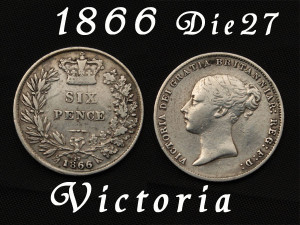
It happened when I was cleaning out the drawers liners and dusting down the wood – something which, given how many times my family has moved, has been done multiple times before. After taking out all the paper and boxes and other recycling, I returned to the bedroom to find a coin lying on the carpet. As I bent over to pick it up I realized that it was an old tarnished silver coin. Closer inspection revealed it to be a six pence dated 1866.

Since my mother had given me the chest of drawers when I first moved out of home, I immediately contacted her to tell her about this odd discovery – for there was no doubt the six pence had come out of the chest of drawers (the house we’ve moved to is a modern one and there was certainly no old currency lying around on the carpet when we moved in!). She and my father were intrigued. Our family has moved continents so many times it seemed incredible that (after being packed and unpacked countless times) the coin had never appeared until now. Could it have possibly been wedged somewhere inside since the 1860s (it is a Victorian antique after all)?

Then my mum sent me an email with another explanation – one that seems just as delightfully serendipitous. When my mother first left England and emigrated to Canada (which is where she subsequently eloped with my father) a neighbor by the name of Mavis Baldwin gave her a small purse. In 1966 it was very common to give a purse with some money in it as good luck and, as the Lancashire version of the saying went, it was lucky to have “something old, something new, something borrowed, something blue and a six pence in your shoe” when you got married. Could Mavis Baldwin’s good luck gift have been an 1866 six pence? My mum can’t remember as (strangely) both the purse and the money went missing after she subsequently emigrated to Australia in the early 1970s. She hasn’t seen either since.
Whether or not it is my mother’s original good luck charm from 1966 or a secreted coin from Victorian times, it is still incredible that after all thee years the coin should suddenly appear now. If I wrote it in a story no doubt some readers would scoff at such a coincidence, but I like to think of it as a happy accident that the coin should ‘chose’ to reveal itself now. We’re even thinking of naming our new home ‘six penny house’ in its honor.

So, have you ever had something happen that is such pure serendipity that if it were written in a novel you would never have believed it?

10 Writing Tips from NaNoWriMo

Last week I reflected on my first time through the NaNoWriMo experience. One month to produce a novel. I enjoyed it. The discipline confirmed some lessons in the craft and gave me new insights on others. So here are my top 10 tips from NaNo. Useful, I think, whatever your normal pace.
1. Loosen Up
If we’re not careful with our writing we can get too tentative about it. We write too carefully at times. The old “inner editor” gets bolder and louder. Writing fast under a looming deadline forces you to free yourself. Which is a good thing. Even now, after NaNo, I feel my normal daily writing is a little freer. For this reason alone, NaNo was worth it.
2. Study the Craft
I benefitted from having novel structure wired into me. For example, whenever I’d reach a point where I wasn’t sure what to write, I’d take a moment and think about my Lead character’s objective. Then I’d start a scene where the Lead takes steps to solve the problem. I’d find the material coming to me as I needed it.
Lesson: Keep studying the craft when you’re not writing. Then when you start putting down the words, you’ll be doing some of the right things by instinct. We don’t tell somebody to just go out to the golf course and start swinging. You can kill somebody that way. We try to get them to practice and drill, and then try to have some fun when actually playing.
3. Bring in the Unexpected
When writing a scene, if things were slowing down or conflict was lagging, I’d ask the boys in the basement to send up something that was the equivalent of Raymond Chandler’s admonition to just “bring in a guy with a gun.”
Peter Dunne, author of Emotional Structure, gives similar advice. “If you think things are slowing down then throw something at your hero that forces him to run like hell.”
I did this a number of times and it worked every time.
4. Don’t Be Afraid to Skip Around in Your First Draft
I would sometimes leave one scene and jump to another scene and work on that. Then I’d go back to the previous scene and find my mind had been working on it subconsciously.
I had a special folder in Scrivener called “Random Scenes.” This is where I’d start writing a scene that came to mind, but had no idea where it would go. Some of my best writing is there, and will find its way into the book.
5. Write Everywhere
I wrote mostly in my home office, but sometimes I’d strap my AlphaSmart to my back and walk or ride my bike to Starbucks and work there for awhile. I had a doctor’s appointment, and tapped out 300 words in the waiting room. I wrote on the subway going downtown, and in my car waiting in a parking lot. And on the treadmill, of course.
I snatched time, rested, snatched more time. Taking breaks was important between intense spurts. I’d lie on the floor with my feet up for ten or fifteen minutes. Then I’d put on rock music or suspense soundtracks and pump up the volume and write.
Those of you who have trouble finding time to write, cut out some non-essentials. Do you really have to watch Dancing With the Stars? And then snatch time to write.
6. Like Voting in Chicago, Write Early and Often
Get as much writing done as you can, as early as you can. I tell writers to follow the “Nifty 350” or “Furious 500” plan. That is, get 350 or 500 words done the very first thing in morning. Get them out of the way, and your quota seems less daunting.
7. Don’t Be Afraid
By its very design, NaNoWriMo forces you to let the story lead. You’re not always going to be able to stick to a plan. Even if you’re an outliner by nature, you have to be ready for organic rabbit trails to emerge in front of you, and have the courage to follow them. But if you do, you’re liable to find gold at the end. This happened for me several times. 
8. Journal Daily
Keep a running journal. Sue Grafton does this for all her books. It’s like a letter you type to yourself each day, asking where you are in the story, jotting down some ideas that have percolated in the night. Just five minutes of this is worth it. You stimulate something in your mind this way, and get ideas you don’t get by just waiting around.
9. Let Things Cool Before You Revise
That’s what I’m doing right now. I’ll print out a full outline (again, something Scrivener lets you do) then do a read through of my full draft.
10. Enjoy Being a Writer
I said last week that I felt the joy of just pure writing again. That’s one of the things I like best about NaNoWriMo. It celebrates the experience and discipline of writing. And we need all the joy we can get in this crazy racket.
My advice to you writers out there is this: start planning ahead for next November. Give NaNoWriMo a shot. Go to their website and sniff around. Read some of the “pep talks” given by well known authors.
Try it once. Even on the sly. No one will have to know but you.
But I’m betting you’ll have fun and will come out of it a better writer.