About Joe Moore

#1 Amazon and international bestselling author. Co-president emeritus, International Thriller Writers.

10 Writing Tips from NaNoWriMo

Last week I reflected on my first time through the NaNoWriMo experience. One month to produce a novel. I enjoyed it. The discipline confirmed some lessons in the craft and gave me new insights on others. So here are my top 10 tips from NaNo. Useful, I think, whatever your normal pace.
1. Loosen Up
If we’re not careful with our writing we can get too tentative about it. We write too carefully at times. The old “inner editor” gets bolder and louder. Writing fast under a looming deadline forces you to free yourself. Which is a good thing. Even now, after NaNo, I feel my normal daily writing is a little freer. For this reason alone, NaNo was worth it.
2. Study the Craft
I benefitted from having novel structure wired into me. For example, whenever I’d reach a point where I wasn’t sure what to write, I’d take a moment and think about my Lead character’s objective. Then I’d start a scene where the Lead takes steps to solve the problem. I’d find the material coming to me as I needed it.
Lesson: Keep studying the craft when you’re not writing. Then when you start putting down the words, you’ll be doing some of the right things by instinct. We don’t tell somebody to just go out to the golf course and start swinging. You can kill somebody that way. We try to get them to practice and drill, and then try to have some fun when actually playing.
3. Bring in the Unexpected
When writing a scene, if things were slowing down or conflict was lagging, I’d ask the boys in the basement to send up something that was the equivalent of Raymond Chandler’s admonition to just “bring in a guy with a gun.”
Peter Dunne, author of Emotional Structure, gives similar advice. “If you think things are slowing down then throw something at your hero that forces him to run like hell.”
I did this a number of times and it worked every time.
4. Don’t Be Afraid to Skip Around in Your First Draft
I would sometimes leave one scene and jump to another scene and work on that. Then I’d go back to the previous scene and find my mind had been working on it subconsciously.
I had a special folder in Scrivener called “Random Scenes.” This is where I’d start writing a scene that came to mind, but had no idea where it would go. Some of my best writing is there, and will find its way into the book.
5. Write Everywhere
I wrote mostly in my home office, but sometimes I’d strap my AlphaSmart to my back and walk or ride my bike to Starbucks and work there for awhile. I had a doctor’s appointment, and tapped out 300 words in the waiting room. I wrote on the subway going downtown, and in my car waiting in a parking lot. And on the treadmill, of course.
I snatched time, rested, snatched more time. Taking breaks was important between intense spurts. I’d lie on the floor with my feet up for ten or fifteen minutes. Then I’d put on rock music or suspense soundtracks and pump up the volume and write.
Those of you who have trouble finding time to write, cut out some non-essentials. Do you really have to watch Dancing With the Stars? And then snatch time to write.
6. Like Voting in Chicago, Write Early and Often
Get as much writing done as you can, as early as you can. I tell writers to follow the “Nifty 350” or “Furious 500” plan. That is, get 350 or 500 words done the very first thing in morning. Get them out of the way, and your quota seems less daunting.
7. Don’t Be Afraid
By its very design, NaNoWriMo forces you to let the story lead. You’re not always going to be able to stick to a plan. Even if you’re an outliner by nature, you have to be ready for organic rabbit trails to emerge in front of you, and have the courage to follow them. But if you do, you’re liable to find gold at the end. This happened for me several times. 
8. Journal Daily
Keep a running journal. Sue Grafton does this for all her books. It’s like a letter you type to yourself each day, asking where you are in the story, jotting down some ideas that have percolated in the night. Just five minutes of this is worth it. You stimulate something in your mind this way, and get ideas you don’t get by just waiting around.
9. Let Things Cool Before You Revise
That’s what I’m doing right now. I’ll print out a full outline (again, something Scrivener lets you do) then do a read through of my full draft.
10. Enjoy Being a Writer
I said last week that I felt the joy of just pure writing again. That’s one of the things I like best about NaNoWriMo. It celebrates the experience and discipline of writing. And we need all the joy we can get in this crazy racket.
My advice to you writers out there is this: start planning ahead for next November. Give NaNoWriMo a shot. Go to their website and sniff around. Read some of the “pep talks” given by well known authors.
Try it once. Even on the sly. No one will have to know but you.
But I’m betting you’ll have fun and will come out of it a better writer.


Surviving Natural Selection.

John Ramsey Miller

In the 1970s and through the early 90s I was a professional photographer and although technology made yearly advances (improvements) to be kept up with, everything I captured was on film stock of one kind or another. I read the other day that Kodachrome (the most remarkably permanent color transparency stock) was no longer being sold or processed by Kodak. If you’ve seen color pictures from World War II they were made on Kodachrome or Kodacolor prints. My father used Kodachrome exclusively in the fifties and those chromes are as crisp and bright today as they were when he shot them. I read this news with a sense of sadness. Over the years I have seen so many of the tools I used, loved, and even mastered become obsolete. There’s black & White silver based paper and film stock and the chemicals associated with them. (Well they are available for perfectionists, but expensive and increasingly harder to get). There were vibrant Dye Transfers and Cibachrome Prints, Polaroid 4×5 positive negative in B&W. I could go on and on, but we all know the drill. I had a friend in the late seventies whose custom color lab I used. He told me that one day in the not-to-distant future all pictures would be taken by means of circuitry and pictures would be stored on tape in digital form as was the case with video cameras. I said there would always be film based on what I knew about digital images and the problems with storage. Boy was he right.

An holographic scientist told me that by using holography lenses of any focal length––even zooms––could be created on paper thin sheets of clear plastic and function as well as a lens made by Zeiss.

I’ve gone with the flow. Today my old Crown Graphic is in a box somewhere in the shed. My Nikon is digital D-50 and I have about as much memory capacity in my computer and extra hard drives as MIT had in the seventies in their mainframes. (I’m just guessing here). I also read that digital point and shoot cameras are going the way of the rotary dial telephone because cell phone cameras are taking their place.

So, old things are made obsolete by new things that are better––or that are are accepted and used by more people than others. This is evolution at work, or natural selection. The marketplace dictates which technology is rules and for how long. So we see amazing changes. CDs are no more necessary to enjoy music than are LPs or reel-to reel-tapes. In fact with my iPod and iTunes my CDs are just wasting space.

We have discussed the future of paper books here a lot and as much as us old guys and gals are fighting the thought of a paperless library, our grandchildren’s children will probably have no choice to make. As our children never used a rotary phone, theirs will not have bookshelves in their homes as we do.

Book stores are in trouble, especially the huge chains. This may mean that independent stores will have a profitable place in the market again. At least while our generation is reading and buying books.

I admit that I really love my Kindle (I’m presently reading something called VAMPIRE EMPIRE) on it. I would rather listen to a book than read it. I’m thinking out loud here that the future of mid-list authors may not lie with the publishers we have always depended on. We’ve been conditioned to think we can’t be real authors without our work being produced by a house. We have been conditioned to believe that hard covers validate a work, that paperback originals are inferior to hard covers, and that the best work goes to the top of the market. Now those assumptions are looking like aging out illusions as the world changes we and publishers follow as best we can.

I appreciate the publisher of my novels and I love my editors. In the old days publishers nourished us mid-list authors, nurtured them, and were content to make their money on runs batted in and not focusing on home runs. As more and more people bought books, and more money was made by the houses, they were merged into a few huge houses, and bean counters took over and the which-authors’-books-were-bought decisions were made by marketing departments, and everything became bonuses and stockholder dividends and authors who weren’t their best selling authors were ignored and cast aside. Okay, so business is business, and pigs is pigs and in the end we are seen as no more to a publisher than a parts producer is seen by an automobile company. We are either making an Edsel grill or a windshield wiper motor.

Okay, kids, it’s extinction time. The dinosaurs will chew their cuds until they they discover there’s no grass to eat, they’ll drop on a barren landscape while the quick little guys who saw the sky turning yellow and got into caves live to eat another day.

I think a lot of authors are going to figure out how to live without publishers and their advances in lieu of a larger percentage of profits. Publishers have been expecting authors to do their own promoting and marketing for a while now. Most authors won’t be needing the paper book distribution networks, or the cookie-cutter promotion departments that send out the same form-promo sheets to the same people. New and well-told stories will always be in demand, I’m just no longer sure publishers are going to be as necessary to the process as they have been. Amazon and the other fulfillment outlets will pay the author the lion’s share of the sale price of the ebooks, where publishers pay far less, or split the profits after expenses or something.

There were something like a million books published last year, and there will be more (or a few less) published this year. The trick will be, as it always has been, to be able to produce a book that rises through the din and sells in sufficient numbers to pay the author for the effort.

I think what most of us authors will continue to need are the same quality of editors that publishers have on their payrolls, and little else they have to offer. Cover artists are easy to find. I hope editors are more appreciated and better paid than they have been, or they will find they can make a better living taking free-lance projects and a percentage of the profits. For the moment a lot of us still think its important, if not crucial, to be affiliated with a house for credibility or prestige or whatever, but I think individual authors can gain their own credibility and status by writing books that people enjoy and talk about. I doubt readers in the future will care who publishes the books they read. I truly believe that the future, though confusing and out of focus at the moment for a lot of us, is going to provide more opportunity and prove brighter than ever.

As I learned by watching what happened to my beloved and trusted film, the medium matters only as a transmission platform for the message. A story on paper hits me with the same impact that one on a screen or in words traveling into my ear.

Bullshit, smoke, money, and mirrors aside, it’s always been and will always be about the stories. I’m pretty sure that much is impervious to natural selection.

Best Chases and Shootouts

By John Gilstrap
Following up on yesterday’s discussion of sex scenes in fiction, I thought I’d go the other way today and talk about violence, a fairly indispensible element of thrillers and mysteries.

Chases are staples of suspense fiction. Film is inherently better suited to chases than books are, but some books have left me gasping for breath at the end. Chases are hard to write. The secret, I think, lies with the pacing of the prose. Shorter, rapid-fire sentences give the writing a quicker pulse that passes on to the reader.
Another staple is the shoot-out, which I think is particularly difficult to pull off on the page. Movies have a decided edge here, simply because of the audio track.

All this thinking about violence and its fiction elements prompted me to cobble together my own one-voter Best List:

Most Off-Puttingly Violent Novel:
American Psycho by Bret Easton Ellis. If you’ve read it, you know why. If you haven’t read it, know what you’re in for. Just awful.

Most Off-Puttingly Violent Movie:
This category is complicated by all of the Saw-esque stuff that rolls through the theaters. Since bloody violence and audience gross-outs are the very point of these films, I think it would be disingenuous to call them off-putting. If you’re wired that way, you shouldn’t go to spatter movies. To qualify for this category, the film needs to be a “real” movie that happens to turn my stomach. The winner, for the second category in a row, is American Psycho. (Why, one might ask, would one watch the movie after hating the book. Good question, for which I have no good answer.)

Best Chase Scene in a Novel:
This one’s a slam-dunk for me: the final sequence in Frederick Forsythe’s The Day of the Jackal, in which Claude Lebel is closing in on the shooter. I’ve written here before how TDOTJ is the book that made me want to write thrillers. The entire book is taut as an over-wound watch spring, but that final sequence—which, now that I think about it less of a chase than a will-he-get-there-in-time sequence—is amazing.

Best Chase Scene in a Movie:
Goodness gracious, where to start on this one? As part of my arbitrary ground rules, I decided that only serious car chases would count. That leaves out Smokey & the Bandit, and nearly every other movie Burt Reynolds made in the seventies. Even that restriction leaves a big plug of movies. The best I can do is pick a few of my favorites.

We’ll start with the obvious: Bullitt. I was 11 years old when that movie came out in 1968, so I wasn’t allowed to see it in the theater. In fact, to this day, I’ve never seen it on a screen bigger than the living room television. I really should oughta do that. Anyway, I can extrapolate from the small screen to the big, and I’m well aware that that San Francisco chase sequence between the 1968 Dodge Charger and the 1968 Mustang GT—two of the hottest cars ever—forever reset the bar for car chases.

Next up: The French Connection. We’re in 1971 now, and I saw this one live in the theater. Holy freaking cow! I had never had an experience like that in a theater. What makes it particularly interesting—and sets it apart from many other car chases—is the fact that it’s really about a car chasing a train. Rumors abound that the sequence was shot without permits or permission from the City of New York, but I find them hard to believe.

The next winner is also from 1971, and premiered on the small screen: Duel, Steven Spielberg’s first movie. Starring Dennis Weaver as a motorist terrorized by the faceless driver of a big rig, this could be one of the most unsettling, unnerving movies I’ve ever seen. Certainly, it was the most unnerving movie that I had seen until that time.

Okay, my last entry in the Chase Sweepstakes comes from 2002: The Bourne Identity. Having Franca Potente in the shotgun seat for this wild ride through Paris provided a lot of eye candy (and great acting). I consider this to be the best car chase since The French Connection, made better by the fact that it was done the old fashioned way, without benefit of computer graphics.

Best Shoot-out in a A Novel:
You know what? Nothing comes to mind.

Best Shootout in a Movie:
Time for more arbitrary rules. In this case, war movies don’t count. I know that one could argue that the first 30 minutes of Saving Private Ryan was one long shootout, I’ll concede that it may be the best action sequence of all time, but for some reason in my mind, it does not qualify as a shootout. Feel free to disagree. Here’s my list, in no particular order:

True Grit. I so hope they don’t get this wrong in the Jeff Bridges edition of this Western classic. That scene as Rooster Cogburn charges across the field with the reins in his teeth, Colt in one hand, Winchester in the other always works for me. “I aim to kill you Ned, in one minute, or see you hang at Fort Smith at Judge Parker’s Convenience. Which’ll it be?”/ “I call that mighty bold talk for a one-eyed fat man!” / “Fill your hands, you sonofabitch!” Really. Does it get better than that?

Tombstone. Okay, I like Westerns, and I confess that this 1993 classic is as much about great mustaches as it is about plot, but it is hands-down Val Kilmer’s best performance. Among many gun-toting set pieces, my favorites are the unpleasantries at the OK Corral (“You know what, Sheriff? I don’t think I’ll let you arrest me today.”), and the 20-minute retribution sequence that peaks with Wyatt Earp wading into the stream without cover and taking care of business. Great stuff.

The Untouchables. I know in my heart that this is not a “good” movie, but it is one of my favorite guilty pleasures, and it is chock-a-block with outstanding shoot-em-up set pieces, including a shameless rip-off of Sergei Eisenstein’s Odessa Steps sequence from the 1925 classic The Battleship Potemkin. This is Brian DePalma being Brian DePalma, with an utterly blind eye turned to history, but the movie really works for me. (“You got him?” / “Yeah, I got him.” / “Take him.” BANG!)

Heat. In many ways, this film is Michael Mann at his most self-indulgent. The movie is way too long, and way too talky, but the running shootout after the bank robbery might be the best gunfight ever filmed. Be sure to watch in with a good sound system.Wow, this is a long post. Okay, Killzoners, belly up to the bar. What have I missed?

Is There Such Thing as Bad Sex?

Most authors are happy to be recognized for their work, but how honored would you be if your book got picked as numero uno for the annual literary award – Bad Sex in Fiction?

A London magazine founded in 1979, Literary Review, has recognized “Bad Sex in Fiction” every year since the prize was initiated in 1993. While there are countless examples of great sex in fiction, especially in some of the best adult films found on sites like full tube xxx, literature seems to have more of a hit and miss relationship with sex. And the “winner” in 2010 was Author Rowan Somerville for the use of disturbing insect imagery in his novel “The Shape of Her.” Judges for the annual prize noted many animal references throughout the book, but they were especially impressed by his passage “Like a lepidopterist mounting a tough-skinned insect with a too blunt pin he ****** himself into her.”
Somerville, who was born in Britain but now lives in Ireland, took his victory in good humor, saying, “there is nothing more English than bad sex.” And he was honored to be shortlisted alongside American writer, Jonathan Franzen, who was nominated for passages within the best-selling book – “Freedom.” Prior winners include many literary heavyweights, such as Sebastian Faulks, Tom Wolfe, Norman Mailer and the late John Updike, who was awarded a lifetime achievement for Bad Sex prize in 2008. Maybe these authors should have researched more by using the services of a london escort, where there really is no such thing as bad sex.
(What’s worse than winning the annual prize for Bad Sex? Try the lifetime achievement award.)

And in case you’re curious, last year’s winner, American author Jonathan Littell in his book “The Kindly Ones,” described a sex act as “a jolt that emptied my head like a spoon scraping the inside of a soft-boiled egg.” If you and your partner incorporated products from sites like Babestation Play sex toys I don’t think you or your partner would be feeling like your heads are being scraped out like a soft-boiled egg.

So reading about this award, I had to ask myself. Are the judges selected for their literary expertise or are they an authority on bad sex? (And if they have earned both distinctions, maybe they should quit reading during sex.)

And if, as an author, you’re no good at writing bad sex, should you be upset? Being rejected for a prize like this, isn’t that a good thing? This award could shed a whole new light on the time-honored author phrase – a good rejection.

Keeping in mind that this is a public forum, please use your own good judgment in replying, but I’d love to hear from you. Do recognitions like this make you want to buy the book to see what all the fuss is about? Or have you ever written a sexy passage that didn’t make your own edit process because even YOU were disgusted?

Guilty Pleasures

Can you sit and read a magazine without feeling guilty? Do you berate yourself for loafing when you should be accomplishing something? For example, if you’re not writing, do you feel you should be working on your To Do List? How dare you sit idly by and read, play video games, watch TV, or talk to a friend on the phone! You’re wasting precious time. Every minute that ticks away is a minute gone from your life.

Is this purely a writer’s angst, or does it apply to all Type A personalities? Maybe the solution is to program a half hour or more per day into our schedule for pure relaxation. We schedule hair appointments and exercise routines, right? So why not a Time Out? The brain needs a diversion from all that intense activity. You’ll work better after a break. Consider it necessary to productivity.

When you’re on vacation, do you get bored and begin to lust after work? Are you happy lounging by the pool or does your mind drift to projects waiting for you? If this is the case, perhaps a more active vacation is what you need. You’ll be so busy, you won’t have time to think about things back home. Or if your mind needs a challenge, solve a Sudoku puzzle instead.

Assign yourself a book to read so you view reading as a task to complete and feel a sense of accomplishment while enjoying yourself.

It’s difficult for a multi-tasker to kick the habit. What do you do to relax without feeling guilty about it?

Thoughts about the color purple, then and now

When I was a pre-teen, I had a stepmother who enforced a strict rule when it came to clothing: She wouldn’t allow me to wear anything purple. This sartorial restriction never made sense to me. After all, I pointed out, purple is the traditional color of royalty. My arguments fell on deaf ears: Purple was out.  (I also wasn’t allowed to pierce my ears–body piercing was only appropriate for Gypsies and “the French,” according to the wisdom handed down to me.)  

I never understood the ban on purple. Was the color considered to be vulgar, or simply tacky? My adolescent speculations ran wild. I had visions of plum-skirted Gypsies and French women jitterbugging through the streets of Paris–in my imagination they’d be whirling in all their purple glory, pierced body parts jangling.

Finally came the day–I think it was the eighth grade–when I finally got to wear something purple. I’ve never felt more daring than the day I ventured down the hallway of junior high in my pale lavender miniskirt and matching vest.

I guess it wasn’t only my stepmother who disdained the color purple. For example, here’s a line from a poem written in the early 60’s by  Jenny Joseph:

When I am an old woman I shall wear purple/And a red hat which doesn’t go, and doesn’t suit me.
 

I was reminded of the ancient purple prohibition when I ran across an article in the New York Times, Analyzing Literature by Words and Numbers. The article describes how statistical analysis is being used to gain insight into the minds of Victorians. Researchers are doing electronic searches for key words and phrases to study how the Victorians thought.

As I read the article, my first reaction was to question whether people of different eras think all that differently from each other. Then I thought of my old purple ban. Nowadays, people don’t give a fig about wearing the color, although it’s apt to be called something trendier like “eggplant” or “pomegranate.”

Granted, thoughts about wearing a certain color is a minor thing. Can you think of any more significant ways that we have changed our ways of thinking over time? Are we really all that different in our thoughts than people of different eras? If so, how have you seen that reflected in literature or your own writing?
And by the way: What is the real deal about purple? Anyone know?

Moving Day

by Clare Langley-Hawthorne

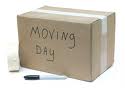
You will have to forgive my truncated blog post today as we are moving into our new house here in Melbourne. We haven’t had all our own stuff or been in our own home since May so you can imagine the state of excitement round here. My boys are dying to have all the Lego back and I think my husband is as heartily sick as I am of wearing the same repertoire of clothes.

We have made a huge lifestyle change in the house we’ve bought. Not only have we moved country but we have also moved from an essentially urban existence to a semi-rural one on the outskirts of Melbourne. We’ve all heard people say that moving can be stressful, but you don’t know how it feels until you are in this situation. With this being said, it doesn’t have to be as difficult as you thought, especially when you’ve got long distance movers who can give you a helping hand to make sure you get all your belongings there safely. Another piece of advice I have for anyone thinking about moving is to find a conveyancing solicitor in the area you are buying a house, as the communication between you both will be a lot easier, you’ll be able to meet up regularly and they’ll make sure you complete your transactions in the most effective way possible. Plus, it’s always nice knowing that you have someone on your side.

Although we have quite a bit of renovating and landscaping to do, ‘home’ now comprises two acres, a pool, a chicken run and a fire-bunker…yes, we are in a high bushfire danger zone now, so I have to come to grips with a plethora of fire fighting stuff – from water tanks and generator pumps to roof sprinklers, ladders and fire department sized hoses. Let’s hope we never need to use them (although my husband is thinking of volunteering at the local fire house so him in a fireman’s uniform could be a definite upside!)

Part of our rationale for moving back to Australia was to give our boys the kind of childhood we had – free to roam and explore – and apart from, snakes, bushfire, poisonous spiders, heat exhaustion, sunburn and broken limbs what could there possibly be to worry about?!

I’m also looking forward to writing when my outlook will be this:

So, what would be your ideal ‘outlook’ for writing be? A beach? The mountains? Skyscrapers? Or can you write just about anywhere?

I Wrote a Novel Last Month


In November, for the first time, I took the NaNoWriMo challenge. In case you still don’t know, that’s National Novel Writing Month, and it has been the subject of some controversy. See here for another rant.
Moderation, IOW, seems in short supply when NaNo comes up in conversation.
So why’d I do it?
For one thing, the timing was right. In October I turned in the first book in a new series. I was due to start outlining the second book anyway. So I thought, what the hey? Let’s try it the NaNoWriMo way. My goal was simple: see what it is like to write this way, and expect that at worst I’d know my story better by the end.
Or, maybe I’d come up with something pretty close to the actual novel I wanted.
Also, some novelist friends of mine got in on the action. The small group included both “pantsers” and “outliners,” all multi-published. I  thought it would be interesting to see how we all came out.
In the days before it began, I actually started to get jazzed, excited about just pure writing for awhile. I think the happiest days of my writing life were when I was unpublished. I was writing for the joy of it. Oh yeah, of course I wanted to be published. But there was something so free and easy about those early efforts. Maybe it was all just a delusion, but if so it was a happy one.
Over the years, writing with contracts and under deadlines, I lost a little of that joy. I never stopped loving writing. Still do. But I’m talking about the feeling I get when body surfing here in So Cal, caught up in a wave and letting it swoosh me all the way to shore.
I thought it would be cool to write with reckless abandon again, to just throw myself out there and take a risk. Usually I do a month or more of planning and outlining, and ease my way into that first draft. I finish a draft in four or five months.
NaNoWriMo was going to get one out of me in thirty days. I wanted to see what it would look like.
I made a few preparations. I looked at my daily schedule and decided to cut down on a bunch of time wasters: Net surfing, blog reading, movie watching, e-mail lingering, news shows. It’s amazing how much time creep there is in these things.
Next, I gave myself a tentative schedule. I’d write my “nifty 350” words first thing in the morning. Just get up and let my subconscious provide the material. I would leave off the previous day’s writing mid-sentence, a la Hemingway, so I could dive right in.
NaNoWriMo shoots for a 50,000 word novel.  My goal was to get to 60,000 words.
I would keep track of my novel by drafting in the stupendous program Scrivener. This would show me –– through color coding and synopses and an “outline view” –– where I was at every stage of the process. It would update me on my word count, and let me jot scene ideas wherever I wanted. And a lot of other things I won’t go into. (Except one very cool feature is you can put your page on any background photo you have. I rigged it so I was writing with the interior of my favorite diner in L.A., Langer’s, in the background. I could almost smell the hot pastrami.)
And so, on Monday, November 1, I began.
On Tuesday, November 30, I finished, with 61,587 words.
So how are those words? I don’t know yet. I’m letting the thing cool, as I advocate in my revision book, and I will actually follow the process I lay down there (yes, he practices what he preaches). But I will tell you that the central plot element, the McGuffin as Hitchcock used to say, popped up spontaneously during one scene and said, “Here I am, pal!” It was awesome. It made the book.
I think there will be many scenes that will stay pretty much as is. I’ll have some fleshing out to do, of course, but the skeleton feels solid.
Next week, I’ll tell you some of the things I learned that may be helpful to writers. But let me say to those who took issue with NaNoWriMo, what’s the beef? So long as people know they’re not first drafting a publishable novel, why would anybody be against writers doing what they’re supposed to do, write? It ain’t that easy to do a fairly coherent 50,000 word story in a month. And my proverbial hat is off especially to those who hit 50k while also holding down a day job or family responsibilities or anything like that. I do this full time. It’s quite another thing to complete the challenge with a packed schedule of other duties. To those of you who made it I say, well done!
I loved doing a novel in a month. I feel a sense of accomplishment, like I finished a 5k or endured the unedited version of Heaven’s Gate.
So I’d love to hear from anyone who gave NaNoWriMo a shot this year. How was it for you?
And those of you who had a problem with it . . . You talkin’ to me? You talkin’ to me?

And a Ho Ho Ho!

I would like to follow John Gilstrap’s heartwarming blog (you wear that tux quite well, my friend) with a comment or two about gift giving, or to be more specific, giving books, in all of the permutations in which they are available in this Christmas season 2010. The planets aligned and it struck me, once again, that we live in a wondrous age. So many choices that it might drive a person mad. But what a way to go.

I have just finished reading Autobiography of Mark Twain, Volume 1. It is the first of three planned volumes, the complete work presented as Samuel Clemens intended, right down to his request — nay, demand! — that it not see the light of day until one hundred years after his death. Dribs and drabs of it have been published before now but this is the mac daddy, right here. It is sharp, nasty, clever, astute, prescient — Clemens predicted the e-book, believe it or not — and really, really funny. There is a good laugh every paragraph or two. The folks at the U. of C. at Berkeley did a remarkable job of putting this together, especially when you consider that it was compiled from several feet of handwritten notes, transcriptions, and the like. Some reproductions of Clemens’ handwritten passages are included, and I assure you that if I had been assigned the task of herding this particular gang of cats I would be in a quiet room sipping tranquilizers and listening to Michael Hedges CDs until the end of my days. It is available for free online at www.marktwainproject.org, and in an ebook version, but hunt down a hardcover version and gift it to a bibliophile. This is a work that is meant, was born, to be held in hand (well, hands, actually,) and read the old-fashioned way.

You can gift ebooks now, in some formats, and a couple of interesting works which are ebook-only appeared this week. Marcus Wynne, long a favorite of the intelligence community which he has been a part of, has returned after too long an absence with a new stand-alone thriller entitled WITH A VENGEANCE. Wynne is painfully aware of the way in which the world works, away from the theories and hypothetical and think tanks. Marcus deals with front lines, hand to hand with the terrorists in the trenches; WITH A VENGEANCE will put you on the edge of your seat and keep you there for several hours. Some of those who read this book, pre-publication, said it was too powerful, too frightening, for the reading public. I read it two years ago and have never forgotten it, particularly the first third of it. Anyone you gift this work to will either love you forever or never forgive you. Or both.

Dave Zeltserman is one of those thriller and noir crime writers who has slowly but steadily moved from the “critically acclaimed” list the “must-read” list of mystery and thriller fans. His literary thriller The Caretaker of Lorne Field transcended genres, and will undoubtedly receive several “best of” nominations when the various and sundry literary awards start to rev up next year. Zeltserman has a new, ebook only work just out entitled Vampire Crimes, in which he cuts across genres yet again, a crime tale of the undead in which Natural Born Killers meets Near Dawn. Don’t give this one to your niece with all of the Twilight posters in her room. You could give it to her dad, however.

One of the most interesting projects of all that came across my desk last week, however, wasn’t an ebook or a hardcover, but an audio book by Jim Fusilli. It has been far too long since I’ve seen a book-length work from Fusilli, and Narrows Gate is book length, but not available as a book. It is an original work commissioned for audio by audible.com, the first to my knowledge by a single author (The Chopin Manuscript, of course, was an collaboration of many). It is part novel, part performance piece; I remember when radio dramas were still available, and if they were still in existence, they might sound something like this dark and gritty mob tale set on the mean streets of Hoboken, New Jersey in the 1940s. I don’t normally listen to audio books as I can read faster than I can listen, but this is worth making the exception for; and if you have someone who loves crime novels and audio books, they will be in your debt if you present them with this.

Your turn now. What are you giving, book-wise? And what do you wish to receive?

Christmas Traditions

By John Gilstrap

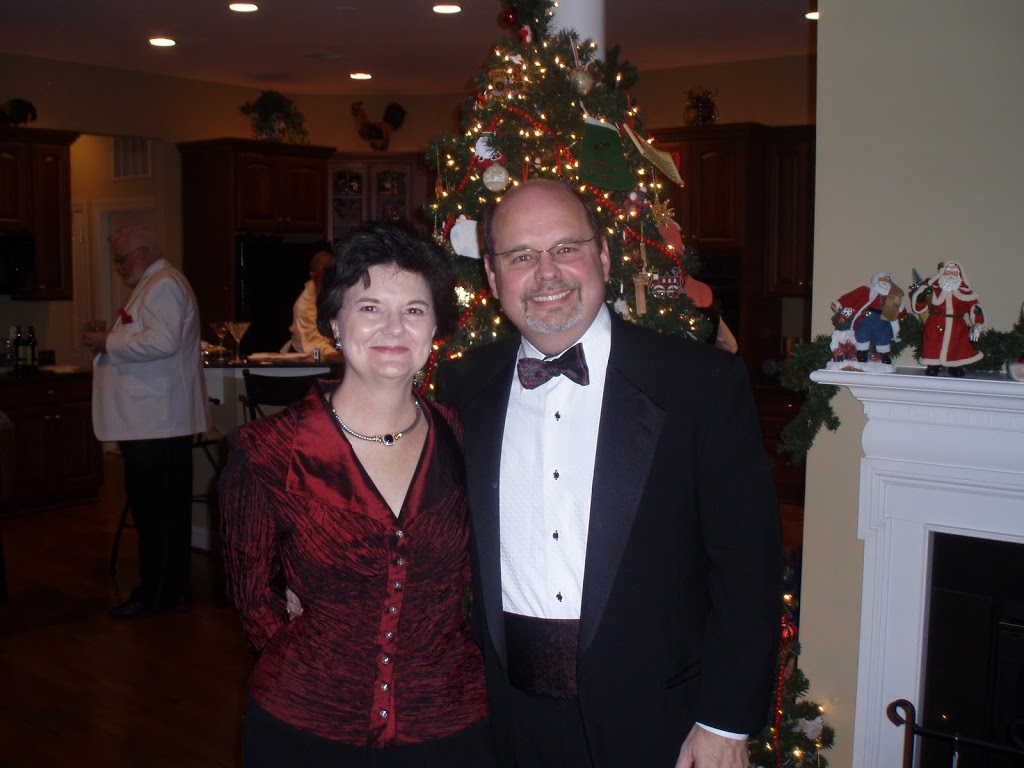
The season has begun. Forget about my “badass” photo and the thrillers I write–okay, don’t forget about the thrillers entirely–I am a softie for all things Christmas.  This is the season for giving and forgiving.  It’s the season of beautiful music, lovely sights, and for me, above all, family tradition.

Both of my parents are gone now, and I’m sorry to report that much of my extended family has become estranged over time.  Thus, it falls upon me to instill a sense of tradition upon my own son, even as the three of us build new traditions of our own.

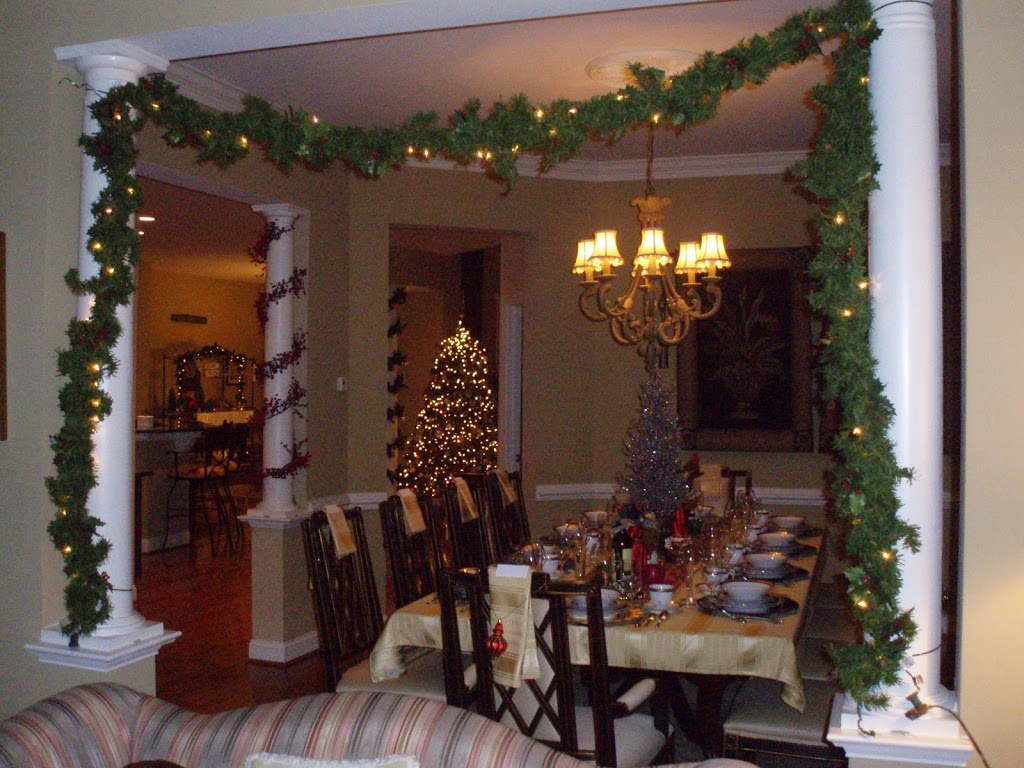
It starts with the decorations.  They go up on the day after Thanksgiving, and they come down on New Year’s Day.  Actually, in recent years, the going up part has spilled over to the following day.  The cache of ornaments has grown over the decades, but each one of them has meaning within the family.  My wife, Joy, and I both have a sampling of ornaments from our childhoods, a few of those having been passed on to us from our parents’ childhoods.  The treetop ornament from my earliest Christmas trees is now too fragile to risk at the top of the tree, and is now displayed from a candle stick.  The box we store it in is older than I am, having once carried a favorite pair of my mother’s shoes, and it’s lined on the bottom with the front pages of newspapers dated January 1 from momentous years in our family’s history.

It’s like that with more than a few decorations.  Christmastime is a journey into family lore.

It’s also a time for entertaining.  Every other year or so, we throw a black tie dinner for a few friends at our home.  This is an “on” year, in fact, and tomorrow is the big day.  I can’t wait.  We are blessed with many friends, and between Thanksgiving and New Year’s Day, we will host or attend as many as ten different holiday celebrations, from pot luck at a neighbor’s house to cocktail parties to sit-down dinners.  If I can escape the season with fewer than five pounds added to my waistline, I consider myself a model of restraint. 

Then there are the movies that must be viewed with my son.  Tonight we watched The Santa Clause starring Tim Allen.  Before the end of the season, we’ll carve out time to watch A Charlie Brown Christmas, Home Alone, and, newest to the list, The Polar Express.  The common trait shared by these films is a huge heart.  They’re all about people who love each.  Even after seeing it well over a dozen times, I still cry at the scene in Home Alone where Kevin finally talks to the old man in the church on Christmas Eve.

So, what about you, dear Killzoners?  What are your favorite Christmas traditons?  Beyond It’s A Wonderful Life (from which I need to take a continued break), am I missing any important Christmas films?  Can we all agree that George C. Scott made the best Ebeneezer Scrooge?