
I’ve been researching one’s Shadow Self for a different site, but it’s such an intriguing topic, I thought I’d share what I learned with you, as well.
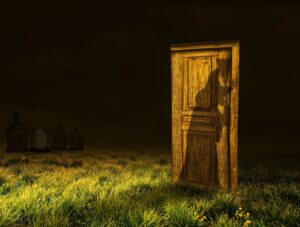
First, let’s rewind to how I landed on this topic.
The other night, I was listening to 100 Sleepy Facts About Psychology on the Sleepy Science Channel to fall asleep. Might as well learn a few things while sleeping, right? Many facts slip by me — first and foremost, my objective is to sleep — but my unconscious mind is taking notes. You never know what might resurface in the WIP.
On this particular night, I caught the narrator veer into a segment about how writers’ minds differ from others. I love brain science, evident by this post, and this one, and here, as well. Many people can’t access the unconscious mind without guidance or psychological help, but writers tap into it all the time while in the zone. It’s how we write scenes that we have no memory of writing.
I’m sure many of you have experienced this scenario…
After the first draft is complete — before or after the manuscript cools to create critical distance — you return to page one and read till the end to assess continuity. And 9.99 times out of 10, you’ll come across at least a few scenes that you don’t recall writing. If you’re a writer who regularly accesses “the zone,” you might find entire chapters that feel unfamiliar, like someone else wrote those parts.
Ever notice a recurrent theme, crime, or character type across an author’s entire body of work? The writer might not even be aware of the similarities. Consciously or not, they’re re-probing these areas to make sense of them. When our unconscious mind takes over, it’s often our most authentic writing. Hence why we often strive to reach the zone.
One’s Shadow Self lives in this space between our conscious and unconscious mind, and the zone helps us access it. Most people try to suppress their Shadow Self. Writers explore it to help us craft villains, characters we would hate in real life, and/or the ugly side of humanity.
Readers can also access their Shadow Self; they’re more self-aware than non-readers.
Fiction provides a safe, liminal space to confront repressed emotions, fears, and taboo subjects. If a reader is engaged in a storyline that evokes strong emotional reactions, like anger, envy, jealously, greed, etc., the book acts as a mirror to reveal hidden parts of the reader’s personality — parts they may not be aware of till the author forces them to face their Shadow Self.
Swiss psychiatrist Carl Jung introduced the term Shadow Self. Rodney Luster, PhD at Psychology Today said, “His perspective, however, may have taken inspiration from Austrian Neurologist Sigmund Freud, who had explored this aspect of the unconscious mind and used words like shadow, melancholia and projection to depict how people might act on repressed issues.” Luster also added:
In Jung’s disposition, he believed the shadow aspect of our self as “a thing a person has no wish to be” (Perry, 2015). He also described it as the part of our psyche containing the hidden aspects of our personality that we reject or hide from others, even ourselves. These hidden aspects often include our impulses, desires, and personal qualities that society may deem socially negative or unacceptable (Jung, 1953). Essentially then, the shadow-self is considered by many to be the darker, looming side of our personality that we are less willing to engage or recognize (Lonngi, 2024).
Shadow Theory, also coined by Jung, defines the “shadow” as the unconscious, repressed, or unacknowledged aspects of personality — both negative (anger, greed) and positive (creativity, passion) — that the conscious ego rejects. These hidden traits are often projected onto others and, if unintegrated, can dictate behavior.
Light and darkness reside within us all.
Jungian expert Robert A. Johnson, author of Owning Your Own Shadow: Understanding the Dark Side of the Psyche, added more clarification about one’s Shadow Self:
It is possible to project from the shadow the very best of oneself onto another person or situation. Our hero-worshiping capacity is pure shadow; in this case, our finest qualities are refused and laid on another. It is hard to understand, but we often refuse to bear our noble traits and instead find a shadow substitute for them…Our own healing proceeds from that overlap of what we call good and evil, light and dark. It is not that the light element alone does the healing; the place where light and dark begin to touch is where miracles arise.
So, TKZers, have you heard the term “shadow self”? If so, are you able to access it while writing?
As always, a great class in the subject of the mind, Sue. I remember one character, a sociopath, that I had avoided getting to know. At about the halfway mark, I hit a wall. I couldn’t go forward until I put myself into that character’s head. Once I understood how she thought, everything fell into place.
I encountered the same, Pat. This was the only villain I truly despised as a person, but once I slipped inside his skin and viewed the world through his eyes, at least I understood him. Still didn’t like him much, though. 😉
I have a good relationship with Shady-Me. He gives me helpful ideas when I’m describing my antagonist’s plans and motivations.
I have a good relationship with Shady-Me. He gives helpful advice when I’m describing an antagonist’s plans and motivations.
Me too, Mike. LOL
Sue, you’re singing my song. The shadow is my best writing buddy.
As a pantser, the shadow is what guides me through a plot. I don’t know where I’m going but the shadow knows what the story needs. When I’m stumped and hitting a wall, I reread from the beginning. Most of the time, I discover a breadcrumb that the shadow planted while I wasn’t looking. That little hint reveals a hidden motive or desire that’s key to understanding the antagonist/villain who’s driving the plot.
Exactly, Debbie. Those breadcrumbs also work for future books. They seem so obvious in hindsight, but while writing, the shadow self sneaks them in there.
Once again, TKZ has taught me about something I do but didn’t know its name. The Shadow Me is what makes life interesting. It makes my words worth reading. It makes me jealous of “creatives” and the worlds they create. My friend released some lighting studies from his side project. He won’t be sitting in with a jazz trio anytime soon. But His Shadow self in on the drums. OR will be in a few years.
Good point, Alan. All creatives (and people in general) should get in touch with their shadow self. As you say, it keeps life interesting! LOL
Fascinating, Sue. I knew about Jung’s shadow self, but not in the context of writer’s brain, nor in Johnson’s idea of projecting best qualities onto others, an interesting reversal of projection. Lots of food for thought. I see a potential intersection here with Acceptance Commitment Therapy (ACT) here as well, and another way to use internal beliefs and especially feelings in fiction.
The zone is vital, but I will say that as an outliner it can at times be harder, for me at least, to reach the zone because of the conscious “controlling” aspect at work with an outline. This is where letting oneself cut loose and go into the zone, map in end, ignoring it if the shadow shows a better way for this scene, chapter, or even act.
Yes, indeed, Dale! Music helps me let go of control. Without it, I’m an overthinker.
I believe Mr. Stevenson was on this in The Strange Case of Dr. Jekyll and Mr. Hyde.
While I don’t think I’ve ever forgotten a scene I wrote, I have found things “lurking” that I can expand upon, things I didn’t quite “see” upon first drafting. That’s some of the best stuff.
You’ve never forgotten a scene you wrote while in the zone, Jim? Huh. I thought all writers experienced this. Go figure. And yes, I agree the “lurking” is the best stuff.
If I can call my “shadow self” that part of me who peeks in the windows and lurks in the corners of my brain, trying to figure out why I’m (the MC) doing what I’m doing, then yes, I’m acquainted with her.
Accessing my Shadow happens, I think, without my conscious knowledge.
😱😶🌫️
Yes, it does, Deb. Like your description better! LOL