Size Matters

by Michelle Gagnon

burritoA confession: I’m not a big short story reader. I’ve gone through phases where I was on a Chandler or Munro kick, but by and large I tend to read novels. Recently I’ve been judging a short story contest, however, and it’s been an interesting experience. What I’ve discovered is that when it comes to crime fiction, the short story format is apparently a trickier beast to wrestle down.

The stories that fail appear to fall into a few categories (food-related; humor me):

  • The Grande Burrito: The author crammed it all in, and what could have been expanded into a full manuscript has been abridged. These stories tend to open with some lovely lyrical passages before morphing into a rapid-fire ending that usually involves an information dump on the final page. In these cases, I get the sense that the writer bit off more than they could chew. Rather than focusing on a smaller, self-contained story, their scope was too broad and it ended up being a hot mess.
  • The Chinese Food Syndrome. The opposite problem: these stories left me wanting more. Not enough happened, or the scope was too small. The best short stories are self-contained, hewn down to the bare essentials, and when you turn the last page you find yourself fully satisfied. You’ve been told just what you need to know, and everything was resolved in a way that was satisfying. The perfect dessert, if you will.
  • The Pancake: Everything is flat. Two-dimensional characters whose motivation is never clear, a plot that doesn’t make sense, nothing seems to gel. You don’t need much to describe a character; the best writers can do it in a sentence. So for me to go through an entire story and come away with no sencarverse of the characters is inexcusable. One of my all-time favorite stories is “Cathedral” by Raymond Carver:
    • This blind man, feature this, he was wearing a full beard! A beard on a blind man! Too much, I say.

That one passage not only describes the blind man, it also speaks volumes about the main character, telling you everything you need to know to make the final passage of the story transcendent.

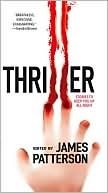
  • The Filler: Like a hamburger without the bun. These stories invariably involve characters from a recurring series. Ideally, these stores should offer another perspective on them and their actions, whetting your appetite enough to draw you into following them for a full book (or ten). But far too often Thrillerthese are an ad masquerading as a story. I love vignettes told from the point of view of a different character in the book (Rosencrantz and Guildenstern are Dead is a favorite of mine). Our own Clare did this recently, as did J.A. Konrath and Lee Child in the Thriller Anthology. For me, those stories work. Less appealing is something that’s clearly excerpted from a book.
Mind you, many of the stories I loved, and all for different reasons. Most offered a glimpse of characters at a crossroad. The story depicts a flash from their lives when the crime they encounter, whether expected or unexpected, defines them in just a few short pages. A standoff in a drugstore, or a murder in an alley. Not that it has to take place in a short time frame, but by and large I don’t need to see their entire lives, and I really don’t enjoy a Christie-style parlor room “this is what happened” scene at the end. Just give it to me straight.

So what do you think makes a strong short story? And is it a tougher format for crime fiction?

Detours on the way to publication

By Joe Moore

You’re writing a novel. Maybe you’ve even finished it. Congratulations. The hard part is over, right?

Wrong.

detour1Now comes hard part #2: getting ready to sell it to a publisher. Even before you start your search, there are some basic concepts you should research first. They can prove to be costly detours on your way to finding an agent and editor if you don’t. Having the correct information by doing your homework can make for a smoother journey to publication.

First, you need to define your audience. It’s important that you know what type of person or group will go out of their way to find and pay to read your book. What are the characteristics of your target reader such as their age, sex, education, ethnic, etc. Is there a common theme, topic or category that ties them together? And even more important, what is the size of your target audience?

For instance, if your book is a paranormal romance set in the future in which the main characters are all teenagers, is there a group that buys lots of your type of book? If not, you might need to adjust the content to appeal to a broader audience. Change the age of the characters or shift the story to present day or another time period. If your research proves that a large number of readers buy books that fall into that category, making the adjustment now could save you a boatload of frustration later.

Next, you need to define your competition. Who are you going up against? If your book falls into a specialized sub-genre dominated by a few other writers, you might have a hard time convincing a publisher that the world needs one more writer in that niche.

The opposite problem may occur if your genre is a really broad one such as cozy mysteries or romance. You’re going to have to put a unique, special spin on your book to break it out of the pack. Or accept the fact that the genre and your competition is a wide river of writers, and you only hope to jump in and go with the current. Either way, make the decision now, not later.

The next issue to consider is what makes your book different from all the others in your genre. Do your homework to determine what are the characteristics of books that your potential audience loves. This can be done online in the dozens of Internet writer and reader forums. And you can also do the research by discussing the question with librarians and books sellers. Once you know the answers, improve on what your target audience loves and avoid what they don’t.

Just keep in mind that you can’t time the market. The moment you sign a publishing contract, you’re still 12-18 months behind what’s on the new release table right now.

Another detail to consider in advance is deciding how you’ll market and promote your book. Sadly, this burden has fallen almost totally on the shoulders of the author and has virtually disappeared from the responsibilities of the publisher. Start forming an action plan including setting up a presence on the Internet in the form of a website and/or blog. Also, is there a way to tie in your theme to a particular industry? How can you promote directly to your audience? For instance, if your romance novel revolves around a sleuth who solves crimes while on tour as a golf pro, would it be advantageous to have a book promotion booth at golf industry tradeshows? If your protagonist is a computer nerd, should you be doing signings at electronics shows? How about setting up a signing at a Best Buy or CompUSA? Follow the obvious tie-ins to find your target audience.

Writing is hard work. So is determining your target audience and then promoting and marketing to them. Like any other manufacturing company, you are manufacturing a product. Doing your homework first will help avoid needless detours on the way to publication.

Are there any other speed bumps and detours that you can suggest avoiding that could cause writers to stumble while trying to get their books published?

~~~~~~~~~~~~~~~~~~~~~~~~~~~~~~~~~~

CALENDAR OF UPCOMING GUESTS

Mark your calendar for the following guest bloggers at the Kill Zone:

Cara Black, March 8
Robert Gregory Browne, March 15
Neil Plakcy, March 22
Liz Jasper, March 29

TARP times, hard times, a ring of death

The national economic meltdown was brought home to me this week. Uncharacteristically, my local Big Bank put a seven-day hold on a large out-of-state check I wanted to deposit.

Seven business days? Big Bank had never done that to me before. Those bastards. That meant it would be a week and a half before I could use my funds. So in a fit of financially ill-advised pique, I snatched back my check.Then I set off with the goal of finding a Cash America, or a Paycheck America, or wherever it is America goes these days to get a check cashed instantly (for a fee, of course).

As it turns out, none of those places are located near where I live, which is by the beach in Southern California. They are all, shall we say, inland.

I finally located a check cashing place. Inside the sterile-looking, cheerless lobby, the clerks were sequestered behind bulletproof Plexiglass. While I was waiting for my paperwork to be approved, I noticed a small coffee can on the counter. It had a picture of a man and two young girls on it. “Help the Masons”, the can said. “Every penny counts.”

“Who are the Masons?” I asked the clerk.

Mason was their coworker, she explained. He’d been gunned down in the parking lot. Five bullets. Now he was paralyzed from the waist down. He’d been raising those two little girls by himself, and now… her voice trailed off.

“The streets right around here are real bad,” she said, then named four streets, gesturing with her hands. “It’s like a shooting circle. Things are getting worse. Everyone around here’s out of work. Everything’s bad.”

I asked some more questions about Mason. He has no health insurance. Pretty soon, he’ll probably get kicked out of the rehabilitation facility he’s been recovering in. Right now his mother is in town from Wisconsin, looking after the little girls. After that, no one’s sure what will happen.

I shoved five bucks into the donation jar.

As I drove away from the check-cashing store in my “rob me” Z4, I pondered a sense of unease has settled over my hometown of Los Angeles. People are losing their jobs, all over. I read last weekend that the unemployment rate in this city is over ten percent. It seems to be getting worse by the week.

In the immediate wake of hard times like the ones we’re having right now, the circles of violence like the one that swept up Mr. Mason inevitably grow and invade into new territory. There was much wringing of hands in my beach city community recently about a string of robberies that had been committed by perpetrators from–quote–outside the community. In my own postage-stamp-sized town, we’ve started to have home invasion robberies. I used to worry about frat boys stumbling up from the bars on Pier Avenue at 2 a.m. on Saturday night. Now I’m worried about desperados seeking cash.

And violence is only the dark underbelly of the recession/depression/liverwurst, whatever it is we’ve got on our hands. Little stores are closing all around in my community, one after another.

What about you? Where you live, do you see any visible signs of economic hard times? Does it make you nervous? Do the incidents that take place around you impact or inform your writing?

Getting Inside a Character’s Head

by Clare Langley-Hawthorne

I have just finished the first part of an online short story I’m posting on my website which requires a change of perspective. Both Consequences of Sin and The Serpent and The Scorpion incorporated a distinctly Ursula-esque POV but in the new story I have delved inside the head of another character – namely Lord Wrotham – which has opened up all sorts of possibilities (I can’t help but grin as I write that).

It does, however, also raise some challenges which go to the very heart of character development. You see I have only ever viewed him the way Ursula views him. Although I know his background (I created it after all), in many ways he’s as much of a mystery to me as he is to Ursula. Hence the fun in writing the story…and for those of you who have read The Serpent and The Scorpion, the story also offers some tantalizing clues as to what led to his arrest…

When I develop characters some of them appear pretty much fully formed in my head, whereas others take a while to ‘ferment’, as I ponder their past and what has made them who they are. Now I know many writers take offence at the prospect of characters doing unexpected things (aren’t we the ones in control after all?!) but I do find that many times my characters start behaving in ways I never intended – in a way rewriting themselves as the book progresses. For me, that’s all part of the fun of character discovery and development.

So how do writers flesh out their characters and what did it take for me to write this story from another character’s perspective?…You’d think it would be a methodical, well-organized process but instead I found myself:

  1. Rummaging through my old electronic files for the backgrounder I developed for Lord Wrotham then realizing that as I wrote both Consequences of Sin and The Serpent and The Scorpion I basically discarded most of it and reinvented him as I went along (bugger!!)
  2. Rewriting the bloody backgrounder from scratch only to find a couple of minor characters unexpectedly popping up in his past (Bugger! Bugger!) which meant I had to take a closer look at them as well
  3. As I am also working on the third Ursula Marlow book, Unlikely Traitors, I then sifted through that draft manuscript to check his story and then started playing the ‘what if’ game….(triple bugger, No!!!)

So what happened at the end of this process? Well, I decided I liked pottering around in Lord Wrotham’s head…In fact, I was discovering he was one complicated sexy man…then my husband stopped talking to me.

I guess that’s what happens when characters take over.

So how do you approach character development – are you better organized than me? Do you have it all figured out? Or do your characters, just occasionally, take you by surprise? Are there any writers whose characters you wish they would explore more – characters you wish you could get inside their head and have a bit of a rummage?

Fangs for the Easy Listening Jazz

At my first Thrillerfest in New York, I was perusing the table in the booksellers’ room when this juicy title caught my eye: X-Rated Blood Suckers, with a cover that was strikingly reminiscent of a 70s Grindhouse flick. In my opinion Mario Acevedo has, hands down, the best titles and covers in the biz. (He also has the best book trailer, see it here). And his stories, featuring vampire detective Felix Gomez, deliver all the fun and excitement those covers promise. The Kill Zone is thrilled to have him join us today for a walk on the wild side of thrillers: paranormals and the supernatural.

by Mario Acevedo

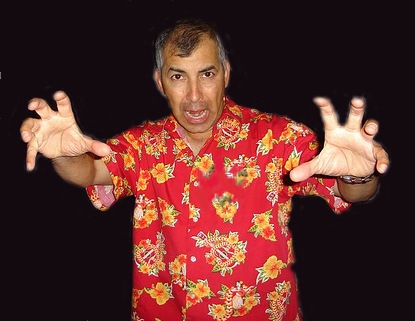
While I’m known for my vampire-detective stories, I like to think of myself as a mystery writer. What I like about the mysteMarioVampiroEditry genre is that there is no equivocation about the story question. We know what’s at risk and what motivates the protagonist. Saving his ass!

In mystery stories we writers can wallow in the dark underbelly of society and call it research.

We love asking questions such as:

“What’s the best poison given these circumstances?”

“Where’s a good place to hit a skull with a sledgehammer?”

“How can I use cross-dressing autoerotic asphyxiation as a plot device?”

At mystery writer meetings we can sit through dinner when the presentation is a medical examiner’s PowerPoint of autopsies. “May I have another slice of cheesecake and could you go back to the picture of blood spatter on the headboard?”

We can say with a straight face, “Honest Mr. Police Officer, I was only asking the price of a blow job from this woman as research. I need authentic details.”

JailbaitZombieEnhanced_TN In mystery literature we can show the complex relationships between characters. Lying. Infidelity. Betrayal. And that’s among the good guys. We can play with the motives for crime: Jealousy. Lust. Greed. We explore lives ruined by humiliation and murder. That’s entertainment!

In any novel, what keeps a reader turning pages is tension and conflict. And no genre does tension and conflict better than a good mystery. What keener source of tension than begging for your life while at the wrong end of a gun?

Since I write vampire-detective mysteries, I have to layer in the supernatural elements. Until recently, vampires were the monsters fanging humans, an act that resulted in murder, or at least assault and battery. Now vampires are the good guys and we could have them be all nice and not drink human blood (or worse, go vegan), in which case, what’s the point of being an undead bloodsucker? My challenge is weaving the supernatural with the gritty noir of a mystery.

The keys to a mystery are the committing of a crime and the threat of a bigger crime if the hero doesn’t persevere. But a crime according to who? A werewolf gnawing on your dismembered torso doesn’t regard himself a criminal anymore than does a senator whoring himself to the rich. It’s simply his nature.

So while supernatural beings might disregard human laws at will, they must abide by their own code of conduct. What are the no-no’s? Zombies don’t regard noshing on human brains as murder so what would be considered taboo for revenants? Perhaps you can only eat Catholics on Fridays.

In supernatural mysteries we have a strong story question that braids the natural and the supernatural. Our hero must solve a crime affecting not just one world but two. It can be a mystery we can all love to read.

So here’s a question: if you created a paranormal character, what would their special power be? And what would they fear? Garlic, water, easy-listening jazz?

Mario Acevedo writes the Felix Gomez vampire-detective series for Eos HarperCollins. Mario travels the astral plane (using frequent flyer miles) to research the world of vampires, zombies, and alien gangsters. He lives and writes in Denver, CO.

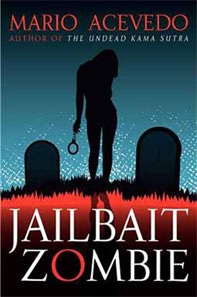
Check out book 4 in the Felix Gomez vampire-detective series: Jailbait Zombie (Eos HarperCollins). Vampires vs zombies in the ultimate undead smackdown. Available Feb 25 at better bookstores everywhere.

SPECIAL BONUS! You can download a copy of my first book, The Nymphos of Rocky Flats, through Feb 24 by clicking here

If you Don’t Have Time For Your Fans, Do You Deserve Them?

By John Ramsey Miller

We need our fans and readers because they buy our books and not just because without their purchases we’d be negatively impacted financially. A lot of authors say they only owe their readers the best book they can write and nothing else. To a lot of authors, a book sale is merely an arm’s length business transaction. Other authors go out of their way to get close to their fans, surrounding themselves with their readers at every opportunity. I know some authors who see their fan clubs as being their immediate family. And some authors will go out of their way to avoid having their fans be able to get in touch with them.

I appreciate my readers and the fans of my books. Fans are readers who read every book I write. I’d love to have a few million fans who couldn’t live without my next book. The majority of the e-mails I get from readers say they enjoyed one of my books, or are asking when a new book is coming out. I can and do answer every e-mail I get. I guess a lot of authors are afraid they’ll get so many e-mails they can’t address them all without spending hours doing so, that they make themselves very difficult to get in touch with.

See, I think being reasonably accessible to readers and fans is good for one’s career. I don’t see my readers as nuisances, instead as individuals worthy of my attention.

Web sites are sales tools, and they should promote authors, but the best ones do more than that. I think a writer’s web site should have a way for readers to contact the author. Not having that feature seems arrogant to me. I think some authors see being hard to get in touch with creates a mystique, but I don’t think it does. I always smile at the way some authors listed in the “members registries” of professional organizations have their agents phone number as the way to contact them, which I think is a waste of an agent’s time. I guess if you are making your agent enough money they might be happy to become your answering service. My agent would not be at all amused.

Every very, very, busy author I know has a private e-mail address and a business e-mail address. I have four e-mail addresses. One I’ve had for fifteen years and is my “private” box. I have one connected to my web site, which goes directly into my private site. I have another one for my corporation, Burning Rabbit, LLC., and I have a G-mail one for getting into this blog site. I check e-mails when I’m at the computer. I give anybody reading this blog permission to drop me an e-mail any time they like. It may take time to respond, if I’m busy, but I will reply.

I have a busy life aside from writing, and a wonderful family and good friends, dogs and chickens all of which require time. But I want my readers to be able to at least send me messages, to ask me questions related to my books or about writing in general.

Although I might not “owe” a reader anything beyond my book, I think communicating with the people who invest time and money in my stories, and go to the trouble to write me a note is the least I can do. Just don’t come to my house without e-mailing ahead, or better yet, calling. I’m in the book.

Literary Snobs & Commercial Sellouts

By John Gilstrap
http://www.johngilstrap.com

I’m getting a little panicky. Tomorrow (Saturday), I am moderating a panel at George Mason University in Fairfax, VA, called Literary Snobs & Commercial Sellouts, an exploration of the truths and truisms of the prejudice we all have felt at one time or another.

I’m one of those people who takes moderating responsibilities pretty seriously, so as I gather research for the panel (two genre authors and one literary author), I’m finding this all to be much more difficult than I had expected. Defining genres is fairly easy. You’ve got your mysteries, your thrillers, you romances and on and on, each with their expected constructs. Okay, I get that. Sure, there are some exceptions to the rules and some crossover authors, but basically genre is, well, genre.

So, what the heck is literary? I talked to my agent today to bounce my thoughts around and hypothesized that perhaps “literary” could be defined as absence of genre. No, she said, that would be “mainstream.” Literary is something else. Unfortunately, she wasn’t a lot of help when it came to putting a finger on a useful definition of that other something.

Some who post on the Internet posit that while a commercial novel stresses plot, a literary novel stresses other-than-plot. Okay, then explain how Harper Lee or even J.D. Salinger can be considered “literary.”

There are lots of throw-away insulting definitions of “literary,” but those aren’t useful to me in my hour of need. Seriously, what makes the difference? Is it merely a matter of personal taste? Surely it has to be something more that merely “well-written,” because most books fall within a ring or two of that bull’s eye.

If a book fails to move me, can it still be “literary”? If a book does move me, can it be anything but? All input is desperately welcome.

Are you here for the conference?

by Michelle Gagnonconference

Until I received an invite to Bouchercon, I had no idea conferences like that even existed (and until relatively recently, I had no idea how to properly pronounce Bouchercon, either, as it turns out. I have to stop myself from French-ifying it).

How cool, I thought- the opportunity to meet some of my favorite authors and discuss their books with like-minded fans. When I joined some of the online mystery groups and found out that not only could I attend, but I might even be asked to serve on a panel, it was downright mind-boggling. So the year my debut thriller was released, I devoted most of my marketing budget to conference fees, flying everywhere from Anchorage to New York.

Was it worth it?

Well, I had a great time, that’s for sure. The camaraderie at these conferences is fantastic- where else could I spend a night kicking back with Jeffery Deaver and Harlan Coben? But after two years of attending as many as I could afford, I’ve developed some basic parameters:

  • Cost and release dates: My last two books had summer releases: great for conferences, since most of the big ones occur between March and October and they’re clustered in the summer months (I always think of Bouchercon as closing out conference season). THE GATEKEEPER will be released in November, so I’m cutting back dramatically on what I attend since I’ll just end up pitching BONEYARD to people, many of whom already heard about it last year. Cost is always an issue- even if the conference fee isn’t very expensive, once you factor in all the ancillary costs (travel, hotel, etc), each conference runs me at least a grand. And that adds up quickly. Which leads to…

  • What do I hope to get out of it? Mind you, I love hanging out with fellow writers and fans, but it’s hard to justify spending a thousand dollars over a weekend to do that (especially in this economy). So ideally, I hope to get on at least one good panel, and to network with people I haven’t met yet. There’s always a lot of debate on the lists about which conferences are worth attending, and I’m certain that everyone has a different experience. You might sell more books at smaller regional ones where you’re one of a handful of authors, whereas at larger conferences you might get lost in the shuffle. Yet at those big conferences there’s an opportunity to meet domestic and foreign editors, booksellers, and agents, and to get your name out to a larger cross-section of mystery fans.And sometimes the regional conferences are skewed toward local authors, so if you’re not from the area, you might find yourself relegated to the panel on bug detectives (not a well-attended one, in my experience). So it largely depends on what your career goals are at that given moment. Personally, I’m doing the same thing with conference attendance that I do with my financial portfolio: spreading it out between smaller conferences like Left Coast Crime (they had me at “Hawaii”) and big ones like Bouchercon (which I always seem to get a lot out of).

  • Is it a fan conference, or a writing one? Not that writers aren’t fans- we all are, obviously. But some conferences specialize in helping new authors hone their craft and pitch agents- which is invaluable for them, but I’ve discovered that at those conferences, I spend most of my time dodging requests to pass a manuscript on to my agent. I’d much rather go to a true fan conference, where most of the attendees are readers who want to meet their favorite bestselling authors, and who might be persuaded to try a new one as well.

  • Which genre does the conference emphasize? I’ve gone to a few romance conferences, and so far haven’t had much luck with those (although I know my friend Alex Sokoloff has had a much more positive experience). For me, going to RWA felt like starting over again; I didn’t know the lingo, and since romance isn’t a major component of my books, I drew a lot of blank stares. I’m considering giving Romantic Times a shot when it lands a bit closer to home, but flying to Orlando isn’t a possibility for me this April.

Even though I’m cutting back, as of right now I plan on attending Left Coast Crime, LA Times Festival of Books (a cheap flight, and I can stay with friends), Book Passage (local, and no conference fee), and Bouchercon. I’m on the fence about Thrillerfest, since NY is just so darn expensive, and I’m skipping BEA since my ARCs won’t be ready yet. Also, no Edgars for me, sadly, or Sleuthfest (I could really use a trip to Florida, too. Oh well).

On the plus side, this leaves my summer largely free. But I have to wonder what poor Harlan and Jeffery will do without me. So my question for the day is: are you going to any conferences? Which ones, and why?

Tool Guy wants to know: What writing software do you use?

After Clare’s lovely dreamweaver post yesterday, I thought I’d slam us down to earth with some Tool-Guy talk (okay, so I’m a Tool Gal, but honestly. who bothers to check under the belt?).

In my own writing, up until now I have been a fan of a little program called ProsePro. It’s cheap, it plugs into Word, and best of all, it auto-formats my chapter headings, page and chapter numbers so that I don’t have to deal with them. ProsePro has few bells and whistles other than that, but I never cared.

But then in one of my Yahoo groups, someone happened to mention a program called Liquid Story Binder.

Oh. My. God.

I’ve been playing around with this new program, and I’ve discovered so many new bells and whistles that I’ve become a veritable one-woman marching band. Liquid Story Binder has got timelines. It’s got planners. And outline makers. And…and things I haven’t even discovered yet.

Yes folks, I’m in writing Nirvana.

But here’s the thing. My new infatuation with Liquid Story Binder has given me a Hugh Hefner-type roving eye for other software programs that might be out there, waiting to help me plumb the depths of the next great American Thriller Bestseller.

So I’m wondering: What writing software do you use? What is the one feature in that software that you cannot–would not–live without?

The stuff dreams are made of

by Clare Langley-Hawthorne

I’m typing this as I watch the Oscars (one of my guilty pleasures) and, as always, I spend most of my time as a sofa-fashionista criticizing the gowns without much thought for the movies. Of course with twin 4 year olds I haven’t seen any of the movies anyway – except for Wall-E (multiple times)…More importantly though, I love how the Oscars always make me believe, at least for one night, that dreams are possible…so I dedicate this blog post to those absolutely ridiculous unattainable dreams that keep us all going. In the spirit of the Oscars I have created my own mock awards and I hope you will make me feel less of a loser and add your own nominations and your own crazy dreams.

Best actor in a dream: My husband still wonders where the hell the fictitious Lord Wrotham came from and I have to confess I do (pathetically) cast my own books as movies…so here’s to Jeremy Northam, Richard Armitage and Colin Firth – if you were all rolled into one and cast in my movie then two of my dreams would come true (to have my books on screen and to have the best, most repressed, hero ever)

Best supporting dream: To be on the cover of Vanity Fair – Hell to be on any page of Vanity Fair…

Best original dreamplay: Act 1: Scene 1: Author opens the Sunday edition of the New York Times and pulls out the book review to the bestseller list. Camera pans to mass pandemonium in the streets.

Best animated dream: To see the Earth from space. This is the reason I push my boys to be obsessed with space travel – and why we have seen Wall-E hundreds of times…(Yay for that Oscar!)

So what are your most outlandish dreams? Go on dress them up in Armani or Valentino and share them with the blog world…or at least with me:)