Our guest today is New York Times bestselling author, Steve Berry. Steve’s books have been sold in 49 countries and 39 languages with over 8 million copies in print. His novels include The Amber Room, The Romanov Prophecy, The Third Secret, The Templar Legacy, The Alexandria Link, The Venetian Betrayal, and his latest, The Charlemagne Pursuit. His next thriller, The Paris Vendetta, will be available December 2009. In addition to writing novels, Steve serves on the International Thriller Writers board of directors as co-president.
By Steve Berry
 Over the past six years I’ve been asked countless times by the press, fans, and friends about The Da Vinci Code. It’s a natural question since my stories are constantly compared to it. Dan Brown even provided a wonderful blurb for my first novel, The Amber Room, (calling it “sexy, illuminating, and confident . . . my kind of thriller”). I still like reading that comment from time to time.
Dan achieved what every writer dreams about. He wrote a story that utterly captured the imagination. One of those tales that rang with a sense of originality. Remember all the press. The hype. The talk. The buzz. It was amazing. People flocked into stores and bought The Da Vinci Code by the millions. The result? A guy who barely existed after his first three novels, was catapulted into a worldwide household name. Eventually, non-fiction books, more fiction, television shows, games, memorabilia, a movie, you name it, and that book spawned it.
 But that will not be Dan’s legacy.
Nope.
What he did is bigger than all that.
Dan will be remembered for bringing a genre back to life.
Here’s reality: When the Cold War ended in 1990, the traditional, tried-and-true-good-old-fashioned-spy-thriller died. By 1995 the genre was virtually gone. By 2002 editors simply weren’t buying, and people weren’t reading, spy thrillers. Sure, if you were Cussler, Follett, Ludlum, and Forsyth you were okay. Those long standing audiences were fully developed and totally assured. But if you were anyone else, especially a rookie trying to break in, times were tough. During the 1990s my agent submitted 5 separate thrillers to New York houses. They were rejected a total of 85 times.
Then, in March 2003, the world changed.
That was when The Da Vinci Code was released.
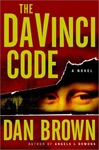 For the next 36 months The Da Vinci Code was either #1, 2, or 3 on The New York Times bestseller list, mostly in the #1 slot. On every other American bestseller list the story was the same, as was the case from around the world. Few books can claim such a feat. A genre that what was once called ‘spy thriller,’ re-emerged as the international suspense thriller, a blend of history, secrets, conspiracy, action, and adventure.
Just exactly what I, and many others, happen to be writing.
Many of us received our chance to find an audience thanks to what Dan Brown and Doubleday did in releasing The Da Vinci Code. Thrillers were hot once again. Hundreds of new books appeared. The resurrection led, in no small measure, in 2004, to the creation of International Thriller Writers, an organization now of over 1000 working thriller writers.
Happy days were here again.
Every few years a book comes along that literally changes things. Stephen King’s Carrie. David Morrell’s First Blood. Scott Turow’s Presumed Innocent. John Grisham’s The Firm. Those books fundamentally altered their genres. They also opened up opportunities that, before them, did not exist for others.
The Da Vinci Code is such a book too.
I tell the story that every time I pass a copy I stop and bow. Perhaps that’s an over-dramatization but, in my mind, I always utter a silent thanks. Maybe I would have made it to print one day. Maybe not. All I know is that I did make it in 2003 thanks to Dan Brown, Doubleday, and The DaVinci Code.
In September, The Lost Symbol will be released. This time Dan and Doubleday will not just resurrect a genre, they could well revive an industry. Book sales have been decreasing over the past two years. Print runs are down. Re-orders are slow. Backstock is disappearing. Already, bookstores and booksellers are salivating at the prospects this fall offers. People will, without question, return to the stores. Books will be sold, and not just Dan’s. The ripple affect will be huge. Everyone’s bottom line will be positively affected. This is precisely what the publishing industry needs. The Lost Symbol will certainly debut at #1 and remain there for many months, if not years. Already it is the single largest first printing in Random House history (5,000,000), but my guess is that number will increase before the fall.
Welcome back, Dan.
For the past six years, many a prince has fought over your throne. Several have laid claim, but none emerged to take your place.
Now they all must move aside.
The king is back.
May his reign be long and prosperous.
So what do you think? What effect will Dan Brown’s new thriller have on the publishing industry? Will it surpass The Da Vinci Code?
~~~~~~~~~~~~~~~~~~~~
Coming Sunday, June 21, Paul Kemprecos tells us what it’s like to collaborate with Clive Cussler. And future Sunday guest bloggers include Robert Liparulo, Linda Fairstein, Julie Kramer, Grant Blackwood, and more.