Regrets, I have but few…

by Clare Langley-Hawthorne

My husband and I went and saw the inimitable Jackson Browne last week and it’s put me in a reflective frame of mind. Of course, the fact that Tim and I were some of the youngest fans in the audience didn’t help – but Jackson Browne has provided a very strange soundtrack to our lives. When I first met my husband he had one of those early cool portable CD players (hey, it was only 1987!) but to say I was aghast at his CD collection would be an understatement – I mean who else had The Eagles, Fleetwood Mac and Jackson Browne alongside Madonna? My tastes ran to New Order, the Violent Femmes and The Smiths so I was literally gobsmacked. I grew, however, to love Jackson Browne (The Eagles I’m afraid had to go…) and my husband’s love of his music provided new insight into him – who knew the preppy guy had an angst ridden 1970’s soul?
The concert has made me think about the nature of regret. I have to admit, even as I face down the dreaded four-zero in a few months, I don’t really have many regrets at all – and the ones I do seem pretty trivial in the context of my life. I certainly wish I had pursued my dream of being a writer earlier – but then I wouldn’t be the writer that I am now. I’m a strong believer that you stumble upon your own path – and I’m supremely grateful of the path I managed to find.
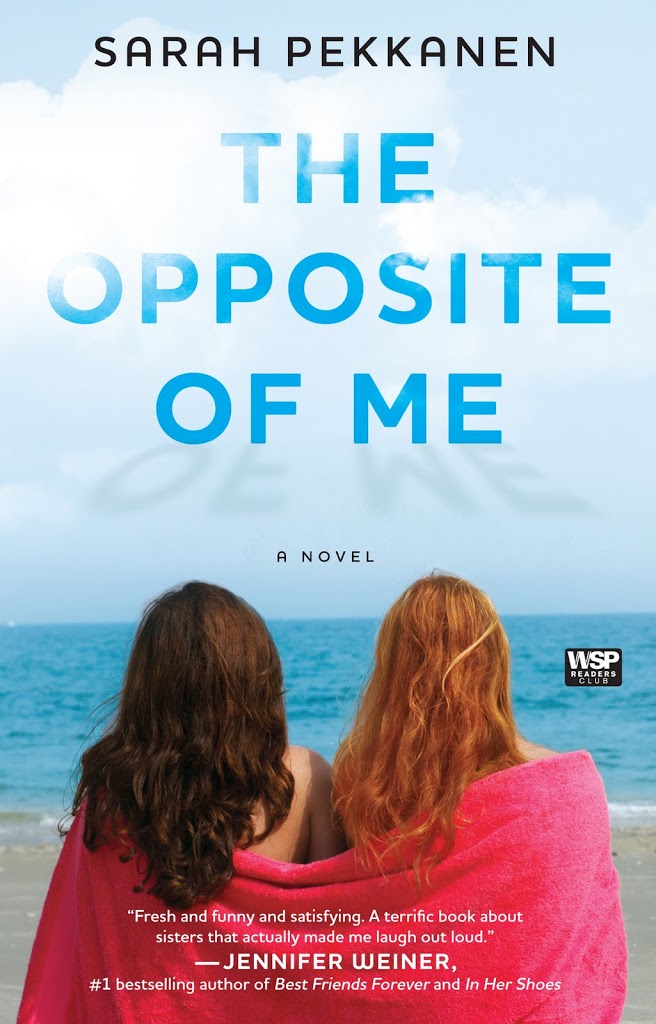
That being said, I do wish I’d been more savvy about the publishing industry when my first book came out. I would have definitely fought harder to change the cover for the hardback of Consequences of Sin (see exhibit A, on right). Although the paperback cover is fabulous (see exhibit B, on left) I still think the cover for the hardback irrevocably hurt sales and may have doomed me to Barnes & Noble (not to mention publishing) purgatory…

But it’s hard to have a clue when you’re first starting out – right??

I’m sure in a few years I’ll no doubt wish I had known now what I will know then, but I’m not going to lose any sleep over regrets (it is pretty pointless, after all), but regret, as Jackson Browne so often writes and sings about, is an important emotion. It is one that defines and shapes us, and when creating characters I think it’s important to explore not only their loves, hopes, and fears but also their regrets. In many ways our behavior is guided by regret in subtle but crucial ways – and I love getting under the skin of my characters in this way.

So what (if any) regrets do you have regarding your writing? Do your characters carry some of those same regrets? Do they have an angst ridden soundtrack to their lives or are they at peace with the path they (or rather you, as a writer) have chosen for them…?

What’s in a Name?

by James Scott Bell

Mystery writers everywhere honor the name of that master detective, Sherrinford Holmes, and his good friend, Ormond Sacker.

Or not.

And what about that great heroine of the Civil War South, Pansy O’Hara? Remember her?

Of course you don’t. Because Margaret Mitchell thankfully scotched it after briefly considering it for her lead in Gone With the Wind. Props also to Sir Arthur Conan Doyle for choosing Sherlock Holmes and Dr. John Watson, after toying with those other names.

The name of a Lead character, especially one who will be the star of a series, is not to be randomly selected. Sherlock Holmes is perfect. (Doyle admired Oliver Wendell Holmes, Jr.; Sherlock may have been the name of Doyle’s favorite cricket batsman). And Scarlett is just right for Miss O’Hara.

Travis McGee, the popular creation of John D. MacDonald, has a sound like the character himself–living on a houseboat, few cares in the world, hard when he needs to be.

Could any gumshoe be tougher than Sam Spade?

Ignatius J. Reilly and Myrna Minkoff definitely belong in John Kennedy Toole’s oddly structured comic novel, A Confederacy of Dunces.

And so it goes, with other names like: Winter Massey, Kate Gallagher, Cotten Stone, Ursula Marlow, Jonathan Grave and Kelly Jones.

Good, solid monikers all. I wonder what the naming process was for the creators of these characters? Perhaps they’ll share it with us.

Here is what went into naming my own series character, Ty Buchanan, whose latest appearance is in Try Fear.

Tyler is from Fight Club. Tyler Durden (played by Brad Pitt in the film) is primal, nihilistic, violent. In Try Dying, the first book in my series, Ty Buchanan has to contend with similar feelings as his world is turned upside down. An up-and-coming lawyer in LA, Ty has it all. But his fiancée is killed (on page 1) and when he goes looking for answers, he’s forced into a street existence that both engenders and requires a hard-edged response.

Buchanan is from a favorite Western of mine, Buchanan Rides Alone (1958, dir. Budd Boetticher), starring the iconic Randolph Scott. He is, in the best western tradition, an anti-hero and loner, but with a strong inner code of honor. He doesn’t look for trouble, but when it finds him, he fights. And he always displays an insouciant good humor.

I wanted these two dynamics to play out within Ty Buchanan. They provide counterpoint and inner conflict, as the Buchanan side is often at odds with the Durden aspect. Thus, the name.

So, writer, how did you choose names for your Lead characters? Is it more than a sound for you? Is there a deeper meaning you look for? Or do you just run your finger down the white pages of a phone book?

And you, reader, what names come to your mind when you think of memorable literary heroes?

The Blurb Request.

John Ramsey Miller

One of the perks of being a published author is that authors and publishers will ask you for blurbs. Some are gems and writing a blurb is a pleasure, and you get to see and understand how difficult it is to write a great blurb that will do the book justice. Flip the coin.

Sometimes you eat the bear…

This week I received a book from an editor at Delacorte asking for my opinion on a book she edited that is being published in January 2010. I read the manuscript and the first 8o pages literally rocked my world. I’m serious. I found myself holding my breath as I read. This is a first novel by an unknown author and I read the book in five hours and I was blown away. Blown away. Blown away. The terms: an exciting new voice, and a talented storyteller, are tossed around every time a first novel is introduced, and often they are just marketing fluff from the book of standard sales phrases that was written in about 1820. I’ll just say one thing with conviction. This woman can flat write a coon up a tree backwards. The author’s name is Carla Buckley, and THE THINGS THAT KEEP US HERE should be a huge success. Hopefully this will be the first of many. It’s manuscripts like this that keep me excited about the requests and ready to read another manuscript.

Then …. sometimes the bear eats you.
I have also been asked to blurb a book and after reading it, wished I hadn’t said I would. Occasionally the author is a friend, or connected to a friend, the best I can do is write something that isn’t dishonest. Years ago, I hated to disappoint people. Now I say I only blurb books scheduled for publication and submitted to me by the publisher. Years ago I didn’t want any aspiring author to think that I thought I was too good to help them out. Yesterday I found a list of blurbs I wrote ten years ago and sent to an author who was a friend of a friend and owed this weekend author his life or something. I’ll withhold the name of the publisher (an internet on-demand publisher) and the author, who is no longer among the living.

Here are a handful:
“Few authors would have even attempted to incorporate so many seemingly unrelated characters and plots into one novel.”

“ ___________ is an author who is truly in a class of his own.”

“Never before has an author utilized so many genres in one novel.”

“You will laugh and you will cry and you will not believe just one person wrote this book.”

“I was so entertained by _______________ that I found myself reading long sections of the book over the phone to my friends until my voice played out.”

“A rich tapestry of plots, genres and styles that will have the reader laughing one minute and crying the next.”

“If you live to be 100, you’ll never again read anything like ___________________.”

The author actually used two of the blurbs on the cover. I didn’t lie in any of the blurbs, and everybody was happy.

The book whose name cannot be said, was literature’s PLAN 9 FROM OUTER SPACE. It had a time-traveling villain who wore white robes so he could appear in any time period without drawing stares, a vampire dog, a thirty page sea battle that it turned out was a tank commander’s dream, a virus that could destroy the earth’s flora and fauna, a haunted house where a child lived with an old pirate, a gay ghost who followed the tank commander around, a lesbian detective who looked like Rip Torn, an alcoholic cigar-smoking chimpanzee, and more. Characters appeared suddenly, delivered a volume of information, and just vanished forever. The author wrote one chapter in first person and narrated the next. One chapter was simply dialog between a deer and an alligator as they discussed the viral threat to their habitat from the mad scientist villain. A gay ghost (I kid you not) lamented the fact that being protoplasm made him able to create suction. There was a battle between an evil army of swordsmen and a villain turned good by love, at the end that broke up an opera. The lesbian detective fired her pistol at the bad villain and accidentally killed the fat lady before she could sing. And the audience sat watching until it was over, whereupon they applauded. What New Yorker who attends operas would actually know a battle in the aisles was not part of the opera they had paid to see? And the gay ghost who had simply vanished halfway through the book returned to sit in the audience for the action. Out of about nine plots, none was more important than any other and none of the loose ends were tied up so (as the author told me) there could be a sequel. The author also told me that he never planned anything he wrote ahead, and always had a drink or two then simply wrote the characters that appeared and “pen to paper” he went traipsing wherever the characters led him. I suspect he was completely unaware that they’d taken LSD and led him on a wild goose chase through a burning asylum.

Some have it and some don’t.

So, authors, got any good blurb stories?

Dare to Live Loud Colors

By John Gilstrap
www.johngilstrap.com

Have you ever noticed how much of our lives are spent preparing for failure? We set our “sights high, but our expectations low.” We “say a little prayer,” while we “plan for the best but expect the worst.” Then, when good news does arrive (and let’s be honest: good outweighs bad in the end for most people), we hesitate to celebrate as we “wait for the other shoe to drop.”

Most people, it seems to me, are perfectly happy to be around others who talk themselves down, yet get uncomfortable around acquaintances who say positive things about themselves. We are awash in pejoratives for people who are confident in their own abilities—narcissistic, egotistical, too big for his britches, precocious, swelled head—but where are the pejoratives for people who keep their talents hidden?

I can’t think of a single one. Instead, we call those folks humble, and we pretend to hold humility in high esteem.

Such hypocrisy. Talent denied is a key ingredient for mediocrity—a lifelong role in the chorus while the soloists command the spotlight. Mediocrity is beige. It’s safe, it’s boring and it’s comfortable, but as far as I’m concerned, it’s no way to live life. I guess it’s fine for those who are genetically predisposed to the ho-hum; but if you want to squeeze all of the drama out of life, and certainly if you want to make a living writing books, or acting, or practicing any other art form, then you’d best start living loud colors.

Start by owning up to your talent. I think you owe God that much for giving it to you.

Somebody asked me the other day when I first realized that I could write well. Not too long ago, I would have hemmed and shuffled and said something self-deprecating about how a lot of people would tell you that I still don’t write well. I’d have played it for a laugh and then said something about having been lucky in my life.

In short, I would have dodged the question. But that was before my new commitment to honesty and living loud colors.

For this questioner, I took the truth for a test-drive. I told her that I’ve known I was a good writer for as long as I can remember. I knew it, in fact, long before I had any tangible proof that I was right. I knew it because I wanted so badly to be good. In elementary school, I was the one who wrote stories for fun, and then re-wrote them four and five times because I wanted them to be better.

I’ve known for as long as I can remember that I was going to be a published novelist. Truly, there was never a doubt. I had no idea how long it would take, but that didn’t matter because I was willing to do whatever was necessary to learn the craft. I knew it would happen because I wanted it so badly, and because I was well enough read to know that my stuff was good. I knew that my storytelling was better than a lot of what I bought at the bookstore. If, in fact, I never did publish a novel, it would have been because I’d died too early.

I’ve rewritten that last paragraph six times now trying to make it sound not-arrogant. If I failed, forgive me, because I don’t feel arrogant. I feel blessed. And it ain’t braggin’ if it’s true.

If you feel blessed by talent, you should say it out loud when people ask. Try it now. Come on, we can do it together: “I’m proud of the gift I’ve been given. I’m proud of the endless, continuing hard work I put into it. I will be successful.”

If you can’t say it, how can it ever happen? I’m not talking self-delusion here, or new-age gobbledygook about some Secret where visions make your dreams come true. I’m talking simple honesty.

When I’m elected king, children will be taught to drench themselves in the exotic colors of life and to pursue their dreams with focus and vigor. Beige will be outlawed for all but those who are born to be boring. Adults will be as honest about their successes as they are about their failures, and they will be utterly shocked every time they don’t win.

What we envision for ourselves defines who we can become.

Summer Blockbuster Scorecard

by Michelle Gagnon

As many of you know, if I weren’t writing crime fiction my dream job would be movie reviewer. And while I love watching arty indie films in the comfort of my home, if I’m going to shell out nearly $100 (tickets, parking, sitter) I really want to see things explode. Preferably in space.

So summer releases are my guilty pleasure. I greedily devour all the pre-release press, watch the trailers online, and plan my weekends according to what will be showing. And invariably, some of the films I was eagerly anticipating prove horribly disappointing. But then, there are also always some surprises. Here then, in descending order, are the films I managed to see this summer. The top ones were my favorites, bottoms were just that- not even rent-worthy.

DISTRICT 9

Wow, did they save the best for last. I deliberately avoided all reviews before going to see it this since there are always spoilers, so I was on the edge of district 9 my seat for even the earliest plot twists. One of my friends argued that this wasn’t really a blockbuster, and in a way he’s right- this is a thinking person’s Sci-Fi film, with the capacity to provoke questions and debate for days. Discussions of human rights, apartheid (setting it in South Africa was genius) and balancing the needs of the individual over the interests of the population at large aren’t things I usually leave a blockbuster debating, and yet this time I did. On top of that, there were some knock-down drag-out action scenes (although at times, I could have used a little less handheld camera work) and the aliens were some of the best I’ve seen, creepily but believably “other.” See this one on the big screen if you can (but don’t bother bringing snacks. For the first time in recorded history, I was unable to finish my vat of popcorn. There were some extremely gross scenes).

STAR TREK

star trek If you had told me at summer’s outset that this would come in near the top of my list, I never would have believed you. I’m not much of a Star Trek fan, and the trailer looked silly. But I loved this film. It delivered everything a top notch blockbuster should: good action sequences, a solid plot, decent acting, and memorably cheesy lines. Bonus points for some of the best casting in Hollywood – even I got some of the inside jokes about the original characters. J.J. Abrams revitalized this tired franchise in the same way that Batman Begins and Casino Royale brought back Batman and Bond. Hopefully they’ll be able to keep it up in the next one.

BRUNO

Not nearly as funny as Borat, yet I still laughed more than at any other comedy this year. Paula Abdul, discussing how she “just doesn’t feel right unless she’s helping people” while sitting on a day laborer? Stage parents cheerfully agreeing to allow their kids to participate in a photo shoot at high speed, without a car seat, holding flaming objects while dressed as mini-Nazis? It’s all here, folks. The single-running joke ran out of steam for me before the film ended, however.

PUBLIC ENEMIES

I actually had to look back through the release list to remind myself about this film, which pretty much sums it up. Not terrible, not great- forgettable. The acting was fine, the story seemed to drag, I found it difficult to care about the characters. But watchable. It was desperately trying to be THE UNTOUCHABLES, but didn’t even come close.

TERMINATOR SALVATION

Remember how at the outset of the original Terminator film, there’s that ominous opening scene set in the future with cyborgs walking through the tattered remains of human civilization, and you thought, tsalvation “Wow, I’d love to see an entire film set there!”

Well, this is that film. And somehow, they managed to make that future boring, despite hundred-foot tall robots and a CGI budget that could probably solve the world hunger problem.

While this wasn’t a terrible film, those of us who were hoping for another T2 to clear the lingering aftertaste of T3 from our mouths were let down. And casting Christian Bale as John Connor was a mistake- every time he came onscreen I wondered where the batmobile was. Stick to one blockbuster franchise at a time, Bale- and you were clearly already starring in the better one. The real star, surprisingly, was unknown Sam Worthington. He almost managed to save this film.

TRANSFORMERS: REVENGE OF THE FALLEN

I know, I know; what was I thinking? The first film was little more than a two hour car commercial, so how one earth did I end up trapped in a theater with the sequel?

transformers-revenge-of-the-fallen-3 Suffice it to say I was on vacation in a one-screen town, with free childcare, and this was all that was showing. And I thought to myself, “How bad could it be?”

The answer: breathtakingly horrible. This was a convoluted nightmare. I don’t expect much from a Michael Bay film, but this one really surprised me. How on earth did he manage to make a story based on a toy robot line so completely muddled and confusing? It was impossible to tell the “bad” transformers from the “good” ones, I had no idea what the leads were trying to do half the time (and the other half was devoted to attempting to figure out where they were). Worst film of the summer, possibly even the year.

Of course, this isn’t an exhaustive list (again, $100 to go to the cinema here in charming San Francisco). There are many I wanted to see but missed, including Up, The Taking of Pelham 123, Year One, Harry Potter…I’m hoping to catch a few before they vanish into the ether to await DVD release. But I’d love to hear which should be at the top of my list, and which I can wait a bit longer for.

ITW Thriller Awards

By Joe Moore

DSC_0373 (Small) It’s Thriller Awards submission time again. ITW announced the winners of the 2009 awards in July during ThrillerFest. Jeffery Deaver won Best Thriller for THE BODIES LEFT BEHIND. Tom Rob Smith took home Best First Novel for CHILD 44. Alexandra Sokoloff grabbed the Best Short Story award for THE EDGE OF SEVENTEEN.

ITW_Award_black_72dpi As previously discussed on this blog, the hard cover and paperback originals were lumped together into Best Thriller for 2009. For the most part, this was based upon the belief that a good book is a good book no matter what the format.

For 2010, things have reverted back to separating the hardbacks from the soft. So the categories are Best Hard Cover original, Best Paperback Original, Best First Novel, and Best Short Story.

ITW has announced the call for submissions. Competition is open to anyone who meets the requirements which include being published by one of the organization’s recognized publishers. You don’t have to be an ITW member to enter. A complete set of rules can be found on the Big Thrill website.

Thrillerfest D3 '09 (Alan Jacobson) (194) [640x480]For a look at the 2009 Thriller Awards Banquet and ThrillerFest conference, visit the ITW photo gallery.

Now that the Thriller Awards are back to separating the hard cover from the soft, do you think there’s a preconceived prejudice between the two? In other words, if a book is published in hard cover, do you think readers consider it to be “better” that one released as a paperback? Or is it true that a good book is a good book?

Finding inspiration far from home

My family and I are on vacation in Washington D.C. this week, tromping through all the major museums and monuments. Despite 95-degree heat and 100-percent humidity, I’m having fun seeing everything with my art-major daughter. The two of us–she with her sketch book, I with my notebook–have been recording our observations of the city. Most of my notes have little to do with the impressive sights all around us. They have more to do with the rhythm and flow of the city: The jazz quartets that seem to be playing on every street corner, the surprising curtness of the service people who work in this tourism-oriented town, the scary speed of a subway train as it rushes through a long, black tunnel. In the Natural History Museum, I spent an inordinate amount of time in an exhibit about forensic anthropology, taking notes about every aspect of how scientists can determine information about a person’s life from his bones, even hundreds of years after his death. Someday I’m sure, that information will come in handy in a story.

I love they way leaving home helps me jar loose a little creative inspiration. It seems so easy to see foreign locales with fresh eyes. How about you? Have you been anywhere this summer that has served as an inspiration for your writing? Have you ever gotten a story idea from a trip you’ve taken?

Quick, Catch That Voice!

by Clare Langley-Hawthorne


My current WIP uses a first person perspective which is new for me. New, not only because I usually write in third person (a close third person voice I grant you), but also because this time the first person narrator is a seventeen year old. Oh and living in 1914. So last week I just rewrote the first chapter for a third time – not because I’m anal (well…) but because I hadn’t nailed the voice yet.

For any novel I think voice is important but when dealing with a first person narration it’s critical – as far as I’m concerned a reader has to fall in love, has to inhabit the ‘body and soul’ of the narrator, right from the first page or (I fear) the novel is doomed to fail.


Why did I chose the first person POV for this book? Well, almost all YA novels adopt this perspective and I think wisely so. The journey normally taken in a YA novel is, after all, a journey of self discovery, one we want the reader to identify with as closely as possible . However, once I adopted the first person it was much harder than I had anticipated to get the voice just right. I’ve had a ‘challenging’ few weeks…and the process I went through to try and establish the ‘voice’ of my protagonist Maggie Quinn was far from perfect, but here’s what I did…

  1. I reserved and read as many YA historical/paranormal books I could. I took note of how the authors approached the issue of voice and how they appeared to achieve making that voice as authenticate and compelling as possible. The best YA book I read so far was The Hunger Games by Suzanne Collins (an awesome book which is also illustrative of the fact that great YA books are really just great adult books with strong YA characters and themes).
  2. I started compiling a backgrounder for Maggie and brainstormed ideas about her inner self – delving even deeper perhaps than I have done for other characters in previous books (but then again that may also be because my husband is convinced Ursula Marlow is actually me!).
  3. I then walked around for a week or so with Maggie in my head, ruminating on how she would act and react to things.
  4. I drafted a prologue and first chapter.
  5. Read it. Realized the voice was not there.
  6. Got despondent. Decided perhaps I should focus on research for a day or so…
  7. Tossed the prologue – don’t need one!!!
  8. Rewrote chapter one. Wrote snippets of key parts for chapters two, three and four (as an outliner I already had these place marked:))
  9. Read second draft…realize I have no talent for writing whatsoever (shit!). Got even more despondent.
  10. Watched teen movies. (John Hughes, come back!)
  11. Did more historical research….
  12. Walked around a bit more with Maggie in my head. Still despondent.
  13. Rewrote chapter one again…and then a glimmer of light at the end of the tunnel. Maggie is finally taking form. (hmm…is that ‘lucky’ number 13??)

So how do you approach the issue of voice? How do you know when you ‘have it’ or you don’t? What challenges do you see for someone attempting a first person POV – any advice on the do’s and don’ts? I’m already realizing it’s limitations but believe it or not, I think I’m starting to finally enjoy it…until next week when I reread chapter one and decide Maggie’s voice (and my writing) sucks once more.

Shake, Rattle and Write

by James Scott Bell

On this date in 1977, Elvis left the building for good.

He was found face down in his bathroom at Graceland. The official cause of death was heart failure. He was forty-two years old.

Elvis immediately took up residence in the pantheon of pop culture icons. The Soviet newspaper Pravda announced that America could be thanked for three things: Mickey Mouse, Coca-Cola and Elvis Presley. A new industry – Elvis imitation – sprang up, bringing employment to thousands. In fact, everyone started doing Elvis, even around the office. How many times have you heard a fellow worker give the Thank you. Thank you very much line over some trivial favor?

Last month I went to a Dodger game with a friend. I thought it was just going to be baseball. But it was “Elvis night.” Elvis songs were featured between innings, and numerous fans were decked out in Elvis regalia—fake sideburns and sunglasses and big black wigs.

And every time the JumboTron showed one of these ersatz Elvises, the crowd would go wild.

Thirty-two years after his death.

A true American original, Elvis. Yeah, you kind of have to overlook the years he made such masterpieces as Harum Scarum and Change of Habit. And we all know his last years were not happy ones, on the concert stage or in his personal life.

But early on, moving and shaking, all that energy and appeal and singing ability, that was true Elvis. The Elvis who amazed Sam Phillips and blew away Roy Orbison, not to mention sixty million viewers of the Ed Sullivan Show. The Elvis poignantly recaptured in his 1968 “comeback” special.

There are no guarantees in the arts. But the ones who make it big usually do so by finding that spark of originality within them—that certain passion that ignites their creativity—and wedding it to a practical look at the commercial marketplace.

You want to sell? You have to do both. When you write, you should feel a little like 50’s Elvis. Shake it, go for broke. Give freedom to your voice and vision, the twins that make up the definition of originality. As Elvis put it in a 1956 interview, “Some people tap their feet, some people snap their fingers, and some people sway back and forth. I just sorta do ’em all together, I guess.”

To break through, you have to find out what it is you do well “together,” and do it for all it’s worth.

But you also need a little “Colonel” Tom Parker in you, understanding that publishing is indeed a business, and you are offering a product for consumers.

It’s an ongoing balancing act. You must never let your desire to be published drain you of your spirit and singularity (your inner Elvis). But if you want to be published by someone other than Kinko’s, you need market sense, too.

So how do you find the right mix in your own writing? Do you think about both sides of the equation early and often? Or does doing so get you all shook up?

Don’t be cruel. It’s now or never. Discuss.

Dispatch From The Shallow South

by John Ramsey Miller

I live in the “rural” South. She nurtures me in those big warm arms, and she shares her stories with me, and it’s because of her that I speak with that pleasing twang we southerners share like a genetically induced cowlick. I’d rather set a book in a small southern community than in New York City, and I find a character who goes shirtless and eats instant coffee from a jar with a spoon infinitely more page worthy than a slumming detective who’s secretly a multi-millionaire playboy. I am known as much for my oddball characters as for anything else in my novels. My oddballs aren’t a stretch for me. I actually saw a man eat Sanka because there was no hot water. It was not a pretty sight, but one that stuck in my mind in the way piping-hot mozzarella cheese clings to the roof of my mouth. I don’t hang out much with multi-millionaire detectives so I have little idea as to how they behave.

Here in the sticks I see a lot of mullets and other accoutrements of Out-Of-Touch-With-High-Fashion-and-I-Don’t-Give-A-Hoot disease. Last night in a local restaurant I saw a middle age man with a Prince Valiant hairdo, a work shirt, jeans and hunting boots. Here in the outer regions I am often among people in 12 step programs due to a WALMART shopping habit. I have heard music dance mix tapes have both country and hard rock music on them. I spend time with people whose social filters were due for a change 100,000 interactions ago. Out here you can wear a NASCAR t-shirts and jeans and sport coat to church and be overdressed. Women may have a closet full of camouflage fashion accessories, consume their alcoholic beverages from cans, have a distinct fascination with mud and four wheelers, and spit at the ground to accent a point they’ve just made. Their men are a lot rougher around the edges than the gals.

The other afternoon my wife had to stop because a 40 lb alligator snapping turtle was sunning in our driveway and wouldn’t give her right of way. I took the turtle by its tail (at some peril since I have seen these reptiles snap a broomstick in half) put it in the back of my SUV and drove to a large pond between here and the town nearest my house. And the whole time I was lugging this prehistoric monster down the bank, and I was trying to hold it out to keep from losing a chunk of right leg, I was thinking about the turtle soup from Commanders Palace. For a few seconds that shelled critter came close to a cooking pot. I seriously considered looking on the Internet for instructions on dressing out a snapping turtle and searching for a recipe for that soup I do love so. Only a reluctance on my part to do the necessary research saved it. Well, that and my desire to save a creature so stupid he’d wandered from his pond and into the woods. It’s possible that it was on its way somewhere and I interrupted turtley vacation plans. God, I love the sticks.

This weekend I am going to be digging post holes in the earth to sink 4x6s for a new chicken coop that I’m building and for setting fence posts. I have 50 chickens arriving next week and I’ve waited until the last moment to shelter them. So, I’ll be sweating and smiling and thinking about the healing power of hard work. And next week I’ll be writing again, which (as we all know) is far harder than digging holes or building structures for Henny Penny.

To end on a high note, here’s a picture of my youngest grandson sitting in my wife’s lap that I took this afternoon. He is quite a character, and this is what life is all about.