Page One Critique of The Storm Killer

Here’s the sample:

Chapter One

August 10th, 1935

For the past ten years I’ve spent my nights exploring the darker side of humanity. In the morning I’d cleanse my soul with a shot of Four Roses before writing about what I’d seen. My job as a reporter for the New York Daily Post was my life. Helen’s murder made me realize that the story isn’t everything.

I was sleeping off a night of heavy drinking when someone started pounding on the door to my room. With a groan I pulled the pillow over my head. It didn’t help. The banging continued.

I forced open my eyes. The shade was drawn on the only window in the room. Diffused light combined with my bad eyesight gave the room a surreal appearance, as if a cloud had enveloped my world. The tick, tick, tick of the electric fan near the window did little more than shuffle the heat from one side of the room to the other. Summer in New York. Who the hell needs it?

Crawling out of bed, I squinted at the clock. It was past noon. I grabbed my Luckies. Shook one out. Lit it. While I set my lungs on fire my unknown caller started rattling the doorknob.

“Hold your fucking horses,” I shouted.


Although the cigarette took the edge off my headache, I knew from experience that only time or a shot of whiskey would quell the tempest in my gut. It didn’t help that my neighbor was playing “She’s a Latin from Manhattan” on his Victrola. The wall might as well not have been there. I ground my teeth and winced when the record skipped a beat. He’d played it so many times that I knew exactly where the scratches were.

First things first, I like the title. I don’t love it, but I like it. (By way of full disclosure, the from the formatting in which I received the sample, it wasn’t clear to me if “The Sorm Killer” is the title of the story or the heading for the chapter.)

I would kill the first paragraph in its entirety. As a reader, don’t burden me with your character’s last ten years before you introduce me to the present. From the drinking problem to the job as a reporter to the fact that someone named Helen was murdered, there’s no detail in that paragraph that couldn’t be more artfully introduced later in the story.

You wrote: I was sleeping . . . someone started pounding on the door to my room. This kind of passive sentence construction is toxic. Plus, the fact that the character is sleeping is rendered redundant in the next sentence where he pulls the pillow over his head. Is the issue really that someone started pounding, or is it that someone pounded at all? Consider something like this:

The pounding on my door drove the Four Roses ice pick further into my brain. For a second, I actually believed I could make it go away by pulling my pillow over my head. It was that kind of morning after that kind of night.

That’s not the most artful paragraph in its own right, but the point is to illustrate how a lot of information can be conveyed in relatively few words, even with the implied backstory of a drinking problem.

I think you convey a very nice sense of place and atmosphere in this piece, even if it does remain way too wordy. For example, I would condense “. . . gave the room a surreal appearance, as if a cloud had enveloped my world” to “. . . made the room look cloudy.

I mentioned this earlier in the week with regard to a different piece: Avoid the F-bomb on the first page. It’s too off-putting to too many readers.

The final point I want to make is one that I considered not making at all because it has less to do with writing style than content choices. But, in for a dime, right?

I feel like I’ve seen this scene a thousand times in a thousand noir settings. There’s some great detail–I particularly like the bit of business about the Victrola and having heard the record so many time through the wall that he knows where the scratches are–but overall, it has the feel of a retread to me. That’s a problem. Perhaps what follows would knock me for a loop, but if that’s the case, then that’s the scene that should be moved to the front of the story.

Consider this: Can the story begin with whatever news the visitor is bringing? Rather than building up to it, just smash us in the face with it.

John Gilstrap

Anonymous First Page Critique: Stealing Genius

by Michelle Gagnon
This week, TKZ is embarking on a new experiment. The first thirty people who sent us the opening page of their thriller WIP are receiving a critique. We’re keeping the authors of the submissions anonymous. I’ve posted a first page below, with my recommendations directly following.
STEALING GENIUS
Northern Waziristan
Pakistan/Afghanistan Tribal Region
Thomas watched the gathering crowd of Pushtun tribesmen from the tent’s relative cool. Some of the men were locals, but most were exhausted Afghani warriors and neighboring tribal militia gang members seeking sanctuary in the no-man’s land while they licked their wounds.

Once fortified and re-armed, they would return to their personal battlefields to kill again. Unless they found Thomas. He knew the languages of the region and wore the appropriate garb, but his blond hair, blue eyes and pale skin would betray him as much as his Australian accent. If anyone noticed Thomas, the killing would start much sooner.
He backed deeper into the dark as he checked his watch and hunkered down by the cases he’d humped into the village hours ago when it was still dark. His patience and cool exterior were growing thin. The lunatic was late. Again.
Thomas had asked for permission to end this particular arrangement — end it with the slice of his bowie knife. But the old man denied his request.
Sweat beaded on his clean-shaven face, the robes he wore over his Kevlar unibody armor providing little relief from the hellish conditions. Thomas longed for his uniform — any uniform. He would be even hotter and by now as damp as a fish, but he’d still be more comfortable. Thomas had spent most of his life in one uniform or another and missed the security it gave him.
His last official uniform was Australian military, his homeland. He hadn’t seen the shores down under in almost three years. But even as an Australian commando, he’d rarely seen them, spending most of his time in East Timor or Papua New Guinea as a Peacekeeper.
The shouts from outside the tent rose in volume and frequency. Thomas eased his six-foot frame back towards the mouth of the tent. The shouts had changed in tone and temper. Anger was more prevalent now, as were mentions of Americans.


_______________________________________________________________________________


There are the bones of a truly amazing opening here. I love the setting, the detail, and the situation Thomas is facing.
That being said, you really need to grab me. The first few paragraphs succeeded in that regard. But then the bulk of the rest of the page is exposition. I find out way more about the protagonist (I’m guessing that Thomas is the protagonist) than is necessary at the outset of the story. All I really need to know is that he’s waiting for someone, and that he’s in imminent danger of being killed. Paragraphs five and six could be condensed into a single sentence about him wearing robes over Kevlar.

Personally, I’d stop right after, “The lunatic was late. Again.” and jump into some action. I’m going to hazard a guess that somewhere in the next few pages either the lunatic will show up, or Thomas will be discovered. Take me there. Then fill in the rest of the backstory more gradually in terms of his military past. It’s even more interesting if I’m not sure whether or not Thomas is a good guy at this point, he could just as easily be the villain. Not telling me about his military connection adds an element of ambiguity to the scene.

Also, if possible I like to see a little dialogue on the first page–personal preference, so take it with a grain of salt. But instead of “the shouts from outside the tent,” maybe you could cast those shouts as dialogue. Then I could find out what language they’re speaking, how much of it the main character understands, and what he’s afraid of.
One more suggestion: this is still a fairly passive opening in terms of Thomas. You write, “He backed deeper into the dark as he checked his watch and hunkered down by the cases he’d humped into the village hours ago when it was still dark.” So right now he’s waiting, which isn’t the most exciting activity. Why not start with him humping those cases? That actually seems like the time he faced the greatest danger of discovery.
But either way, there’s a lot of potential here. Just be wary of exposition at the outset. You have another 399 pages to tell us about Thomas. I’d recommend doling out the details more gradually.


First Page Critique

By Joe Moore

ITW_Award_black_72dpi Yesterday, the nominees for the 2010 ITW Thriller Awards were announced. Congratulations to our Kill Zone blogmate, John Gilstrap! His thriller NO MERCY was nominated for Best Paperback Original. This is a great honor and we all wish John the best of luck in taking home that award next July.

This past Sunday, Jim posted a blog about the importance of the opening pages of a manuscript submitted to an agent or editor. He pointed out some common pitfalls that new authors make, and which ultimately can result in rejection. Clare continued the theme on Monday by listing additional sins committed by first-time writers. And yesterday, Kathryn invited our visitors to submit the first page of their manuscript for a free critique. Unless otherwise requested, the authors will remain anonymous. So to start things off, here’s our first submission and my critique, page one of the manuscript THE CASSIOPEIA EFFECT

Marcus had never seen a dead body before. No, that’s misleading. He had seen a dead body—two of them in fact. That came with burying his wife and daughter eight years earlier. What he’d never seen before was a dead body lying in the streets. It was common enough in the part of the city he found himself living, where the homeless turned up dead from time to time, but up until a few moments ago, he’d been lucky.

It seemed his luck had changed. Whatever streak he’d been riding was coming to an end at an alarmingly fast rate. In the last twenty-four hours he’d lost a small fortune to his bookie, been given a notice of eviction from his apartment, and crashed his computer. Now there was a dead guy leaning against his car. It really didn’t surprise him, though.

For him, Good Luck came and went like a five dollar whore giving head while parked next to the curb. Bad luck, on the other hand, was like a bad love affair he couldn’t put an end to. No matter how many times it left, it always showed back up knocking at his door. All the other stuff had been Bad Luck knocking; finding the dead guy next to his car was it breaking down the door and rushing back into his life.

Marcus stepped off the curb and walked to his car and the waiting dead man. The filthy trench coat, ripped pants, and mismatched shoes left little doubt that the guy was one of the many homeless who wandered the streets. The amount of blood splattered across the car door made it pretty apparent the homeless guy was dead. But Marcus was still going to check. There was no way he was going to let a man die if there was still a chance to save him. He already had to live with too many things he wasn’t proud of and wasn’t about to add another.

Careful to avoid the blood pooled on the oil stained pavement, he knelt down next to the body, pulled back the collar of the coat with one hand, and with the other, checked for a pulse. Nothing. Whoever he had been, he was nothing but dead now. Marcus’ eyes played over the strange pattern of blood spray on the car door as he tried to decide what to do next.

There wouldn’t be any calls to 911 or the police. Moving him off the car and leaving him in front of his building for someone else to find wasn’t an option either. He didn’t need a dead guy connected to him in any way. What he could do, Marcus decided, was take him a few blocks where he’d be found and, hopefully, get the burial he deserved.

One of the main issues raised in Jim’s post on Sunday was what he called “Exposition Dump”. Unfortunately, that’s what we have in this example—the first 3 paragraphs contain a great deal of backstory with little “here and now”. This information should be saved and revealed later.

The best method for a reader to get to know a character is through their actions and reactions. Telling me about the bad luck Marcus has had does not engage me emotionally or spark my interest.

But all is not lost. In addition to cutting back on the “telling”, the writer might want to consider shifting the story into first person. Doing so could cause the reader to be pulled up close to the character and perhaps have a bit more feelings for Marcus. Here’s an example.

The first couple of sentences read:

Marcus had never seen a dead body before. No, that’s misleading. He had seen a dead body—two of them in fact. That came with burying his wife and daughter eight years earlier.

Now, here it is in first person:

I’d never seen a dead body before. No, that’s not true. Eight years ago, I had to bury my wife and daughter. But this was different.

Suddenly, the scene questions that pop into the readers mind—questions that were weak before—are now personal and tantalizing. The most intriguing: What happened to his wife and daughter? The straight exposition didn’t cause me to consider the questions in the same manner.

The second point I need to make is that if Marcos is the main character (and I have no idea if he is or not), I don’t like him very much. Why? He shows bad judgment. He’s into $5 whores, illegal gambling, and not willing to at least call the police—even anonymously—to report what he’s found. He quickly comes to the decision that for his own best interests, he should gather up the dead man and dump the body in another location. Granted, we don’t know why he would react this way, but having a number of negatives with little positive doesn’t make for a very likeable character. The reader needs to feel something for the character pretty much from the start. All I feel about Marcus is negative.

Don’t get me wrong. There’s nothing objectionable about a character with those attributes as long as there’s a reason for the reader to sympathize with him and respect or at least understand his judgment. Right now, there’s nothing here I was able to latch on to.

I like to use my “Dirty Harry” example of how to establish a reader/viewer and character relationship fast. The first scene of the movie, Harry helps a little old lady cross the street. Then he goes into a coffee shop that’s being robbed and blows the bad guy away. I like Harry right from the start even though I know he’s rough around the edges, dangerous, cocky, and kind-hearted.

The truth is that most manuscripts get rejected by the end of the first page—or at least the first couple of pages. This is reality. No agent is going to persevere for fifty or a hundred pages in hopes that things might get better. And no reader will either.

What I’ve expressed is my personal opinion. If I were an agent or acquisition editor, I would probably reject this manuscript and move on to the next one in line.

So what do you think? After reading the first page, are you compelled to read the second page?

Download FRESH KILLS, Tales from the Kill Zone to your Kindle or PC today.

Calling all Brave Pens: First-page critiques at TKZ

By Kathryn Lilley 

[Update: We had a great response by Brave Pens and reached our max of 30 submissions, so we’re not taking more at this time. Stay tuned to this blog as we do the critiques that came in!]

Jim’s Sunday post about first-page blunders inspired an idea: We’re going to do some first-page critiques  here on the blog! You can send us the first page of your manuscript (anonymously, of course!), and we’ll critique it. Sound good?

Here’s how it will work: Send the first page of your manuscript (and title) as a Word attachment to the email address killzoneblog at gmail dot com. (We’ll take the first 30 “first pages” we receive this go round, first come first served.) The pages will be divvied up among the Killers; from time to time we’ll post each first page, and do a critique. Everyone will be able to comment as well.

I think this will be lots of fun, and hopefully helpful! I remember right before I found an agent, I got the first 30 pages of my manuscript critiqued by the P.J. Parrish sisters (I won the critique during an auction at Sleuthfest). Their comments were hugely helpful–I made a list of the comments and went back through my ms, applying the comments throughout. After I did that draft, I landed an agent and publishing contract in very short order.

It was also the first time I’d had “real world” feedback about my writing. Until that critique, my only input had come from my writing group and creative writing courses–all good feedback, but I was yearning for input from people who toil in the workaday publishing trenches.

So I’m looking forward to reading some of your pages! Let us know how you like the exercise, and we’ll probably do it again!

The First 50

By Clare Langley-Hawthorne

First an apology for missing last week’s post – I was in Australia and entered an internet black hole in rural Victoria from which I could not emerge until Tuesday!Now, I’m back and apart from a wee bit of jetlag (I never get over the confusion that it’s tomorrow in Australia already!), I’m also back online.

James’ great post yesterday on the importance of the opening line prompted me to think about the next crucial thing an agent usually looks for – a slam-dunk first 50 pages. When I was submitting manuscripts that was what agents typically requested after they had initially viewed a query letter and (possibly) the first chapter or detailed synopsis. How well I remember sweating over those first 50 pages when my agent asked for them to be sent.

Today, I still believe the first 50 pages are critical. Accounting for roughly the first 3 chapters or so, they are the vehicle by which the writer demonstrates his or her mastery of voice, plot and character and they establish the promise of the story to come: the hook that draws a reader in, the tension between the characters that will help propel the plot forward and the pace of how the mystery is likely to unfold. I have no doubt that agents can tell on the first page whether the writing is up to snuff but (in my opinion) it’s the first 50 pages that shows them whether the writer is likely to be able to deliver on the promise displayed on that first page.

In a classic novel ‘pyramid’ structure the first 50 pages (or so) help establish the status quo as well as the conflict or situation that is about to upend all of that. It is essential in these first chapters that the characters’ relationships and conflicts are brought into play. I also view these first chapters as the key to grounding the story – not by bogging it down in back story or exposition – but in drawing the reader into the world you have created so they are committed and compelled to continue reading. I need to have a clear sense of time and place established, be able to visualize and care about the main characters and understand their motivations. Achieving all this can be a challenge. Here are some of the pitfalls that inexperienced writers should try and avoid in those first 50 pages.

Packing it all in

Too much back story and character exposition can grind the story to a halt and nothing is more disappointing than reading a terrific first chapter, full of action, only to find the second chapter mired in explanations, background and description. The key is to continue to intrigue a reader with partial disclosures – everything doesn’t need to be revealed in one second or third chapter informational dump.

Plot takeover

Equally well, a breakneck plot that charges through the first 50 pages without stopping for breath can leave a reader disorientated and confused. I still believe a balance is needed in the first few chapters so that the reader can receive enough grounding in terms of the key characters to care about their circumstances. Thrills and spills are not enough.

Voice confusion/lack of strong POV

As James noted yesterday POV confusion can destroy an opening page – it can equally well derail the first few chapters. Writers need to beware of introducing multiple POVs in the early chapters that dilute the ‘voice’ or which confuse a reader. I think the strength of a great opening lies in establishing the voice that will move the story forward – and that counts for every chapter not just the first one.

So what do you think needs to be achieved in the critical ‘first 50’? What other pitfalls do you see, as writers and readers? What can you tell about a manuscript in the first 5o pages?

Garlic Breath, or What Not to Do on Your Opening Page


“If you cannot write a compelling opening scene, from the opening sentence, I’m not going to finish your proposal.”
– Agent, speaking at a recent writers conference

The opening page of your novel is your big introduction. It’s what an agent will read with most interest, to see if you can write (which is why page 1 is often the first thing read in your proposal. You may have spent 100 hours on a killer synopsis, 50 on an irresistible query, but if the writing itself is not up to snuff, the busy agent can save time by tossing the whole thing aside without reading the rest of the proposal).
Think of it this way. You are at a party and the man or woman of your dreams is across the room. The host offers to introduce you. You walk over. There is great anticipation, even from Dreamboat, who is there to meet people, too. So Dreamboat extends a hand, you take it, and say, “Nice to meet you.”
Only you have a horrendous case of garlic breath. Dreamboat winces, whips out a phone and walks quickly away, muttering, “I have to take this.”
Well, that’s what it’s like for an agent reading your first page. He or she wants to like you, but if you’ve got garlic breath, it’s all over. Bad first impression. See you later.
I taught at a writers conference recently, where attendees were invited to submit the opening page of their manuscripts – anonymously. We then put these on two transparencies. The first one as is, the second I had marked up as a tough editor might.
It was quite educational. I got 12 first pages in all, and none were ready for prime time. There were several items that should be avoided at all costs on the first page. Here they are, in no particular order:
Characters Alone, Thinking
This was in the majority of the first pages I reviewed. We did not get a scene, which is a character in conflict with others in order to advance an agenda. We got, instead, the ruminations of the character as he/she reflects on something that just happened, or the state of his/her life at the moment, or some strong emotion. The author, in a mistaken attempt to establish reader sympathy with the character, gave us static information.
Such a page is DOA, even if the character is “doing” something innocuous, like preparing breakfast:
Marge Inersha tried to mix the pancake batter, but thoughts of Carl kept swirling in her head, taking her mind off breakfast and back to Tuesday, horrible Tuesday when the sheriff had served her with the divorce papers. Tears fell into the batter, but Marge was powerless to stop them. She put the mixing bowl on the counter and wiped her eyes. How much more could she take? With two kids sleeping upstairs?
Marge is certainly hurting, but you know what? I don’t care. I hate to be piggy about this, but I really don’t care that Marge is crying into her pancake batter. The mistake writers make is in thinking that readers will have immediate sympathy for a person who is upset.
They won’t. It’s like sitting at a bar and guy next to you grabs your sleeve and immediately starts pouring out his troubles to you.
Sorry, buddy, I don’t care. We all got troubles. What else is new?
Don’t give us a character like that on page 1.
Dreams
Agents and editors hate it when you open with a dream. And so do most readers. Because if they get invested in a cool opening, and then discover it’s all been a dream, they feel cheated. So you may have a gripping first page, but you’ll ruin the effect when the character awakens.
Yes, I know some bestselling authors have done this. When you start selling a gazillion copies, you can do it, too. Until then, you can’t.
Exposition Dump
In most of the first pages I reviewed there was entirely too much exposition. The author thinks that this is information the reader has to know in order to understand the character and the scene.
In truth, readers need to know very little to get into the story. They will wait a long time for explanations and backstory if the action is gripping, essential, tense or disturbing. My rule, ever since I began writing and teaching, is act first, explain later.
This rule will serve you amazingly well your entire writing career.
Weather Without Character
Another complaint you’ll hear from editors and agents is about “weather openings.” This is a catch all phrase for generic description. Chip MacGregor, agent, described his opening pet peeve this way: “The [adjective] [adjective] sun rose in the [adjective] [adjective] sky, shedding its [adjective] light across the [adjective] [adjective] [adjective] land.”
If you’re gong to describe weather on the opening page, make sure you’ve established a character on whom the weather is acting. And make sure that character is not alone, thinking.
Point of View Confusion
Another big error was a confusion about Point of View. This comes in several guises.
1. We don’t have a strong POV character. Who does this scene belong to?
2. We “head hop” between different characters on the same page, losing focus.
3. We have the terrible sin of “collective POV.” That is, we get a description of two or more characters who think or perceive the same thing at the same time.
John and Mary ran from the gang, wondering where they were going to go next.
The 300 Spartans turned and saw the Persians approaching.
4. We have First Person narration without a compelling voice. First Person needs attitude.
5. We don’t have a POV at all until the second or third paragraph. We have description, but no idea who is perceiving it. We need that information right away.
So these are some very big don’t’ on your first page. Care to add more to the list?
And next week, I’ll tell you how to write an opening page that works . . .every time . . .in any genre . . .

“I Already Have A Gold Watch.”


By William Word Smith (AKA John Ramsey Miller)

A friend of mine once told me, “You should always quit when you’re on top, but most everybody will know your career is over before you do.”

At some point you might feel the loose rocks shifting under your boots, and you will perhaps be able to hear the young turks gaining on you. Your incoming calls, letters, and emails will slow down, and you will go longer and longer between hearing from your contemporaries. I get emails almost daily from a fan from somewhere asking when my next novel is coming out. I answer the same way––I have one making the rounds to editors and another half written. That is all true. What I haven’t said publicly is that I wrote this last book under an assumed name and so the editors who are seeing it think it’s a debut novel by an unpublished author. As a debut author I’ve gotten a lot of thoughtful comments and outright compliments, but in the end my novel just doesn’t seem right for anybody’s list. I’ve been right here before but I never thought I’d be here again. It’s enlightening and disappointing. It’s like going to a costume party and being able to hear things about yourself that are not shaded by the fact that you are there.

Every publisher is looking for a book that will stand up on its own and take off, just like they have since the first book took off on its own by word of mouth and sold a million copies with no effort or expenditure on the publisher’s part. Can’t blame them for wanting to hit a home run every time they swing a bat. Every coach knows you take the home runs when you get them, but it’s runs batted in that win games. They don’t have any idea what they are looking for, and mostly they won’t know it when they let somebody else buy it. It really is funny, this business. Nobody knows anything …and how.

I was thinking about Cormac McCarthy the other day and how his career has ebbed and flowed, but he has always been there. You can see why he’s still around and remains the heavyweight champion. Almost years ago Shelby Foote told me to read McCarthy because he was my generation’s William Faulkner. Shelby was right. It is often hard to read McCarthy’s books, but also impossible to turn away. Pain under McCarthy’s pen is so matter of fact, evil so banal and death so frigging random that it astounds. Everything about his writing astounds. He’s only lately become a best-selling author. Most people would think it started with “All The Pretty Horses”, but “Outer Dark” was where it started for me. I’ve been a fan ever since, patiently waiting for every new book. When “Suttree” came out I was waiting for it at the book store.

In my opinion, nobody writes description, dialog and defines characters like that man. He draws blood and tears with those keystrokes. Only in a McCarthy book can a backwoods, murderous necrophile give a toddler a baby bird to play with, and watch impassively as the child snaps off the creature’s legs. Only in one of his books do a group of scalp hunters spend the night playing with an Indian child then kill and scalp him before breaking camp. Cannibals will eat a newborn for him. Some author’s books will make you laugh or cry. A McCarthy book will make you wince and sweat and your eyes hurt.

I’m no Cormac McCarthy. I’ve been tempted a lot lately to walk away from this craft of ours before I make a fool of myself, standing at the door with my hat in hand, looking at the floorboards while I beg for work. I’m thinking that, since 1995, I’ve made my living writing fiction and maybe it is time to set my keyboard aside and find an “otherwise” employment opportunity. Trouble is, I’m sure I’ve got a dozen books left in me, and if that’s what it takes, I will write them under some name or other even if you don’t ever get to read them. It’s about the writing, not the publishing, after all.

I’ll tell you this: I won’t ever quit typing stories, that’s for sure. I just might write some books that I want to write and maybe in the process I’ll just reinvent myself one more time.

The Worst Day

by John Gilstrap
www.johngilstrap.com

This week, my big-boy job took me to Islip, New York, where I was to deliver the keynote address for the Long Island Chpater of the American Society of Safety Engineers. I flew into Islip though a circuitous, cost-savings route that ate up nearly as much time as if I had decided to drive, and when I arrived at the airport, I confess that I wasn’t feeling all that well.

I checked into my Hilton Garden Inn–not a bad chain overall, but certainly not high-end–around 6:30, grabbed a very light dinner and then just settled into my room early. By 9:15 or so, I was asleep. Then, at 4:03, I was awake. Oh, God, was I awake.

I’ll call it a north-south stomach flu, for lack of a better term–and to convey the both-ends nature of the malady without invoking too much unpleasant detail. The good news is that all deposits were made in their appropriate recepticle, but I tell you, it was close. Thus began 8 of the most miserable hours I can remember.

It was so bad that I did something I’ve never done before: I skipped my speech. There just was no way. Standing was enough of a challenge. The thought of trying to deliver a speech–well, that would have ruined everyone’s morning.

Instead, I slipped the Do Not Disturb sign over my door knob, and I stayed in my room, where I tried desperately to sleep, while my body insisted on dehydrating. Then, around noon, the demon left me. I was exhausted–and empty, Lord knows–but my insides had settled. It was like flipping a switch.

But I was still in the Hilton Garden Inn in Islip, NY, where there’s no such thing as room service at midday. That meant getting dressed and getting into my car just to find something bland to eat, and something soothing to drink. There sure are a lot of Italian restaurants in Islip, NY. And delis; both of which I would have welcomed on any other day, but I was on a quest for toast. Or Saltines. I settled for a plain bagel.

I’m sure there are many things that are far worse than being tummy-sick away from home, but this week I had a hard time thinking of any of them. There wasn’t even anyone there to attend my pity-party. The good news is that I’m feeling better, I’m back home, and this is Friday!

So, what about y’all? Got any poop-n-puke stories you’d like to share?

Can you really be desensitized to violence?

by Michelle Gagnon

During the Left Coast Crime Conference a few weeks ago, I attended, “Forensic Science Day.” We were images-5.jpgpromised that the “California Forensic Science Institute (CFSI) and the Crime Lab Project (CLP) would provide expert speakers and programming.”

And let me tell you, they weren’t kidding.

The eight hour event included a tour of the Hertzberg-Davis Forensic Science Center on the CSU Los Angeles campus, a lab which serves the LAPD and the LA Sheriff’s Department.

It kicked off with Don Johnson (not the one of Miami Vice fame-although he was wearing a pastel shirt) from the school of Criminal Justice and Criminalistics walking us through a quadruple homicide as it was initially encountered by the CSI team. Which meant dozens of photos of the victims as they were found, in addition to the trail of carnage through their house which gave you an extremely clear picture of the attack and how it proceeded. It wasn’t pleasant.

Now, I watch a lot of procedural shows on television-not CSI, because frankly I think it’s just silly. But the Law and Order franchise, The Closer, Southland, and in the past The Wire and The Shield. I’m no stranger to graphic depictions of violence. And what we were seeing was still photos, not video. images-4.jpg

Yet what really struck me was how when it comes down to it, there is a difference between a fictionalized vs. a real crime scene. I had expected to be somewhat desensitized, but somehow knowing that what we were seeing had really happened, that these were real victims who weren’t going to get up and walk away, made it almost too much to stomach. It didn’t help that two of the victims were an elderly disabled woman and a four year-old girl. During their close-ups, I almost had to leave the room.

images-3.jpgIn the course of researching serial killers a few years ago, I experienced something similar. It doesn’t matter how many times you’ve sat through “Silence of the Lambs,” or movies of that ilk. When I read about some of the things that serial killers had actually done to their victims, it was a gut punch. Some of the stories were so horrible it took weeks to get them out of my head. There were things I encountered that honestly I wish I’d never seen- and those of you who have read my books know that I don’t shy away from violent crime. So it surprised me to have such a strong reaction.

Since Columbine there’s been a lot of discussion regarding whether the violence on TV, in movies, and in video games has desensitized kids to a point where they’re more liable to commit violence in real life. I himages-2.jpgave to wonder, based on my reaction to that quadruple homicide scene. Is it true that for some people, the line between truth and fiction has become blurred? Or would a kid hooked on Grand Theft Auto have the same reaction I did to images from a real crime scene? I suspect that for the most part, they would. What do you think?

On a side note, the rest of the day was very cool. A trace evidence specialist led us through the Phil images-1.jpg Spector case (which, oddly enough, wasn’t nearly as disturbing. But then, what happened to Lana Clarkson wasn’t as terrible as what was done to that little girl). We also had a fantastic presentation from a “Questioned Documents” examiner who explained exactly how easy it is to forge a signature, and what to do to combat that (sign your name over itself 2-3 times) and we toured the labs, including the rooms that hold stainless steel water tanks where guns are fired to match ballistics from crime scenes. Very cool. More information on the lab and the Crime Lab project is available here.
My afternoon with genre outlaws: Fiction without borders

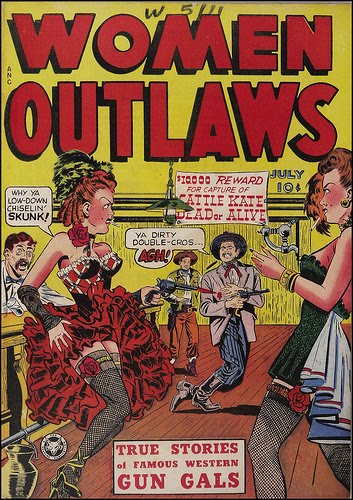
Is it a good idea for writers to straddle genres? That question was the focus of lively debate at a program I attended over the weekend. Moderated by Edgar Nominee Christa Faust (whose books have the hottest covers in town, by the way), the panel included comics author Steve Niles, Linda O. Johnston, and Matt Wallace, a Nebula and Bram Stoker Award Nominee.

Christa kicked things off by having the panelists pull genre labels from a paper bag. The panelists then had to pitch a story that combined multiple genres. Pulp noir and techno-thriller, anyone? Matt came up with a story set in the 30’s, involving a stolen iron lung and a death ray chase.  It got a big round of applause.

Cross-genre writing is here to stay, seemed to be the message. Linda, a self-described “Romantic Suspense, Paranormal Romance and Mystery Novelist,” has no problem combining genres. One of her series involves a pet rescuer; another features a sexy military man who just happens to be a werewolf, and the veterinarian who saves him. Holy Genre Smack-down, Batman

Writers who cross genres must build their “author’s brand” to draw readers across the borders, was one message we heard.  Sue Ann Jaffarian, who writes paranormal cozies and “regular” cozies, was cited as an example of successful brand building. She and Christa recently did a tour to help spread the word that readers shouldn’t be afraid of jumping genre fences, such as from cozy to hard boiled. We heard that writers should determine where a story belongs, rather than trusting the publisher to assign it to the right genre. (Although publishers can, and sometimes do, overrule our choices). If you’re not sure which genre your story belongs in, pick the most prominent one. (And as Jim reminded me in the comments, it’s important to write a story that you’re passionate about: Don’t combine trendy genres as a sales gimmick.)

Science fiction and horror have often been described as the cheap-seats of genres, but when horror and sci-fi writers become successful–think Stephen King–they usually get promoted to the general fiction aisle. So maybe it’s up to writers to break down the arbitrary borders.

The program venue, by the way, was Meltdown Comics, a place I loved discovering (Before Sunday, I hadn’t opened a comic book since the Love Comics of my ‘tweens.) Matt said later on Twitter, “Frontage in @meltdowncomics is great. Telling patrons they can find your work under the head of Thor is priceless.” The staff made our MWA SoCal group feel right at home.

So what about you? Does your writing (or reading) straddle genres? Which ones? Have you ever had something you wrote exiled to the wrong genre section, where it was hard for readers to find you?

Frontage in @meltdowncomics is great. Telling patrons they ca... on Twitpic