Establishing a Strong Sense of Place

Today our first page critique raises an important aspect in making many a good mystery or thriller – a strong sense of place. I always think the challenge in creating a sense of place is to make it instantly fully realized as well as believable. A reader truly needs to ‘be there’ and to have full confidence that the author has done their research.

A strong sense of place can be a tricky prospect for a first page: too much and the reader starts to yawn; too little and the story can seem generic and bland. If the set-up seems too contrived or deliberate, a reader starts to feel awkward; if the writer gets crucial facts wrong, the reader immediately disconnects from the story.

I think the first page we are reviewing today manages to instantly capture a great sense of place. Although I might tighten it up a wee bit (see my comments after the piece) all in all this first page grabs me – in part because the place itself resonates and intrigues.
So here it is – the first page of the novel, 65 below.
Richardson Highway
East of Fairbanks
Alaska
17 December 1600 hrs
“Damn! When it gets dark out here, it is dark as death.”

Eugene Wyatt drove as fast as conditions allowed down the Richardson highway in his big beige Ford F250 Crew Cab Diesel pickup, with the brown and white Tanana Valley Electric Cooperative logo emblazoned on the doors. It was only four o’clock in the afternoon but the late December sun had already long descended, leaving the land in total inky blackness. His three-year-old golden retriever Penny sat on the passenger side of the wide bench seat. She ignored her master’s Oklahoma drawl and stared out the window as they drove along. The dog’s breath shot a burst of steam onto the frigid glass a few inches away every time she exhaled. Her tongue hung limply over the teeth of her open mouth.

On any typical evening, there would have been brightly lit signs atop tall poles in front of the gas stations, or neon beer advertisements pulsing blue, red, and yellow from within the windows of busy bars as he passed through the small city of North Pole then the even smaller town of Moose Creek. Tonight though only the glow of candles and oil lamps flickered dimly between the curtains of the handful of homes along the highway. The power was out, everywhere.

Eugene looked at Penny who stared transfixed at the truck window. The frost from her breath created a ring of ice crystals on the glass that she seemed to be studying. The area had warmed up significantly in the past few days though after an unseasonal cold snap that held the land at negative fifty for several weeks. The red mercury line on the thermometer now hovered at a livable zero degrees Fahrenheit.

Eugene remembered a line a comedian had said on TV the night before.
If it is zero degrees, does that mean there is no temperature?

The humor of the line dissipated fast. There had never been an outage like it in his thirty years in Alaska’s electricity business. At first, the authorities thought it was a local failure within the Tanana Valley Cooperative area. It was not long though before they discovered it was much bigger. The phone company went out at the same time. Cellular towers failed. The whole of the Interior region of Alaska, an area the size of New York State, was thrown back into the 19th century in an instant.

My comments:

  • First off, I liked how the author started the book with dialogue – it instantly set the tone and introduced us to the character.
  • The details (car type/age of dog) on the first paragraph might (perhaps) be tightened up but I thought this and the second paragraph set the scene really well. The success I think in this first page is that it establishes the scene with a minimum of backstory and explanation – we know all we really need to know at this stage: It’s Alaska, the power is out, the main character (an outsider from Oaklahoma) is out on the highway with only his dog and there is a sense of foreboding that promises much in the way of suspense.
  • I thought the final two paragraphs set up the problem well – that there had never been a power outage like this, that Alaska was now a total ‘frontier’ land, and the reader now gets a strong sense that something awful/shocking is probably about to happen – Just what you want the first page of a good mystery/thriller to set up!

So what do you think? Did you get the immediate, visceral feel of Alaska like I did? Did you feel the set up was there and, more importantly, would you read on?

I know I would.
How to Write Your Last Page

James Scott Bell

It’s been a heady couple of weeks doing first pages here at TKZ. So I thought, just to catch our breath and balance things out, maybe we should go the other way for a moment.

What about your last page?

I love the Mickey Spillane quote: “The first page sells your book. The last page sells your next book.”

How true that is. How many times have we begun a novel or movie, only to be let down when the book is closed or the credits roll?

I love beginnings. Beginnings are easy. I can write grabber beginnings all day long. So, I suspect, can you.

But endings? Those are hard.

Why? First, because with each passing day another book or movie has come out, another ending has been rendered. So many great endings have already shown up. We who continue to write have the burden of trying to provide satisfactory surprise at the end when so much ending material is already out there.

Second, our endings have to tie things up in a way that makes sense but is also unanticipated. If the reader can see it from a mile away, the effect is lost.

I like what Boston University writing teacher Leslie Epstein said in a recent Writer’s Digest piece (“Tips for Writing and for Life,” WD March/April 2010). When asked if a writer must know the ending before he starts, Epstein says, “The answer is easy: yes and no. One must have in mind between 68 and 73 percent of the ending.”

Epstein’s having a bit of fun here, but his point is solid. If you have the ending 100% in mind, you’re in a straitjacket, unable to let your story sufficiently breathe, or twist, or turn.

OTOH, if you don’t have any idea where you’re going, you could easily fall into the meander trap, or the backed-into-a-corner trap.

There are some very helpful techniques for writing a great ending. Joe Moore discussed some of these last month. Type “endings” in the search box in the upper left of the blog, and you’ll get other thoughts by my blog mates. And I’ll humbly mention that I have also treated the subject in Plot & Structure.

But rather than focusing on principles, today I want to offer you my own personal approach to writing endings. It’s called Stew, Brew and Do.

Why is it called that? Because I made it up so I get to name it.

Here’s how it goes:

Step 1: Stew.

I spend a lot of time at the end of a manuscript just stewing about the ending. Brooding over it. I’ve got my final scenes in mind, of course, and have written toward them. I may even have written a temporary ending. But I know I won’t be satisfied until I give the whole thing time to simmer. I put the manuscript aside for awhile, work on other projects, let the “boys in the basement” take over.

I tell myself to dream about the ending before going to bed. I write down notes in the morning.

Step 2: Brew.

When I am approaching the drop dead deadline, I continue to outline ending possibilities. I will have files of notes and ideas floating in my head. When I know I have to finish I use Brew in both a practical and metaphorical way.

I take a long walk. There is a Starbucks half an hour from my office. (In fact, there is a Starbucks half an hour from anyplace in the world). I put a small notebook in my back pocket and walk there and order a brew—a solo espresso. I down it, wait a few minutes and then start writing notes in the notebook.

Then I walk another half an hour, to another Starbucks (I’m not kidding). There I make more notes. If I have to, I have another espresso. I am a wild-eyed eccentric at this point, but I do have ideas popping up all over the place.

Step 3: Do.

I go back to my office and write until finished.

Well, it works for me. I like most of my endings, but they were very hard work to get to. But hey, that’s good. If this gig was easy, everybody’d be doing it, right? Be glad it’s as hard as it is. Your efforts will pay off.

So what works for you? Do you find endings hard? Or do they roll out of your imaginary assembly line fully functioning and ready to go?

What are some of your favorite endings? Or better yet: what endings, to movies or books, would you change?

This First Page Thing Of Ours

By John Ramsey Miller

Here’s the first page of an anonymous author’s submission entitled, JOBE’S PRIDE. The first question is: Would you read more if this went beyond the first page? How do you think it could be made better?

Chapter 1: Dumpster Diving

Wed., April 21, 2:39 a.m.

They had conducted rescue missions in seedier areas. Ellie was sure of it. She just couldn’t place any of them at the moment.


The GPS in her aging minivan confirmed this as the address she’d received. This was it: this dumpster-lined alleyway in a part of L.A. that had never been trendy.

Ellie jumped down from one trash container and climbed to the rim of another. Across the alley, she could just make out Zoe’s slim, black-clad form raking through the debris from a construction site.

What if they were too late? Ellie’s instructions had been frighteningly specific: be at 2675 East Winston Rd. between 2 and 2:15 Wednesday morning. But traffic on the 5 had been worse than she’d expected and they had arrived late.

She nearly fell in the dumpster when an engine roared to life on a nearby street. Everything about this rescue made her jumpy. She reached her rake into the garbage. If she had her way, they’d just go home and forget this ever happened. But she couldn’t. And that disturbed her most of all. She reached and raked. Reached and—

She almost missed the foot when she uncovered it, but the small lamp on her headband brought it into relief against the chicken carcasses and other restaurant refuse. It wasn’t a dog. Or a lion. It was human. What had she gotten them into?


Her heart stopped long enough to hurt, then began pounding with fervor to make up for lost time. She must have yelled out, though she didn’t remember doing so. Then she plunged into the dumpster and began pawing through the slop in a frenzy to uncover the owner of the foot.

Okay, I think this opening is very well done. I know where I am, I’m there with Ellie and her (animal-rescue) partner, Zoe, and that she was expecting to find an animal in distress, not a human being in the garbage. The first thing that I stumbled on was the line about the GPS puts me in the van, but right after that I realize she’s already been through one dumpster, and is headed for another. I’d solve that by adding “had” in front of “confirmed.” The other point (and I’m being picky because there’s so little here to criticize) is that Ellie should almost fall “into” the dumpster, not “in” it. I might also add an exclamation mark after “It was human.” And instead of, “What had she gotten them into?” , I would go with something more along the lines of “What had she stumbled into?” How can she know this is even what the caller had sent them to rescue. There could still be a starving cat pinned under the human, or a lion in another container. And I’d go with “the message had said, ‘Be at 2675 East Winston Rd.in one hour.’ ” The way it is written, the message might have come in hours or days before she went there.

Problems require light editing. I have to say, I’d keep right on reading. I can’t tell if this is the opening of a thriller, mystery, supernatural, horror, or a cozy, since it would work with any of those genres. I say, “Good job on Jobe.” Jump right in, guys n’ gals.

Different Rules for Reading–And a Critique

By John Gilstrap
http://www.johngilstrap.com/

We’ve been doing this critique thing for a week or so, and it occurs to me that a one-page critique may be unfair to the writers. I want to make sure that they don’t get discouraged by the input they receive. I don’t know that I speak for everyone, but when I read these one-page samples, I find myself entering the exercise with the well-meaning intent to find a way to make the piece better. That’s fundamentally different than the way I read a book that has been published. When I read a book, I presume that the author knows exactly what he’s doing. If I become absorbed in the writer’s voice, I’m not going to parse words that occur mid-sentence.

This is not to say that there’s not real value in the critiques that are offered here–particularly those that deal with structure, passive voice and weak openings; but I worry that writers who are insecure with their skills will actualy start thinking too much. Never lose sight of your vision for your story, and never lose your ear for your own voice. If Stephen King and George Pelicanos and James Patterson were to set out to write the same story, the styles and structures would be entirely different, and I’m confident that all of them would be really good.

As with any critique, make sure you have the courage to reject input that you believe is wrong.

Now, for today’s sample (more from me on the flip side). Note that the italics are all mine, not the author’s.

Chapter One

Comedian Frankie Doyle was in a piss-poor mood. His Friday-night gig at the Improv had bombed, thanks to a couple of jack-weeds in the front row who kept heckling his setups. Then his agent had called with bad news: Frankie’s sitcom had been canceled. After just two episodes the network was replacing Frankie’s Nuts with a reality series, some asinine thing about hookers on Sunset Boulevard. The timing couldn’t be worse. Recently he’d been blowing through major dough while chasing the dragon. During his last high he’d paid cash for a BMW 8 Series.
Same old Frankie, his ex-wife’s voice echoed through his head. You’ll wind up on the street before you’re 30.

“Fat bitch.” Frankie addressed this comment to his waning head of beer. It was his fourth since he’d settled onto his regular stool at the Hook.

Once he finally settled behind the wheel of his car, Frankie began to cheer up. He inhaled the new-leather fragrance, feeling himself absorb some of the BMW’s mechanical testosterone. No one who drove such a magnificent machine could be called a loser, he thought. If his career went completely south, he’d simply move into the car.

Frankie goosed the accelerator down the California Incline and merged south onto the Pacific Coast Highway, a curving ribbon of asphalt wedged between the mountains and the sea. By now the booze had clobbered his senses. Shaking his head to stay awake, he failed to notice when the BMW began to drift. The left front tire edged over the double-yellow line, into the northbound lane.
* * *

Wow, there’s a lot to like here. I love the voice–mechanical testosterone, jack-weeds. I’m not sure I even know what chasing the dragon means, but it works. There’s a lot of energy in this writer’s voice. C’mon, “the booze had clobbered his senses”? That’s really, really good.

Here’s my problem with the piece: It’s not a great beginning. But it could be. Look at the first line: “Comedian Frankie Doyle was in a piss-poor mood.” Then it goes on to tell us why. My suggestion would be to open with the conversation–something really snappy and with attitude–in which Frankie learns that his sitcome is being canceled in favor of some stupid reality show. It’s the basic show-don’t-tell challenge. By giving us a POV scene where he feels his world coming apart, we’ll be instantly invested in the character.

First Page Critique: Trimming the Fat

Next week I’ll be subjecting you all to another one of my rants…but today, we’re going to take a gander at another anonymous first page submission:

     Harvey Rodriguez waited till daybreak before he ventured out to look at the body. He wanted to make sure that the men with the guns were long gone before he turned himself into a target, so he’d spent most of the night lying still in his tent among the trees, trying his best to remain invisible.

            If he’d had a brain in his head, he’d have used the cover of darkness to scoot out of here, but every time he’d flexed his legs to move, he’d talked himself out of it. He’d used the time to plot his strategy.

            On the one hand, he’d been living out here long enough to be running pretty low on everything, and even if the killer had stripped the dead man’s pockets clean, the corpse was likely to have something of value, if only a pair of socks that actually covered his whole foot. Or maybe a watch. Harvey’s ten-year-old Timex had crapped out a month ago.

            On the other hand, when you’ve got no home and you make your living—such as it is—off the sometimes unwilling largesse of others, the last thing you need is to get yourself wrapped up in a murder case. It wasn’t as if he had people who could vouch for his alibi, you know? He could almost hear the interrogation in his head:

            Where were you last night?

            I was at home.

            And where’s that?

            Wherever I make it. Last night, it was in the woods out by Kinsale.

            Right where a murder happened?

            Yes, sir. That’s a hell of a coincidence, ain’t it? I was just lying there in my tent and I heard somebody in the woods. I started to peek out and then I heard a gunshot, and I ducked the hell back in.

__________________________________________________________________________________________

All in all, I think this opening is pretty darn impressive. A lot of the typical mistakes we’ve been discussing aren’t present here. Great first sentence, it really grabbed me. We get a little bit of information about Harvey, but not his entire life history. There’s some dialogue–imagined, but it’s there. We get a sense of the setting, the predicament that Harvey finds himself in…I really wanted to turn the page to find out what happens next. So the main goal has been accomplished: I was hooked.

The only constructive criticism I can really offer is that it needs some tightening up. I’m currently revising my fourth book in the series, and I see a lot of my own mistakes here. I’ve been forced to trim approximately ten-to-fifteeen thousand words from every one of my manuscripts during the editing process. And the majority of those removed words were superfluous fat clogging up the flow. The main culprits for me are “just,” “that,” “the,” “started to,” and “began to.” I’m also a sucker for overusing pronouns.

For example, take the first sentence. If I was fine-tuning this manuscript, I’d say, ” Harvey Rodriguez waited till daybreak before venturing out to look at the body.” It’s a minor change, but the sentence flows better. I’d do a similar thing in the following sentence: [the bracketed words and passages would be removed] “He wanted to make sure [that] the men with [the] guns were long gone [before he turned himself into a target], so he’d spent most of the night lying [still] in his tent among the trees, trying [his best] to remain invisible.” (I’d also consider changing “remain invisible” to “become invisible.”)Beware of slipping from first person to second (“you know,” and “On the other hand, when you’ve got no home and you make your living…”). In fact, those two middle paragraphs could be combined:

      Harvey had been living out here long enough to be running low on everything. Even if the killer had cleaned out the dead man’s pockets, the corpse was likely to have something of value. A pair of socks that covered his whole foot, or maybe a watch to replace his crapped-out Timex. Making his living —such as it was—off the sometimes unwilling largesse of others, the last thing Harvey needed was to get wrapped up in a murder case. It wasn’t as if anyone could alibi him. He could almost hear the interrogation in his head…

I’d recommend that this writer go back through the manuscript with a fine tooth comb. Be merciless. Trim any and all fat, because the meat here is nice and juicy.


The demise of free advertising and a first-page critique of The Birds

By Joe Moore

Have you ever seen someone reading a novel at the beach, on a plane, train, doctor’s office, subway, or just noticed a book sitting on a coffee table in someone’s house? Next to having a friend or trusted colleague recommend a book, seeing someone else reading a book is a great product endorsement. After all, that stranger on the plane paid good money to buy it, and you can tell even from a distance just how much they’ve read. If it’s more than half way, that’s a great indicator that the book is worth your time. And what’s really cool is that every one of those books come with free advertising. It’s called cover art. Not only is seeing someone reading a book a good indication that it’s worth reading, but the cover helps reinforce the sell.

Now comes a new dilemma, a byproduct of the emergence of e-books. With the advent and growing popularity of e-readers like the Kindle, Nook, and iPad, there’s no more free advertising. Seeing someone reading from a Kindle on a plane or in a Starbucks tells you absolutely nothing about the book. How far have they read? Who knows. And what genre is it? After all, isn’t that the job of the cover art? Even in this era of the emerging e-readers, publishers still believe that books need graphic representations, if only for online marketing. But what about all that free advertising those authors got when their books showed up at the beach or on a train?

If the trend continues, someday it might be gone.

imageAnd now for my critique of today’s first-page submission to TKZ. I don’t know what the author’s WIP is called, so I’ll refer to it as The Birds. You’ll soon see why.

As I maneuvered through the after-work crowd and weaved between the tents of the farmer’s market in Daley Plaza, children clambered up the spine, mounted the wings, and slid down the belly of the 50-feet Picasso sculpture. At the market, people mused over smoked cheddar and peppercorn; heirloom, beefsteak and roma tomatoes; red and black raspberries; white and sweet potatoes; red, green, and yellow peppers and orchards of every variety.

Wild shadows cut across the sky and a gust of wind whooshed into my ear. I stopped cold. Lying at my feet, a seagull quivered. His wings were crooked and bones protruded through his gray feathers. Blood saturated his white underbelly and painted the ground, then the trembling ceased.

“Are you alright?” a man asked, “Did it hit you?”

Forming words seemed impossible. I shook my head.

“Poor thing,” said a woman.

The man tilted his head to the sky. “Never seen seagulls this far inland. Mostly pigeons around here.”

Hundreds of seagulls flying in disarray blocked out the fading evening light. Their cries reminded me of a maternity ward, when one newborn’s cries started up the rest of the babies. A great swoosh of wings stirred up the still air and reverberated across the sky. Something brushed against the back of my neck. Another, against the top of my head. I crouched, covering my ears. One by one the birds rained down on us. Bones snapped against the pavement. Bones crushed underfoot. People panicked and ran into each other. A man elbowed me in the side.

This is a dramatic opening. In fact, it’s verging on melodramatic. It’s also over written and somewhat confusing. Obviously, there’s some scary stuff going on in this scene. Something is making flocks of seagulls fly in disarray and crash into the ground. The problem for me was that the writing is way over the top and exaggerated. And the character is in no real danger, only the birds are. Still, it has some intrigue. An apocalyptic event or environmental situation is causing animals to fall from the sky right into the beefsteak tomatoes. That’s not to be taken lightly. I’d be interested in knowing what it is, but if I were an agent, I’m afraid I’d be hard pressed to keep reading. My advice to the writer is to pull back, distill the essence of this scene and proceed with an economy of words.

What do you think? Would you keep reading?

Download FRESH KILLS, Tales from the Kill Zone to your Kindle or PC today.

The name game, and another first-page critique

Before we get to today’s critique (I’ll explain McGruff later too), check out this fun toy that I heard about from my friend Sheila Lowe—it’s a name generator. They claim to be able to come up with “billions” of name combinations. I tried it and came up with a couple of new ideas by combining their suggestions.

So, here’s today’s first-page critique. My comments are in the bullet points that follow.

SHOPPING CAN BE DEADLY

     Shopping, taxis, suitcases, dogs, wine, antiques and Private Investigators don’t mix well together.  Separately, they’re okay; together they can lead to murder.  I know that now, but I had no clue on my first day.  You would have thought that I had a clue since I’m the Private Investigator mentioned above.  My name is Graff, Guy Graff.  I’m twenty-four years old, opened my own detective agency, Graff Investigations, and thought I was ready for anything; wrong again.  Let me start at the beginning. 
Detective Rule Number twenty-seven: Get to the point before something with a sharp point gets to you.
    It was Valentines Day.  Well it was for everyone else, not for me.  More about that later as I’m trying to get to the point.  
    I woke up that day with a bit of excitement in my stomach. Enthusiasm mixed with anxiety, like before a blind date when you haven’t been with a woman for a year.  I opened my agency two months ago and today was the start of my illustrious career.
    Pulling the handle of my small noisy refrigerator, I knew that I had made a complete break from my former opulent Philadelphian Mainline life.  We had money.  At least my parents did.  I turned my back on it. 


My critique:

  • This first page suffers from “back story blues”it’s heavy on  background information, light on drama. It’s a cozy mystery, judging by the writing and the title, but like its hard-boiled cousin, a cozy must grab the reader’s interest with some kind of compelling opening scene or disruption (See Jim’s Sunday post on that topic). The narrator in this first page is so busy giving his back story and wandering off point that the reader’s attention wanders away, as well. All the information about opening the agency, breaking away from Mainline society, etc., can be presented after the opening scene. Take a look at how Elaine Viets opens her shopping mysteriesshe’s an expert at setting up humorous opening scenes that draw in the reader.
  • I like your Detective Rule No. 27, but I would use it in a different way. I suggest putting a Detective Rule at  the head of each chapter as a framing device. Look at some cozy mystery series, and you’ll see that many of them use chapter-heading framing devices (such as Deb Baker’s Dolls to Die For mysteries, and my Fat City Mysteries). 
  • It’s refreshing to see a male character as the lead in a cozy. That will help distinguish this story from the cozy pack.
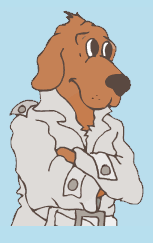
  • Speaking of name games, the name “Guy Graff” reminded me of McGruff. You might want to reconsider that name. You don’t want the reader to pause or get distracted.
  • I suggest that you locate the first scene  where the action or conflict starts for Graffthat will probably be the true opening of your book. Then weave in the background information contained on this first page. 
  • If you keep that first line in the story, I would rework the list–the list is too long, plus it sounds a tad awkward. The title could be stronger, too. 
  • Keep going! All the revisions that I’ve suggested can be easily fixed in the rewrite stage.

So how ’bout it, other readers? Do any of you read cozies? What suggestions would you make?

Keeping It Grounded

James gave a fabulous run down yesterday on the principle of the ‘big grab’ needed on the first page of any novel. Today, I am going to focus on the issue of ‘grounding’ – a necessary aspect of ensuring a reader gets a strong sense of time, place, as well as character. Even if you are going to throw the main character’s life in total upheaval, a reader still needs to know (and care) about what that life was life to begin with. This doesn’t mean we need heaps of details – what we need is just enough for the reader to believe the world the reader has created and have some sensory point of reference that resonates as well as intrigues.

Today we’re critiquing the first page of a novel called SINK and I think it illustrates the difficulty of grounding a reader. Here’s the first page – my comments follow as bullet points.

SINK

Day 1

Gold wire wrapped around a ruby. Almost like a star. The wire hides the center of a heart-shaped stone. Ayu wonders vaguely why gold always has a slight warmth. As if it retains the memory of being melted. The bottom of the pendant comes to a point so sharp she imagines a heart cutting flesh as it jumps out of the owner. Naoki’s heart. Ayu starts shaking, her throat bubbles and laughter explodes from her instead of tears.

The windowless interrogation room looks like the ones she’s seen on TV, except much smaller. Everything in Tokyo is. The damp air makes Ayu sneeze and Ms. Shimizu, her homeroom teacher, shifts her chair closer. Ayu didn’t tell her aunt and uncle that the police wanted to see her; she called Shimizu instead.

“We found that on the body. Are you sure you haven’t seen it before?” Across the table, Assistant Inspector Kameda presses her thin lips together. Her dull gray suit matches the streaks in her hair. This coloring and her small eyes give her a pigeon look.

Ayu takes a sharp breath. “No.” She weighs the jewel in her hand. It’s dense. Like the flat gold chain around her neck, the one that belonged to her mother.

“Why were you laughing?”

“I have no idea.” Ayu presses a fist against her mouth. She’d meant to take back yesterday’s words at homeroom. Except he hadn’t shown and she’d blamed him for that, too. “Maybe it’s not Naoki.”

“His father made a positive ID.”

It must be someone who looks like Naoki. Wears the same Diesel jeans and jacket. “Can I see the body?”

  • Starting off with the description of a pendant is an unusual choice and one I’d be fine with, if it didn’t leave the reader feeling totally ungrounded. Initially, I was intrigued but then ultimately I was just bemused as the first paragraph ended. I couldn’t visualize ‘a heart cutting flesh as it jumps out of the owner’. I also immediately didn’t like the protagonist – why laugh instead of cry? I needed to know more to feel both grounded in the story – at this stage I’m not even sure where Ayu is or the significance of the pendant. The memory of it being melted didn’t have any relevance to me- the memory of it piercing flesh, now that would have been at least sinister.
  • In the second paragraph we get some more details that ‘grounds’ the reader – we know we’re in an interrogation room in Tokyo. The observation, however,that ‘everything in Tokyo seems smaller’ seems incongruous – would a local really notice or think that? Then the reference to the homeroom teacher leaves me thinking that Ayu is a young teenager – but how young? Again, I have nothing with which to ground me as a reader. It doesn’t need to be much, but it does need to be there – even if it is something like. “At sixteen Ayu didn’t tell her uncle and aunt she phoned Shimizu instead.” It needs to clear whether this is a YA book or not – so the age of the protagonist may be important (depending on the rest of the book. I don’t know if this is YA or not).
  • “She’d meant to take back yesterday’s words at homeroom. Except he hadn’t shown and she’d blamed him for that, too.” This could be interesting but as a reader I was just mystified – we need more to care about these characters and the past fight they may have had.
  • “Can I see the body?” – By this point I was really confused about the main protagonist – she laughs at the thought of Naoki’s death, she obsessively notes details about a pendant (the relevance of which is unclear) and then she is in denial that the body could be Naoki’s (even though up to this point the reader suspects she was there – the first paragraph reference to Naoki’s heart jumping out certainly makes suggests it) – and now she asks to see the body? I’m at sea as to who Ayu really is as a character.
  • In short, although this first page offers some intriguing information I’m too ‘ungrounded’ to understand or care about either Ayu or Naoki. How do you all feel? For me it’s a grounding issue but others might feel quite differently.

How to Grab Them on Page One

It’s first page week here at TKZ, and if you’re an unpublished writer you’ve been treated to some real gold. The instruction from our band of bloggers has been a valuable workshop on the art of what I call “the big grab” – getting the reader hooked from the start.

Last week, I wrote about what not to do on your opening page. Today, I want to suggest to you an opening strategy that works for any type of fiction.

At the outset, please note that what follows is not a formula. This isn’t painting by the numbers. But it is a principle, and thus has infinite possibilities for application. No matter what your style or genre, this principle will work its magic for you, every time.

Recall that last week’s post was triggered by something an agent said at a recent conference, to wit: “If you cannot write a compelling opening scene, from the opening sentence, I’m not going to finish your proposal.”

I assume you do want agents — and editors — to finish your proposal. If so, you must grab them on page one. How can you do that?

By beginning your novel with a disturbance to the Lead’s ordinary world.

Why disturbance? Because: Readers read to worry. They want to be lost in the intense emotional anticipation over the plight of a character in trouble. Only when that connection is made does reader interest truly kick in.

But in their opening pages many writers fall into what I call the “Happy people in Happy Land” trap. They think that by showing the Lead character in her normal life, being happy with her family or dog or whatever, we’ll be all riled up when something bad happens to this nice person, perhaps at the end of chapter one, or beginning of chapter two.

Or they fall into the “I’m the Greatest Literary Stylist of Our Time” trap. This is where a writers desires to display brilliance via pure prose before, somewhere down the line, something like a plot kicks in.

But that’s too long to wait. You need to stir up the waters immediately.

A disturbance is something that causes ripples in the placid lagoon of Happy Land. It can be anything, so long as it presents a change or challenge to the Lead. (It’s important to note that this disturbance need not be “big” as in, say, a thriller prologue. The opening disturbance can be a jolt, however slight, that indicates to the Lead she is not having an ordinary moment here).

And you need to have that jolt on page one, preferably paragraph one.

This is true for both commercial and literary fiction, BTW. Compare the following two openings, the first a commercial example, the latter a literary one.

They threw me off the hay truck about noon.

(The Postman Always Rings Twice by James M. Cain)

The world outside the window was in flames. The leaves on the pistachio trees shone fire-red and orange. Mattie studied the early morning light. She was lying on the side of the bed where her husband should have been sleeping.

(Blue Shoe by Ann Lamott)

Notice that Cain starts with a character in motion at a point in time that is obviously a disturbance to him. In this case, the disturbance is physical.

In Lamott’s example, we have two lines of description, then the Lead is introduced, and the last line is a ripple of disturbance, this one emotional: where is her husband?

Dialogue, if it indicates immediate conflict, is another way to create an opening disturbance. I’ve heard more than one agent say they like to see dialogue in the first pages. Why? Because it means you are writing a scene. Not exposition or description or backstory, but a real scene. Like this:

“The marvelous thing is that it’s painless,” he said. “That’s how you know when it starts.”

“Is it really?”

“Absolutely. I’m awfully sorry about the odor though. That must bother you.”

“Don’t! Please don’t.”

(“The Snows of Kilimanjaro” by Ernest Hemingway)

From these examples it’s plain to see that there are countless ways to grab readers right away through this wonderful thing called disturbance.

Now why wouldn’t you want to do that?

Perhaps you have a reason. Maybe style is what you’re after most of all. A mood. Or maybe you’re writing a grand epic, and want to “set the scene” as it were. But before you abandon the disturbance principle, look at the opening lines from a couple of “big” novels:

The boys came early to the hanging. (The Pillars of the Earth, Ken Follett)

The gale tore at him and he felt its bite deep within and he knew that if they did not make landfall in three days they would all be dead. (Shogun, James Clavell)

I don’t know about you, but that’s enough narrative energy to propel me through the next few pages. If I get a long weather report up top, or two pages on the sunlight over Rio (no matter how beautifully rendered) I will be sorely tempted to put the book down. If you tell me how the character got to the scene, via backstory or flashback, I’m definitely moving on.

But if you indicate there’s a character here facing change or challenge, uncertainty or conflict, I’m going to want to know why. I don’t need to know the background info yet. I’ll wait for that if trouble is brewing.

John LeCarre once said, “The cat sat on the mat is not the opening of a plot. The cat sat on the dog’s mat is.”

Mr. LeCarre has it right. The opening page of a novel has to draw the reader in with an indication of trouble to come.

Do that by disturbing your characters from the very start.

“Okay, here’s mine. Or somebody’s”

THE BLADE OF ABRAHAM

April 30, 1945. Austrian Alps

“The Führer is dead.”

Dr. Kurt Heisenberg felt his heart stop. The words pierced his skull like an executioner’s needle. He pressed the phone receiver closer to his ear, hoping he had misunderstood. “I am sorry, Reichsminister Speer, would you repeat that?”

“Dead, Herr Doktor.”

A sheet of frigid rigor seemed to wrap around Heisenberg, colder than the ice and snow just outside the heavily fortified concrete bunker. No doubt he would have felt warmer standing in the glacial temperatures beyond the bunker’s blast-proof doors than he did here, at this moment. The Reichsminister’s words went way beyond causing a delay of Heisenberg’s prized Uranium Projekt. It meant its sudden termination. Without the ironclad authority of Adolph Hitler and his command to drop the weapon on the heart of the British Empire, there would be no debilitating strike against the Allies, no unconditional surrenders, no new world, no Aryan fulfillment. The demise of the Führer was a death sentence for the Projekt.

With a voice that sounded like air seeping from a deflating balloon, Heisenberg said, “What must I do?”

“You are ordered to execute emergency directive Mitternacht immediately,” Speer said. “Is that understood?”

Heisenberg nodded but then realized he must also verbally acknowledge the command. He pushed the choking words from his mouth. “Yes.”

“You’ve done well, Herr Doktor. All of Germany thanks you.” After a long pause, Speer said, “Good luck.”

Heisenberg gently placed the receiver in its cradle as if doing so might soften the blow inflicted by the Minister of Armaments. He felt like a bear emerging from a long hibernation only to find that winter was far from over. The Mitternacht or Midnight Directive meant only one thing: the Uranium Projekt was dead, and must be buried. Speers’ words were the equivalent of nailing the coffin shut. All that was left was to throw the dirt onto the casket. And that was what he must now do.

Okay. We know Hitler is dead. And we know that Herr Doctor (Or Mr. Doctor Kurt Heisenberg) is really bummed out about it. He wanted badly to screw up some unknown stuff or other. That in itself is hard to imagine, but okay this guy is bad–perhaps diabolical even. Seething badness, even though we don’t know anything about him, that isn’t truly bad because only Hitler would have allowed him to beear terrible fruit, and now he’s screwed I tell you. I mean this guy liked Hitler, which in the realm of things not to do if you are a good guy is 29 on a list of 30. And he talked to Albert Speer, who made him say, “he got it.” Speer would soon be off to Spandau to write books on toilet paper and smuggle them out, but I suppose this guy is off to do something truly horrible terrible monstrous.

Do I want to keep reading to see what Dr. Kurt Heisenberg is going to threaten to screw up? Do you want to know who will step up to smack his ass? I guess I’d keep reading for a few more paragraphs before I placed it on my”When-hell-freezes-over pile.