Quirky Ramblings on E-Books, Self-Publishing and the Consumer

USA TODAY had an interesting article on authors who have struck it big with their self-published e-books. The article featured 26-yr old Amanda Hocking of Minnesota who got tired of being rejected by traditional publishers and self-published last year. In 2010, she sold 164,000 books, with most priced between $0.99 and $2.99 per digital download. And in January, 2011 (after many readers got e-readers for Christmas), she sold 450,000 copies of her 9 paranormal titles, with three of her titles making their debut on the USA TODAY’s Bestseller list.

Her percentage of that sales price range comes in at 30-70%, respectively, but she’s making money at it. And she promotes on Facebook, Twitter, and word of mouth—and credits the popularity of the paranormal genre for much of her success.

And another paranormal e-novelist, who sold 70,000 copies since July 2010, got noticed by Random House and just signed a three-book deal.

I bring this up because of a talk I had with a neighbor this week. She got me thinking about digital download books. My neighbor had received a Nook for Christmas and was downloading books online. She was feeling pretty tech savvy, for sure. And she wanted a trip down memory lane when she used to read simple sweet romance novels, easy reads that made her happy.

Instead, she bought erotica by mistake. Now her online booksellers are sending her recommendations for the same steamy stuff she just purchased. (I’m chuckling as I write this. If you knew my neighbor, you would too.) She actually had to call the online bookstore to see if they could stop sending those recommendations to her Nook, but since it was such a new product, they couldn’t help her. But she was willing to download a book that she knew nothing about other than it was a romance and she had virtually no knowledge of the plot. She only knew it was a bargain. And she’s not alone. I’ve heard on blog posts and other places that many readers are willing to try a new author for $0.99-$2.99/book.

Now I’ve resisted buying an e-reader so far. I’m not sure the technology is there yet and I like the feel of a book in my hands. Plus I spend way too much time in front of a computer writing that I think reading off a display might make my quirky eyesight worse. But I can see why a reader might like the option of downloading a book quickly, read it immediately without paying shipping, and maybe get it for a bargain. And I also have a couple of manuscripts “under my bed” that are only playthings for my cats. Maybe it’s time to do something with them and test the new marketplace of e-books.

I’d like to hear from anyone who has an e-reader. How do you like reading off it? Has owning one changed your book buying habits? Do you still buy print books? And is there a price point that might tempt you to try a new author?

And if you’re an author who has sold your e-books online through Amazon’s Kindle Direct Publishing, Barnes & Noble’s Pubit, Lulu, Smashwords, and other locations—how has that worked for you?


Finding your voice as a writer

Sometimes it’s hard to find the right voice for a story.

During the two years it took me to write the first book in my series, I struggled mightily to find the narrator’s voice.  My first writing efforts were dry and objective–the chapters sounded like they’d been written by a former journalist (which I was). In despair I hit the bookstores, looking for inspiration. Ultimately I came across a new (to me) genre called “chick lit”. As I read the first few pages of a random book, I grew excited.

“I can write like that,” I thought.

After going back to my manuscript, I injected it with the snappy, snarky rhythm of the chick-lit style, including (hopefully) lots of humor.  And voila! Dying to be Thin was born.

My new WIP is a thriller–and once again, it was a struggle to find the right voice. This time I  read Michael Crichton, Dean Koontz, and Lincoln Child, among others, for inspiration. I studied the way they pull off their narrators’ voices, trying to find techniques that would work for me. I visualized how how their various styles would work with the particular story I’m  writing.

In the end it was no one particular author, but an amalgam of techniques, that worked. 

Joe had some good technical tips about creating voice in his post, “Look who’s talking,” and Jim has more suggestions in his post, “How can I learn to write like…“.

How about you? Do you struggle to find a voice in your stories? What are some of the techniques that you use?

No blog post today due to flooding

My apologies but there will be no blog post today. After over 4 inches of rain fell in 12 hours our house flooded so we are trying to get it all sorted out. Will be back next week with an update but, most importantly, my family and I are all fine.
Clare

– Posted using BlogPress from my iPad

Top Ten Writing Influences

A common interview question for writers is, Who were your literary influences? I’ve given it some thought over the years and have come up with a list of my top ten. Here they are, in no particular order:
Franklin W. Dixon
This was, of course, the cover name for the Hardy Boys series. Several authors did the actual work (a Canadian named Leslie McFarlane was the first). From The Hardy Boys I learned that you could make readers read on by ending a chapter with an exclamation point! Today I don’t use the actual punctuation mark, but try to achieve the same feeling—so readers have to turn the page.
The Classics Illustrated comic books guys
I loved the old Classics Illustrated series. I got acquainted with much great literature that way. The Hunchback of Notre Dame, The Count of Monte Cristo, The Adventures of Robin Hood, Men of Iron and on and on. Beautifully illustrated and written. I learned pure storytelling from these little gems.
Edgar Rice Burroughs
My first “grown up” novel was Tarzan of the Apes. I loved the experience of being pulled into a big story and then not wanting it to end.
William Saroyan
My beloved high school creative writing teacher, Mrs. Marjorie Bruce, encouraged me to read more than sports biographies. At a book fair she got me to buy My Name is Aram, which is still one of my favorite collections of short stories. I love Saroyan’s whimsical voice.
Ernest Hemingway
In college, Hemingway knocked me out. I think he is the greatest short story writer who ever lived. His style is easy to satirize, but no one has ever been able to do it better—not even the lionized “minimalists” of current fashion. I am very proud to have been a semi-finalist one year in the Imitation Hemingway Contest.
Jack Kerouac
I think most college guys who are into literature go through a Kerouac phase. I ate up On the Road and Kerouac’s idea of  “be-bop prose rhapsody.” Even now I try to follow some of his writing techniques, like:
–  Submissive to everything, open, listening
–  No time for poetry but exactly what is
–  Believe in the holy contour of life
Raymond Chandler
Oh man, when I discovered Chandler, I was in heaven. Still the best prose stylist of any hard boiled school you want to name. Nothing more needs to be said.
John D. MacDonald
Storyteller supreme. Great stylist of “unobtrusive poetry.” I’m thinking mainly of his 50s stand alone novels. The Travis McGees are enjoyable on their own and have much to commend them. But his output before that was amazing and the top quality of the paperback writers of the day.
Dean Koontz
I learned a lot from Koontz about how to write a flat-out page turner. Koontz also wrote a superb book on the craft, How to Write Bestselling Fiction. It’s out of print and goes for about $200 on the open market. I got mine off a library giveaway shelf and still refer to it.
Stephen King
King puts it all together. A great stylist, plotter and character creator. I read King and sometimes just shake my head at how good he is. Please don’t bring up the fact that he also sometimes seems to be the king of F-bombs. He succeeds in spite of, not because of, that little fact.
So writers out there, who are some of your writing influences? What is it about them you like?
If you’re primarily a reader, what writer would you pick as someone you’d recommend to a writer to learn from?

Why?

It has been an extremely interesting week, one of highs and lows. I had a wonderful professional and personal high that is still playing itself out, a circumstance where I was able to help a kind and decent person at a time when they needed it. You can read about that elsewhere http://www.dispatch.com/live/content/life/stories/2011/02/04/you-and-me-writer-identified.html?sid=101 if you wish. But let’s talk about the “low” here, at length. I have sometimes forgotten in the course of my postings that this blog is called The Kill Zone, so I will get back on track here and now.

I read crime fiction because I am fascinated with the battle between good and evil. I know that the lines are often blurred, but not necessarily to the extent that they are indistinguishable. Yet every bad guy, if you will, represents a failure on some level, perhaps unavoidable, perhaps otherwise, but a failure and a tragedy still. We all know a number of folks who for one reason or another — or for perhaps no discernable reason at all — fall off of the rails.

My younger son, who is now in his late 20s, had a childhood friend who I will call “Todd” for purposes of this discussion. Todd, when he was attending grade school with my son, gave little indication that he would have troubles later in life. He was raised in an intact family with loving parents, and if he occasionally experienced some impulse control problems, they never reached the stage that would portend the disaster his adult life has become. My son and Todd lost touch when we moved to a different school district in the area, even though I kept in contact with Todd’s parents as they intermittently relayed tales of what was turning into a slow-motion train wreck. Todd was barely into his teens when he was arrested for shoplifting. Other troubles followed. He began to have trouble with drug use; his folks placed him a tough rehab program which, to all outward appearances, he successfully completed. They took him to South Carolina over a Christmas weekend to celebrate his success. They had been there for two days when Todd‘s father called me, almost hysterical. Todd had gone out with some friends to walk the beach and within a half-hour had been arrested for armed robbery. Charged as an adult, he spent six months in a jail awaiting trial. By the time Todd finally returned home, his course seemed to be set. Trouble seemed to dip and swirl around him. When Todd’s father died of cancer, Todd could not attend the funeral because he was sitting in an Ohio prison, having been convicted of yet another offense. His mother, a sweet and kind person who devoted her life to her son and husband, had the appearance and demeanor of someone who had been shell-shocked. Just so.

Todd was in the news again this week. The area had been plagued by a period of gas station robberies and Todd was charged as the alleged perpetrator. In his booking photo, wearing a dirty wife beater and a scripted tattoo across his left arm and chest, he bears but a faint resemblance to the little boy who with my younger son played with Transformers and shared respective bedrooms like brothers. In the picture it is Todd who looks shell-shocked this time, vaguely dazed, perhaps by the state of his life at this point, perhaps wondering how and why he wound up on the downhill road he is on. Or perhaps I am projecting my own questions, wondering why him, and not my own son, since they were so alike in so many ways. The chill I have felt since seeing his picture, however, has nothing to do with the weather. And I doubt that there is a book that I could read that would conclusively answer my questions.

I Hate Unsolicited Phone Calls

By John Gilstrap
I pen this week’s post from Bakersfield, California, where I’m teaching a two-day seminar on safety and health issues in the recycling industry. It’s a great class so far, packed with a lot of motivated and enthusiastic students. The fact that it took me 17 hours to get here, thanks to Mama Nature doesn’t take away from my enjoyment of the process, but it does mean that I’m tired. With tired comes cranky.

And nothing spins me up quite like unsolicited recorded phone calls.
I felt my pocket buzzing while I was in the middle of my lecture and of course ignored it because, well, I was in the middle of my lecture. During the break, I looked at my phone and found an 866 number, identified as “unknown.” I remember a friend of mine telling me about online reverse phone lookup websites that can identify unknown and scam callers, and would have saved me a lot of time!

I called the number back and reached a recorded greeting that told me, “be aware that we are a debt collector.” I suspected that it was either a scam or a wrong number, so after a minute or two on hold, I hung up and went back to work.

Then I got to thinking. This has been the year of compromised credit cards for us. It’s happened at least four times. While we’re current on all our bills, was it possible that something slipped through? There’s also the matter of a denied medical claim that we’re still negotiating with the insurance company. Could that be the problem? I really wish I’d just known how to check phone number ownership, it could have saved me such a headache.

They called back when I could actually take the call, and it turns out that a Mr. and Mrs. Ngyuen are behind on their house payments. The call goes like this:

“If this is Mr. or Mrs. Ngyuen, press one. If not, press two.”

I press two.

“If you need a moment to bring them to the phone, press one. If this is the wrong number, press two.”

I press two.

“If you want to stop receiving these phone calls, press one.”

I press one. (Really. Does anyone NOT want to stop receiving these calls?)

“To be removed from the call list, you must talk to a customer service representative. Please hold.”

I hold. For six minutes, being told regularly how important my phone call is.

Finally, a young man answers, “Hello?”

“Hello?” I say. “Really? That’s it? Hello?”

“Who is this?” he asks.

“You called me,” I say.

“Are you looking for the modification department?”

“I don’t know what a modification department is. I’m calling to be taken off your list.”

“What list?”

“The one you called me from.”

“I’m sorry, sir, I think you have the wrong number.”

“It can’t be the wrong number,” I say. “I pressed one.”

“One what?”

“The number one. You called me. Your recording told me to press one to get taken off the list. I can’t have called a wrong number.”

“Oh,” he says. “Let me pass you to someone who can take you off the list.”

“What list?” I ask.

“Huh?”

“I few seconds ago, you didn’t know what the list is. How are you going to take me off of it if you don’t know what it is?”

“I’ll transfer you to someone.”

“Let me talk to your supervisor.”

“I’ll transfer you to someone.”

“You’re not listening. I’m already talking to someone. Another someone doesn’t do me any good. I want to talk to your supervisor.”

“He’s not available.”

“I’ll talk to his supervisor, then.”

“Please hold.”

I endure three more minutes of assurances that my call is important.

“Um, sir? They weren’t available.”

“Your supervisor’s supervisor?”

“No sir. Someone else.”

“So if someone’s not there, that means no one’s there. Are you in a room by yourself?”

“No, sir.”

“Then someone must be there.”

“Sir, if you can just give me your phone number, we can take you off the list.”

“The right list? The one I want to be taken off of?”

“Yes, sir.”

“The list you don’t know.”

“Yes, sir.”

“And you can guarantee that I’ll be removed.”

“I think so.”

I give him the number. “And what about the Ngyuens?” I ask.

“Excuse me?”

“The Ngyuens. The ones who are behind on their payments. Someone should call them and let them know.”

“Um.”

“They’re not at this number. I think we’ve established that.”

“They must have had that number before you.”

“This is a cell phone. I’ve had this number for over ten years.”

“Sir, I’ll tell the right person, and they’ll take the number off the list.”

“Okay,” I say. “I don’t want to have this conversation again.”

“I understand, sir. Neither do I.”

Getting the Dead out of Deadline

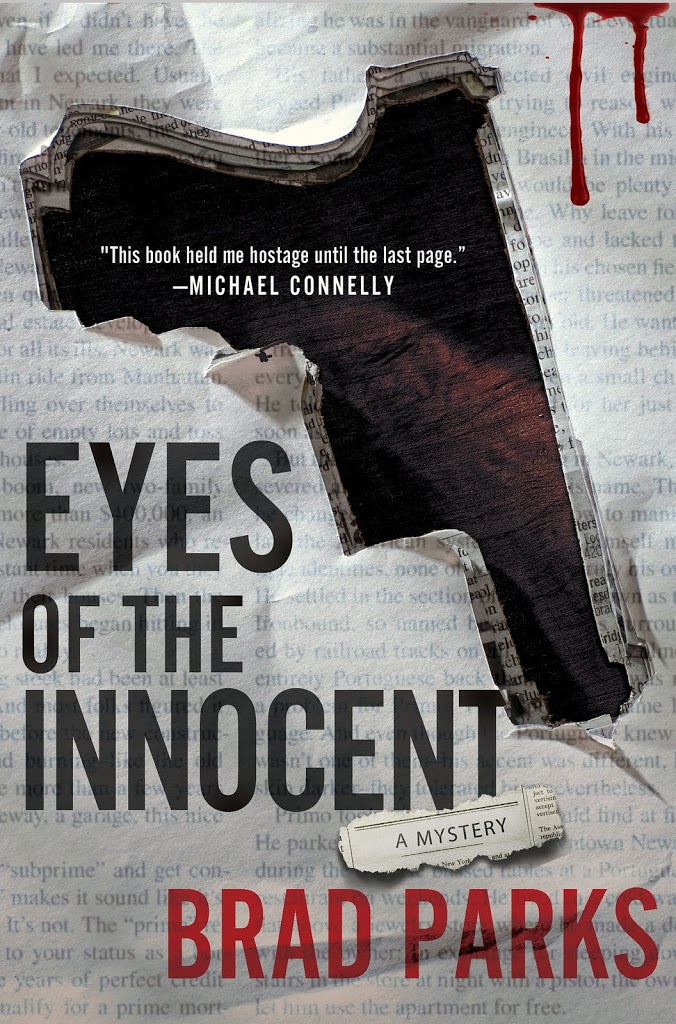
by Brad Parks

Today TKZ is thrilled to welcome Brad Parks, reformed sportswriter and award winning author, whose second book EYES OF THE INNOCENT was just released.

I have this weird thing for dates. They stick in my head for no good reason.

Aug. 5, 1998. The day my pet rabbit, Snowflake, died.
Aug. 20, 1994. The day I first kissed the beautiful woman who is now my wife
.
Nov. 5, 2004. The day I finished my first novel-length manuscript (a book that, incidentally, will likely never be published, unless I pull a Stieg Larsen and become unexpectedly famous after my untimely passing).
Feb. 3, 2011. The day I put the entire Kill Zone audience to sleep with the boring biographica
l details of my tedious life because I didn’t move on with the point of my guest blog post…

… So, right, the point of this post is actually to talk about some of the most significant dates in a writer’s life.

Deadline dates.

Now, that word, “deadline,” can inspire a lot of fear in writers. Its origin – and I swear, I’m not making this up – is actually penal in nature. Once upon a time, a deadline referred to a line in a prison that inmates couldn’t cross, or else they’d be shot dead.

But I’m here to say deadline is actually a wonderful thing for writers, something we should embrace rather than loathe. And I have come to discover there is power and freedom in a deadline, in knowing that you don’t have the luxury to get too picky, in understanding that what you’re aiming for is not “good” but “good enough.”

I first learned this as a journalist. I spent twelve years working for daily newspapers, much of it in the sports department, where the deadlines are unforgiving. I can remember covering Yankees playoff games in 1999, when my editor explained to me they were holding the entire paper for my story – and that each minute the story was late would cost $15,000 as presses and trucks sat idle, racking up gas and overtime.
I didn’t know if he was inventing the number, but I did know I was making about $60,000 a year, so my entire annual salary could slip away in four minutes. And I was guessing it would probably be easier to find another $60,000-a-year sportswriter than paying for the ten minutes it took for me to find that perfect word or phrase for my lede. It tended to have a marvelous, focusing effect on my work, one I carried throughout my journalism career.

But I have also learned to love deadlines as a novelist, and it was because of my latest book, EYES OF THE INNOCENT, which just hit the shelves.

Now, the aforementioned unpublished manuscript took me three years, writing during the off-season of whatever sport I was covering. The next one? I probably turned that around in a year and a half, writing in dribs and drabs when news was slow.

I knew from the start EYES OF THE INNOCENT needed to be a different animal, thanks to deadline. And here, I return to my thing with dates, and some of the ones my brain attached to this book, starting with:

July 8, 2008. The day I learned I would have to write it. I know because that was the wonderful afternoon my agent called to say my manuscript, the book that would later become FACES OF THE GONE, had sold to St. Martin’s Press. She also told me it was a two-book deal, so FACES better have a sequel.
That leads to:

Jan. 27, 2009. The day, according to my contract, that second book would be due.

Now, six months is not an unreasonable length of time in which to write a novel. Heck, there are romance writers out there who can turn one around in six weeks. Except, of course, there were complicating factors.

The first was that we were in the midst of moving three states away, from New Jersey to Virginia. When I got that call from my agent, we were less than two weeks away from the moving vans arriving (July 21, 2008).

The second was that I still had a full-time job as a daily newspaper reporter.

But those were far less important complications than the real deadline then looming in our house around that time:

Dec. 18, 2008. The day my wife was due with our second child.

I knew, from the experience of the first child, that absolutely no meaningful writing would get done for at least six months after the blessed arrival. I also knew, again from Baby No. 1, that my wife would probably go early.

So I had to get to work. I spent a few weeks going over FACES OF THE GONE (it had been roughly two years since I finished it and I needed to re-familiarize myself). Then came:

Aug. 13, 2008. The day I first opened up the file that would become EYES OF THE INNOCENT. Unlike those first two manuscripts, where there were so many stops and starts, I really had to hammer on this one. Deadline and the impending arrival of a baby had given me no choice. And I discovered, much like the days when dilly-dallying cost $15,000 a minute, the pressure had a way of making me concentrate on getting to The End without worrying quite so much about the little stuff along the way. So it was, three months and twenty days later, I got to:

Dec. 3, 2008. The day I turned in a draft to my agent. (And, it turned out, I was just in time – my wife was, once again, about two weeks early).

Is the book any different for having been turned around so quickly? Yeah, it is: It’s better. The pacing, the plotting, it’s all so much tidier. Everyone has their own speed. But I’ve since discovered three months per book is the right one for me. And I have that one tight deadline to thank for the revelation.
What about you guys? Any good deadline stories out there?

Brad Parks’s debut, FACES OF THE GONE, became the first book ever to win the Nero Award and Shamus Award, two of crime fiction’s most prestigious prizes. His second book, EYES OF THE INNOCENT, just released from St. Martin’s Press/Minotaur Books. Library Journal gave it a starred review, calling it “as good if not better (than) his acclaimed debut.” For more Brad, sign up for his newsletter, follow him on Twitter, or became a fan of Brad Parks Books on Facebook.

The Price of a Career

Have you made sacrifices for your career? Lost friends? Not spent as much time with loved ones as you might have liked? Taken less vacations? Become more sedentary than is good for your health?

Writing is a solitary profession. No one understands the cost involved or why we spend hours hunched over the computer. No one warned us about the time we’d spend setting up book events, creating book trailers, preparing workshops, answering fan mail, writing blogs, and updating our websites. Even my maid remarked recently, “You spend a lot of time at home.”

I tried to explain how this is my job. It requires hours of hard work like any other small business. As far as accepting social invitations, I’m guarded of my time because it’s so precious, and I never seem to have enough minutes in the day. I guess this makes me more of an “All work and no play” type of gal, but we writers feel guilty when we’re not at the computer, right? And when I really want to play, I go to Disney World or on a cruise. Every other time is work time, and lunches with friends or an occasional mah jong game become breaks from the daily grind. Other writers understand this compulsion. They’re just as eager to return to work after time away from home, whether it’s writing or marketing their various projects. Or am I the only nutcase out there?

How do you deal with people who figure you’re home all day so you should be available to chat on the phone for a half hour or go out for an impromptu coffee date or pick up their purchase for them at a store twenty minutes away? Do you say yes to everyone, because you’re too nice to refuse, come up with an excuse, or say you’re working? Have you been tempted to retire from writing so you can have a life of leisure and hang out with your friends all day? So you can leave the desk behind and “have fun” instead with your spouse who relies on your companionship? What has your career cost you? 


Socionomics Is Here To Stay

Dinner with girlfriends recently brought up an interesting subject: marketing our books and the Social Media craze. My one friend tapped her fingers as she named the different social media platforms her sixteen year old uses, Twitter, TumblR, Facebook, YouTube, Flickr. She said, “You want your book buzzed about? Give it to my daughter. She’ll have it viral in no time.”
The young ones are the fearless generation with this new technology. They’ve been born into a world with the Internet, where folks my age who just got comfortable emailing, must now warm up to the idea of communicating in 140 characters or less—by telephone!
And to think, fifteen years ago, my second grade son saw a record album turn table in a friend’s house and whispered to me, “Mom, what is that?”
It seems as if every day we open our doors to another new change in world communications. So, I did some research on this exciting buzz about social media. Here’s what I found: Socionomics. This is the new phrase being touted for the Social Media Revolution. I like it. I could go on with facts and figures about how this phenomenon is changing our world (including the political impact it’s having on Egypt these days), but nothing speaks clearer than the video below on what the future holds. The statistics are mind boggling.

Check out the video:


Where shall we go from here?

Back in the Saddle

by Clare Langley-Hawthorne

The summer holidays are drawing to a close and with my boys starting school on Wednesday I am emerging from writing hibernation to face the prospect of rewriting my WIP (and facing a blank computer screen!).

You may remember my blog post last year about feeling I was in a deep, dark, plot pit – well, at least I managed to dig myself out of that over the holidays. I didn’t get any real writing done but I did get a chance to brainstorm plot options and clear the way for what (I hope) is the answer to my overly complicated plot. The thing is I now have two days to start revving the engines to get back down to writing full time and I feel like a rusty old motor in the scrapyard.
Over the last five years I have been pretty consistent in terms of writing output – but I am nervous after such a long hiatus that I won’t know where to start or what to do. Needless to say, my inner critic and naysayer is in high gear as you can imagine…
I am reassuring myself that I am ready – I have a revised synopsis in place and will start with a revised plot outline. I convince myself that all the key ingredients are there – my characters are well rounded and full of necessary angst, the mythology is fully-realized, the historical research complete…so what could go wrong?! I think my main worry is that I may have lost any talent I may have had along with the drive needed to propel myself to the finish.
So any recommendations or advice on getting back into the swing of things? How do you recover after a writing hiatus? How do you make sure you don’t stall?:)

All and any suggestions would be most welcome – I’ll report back in a few weeks as to my progress!