Reader Friday: Where do we write?
Note: Starting today, on Fridays we are going to be running the first of a few special topics. For lack of a better phrase, we’re calling it “Reader Friday.”
The writer’s desk. Sometimes, it’s the place we rush to eagerly in the morning, impatient to spin magic from nothing more than thoughts and dreams. Other times, our desk is Hell on Earth. We’re chained to it, driving to make a deadline. Or struggling to fill a stubbornly blank screen.
One thing is true of all writers: We spend a lot of time at our desks. Where we work may say a lot about who we are as writers.
Here are some of the TKZ gang, as reflected by our desks.
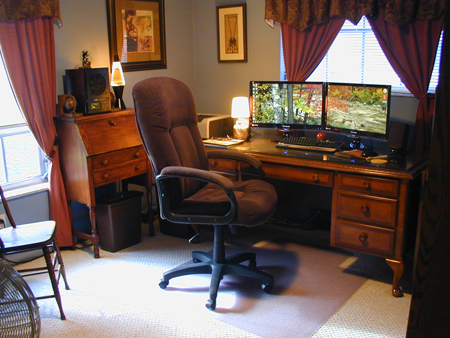
Joe Moore – A picture of serenity
Just looking at the picture of Joe’s office makes me feel relaxed. But Joe, is it always this neat?
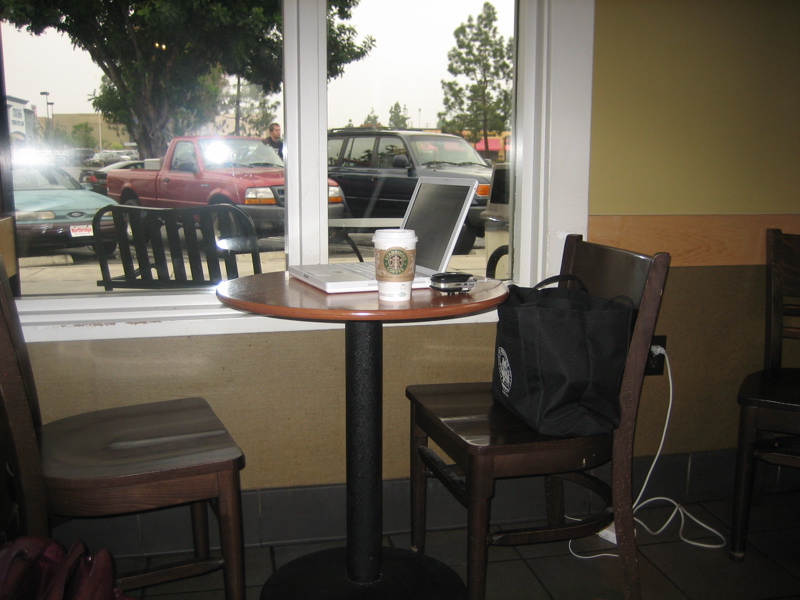
James Scott Bell – City View
Jim Bell shared a picture of his favorite writing spot–a local coffee shop with a great view of LA street life.
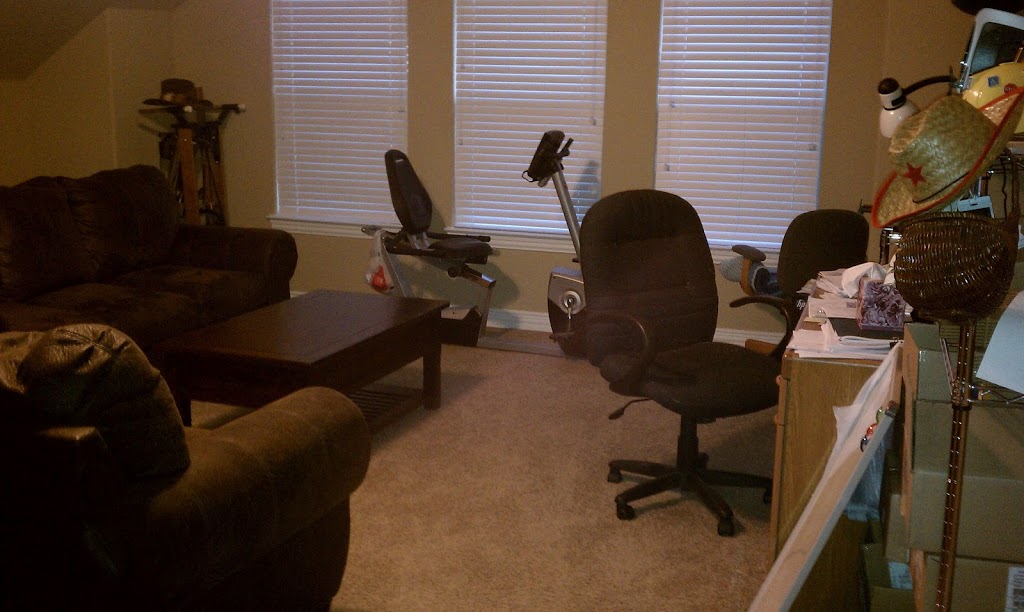
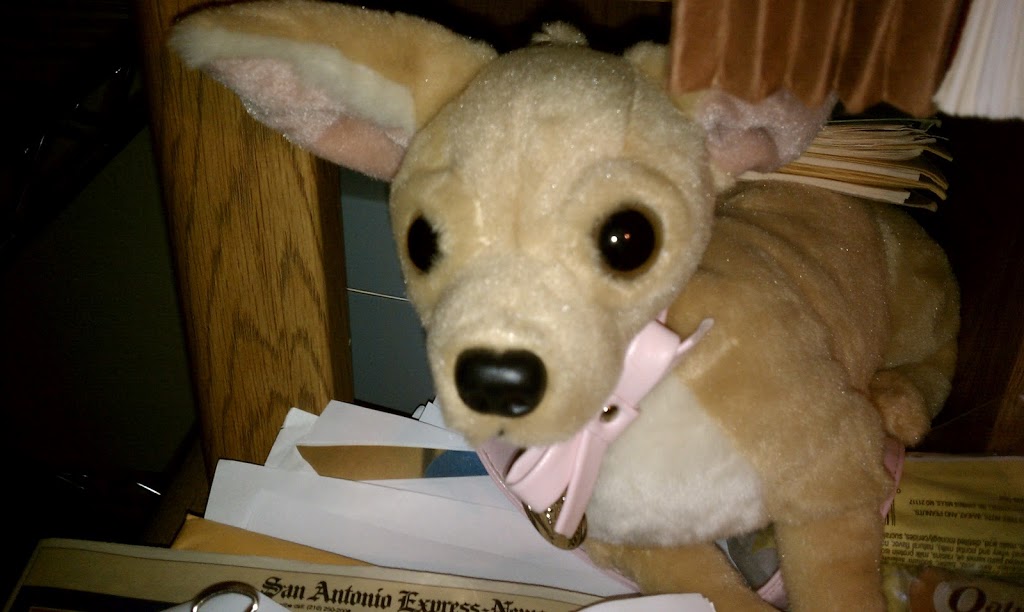
Jordan Dane — Have Diva Dog, will Travel
Jordan’s well-appointed office doubles as home for her Diva Dog, which she takes to signings.
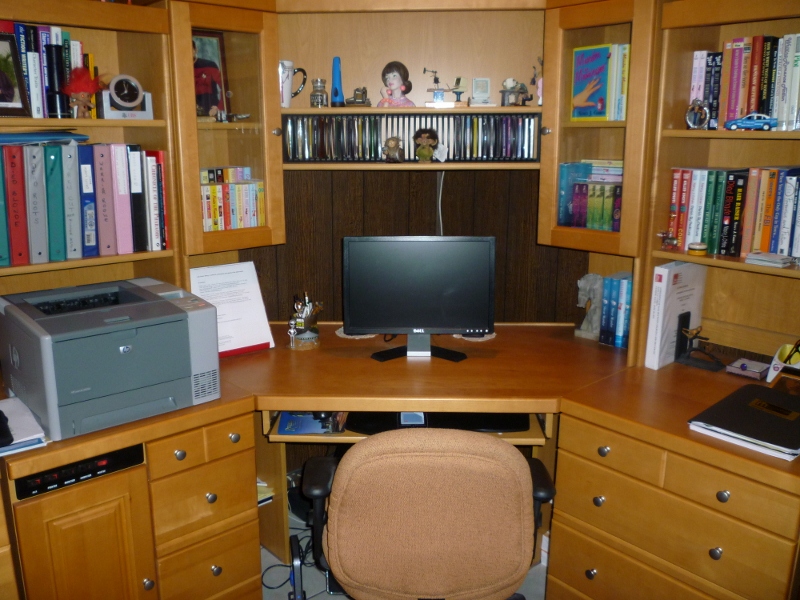
Nancy Cohen — A Writer’s CentCom
Nancy’s writing hub looks like a setting for “War Games II”. Her next thriller?
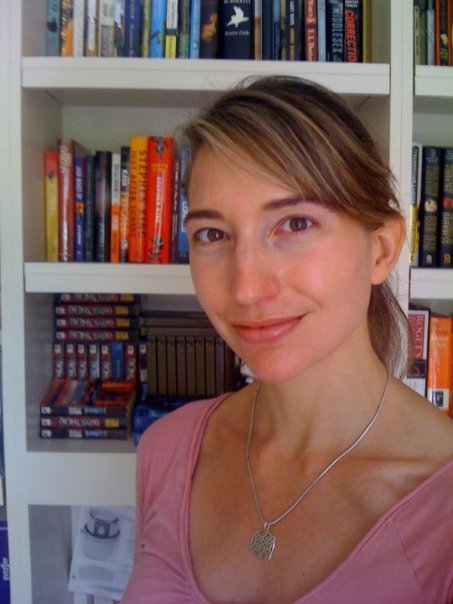
Michelle Gagnon — Thinking Outside the Box
Michelle is in the middle of a move, so she’s temporarily between offices.
“It’s interesting, because lately I’ve found that I actually work best away from my official “desk”; on airplanes, or other places where there isn’t easy access to the internet so that I don’t get as distracted,” she says. “…I am toying with doing away with a real office in favor of working in different parts of the house depending on my mood.”
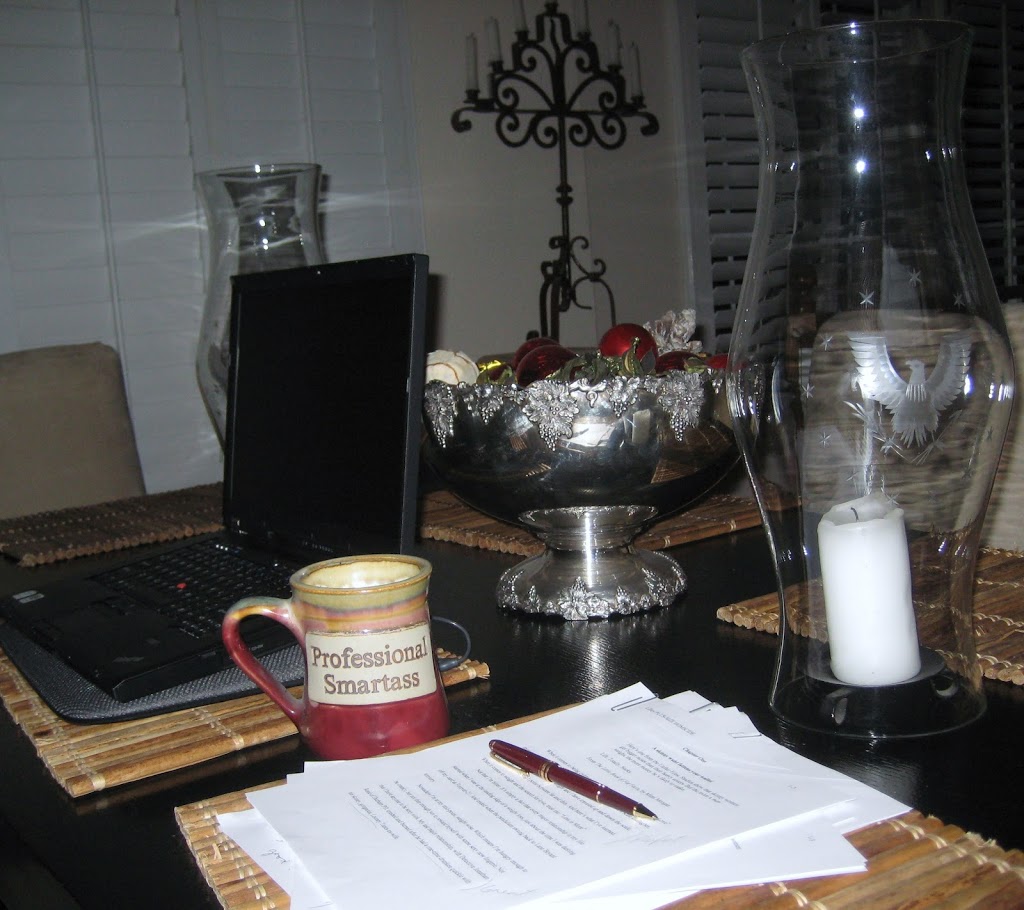
Kathryn Lilley — A Terminal Case of Wanderlust
I’m a restless soul, always on the move. I plug in my laptop wherever I happen to land. Yesterday, it was the dining room table. I took this shot as I wrote today’s blog.
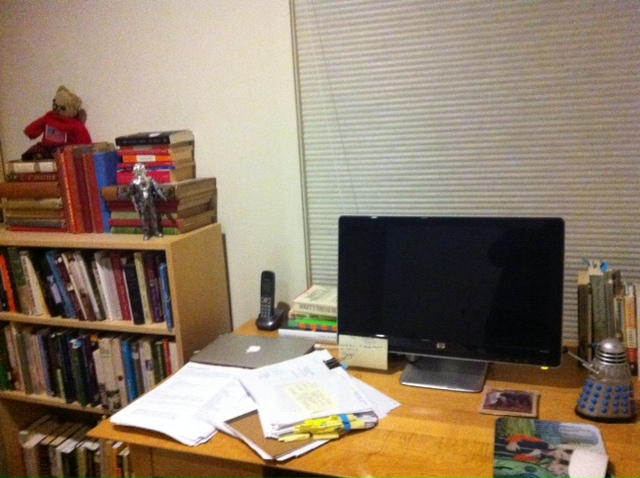
Clare Langley-Hawthorne — The Exterminator
About her office Clare says, “You can see the Dalek on my desk…I can push a button and hear ‘exterminate’ when things aren’t going so well with the manuscript!”
John Ramsey Miller — Blogger Emeritus
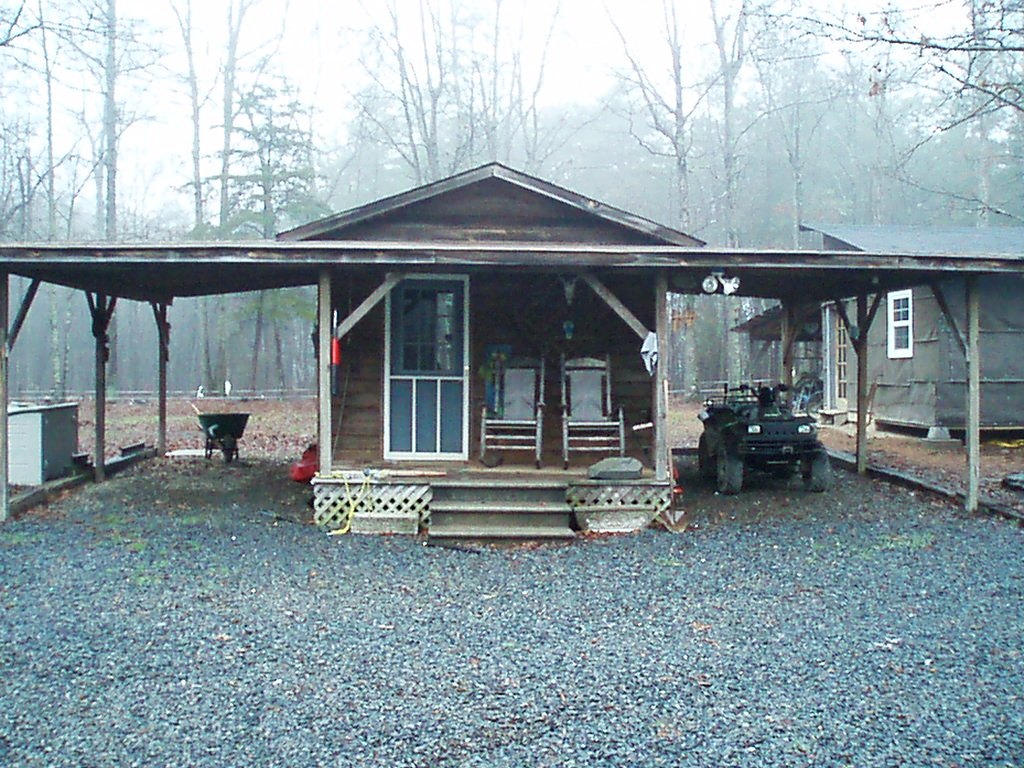
Before he transitioned to his new silk-screening endeavor, John left us with a picture of his writing cabin. Alas, no chickens in sight–the evil fox got ’em!
Next Friday: Let’s see where you write!
For next Friday’s post, we want to hear about where our TKZ readers write! Send us a photo of your desk. You can send it to killzoneblog at gmail dot com.
If you have any thoughts about writing desks, or if you have any writing-related questions, feel free to post them today in the Comments. We’ll all be dropping in from time to time today; we’ll do our best to answer them.
Essential Twitter Hashtags for Authors, Readers and Publishing Industry Professionals
Twitter can feel like screaming into the void until you get a feel for the Twitterverse. If you tweet using a link to your blog post or website to draw traffic, you can check your blog or website stats to track the traffic from that link. Using Twitter in the right way can enhance your promo, but if you aren’t maximizing your tweets with hashtags, you’re not being as effective as you can be. That’s a waste of your precious time that you can’t afford. Here’s why:
To keep up with the latest in hashtags or look up ones you don’t understand, go to #TagDef. Below is a really good list to start with hashtags geared for authors, readers, and industry topics.
- #AmWriting
- #AmEditing
- #BookMarket (Every Thursday, 4 PM, ET)
- #IndieAuthors
- #LitChat (Every M/W/F)
- #MemoirChat (Bi-weekly Wednesday, 8 PM, ET)
- #WordCount
- #WritersLife
- #WriteChat
- #WriteTip
- #WriterWednesday (or #WW)
- #WritingParty
- #WritingTip
- #YALitChat
- #RomanceWriter
- #SciFiChat
- #KidLitChat
- #RWA (Romance Writers of America)
- #ACFW (American Christian Fiction Writers)
- #MGLit (Middle Grade Lit)
- #SCBWI (Society of Children’s Books Writers and Illustrators)
- #MemoirChat
- #AskAgent
- #AskAuthor
- #AskEditor
- #GetPublished
- #PromoTip
- #SelfPublishing
- #Publishing
- #EBooks
- #IndiePub (or #IndiePublishing)
- #BookMarketing
- #WritingPrompt
- #StoryStarter
- #WordAThon
- #Creativity
- #WIP (work in progress)
- #1K1H (write one thousand words in one hour)
- #FridayReads
- #BookGiveaway
- #Giveaway
- #Kindle
- #MustRead
- #Nook
- #Ebook
- #LitChat
- #StoryFriday
- #MustRead
Here is the Linky Tool:
Celebrating Freedom to Choose
Happy 4th of July! Today we celebrate freedom, and in the U.S. that means the freedom to choose our own religion, career path, locale to live, and much more. Rarely do we stop to appreciate the bounties we have been given. What does this mean to us as writers?
![]()
Today we have more freedom to choose where to publish our work. We used to be confined to the mega New York publishing houses. If you weren’t in there, you were out in the territory of the scorned masses, wallowing in the disreputable halls of the self-published or with unknown small presses. A friend of mine published her book in ebook format with Hardshell back in the day. Was it no surprise that this venture got nowhere? Ebooks hadn’t been widely discovered yet, and this publisher was ahead of its time. Today, it’s a different story.
Indie publishing has blossomed along with small presses and digital first imprints. We have so many more choices, almost too many as they can get overwhelming. If we decide not to wait for a publishing house to determine our fate, for example, do we really want to become publishers ourselves? Because that’s what this world is coming to as we authors take the reins.
Here’s what it means to choose the self-publishing path: Besides writing and marketing our own works, we have to outsource to editors, cover designers, and formatters. We have to collect the income from various distributors and formulate our own spreadsheets. And don’t forget buying ISBNs, determining a name for our publishing “company”, and registering for copyright.
With freedom comes greater responsibility, and we’re feeling that as indie authors.
You give up some of those freedoms to go with a publishing house, be it large or small. You also give up a percentage of your income and price control. But then they handle the cover design, editing, and distribution. If it’s a decent house, you get your rights back in five years and then you can put up your edited work on your own. But it could take years just to get your manuscript accepted in the first place and then scheduled…years that your book could already be available to readers had you put it online yourself.
These are tough choices, but at least we have them. It’s more than we could do several years ago. Now there’s always the possibility that our work will make it into the hands of readers one way or another. Isn’t that a reason to celebrate?
Identity Theft: Cloud Files and Urgent Phone Calls
by: Kathleen Pickering http://www.kathleenpickering.com
Will the real Kathleen please step forward?
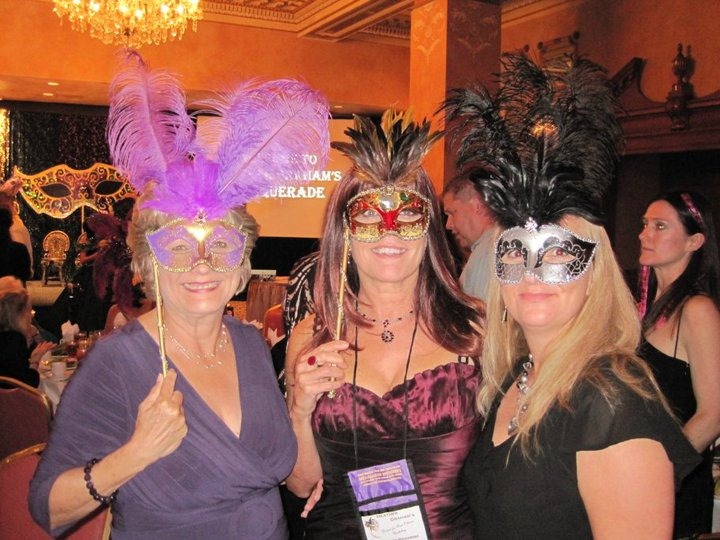
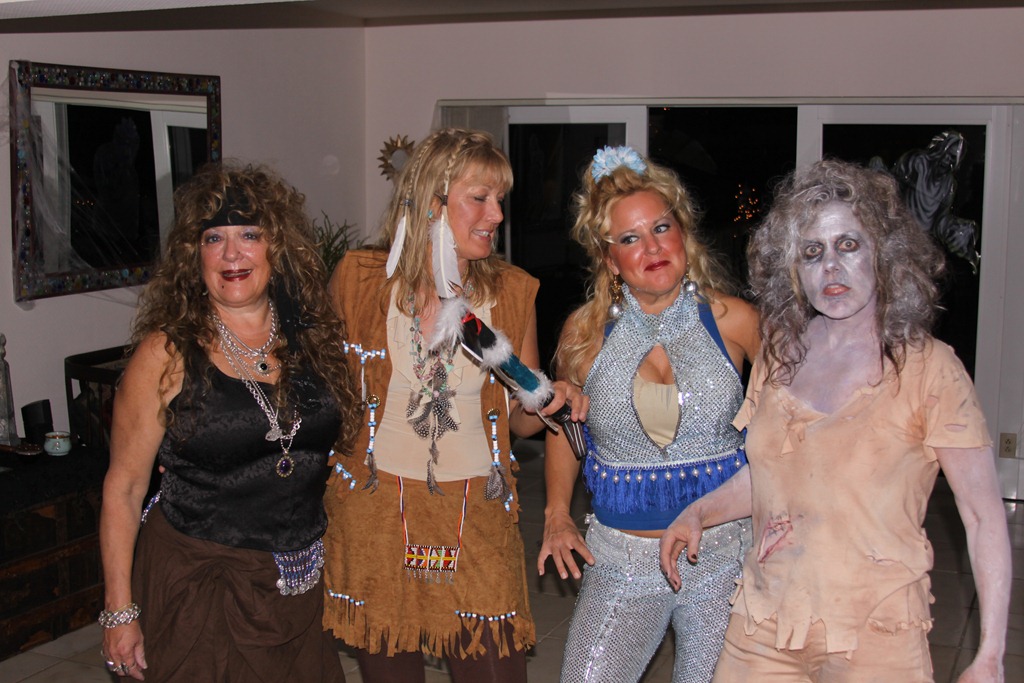
While we may seek to keep our identity private, either by costumes or maintaining a low profile (the latter of which I have no idea how to do!), I learned a really hard lesson over this weekend.
I learned that the potential for identity theft could even happen to me.
Early Saturday morning I was awakened by an urgent phone caller telling me that my computer (which was in “sleep” mode) was downloading dangerous viruses that would soon crash my hard drive.
I questioned the caller. He said he was with Microsoft Windows and that I was wasting precious time by asking questions. Now, I’d like to say I was half asleep, but my gut reaction was to hang up on this dude and I ignored myself.
What an idiot!
When will I learn to trust my gut? I’m telling you. No more Ms. Nice Piks in this corner. No. No. No.
I am embarrassed to tell you that I trotted into my office and gave this clown remote access to my computer so he could show me the infected files which turned out to be error and warning messages typical of Microsoft files. Then he proceeded to try to sell me an antivirus program for $130.
I said, no. He bullied me some more then I hung up. But no, that wasn’t enough. He was still remotely connected. When I notated on the screen that he should exit my computer, he had the audacity to tell me to wait–twice!
In hindsight. I should have turned the darned thing off, but hindsight is 20/20—and the slimy dog had control of the mouse. Sheesh!
I posted the episode on Facebook and folks responded saying they’d had the same or similar experience and the guy really was trying to get me to by an expensive antivirus program. I hope that was all. Others offered advice on restoring my PC before the event to eliminate any viruses he may have planted.
Then, I went and purchased an Identity Theft system to monitor my PC. I learned some interesting info and want to share it with you.
There are plenty of sites out there to give info on how to protect against identity theft. Nextadvisor.com is a good place. Here’s a link to compare Identity Theft services: Compare IT Services.
I also found tips to prevent Identity Theft. One point of vulnerability is storing your data on Cloud or DropBox—remote sites to hold files instead of on your own computer. You end up trusting your on-line server to protect your stored files from hackers. Word is that the law is nebulous over who is liable for data theft on these sites. Since Cloud and similar services are free, the user is usually held responsible for any breach of information. Do your homework before placing valuable information out there!
Here are a few tips to avoid Identity Theft:
1. Instead of signing the back of your credit card, write “request ID”.
2. Shred everything that has your name on it.
3. Destroy Digital Data. Erase any info on discarded computers, smartphones, etc. that hold data on you. Break them, if all else fails.
4. Read through statements carefully. Be sure your being billed for items/services you purchased.
5. Don’t leave mail in the mailbox. Easy target for looters.
6. Check your credit reports at least once per year.
I bought Identity Guard for my computer because not only does it monitor my SS#, bank accounts, loans, credit cards and the use of my name, phone and address, Identity Guard monitors my PC with an anti-phishing and virus protection called Zone Alarm for the duration of membership. I feel pretty confident that I’ve protected my security at last.
Another site, 5Identity Theft Protection, offers tips to protect social media activity and internet passwords. Here’s the link. This site is loaded with info: Identity Theft Protection
Here are some additional warning signals I found on 5Identity Theft Protection to tell if your identity has been compromised:
– you are denied credit or loans for no apparent reason
– monthly credit card statements, utility bills, etc. stop arriving
– you receive a credit card without asking for one
– you receive bills from places you haven’t been
– you receive notices from collection agencies
– some of your mail is missing.
Hope this info helps and encourages you to think of me if someone asks for access to your computer. If they call you, the answer is, NO! (I know, you already know this!) Be sure to think twice before putting your valuable information into the ether-net for purchases and signing up at different sites. Always check that the site is secure. In closing, I wish that your identity only be lost as far as the next costume you wear!
Happy writing!
xox, Piks
Omit Needless Words!
It’s with a wee bit of wistfulness that I write this blog post, as not only have we bid ‘au revoir’ to two of our blog mates, John Gilstrap and John Ramsey Miller, but also because I have realized just how many blogs have now gone off-line having, perhaps, run out of steam or time or words of wisdom. It’s hard thinking up topics week-after-week and deep down, I fear, I repeat myself a lot:)
However, there are always new topics that catch my attention (like just how Fifty Shades of Grey has managed to become a huge bestseller…) and old topics that never seem to be resolved. One of these is the question of just what makes bad writing, well…bad. I was prompted to ponder this issue anew by an article in the ‘Dear Book Lover’ column of the Wall Street Journal last month (which my husband forwarded to me, hopefully, not because he thinks my own writing is bad!).
As this column points out, bad writing is impossible to define because of the inherent subjectiveness involved in determining what constitutes ‘bad writing’. It goes on, however, to point out that bad writing almost always involves overwriting and here is where I have a confession to make – I am an overwriter. There I’ve said it. When I was younger almost all my material was packed to the brim with overripe metaphors and obscure concepts. In the words of Roger H. Garrison (“How a Writer Works”) it was flowing with the “tides of phony, posturing, pretentious, tired, imprecise slovenly language, which both suffocate and corrupt the mind.” Mea culpa, indeed…
So what did I do to change this tide? I took Strunk and White’s advice to heart and I learned to “omit needless words.” Sadly, I still overwrite on occasion, but at least now I (usually) pick it up in the editing and revision process. It also helps me to follow another terrific mantra to “keep it simple, stupid.” Unfortunately, as I mentioned in my comment to Jim’s post yesterday, I still find it hard to do the same when it comes to concepts or plots, but I am learning (I hope!).
So how do you define ‘bad writing’? Are, you like, a closet over-writer or are you blessed by the goddess of brevity? Do you find that your tolerance for sloppy prose has diminished over the years? Perhaps this has helped my own writing. Gone are the days of buying into the high-faluting drivel of many so-called literary novels. Nowadays, I want to read something that distills rather than over-kills a complex concept. What about you? Will you keep reading even if the actual writing is (dare we say it) ‘bad’?
Successful Fiction Begins With a Great Concept
And I’m Following Gilstrap, As Usual.
So Long, Farewell, Auf Wiedersehen, Adieu
I tell my students in writing classes that you know it’s time to stop writing when you’ve run out of things to say. It seems reasonable that what applies to fiction should likewise apply to blogging, and thus, this is my final post as an active duty Killzoner. It’s been close to three years, which means something along the lines of 150 Friday posts, and, frankly, I worry that I have begun to repeat myself. Y’all deserve better than that.
As one of the founding members of this corner of cyberspace, I’m very proud of what we’ve accomplished, and I value each of the friendships I’ve developed over that time, both real and virtual. I feel as though I’ve come to know our regular posters, and I hope that we continue to communicate. To reach out directly, please feel free to email me at john@johngilstrap.com. I really do answer every email I get, though sometimes I’m admittedly a little slow.
If you’ve got some spare time, I hope you’ll make a chance to visit www.johngilstrap.com and join my mailing list. I don’t send out a lot of newsletters, but when I do, I work hard to make them short, relevant and interesting. Also, I encourage everyone to “like” my Facebook page, www.facebook.com/johngilstrapauthor. When I get the urge to write a blog-like essay, that’s where I’ll be posting it. And, of course, there’s my Twitter account, @johngilstrap; but I must confess that the usefulness of Twitter continues to elude me. (That semicolon was for you, Mr. Bell.)
I should point out that I’m really not going anywhere. I’ll continue to be a regular visitor to TKZ, and I’m sure I’ll be adding a few cents-worths from time to time.
It’s been a privilege, folks. For those of you who write, keep writing. Never lose sight of the dream and remember my mantra that failure can never be inflicted upon another person. It has to be declared by oneself.
And for heaven’s sake, keep reading.
A Freelance Editor Talks About Authors’ “Habits” & Predictable Writing
By Jordan Dane
I had the pleasure of working with Elyse Dinh-McCrillis (The Edit Ninja) on my short story anthology – Sex, Death and Moist Towelettes – and hope to send her more full-length novels. She came recommended from another thriller author – Brett Battles – so I owe him a beer. She is guest posting her thoughts on the patterns of authors. Enjoy!
Patterns in Writing
When Jordan approached me about a guest post, I decided to write about the patterns I’ve noticed in my clients’—and other authors’—work. These aren’t errors, but habitual things writers do that make their writing predictable. Most of my clients are surprised when I point them out, so it’s become clear these things happen unconsciously.
I’m not talking about a signature. One of Elmore Leonard’s signatures, for example, is his hip dialogue, with specific rhythms you can almost hear while reading. But the dialogue isn’t repetitive. I’d like to discuss things that show up repeatedly, and could potentially distract readers.
Here are some of the most common patterns I’ve seen, in everything from manuscripts by first-time authors, to finished novels by Pulitzer-nominated writers.
I was a beta reader for a friend and noticed he described many things in his novel as “dank”—basement, room, weather, smell, even mood. I suggested he substitute a few synonyms. He did a search and said, “I found only thirteen mentions in the whole ms. That’s not a lot!” I asked, “But how close were they together?” He admitted that in one instance, the word showed up twice in three pages. Astute readers would notice that.
In this one book I read, whenever the women were nervous, they bit their lower lips, and when the men experienced stress, they ran their hands through their hair. I started counting the number of times this happened, and could see it coming if characters started feeling stressed or anxious. I got so caught up in the counting, I lost track of what was going on in the plot.
Many writers fall into a rhythm as they write, which sometimes results in the same kind of sentence over and over: always starting or ending with a participial phrase, starting or ending a line of dialogue with a direct address, too much passive voice, multiple run-ons in the same paragraph, three short sentences in a row. (“He looks. He listens. He waits.”) All those stylistic choices are fine, but when one occurs too often, the writing becomes routine. Mix up the kinds and lengths of sentences, use them in different order, keep readers on their toes.
Sometimes writers get tied to one kind of speech pattern. I recently read a book by a well-known author in which many characters would eliminate the first words in questions: “That him?” “Help you?” “Hell you talking about?” It’s fine if one character talks like that, but I think a little old lady might say, “Is that him?”
In a novel I edited, there were characters named Linda, Lita, Lynn, Lila, Laura, Leslie, Lori (they were not related). I have a good guess as to what letter might be on the author’s monogrammed towels. In another ms, several of the names rhymed: Boris, Norris, Morris, Doris, Dolores. The thriller read like poetry.
This one book I read averaged one italicized sentence for every two paragraphs. So many things were important. The italics soon became mundane, which defeated their purpose.