When Titles Go Bad

By P.J. Parrish

Okay, we’re starting out today with a quiz. No Google-cheating for the answers either. Here are the original titles for some books. I guarantee you’ve read at least one. (I’ve read them all which is why I picked them) Can you guess what they wound up being called?

The Last Man in Europe
They Don’t Build Statues to Businessmen
Fiesta
At This Point in Time
Wacking Off

Now let’s talk about what you’re going to call your book. Because this is the most important marketing decision you will make and frankly, given the quality of some titles out there, we all need some help on this front.

The naming of books is a difficult matter. 
It isn’t just one of your holiday games. 
You may think at first I’m as mad as a hatter 
when I tell you, a book must have three different names.

Apologies to T.S. Eliot but I’ve found that his rhyme about naming cats works for books. In my life I’ve had sixteen cats and published sixteen books. Weird stat, huh? Got me thinking  about how important a name is when it comes to your book.

How important? I found a marketing survey that asked readers what was the element that most influenced why they bought a book. Excluding Gigantoid Author Name (ie James Patterson can put his name on an Altoid can and it would sell) here is the order:

1. Title
2. Cover
3. Back copy
4. Opening paragraphs
5. Price

This is why when Carson McCullers submitted her first novel The Mute to Houghton-Mifflin they bought it and renamed the book The Heart Is a Lonely Hunter. This is why after William Golding’s first novel Strangers from Within was plucked from Faber and Faber’s slush pile, it was retitled Lord of the Flies.


First impressions count. And your title is like a business card, a quick but well-calculated introduction you offer your reader in the hopes it will entice her to want to know more. It doesn’t matter if you’re traditionally published or doing it yourself, the wrong title can make or break your book – and you.

Going traditional? In your average publishing house, there will be many people with their hands on your book: editors, sales reps, marketing managers, publicists, even book buyers at the major booksellers will weigh in on the consumer appeal of your title. (Walmart threatened to not stock our book South of Hell because of the title; they backed off) Chances are your title will be challenged or even changed.

Going self-published? What you call your book will be entirely up to you so it’s really important to understand what a title needs to do. More on that in a moment.

Let’s go back to T.S. Eliot for a sec. He says that cats have three names: the first is the one the family uses in every day life. For us this was UNTITLED LOUIS KINCAID THRILLER NO. 1. That’s how it appeared on our contract. Lots of writers call their book WIP or The Book. Or in some sad cases, That Thing That Has Eaten Up My Life For Ten Years.

Eliot’s second name for cats is “fancier names that sound sweeter.” For us, it was The Last Rose of Summer, the title we submitted. We loved this title. We thought it spoke volumes about our thriller which was about the vestiges of Old South racism, forbidden love and death. But it wasn’t dark enough. It sounded like a romance.

Eliot’s third cat name is one that’s “particular, peculiar and more dignified.” This is the title your book really needs. For us, it was Dark of the Moon. We came upon that title after weeks of gnashing our teeth. I pulled my volume of Langston Hughes poems from the shelf and there was his poem “Silhouette” and our final title.

Southern gentle lady,
Do not swoon.
They’ve just hung a black man
In the dark of the moon.

They’ve hung a black man
To the roadside tree
In the dark of the moon
For the world to see
How Dixie protects
Its white womanhood.

Southern gentle lady,
          Be good!
          Be good!

I think some authors have “the title gene” and come up with the perfect names. Others lock onto signposts like Sue Grafton’s alphabet, John Sandford’s “Prey” or Evanovich’s numbers. Although I have to say I’m not crazy about this approach especially since it has spawned some lazy imitation gimmicks. (Hey, I’m going to write an erotic-suspense series! I just Googled condom names! Want to buy my book Vibrating Johnny?)

We’ve been lucky and have had to change only two of our titles. Maybe it’s because I used to write newspaper headlines so my brain is trained to take a story and smash it down into ten words or less that you can read from a passing car. I do know that authors struggle mightily with their titles. There’s even a award for the worst title -– and of course it’s awarded by the British.
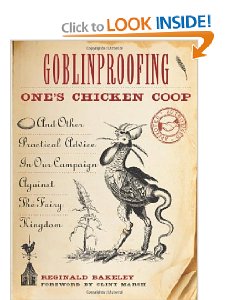
Bookseller Magazine gave their prize this year to Reginald Bakeley for his book Goblinproofing One’s Chicken Coop – and Other Practical advice In Our Campaign Against the Fairy Kingdom. The runners-up were:

How Tea Cosies Changed the World.
God’s Doodle: The Life and Times of the Penis.
How to Sharpen Pencils.
Was Hitler Ill?

In twelve years of teaching workshops and doing critiques I’ve have seen maybe one title that I thought really captured the book’s tone. (It was our own Kathryn Lilly’s Dying To Be Thin.) So I know how hard this is. Here is my advice on titles, for what it’s worth:

  1. Capture your tone and genre. Go on Amazon and look up books similar to yours (cruise the genre bestseller lists). Words have inflection, mood and color. Choose them carefully.
  2. Grab the reader emotionally. Two titles that do it for me: The Unbearable Lightness of Being and The Spy Who Came in from the Cold 
  3. Don’t settle for clichés. Yes, it’s hard to come up with fresh permutations on old standby words (especially in genre fiction where we rely on “dark” “blood” “death” etc.) But you have to find words that are unique about your story and draw upon them. Here’s a great title that twists a cliché word: Something Wicked This Way Comes.
  4. Don’t use empty arcane words that you think sound cool. Examples of bad titles: The Cambistry Conspiracy. (about world trade) The Hedonic Dilemma (about psychology ethics).  Penultimate to Die. (the second-to-the-last victim).  Don’t worry…I made these up. 
  5. Create an expectation about the story. You know why I love this title: A Heartbreaking Work of Staggering Genius? It makes me say, “Oh yeah, buddy? Show me!” and he does.
  6. Be brief and punchy. Okay, I know I just gave you a bunch of long titles I love but there is something wonderful about short titles and studies show most bestsellers have short titles: Gone Girl works. So does Tell No One, Lolita and Jaws (original title A Stillness in the Water).
  7. Make the title work on other levels. This is hard but worth the brain-sweat if you can do it. Consider what these titles come to mean once you get deep into the stories: Catch 22, Silence of the Lambs. But don’t get too clever. I love Louise Ure’s book Forcing Amaryllis and the title is brilliant because it is about a rape and murder. But do most understand that the title is from a gardening term about forcing a plant to bloom early? Not so sure.
  8. Make a list of key words that appear in your book. Is there something you can build on? For our book A Killing Rain, the title came when I heard a Florida farmer describe that drenching downpour that can kill off the tomato crop and we used it in the book. The title was there all the time and we didn’t see it at first.
  9. Search existing works — the Bible, poetry, Shakespeare. I found our title An Unquiet Grave in an 17th century English poem.
  10. Write 20 titles and let them sit for a week or so. Go back and read them and something will jump out. Find some beta-readers you can test with. Titles usually evoke visceral immediate responses. You will know immediately if they connect.

And last: Never get emotionally attached to a title. It’s the worst thing you can do because it probably will be changed. Or needs to be. Because your first title is usually, as T.S. Eliot said, a prosaic every-day thing. You can do better. It’s there. You just have to dig deep. Sweat out that great title that Eliot called the “ineffable, effable, effanineffable deep and inscrutable singular name.”

Answers to the quiz:
The Last Man in Europe (1984)
They Don’t Build Statues to Businessmen (Valley of the Dolls)
Fiesta (The Sun Also Rises)
At This Point in Time (All the President’s Men)
Wacking Off (Portnoy’s Complaint)
How Self-Publishing Has Changed the Industry

by Clare Langley-Hawthorne

I read a recent blog post on The Guardian book blog about the 10 ways self-publishing has changed the book world and, after Jim’s post yesterday, it got me thinking about how I would explain the current state of the book world to friends and family who are neither authors, nor wanna-be writers, but who, as book readers, are nonetheless intrigued by all the changes going on in publishing. 

I’ve summarized the Guardian’s top 10 list below and am interested in whether or not you agree (though I do think most of them are pretty self-evident):

  1. There is now a wider understanding and increased visibility about what publishing is (and acceptance that it’s more difficult than it looks). Self-publishing has enabled people to learn the process and understand what is involved which has led to a wider awareness and diversity in the publishing process.
  2. We are no longer confident that publishers and agents know what everyone wants or should read. 
  3. The copy-editor is now in strong demand as writers realize the limitations of self-editing. Freelance copy-editors are now in high demand by both self-publishing authors and traditional publishing houses.
  4. The book as a ‘precious’ object is re-emerging as publishers produce limited, luxury editions.
  5. Authors are being empowered to do their own marketing and are no longer reliant on publishers to mediate the relationship between authors and their readers. Looking ahead, authors are likely to be less compliant with what their publishers demand of them.
  6. The role of the agent is also changing. With self-publishing, agents need to find new ways to make their work pay.
  7. New business models and opportunities are springing up offering ‘publishing services’ from manuscript and plot development to editorial and marketing assistance. Publishing is thus emerging as a process – accessible as a variety of different services – rather than an ‘industry’ as such.
  8. It’s not all about making money. Self-publishing means recognizing and preserving content that has value for someone but that doesn’t mean the process has to yield an income to be worthwhile.
  9. The end of the ‘vanity press’ put down. Self-publishing is now seen as the ‘homing ground of the instinctively proactive’ – those who can identify the market, meet its needs and deliver directly. 
  10. Self-publishing brings satisfaction and happiness in and of itself as each writer meets their own needs (which may only require a finished product or small sales to a niche market).

The most important element I take from this list is the notion that publishing is emerging as a range of processes, accessible to all, rather than an industry that so many viewed as an impenetrable fortress. I am also intrigued by the comment that authors will probably become less ‘compliant’ with the demands the publishers place on them, as they are empowered to understand their own market and reader needs (especially as authors now have many of  the tools [such as social media] to meet these needs directly).

Here at TKZ we have had a number of blog posts regarding the question of self-publishing, its challenges as well as its rewards. So what would you say is the number one way self-publishing has changed the book world?

Help! I’m Published and I Can’t Get Up!

James Scott Bell
@jamesscottbell

Today’s post is brought to you by Self-Publishing Attack! Nine out of 10 doctors who self-publish recommend it to their patients who self-publish.

***

Over the past year I’ve heard from a number of writing friends, all of whom have been traditionally published. They are facing some harsh realities, like being dropped by their publisher. Or being unable to land another contract because their sales record follows them around like a bad smell. They are good, solid writers who made it into the Forbidden City. But the gendarmes have tossed them outside the gates without so much as a fare-thee-well.


These writers tremble now in the dark forest, wondering about the band of scofflaws who are self-publishing. It’s not something they thought they’d ever want to (or have to) do.

They always thought they’d have that comfortable room in the City, and maybe even get a place at the A List banquet table if things broke right.


But things haven’t broken right. And now they don’t know what to do. So here’s an amalgamation of the advice and encouragement I’ve been handing out:

1. Know Thyself

Are you a writer? Yes, that’s the first question. I mean the kind of writer who can’t not write. If you can do anything else and it improves your quality of life, by all means, do that thing instead. It reminds me of Lawrence Block’s counsel: If you think you want to write a novel take two aspirins, lie down in a dark room, and wait for the feeling to pass.

If you get out of that dark room and know you have to do this, no matter what, take further stock. What type of writer are you? I see four general categories:

Hands off

This is where the author gives everything, including most of the rights and income, over to a publishing house. It must be pointed out, however, that such contracts are increasingly rare, especially for midlist writers whose previous books did not sell. Indeed, several agents I’ve talked to recently say it’s easier to place a new writer than a midlister with poor numbers. And advances are down so low they are starting to feel like retreats. 

Yet many writers continue to pound on the gates of the Forbidden City because of the “prestige” factor. They also hold to the hope that they might make it to national and international bestseller status. If that’s you, just understand that the odds of moving from published to mega-bestselling is an Evel Knievel jump over the Snake River. So wear a helmet. 

Fingers in

There are new ops springing up in the digital world, where the author can contract with a company providing a menu of services. These companies are innovative and fast moving. You share the income, but in terms that are more favorable to the writer who takes the hands off approach. At the Writer’s Digest Conference last week in New York, I heard about one such company, Booktrope. There will be more, many more, down the road. Look over the terms each company offers, and see what other authors say about them. Keep track of the fakes and phonies by looking at Writer Beware every now and then. 

Hands on

This refers to the pure self-publishing writer, who knows writing is (and really always has been) a business. He puts writing as job #1, but places strategic planning as job #1a. He breaks down his publishing career into three parts: a) production (which includes short form and long form work); b) design; c) marketing. He puts in research up front to get his own freelance team in place and, once there, works a plan, works a plan, adjusts, works a plan, works a plan. And, as I say in Self-Publishing Attack, they repeat this over and over the rest of their lives.

More and more we are hearing about even New York Timesbestselling authors who have been crunched by current reality. The aforementioned Mr. Block, who once could find two shelves of his backlist at a Barnes & Noble store, now sees only three or four titles, one copy each. A few years ago he never would have thought he’d recommend a hands on approach, but that was then. In a recent blog post he writes:

“[M]y default response, when someone asks how to get an agent, or how to find a publisher, or any writerly version of what-do-I-do-now, is to suggest publishing it oneself. That’s a course I never would have recommended to anyone, except perhaps the occasional dotard who’d penned a memoir he hoped his grandchildren would read. And now I’m urging it upon everyone—writers whose publishers have dropped them, writers who never had publishers in the first place, writers whose early books have gone out of print.”

Arms around

This is the writer who embraces change and all the opportunities out there. He does not shun traditional publishing, for example, but is open to the right deal (and that means knowing publishing contracts and what terms to walk away from). This writer does not throw flames at bridges. Instead, he builds them—to readers, mostly, but on occasion to the industry, too.

So the very first thing, if you’re a writer who has “fallen,” is to know what type you are. Are you entrepreneurial or highly risk averse? Can you think like a business person, or does the thought of doing so give you the cold sweats?

Since I’m an “arms around” writer, I try to counsel those of the opposite disposition to at least try to know more, do more, take more responsibility for their own life and career. The days of Emily Dickinson are over. I liken the current climate more to the pulp writing days of the Great Depression. Those guys knew it was a business, and had to produce the work to eat.

Get busy, learn, and remember . . .

2. Don’t Give Up, Ever

You have the talent and the craft. That was proved when you signed with a publisher once upon a time. You can still write, so do it. Produce the words. Spend some part of your week, whatever you can spare after the writing is done, studying the new landscape and applying what you learn.

Finally, get rid of all expectations. Expectations are for chumps. The only thing you can control is the work you do today, and then tomorrow. If you are a writer, you write, even if you never sell another thing. But you will. As I told my workshop in NY, your Ficus tree will make something, if it follows the right plan. It may just be enough for a specialty drink at Starbucks (assuming your Ficus likes coffee). But it will be something, and something is better than nothing (I took high school math).

Get up and write, friend. You are not alone. And you are not down for the count. The future is bright for the writer who won’t give up.

Living in the Past

I received a nice present in the mail this week from one of my best and oldest buds,  he being former radio personality extraordinaire, editor, movie critic and all around good guy Jeff Gelb. Jeff was and is a huge fan of popular culture, including detective fiction. He was at a Pulp Fiction Festival (the genre, not the film) in Los Angeles recently, visited the dealer room, and popped for a couple of old magazines from my past: Real Detective and For Men Only. Don’t tell anybody, but I got a little misty-eyed when I opened up that plain brown envelope and found those treasures.


Those magazines were a part of my childhood. I grew up in an era when gentlemen got haircuts every two to three weeks whether they needed it or not. The barber shops didn’t have all of the frou-frou crap that they have now. Amenities consisted of a barber pole in front, leather chairs to sit in while you waited for a barber, a gumball machine, and magazines. None of the barbers — not stylists, but barbers — would have been mistaken for Ru-Paul, either. Each and all would be squared away, wearing pressed black pants and white collarless button-up shirts, like they were interns or something, with their tools of the trade on a sink behind them. Hair tonics like Vitalis, Brylcreem and Wildroot were lined up with military precision, with different styles and lengths of scissors laying at the ready next to them. The big deal at the barbershop, however, was the reading material. There were comic books, sure, but there were also stacks and stacks of different magazines, such as the Field & Stream and Popular Mechanics.  And then there were the marginal publications that weren’t quite of the level of Playboy but were “gateway” literature, if you will. One or more of the barbers might frown if you were in short pants and busily thumbing through such lurid articles as “Babes, Brawls and Border Smashing” — many was the time I missed hearing my name called, so absorbed was I in the reading material — but the general rule was that if you were old enough to get your hair cut without mommy waiting with you then it was none of their business. The drugstore and supermarket didn’t consider their magazine sections to be the library, but at the barbershop you could read

 Stag and  Saga and the aforementioned For Men Only. The covers were always adventure-themed, with generic, very capable-looking Marlboro men rescuing women in danger of losing their lives or their underwear, in no particular order. The so-called “true detective” magazines ran a close second, with exciting article titles gracing lurid covers. A publication that met readers of both types of magazines was an irresistible piece of trashy wonder titled The National Police Gazette. The latter was an extremely popular periodical, though no one would admit it. When I was an altar boy (yes, I was) my school was selling magazine subscriptions as a fundraiser.  I asked a geriatric priest I knew if he would be interested in purchasing any subscriptions. He asked, with a smile on his face and a twinkle in his eye, “Ya got Police Gazette?” I responded “I wish!” which brought a coughing fit on him so severe that I thought we were going to have to call the emergency squad.

Those magazines are long gone. Stag and the like reached a point where they had to, uh, up (or maybe down) their game to compete with such upstarts as Penthouse and such and just couldn’t meet the production quality (yeah, I know, I know).  The true detective magazines collapsed under their own weight; there were just too many of them. Still, I miss those magazines, and I didn’t have any of them (the “why” is a tale for another time), which is why my friend’s generous gift meant so much.  One of the many sad things about their absence is that they provided a good place for fledgling authors to hone their chops and make some money along the way. Lawrence Block, Stephen King, and Harlan Ellison all paid for electricity and food and diapers with stories in such magazines. The issue of For Men Only which I received contains an excerpt from a new (at the time) book by Alistair MacLean titled THE WOMEN TAKERS, which, we are helpfully informed, is a $5.95 bestseller (that is what a hardback book would set you back in 1968). The same issue contains some lurid but well-written short fiction written by Donald Horig, who would go on to become a well-respected and prominent baseball writer. Horig is still alive, probably cringing at the mention of the story, entitled “The Taming of Mona.” If he’s embarrassed,he should not be.  There are still a few avenues for writers to display their wares — the science fiction and mystery digests come immediately to mind — but  there aren’t many. They’ve gone the way of the traditional barber shop. I miss both.

I ask this question primarily of older readers, but you younger folks can absolutely join in the fun as well: what magazines do you miss, ones that you read during your childhood and teen years but are no longer published? It can be anything from Pageant  to  Humpty Dumpty to Photoplay to, yeah,  The National Police Gazette, but what do you miss? And why?

So long, farewell, auf Wiedersehen, goodbye…

by Michelle Gagnon

Back in July of 2008, the lovely Kathryn Lilley first contacted me

about joining a group blog composed of like minded authors. Originally, there were six of us: Kathryn, John T. Gilstrap, Joe Moore, Clare, John Ramsey Miller, and myself. Sundays, we hosted guest bloggers, starting with Tim Maleeny, Alafair, Burke, and David Hewson. 

I confess to getting a little misty as I scrolled back through our early posts. Over the past nearly half a decade, we’ve held forth on everything from the craft of writing, our favorite books and films, and a multitude of other subjects (some more random than others). We’ve critiqued numerous fantastic works in progress, and gotten to know some of our regular commenters so well that frequently as I’m reading a post, I’m already anticipating how Basil Sands will weigh in on it (entertainingly, as always). This has become a family, in so many ways. 

Most of you haven’t seen behind the curtain. There has occasionally been controversy, when some of us disagreed on whether or not a particular post was right for TKZ (the debates were sometimes heated, although they always remained respectful). We’ve empathized and supported one another through illness and loss. We’ve become a community that I am so proud to be a part of.

And over the years we’ve added other wonderfully talented novelists to our ranks; each of them has brought something to the table, adding their own insights and thoughtful commentary. The addition of Boyd, Nancy, PJ, Joe Hartlaub, Mark, Jim, and of course my every-other-Thursday counterpart Jordan, has gone a long way toward making this daily shout into the wilderness required reading. Some of our posts have been referenced by The Wall Street Journal and The New York Times. Our average daily hits have grown from under a hundred at the outset to an average of a thousand a day, and we’ve passed the one million mark for all time pageviews. We were also recently recognized by Writer’s Digest as one of the “Top 101 sites for Writers,” which has been immensely satisfying. I’m humbled to have been part of something that has proven so successful, and that has hopefully helped other writers navigate the minefields of the publishing industry. And personally, I love that our all time most popular post was Clare‘s, “Top 5 Best Sex in Literature,” (14,252 hits) followed by Jim’s aptly entitled, “Rhino Skin” (13,113). For me, that pretty much sums up the vast range of topics that we’ve covered over the years.

So it’s with great sadness that I announce that this will be my final post for The Kill Zone. Over the past five years, I’ve gone through a series of personal struggles that have changed my life irrevocably (mostly for the better, but it was a long and winding road getting there!) My career has undergone tremendous turmoil. I went from fearing that I would never get another book contract, to suddenly finding myself committed to writing three books in a year (a good problem to have, but still–overwhelming). I’m the single parent of a young child, which is immensely rewarding, but also time consuming. My daily obligations are such that something invariably always seems to fall by the wayside; too many plates spinning simultaneously, as the saying goes. In order to stay true to the spirit of this blog, I want to make sure that TKZ does not become the plate that I drop. Which means that it’s time for me to step aside.

I’ll miss you all–but will be stopping by regularly, as a commenter this time. 

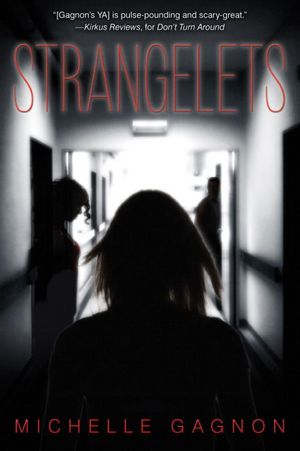
Side note: I released a Young Adult standalone thriller this past Tuesday with SoHo Press. It’s called STRANGELETS, and marks a departure for me. I credit TKZ with pushing me out of my comfort zone–so many of the posts here have expanded my horizons as a writer, and convinced me to challenge myself. So this is my first attempt at true world building, in a dystopian alternate universe. I hope you’ll consider giving it a read.

And I do hope to stop in occasionally with guest posts, if they’ll still have me! 

Best,

Michelle

Books That Inspire

Nancy J. Cohen

My daughter, who is a busy career woman, would rather watch TV to relax than read a book. No matter how much I try to convince her that reading novels can be valuable, she is not a Fictionista. I started thinking how books have influenced my life.

In the early days, I read Nancy Drew, Cherry Ames, and Judy Bolton mystery series. This initiated my love for the genre but it did more than that. Reading about Cherry Ames made me want to be a nurse. I wanted to ease people’s fears in the hospital and help them deal with illness. And so I volunteered in the local hospital and took employment, when of age, as a nurse’s aide for a summer job. Nursing school loomed in the future following high school.

A career choice faced me. I was also a student of ballet and could have auditioned for a professional company, but that would have meant daily rehearsals and giving up my ambitions to be a nurse.

Nursing won out, and I graduated with a bachelor’s degree. If you take a look at a site like www.testprepselect.com/medical-nursing/best-mcat-books/, you’ll get an idea of the sort of books that I would have had to read while I was at nursing school. As I am a big fan of reading, I did not find it boring or hard work. In fact, it kept me going. Plus, I was constantly learning something new daily.

Meanwhile, I was still an avid reader and had even tried my hand at some short stories. But it wasn’t until grad school in nursing that I decided to write a novel. Stories by Mary Stewart, Victoria Holt, and Phyllis Whitney inspired me to write romantic suspense. I bought a book called Structuring Your Novel and that’s how I learned to write a full-length book. I wrote six books before one sold. My romantic suspense never got anywhere. When I combined my love of scifi with romance, that’s what sold. Now I had two blossoming careers. What next?

I discovered humorous cozy mysteries with Jill Churchill. Oh, my. These were great. I liked the humor. I liked the structure. And so I wrote one. That sold, and the Bad Hair Day mysteries were born. Now I’m retired from nursing but the writing career is still going strong. Thanks to these books I’d read, not only did I become a writer, but I practiced ten good years as a registered nurse.

What books have inspired you in life? Have any of them led to a career other than writing?

How do you like your critiques cooked?

Breaking News: We recently learned that TKZ is listed on Writer’s Digest Magazine’s list of “101 Best Websites for Writers“.  We’re totally thrilled to make that list, and we pledge to do our best to live up to that honor going forward!

Today, TKZ’ers, we have a question for you about critiques and how they’re delivered.In years past, we’ve done critiques of reader submissions once a year. We normally accept a limited number of one-page submissions, and then we post our critiques over a span of several weeks. (For an example of how the critiques work, click here.)
This year we’re thinking about changing things up a bit. We’re considering making the critiques a regular feature of the blog. If we adopt this change, we would post a first-page critique every other week,  instead of posting them all at once over a span of several weeks.
Is that a change you’d like to see? And while you’re at it, do you have any other thoughts about critiques? Bouquets, brickbats? Let us know!

Falling in Love with Words: A Tragic Romance

by Boyd Morrison

We’re readers and writers. We love words. We love their musicality and rhythm, their evocation of achingly beautiful images and thoughts, and their ability to convey us to fantastic worlds and tell exhilarating stories. But what if our love of words transmogrifies into an unhealthy obsession with one word in particular, stalking it like a psychotic spurned by a paramour to the point that it wants to take out a restraining order against us?

I speak from my own sordid experience. I recently received the copyedits back on my latest novel. Overall, the changes were minimal, except for one specific piece of feedback: the copyeditor remarked on my absolute adoration of the word “just.” I thought perhaps she was exaggerating until I did a search for it. In my 93,000-word novel, I had used “just” 232 times.

Some words must be used over and over. There is no substitute for “the,” and any replacement for “said” has to be used judiciously and infrequently unless you’re writing a Hardy Boys mystery. But while “just” has many proper applications, I had employed it primarily to amp up the suspense. Someone had “just a minute” until the bomb went off. Or a person ducked behind a statue “just as bullets slammed into the wall around her.” As I re-read the copyedits, it became comical to see how often “just” appeared, sometimes three or four to a page.

I’m grateful that my copyeditor called them out. A reader who encountered all of them might come to wonder if I had any other way to build the tension in a scene. “Just” still had its place in the novel, but I got rid of half the occurrences.

Repeated use of a word can be distracting and take the reader out of the story, especially if the repetition occurs in close proximity. In a single paragraph of the novel during a fight scene, I used “bashed” twice. I replaced one of them with “kicked.” The online thesaurus gets a lot of use during the editing phase.

Unusual words only have to appear two or three times in a novel to seem overused. In another novel I realized I had used the word “pristine” seven times. My theory is that as I was writing the manuscript over the course of months, I would get to a place where I needed a word to mean “spotless” and thought to myself, “You know what word I haven’t used yet? Pristine.” In another month of writing, I’d forget that I’d used “pristine” and have the same thought all over again. After copyediting, I ended up keeping only one “pristine.”

I don’t think I have a way to turn off my need for repetition. It seems to occur no matter how consciously I try to avoid it. That’s why having an independent editorial eye is so important. I suppose I use similar unusual words and turns of phrases from novel to novel, but no editor that I’ve worked with goes through every book in a writer’s oeuvre to make sure that doesn’t happen. I’m happy enough to minimize them in a single novel.

I’d love to hear from other writers what words you’ve fallen in love with in your own manuscripts. Just try me.

Dreams, Reality and Writing

James Scott Bell
@jamesscottbell


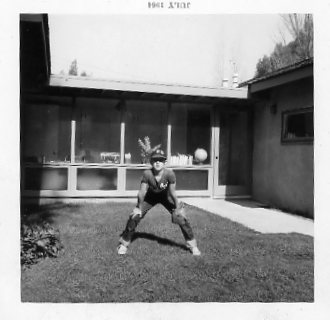
There he is. Jimmy Bell, age 10, crack third baseman for the Red Sox of the Sunrise Little League in Woodland Hills, California. He’s ready for anything. And his head is full of dreams.
He dreams of playing third base in the Major Leagues. Of playing it like Brooks Robinson, maybe the greatest defensive infielder of all time. He dreams of hitting like Mickey Mantle, but doing it all in Dodger blue. 
The dreams keep him happy in the summer, when the smell of grass from the field and hot dogs from the Snack Shack create the aroma of the possible.
But then somewhere along the way, reality sets in. In its cold, nasty fashion it wakes him up and sets a full length mirror in front of him and says, “Look. Do you see your dream in here anywhere? No? That’s right. Because it ain’t gonna happen, kid.”
No one really likes reality all that much, do they?
Which is why you should give it a kick in the classifieds every now and then.
Which is what Jimmy Bell did after realizing his Major League career was a longer shot than William M. Gaines winning the Pulitzer Prize. (And if you don’t know who Bill Gaines is, read up on him, for he had a greater influence upon America than Henry Luce!)
My dreams switched to basketball. If baseball was my first love, basketball was my true love, the girl I wanted to marry. And working as hard as I could I became one of the best pure shooters in my town, which happened to be a big one called Los Angeles. I dreamed then of wearing Lakers gold.
In college, though, reality came calling again. This time, in the mirror, it showed me the body made of the DNA of my Irish and Scottish ancestors. A body that was not made for quickness or jumping but for klonking slow Englishmen on the head with rocks. Had I been deeded the body of a Jerry West or a Walt Frazier, I daresay I would be in the Basketball Hall of Fame today.
I refused, however, to let reality keep spoiling my parties. I started dreaming of an acting career, of becoming another Brando or Newman. Reality kept its distance this time. It knew I had a few good kicks in me. And it was going good there for awhile—Off-Broadway, commercials. Then I married a beautiful actress and decided that was a dream realized, and I wanted to support a family.
Thus, I went to law school, dreaming of becoming a famous trial lawyer. This was firmly within my grasp. But with two young kids and a long commute to a big law firm, reality whispered something to me: if you really want to be the best, you’re going to have give something up. Like time with your children while they’re young.
I downsized, opened my own office (with my dad, an L.A. lawyer), and was a seven minute drive from my house.
Hovering over all of this was another dream—of becoming a writer. Off and on, through boyhood and school years, I thought it would be wonderful to be able to write books and have people buy them.
But some mob hired reality as a hit man, because it kept shooting me down. It told me I didn’t have what it takes to be a writer. That I couldn’t ever learn how to do it. Its favorite phrase, spoken with a cigarette dangling from its lips, was, Writers are born, not made, kid. And you’re not a writer.
Rather than take more punishment, I put the writing dream away. But it came back, years later, in a movie theater. My wife and I were at a double feature. One film was Wall Street. The other was one I’d hardly heard of, Moonstruck. But that was the movie that knocked me out. It was one of those rare experiences that sweeps you up and holds you tight and makes you happy you’re alive.
And I knew I had to try the writing dream again. Had to. I wanted to write something that would move an audience like Moonstruck had moved me. Reality be hanged! I was going to shove reality out of a moving car on a steep grade.
I set out to do the thing reality said could not be done. I read books on writing. I devoured them. I subscribed to Writer’s Digest and highlighted the articles on fiction craft. A few years later I was a published novelist. Then I was making a living at it. Still am. Not bad for somebody who was “not born” to write.
So what would I say to Jimmy Bell, age 10, if I could go back in time? I’d tell him to keep on dreaming, but be ready to change dreams once in awhile. Work hard, drive toward what you yearn for, but also adjust to the curveballs life throws you. Maybe I’d even give him a few lines from Kipling’s If, just to show him he’s going to grow up and know some poetry:

If you can dream, and not make dreams your master;
If you can think, and not make thoughts your aim,
If you can meet with Triumph and Disaster
And treat those two impostors just the same…

If you can fill the unforgiving minute
With sixty seconds’ worth of distance run,
Yours is the Earth and everything that’s in it,
And, which is more, you’ll be a Man, my son!

So, if you had the chance, what would you tell your ten-year-old self?