The Stars Are Out at ThrillerFest
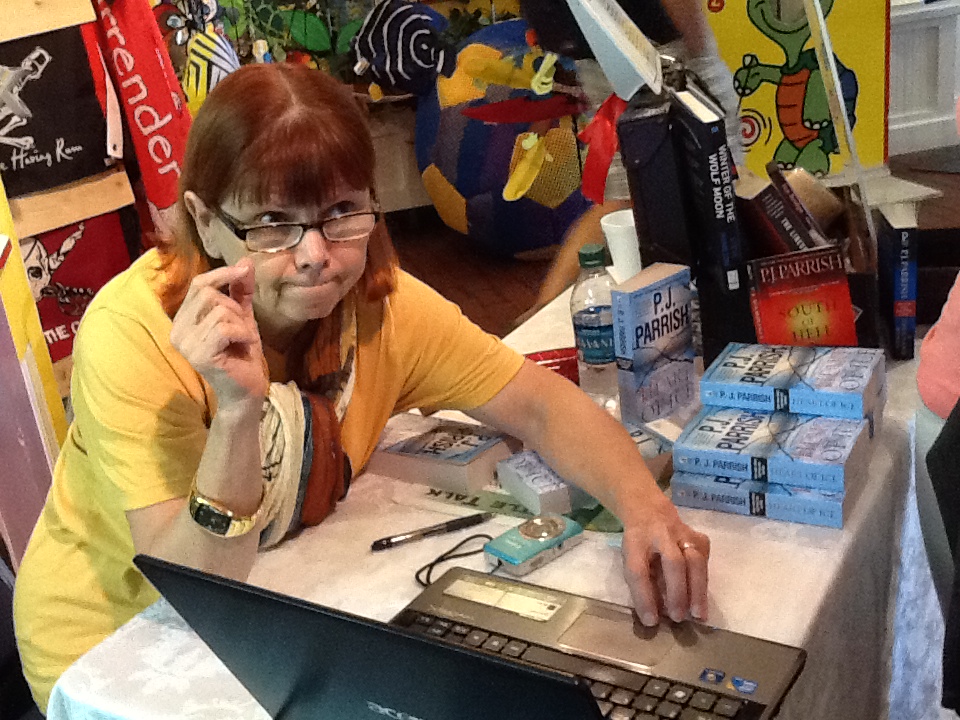
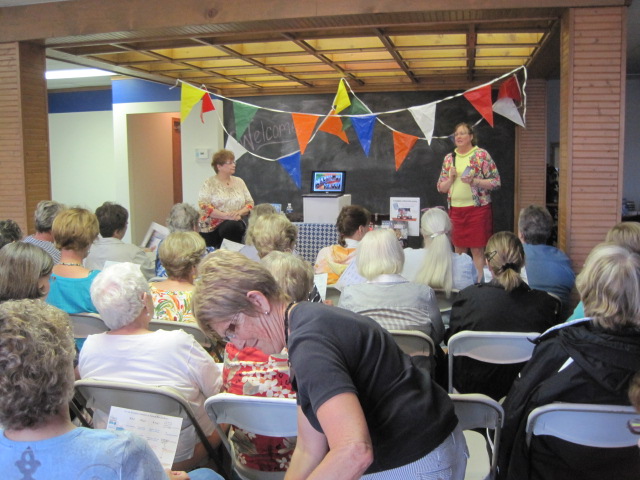
I would love going to an actors’ convention where I could have dinner with Sandra Bullock, take an acting class from Michael Caine, audition for a role in the next Spielberg movie, and share laughs at the bar with the cast of Castle. Won’t ever happen. It sounds too good to be true because it is. But that kind of dream conference does exist for thriller writers and fans. It’s called ThrillerFest, which will be held in New York City on July 10-13, 2013.
The attendees this week include writers who live on the New York Times bestseller list. The five spotlight guests alone–R.L. Stine, Anne Rice, Michael Connelly, Michael Palmer, and T. Jefferson Parker–have sold somewhere in the neighborhood of 500 million books. And everywhere you look at the conference, you’re blinded by the star wattage: Lisa Gardner, Steve Berry, Lee Child, Catherine Coulter, Douglas Preston, Heather Graham, Brad Meltzer, Joseph Finder. It’s as if you could get into the Oscars merely by paying a registration fee.
But the really amazing thing about ThrillerFest is that you get to meet and talk to these people, not just ogle them from afar. When I was a newbie unpublished author at the inaugural ThrillerFest in Phoenix seven years ago, I didn’t know a soul. At the opening cocktail reception, I spent most of the time ambling about, listening in on snippets of conversation as I tried not to spill red wine down my shirt. Then I spotted Jon Land, an author I’d been reading for years. I gathered up my courage and nervously introduced myself, telling him that I was a huge fan. To my shock he asked me to join his group for dinner, where we had a fantastic time. In what other entertainment medium could that happen?
While I’ve mentioned some of the big names you can hobnob with, there are also plenty of up and coming writers who attend, some of whom will be household names in a few years. Imagine getting to know Dan Brown or Stephenie Meyer just before they hit it big. And because I’ve gone to the convention every year, I’m lucky to count many of these future publishing phenoms as friends.
ThrillerFest is also a great deal for unpublished authors looking to break into the business. Through an event called AgentFest, aspiring writers can pitch their novels to a who’s who of the biggest agents in publishing. I was fortunate enough to find my own agent there. Before I met her my manuscripts barely got a nibble. Now I’m the director of AgentFest, my sixth thriller, THE LOCH NESS LEGACY, has just come out, and my novels are published in 22 languages. If I hadn’t attended ThrillerFest, who knows what I’d be doing?
For those looking to hone their writing skills, CraftFest offers a wealth of knowledge that is available nowhere else. You can actually take writing classes from legendary authors like Connelly, famed for books such as THE POET and THE LINCOLN LAWYER, and David Morrell, the creator of Rambo. The biggest problem is the information overload you might experience trying to cram every nugget of wisdom into your brain.
The best part of the conference is hanging out with these authors at the bar, the central gathering place. At first you’ll regard them with awe that they have descended from the heavens to walk amongst us. Then when you’re introduced to them, you’ll realize that they’re just people, too–although extremely talented, friendly, fascinating people. They’re happy to greet fans and share their insights about the business. Buying them a drink doesn’t hurt, either, though this being New York you’d better hang onto your wallet for a bumpy ride.
If you do get some of these writers liquored up, don’t be surprised if you laugh yourself silly as they spin wild tales of publishing wackiness, crazed fans, and book tours gone wrong. After all, these people know how to tell a story.
The Magical Midpoint Moment
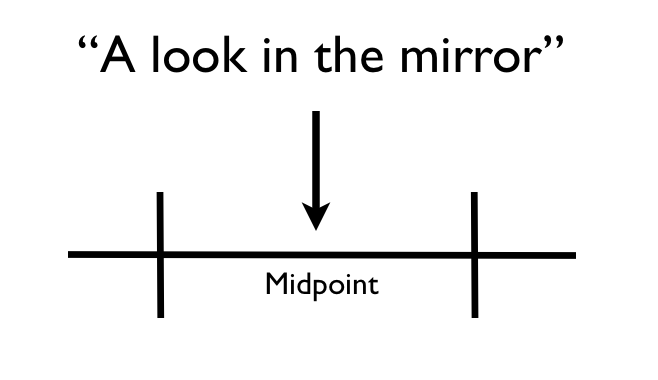
These two basic thoughts are not mutually exclusive. For example, an action story may be given added heft by incorporating the first kind of reflection into the narrative. This happens in Lethal Weapon when Riggs bares his soul to Murtaugh, admitting that killing people is “the only thing I was ever good at.”
Also, notice how this is different from other definitions of the midpoint you’ll see. Virtually all books on the craft approach it as another “plot” point. Something external happens that changes the course of the story. But what I detect is a character point, something internal, which has the added benefit of bonding audience and character on a deeper level.
Finally, in Sunset Boulevard, in the middle of the movie to the minute, Joe Gillis also has to decide what kind of man he is. Norma Desmond, his benefactor and lover, has tried to kill herself because Joe found a girl his own age that he wants to start seeing. When Joe hears about it he rushes back to her mansion with the thought that he’ll finally tell her it’s over, that he’s leaving. But she threatens to do it again. And Joe sits down, literally, next to a mirror. In that moment he makes his fateful decision, the one that drives the rest of the movie.
Could the reason these movies are classics, and others not, be that the writers understood the power of the look in the mirror? Whether instinctive or purposeful, they knew exactly what to do.
Books:
In the middle of The Silence of the Lambs, Clarice is alone in her room, having just heard of Chilton’s betrayal of Lecter, meaning she won’t get any more information from him, meaning the certain death of the kidnapped girl she’s been trying to save. The odds are now firmly against her and the FBI. In the shower, Clarice reflects back on a childhood memory which symbolizes loss for her.
At the midpoint of The Hunger Games, Katniss accepts the fact that she’s going to die. The odds are too great: I know the end is coming. My legs are shaking and my heart is too quick . . . . My fingers stroke the smooth ground, sliding easily across the top. This is an okay place to die, I think.
Of course, not every film or book will have a “mirror moment” like I’ve described. But the ones that do have a depth about them, a better cohesion and focus, and a satisfying arc. That’s the sort of thing that makes a reader search out more of an author’s work.
GOING BACK: THE ANGRY PLANET
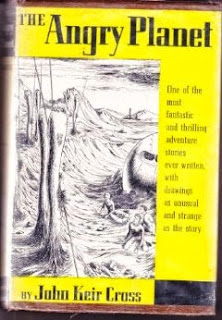
Sometimes I sits and thinks and sometimes I just sits. I was sitting and thinking yesterday when a book that I last read around fifty-five years ago, when I was but a wee lad, popped unbidden into my head. It was a science-fiction novel, now long out of print, titled THE ANGRY PLANET and it was written by a British author named John Keir Cross. I can remember exactly where I got the book — the Lane Avenue Shopping Center branch of the Upper Arlington, Ohio Public Library system — and why I picked the book up. There was a movie that was heavily advertised at the time titled The Angry Red Planet that was making the rounds of the drive-ins at the time, and I thought that maybe the film was based on the book. It wasn’t, and as it turned out the book THE ANGRY PLANET was much better than the similarly titled movie could have ever hoped to be. It was, in fact, the first book that really and truly grabbed me by the lapels and made me a reader.
THE ANGRY PLANET was aimed squarely at the youth market in general and boys market in particular, and was originally published in 1946. The basic plot concerned a couple of teenagers stowed away on a rocket to Mars and had a number of adventures. There were two species of Martians at the top of the food chain which naturally were at mortal war with each other. One type was tall and thin and benevolent and friendly and resembled a celery stalk; the other type was short and squat and evil and resembled a mushroom without the stem. The nice Martians had these long, thin razor-sharp swords which they used to dice the bad guys up; they needed them, because the bad guys were much stronger, and possessed these powerful tendrils which they used to pick the nice guys up and snap them in two like a Slim Jim or a…well, like a celery stalk. The book ended with the Earth guys escaping from Mars by the skin of their teeth just as it looked like the nice Martians were going to lose a huge battle with the nasty ones. I read that book several times; at some point after the fact learned that there was a sequel to the book titled RED JOURNEY BACK, which I never saw or got to read. Remember, this was in the very early 1960s, when the only “Amazon” was Wonder Woman or a river in South America, take your pick, “computers” were what we called people who could operate slide rules or adding machines, and “kindle” was something you did to keep the fire going. Things moved on. I discovered detective fiction and paperback books on those revolving wire racks in the drugstore. But I never really forgot THE ANGRY PLANET. Sure, it got buried in my subconscious under birth dates and telephone numbers and learning how to drive, but I never truly forgot that book. Cross really had a talent for writing battle scenes, and the story was illustrated here and there with black and white line drawings that were somewhat disturbing for reasons that I couldn’t quite identify then but undoubtedly could today, if I had a copy of the book in my hand.
Just for grins I thought I would see if RED JOURNEY BACK was available on any of the e-book platforms. It isn’t. Along the way, however, I did some research and learned that Cross, back in the day, was somewhat renowned as a writer and editor of adult horror fiction. Some first editions of his work, including THE ANGRY PLANET, trade hands for a pretty penny. I also discovered for the first time that I’m not the only one who read THE ANGRY PLANET; there are any number of bloggers out there with memories better than mine who also have an actual copy of the book and still take time to re-read it.
Accordingly, I’m wondering…what is the first book that really and truly made you a reader? Do you have a copy of it? Is it still in print?
Reader Friday: Why the Flops?
Looks like Disney’s $259 million reboot of The Lone Ranger is headed for Flop City. It follows another major disappointment, Sony’s $150 million White House Down. What do you suppose is going wrong?
Interface: A Critique
INTERFACE (a thriller)
First Page Critique
Tom Faraday awoke feeling like he had been sleeping forever, and immediately struggled to recall where he was, or how he had got there. Some nights, he reflected, you hope you remember. Others you hope you forget. Tom was not sure which category the previous night would crystallise under. Right now he was just feeling the after effects of what must have been an evening of extraordinary excess.
He rolled over in the hotel bed and blinked repeatedly. The alarm clock read 8:30 a.m. Next to the clock was his watch, and next to that an electronic card key for his room. Picking it up he saw he was at the Western Star Hotel, in Waterloo, central London. This seemed vaguely familiar, but a stabbing pain deep in his head was making it hard to think clearly. He slipped on his watch, a present from his mother, slid out of bed and padded across to where his suitcase lay open. From a small zipped compartment he retrieved paracetamol and swallowed them down with gulps from a bottle of mineral water. He then stumbled into the bathroom, and was greeted by a tired visage in the mirror. His eyes were bloodshot, hair unkempt, stubble unusually obvious. He stroked his chin distractedly, thinking he must have forgotten to shave the previous day.
Back on the desk he found an elegantly printed invitation, and as he read it his memories started to return. The card bore his name in calligraphic handwriting, and was to the launch party for CERUS Technologies’ new office building. Tom rubbed his eyes and thought hard. What did he know?
He knew his name. He knew his age: 26. He remembered his job. He was a lawyer at CERUS Technologies. And he remembered the party.
He remembered getting there by taxi, late on Friday night. He remembered William Bern’s speech. And he remembered drinking a few beers. And then a few more. Perhaps a lot more. Of the trip back to the hotel, he remembered nothing. Friday night had come and gone.
He stretched slowly and looked for another bottle of water. Apart from the headache he did not feel too bad. Hopefully no harm done, and the rest of the weekend to recover. The noise of a mobile phone ringing broke him from his thoughts. His phone. He retrieved it from his pocket, noticing the battery was nearly dead.
<><><>
Critique by Nancy J. Cohen
The opening line is great. It immediately draws me in, wondering the same thing as the character. Where is he, and what is he doing there? I would delete “he reflected.” We’re in his viewpoint, and that qualifier is unnecessary.
Crystallize has a “z” not an “s”.
Delete the “just” before “just feeling.” This is one of those overused words. For more info in this regard, please see my review of a fabulous self-editing program at http://bit.ly/12iU9nZ. The Smart-Edit software points out all the words and phrase you overuse and much more.
What kind of drug is paracetamol?
I’d separate into a new paragraph, “The noise of a mobile phone…”
The cell phone is in his pocket? Is he still wearing his clothes from the night before? Or did he get dressed in them?
So the guy is hungover from a workplace party. I’m intrigued, but I am wondering where this is going. Hopefully the caller will inject more information. You do point of view very well, and I have no problems with the pacing especially if a dialogue ensues.
At first, I thought Tom had memory loss and couldn’t remember how he got where he is. But he does seem to recall everything, except maybe the cab ride back to the hotel. Then again, where does he normally live? My questions tell you I am hooked and would read more. I’d be hoping, though, that something happens to tell me all isn’t right and things are going to get hairier from here on in. Good job and Happy Fourth of July!
Writing Contests
Nancy J. Cohen
Writing Contests for Published Authors
Being a finalist in a writing contest can lift your mood, while not earning any kudos can depress you. So why enter them at all?
One reason to enter a contest for published authors is to expose new readers to your work. A judge might become a new fan. It’s another way to get your name out there. Plus, if you win, you’ll be able to call yourself an Award-Winning Author. That looks good on your book cover and in your professional biography. If you’re a finalist, you can get mileage out of that term as well. The ensuing publicity can broaden your readership.
On the other hand, low scores can totally strip you of confidence. In the mystery field, there aren’t a whole lot of contests to enter. If you write humorous cozies like I do, there’s no sense in entering the Edgars. You have to be nominated for most other awards like the Agatha, and that becomes a popularity contest as conference goers vote for the winners. There’s little judging with feedback or specific criteria like in the romance field.
Thus this past year I entered both my paranormal romance and my mystery into separate contests sponsored by RWA chapters. I did enter Shear Murder in the Florida Book Awards, even knowing a work of serious crime fiction would be more likely to win. My purpose was to gain the attention of whatever librarians might read my entry, although with the $50 entry fee, the cost of four print books (over $50), and the $15.41 postage, I might not bother again.
My romance didn’t garner a single nod in the myriad of contests I’d entered. I could understand this reaction because my mixed genre story might not appeal to the standard romance fan. My paranormal romance stories have a humorous touch and blend elements of science fiction and fantasy with mythology.
I’d had better hopes for my mystery, Shear Murder, but this title didn’t make the cut at the Daphne award sponsored by RWA’s Kiss of Death chapter. I’d entered it into the mainstream category because romantic suspense is more the cup of tea for this group. And then I got my scores back. Talk about demoralizing!
My heart sunk at the first score, 44 out of 88. Is my writing that bad? Does my series only appeal to a select group of fans? But as I read the comments, I realized that maybe this judge didn’t read a lot of cozies. Her final remark was, “A struggle to complete the reading.”
Oh, wait, there were two more scores. My spirits lifted. The next one was 72 and the last one was 87 out of 88! The last judge said, “This book is superb; masterfully written.”
So who am I to believe? Judge number one or Judge number three? Might I have finaled if not for that one judge who obviously didn’t get my work?
It doesn’t matter. The point here is that judging is subjective. One reader might love our book and another might say it should never have been published. I went for the goal and didn’t make it, but that doesn’t mean I won’t try again. I did, once in my lifetime, win the HOLT Medallion Award. If it happened once, it can happen again. You just have to grow a thick skin to keep trying and weigh the investment of time and money against the possible benefits.
Do you consider writing contests for published authors to be worthwhile?
Writing in cold blood
Like many people, I’m fascinated by sociopaths. In particular the violent, physically attractive ones–think Ted Bundy and Jodi Arias–make me wonder: What makes them tick? How did they become monsters? How do they behave when they’re flying under the radar, before revealing their violent natures?
As writers it’s our job to dissect what motivates our characters. Many writers fall into the trap of writing psychopaths (a term that is interchangeable with sociopaths) as cardboard, two-dimensional characters. Evil requires a special effort to make it believable. And even to make it, ugh, sympathetic.
Science gives us some clues about ways that psychopaths reveal themselves in speech and mannerisms. A computer analysis of interviews with 52 convicted murderers who tested positive for psychopathy showed that all the men spoke with little emotion, used cause-and-effect statements to describe their crimes, and emphasized basic needs such as food and money.
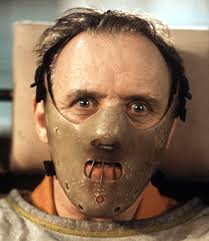
That finding poses a problem for writers: Unemotional characters who speak in cause-and-effect statements can be boring on the page. So when we’re creating a psychopath, we need to reach beyond the typical behavior. We might choose to make them charismatic and larger-than-life (Hannibal Lecter and the Batman villains, for example). Or we might decide to make them more human. After all, there are lots of murderers who aren’t psychopaths. They might be driven by revenge, a sense of mission, or even a warped value system (Dexter).
This topic has been on my mind because I’ve been reading The Psychopath Test: A Journey Through the Madness Industry.The book offers a fascinating insight on psychopaths, as well as the psychiatric industry that treats and categorizes them. The book includes the standardized test, the Levenson Self-Report Psychopathy Scale, to analyze whether a person exhibits sociopathic traits. Here’s an online cheat sheet to the test. Let us know how you score, if you feel like sharing! Disclaimer: It takes a trained professional to administer the actual test and analyze it, so we won’t start shunning anyone in the grocery aisle who comes back with a high score!
Truth is way Better than Fiction
The recent Edward Snowden affair reaffirms my belief that a) nothing in fiction is any where near as strange as reality and b) a good spy/traitor (is he/isn’t he) story is even more compelling in real life as it is in a story. As a mystery writer I love contemplating ‘what if’ scenarios and recent events such as these always make me look back at history and consider how I would craft a story based on some of the key events and people involved in ‘exposing’ state secrets or engaging in various levels of subterfuge or espionage.
No matter what you might think of the current Edward Snowden affair, it’s hard not to argue that it doesn’t have thriller appeal. It has a potentially unreliable narrator, the disclosure of secret and classified material, a desperate flight to an old cold war enemy, and the likely involvement along the way of various secret service agencies. It reads just like a thriller – no?
And with all this going on, I got to thinking about some of the more notorious spies and potential traitors in history and how it would be interesting to explore their stories. Indeed the inspiration for my third Ursula Marlow novel, Unlikely Traitors (due out in late fall – more on that later in the summer!), was Roger Casement, who was hanged as a traitor in 1916 for inciting rebellion in Ireland (and involving a possible collusion with Germany). I would also love to explore the story of another spy of the same era, Sidney Reilly, the so called “Ace of Spies”, because the ‘truth’ behind both these stories are so elusive.
So for all you thriller writers, which spy (or alleged spy) would you most like to write about and why? What era/personalities intrigue you the most? Is there any real life story that you are itching to tell because, as with Edward Snowden, the truth is even more bizarre than fiction?
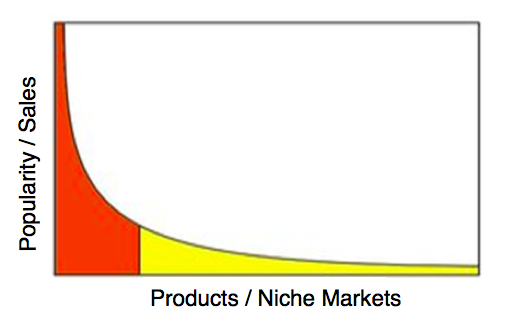
We Are All Long Tail Marketers Now
by James Scott Bell
@jamesscottbell
You don’t need co-op or front of brick-and-mortar store placement.
You don’t need blurbs from star authors.
If you are a traditionally published author, you need to at least set up a footprint in self-publishing. Talk to your agent and editor about this. Think in terms of non-competitive and complementary short-form work. That is platform building of the best kind.
[I’m teaching all day today, but I’d love to hear your comments. Have at it!]