Writing When You’re Tired

James Scott Bell

Man, I’m tired. 

I’m sitting in one of my branch offices. It has a round green sign outside and serves coffee all day and into the night. Of course, you have to pay for the coffee, but since the rent is otherwise reasonable I don’t complain.
I’m tired because I didn’t get enough sleep last night. I woke up at three, wide awake, knew I wouldn’t get back to sleep, so I got up and watched Mike & Mike for awhile, did a little email, tried to get back to sleep, didn’t.
So I’m here with cement bags behind my eyes, chugging dark roast, trying to figure out how to work on my WIP when my brain is lazing in a hammock with its hat over its eyes.
Here’s what I’m going to try.
1. Work on Paper
I like writing out notes and mind maps and doodles and ideas on paper. I carry legal pads in my backpack for this purpose. So I’ll do some of that. It doesn’t require that I think about style or word choices. I can mess around.
2. I’ll Write a Short Burst
I’ll think up an emotional moment in my WIP and write in a white-hot lather for as long as I can. It might be two minutes, it might be ten, but I’ll just knock off when my brain shuts down.
3. I’ll Stare
I believe in creative staring. This is why, when I’m sitting in a chair at home, looking out the window, and my wife asks me what I’m doing, I can say without qualm or hesitation, “I’m working.”
Here at Starbys, I stare out at the parking lot, or the outside seating area, looking at people, sometimes finding a character . . .or just letting the boys in the basement play around and send up images. If something occurs I like I write it down.
4. I’ll Read Something
When in doubt, whip out the Kindle and read something. When I’m this tired, and I read, I tend to nod off. I was reading once in a soft Starbucks chair and my head went down, down . . .and when I opened my eyes there was a handwritten note on top of my open Kindle that said WAKE UP. To this day I don’t know who left it.
When I’m at home, a nice power nap does wonders. But I try to avoid narcolepsy in public places.
5. I’ll Eavesdrop
I get some pretty funny dialogue exchanges this way. The names are changed to protect the innocent. I once heard a couple of guys arguing, and one guy asked the other if something-or-other was “logical.” The other guy gesticulated and said, “It’s so logical it’s ridiculous!”
6. I’ll Write Another Burst
I’ll try to write another burst, because getting words down is my number one priority. Write till the brain shuts down again.
7. I’ll Refill My Coffee
No explanation necessary. If you are not a coffee person (unlike me), then there are plenty of other things that you can consider using to help you wake up such as Modafinil. If this is something that you are interestedf in finding out more about then you can check out a website like https://imodafinil.com. No matter what you decide to take though, all that matters is that it wakes you up. Somehow.
There, I’ve just written about 500 words. I’m going to stop now because I’m fading . . . fading . . .
I’m back. Hey, who left this note?
What do you do when you’re tired and you have to write? 

The Enduring Legend

I could be wrong but I somehow doubt that when Washington Irving took quill to parchment in 1820 he ever contemplated that his story “The Legend of Sleepy Hollow” would, almost two hundred years later, find life on the stages of high schools across the United States, particularly in late October. I thought about this last night as I watched Annalisa, my younger daughter, take the stage just these past Thursday and Friday nights at Westerville North High School in the female lead role of Katrina. The faculty director, an extremely talented woman named Kimberly Mollohan who has in her time graced several stages on Broadway (yes, the one in New York), wisely did not attempt to modernize the story in any way. As a result the primary characters, which have become archetypes in American literature and drama, shine through.

Ichabod Crane is the odd schoolteacher come to town, he of the strict discipline and the voracious appetite which belies his slender build. Crane, however, is outclassed by The Headless Horseman. Though he does not enter the proceedings until almost the very end,  The Horseman is owed a debt by every boogieman that you can think of, from Stephen King’s clown under the bridge in IT to the walkers on Walking Dead  to every villain Batman ever faced. Even last night, among the crowd of high school students and the parents of the actors, an involuntary scream (or two) was elicited from among those assembled.
How is it that “The Headless Horseman” has come to endure, after lo these many years?  I would say that it is because its themes are simple and universal. There is a love triangle involving Katrina (and even though it’s just a play, gentlemen, let’s not get too close to the lady, y’hear?); “Brom Bones” Van Brunt, the affable but underachieving town layabout; and Crane, whose feelings toward Katrina are influenced more by his desire to get his hands on her considerable inheritance than by her beauty.  Thus love, lust, and greed create a conflict; throw in a hint of the supernatural and you’ve got a story that survives the centuries.

As I fell asleep last night, the play still fresh in my mind, I wondered: have the great stories all been told? Can you think of a story, a novel, a play published in the last, say, fifty years that has a chance of still being read (or whatever passes for reading) and well known in 2153? What say you? And Happy Halloween!

First-Page Critique – The Pink Motorcycle

by Jodie Renner

Here’s our first-page submission for today, with my comments at the end.

The title is The Pink Motorcycle.

Why did they hurt me? What? Pavement. Rough and warm, I know this, the heat feels good against my aching body.
 
“Rae? Rae Lynne?”

They’ve come for me. No! Not again. No.

“Hey watch out with that.”

Blinking the sleep from her eyes she was surprised to see her brother standing over her. “Billy, I’m-I’m so sorry. I must have…” She set the screw driver down sucking in a deep breath. Her hands shaking. Sweat dampened her shirt, she shivered, chilled and frightened she swallowed the rising bile. The nightmare lingered, leaving her off balanced. She breathed through it the way the psychiatrists had told her. 

“They took him away.”

Staring at the ceiling she blinked dry eyes, gritty with the need for tears. She did not cry. She couldn’t allow it. Taking a deep shivery breath she returned her attention to the motorcycle.

“Rae, did you hear me. I said they took his body away.”

“I heard you.” She rummaged through her tool box. Sucking her lips between her teeth. She kept her head down forcing the grief away.

“Come on Rae, I’ll take you home.” He knelt beside her crowding her with his need to comfort her.

HERE’S THIS SHORT EXCERPT AGAIN, WITH JODIE’S COMMENTS & EDITS INTERSPERSED, PLUS GENERAL IMPRESSIONS AT THE END: [,* = added a comma]

Why did they hurt me? What? [I don’t really get the “What?” Maybe “What did I do?” or “What happened?” or …?] Pavement. Rough and warm, [I’d make it a period here: “…warm.” or “Pavement under me, rough and warm.”] I know this, [or maybe “At least…”] the heat feels good against my aching body.

“Rae? Rae Lynne?”

They’ve come for me. No! Not again. No.

“Hey,* watch out with that.”

Blinking the sleep from her eyes,* she was [the switch from first person to third seems a bit jarring to me… Maybe stick with first person? (e.g., …from my eyes, I was…) Or put the first-person, present tense thoughts above in italics to indicate direct thoughts.] surprised to see her brother standing over her.

“Billy, I’m-I’m so sorry. I must have…”

She set the screwdriver [one word] down,* sucking in a deep breath. Her hands shaking. [“Her hands shook” or “Her hands were shaking.” Or: Sucking in a deep breath, she set the screwdriver down, hands shaking.”] Sweat dampened her shirt, [I’d put a period and cap here.] she shivered, [and period and cap here] chilled and frightened,* she swallowed the rising bile. The nightmare lingered, leaving her off balanced [feeling off-balance]. She breathed through it the way the psychiatrists had told her.

“They took him away.” [Who’s talking here?]

Staring at the ceiling [ceiling? I thought she was lying on pavement…? If she’s in bed or on the couch or whatever, would it feel rough and warm under her? And why would she be holding a screwdriver in her house?] she blinked dry eyes, gritty with the need for tears. She did not cry. She couldn’t allow it. [Maybe say why not?] Taking a deep shivery breath,* she returned her attention to the motorcycle.

“Rae, did you hear me? I said they took his body away.”

“I heard you.” She rummaged through her tool box [Okay, so she’s in her (or a) garage? I’d make that clear as soon as she wakes up, where she is. And if she’s in her/a garage, would the floor feel warm under her?]. Sucking her lips between her teeth. [Attach this fragment to the one before (or after) it with a comma.] She kept her head down,* forcing the grief away.

“Come on,* Rae, I’ll take you home.” He knelt beside her,* crowding her with his need to comfort her.

COMMENTS: This short opening definitely incites my curiosity! If you can clear up some of the confusions, I think it will make a gripping opening. I’m intrigued by the references to hurting her and the psychiatrist and taking the body away and her grief about that. I’m already empathizing with Rae Lynne and starting to worry about her – an excellent sign!

I definitely want to read more, to find out about Rae Lynne and Billy, and what’s going on with them.

Maybe keep brainstorming to see if you can come up with a more compelling title?

Thanks for submitting this first page for a critique. I look forward to seeing this book in print! Good luck with your revisions!

P.S. One alternate possibility for the beginning, just to give you some ideas:

Why did they hurt me? What did I do? Where am I?

She was lying on pavement. Rough and warm, the heat felt good against her aching body.
 
“Rae? Rae Lynne?”

They’ve come for me. No! Not again. No.

“Hey watch out with that.”

Blinking the sleep from her eyes, she was surprised to see her brother standing over her.

Related links:

Those Critical First Five Pages

Set up Your Story in the First Paragraphs

Open Your Novel in Your Protagonist’s Head

12 Do’s and Don’ts for an Amazing First Page

More first-page critiques by Jodie

First-Hand Research: Arizona

Nancy J. Cohen

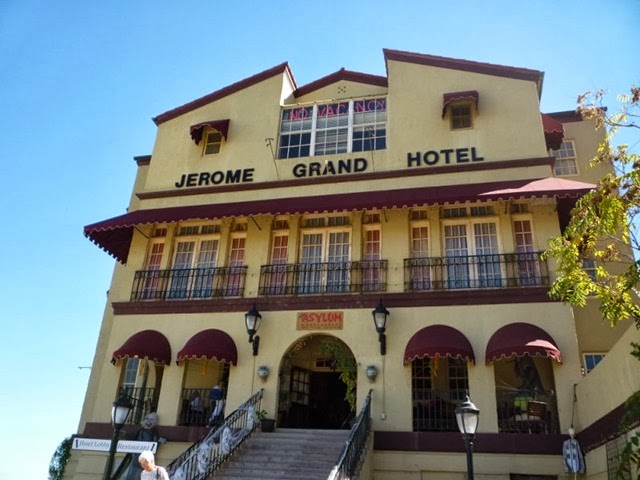
Do you believe in ghosts? I would like to think they exist, especially after numerous orbs came out in the photos I took on our Arizona trip. However, sites online explain the phenomenon as artifacts like cameras reflecting dust motes or water vapor droplets. Nonetheless, we visited many haunted sites on our recent trip west. The most exciting one was the Grand Hotel in Jerome. Formerly a hospital, this structure was built on a mountainside to serve the local miners. We took the nightly ghost tour and were given our own instruments to investigate.

P1020723 (800x600)  P1020722 (800x600)
P1020743 (800x600)

P1020758 (800x600)

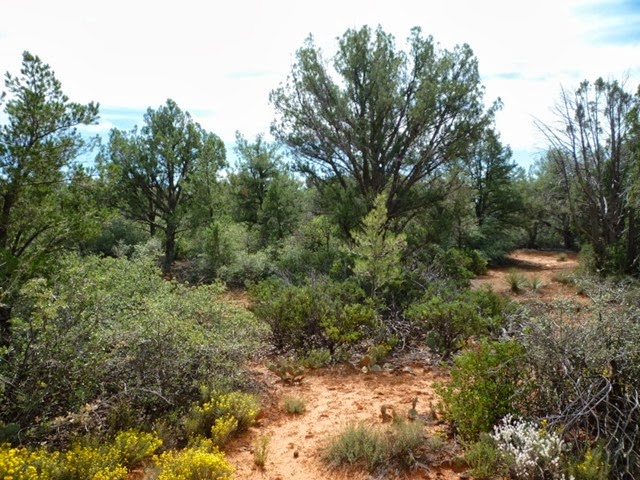
How does this work into the book I’m planning to write? I needed first-hand research, and it’s a good thing I went on location. When I’d put a forest in my story synopsis, I imagined the northern kind with tall trees and thick undergrowth. Man, was I off mark! Arizona forests, as least where I went, consisted of low scrub brush, scattered trees, reddish-brown dirt, and cacti. Uh-oh. Nix the victim in my story dying when a heavy branch falls on him. Instead, he’ll tumble off a mountain ledge. As mountain vistas are all around, this should be more plausible.

P1020790 (800x600)
P1020896 (800x600)
P1020891 (800x600)

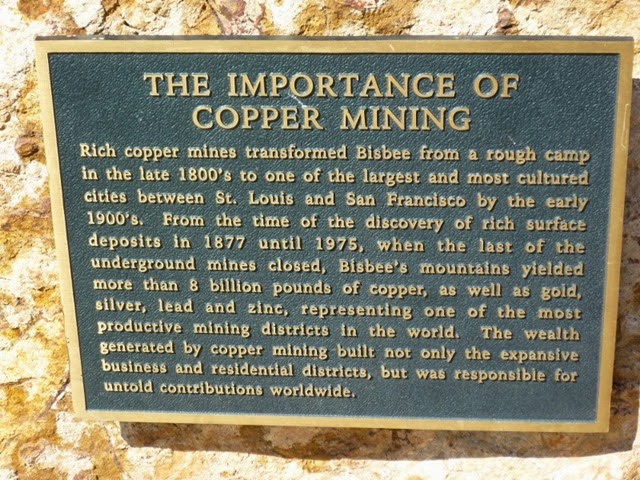
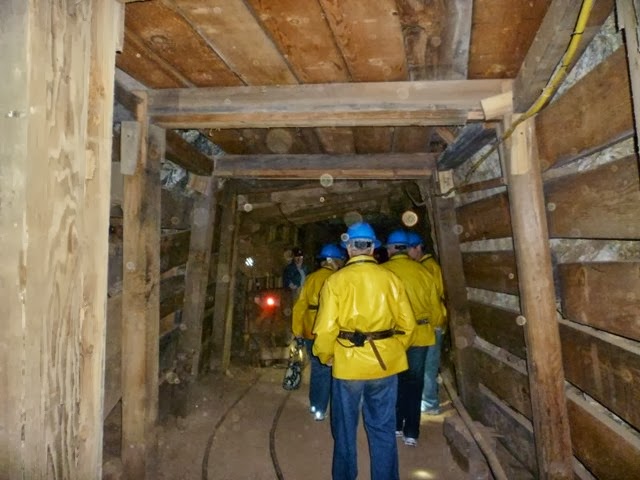
Copper mines play an important role in my story, too. Little did I realize you had to be at higher elevations for this factor. My protagonists explore a mine in the story. Now I know what they should wear, what they will see, how they will face the scariness of pitch darkness below ground. As for the orbs, it’s either very dusty down there or the shafts are haunted.

P1020935 (800x600)  P1020954 (800x600)
P1020963 (800x600)

And the dude ranch where we stayed one night is the background setting for the entire story. I couldn’t possibly have written a word without being there in person, smelling the horses, having a drink in the lounge called the Dog House, and sampling the food in the dining hall. Plus interviewing the staff changed another story element. A character’s horse won’t be spooked by a snake let loose in its path anymore. Instead, someone strings a trip wire across the trail.

P1020820 (800x600)
P1020831 (800x600)
P1020841 (800x600)
P1020880
P1020855 (800x600)

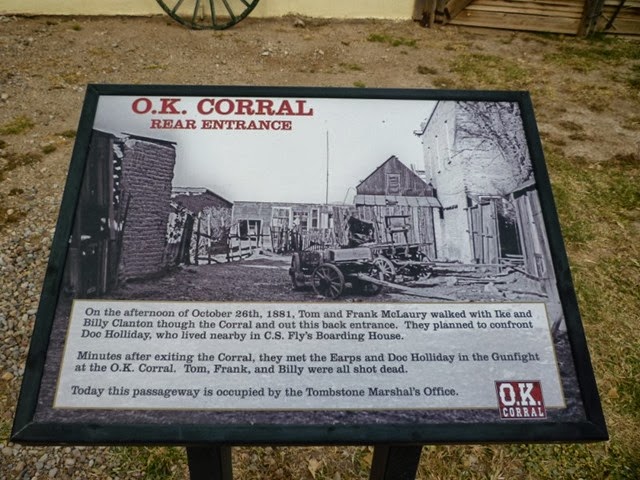
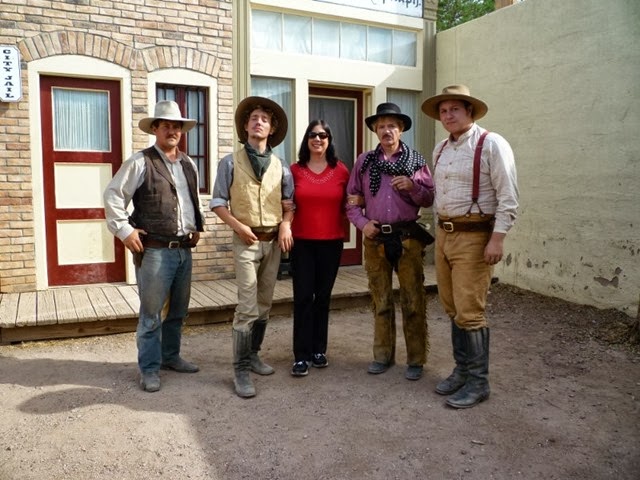
We had many more adventures, from gazing at the awesome red cliffs of Sedona to an off-trail jeep ride to a recreation of the gunfight at the O.K. Corral. We stayed at the dude ranch, rode down into the copper mine, and went on our own ghost hunt. I also got to tour the Desert Botanical Gardens to note the varieties of plants, trees, and cacti. All of these experiences were essential for my novel. Sometimes you can’t get what you need online or in the library. You have to go to the place to sniff around for yourself.

P1030041 (800x600)
P1030051 (800x600)
P1030073 (600x800)

You can see more of my pix here: http://fw.to/SB2DmEH

So what trip have you made that was essential to your research?

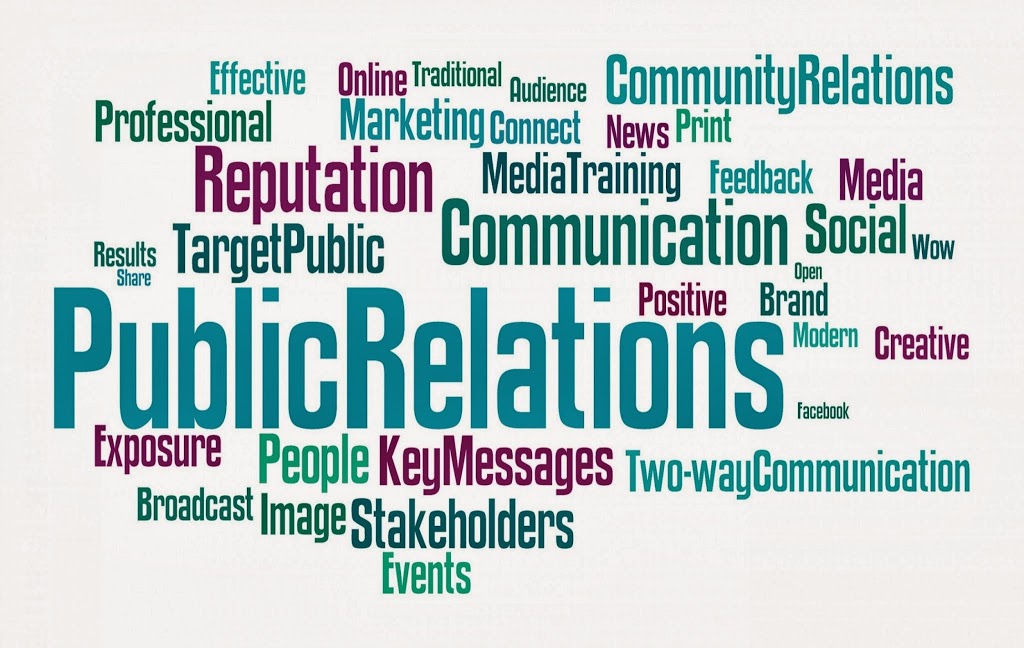
The role of publicists in indie publishing

Recently I received an email from a TKZ’er. He wanted to ask a follow-up question about our post discussing the Recomended Resource List for indie authors:

I have  a problem not addressed in your post–help with marketing. A clean  manuscript with a great cover means little without knowing how to  get the word out. I am more than willing to do my part in terms of  marketing my books, but as an older writer who isn’t savvy about  social networks, etc., I need someone in my corner. Can you offer  any suggestions or guidance? Thanks a lot.

I might not be the best person to address this topic since I haven’t used a publicist in a few years. But since the question came to me, I’ll give it a shot.

When I first signed my contract with a Big 6 Publisher a number of years back, I knew that the large publishers have in-house publicists who handle author promotion. But like many of you, I’d heard horror stories about new authors who’d been ignored, neglected, or otherwise left to rot on the vine by their in-house publicists. I decided to get proactive. I hired an independent publicist. The PR company I hired offered its publicity services “A La Carte”. Clients paid for a specified number of print interviews, broadcast interviews, book reviews, signings, speaking engagements, etc. I liked that approach.

Here’s what I got out of the experience of using a publicist, the good and the bad:

PRO

Reduced need for self-promotion
I don’t like selling myself. So I loved how the publicist freed me from the burden of arranging my own book signings and interviews. And so what if most of those interviews were with minor outlets in places like Kalamazoo? I was a newbie, so it wasn’t like I was expecting Oprah to be banging down my door.

Time saver
I had spent years writing my first book, and all of a sudden I had to adjust to the demand of producing another manuscript within nine months. Had I been left to my own devices, I probably wouldn’t have done a single promotional event that year.

Organization
The publicist kept everything on track for me, emailing me nifty little calendars with every event’s details outlined. 

Re-introduction to media

Even though I have a (distant) background in broadcasting, it was extremely helpful to do all those radio shows (plus the rare TV appearance). I was able to hone my “author act” during those events. And it was fun. I loved talking to overcaffeinated radio hosts during their drive-time morning shows. (Since I live on the West Coast, the timing meant I usually had to down a couple of Red Bulls to project enough peppy “author energy” at 4 a.m.)

TKZ dividend
When I decided to start a writing blog in 2008, I didn’t know many other writers. My publicist gave me the names of many of the writers who joined me in launching TKZ. I’ll always be grateful for that assist!

Con

Cost
The publicist’s services didn’t come cheap. It cost about $4,000 to have them arrange a semi-active calendar of book-related events. Considering that the average new author’s advance (for those who even get advances anymore) is somewhere in the neighborhood of $5,000 to $15,000, that’s a considerable chunk of change.

Bang for the Buck
Did all those paid-for radio interviews, book signings, and other events translate into increased book sales? There’s no way to know, frankly. I certainly felt like I was doing a lot to spread the word that year. But there’s no real way to judge the effectiveness of all that activity.

Final question: Are publicists useful for indie authors?
Could some of you here, legacy, indie, or some combination thereof, share your experiences with using a publicist? How do you think paid PR fits into the evolving indie publishing landscape?
And if you’ve had a positive experience with using an independent publicist, let us know in the comments. And if you’ve had a horror story about paying lots of money for little outcome, please share that as well. (Although it would probably make sense to omit the publicist’s name in that case!)

Note: I haven’t mentioned the name of the publicist I used in the past, only because I’m not sure how active she is in the industry anymore. If I get an update about her status, I’ll let you know.

Immerse Your Readers with Sensory Details

by Jodie Renner, editor and author  

How often do you hear — or feel — about a rejected novel, “I just couldn’t get into it”? A story might have a great premise and plot, but if we “just can’t get into it,” we’ll put it down and look for another one.

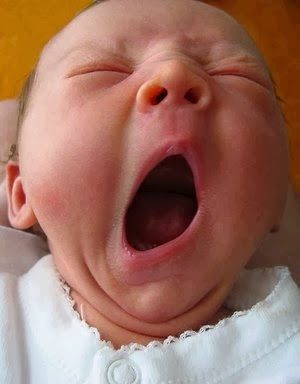
What are some aspects of a novel that make you yawn, go “meh,” or start thinking about what else you could be doing? I would bet that most times it’s because the author hasn’t succeeded in engaging you emotionally, in effectively sucking you into their story world, making you feel like you’re right there with the characters.

I read for entertainment and escapism, so I want to lose myself in a novel, not be a detached observer of the characters and events. Don’t you?

In my editing of fiction, I sometimes see too much general, factual exposition (“info dumps”); or neutral, mostly visual description; or a page or more of straight dialogue (“talking heads”), with little or no indication of where the characters are, what they’re doing, what they’re seeing, hearing, smelling, touching, or tasting, or how they’re feeling/reacting to others and their environment.

“Good writing is supposed to evoke sensation in the reader – not the fact that it is raining, but the feeling of being rained upon.” ~ E. L. Doctorow

In order for your story and characters to come to life on the page, your readers need to be able see what the main character is seeing, hear what he’s hearing, and smell, taste and feel along with him.

And to empathize with and bond with the character, readers also need to see/feel her reactions and thoughts.

“If you write abstractions or judgements, you are writing an essay, whereas if you let us use our senses and form our own interpretations, we will be involved as participants in a real way.”  ~ Janet Burroway, Writing Fiction

So if you’ve written a half-page or more of nonstop dialogue, neutral information-sharing, or description that’s mainly visual, it’s time for some revisions.

To bring your scene and characters to life and engage the readers, evoke all or most of the five senses in almost every scene.

~ SIGHTS. Readers need to see what your viewpoint character sees: pertinent visual impressions of the scene and people around him. And best to include only relevant information, the things that character would actually notice in that scene. We don’t need a detailed description of everything in a room, for example — they’re usually too busy acting and reacting to study the room thoroughly.

Zoom in on some telling details, like smudges on a mirror, sweat on a brow, condensation on a glass, steam from a coffee cup, fists clenched, hands shaking, shoulders hunched, etc.

A small sampling of visual descriptors: glaring, faded, dim, bright, dingy, flashing, dazzling, blurred, sparkling, brilliant, flashy, radiant, shadowy, smudged, streaked, glistening, shiny, gaudy, gleaming, glittering, gloomy, glowing, hazy, misty, shimmering, streaked, twinkling, tarnished

Example of effective visual description:

“…people on the bridges peeping over the parapets into a nether sky of fog, with fog all round them, as if they were up in a balloon, and hanging in the misty clouds.”
Bleak House, by Charles Dickens

~ SOUNDS. We need to hear anything your POV character can hear, including tone of voice.

Some sound verbs: swish, rattle, crash, whack, crackle, gulp, slam, hoot, clatter, crunch, fizz, grind, gurgle, blare, chime, slap, chirp, chortle, thud, chuckle, clash, croak, rumble, croon, drone,  groan, howl, jangle, knock, ping, jingle, plop, roar, rustle, sizzle, slurp, thunk, tinkle, twang, whine, whistle

Example of sounds:

“…the storm came rattling over the Heights in full fury. … a huge bough fell across the roof, and knocked down a portion of the east chimney-stack, sending a clatter of stones and soot into the kitchen-fire.”
Wuthering Heights, by Emily Bronte

~ SCENTS – anything that might be pertinent or bring the scene to life —fresh coffee, an apple pie baking, bacon frying, a suspicious chemical smell, fresh-cut grass, the stench of a dead body decomposing, etc.

Some possible descriptors for scent: musty, damp, stuffy, sweet, sickly, rank, spicy, acidic, perfumed, fetid, musky, suffocating, putrid, tantalizing, mouth-watering, noxious, sharp, foul, rancid, stinky, funky, pungent, piney

Example of smells:

“…they were crammed in a tiny apartment that smelled of burning rubber and foot odor.”
~  Holes by Louis Sachar

~ TOUCH . We should feel any relevant tactile sensations of the viewpoint character.

Some tactile sensations to consider: sticky, fuzzy, slimy, clammy, hairy, silky, smooth, rough, soft, hard, rigid, fluffy, starchy, crisp, corrugated, rippled, abrasive, cracked, tough, bristly, burning, cold, cottony, damp, dry, feathery, furry, gnarled, hot, knobbed, knotted, leathery, limp, lumpy, oily, puffy, ribbed, rubbery, sandy, sharp, smooth, velvety, wet

Example of touch:

“On every rail and gate, wet lay clammy.”
Great Expectations, by Charles Dickens

~ TASTE.  Let us vicariously taste some of the things the character is eating or drinking.
Some descriptors for tastes: sour, bitter, oily, salty, acidic, spicy, fiery, sweet, rich, buttery, sugary, revolting, biting, fruity, full-bodied, gamy, gross, juicy, sharp, succulent, syrupy, tangy, tart, zesty, zingy

Example of taste:

“Slimy water that tasted like blenderized fishsticks slid down my throat.”
Crown Me! by Kathryn Lay

So if you want to write riveting fiction (and who doesn’t?), don’t keep your readers at a distance, impassively reading the words on the page. Suck them right into your story world, your fictive dream, by making them feel like they’re right there with your character, like they are your character. Evoke sights, sounds, smells, and tastes from the readers’ own memory banks, which will trigger emotions. Scents especially bring back feelings and memories, which readers can draw upon to be active participants in your story.

And show us what the characters are thinking and feeling, too — their inner and outer reactions to what’s going on around them. All of this enhances the readers’ experience and deepens their emotional investment with your story.

Check out these related posts by Jodie: “Show Those Character Reactions” and Phrasing for Immediacy and Power State Cause before Effect, Action before Reaction, Stimulus before Response. And see James Scott Bell’s excellent post yesterday on drawing on your own memory bank of emotions to enhance your fiction.
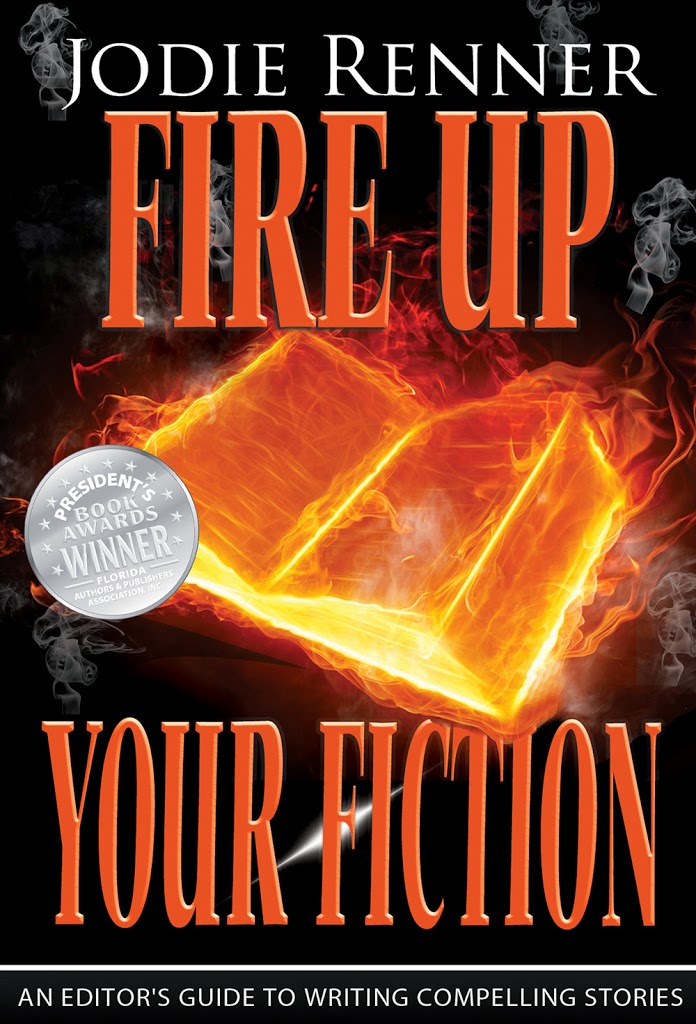
Jodie Renner is a freelance fiction editor and the award-winning author of three craft-of-writing guides in her series An Editor’s Guide to Writing Compelling Fiction: Captivate Your Readers, Fire up Your Fiction, and Writing a Killer Thriller. She has also published two clickable time-saving e-resources to date: Quick Clicks: Spelling List and Quick Clicks: Word Usage. You can find Jodie at www.JodieRenner.com, her blog, http://jodierennerediting.blogspot.com/, and on Facebook, Twitter.

Love, Loss and Emotion in Our Writing

James Scott Bell

Her name was Susan and we were in the third grade. I saw her for the first time on the playground. She had blonde hair that was almost white, and eyes as blue as a slice of sky laid atop God’s light table.

She looked at me and I felt actual heat in my chest.

Remember that scene in The Godfather where Michael Corleone, hiding out in Sicily, sees Appolonia for the first time? His two friends notice the look on his face and tell him, “I think you got hit by the thunder bolt!”

When it happens to us at eight years old, we don’t exactly have a metaphor for it, but that’s what it was––the thunder bolt. Love at first sight!

I remember the ache I felt the rest of the day. My life had changed, divided into two periods (admittedly of not too lengthy duration)—before Susan and after Susan.

Now what? Having no experience with love, I wondered what the next step was supposed to be. How did love work itself out when your mom was packing your lunches and your allowance was twenty-five cents a week?

I’d seen The Adventures of Robin Hood with Errol Flynn. He climbed up the vines to Maid Marian’s balcony. Was that a plan? Not in Woodland Hills, California, a suburb of mostly one-story, ranch-style homes. Clearly, the balcony strategy was out.

I had also seen the 1938 version of Tom Sawyer(I was getting most of my life lessons from movies and Classics Illustrated comic books) and was enamored of his love for Becky Thatcher. And what had Tom done to impress Becky? Why, he showed off, of course.

There was my answer. I would show off in front of Susan.

What was I good at? Kickball. Athletic prowess would be my ticket into Susan’s heart. So out on the playground I made my voice loud and clear when I came up for my kicks. Susan was usually nearby playing foursquare.

And every now and then we’d make eye contact. That’s when I’d kick that stupid ball all the way to the fence.

Yet I was shy, afraid to talk to her directly. I mean, what was I going to say? Want to see my baseball cards, baby? How about joining me for a Jell-O at lunch? Hey, that nurse’s office is really something, isn’t it?

Flummoxed, I thought of Susan for weeks without ever exchanging a word with her.  She had no problem with that, it seemed. But she knew I liked her. The rumor mill at school was a fast and efficient communication system. Which only made me more embarrassed.

I considered running away and joining the circus, but my parents were against it.

Then one day circumstances coalesced and the stars aligned.

School was out and kids were heading for the gates to walk home or get picked up. I usually went out the front gate. Susan went out the back, and this day I fell in with that company and quickened my pace to get next to her. Heart pounding, I said something suave like, “Hi.” I don’t recall that she said anything, but at once I found we were side by side, walking down the street.

I started talking about our teacher, Mr. McMahon, who was tall and imposing and a strict disciplinarian (thus, in hallways and safely out on the playground, we referred to him, in whispered tones, as “Mr. McMonster.”)

Susan said nothing. I started to get more confident. Maybe, just maybe, she was interested in what I had to say. And maybe, just maybe, oh hope of all hopes, she actually liked me back.

All of that showing off was about to pay dividends!

And then came one of those moments you never forget, that scorch your memory banks and leave a permanent burn mark. Susan turned to me and spoke for the first time. And this is what she said:

“Just because I’m walking with you doesn’t mean you’re my boyfriend.”

It was the way she said boyfriend that did it. It dripped with derision and perhaps a bit of mockery. If I could have found a gopher hole I would have dived in, hoping for a giant subterranean rodent to eat me up and end my shame.

This all happened fifty years ago, yet I can still see it, hear it and feel it as if it were last week.

Is that not why some of us are writers? To create scenes that burn like that, with vividness and emotion, rendering life’s moments in such a way as to let others experience them?

Even if it’s “only entertainment,” the emotional connection that takes us out of ourselves is something we need. “In a world of so much pain and fear and cruelty,” writes Dean Koontz in How to Write Best Selling Fiction, “it is noble to provide a few hours of escape.” And the way into that escapism is to create emotional moments that are real and vibrant and sometimes even life-altering.

The best way to do that is to tap into our own emotional past andtranslate moments for fictional purposes. Like an actor who uses emotion memory to become a character, we can take the feelings we’ve felt and put them into the characters we create on the page.

Thus, Susan was part of my becoming who I am and how I write.

So Susan, my first love, wherever you are, thank you. Maybe I wasn’t your boyfriend, but you taught me what it’s like to love and lose. I can use that. All of life is material!

I hope you’re well. I hope you’ve found true and lasting love, like I have. I want you to know I hold you no ill will.

But always remember this: I’m still the best kickball player you ever saw.

Inspiration on Two Wheels

By Mark Alpert

I used to bike in Central Park, but it got too crowded. The tourists, so blessedly oblivious, don’t look where they’re going. They step into the bike path, gawking at everything except the cyclist bearing down on them. You can try yelling, “Watch out!” but it never works. It only startles them. They stand there in the middle of the path with their eyes wide open and their mouths agape. After experiencing several near-collisions, I realized I was fighting a losing battle. So I started biking in Riverside Park instead.

The bike path in Riverside runs next to the Hudson. I ride about five miles north, from 72nd Street to the George Washington Bridge, then turn around. There are good views of the river and the Palisades on the New Jersey side. I can outrace the barges when they’re moving against the current (which sometimes goes north, sometimes south, depending on the tides). If I’m riding during rush hour, I blow past the cars stuck in traffic on the West Side Highway. And sometimes, if I’m lucky, I find inspiration. Herman Melville was right: New Yorkers are obsessed with the water surrounding their city. “Posted like silent sentinels all around the town, stand thousands upon thousands of mortal men fixed in ocean reveries.”

Last May I saw a corpse lying on the strip of grass between the bike path and the river. It was a Saturday evening and I was exhausted because I’d just gone fifty miles instead of my usual ten. My son’s baseball team (the New York Gothams, hooray!) had traveled to a tournament in Demarest, New Jersey, that morning, and I’d had the bright idea of biking there to watch the game. It didn’t look that far on the map. All I had to do was cross the George Washington Bridge and go up the bike path in Palisades Interstate Park. Suffice it to say, my knees were in great distress by the time I re-crossed the bridge and returned to the city. I just wanted to get home and lie down for the next 24 hours. But as I neared the part of Riverside Park that’s unofficially set aside for weekend barbecues (between 145th and 155thstreets, approximately) I saw a crowd of people standing around a heavyset, middle-aged African-American man who lay supine and motionless on the grass. There were several cops in the crowd but no paramedics. That’s a bad sign, I thought as I sped past. No one in the crowd knelt beside the supine man to give him CPR. They just stared at the body and kept their distance. My suspicions were confirmed a moment later when I saw a van marked MEDICAL EXAMINER parked about fifty feet farther down the path. I checked the newspapers the next day and didn’t find any mention of a homicide, so the man must’ve died from natural causes. Still, it freaked me out. Although I’ve finished off scads of unlucky characters in my novels, I haven’t seen more than half a dozen corpses in my life.

In August, Riverside Park gave me another piece of macabre inspiration, although I didn’t witness this incident firsthand. I read a newspaper story about a pack of muggers who’d strung a rope across the bike path, just south of the George Washington Bridge. They waited until they saw an expensive Cannondale bike come down the path, and then they pulled the rope taut to clothesline the cyclist, knocking him off the bike. He wasn’t badly hurt, but the muggers took his Cannondale, as well as his iPhone and the five hundred dollars he was carrying.

My first reaction to the story: Well, that could never happen to me. The victim was biking at 11 p.m. and I would never ride that late. Plus, no mugger would want to steal my bike because it’s a rusty, twenty-year-old piece of crap. And why the hell was the guy carrying so much money?

This reaction is so typically New York. Whenever anything bad happens in this city, we try to distance ourselves from it. We say to ourselves, “That guy got in trouble because he was an idiot. And I’m not an idiot, right?”

Just a few weeks later, another local news item shattered my complacency. An emotionally disturbed homeless man wielding a pair of scissors went on a rampage in Riverside Park near 65th Street. He slashed two joggers, a dog-walker, and a father pushing his two-year-old in a stroller. A bystander wrestled the man to the ground before he could attack anyone else. Luckily, no one was killed. My first reaction to the story: Thank God for New York’s gun-control laws. The carnage would’ve been a lot worse if the assailant had been carrying a semiautomatic.

It was much more difficult for me to distance myself from this crime. It happened at eight in the morning, less than a mile from my home. I could so easily see myself standing in the shoes of the father, throwing my body between the disturbed man with the scissors and the two-year-old in the stroller. I know that New York’s parks are, on average, very safe; that’s why the incidents got so much ink in the newspapers, because they were anomalies. Crime rates in New York have plunged to record lows over the past twenty years. Nevertheless, I felt a mixture of fear and fascination. And as we all know, those emotions are good fodder for thrillers.

Maybe I’ll start a novel with a scene in Riverside Park. “He didn’t see the rope until it snapped up to his neck.” “He didn’t realize he’d been stabbed until he saw the hole in his jacket.” Or maybe not. I’ll think about it some more the next time I go biking.