Reader Friday: Owl or Lark?
How to Successfully Put a New Spin to an Old Tale
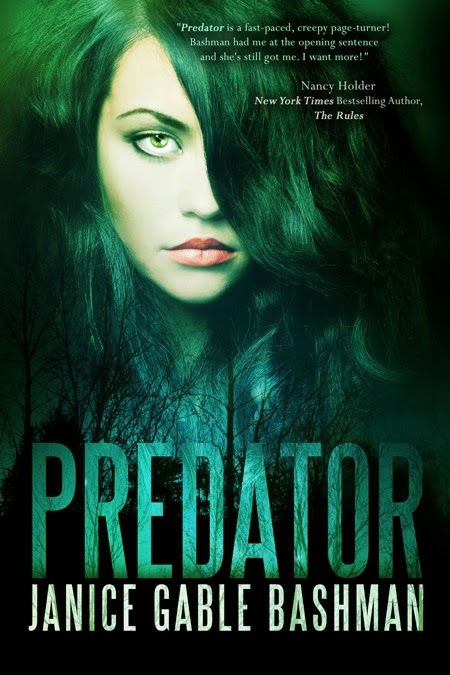
I’m excited to have Janice Gable Bashman as my guest today at TKZ. Her latest release (now available) is PREDATOR with Month9Books. Stunning cover. Janice is a Bram Stoker nominated author and editor of the prestigious International Thriller Writers (ITW) publication, The Big Thrill, and she serves on ITW’s board of directors as the Vice President of Technology. Today Janice will share her tips on how to put a new spin to an old tale and make it fresh. Take it away, Janice—and welcome.
Janice Gable Bashman
I love when an author takes science to its extreme. Often it goes horribly wrong. I devoured early works by Michael Crichton (Jurassic Park and Sphere) and James Rollins (Deep Fathom and Amazonia) during my youth. The books were popular and it’s easy to see why. The authors took old tales—dinosaurs roaming the earth, a 300 year-old space ship at the bottom of the ocean, an ancient power causing havoc in a modern-day world, and a mysterious disease threatening to wipe out the population with the cure hidden deep inside the jungle—and put new spins on them. The stories were fresh and exciting and loved by many. They still are.
So how do you put a new spin on an old tale when readers think they already know how it’s supposed to go and there isn’t anything they can possibly learn?
You have to think outside the box, as the saying goes.
In my novel Predator, I give the werewolf legend a couple of new spins by introducing the Benandanti (an actual folkloric belief that certain families of Italy and Livonia were werewolves who fought against evil) as well as a modern scientific approach to mutation and the science of transgenics. But I take these new spins a step further. The science is used to its extreme, in some cases it goes horribly wrong, and the Benandnati may not be what they seem. How did the Benandanti end up alive today and living in Ireland and the United States? What are they up to and why? Are they good or evil?
By raising new questions, upping the stakes, and using science in a new way, I was able to put a new twist on the werewolf tale. Writing about science or werewolves or super soldiers is nothing new. They are simply a premise. It’s the story elements that give these topics a new twist and makes them fresh and exciting. And it’s the characters that bring them alive.
So how can you do the same with your premise?
Can you combine elements of different genres to create a new idea?
Can your protagonist see things from a perspective different than you ever thought possible?
Can you use your novel’s physical world to put a fresh spin on things?
Can you mash together two concepts to create something new?
Think about it. It’s possible. It’s up to you and your imagination to wow the reader with a new take on an old tale. I know you can do it.
So TKZers—what novels do you love that put a new spin on an old tale, and why?
———————————————————————————–![]()
Janice Gable Bashman is the Bram Stoker nominated author of PREDATOR (Month9Books 2014) and WANTED UNDEAD OR ALIVE (w/NEW YORK TIMES bestseller Jonathan Maberry) (Citadel Press 2010). She is editor of THE BIG THRILL (International Thriller Writers’ magazine). Her short fiction has been published in various anthologies and magazines. She is a member of the Society of Children’s Book Writers and Illustrators, Mystery Writers of America, Horror Writers Association, and the International Thriller Writers, where she serves on the board of directors as Vice President, Technology.
Links:
Website: https://www.janicegablebashman.com
Facebook: https://www.facebook.com/JaniceGableBashmanAuthor
Twitter: http://twitter.com/janicebashman
Book buy links for Janice:
http://amzn.to/1xCYQwO
http://bit.ly/ZsJgFX (Barnes & Noble)
Why do you write books?
At one of my recent fiction workshops I asked the attendees why they want to write a book. The responses varied, and all were interesting. Then I pointed out which responses I felt were good reasons and which were not so good. First the not so good.
Fame. Fame is fleeting and almost never comes quickly if at all. For all those striving to become famous, only a few ever achieve it. We’ve all heard stories of writers who self published and became rich. They make the news because they’re rare. If you’re writing for notoriety, reexamine your goals and objectives.
Money. I know a few professional writers who make a good living at the craft. I know many others who make money at writing, but not enough to support themselves and their families. They must be creative in supplementing their writing income—the most common form is to maintain a day job. The rest make so little money at it that one wonders why bother. If you’re writing to make a fortune, call me when you do so I can borrow from you.
Influence. There are some new writers whose main goal is to impress their readers, perhaps with their ginormous brains or voluminous vocabularies. If that’s the motivator you rely on, stick to scientific papers with limited circulation before your brain explodes in frustration.
Agenda. You have a moral crusade and you want to preach it to the masses. You figure you can do it through a novel and no one will figure out that it’s your personal agenda you’re expressing and not your protagonist. Readers are smart. They’ll see you coming a mile away.
Now the good.
No alternative. We write novels because we can’t think of a good reason not to. Wanting to write is not a reason—needing to write is. We simply need to get our stories told. Even if there is no one to read them. Even if we never make a penny. Even if they are for our eyes only. Although it is visually gross and probably tasteless, I always think of the baby alien bursting out of the crewman’s chest in the movie Alien. The story is coming out and there’s nothing we can do about it but sit down and start typing.
As a dear friend and mentor of mine once said, “We write because we’re ate up with it.”
So, TKZers, why do you write?
————————
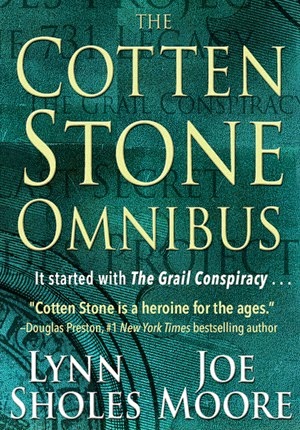
Coming October 15, from Sholes & Moore: THE COTTEN STONE OMNIBUS. The complete Cotten Stone international bestselling collection—THE GRAIL CONSPIRACY, THE LAST SECRET, THE HADES PROJECT and THE 731 LEGACY. Download from your favorite e-book store for only $9.99.
“Cotten Stone is a heroine for the ages.”
~ Douglas Preston, #1 NYT bestselling author
Manhunt Comes a Little Too Close for Comfort
It’s been an exciting week in my little beachside burg. A law enforcement manhunt transformed our sleepy, residential street into the eastern edge of a police perimeter lockdown.
A local police chase ended around noon, when a pair of auto thieves rammed into another car at an intersection a few blocks away from my house. Officers quickly apprehended one of the suspects, but the other one fled and began jumping fences. The police set up a perimeter, one leg of which ended at the foot of our driveway. When I poked my head out to see what was going on, a boyish-looking officer ordered me to stay inside the house and lock all doors. Minutes later, a police chopper began buzzing our house.
Of course, I was thrilled by the ruckus. It offered me a rare opportunity to put our overpriced, high-tech security system to good use. As my husband looked on with a bemused expression, I ran around the house like a jumpy little chicken hawk, arming doors while monitoring the progress of the police chase on an iPad pressed to my ear. Then I reviewed every angle of the house from the camera monitor, to make sure no one had snuck in when we weren’t looking. Leaving nothing to chance, I grabbed our Flat-coated retriever to do a perimeter check. (Our dog MacGregor is totally untrained and exuberantly friendly, but I figured he’d at least throw me a warning bark if he sniffed out a car thief.) We watched from the third-floor balcony as police searched our neighbors’ yards.
In the end, they caught the bad guy hiding inside a garage a couple of doors down from ours.
The whole time the manhunt was going on, I was making notes and taking pictures, trying to preserve the finer details in my writer’s memory.
Maybe my excitement over the manhunt episode had nothing to do with being a writer–maybe it was just a sign that I need to get out more. I should take up some adrenaline-pumping sport, like sky-diving.
Or what if I tried, say, sky-diving from a police helicopter? That would be exciting.
Right. I definitely need to get out more.
What about you? Do you find yourself enjoying the random bits of excitement you encounter during your everyday life, just so you can “use” them as fodder for writing?
Writing Rituals, Order and Routine
Over the last couple of months I witnessed first hand the power of order and ritual in my writing – or, more correctly, I witnessed what happens when order turns to disorder and the ritual of planning and creating disappears. All this because I agreed to step up and volunteer to be president of my sons’ elementary school parent teacher organization and in a giant ‘poof!’ of hot air all my creative order and energy disappeared with it.
Taking stock after a couple of months I now realize just how important order, routine (and time!) is to my creativity – and how I have to reclaim them all, in order to re-establish the balance we all struggle to maintain between our writing life and our ‘other life’.
This fact was solidified when I read David Brooks’ op-ed in the New York Times entitled ‘The Good Order‘ – though this opinion piece veers into politics – it was the idea that creative people need to build and maintain their own order and routine that resonated with me – as well as the fact that doing so can be surprisingly hard (which the last few months have certainly demonstrated!). This op-ed piece also referenced a book entitled ‘Daily Rituals: How Artists Work” complied by Mason Currey (whose website on creative people’s daily routines I encourage you all to visit – if only to read first hand how many artists face their work with deliberation, ritual and routine).
Many writers establish very strict routines in order to get their writing done. Anthony Trollope was at his writing desk by 5:30am and insisted on completing 250 words every fifteen minutes for the few hours he had before his day job started at the post office. Trollope produced a staggering 49 novels in 35 years writing this way. Stephen King gets up at the same time each day, has a glass of water and his vitamins, and sits at the same seat at his desk, where his papers are arranged in the same way each day, before he starts to write. King says this helps tell his mind this is time to start dreaming (a sentiment I love by the way!). When John Grisham was first starting out, he would arrive at his legal office by 5:30am each weekday to write with a goal of completing a page a day. He says his rituals then were “silly and brutal but very important”.
Since volunteering my time and seeing it evaporate just as quickly, I now need to reestablish a new set of writing rituals and routines. I’ve never been one to have any real ritual beyond what I call the art of showing up with my bum in the seat and my fingers on the keyboard each day – but now I need to establish a new order and a renewed sense of discipline. I’m even contemplating setting my alarm clock so I won’t be able to let my volunteer time bleed into my creative time.
So I’m turning to you my TKZers – how do you set your writing routine? Have you had to ‘reset’ that routine when circumstances changed and you suddenly found your writing time being eroded? If so, how have you gone about establishing a new routine or order?
Creating Characters We Care About
James Scott Bell
@jamesscottbell
because he’s dying of cancer and wants to provide for his wife and handicapped son.
So what character in recent fiction have you been drawn to, and why?