
As we gather around with friends and family today to give thanks, the gang at TKZ would like to wish you all a very Happy Thanksgiving! As always, thank you for visiting TKZ, and for being an important part of our online family!

I’ll be flying most of the day and may not get to respond to your comments. In case I don’t, here’s wishing all my TKZ blogmates and friends a wonder Thanksgiving Holiday.
—————-
Someone once asked: “I’ve heard writers talk of being ‘in the zone’ regarding their writing, which I take to mean being in an altered state of extreme creativity. But how, without drugs or other stimulus, do you get into that state?”
In fact, we hear the term in the zone used often, not only with writers, but athletes, artists, and just about any activity that requires skill, creativity and deep concentration.
So what is “the zone” and how do we enter it? Why is it so hard to remain there for extended periods of time?
Being in the zone can last for a few minutes, a couple of hours or a whole day. For those that never seem to enter the zone, it might be because they try too hard to do so. Sort of like when we stop trying to solve a problem, the solution suddenly comes to us through our subconscious.
Let’s try to define what being in the zone means, especially when it relates to writing. For me, it’s a mental state where time seems to disappear and my productivity greatly exceeds normal output. It might start after I’ve finished lunch and sat down at my PC to work on a new chapter. Without any feeling of the passage of time, I suddenly realize a couple of hours have gone by and I’ve produced 1000 words or more. I don’t remember the passage of time or anything that deals with my surroundings. I only remember “living” or becoming immersed in the story’s moment, having the words flow from a deeper source, and “awakening” from the writing zone as if only a few moments have passed.
I’ve never been hypnotized, but I can assume that being in the zone is somewhat like self-hypnosis. My body remains in the here-and-now, but my creative senses somehow find a hidden room inside my mind, a place normally under lock and key. And I’m able to enter it for a short time to let what’s there emerge into the light of day.
It can also feel like driving down the Interstate on a long trip deep in thought and suddenly realize I can’t remember the past ten miles.
I’ve never been athletic, but I bet it’s a similar scenario: a golfer is able to tune out the surrounding crowd of tournament spectators, the dozens of network cameras, the worldwide audience, the cheers from the distant gallery as his opponents make a great putt, and he’s able to enter a place where only his game stretches out before him. The rest slips by in a blur. Personal mind control.
So what is a good method for getting into the zone? Some writers use the “running start” technique by reading the previous day’s work or chapter. It gets them back into the story and hopefully the new words start to flow.
Others listen to music. This is something I often do. Nothing with lyrics, though. I listen to movie scores or piano and guitar solos. I find that it can help set a mood or become background “white noise” that blocks out other audible distractions. That’s because, for me, the biggest obstacle to zoning is distractions. It’s important to reduce interruptions and distractions by creating an environment where they are minimized. This means shutting my office door, closing the drapes on the windows, unplugging the phone, disconnecting Internet access, and most of all, choosing a time to write when those things can be fully managed. Doing away with distractions is no guarantee that I will enter the zone at will, but it does give me a fighting chance to at least knock on the door to one of those dark, hidden rooms upstairs and let my story flow out.
How about you Zoners? What’s it like for you to write in the zone? And do you have a method to slip easily into the zone?
—————
“Cotton Stone is a heroine for the ages.” – Douglas Preston, #1 New York Times bestselling author.
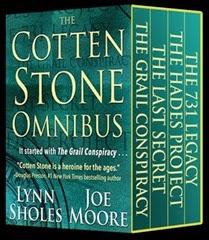 Less than a week to go until the release of THE COTTEN STONE OMNIBUS. The collection includes the complete series: THE GRAIL CONSPIRACY, THE LAST SECRET, THE HADES PROJECT and THE 731 LEGACY. All 4 thrillers for only $7.99. Pre-order now!

This is a Reader Friday-type question, but I have a question for y’all: When an author whose work you have previously enjoyed begins writing in a new genre, using a different voice, how have you responded? Do you think it’s a good idea for authors to use a pen name for a new style of writing, or are you willing to accept different voices from the same writer?

For any of you who are on Facebook with me, you will know that last week I had a great deal to be thankful for, especially as a result of the kindness of strangers.
The drama occurred last Wednesday when one of my neighbors (1st stranger really, as I don’t know him very well) knocked at my door around 7:30 in the morning to tell me that he had just seen our beloved collie, Hamish (as shown in photo above), being lured up the road by two coyotes. I rushed outside (very glamorous in my PJs and dressing gown) to see the most surreal scene – two coyotes nearly at the end of our street cunningly leading my dog along to what I have no doubt would have been a nasty end. I never truly believed all the stories about coyotes working together to lure large dogs away to be attacked by the pack – but I do now.
In a panic I called out after Hamish, who initially looked back at me with a face that said “are you kidding me, I’m having way too much fun!”. By this time my neighbor was running to his car, ready to help – because we both could see that Hamish was way too far away for me to get to him. It took me four attempts (and a lot of willpower not to scream at my dog) before Hamish turned reluctantly to come back to me. That was when the next stranger came in – running down her driveway to help coax Hamish and grab his collar. I’d never met her before, and although it was a little weird meeting in the circumstances (both in our PJs – saving my dog from coyotes!) I was touched by her concern. She was already on the phone to animal control telling them to send a patrol – having not only seen the amazing sight of two coyotes ‘playing’ with a collie but also making the decision to actively come outside and help rescue him.
So as you can see I have a lot to thank two relative strangers and this got me thinking, especially as this is Thanksgiving week, about the difference strangers can make. In my writing career I have been amazed how people who I’ve often never met, have gone out of their way to help me – be it booksellers, readers, conference organizers, blogger or reviewers. Although I’ve always tried to thank each person individually, I would also like to take this time to acknowledge how much we, as writers, rely on the kindness of strangers. I don’t mean that in a ‘taking pity’ kind of way – I mean those active, ‘go out of your way’ actions that can often make all the difference to a writing career. All too often we have no way to repay these acts of kindness, except (I hope) by following their example and helping other writers in our midst.
So, in the spirit of Thanksgiving, which ‘stranger’ would you thank if you could? Have you ever experienced a moment such as mine, where the kindness of strangers really made all the difference (and there is no doubt in my mind that without them Hamish would have been lost forever)? Well, now is the time, to acknowledge those moments. We should also aspire to be these sort of strangers – the ones who don’t stand idly by – but who rush in to help when help is needed.
Oh, and as a side note, this morning we received a ‘coyote’ calling card in the form of someone’s dead chicken disemboweled on our lawn. I swear I feel like I’m suddenly in some kind of ‘coyote godfather’ movie…thank goodness we have strangers looking out for us!
James Scott Bell
@jamesscottbell

Just a housekeeping note today: We are interested in receiving more of your first page submissions for our monthly first-page critiques.
Here’s how it works: Send us the first page (400 words max) of your manuscript in an email or as a Word attachment, along with the title, to the email killzoneblog at gmail dot com. We’ll take the first 30 submissions we receive, then announce when we’re accepting submissions again. The pages will be divvied up among the Zoners for review.We’ll post the pages on recurrent Thursdays, along with a critique. Readers will be able to comment as well. Note: Critiques are done anonymously–writers’names will not be posted, and reviewers will not know who authored their assigned pages.
In years past we’ve had great fun doing this exercise! We’re looking forward to reading some of your pages!
Note: And actually, we don’t cut off the submissions at 30. It just takes us longer to get to ’em! 😉
What’s wrong with this sentence: “Shutting off the ignition, she threw her keys into her purse and emerged into the bright sunshine.”
How can you throw your keys into a purse when you are using them to shut off the ignition?
This type of “ing” phrase is called a gerund. I never knew what it was until a critique partner pointed out that I was using them liberally. And I hate to say it, but this was several years into my published works. Even now, I’m not sure this is the correct grammatical term.
I learned my lesson, and as I’m now going through my backlist mystery titles making updates and tightening sentence structure, I am finding more phrasing like the one above.
Beware these illogical phrases in your own work. Here are some examples:
NO: Flinging the door wide, she stepped inside the darkened interior.
YES: She flung the door wide and stepped inside the darkened interior.
NO: Taking a sip of orange juice, she put her glass down and opened the newspaper.
YES: After taking a sip of orange juice, she put her glass down and opened the newspaper.
NO: Racing down the street, she came to a halt when the light turned red.
YES: She raced down the street, coming to a halt when the light turned red.
NO: Shaking the lady’s hand, she stepped back to admire her cobalt dress.
YES: After exchanging a handshake, she stepped back to admire the other woman’s cobalt dress.
It’s okay to use an “ing” phrase in thoughts. For example, you can say, “Wishing she could change the events of the past few hours, she sped down the road.
What is your grammatical Achilles Heel?

I was thinking yesterday how much two of my favorite icons — Dan Marino and John Grisham — have in common. Stay with me on this.
I love the NFL. From the start of training camp in July through Super Bowl Sunday in February, I am in hog heaven. And the fact that my Dolphins and my auxiliary team the Lions are doing well makes things even better. But when football season is over, like many NFL geeks I resort to a sad substitute, The Draft. I read the magazines, check out the websites and listen to the talking jock-heads on ESPN. Will Oregon QB Marcus Mariota go No. 1? Will the Jets take another QB flyer on controversial Seminole Jameis Winston? Will my Dolphins go for tackle La’El Collins to beef up their O line?
Yeah, I know. I need a life.

On a recent Sunday, after the games were over, I turned to the New York Times. There I read about Stephanie Danler. (That’s her at left). She is a young waitress in a upscale French bistro in the West Village. One day, while serving Random House vice president Peter Gethers his steak tartare, she talked him into reading her manuscript about a young waitress who works in an upscale New York bistro. Gethers, used to getting hit on after 30 years in publishing, deflected her with a polite “have your agent sent it to me.”
I bet you know where this plot is going.
Gethers was smitten after reading 10 pages and, to make a long story short (click here to read it), Danler’s novel Bittersweet was acquired by Knopf for “a pre-emptive high six-figure two book deal.”
Now you’d think that with all the challenges traditional publishing is facing these days, that Danler’s dream deal is rare. It’s not. There has been a string of debut novel big deals lately. Random House recently paid $2 million for 25-year-old debut novelist Emma Cline’s The Girls. St. Martins just picked up New York Times reporter Stephanie Clifford’s debut novel Everybody Rise for over $1 million. And first-timer Imbolo Mbue got a seven-figure deal with Random House for her book about a West African immigrant who works as a chauffeur for Lehmann Brothers.
Which leads me to wonder: Are Knopf and Random House making shaky bets on future prospects?
Which takes me back to Grisham and Marino. Both were overlooked in their drafts. But both took rejection and turned it into a positive. Both turned out to be huge assets for their bosses. Marino was taken by the Dolphins with the 27th pick. That means 26 teams took a pass on the guy who became the first rookie QB to go to a Super Bowl and is a first ballot Hall of Famer. Five teams chose QBs ahead of him. The Colts drafted John Elway knowing they couldn’t sign him. Kansas City took Todd Blackledge. Buffalo took Jim Kelly. New England took Tony Eason. The Jets took Ken O’Brien.

Now let’s look at John Grisham. He struggled to write his first book A Time To Kill while working fulltime as a lawyer. Grisham was turned down by thirty-some publishers. “Everybody said no,” he recalls. After a year of rejection, his agent sold A Time to Kill to the tiny Wynwood Press. The book sold 5,000 copies, most of them by Grisham hawking them from the trunk of his car. Wynwood went bankrupt leaving Grisham with no one to publish the second book he had been laboring on, The Firm. But then a bootlegged manuscript of The Firm surfaced in Hollywood, and as Grisham has explained: “Some guy ran 25 copies, said he was my agent, and sent them to all of the major production companies. He got nervous when they started making offers. At some point he called my agent in New York, and the rest is history. It was an unbelievably lucky break, and I had nothing to do with it.”
But like Marino, Grisham did go on to have a rather long and productive career.
Traditional publishing is a lot like the NFL draft. Every year, there is buzz, hype and great hopes surrounding a handful of hot prospects. Is what goes on in the booths of BEA so much different than the machinations in the war rooms of the NFL, where team owners place multi-million-dollar bets on unknown kids in cleats? Is a publisher dazzled by a pretty face and a “media platform” any different than a scout besotted by a 4.4 and a good Wonderlick score? And is an editor any better at predicting which writer will have a sophomore slump than a coach is at foretelling which rookie will blow out a knee?
No coach can predict which guy is going to be the next sixth-round steal Tom Brady and which one is the next first-round dud Todd Marinovich. Likewise, no editor can predict who’s going to be the next J.K. Rowlings and who — despite all the money they throw around — is going to be the next John Twelve Hawks. (Remember him?)
Or how about Jonathan Littell? A couple years ago, Harper paid him a cool million for the rights to publish his first novel The Kindly Ones in the U.S. It was published in France first where it won prizes and sold well. But it’s 1,000 pages long, Michiko Kakutani hated it, and the book sold only 17,000 copies out of a 150,000 print run.
Then there’s Gordon Dahlquist. Bantam inked him to a $2 million two book deal but his debut thriller The Glass Books of the Dream Eaters sold only 22,000 copies of a 120,000 print run, earning the publisher about $851,500 back on its gamble.
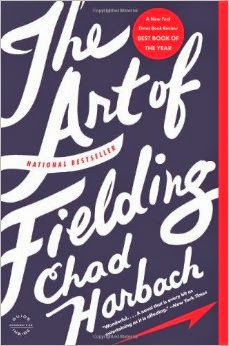
Now, I am not suggesting that all big-buck debuts are bad. Two of my favorite books of all time were expensive debuts: Chad Harbach got $650,000 for The Art of Fielding. It was named a ten best books of the year by the New York Times, shortlisted for the Guardian first book prize, and almost made it to an HBO series. It sold 117,954 hardcover copies so it made back its advance. Another book I adore is Daniel Mason’s The Piano Tuner. He was 26 when he got $1.2 million advance for it. It was a bestseller and Werner Herzog optioned it for film.
But here’s the bottom line: According to Time Magazine 70 percent of novels do not earn back their advance, so the higher the advance the greater the sales expectations. And when a debut writer gets a huge deal and sales fall short, well, the writer is less likely to score a big second deal. I have a dear friend who found this out the hard way: She scored a seven-figure deal on her second contract and didn’t come close to earning out. Her career never recovered. (Click here to read a good overview of the economics of book advances.)
Truth is, the people whose careers depend on drafting players and authors have no real idea how they’ll turn out, if they will be one-season wonders or if they’ll have a long and prolific career. Like my guys Marino and Grisham.
So will Stephanie Danler bring home the Lombardi for Knopf? Or will she just be this year’s Stephen Carter? I dunno, but if there were a fantasy league for writers, I’d be tempted to take a pass on this one and find a couple second-round gems with — as the sports cliche goes — a good upside. But what do I know?
And now, as my other favorite cultural icon Monty Python says, for something completely different:
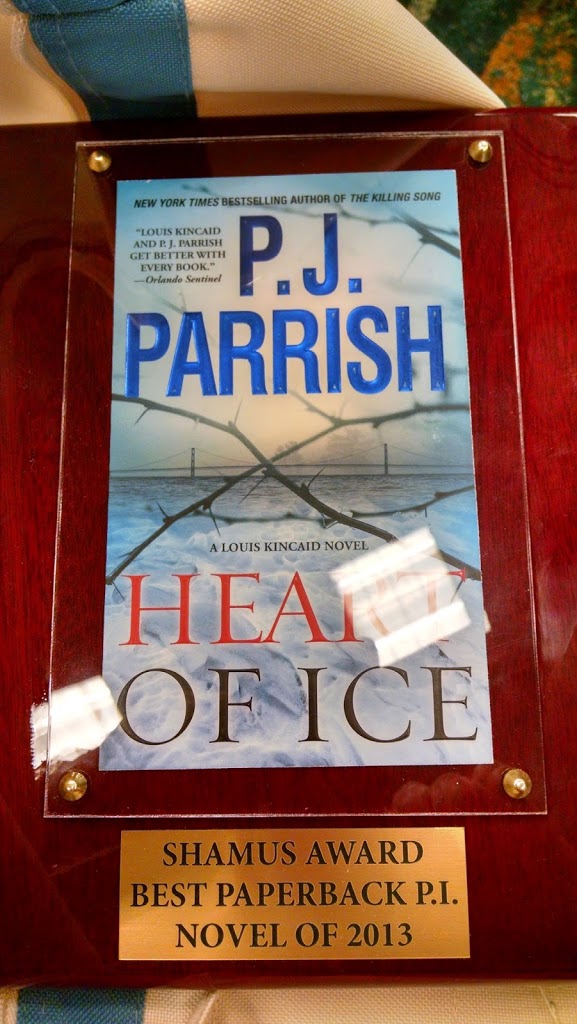
Kelly and I got some great news Saturday morning. Our latest Louis Kincaid thriller HEART OF ICE won the Shamus Award for Best Paperback Original at Bouchercon. The award is given out by the Private Eye Writers of America and we are, to say the least, thrilled and honored. Especially since this book was Louis’s swan song as a PI. Yup, he’s hanging up his gumshoes. (But returning in a new book with a badge again). What a great note to go out on.
