
 We’re pleased to announce that TKZ has made Writer’s Digest’s top 101 Best Websites for Writers for 2016. I’d like to personally thank our bloggers and readers for making 2016 another great year here at the Zone!
Category Archives: Writing
When “What if?” Isn’t Enough
By Larry Brooks
Those two words — what if? – can be a powerful tool for writers in search of their next story. In much the same way a chain saw can be productive for someone who understands what a chainsaw is for.
But they can also be seductive in a potentially toxic way (suddenly switching analogies here) in much the same way that someone with the face of an angel can walk through the door can end up breaking your heart. Because like a guy chasing a windmill, what if? can lead us toward a dead end. Or even a cliff.
Great stories — including great thrillers and mysteries, the stuff of our Killzone focus — need more than the intrigue of a puzzle or even the attraction to a character. They also need to launch a compelling dramatic arc that is worth reading about within a story world worth visiting, leaving the reader breathless from intrigue, raw with emotional resonance, and fulfilled from their return to reality from the vicarious experience you’ve thrust them into.
Toward this end, allow me to share one of the best writing tips I’ve ever heard, from the mouth of a New York agent who has lived even more decades that my very ancient self: when you feel an idea dawning, and your first impulse – versus instinct, which is different and orders of magnitude more valuable – is to jump on it and start writing (whatever that means to you, be you planner or pantser), the wiser writer (one with the scars to know better) will do this:
Run.
See if the idea chases you.
See if come morning that idea seems as ripe as it did in the heat of the brainstorm, or amidst the swoon of too many writing conference happy hour cocktails. Our goal should be to apply a higher level of criteria to the ideas that call our name (you wouldn’t marry someone after the first date – a blind date, at that – now would you?).
Here’s a fact: in the world of agents and publishers, more projects get rejected because of the story than because of the writing. These days your novel needs to be a home run piece of dramatic and thematic imagining, something fresh and compelling, rather than a thin, been-there-read-that shell that exists merely as a vehicle for your brilliant sentences. Which, in that league, are the ante in, such skill is as common as footspeed and strength is at an NFL Combine pre-draft tryout.
This all came up during lunch with a writer friend.
Like most writers, my radar for “what if?” propositions is always rotating, and I got a hit when the topic (my friend, her sister, and my wife… I was out-numbered) brought up the ladies room at one of the area’s hottest bars, the kind where all the women look like they’re vying for a spot on The Housewives of Scottsdale, and the men like the buzz cut, cheesy golf shirt wearing guys they’re married to.
The talk focused on a woman who has served as the hostess in the ladies room at such a famous night spot for the past decade. A woman beloved by all who have washed their dainty hands there after reapplying lipstick. Oh, the sights she must have seen in the room, the stories she has heard.
She, it was offered, should write a book. Which led to… hey Larry, there’s a novel in that! You should write this!
Like, I didn’t have enough rusty ideas kicking around in my head.
And then, like any author worth his printer ink, the “what if?” descended on the table like a bird dropping: what if this woman heard something in that bathroom that she shouldn’t have heard? About someone in the bar who wasn’t supposed to be there, saying and doing things that shouldn’t be said and done? And what if something happened later in the evening inside that bar, something bad, lighting a fuse toward the elimination of anyone who might have heard too much?
Like, in the bathroom, for example.
Approval was immediate. Because — let’s call it what it was — they weren’t the ones who had to to turn this turkey of an “idea” into a novel.
We brainstormed for a while, taking it through the First Act to a proposed first plot point, at which time the food arrived and we turned to other things. Like why some writers drink and others simply go mad.
On the way home my wife asks me, “so, are you going to write that story?”
I didn’t have to think about it. My answer was a firm, no-looking-back, no.
I didn’t have to run away from it to be sure. As sure as I have been every time someone pitches me the idea of, “hey, you should write a story about someone who is born old and ages… backward!” An idea I’ve heard put forth at least a half dozen times.
Bad ideas are just that. Because they’re too easy, too obvious, and too done to death.
Story ideas are just that, and nothing more.
They are aromas, not food. Promises, not deliveries. Seeds, not gardens. And if the flower isn’t something that floats your boat, then the seed is better off as bird food.
One of the great pitfalls of newer writers opens wide when you sit down and try to write an idea that is only an idea, without having sprouted the wings of a story, and too often, don’t have wings to sprout after all.
Ideas – especially in the form of “what if?” – acquire true value when they open doors (rather than yawning pits) to something more substantive than whodunit gratification. When they put you, the writer, into a place that transcends immediate gratification and allows you to go deep and wide into the things that matter in a novel.
Ideas should scare the crap out of you, more than they tickle at first blush. Or at least, excite you to the point of an enduring, informed obsession. When you link a compelling “what if?” proposition to a deeper realm of time-tested passion, vetted in context to an awareness of the higher criteria of story – conceptual allure, dramatic tension and arc, emotional resonance, hero empathy, vicarious experience, and a fresh way to tell the story… now you’re on to something
That’s the story you should write.
I had no real passion for the ladies room at this club, or for the dynamic that becomes the social arena of such a story. I admit, I’ve never been inside a crowded ladies room full of preening cougars – and yeah, that sounds kinda interesting – but who am I to write this story?
Not that you have to have lived every story you tell. But at least you should want to have lived some form of it. Want it beyond that first glimpse of it. Starting a book on the heels of a breakfast conversation is like getting married after a conversation in the check-out line at Costco.
It happens. It hardly ever ends well, even in the most romantic of fiction.
The desire to live vicariously in our stories needs to be matched by our passion for the dramatic landscape across which the story will unfold.
And that’s the question a writer should ask before taking any “what if?” idea seriously. What floats your boat, each and every time something like this has crossed your mind?
This crystallized for me one morning while reading about a new J.J. Abrams television show (Alcatraz), in which criminals who seemingly disappeared from an island 50 years ago are showing up in present day San Francisco, and they are killing people. They’ve traveled through time. They might be ghosts. But the dead bodies they leave in their wake are real, and these time-traveling killers must be found and stopped.
Now that interested me. Both on a “what if?” level, and on a time-tested passion level. I wish I’d thought of it. Time travel is one of the most intriguing premises I can think of… and yet, I’ve never written a time travel story.
Come to think of it, the idea hit me in the checkout line at Costco. And it’s chased me ever since.
Don’t jump too fast at your “what ifs.”
Develop stories from a place of passion and obsession and innate, time-tested curiosity and passion, a place where thematic issues collide with the conceptual, set in an arena that fuels the dramatic as much as it informs any characters you can place within it.
Write the story you should be writing.
Which is an even better writing this than… run.
The Great Culling of 2017
I came to an interesting realization this week: I’m afraid of my own Facebook Timeline.
Over the years, I’ve accepted friend requests pretty much as a matter of course, and now the majority of my “friends” are in fact strangers, among whom most are fans, or aspiring writers or friends of others who are. It’s a little like walking out of your bedroom and finding the hallway populated by people you don’t recognize.
I’ve inadvertently allowed my Facebook Timeline to become a marketing platform for my books. Consequently, I need to be circumspect about everything I post there, for fear of affecting my brand. I don’t post adorable pictures of grand-nieces and nephews because it’s wrong to invite strangers into the lives of other family members. It’s crazy.
I have an Author Page on Facebook for fans and potential fans, and it is designed to be a marketing and writer-education platform. That’s where I post relevant items about my books and other projects, and a controlled stream of personal information about myself and my family–just not everything about us. I try to display the me-I-am, but with some of the sharp edges dulled.
So, I have begun the Great Culling of 2017. My plan is to work my way through my Friends List and un-friend anyone whose hand I have not shaken, or with whom I have not had a personal conversation. There will be some exceptions, of course, because I have become quite close with a number of online correspondents whom I’ve never met, and I welcome those people into my life. Before un-friending them, though, I will send a message explaining why, and I’ll provide them a link to my author page. I’ve already heard from a few “friends” who are pissed at being eased out of my house and into the yard, but most seem to understand.
What do you all think? Is this a rude thing to do? Is there a gentle way to tell loyal fans that as much as I love them, I don’t necessarily want them hanging out with the family and me?
A Little “Paws” For PJ

Where History Comes Alive
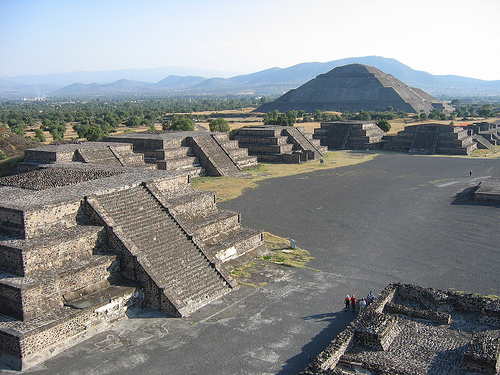 It’s Spring Break so I will be visiting Teothihuacan outside Mexico City when this blog posts, so my apologies, I probably won’t be able to respond to your comments until later in the day/Monday evening. I’ll be showing my boys these amazing pyramids as they have been studying Mexico’s history in their social studies class. We will also visit the Anthropology museum in Mexico City as well – when traveling with me no one gets to avoid history!
One of my favorite parts of research is visiting places and immersing myself in a sense of history. Some places are able to evoke the past easily – as if the past remains stored in the stone walls, cobble stones or timbers of the houses. Other places, however, feel more inaccessible. I find Teothihuacan, with its vast avenue and towering pyramids, is a place that evokes awe but is also so alien in many ways that it is hard to picture what life must have been like way back then. It’s more challenging to imagine the past here but nonetheless the echoes are still there, if you listen hard enough. Likewise, I used to find the Australian landscape much harder to ‘read’ – the aboriginal past seeming to be more elusive and the colonial overtones a little too blunt. By comparison, somewhere like London the past really is omnipresent. For me, the voices of the past are all around and it is easy to imagine the sights, smells and sounds of history.
So TKZers where has history come alive for you? What places have you visited (for research or pleasure) that have evoked the greatest sense of history?
What We Can Learn From Chuck Berry
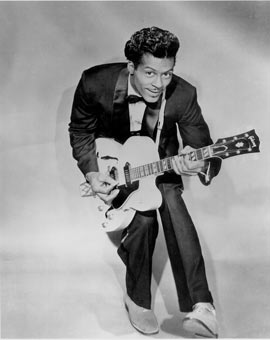
Chuck Berry left us a week ago at the age of 90. He didn’t begin his music career intending to be a rock ‘n’ roll…star? Icon? Immortal? No. Berry wanted to be a blues singer initially, and that genre would sneak onto his albums here and there (including, I understand, Chuck, an album of new material to be released in June). Rock ‘n’ roll, however, was what paid the bills, and that’s what he did, arguably better than anyone else before or since.
Berry’s lyrics were amazing. He could put years and years of story into a three minute song, with three verses, chorus, and guitar solo. Badda bing bang boom. Go to Spotify (or better yet, your own music collection) and listen to what might be his most widely heard song (if not his most famous one), “You Never Can Tell,” which was prominently featured in the film Pulp Fiction. It’s about a teenage girl and boy who get married — probably too early — but with some hard work acquire an apartment with a “coolerator” full of tv dinners and ginger ale (described in a throwaway line that might be the best single pop song lyric ever written), a stereo with all sorts of 45s, and a flash car. They make a go of it against all odds, and Berry tells you everything you need to know about the whole shootin’ match in two minutes and forty-five seconds through a tune driven by Johnnie Johnson’s piano in the background. A somewhat tragic side note to the song is that Berry wrote the song while in prison. Berry also wrote and recorded his autobiography in three songs that you can listen to in just over seven minutes: “Johnny B. Goode,” the lesser known and bittersweet “Bye Bye Johnny” (which tells the story of his acquired stardom and fledgling motion picture career through the eyes of his mother, who drew out all her money from the bank to buy her son a guitar and put him on that Greyhound bus), and “Promised Land,” the mortar between the bricks of the two other songs. I don’t hang around bus stations (…) but I challenge you to go to one in any city and not hear “Promised Land” playing in your head.
What we can learn from this? Keep in mind that Berry’s art had baked-in limitations. For one, songs had to be relatively short if the artist and record label expected to get them played on the radio. For another, the lyrics had to rhyme. A third was that the clock was ticking. You had to keep putting product out back then to keep your place in radio rotation because some young, hungry upstart was breathing down your neck, hoping to take your place. Berry just painted a picture and kept it simple, particularly in songs like “Carol,” where the singer begs the object of his affection not to go off with someone else, and assures her that he’ll learn to dance if he has to practice all night and day. Berry communicates need and desire in two lines. You and I can do this too. If you have an idea for a story or novel, try to write it from beginning to end in one page (single spaced, 12 font size), from beginning to end. Don’t include every character, car crash, or explosion that you conceptualize. Describe each of your main characters in a medium length sentence, set forth what they are chasing, or after, or trying to achieve — the MacGuffin of the work — and what they are going to do to reach their goal. When you wrap up, provide the ending in terms of emotion or result: happy, sad, death, life, win, lose, or draw. There’s your first step, your blueprint, your demo, what they refer to in Nashville as a “guitar/vocal.” You’re not going to be showing this to anyone so if you feel the need to drift off a bit go ahead and have at it but you’ll at least have something down. Think of Chuck Berry while you do it, and remember that all of those great tunes he recorded were the end result of hours and hours or writing, rehearsal and recording, some of it very frustrating. I’m hoping that at some point a boxed set of alternate takes of Berry’s best known songs is released so that we can get a look at some of the entire process. You’re starting in reverse of what Berry did — you’re going to take something short and make it longer — but the principle of keeping it simple is the same for both.
My questions for you: if you have a favorite Chuck Berry song, what is it? Mine is the live version of “Johnny B. Goode” found on The London Chuck Berry Sessions. Berry starts off playing a ferocious version of “Bye Bye Johnny,” savagely spitting the first verse out, but the crowd, either because of their unfamiliarity with the song or confused by its similarity to “Johnny B. Goode,” starts singing the chorus to “Johnny B. Goode” in unison, startling Berry (“Look at ‘em! Look at ‘em! Sing! Sing, children!”) and causing him to switch to the lyrics of “Johnny B. Goode” for the second verse. Listen all the way to the end, when the M.C. pleads with the crowd to vacate the hall because they’re over time and — Oh, The Humanity! — Pink Floyd fans are waiting outside. Meanwhile, the crowd chants “WE WANT CHUCK! WE WANT CHUCK!”
If you don’t have a favorite Chuck Berry song, what is your favorite song otherwise?
READER FRIDAY: On Writing the Opposite Sex

Monopoly Tokens For Writers?
 As you all have probably heard by now, a popular vote has given the world three new tokens for Hasbro’s game of Monopoly: a T-Rex, a Penguin, and a Rubber Ducky are In. The Thimble, Iron, and Wheelbarrow are Out. (Can’t say we’re sorry to see the Thimble go). The closest unsuccessful candidate was a tortoise. Of course, the announcement of the new designs was accompanied by an inevitable bit of controversy about how the new tokens undermined the spirit of the original game. But so far, no dark conspiracy theories have emerged about Rubber Ducky fans rigging the system to give the Boot, the boot, thankfully.
It’s too late to vote, but wouldn’t it have been fun to see a writing oriented token in the mix? Perhaps a computer, a paper-filled trash can, or book token?
Are you happy with the winners and losers in the token popular vote? Are you sorry to see any of the old ones go?
Do You Journal?

Look at all the lovely notebooks.
From the top:
Emerald Leuchtturm-Current Bullet Journal, containing calendar events, daily schedule, car maintenance, random notes taken when the appropriate journal wasn’t available.
White Paper-Masako Kubo–Stapled, not bound. Last summer’s dream journal, reference.
Red HC Moleskine–Long term ideas for novels and stories since 2011
Light Blue Leuchtturm–Mid-End of 2016 Bullet Journal. I didn’t get into Bullet Journaling until late last year. Now using for blog thoughts and ideas
Teal Flexible Moleskine–Current Morning Pages Journal
Bright Orange Moleskine Notebook–Short story development
Buff Flexible Moleskine--Novel (Formerly The Intruder) WIP notes
Orang/Red Moleskine Notebook–Novel (Untitled cozy–Yeah, gonna give that genre a shot)
Bright Pink Leuchtturm1917 Master Slim–This started out as my 2017 Bullet Journal, but it proved too large for toting around. The 5×8 version (top) fits nicely in any purse or bag. I consider this my Journal of As Yet Unrecognized Possibilities.
For somebody who only owned one non-spiral bound notebook six years ago–the Red HC Moleskine–I’ve certainly made up for lost time. What you don’t see are the notebooks for my last three novels, the Bliss House Trilogy, because I’ve archived them.
As a young writer, I wasn’t much of a journaler. I wanted to write, but I was too embarrassed to write down things that might look silly to other people and carried around my ideas in my head. Of course, journals are meant to be private. I have no idea who I thought would want to even peek at my journals. The words were hardly titillating, the ideas tentative and unpolished. It’s not like I kept money or passwords between the pages.
But now that I’m a woman of a certain age, journals have become critical tools. Not only do I have more pressing/interesting ideas, I also have a memory like a sieve. Journals are my full-body, writerly Spanx. They keep everything tucked in and looking, if not good, at least organized.
I’ve become very attached lately to the notion of ideas floating from writer to writer, looking for the right one to tell the story. It’s an idea I first read of in Elizabeth Gilbert’s Big Magic. She talks about starting to write a novel that had been sort of pestering her–but she struggled, and it just wasn’t happening. So she temporarily shelved it. But then she talked to novelist Ann Pachett, who described her own work-in-progress. And the ideas were nearly identical. But Pachett’s book was going very well, and she later finished it and sold it.
By writing ideas down, I hope to tether them at least for a while. Collect them, live with them, let them nurture themselves with the attention I can give them. I can’t tell you the number of times I’ve gone back to the pages of that Red HC Moleskin when I needed a quick idea fix.
Still, it’s a rather intimidating pile of notebooks. They don’t travel easily, and I’ve only recently gotten used to having the Bullet Journal always with me. For a while I tried an app called Wanderlist, but tapping reminders and notes into my phone makes much less of an impression on me than when I write things down. Then I forget to look at the app often enough.
Tell us how you keep track of your ideas and schedule. Do you journal? Or do you go the electronic route?
.
What Would You Tell Kids About Writing?
 I attended a high school Career Day in South Carolina yesterday, to talk about writing as a possible vocation. I hosted multiple, back-to-back discussions, each one covering different writing-related careers: journalism; fiction writing; and technical writing.
During the sessions about creative writing and being a novelist, I focused on the need to learn the craft of writing, the importance of connecting with the local writers community, and a few other things I wish I’d known when I was in high school. I was impressed by the questions the students asked. We discussed the nature of themes in novels, The use of pen names, and when/how many times to edit a working draft. I think there may have been a future writer or two in that group of bright, inquisitive students.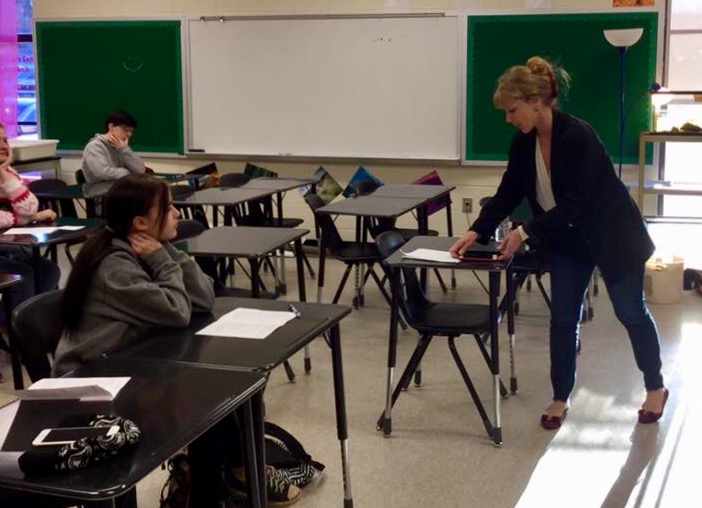
So, what kinds of things would you like to have known about writing, back when you were in high school?