About Kathryn Lilley

A crime writer, former journalist, and author of IMBA-bestselling mystery series, The Fat City Mysteries. She lives in Los Angeles with her husband and two neurotic cats. http://www.kathrynlilley.com/

The Uncomfortable American (Updated)

imageUpdate: Now that I’m back home  from Cuba with better Internet access, I’ve added  pix of Hemingway’s house.

  ***

I’m writing today’s post from the Hotel Nacional in Havana, Cuba, fervently hoping that the revolutionary Internet watch dogs (perros de la seguridad) will allow my words to be successfully uploaded to WordPress and displayed beyond there to you, Dear Reader, on Tuesday. We’re on the third day of an eight-day excursion to this island nation. (In terms of encountering Internet censoring, so far I haven’t in fact  encountered too many problems. The only sites that have been completely blocked so far are the Huffington Post and Gawker. Amazon did seem a tad confused when I tried to order a Kindle book online from my Cuban hotel room–first it displayed a message saying that Kindle books aren’t available in the United States; then it asked whether I’d recently changed my country of residence. I ultimately gave up my quest to purchase the e-book).

It’s interesting visiting Cuba immediately in the wake of the lifting of the decades-long trade embargo and Obama’s recent presidential visit.

I think many Americans are assuming, as I did, that once the embargo is finally lifted in practice, Cuba will be quickly transformed into a more-or-less Westernized economy. I no longer think that’s the case. Cuba is…well, it’s different. As one of my fellow American travelers said with a sigh, over a highly restricted menu at a government-owned restaurant, “Cuba has a long way to go.” First, there’s the abysmal infrastructure (Example: all human waste is dumped directly into the harbor because there are no treatment plants).  Then, there’s the highly centralized economy. (This morning we learned from a speaker that there’s no such thing as a wholesale business in Cuba. Everyone pays the same exact price  everywhere. Try to make a profit running a business that way).

On the plus side, the country of Cuba is charming in many ways. Being here is literally like stepping into a time warp. Taxis are mostly 50-era Chevys (we even saw one Edsel taxi); many streets are cobblestone; architectural styles are similarly retro. The adult literacy rate is nearly 100%.

Overall as an American, though, I feel slightly uncomfortable in Cuba. It started in the airport when our group waited two hours for our baggage to be offloaded from our American Airlines charter flight. (It was Saturday night; it turns out that people don’t like working on Saturday nights). Being in Cuba makes me aware that Americans are impatient. Pushy, even. We tend to look at something and try to figure out a way to make it work faster, better.  I think that once Cuba is overrun with Americans telling them how to make things work faster and better, they may want to pack us all off on the next one-way barco to Miami. And I wouldn’t blame them a bit.

See you back in the States–and viva Cuba Libre!
image

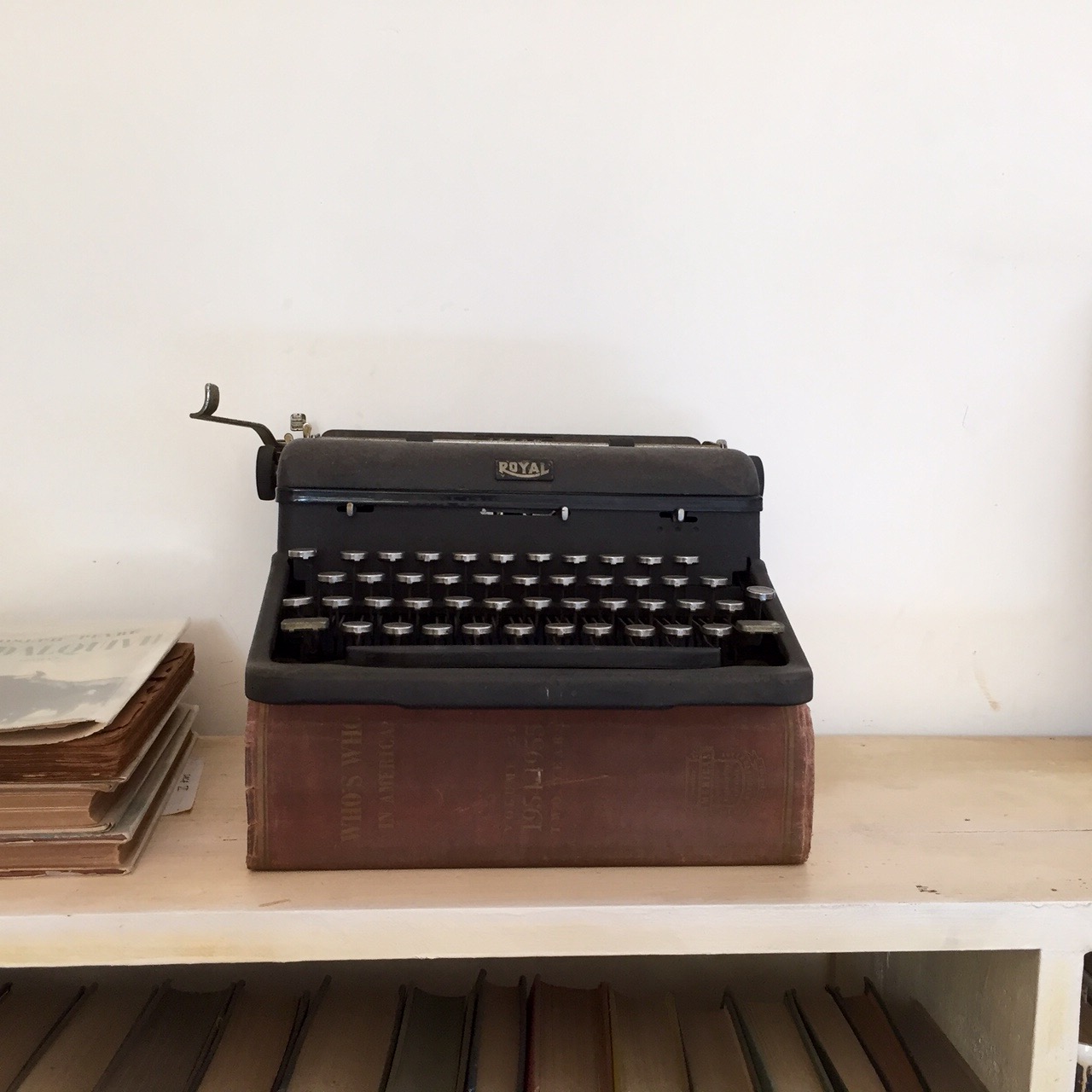
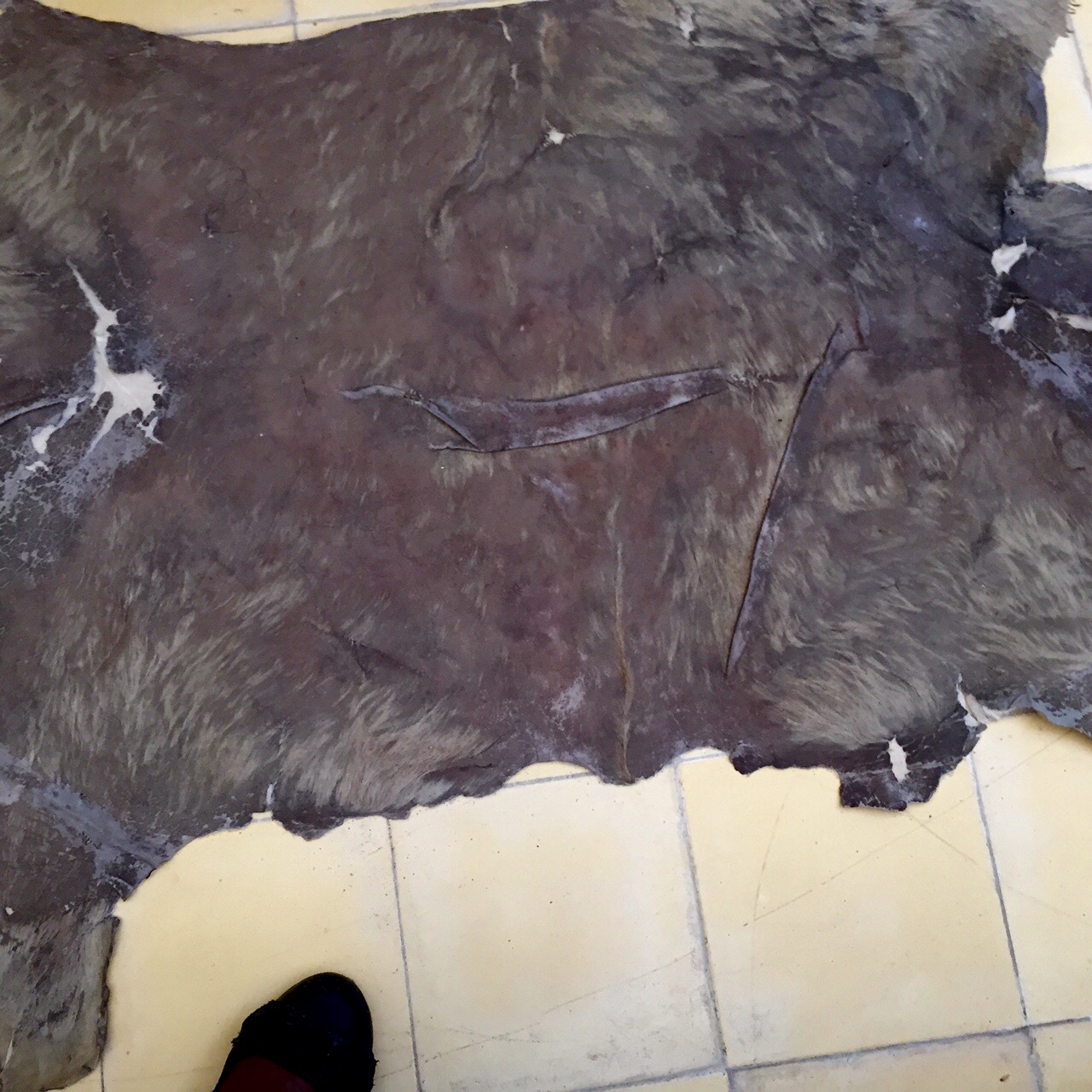
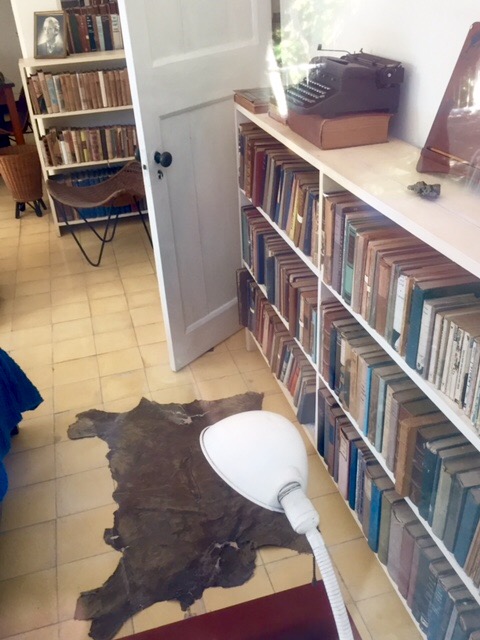
Lesser Kudu skin and typewriter

Update: Now that I’m back home with better Internet access, I’ll post pix of Hemingway’s house in Cuba. I was happy to be able to see the famous typewriter where, standing on top of a Lesser Kudu gazelle skin, he every morning. I had to shoot through a window because visitors aren’t allowed inside, but I successfully bribed a docent to take the closeups of the typewriter and the gazelle hide. (There’s an upstairs office that one of Hemingway’s wives commissioned as a writing office, but our guide said Hemingway used it mostly for rendezvous with one of his lovers. He did his actual writing at the typewriter by his bed).image



image image imageimageimage

Destination Cuba

image

By Kathryn Lilley

The summer after I graduated from college many years ago, I traveled across Europe with a friend.  It was the height of the Cold War, and I was eager to visit West Germany–in particular, I wanted to see the Berlin Wall. That was where World War III was likely to start, my thinking went, so I wanted to see the place for myself. Unfortunately, my traveling companion did not share my morbid obsession with geopolitical hot zones. So instead of making an excursion to eyeball East German guards patrolling The Wall, we spent a few extra days lounging in Parisian cafes, drinking coffee and gorging ourselves on pan au chocolat. The only foreign crisis I encountered on that trip was during a lame attempt to look cool while smoking unfiltered French cigarettes.

When The Wall was finally torn down decades later, I felt a pang of regret for having missed seeing it. So perhaps you’ll understand why I’m so excited to be headed to Cuba next month.

This is what we were upset about...

This is what we were upset about…

I have only a hazy recollection of the Cuban Missile Crisis, which took place in the early 1960’s–I seem to remember people going around collecting sand bags, and adults at the dinner table poring over bomb shelter blueprints. (For our house, the “shelter” was going to amount to little more than a lean-to reinforced with a little dirt, which’ll give you a general idea of how well we’d have survived an afternoon of Mutual Assured Destruction).

Your Correspondent in Havana

Now that the United States has finally gotten over its hissy fit about, yanno, that whole nuclear crisis thing, I’m eager to visit Cuba. In my mind, that island nation represents the last vestige of the Cold War.image I want to see it before a tsunami of American tourists  descends en masse. (Hopefully the people of Cuba won’t allow US corporations to transform their island into yet another overpriced vacation destination. But I’m not optimistic).

Meanwhile, I’m hoping to glean a few travel tips for my upcoming trip to Cuba Libre. Have you had a chance to visit Cuba? Let me know if you have any tips or suggestions for the road. (According to Duolingo, my language-learning app, I’m still only 14 per cent fluent in Spanish, despite having diligently practiced for the last four weeks. So I’ll need all the help I can get.)

Hasta luego, comrades!image

Were “Rules” Meant To Be Broken?

image

By Kathryn Lilley, TKZ

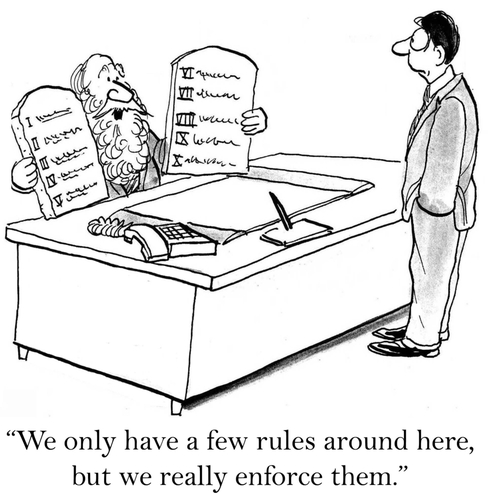
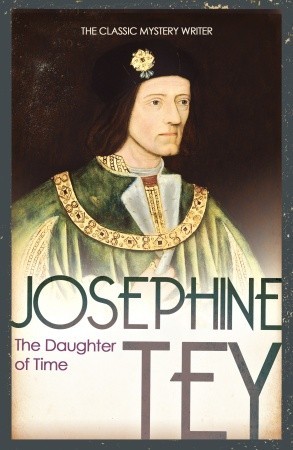
Right now I’m reading AN EXPERT IN MURDER, a bang-up mystery written by Josephine Tey (a pseudonym for Scottish author Elizabeth MacIntosh, 1896-1952). Tey was a writer who delighted in breaking the formulaic mystery writing rules of her era. Those rules, as proclaimed by a group of London-based mystery writers, had been set forth in a manifesto called “The 10 Commandments of the Detection Club”. (Agatha Christie and Dorothy Sayers were founding members of the club.)

TEN COMMANDMENTS OF THE DETECTION CLUB

1. The criminal must be someone mentioned in the early part of the story, but must not be anyone whose thoughts the reader has been allowed to follow.

2. All supernatural or preternatural agencies are ruled out as a matter of course.

3. Not more than one secret room or passage is allowable.

4. No hitherto undiscovered poisons may be used, nor any appliance which will need a long scientific explanation at the end.

5. No (archaic ethnic term) must figure in the story. (Editor’s note: At the time, popular mysteries frequently included a character of Chinese descent. The writers used an archaic ethnic term that I don’t care to repeat here).

6. No accident must ever help the detective, nor must he ever have an unaccountable intuition which proves to be right.

7. The detective must not himself commit the crime.

8. The detective must not light on any clues which are not instantly produced for the inspection of the reader.

9. The stupid friend of the detective, the Watson, must not conceal any thoughts which pass through his mind; his intelligence must be slightly, but very slightly, below that of the average reader.

10. Twin brothers, and doubles generally, must not appear unless we have been duly prepared for them.

***

Josephine Tey gleefully broke most of these rules in her mysteries. Twin imageimposters? Check. A sleuth playing a hunch? Check. In some of her books, Josephine Tey herself featured as a sleuth. (The Detective Club probably never dreamed of creating a rule against doing that).

Because she was a gifted, excellent writer, Tey got away with jettisoning the standard writing tropes of her era.

Nowadays, genre writers still like to talk about the “rules” of writing. (“Never open with a dream or the weather,” for example).  Have you ever intentionally broken a writing rule in your work? Did your “infraction” succeed or fail? Or, have you ever read a story that broke the rules, but was successful nonetheless?

First Page Critique – What’s At Stake?


image

Kathryn Lilley, TKZ

Today we’re reviewing the first page of a story called THE CASE OF THE MISSING YACHT, submitted anonymously for critique. As usual, my comments follow the submission. Please add  your feedback and constructive criticism in the comments. Thanks!

THE CASE OF THE MISSING YACHT

The sign on the door of my Georgetown office said “Vic Jones, Finder of Lost Items.” You might say I’m the St Anthony of DC. I was logging the details of my last case and anticipating an early start on a liquid-refreshed weekend when Mr. Double-Breasted-with-Cravat flounced in blathering about his lost yacht. Gee, I was mildly impressed; until now I didn’t know anyone who owned a yacht.

He was an odd little man, heavy around the bottom, narrow shoulders, thinning hair, and a Groucho Marx-style mustache. He talked non-stop seemingly without taking a breath.

“You’re looking for a big boat, right?” I cut off his monologue; I couldn’t stand it another second. “Who has time to play with boats? A grown man like you ought to be working the mean streets making a decent living.”

“I do make a decent living, young lady,” he went all indignant. “How do you think I can afford a yacht?”

I reached over the desk and laid a stinger across that fat face of his. I don’t care much for back-talk.

His eyes went moist as uncertainty registered followed by a flash of terror. His hand covered the enforced blush spreading over his cheek. What do you think, too forward on our first encounter? He backed way and mumbled, “Perhaps another time.”

“Take a seat.” I said, and noted his hesitancy. “What’s the matter; did I muss your hair? You were saying something about a lost yak?”

“Yacht,” he corrected me. He settled into my wide leather chair, the one that gets clients to relax and unwind. I want folks to feel at home, you know?

“It’s not big as far as yachts go,” he continued, and produced a picture of a sixty-five foot Sea Ray. He stared longingly at his newly departed love while putting up a brave front for me.

“Whatever.” I got down to business with my usual services-and-expenses spiel. He didn’t blink for a full ten seconds as he weighed my fee against the loss of his new toy. Finally he swallowed and gave me a brief nod. I smiled demurely at my new client.

“Do I call you Ms. Jones?”

“Mizz? Only if you’re tired of chewing with teeth. Vic will do nicely.”

“Mitch Goldberg. Pleased to meet you, I’m sure.” We shook hands. I could tell he was warming to me.

My Comments: 

First Things First: the Title

I’m assuming that the title, THE CASE OF THE MISSING YACHT, is simply a working title that will be changed down the road. It rings a tad old-school cozy. But kudos to our brave author for using a placeholder that is more original than UNTITLED.

Pacing and Characterization

I immediately liked the bright, breezy voice of the narrator. The scene flowed along at a lively pace. One nit: The character’s name, “Vic,” made me visualize a male narrator at the beginning of this page. I had to revise my mental image of the main character at the end, when I read the reference to “Miss.” I would suggest reworking the first few paragraphs to avoid creating potential confusion in the reader’s mind.

Avoid Throwing Readers into Full Stop

When a reader has to slow down in order to understand something, he may stop reading. Minor example: some people might not have the background to understand the reference to Saint Anthony as written here. The writer might want to consider adding a clarifying phrase to avoid leaving those readers in the dark. (Even if most of your readers know full well who Saint Anthony was, there’s always someone who doesn’t and has to figure it out from context. Like me).

Another area of potential confusion: I came to a Full Stop when I read the following sentence:

I reached over the desk and laid a stinger across that fat face of his.

I wasn’t sure what “stinger” meant (although I assume it meant a face-slap). In any case, having the character slap the visitor’s face struck me as reaching and a bit over the top.

A Note About the Dialogue 

I had a couple of issues with the flow of dialogue between the two characters in this scene. I had to backtrack when I hit the following lines, to figure out which character was speaking.

He spoke nonstop without taking a breath.

“You’re looking for a big boat, right?”

Because the dialogue is interjected after a reference to the yacht owner being a motormouth, I first assumed it was the guy who was speaking. Every time a reader has to pause to sort out confusion or wrong assumptions, there’s a risk of losing the reader’s interest in continuing reading.

For great tips about handling dialogue and other gnarly, craft-related issues, I recommend that the writer read DON’T MURDER YOUR MYSTERY by Chris Roerden.

A Bland Setup Causes Readers to Jump Ship

Overall, I wasn’t drawn in by the scenario presented on this first page, primarily because the setup wasn’t sufficiently intriguing or compelling. When Vic said “Whatever” in response to hearing about the yacht-owner’s plight, I found myself nodding in agreement. A rich bozo’s smallish yacht has disappeared: why should I care? There needs to be something more intriguing at stake to engage the reader’s interest; this first page needs to give a hint of what’s to come. Otherwise the reader, like Vic, will simply jump ship with a shrug and a “Whatever.”

Thank you to our brave writer for submitting this page. What comments can you add for the writer of THE CASE OF THE MISSING YACHT?

5 Mistakes That Will Kill Your Query Letter

RejectionBy Kathryn Lilley, TKZ

Before there is an Agent and a Publishing Deal, there is every writer’s dreaded obstacle and Final Wall: the Query Letter. Here is  a list of the top five reasons a query letter is rejected by an agent.

1. Perilous Protocol

Manners and professionalism count. Your query letter will be met with an instant “No” if it doesn’t meet the minimum requirements of query letter protocol.

What is “protocol”?

It almost goes without saying, protocol requires you to pay close attention to an agent’s posted Submission Guidelines. Here are some links to excellent discussions about some other how-to basics of crafting a query letter.

The Complete Guide to Query Letters That  Get Manuscript Requests, by agent Jane Friedman.

How to Write a Query Letter by agent Rachelle Gardner.

Query Shark (a site where where you can post your query letter for review, discussion, and critique)

2. Misses and Misdirection

This point sounds obvious, but you must send your query letter to an agent who represents your manuscript’s genre. Do your homework. Research which agents are actively seeking new manuscripts in your chosen genre. (Genre-blending works are frequently problematic here–if you can’t pinpoint which genre your story belongs in, it makes it that much harder to attract an agent).image

3. “Good”, But Not Good Enough

The Truth: Agents aren’t looking for good writing. They’re looking for great writing. They’re looking for compelling, fresh writing that sizzles. “Good” (AKA amateur) writing simply won’t cut it in the current marketplace. So before you submit your query letter, make sure your writing meets that mark. You have to be brutally honest when judging the merits of your own writing. Compare your first chapter to some best sellers in your genre, and then ask yourself: am I there yet?

4 First Line Fails

No matter how well crafted your query letter is, you can lose an agent’s interest with a clunker first line in your story sample. For great discussions about crafting an effective first line, see the following links:

Finding The Right Door To Enter Your Story by PJ (Kris) Parrish

But First…. By Joe Moore

5 Spelling, Grammar, and Punctuation, Oh My!

It hurts me to say this, but many query letters fail due to the sender’s lack of paying attention to the basics of spelling, grammar, punctuation, and paragraph formatting.

image

How about you? Can you share your do’s and dont’s about writing an effective query letter?

Reader Friday: Best Political Thrillers?

It’s a Presidential Election Year–aka “Silly Season”–again. What are some of your favorite political thriller books or films?

Update: We’re truly sad to learn of the passing of Harper Lee, who wrote perhaps the best “political” story (as told through the highly personal story of a child) in American history, TO KILL A MOCKINGBIRD.


Reader Friday: Which Novel Best Describes Your One True Love?

1loveshutterstock_243324172By Kathryn Lilley TKZ Founder

Yes, Ladies and Gentlemen, it’s that time of year again.

VALENTINE’S DAY

is on SUNDAY. (In case you forgot, there are probably still a few good cards left at your local Hallmark Store.)

1woofshutterstock_172989605

But let’s forget for a moment the shallow realm of cute puppies with flowers, kissy-face couples, hearts drawn in the sand, soft-porn  sexual innuendo cards, all that corny blah blah blah. Let’s get to the root of this over-commercialized holiday we call Valentine’s Day.

Valentine’s Day is about Love.

Romantic Love.

Real Love.

True Love.

True, Real, Romantic, Intense, Even-when-its Prospects are Gone or Gone Hopelessly Missing, L-O-V-E.

We have all (or, almost all) experienced that particular life-upending emotion called True Love, at some point in time. Even when it has somehow been lost or  overwritten by life’s vicissitudes, True Love remains forever in one’s heart. You can never rid yourself of your One True Love. Even if He or She is no longer nestled in a loving embrace next to you at the Midnight Hour, your One True Love is still there. Well hidden, perhaps, but He/She is there, lurking. Ready to pounce on your emotional status quo.

Perhaps you’ve tried to dismiss your One True Love; you may even assume that you’ve forgotten all about that Love. It happened so long ago, after all. Something went wrong, and by now you’ve long since written off the whole experience as a regrettable “When Love Goes Wrong”-ish duet, one best left in the past.

But then, many years later, there pops up a reminder. You’ll be driving down a rainy highway late one night, semi-blinded by the zigzag streaks of oncoming headlights, and a particular song comes over the radio. And then something seizes your heart: a memory. That memory twists your innards, all over again. The pain of your loss returns, like it happened yesterday. Love, lost. You change channels to silence that pesky reminder. The source of that reminder? That source was your One True Love.

Or maybe you are one of the Lucky Ones. Maybe you are presently happily, intensely living in blissful harmony with your One True Love. If so, count your blessings. And if you are so blessed to be living in union with your One True Love, on Valentine’s Day this year (it’s on Sunday. Remember that) please do that person a favor. Send Him (or Her) a decent card this year, okay? No puppies, sexual jokes, or sand hearts allowed. A personal message, written by you, not by Hallmark, would be appropriate. True Love is an important thing. It’s not a cheapie card and a teddy bear accompanied by chocolates and/or hottie-babe pajamas, no matter what the TV hucksters tell you.

So here’s my question for You regarding the topic of “Valentine’s Day”:

If you were to ask your Heart the following question: “Which novel best describes the way I feel (or felt) about the One True Love of my life,” which title would your Heart suggest? Or, (if you’re feeling truly brave), which song title would your Heart recognize?

And…Happy Valentine’s Day, Y’all.


1heartshutterstock_16662139

Sure, you can do your own thing, but not if you want to sell books

2kathyC06972C3-4F0F-4F17-B688-BD0EB2681583By Kathryn Lilley, TKZ Founder

Pardon the lateness of today’s post–your trusty admin got flummoxed by one too many date line and time zone  changes. We were in Australia for the Tennis Open, then New Zealand. Not being a tennis enthusiast, I spent most of my time chatting away with members of our group. I met one lovely woman, a writer, who’d written a book following the death of her husband. She traveled across multiple continents and countries, collecting stories of hope from people whose spouses had died. I haven’t read the book yet, but I understand it includes many “signs” that the surviving spouses interpreted as communications from their loved ones. It sounds like a lovely story, like THE YEAR OF MAGICAL THINKING meets Eat, Pray, Love.

But what struck me most about her story was her description of the editing process. Without being prompted, I launched into a discussion of any number of ways one could set up a framework for a book dealing with death, travel, and personal/spiritual discovery. My new author friend waved her hand, as if to dismiss the whole topic of structure.

“I hired an editor, a very well known person,” she said, “but I wanted to write my book in my own way. Structure, organization–that kind of stuff, I felt,  interfered with the way I wanted to tell my story”

Me: “And was your book…published?”

“Eventually,” she replied. “I hired a (well-known predatory company that makes money off inexperienced writers, emphasis mine) that made it into an ebook and uploaded it to Amazon, to all the biggies.

“I just wanted to structure it my own way,” she concluded.

“And that’s fine,” I replied. “But if you actually want to, you know, sell books, you may want to consider revisiting your editor’s suggestions.”

This brings up something I’ll never understand: Why do people insist on “doing their own thing”, rejecting sound, time-tested, professional advice? It’s highly unlikely that a first-time writer’s notion of “doing her own thing” will result in a better book than if she had simply followed some tried-and-true craft guidelines.

Me? I’m like a sponge. I’m always looking for new ways to soak up valuable input from seasoned authors and professionals. That’s why, a few years ago,  I gathered a few hardy, fellow writers. Together, we started this blog. This blog is the place we can all come, let down our writer’s facade, and talk about the nuts and bolts of the writing craft.

“Do you own thing”? Good for diary writing. Not so good for selling books. What do you think?

Update: I just realized that instead of posting my stupid selfie at the top of this post, I should have linked to a video of the absolutely most adorable thing in New Zealand, the annual Running of the Wools. They run the sheep down the Main Street of Queenstown (or at least, try to make them run). It’s hilarious. Watch it if Ewe dare.


Reader Friday: Best-Ever Film Made from a Book?

BY Kathryn Lilley, TKZ FOUNDER

So many films have been inspired by novels–most of them, unfortunately, were Not So Good. Can you name ONE film that was as good as the novel it was based upon (or even better?)

Following are listed some of my personal favorite novel-to-film creations.

JURASSIC PARK


THE GODFATHER

https://youtu.be/idP5-vtkhBE?list=PLPZ7ctz_fKQI1buLLNJz_P_1cW4o69wdl

BLADE RUNNER

THE THING

THE GREAT GATSBY

THE HUNGER GAMES

TO KILL A MOCKINGBIRD

GONE WITH THE WIND

SILENCE OF THE LAMBS

50 SHADES OF GRAY

https://youtu.be/2ddv2PWJo2Y

JAWS

drunkirishdogshutterstock_178849166

In honor of our leprechaun fans.