About Kathryn Lilley

A crime writer, former journalist, and author of IMBA-bestselling mystery series, The Fat City Mysteries. She lives in Los Angeles with her husband and two neurotic cats. http://www.kathrynlilley.com/

First-page Critique: UNTITLED

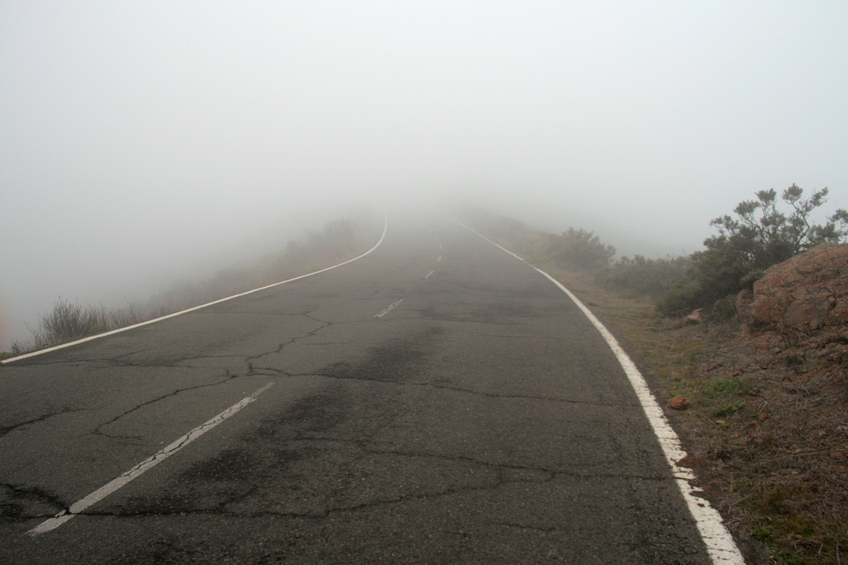
road in the mist

By Kathryn Lilley

Another brave author has submitted the first page of a work-in-progress anonymously for critique. Read and enjoy. See you on the far side with my comments. Then, please join us with your feedback.


UNTITLED

March, seventeen years earlier.

The car ahead of Noah Webb vanished.

He eased to a stop on the shoulder and stared into the soup beyond his headlights. He had followed the car for twenty minutes, two lone drivers trying to negotiate the fog. This road lulled a driver to sleep for eleven miles of straight blacktop. Then it snaked through a series of wooded curves and deep ravines. Under a full moon, this road was a challenge. Tonight, it was deadly.

The other driver never saw the curve coming. Noah shut his eyes. Memories from another distant fog shrouded night, on another lonely road, washed over him. A tear oozed from the corner of his eye and crawled down his cheek. Why was I the one following him?

Webb exhaled, flicked at the tear and mustered the strength to move. He released his grip on the wheel and shook blood back into his fingers. He fished a flashlight from under the seat. As he opened the door, cold, damp air slithered in and licked his face. He pulled himself from the car and stood still, staring where the headlights dissolved into the fog. He dug his nails into his palms and called, “Anybody out there?”

No answer. As he crept around the car, gravel and frosted grass crunched under his feet. He turned and looked back into the glare of his headlights. He checked his watch. Almost midnight. His breath froze and shimmered in the light. He shivered, pulled up his collar and then faced the darkness before him and approached the curve.

He followed the gravel to where the ground spilled over an embankment into the woods. He searched the darkness then stopped. From the bottom of the ravine, two red lights glowed in the fog like squinting eyes. He aimed his light at the car, but the mist swallowed it. “Hang on, I’m coming.”

Webb dug his heels into the slope and sidestepped down. Halfway, his foot slipped. Groping for balance, he fumbled the flashlight and it clattered away. He crashed on his hip then slid over rock and wet grass until he thudded against the bumper of the car.

My Notes: 

I am impressed by the way the writer of this page quickly incorporates several important story components:

  1. An inciting incident takes place (the car in front of Webb’s vehicle careens off a fog-shrouded curve)
  2. Tension is introduced (Webb must decide to act in order to rescue the other driver)
  3. The tension level is raised  (Webb has to overcome a reluctance to act  due to a previous accident experience)

It’s hard to check off all those story points in just 400 words, and I think it was done quite deftly here. I was drawn in by the setup on this first page–kudos to the writer!

I have a few suggestions for edits.

Keep the focus on the fog

The fog in the second paragraph is such a strong element, and the offset  rhythm of the last two sentences is great.

Under a full moon, this road was a challenge. Tonight, it was deadly.

But before I reached the end of that paragraph, the focus had shifted from the fog to the road itself (lulling the driver to sleep, snaking around curves). I would suggest revising the paragraph slightly to maintain a constant sense of the menacing fog.

How do we know? 

When did Webb first become aware of the crash, exactly? In the first sentence?

The car ahead of Noah Webb vanished.


During my initial reading, I didn’t get a clear sense of the crash as it was supposed to be taking place. The first sentence is too nonspecific (The car vanishes–where? Into the fog? Over the side of the road?) I first assumed that the car had simply vanished into the fog. I later deduced that it had crashed from the narration and flashback. As the standard advice goes, it’s better to “show” the crash clearly as it takes place, rather than “tell” it after the fact.

Flashback note

I like the information about Webb’s previous crash because it raises his tension level, but the flashback device itself is a bit clunky. It slowed down the story, especially when we got to the part about the tears rolling down Webb’s face. I’d suggest trying to weave in the  information about the previous crash without bringing the present-day action to a full stop. Perhaps Webb could struggle with his memory and tears as he’s stumbling down the ravine toward the victim’s car. (At least he’d be moving.)

Speaking of flashbacks, the chapter frame puzzles me (in retrospect).

March, seventeen years earlier.

Is the entire scene supposed to be taking place in the past? In that case, it suggests something of a flashback within a flashback, doesn’t it?

Repeated words, format

As I was reading I felt like there were a few too many instances of the word “he”. Try to vary the sentence structures to pare down the repetition.

Also, at one point the name used to refer to the character changes from Noah to Webb. Once you settle on the name you want to use, keep using the same same name for consistency.

Overall

You can file all of my comments today under the “easy to fix” category. Overall, I think the page is a great start. Thanks to our writer today for submitting this first page!

TKZers, can you add more feedback for the writer in the Comments? And don’t be shy if you disagree with any of my notes. The more, the merrier!

First Page Critique: The Challenge Of Telepathy

imageToday we’re reviewing a first page submission titled CHECKS AND BALANCES. I’ll add my comments at the end. Then, I invite you to add your constructive feedback in the Comments.

CHECKS AND BALANCES

The Peak District, Year Eight of the First Lord and Eternal Blessed First Lady’s Glorious Regime. June.

I pushed through the ranks of stern-faced men and women dressed in combat trousers and canvas jackets until I reached David.

“Good of you to finally join us, Melanie.” Without another word, he set out hacked CCTV feed to show Somerset House from the Strand.

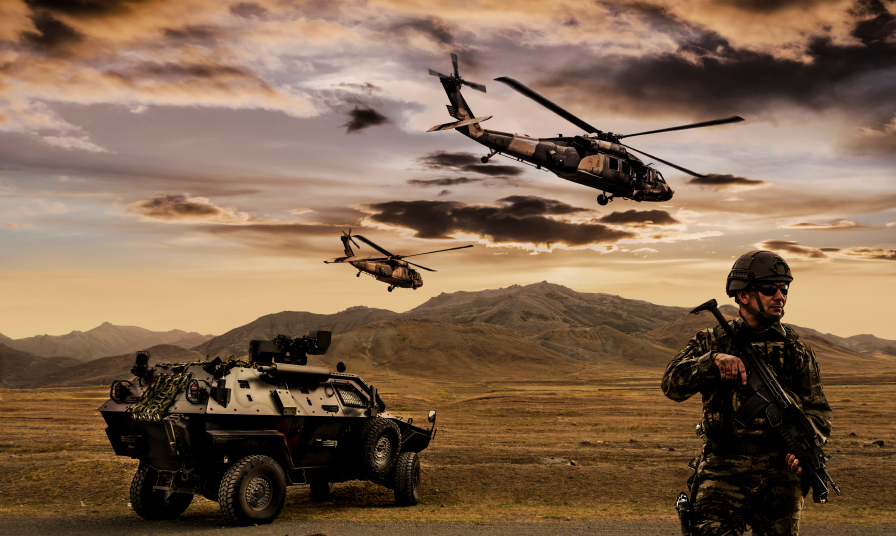
The elegant arches and columns of the Regime’s headquarters formed a stark contrast to this utilitarian network of abandoned mines. I dutifully studied the armed soldiers guarding the archway and the helicopters hovering above the courtyard, but the larger-than-life portraits that dominated the façade demanded my attention.

Honour the First Lord demanded the painting on the left, above an image of a striking man in replica nineteenth-century military uniform. Remember the Eternal Blessed First Lady mourned its companion on the right-hand side. Its subject appeared as fragile and innocent as a rococo shepherdess, but my co-conspirators considered her a she-devil in life and their most high-profile victim in death.

“There’ve been too many deaths, too many prisoners. We need to stop the Regime once and for all,” David intoned. Years of outdoor living had given him the muscles and hearty glow he could only have dreamt of in his old life as an academic. When he spoke, people listened.

I ignored him.

My eyes lingered on the second portrait until its features blurred. Until I was content that the so-called Eternal Bless First Lady’s curves, red lips and Dior gown bore no resemblance to my soldier’s body and weather-beaten face. The Treaty camp didn’t possess a mirror, but I could well imagine the changes wrought by five years of camping in the peaks and hiding in mines, wracked by cold, hunger, and the constant fear of discovery. Besides, Marianne Helmsley’s defining feature had always been her Rapunzel curls, and I’d cropped my hair to the skull the night I fled to the Treaty.

No one had recognized me before. No one would recognize me now. If there was one thing both sides agreed on, it was that the dictator’s wife was dead.

My Comments

No doubt the writer has a strong mental image of everything that’s happening in this first page, but that image wasn’t conveyed cLeary enough for me as a reader to get oriented within the scene. I needed more of a sense of the physical context in which the scene is taking place. For example, the early reference to “hacked CCTV feed” made me assume that the characters are viewing everything else that is being described that described on a monitor or screen of some sort, but I wasn’t certain.

Grounding and Context

The second paragraph refers to “Somerset House On The Strand,” followed immediately by a reference to “the Regime’s headquarters.” By those places are contrasted with “this utilitarian network of abandoned mines,” I was floundering at sea.

Eccentric Language Creates Confusion

I kept stumbling over some unusual language and word choices.

For example, in the following line

Honour the First Lord demanded the painting on the left

I wasn’t sure if the writer intended to use the verb “demanded” as written here, or simply made a mistake. The next line only exacerbated my confusion by injecting a convoluted character name (“Remember the Eternal Blessed First Lady”), along with another eccentric verb choice.

Remember the Eternal Blessed First Lady mourned its companion on the right-hand side.

As a general rule, it’s best to avoid the over-use of confusing, idiosyncratic language. For example, the following introductory framing line struck me as unintentionally humorous:

Eternal Blessed First Lady’s Glorious Regime. June.image

It reminded me of the mockumentary film “Borat: Cultural Learnings of America for Make Benefit Glorious Nation of Kazakhstan”. (Which is probably not the tone that the writer had in mind!)

A Part Well Done: A Snappy KIck-off

I did like the deft way the author kicked out of the scene at the end of the page.

If there was one thing both sides agreed on, it was that the dictator’s wife was dead.

That line gave me the first strong clue about the situation being presented in this story: a military dictator’s wife forced to go incognito within a hostile environment. That’s an intriguing setup for a story. (Update: See Sheryl’s suggestion in the Comments to use this line as the first line of the story–it’s a great idea!)

Writing as Telepathy 

Writing is telepathy, Stephen King once said. The writer of CHECKS AND BALANCES needs to make sure that the reader can “see” the images  that are playing inside the story creator’s mind. It’s not an easy task, to be sure–but that’s the challenge of writing effectively.

A big thank you to today’s brave writer for submitting this first page! Please add your feedback in the Comments.

Remove A Letter, Spoil A Book Title

By Kathryn Lilley

I invite you to goof off with me today by playing a game that’s been making the rounds of social media: #RemoveALetterSpoilABook. Here are some fun examples I’ve run across to date:

Silence of the Labs

Labrador retriever puppies sleeping on basket


The Ale of Two Cities

cheers hands oktoberfest


A Wrinkle in Tim

Indoor portrait of senior man in blue shirt and cap being happy like a kid


Goosebums

image


Update: Inspired by some of the comments, adding a few more

Jurassic Ark

image

THE DAVINCI COD (Credit: Chrissie, Friend of Zone)

image


Hard Ties (Credit: JS Bell, Zoner At Large)

Rural african child


*MMA (Credit: Phil G, Friend of Zone)

Two Fighters


Of Mice And Me (Credit: George S, Friend of Zone)

chihuahua and Djungarian hamster


How about you? Can you think of any other titles to spoil by removing one letter?

Moments In A Writer’s Life, Portrayed By Animals

By Kathryn Lilley

Note: I’m filling in today for my esteemed colleague Elaine Viets, who is on tour with her newest book, THE ART OF MURDER.

A Writer’s Life, As Shown By Animals

How a writer reacts whenever someone says, “I’d like to become a writer, but I don’t have time.”

image


How a writer feels after finishing Draft Five, just before starting Draft Six.

image


When a writer asks a friend to read his manuscript, with strict instructions to GIVE HIM HIS HONEST REACTION.

image


How the friend reacts to the manuscript (officially).

image


How the friend reacts to the manuscript (unofficially).

dog's nose in the sweaters

When a writer thinks, “F*ck it. I’ll just upload my (unedited, unagented) manuscript to Amazon as an e-book, and see what happens.”

image


“What happens” after the writer’s story is uploaded to Amazon.

The dead cockroach, Killed by pest control with black spray in hand

How a writer deals with rejection.

a silly polar bear pushes across the snow on his belly.


When a writer puts Story #1 into a drawer and starts Story #2 (with a newfound focus on the importance of learning craft).

image


How  a writer feels after he signs a contract with an agent/publisher.

jack russell dog celebrating new years eve with champagne and singing out loud, with a fireworks rocket , isolated on white background


When a writer receives the first round of notes from her new editor.

image


When a writer figures out her hourly income, after getting her advance and doing the math.

Female orangutan in Tropic World at the Brookfield Zoo in Brookfield, Illinois on May 13, 2013


As a writer, are you familiar with any of these “writer moments”? Which animal  captures a recent moment of yours?

Beyond The “Word Gap”: A Bridge Too Far?


imageBy Kathryn Lilley

When my daughter was in the first grade, her teacher pulled me aside one day.

“I’m learning so much by listening to the way you speak to your daughter,” she said. “It’s amazing. You talk to her like she’s an adult.”

At the time, I recall being surprised by that comment. (And to be honest, I didn’t know there was another way to talk to children.) Then I started paying attention to the way some of the other parents in the school communicated with their kids. I was struck by the simplified language they used. They used fewer, simpler words than I did. (I remember wondering briefly if I was doing something wrong in the way I communicated as a parent. If so, it was too late to switch gears, I decided. By the time my daughter was six, she already had an adult-level vocabulary).

I felt reassured by a study that came out the next year, which  indicated that children with big vocabularies tend to do better in school than children with small vocabularies. (That there was a correlation between vocabulary size and academic performance seemed intuitively obvious to me at the time. But still, it was a relief to have my personal communication style officially sanctioned by a study.)

After that study came out in the mid-nineties, early education experts and advocates jumped on board the notion of a “word gap”. They stressed the need to close that gap as a major strategy for improving the education system. But some critics are now pushing back on some of the notions fueling the word gap campaign. According to some scholars cited in a recent article in The Atlantic Monthly, merely using more words is not enough to prepare a child for school. Some linguists dismissed the campaign to close the word gap as simplistic, inadequately researched, and ineffective.

http://www.theatlantic.com/education/archive/2016/04/beyond-the-word-gap/479448/

Personally, I would like to see some research done on the opposite side of the word gap equation: I wonder whether there is a potential downside in having a big vocabulary in early childhood. Judging from my own highly unscientific, peer group study sample, younger children who have big vocabularies tend to sail through their grammar school years.  The early years are so effortless for these children, they often fail to develop the study habits they’ll need to carry them successfully through high school and college.

But he’s so bright! Another friend complains to me over the phone about her eighth grade son, who is suddenly struggling in school. Why won’t he just do his friggin’ homework?

Because he never had to work before now, I reply. Her son-of-a-professional’s precocious vocabulary let him coast along in school while some of the less “bright” kids were developing a few basic study habits.

So here’s my take on the word gap movement: it’s a little off base as an education strategy. Yes, having a decent vocabulary helps you shine in the first grade. But eventually, you’re going to have to sit down and do your friggin’ homework.

Here at TKZ, we’re all writers and avid readers, so this is an interesting group to ask: are you familiar with the “word gap” campaign? What do you think about it as an early childhood education strategy?

First Page Critique: Characters, Connection, and Flow

image

By Kathryn Lilley

Today, we’re critiquing the first page of a story called AMERICAN LIONS, submitted anonymously by a TKZ reader. I’ll kick off the discussion with my feedback, and then I invite you to add your notes and constructive criticism in the Comments.

American Lions

“You remember Spag, don’t you?” Aunt Julie asked Nora for about the hundreth time that morning. She asked it when she got Nora and Myra out of bed, when she rushed them out of their house, when she drove them across town, and now as they walked into the Filler Up truck stop. She nodded her head as she asked, “Don’t you remember him?”

I don’t know, Aunt Julie.” What kind of a name is Spag, anyway? “Why are we here? My mom needs me. And Myra can’t miss any more school. They’ll send a truancy officer to our house. He’ll ask questions.”

Stop worrying, Nora. Let the adults handle this.”

Nora had never been to a truck stop before. Aunt Julie said they were going to have breakfast there. Nora scanned the room. It was crowded with rowdy men seated at round tables in the center of the room, men stuffed into booths along both sides. At the far end, Nora could see a kitchen through a cut out in the wall. A row of men sat at a counter facing the kitchen. From the back, the men looked pretty much the same. The had short hair and and were hunched over their plates, or reading newspapers and drinking coffee. But there was one man who sat facing away from the kitchen, toward the entrance. His hair was shoulder length and layered in the current style. Nora studied his features for something familiar. Then she saw him looking back at her and she moved behind Aunt Julie.

“There he is.” Aunt Julie said and the man and he hurried over to her.

“He looks like Rick Springfield,” Myra said.

“Myra, Nora, this is the friend I was telling you about. Remember him now?”

He said to Aunt Julie, “What are they doing here?”

Nora moved close to Aunt Julie and said, “But this place, is it safe?”

“They’re truckers, Nora. You’ll be with Spag.”

“Now wait a minute, Julie. You asked me to meet you here and you put me on baby sitting duty? I thought you were in trouble, I thought you needed my help.”

“I do. I need you to stay with the girls. I didn’t know what else to do.”

“But I can help, Aunt Julie. Don’t leave me here.” She’s my mother. She needs me. This morning was the worse I have ever seen her.

~~~~

My comments

Some distracting technical issues made it difficult at times for me to follow what was happening in this scene.

Setting the stage in the first paragraph: crowd control

The first paragraph introduces (or makes reference to) a total of four characters–Aunt Julie, Nora, Myra, and Spag. I had trouble visualizing who was actually visible in this scene as it opened–there is not enough information provided to orient the reader in the scene. I had to backtrack and reread the first paragraph in order to sort out who was doing what. (Tip: As a general rule, try to lImit the focus of action in each paragraph to a maximum of two characters.)

Cue the reader when the dialogue or focus shifts to a different character

Whenever a new character begins speaking or the scene’s focus shifts to that character, the writer needs to cue the reader that a shift is taking place. For example, in the second paragraph, a new character is speaking, so the dialogue should open with an opening quotation mark.

“I don’t know, Aunt Julie.”

Focus on action/reaction

It would strengthen the scene to include more reaction and characterization for the character named Spag. Show him reacting to the children and sizing up the situation as he realizes he’s being thrust into babysitting duty.

Avoid distracting POV wobbles

I got slightly disoriented by some of the point of view transitions.  Sometimes Nora’s point of view is presented in third-person, as follows.

Nora moved closer to Aunt Julie…

Sometimes the POV shifted to first person, focusing on Nora’s internal thoughts as in the following.

This morning was the worst I have ever seen her. 

(Yes, it’s possible to shift the point of view within a story, but the way it’s done here added to my overall feeling of disorientation within this scene.)

Keep track of characters

The character Myra was briefly mentioned in the first paragraph, but not in a way that established her physically within the scene. I was a bit startled  therefore when Myra popped up later on in the scene to contribute the Rick Springfield observation, (I also had to look up Rick Springfield to identify him. Would a young child know who RIck Springfield is, btw?)

If you are going to re-introduce a character who has been silent or missing for several sentences or paragraphs, you need to re-establish that character in the reader’s mind. Something like,

Myra, who’d remained silent during our discussion, jumped in to deliver the final verdict.

“He looks like Rick Springfield,” she said.

Edit out repetitive language and extraneous words

We all have a tendency to repeat certain words and phrases. The fifth paragraph contains an extraneous phrase “and the man”, and the repeated phrase “Nora moved behind Aunt Julia” are examples here.

Overall

The nice thing about technical difficulties is that they’re easily fixed with editing. An editing pass will eliminate most of the issues I’ve mentioned.

After reading this scene, I’m not sure what type of story this will turn out to be. Once the technical issues are fixed, the writer can concentrate on bringing the characters and story into stronger focus.

Please add your constructive feedback in the Comments, and thanks to our brave writer for submitting today’s first page for critique!