 Think of the book you’re currently reading, and the one before that. Where did you find it? Library, bookstore, Amazon? Someplace else?
Author Archives: Kathryn Lilley

Reader Friday: Best Book You Read Last Year?

A Moment Of Joy That Changed Everything
A half century or so ago this week, a burdened America experienced a moment of joy that gave it a jolt of optimism and energy: the Beatles arrived in America.
Comamentators call the British Invasion by the Beatles “A moment that changed everything.” Music, popular culture, and national mood, all changed forever in the wake of the arrival of the the British rock band.
Enjoy the CBS story about the day the Beatles arrived on US soil and tell us, which Beatles song is your favorite?
Reader Friday: Brags, Book News, And WIPs Roundup!
Guest Post: Harking Back To The Golden Age Of Journalism
 Today we welcome back to TKZ our friend and fellow ITW member, author Lisa Black. Enjoy!
By Lisa Black
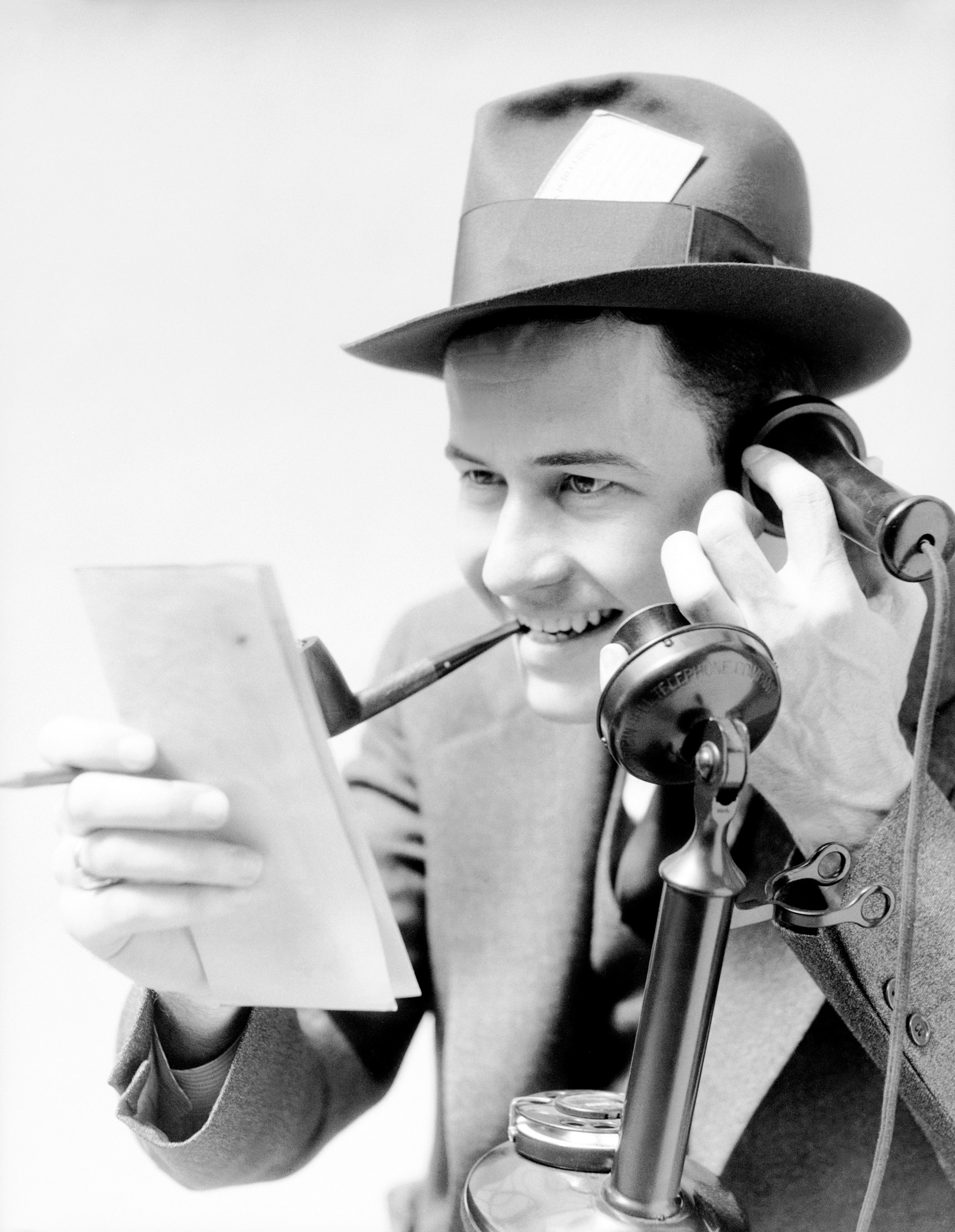
Who hasn’t wanted to be a newspaper reporter at some point in their life? Chasing a big story, elbowing your way up to shady corporations, reluctant witnesses, crusading leaders? Living on coffee and take-out, your only uniform a pair of jeans and a worn leather jacket, with the ever-present notebook and pen in hand? Comforting the afflicted and afflicting the comfortable?
At least that used to sound glamorous to me. Now it just sounds exhausting.
But I still love newspapers. Reading the day’s edition, delivered to a box at the end of my driveway, over a cup of tea is my favorite part of the day. So when I decided to set the second Gardiner and Renner book around a large city newspaper, I knew it was the right decision.
I did a ton of research, but one book that was more fun than work is titled Gimme Rewrite, Sweetheart…. It is a compilation of memories of reporters for the two major Cleveland, Ohio newspapers from when Cleveland still had two papers. Like most cities it now has one and that one only provides home print delivery four days per week.
Reporters in a bygone era could be assigned to the police beat, and their schedule became dictated by the police radio which sat on a shelf for constant monitoring. Fires, traffic accidents, helpful dispatchers warning officers that they might need noseplugs for a week-old welfare check gave the reporters a quick summary of what the story might be. But of course they couldn’t really know until they got there.
Some other tidbits of information from this book:
You may wonder why stories are ‘buried’ near the obituaries. Editors have no way to know how many people will die on any particular day so they leave a little room open near the obituaries. Late-breaking stories are placed there because there is space, not because of any editorial decision.
A reporter got on the good side of some mobsters at their trial by stealing 20-30 year old photos of them from the newspaper’s archives. Giving each a photo and saying, “Look, this is you when you were, like, 22,” made him their new buddy and got them chatting.
Back in the heady days of large staffs, each paper had specialized writers. There were religion writers, aviation writers, medicine writers. At one point both papers had dog writers.
Game-changing stories don’t always have to be herculean, dramatic efforts. One reporter, with help from the hospital’s employees, simply wandered around a hellish psychiatric ward for a day. When the state governor read the story, he strengthened state regulations to improve conditions. Another reporter wrote a story on Savings & Loans soaking home buyer on fees (one of the practices which would cause the entire economy to crash in 2008) and wound up taking on the inimical Freddie Mac. But the local Congresswoman happened to be on the House Banking Committee and Freddie Mac happened to be asking the Committee to do an IPO. Freddie Mac wound up having to make information public and belatedly enforce its own rules.
Or smaller stories—a car dealership beloved in the area for its corny TV commercials ran a contest where they awarded a car to a worthy person. The college girl winner had a father recently disabled from a heart attack, but the car she won got two flats on the way home and the exhaust system fell off. A reporter wrote the truth. Luckily for the reporter the dealership didn’t advertise in the paper, so the paper ran the story anyway—the dealership sued, but the reporter won the lawsuit. The truth, it seemed, was still a valid defense.
Some things don’t change.

****
It begins with the kind of bizarre death that makes headlines—literally. A copy editor at the Cleveland Herald is found hanging above the grinding wheels of the newspaper assembly line. Forensic investigator Maggie Gardiner has her suspicions about this apparent suicide inside the tsunami of tensions that is the news industry today—and when the evidence suggests murder, Maggie has no choice but to place her trust in the one person she doesn’t trust at all….
Jack Renner is a killer with a conscience, a vigilante with his own code of honor. He has only one problem: Maggie knows his secret. She insists he enforce the law, not subvert it. But when more newspaper employees are slain, Jack may be the only person who can help Maggie unmask the killer–even if Jack is still checking names off his own private list.
UNPUNISHED available January 31 wherever books are sold!
www.lisa-black.com
Twitter: @LisaBlackAuthor
Lisa Black has spent over 20 years in forensic science, first at the coroner’s office in Cleveland Ohio and now as a certified latent print examiner and CSI at a Florida police dept. Her books have been translated into 6 languages, one reached the NYT Bestseller’s List and one has been optioned for film and a possible TV series.
www.lisa-black.com
@LisaBlackAuthor
When The Muse Needs A Kick In The Pants
Do you ever have one of those days when it feels like the “boys in the back room” have gone on strike? It’s those times when inspiration fades, and fresh, original ideas seem to have taken a permanent vacay from your brain? To help kickstart the inner Muse, consider trying out these nifty little writing exercise programs, which include everything from a Random Plot Generator, What If? Scenarios, a Character Trait Generator, and a Random First Line Generator. Happy Writing!
Speaking of Happy: We’re excited and pleased to announce that The Kill Zone has been recognized by Positive Writer in its “Best Writing Blogs for Writers Awards 2017″.
Thanks to our bloggers and TKZ readers and community contributors for making this another great year for writing and learning!
Writers Dish On The Topic Of Being “Almost Famous”
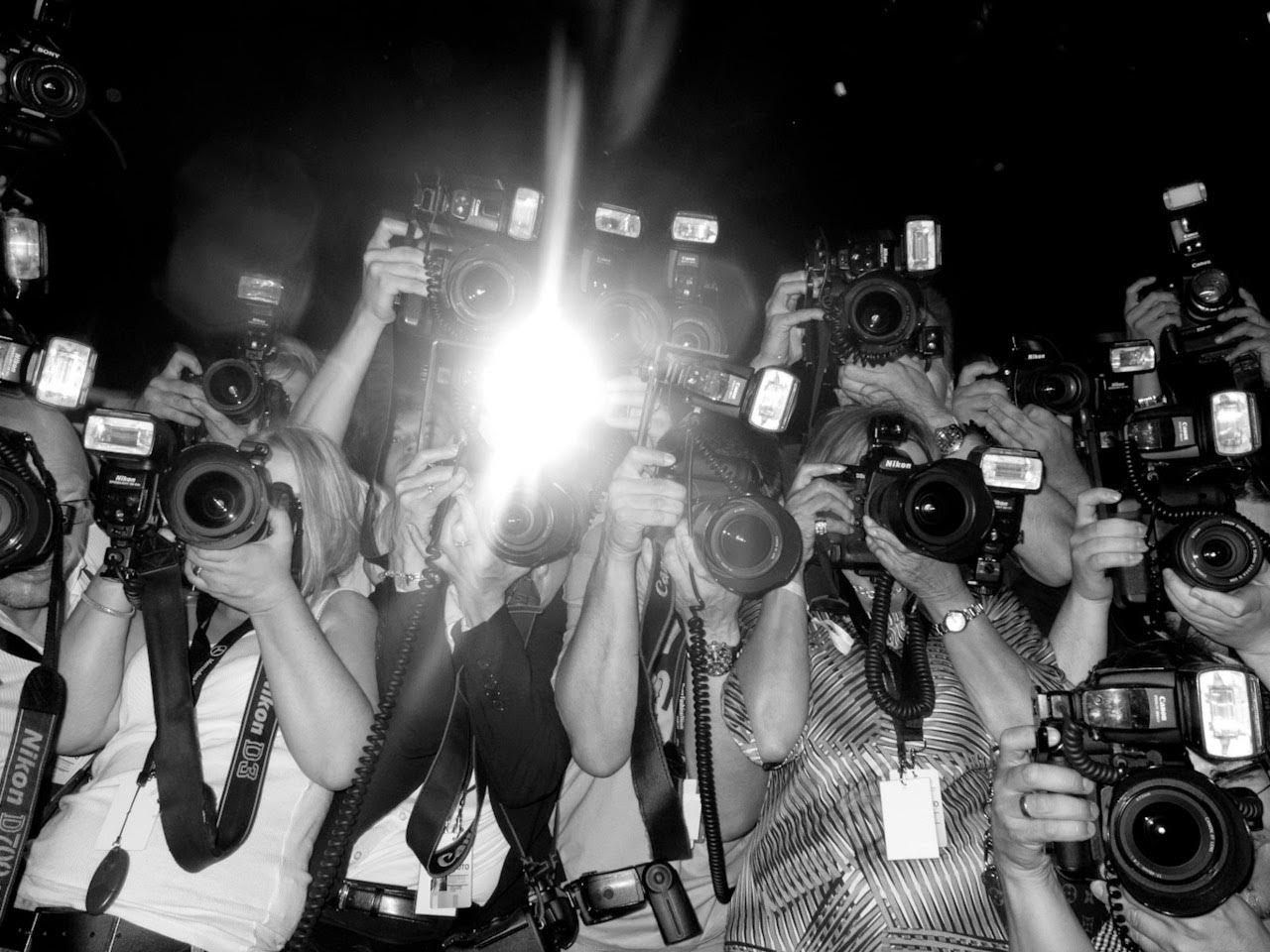
A few years ago, I took an LA-to-Tokyo flight. Upon deplaning, I was met by something totally unexpected: a group of smiling Japanese ladies. They surrounded me and shook my hand, while handing me pieces of paper and pens. They kept smiling, while repeating something which sounded like “Ba-ba.” So of course I smiled and nodded back at them, which made the ladies beam twice as enthusiastically.
It eventually became clear that the Japanese women thought I was an American celebrity–some blondish middle-aged celebrity, I guess, whose name sounds like “Ba-ba”. Later my friends and I tried to figure out the name of my mystery-celeb doppelgänger.
I was reminded of that experience yesterday after reading an article about the subject of being “almost famous.” Because let’s face it–we writers seldom become famous, not in that celebrity-level, red carpet read, paparazzi-magnet kind of way. I think Ernest Hemingway might have been the last fiction writer who could legitimately claim celebrity pop culture status.
Imagine yourself as an A-list celebrity. What would that experience be like, do you think? Share with us!
How Many Of These Classic Books Have You Read?
 We’re in an end-of-year, light-hearted mood today, so let’s take a quiz about what our accumulated reading habits “reveal” about ourselves, for better or for worse. Are you game?
This quiz is called “How Many Of These Classic American Books Have You Actually Read?”
I took the aforementioned quiz, dutifully checking off the books I read in high school or college (or at least, I checked the books that I remember reading–the tail end of the 70’s now seems long ago and far away. (To be honest, the entire late-70’s decade has become slightly fogged-over in my memory, somewhat obscured by a brume of natural herbal smaze).
My quiz result?
It was this: “You must be an English major.”
Wrong. Back in college I was a Political Science major, with a strong interest in journalism (there was no Journalism major at my liberal arts school, so I spent every free moment working at the campus newspaper, and a local TV news outlet). In those days, I had very little interest in fiction. I did eventually end up taking a few English Literature courses, mainly because I saw those courses as being located somewhere within the realm of a Kingdom known as the “Land of Easy A’s”. Whatever “serious” literary books I read, I read them only as a result of the requirements of a course syllabus. My then-ambition was to become an ink stained wretch, not a literati (or literatus, per my Ghost of Latin Teacher Past).
Okay, so you know the worst about me–that I am an English major poseur, at best. What about you? Can you take the “Which Books Have You Read.” quiz, and share your results?? ?
The New “WestWorld”: A Show About Storytelling
 By Kathryn Lilley
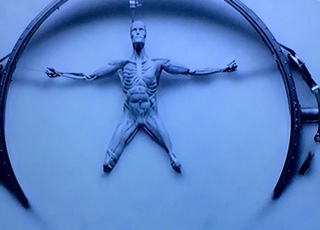
I don’t watch many television shows, so I was surprised that I recently become addicted to a new HBO series: “Westworld”.
When I first heard that HBO was making a series based on the original concept of the Westworld film (the earlier version was written by sci-fi writer Michael Crichton), I’ll admit that I was skeptical. The original Westworld was one of the worst movies of all time, surpassed in its hideousness (despite a bravura performance by actor Yul Brynner) only by its lamentable sequel, “Futureworld”.
The premise is simple: “Westworld” is a recreation of a 19th century western town, staffed by android “hosts”, where vacationers can act out their fantasies about living in the old West. The paying guests of Westworld are told that they can live out their Wild West fantasies in complete safety. “Nothing can go wrong,” the tourists are told. Which means, of course, that everything certainly will go wrong, and fast.
Fortunately for viewers, the new HBO series far surpasses the original film. It explores issues such as the nature of consciousness, the relationship between humans and robots, and the stories we invent about our lives.
Here is the trailer for the original 1973 movie:
And here is the trailer for the 2016 HBO series.
Same premise, much more effective execution. The HBO version of Westworld is a great show for writers to watch, in particular. At its heart, Westworld is a show about storytelling. Each episode explores an aspect of telling stories, positing the notion that our memories are nothing more than the narratives we select to anchor our identities as human beings. My favorite character in the show is the writer, Lee Sizemore, a profane, alcoholic hack who is charged with writing the “depraved little fantasies” that entertain the tourists at Westworld. Sizemore’s hapless, comedic character offers a refreshing contrast to the polished perfection of the androids and robotic-seeming humans of Westworld.
Have you been watching the Westworld series on HBO? Here is a New York Times article recapping this week’s penultimate show, Episode 9. But if you haven’t been watching the series, I wouldn’t jump into one of the later episodes. Multiple timelines and unreliable narrators abound in this ambitious show, so it’s essential to watch it from the beginning. Next Sunday is the finale, and fans of Westworld are eager to know: is Arnold really dead?
Fun aspect of the new Westworld: the integration of contemporary rock music as the musical score. Here’s a clip as an example (strong language, violence advisory).