About Kathryn Lilley

A crime writer, former journalist, and author of IMBA-bestselling mystery series, The Fat City Mysteries. She lives in Los Angeles with her husband and two neurotic cats. http://www.kathrynlilley.com/

Reader Friday: Do You Find Zen In Your Writing?

img_1311Let’s turn our thoughts today to the subject of happiness and finding inner peace. What’s your go-to method for achieving balance and harmony in life? Does the discipline of writing help you stay balanced and impact your mood in a positive way, or is it more like a daily chore?

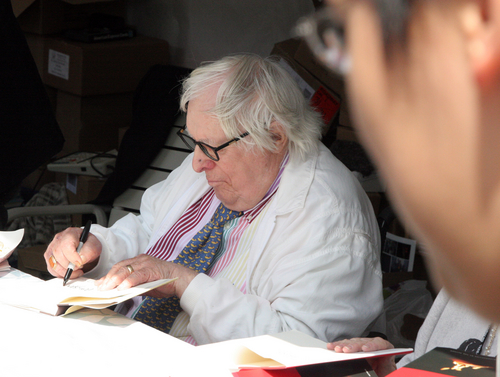
And if you need some inspiration along those lines, please enjoy Ray Bradbury’s “Zen in the Art of Writing”.

https://youtu.be/YnVPFPCuuJc

TKZ Classic: No, That’s NOT The Smell Of Cordite In The Air

Note: From time to time we reprise classic posts that have traditionally been highly popular on TKZ. Here is one of our all-time, most read topics from many years back, by TKZ Emeritus John Ramsey Miller. Enjoy!

By John Ramsey Miller

I have been guilty of having the smell, or swirling of, Cordite in the air after gun play. The other night watching TV I heard one of the techs on CSI (someplace or other) saying that she smelled Cordite in a room, which is more than unlikely since Cordite hasn’t been around since WWII. There is no Cordite whatsoever in modern ammunition. With modern ammo you can smell the pungent Nitroglycerin after firing. Modern powder is basically sawdust soaked in nitro coated with graphite. In very simple terms, the shape and coatings control the burn rates.

To smell Cordite you’d have to have people firing very old ammunition. According to a quick check under Cordite on Wikipedia: “The smell of Cordite is referenced erroneously in fiction to indicate the recent firing of weapons.” So from now on, unless I am writing a period piece, it will be “The pungent smell of nitroglycerin, sawdust, and graphite swirling in the air.” Or I’ll just say, “the smell of gunpowder.”

We’ve discussed accuracy in fiction here before, and maybe it’s worth a second go-round. There are more mistakes made about guns than most other subjects in modern fiction. Maybe that has to do with the fact that the majority of authors are not gun familiar, or comfortable with guns. I’m sort of a gun fan as I’ve been buying, handling, and shooting them all of my adult life. I am hardly an expert on the subject, but I know several (Scotty Boggs, Jason Parr, and Gary Reeder) and never hesitate to ask them for technical advice.

Modern gunpowder is slow burning and non-explosive until it is put into a confined space to allow compression and a spark is introduced by a primer. If you put black powder into an ashtray and put a cigarette in there, your fingers will throb for a very long time and the blackening will be burned into the skin. It explodes without being compressed when a spark is introduced, or rather it burns so fast it seems to explode. John Gilstrap can write here about explosions as he is an expert in energetic materials. When I was in college I put a cigarette into an ashtray I’d poured black powder into.

Here I present a few basics, and probably as much information as an author really needs to know to keep gun owners from laughing out loud and maybe never reading that author’s books again. The two handguns depicted below are my own: the revolver is a Smith & Wesson K-22 Model 17 in .22, and the semi-automatic is a Colt 1911 Model 80 in .45 ACP.

image

REVOLVERS are guns with cylinders that turn (clockwise or counter-clockwise depending on the manufacturer, model, and date issued) to allow a new bullet to present itself before the firing pin in its turn before the barrel. They are also called “Wheel” guns, and may or may not have an exposed hammer. Some hammers are shrouded so the hammer won’t get caught on clothing. They will hold from five to nine rounds depending on caliber and model. Revolvers do not usually have safeties. Not being cocked and/or not having the trigger pulled back is the revolver’s sole safety method. Older guns may be fired if the hammer is struck by force and the firing pin hits the shell’s primer. That is why most cowboys carried the cylinder under the hammer empty. Modern revolvers have a block between the pin and the primer unless the trigger depressed when the hammer falls. There are two types of revolver: the DA, for double action and the SA, for single action. With an SA you have to cock the hammer to move the cylinder (think cowboy gun) or the DA, whose cylinder turns as you squeeze the trigger, or when you cock the hammer.

image

A SEMI-AUTOMATIC handgun has no cylinder, but is fed cartridges (bullets are the nose of a cartridge) from a magazine (housed in the handle), which holds the cartridges in a stack under pressure from the spring. As each bullet is fired, the receiver slides back from the pressure of the explosion and the extractor grabs the rim of the casing to pull it from the chamber, and flip it out to the right. (There are a few left-handed 1911s whose casings flip to the left). The receiver then moves forward under spring tension and, as it goes, it pushes the next cartridge in the magazine into the chamber and leaves the hammer (or striker assembly in the Glock) cocked for the next trigger pull.

All handguns have some safety mechanism. Some have magazine disconnects (won’t fire without at least an empty clip in place) or some firing pin block (to prevent firing when dropped) is usually incorporated. Most semi-automatics have one or more safeties, and some have none to speak of except a lack of trigger pull. A Colt 1911 (They come in several calibers including .45 ACP, .38 Super. 9MM, and .22 LR) has several including a thumb safety, a grip-strap safety, and on some a half-cock, and one that involves pushing back the receiver a fraction of an inch to prevent it from firing. The latter would be a last ditch to keep the gun from going off, and if you miscalculate and the gunman is lucky, the bullet will pass through your palm. When semi’s last bullet is fired and its case ejected, the receiver locks open to let the user know the weapon is out of ammunition. Slap in a mag, release the receiver, and there’s a new round in the chamber.

You will hear over and over that “Glocks do not have safeties.” But they do. Glocks do not have “external” safeties, but they have the two-part “safe-trigger” which actually is a safety. On a Glock the “Striker” (no internal hammer) is half cocked by the first 1/4″ of slide retraction while chambering a cartridge. The other “half-cocking” of the striker is the first stage take up of the trigger pull. On a Glock you get ONE SNAP, then you have to jack the slide resetting the half cock on the striker to have another snap. With some practice you can only pull the slide back just enough to reset the action without ejecting the “dud” round for another try. Interesting isn’t it? There may be exceptions to what I’ve written, but I think it is accurate enough to get a writer around in a shootout. And probably more than most of you want to know.

A cartridge is made up of four parts: Casing, Bullet, Primer, and Gunpowder. The bullet is the projectile that is seated in the casing, but the cartridge is never accurately called a bullet. A shotgun round is referred to as a shell. A shotgun shell (or round) that has been fired is often called a hull. A shotgun shell holds either pellets or a single slug.

A magazine can hold as many rounds as its length and width accommodates. Some mags hold bullets in a straight line and some are wider to allow staggered rounds. Low capacity factory magazines hold from six to eight rounds. You can keep one on the chamber to add an additional round to the gun’s capacity. Hi-capacity magazines hold more shells than a standard mag. I have had fifteen round mags, and some handgun magazines hold twenty or even thirty rounds. Some handgun drum magazines hold more …a lot more.

A magazine can be called a clip. In the military a rifle or machine gun has a Magazine, handguns can have clips. People rarely say clip any more but it was once common to call any magazine a clip. There are clips that hold .45 ACPs in a half moon for use in .45 LC revolvers, and to shoot 9MM rounds in a 38, but they are rare enough that an author shouldn’t need to concern themselves with those.

There’s lots more to know like available calibers, shotgun gauges, How a barrel length’s effects powder burn and velocity, range, knock-down values, recoil, and trajectory. There are enough bullet types and weights to fill several books. And every author who writes weapons should buy a copy of Gun Digest so they can read about and look at the weapons they write about. Write it off as reference material. Get the latest one you can find because they add new gun models yearly, but anything in the past ten years is plenty for most applications. Any bookseller has them and EBay has lots of them used. Here’s the link:

You can study guns for the rest of your life, but the truth is, authors don’t need to know very much to keep from writing someone shoving a clip into a revolver, playing Russian Roulette with a Glock, or just writing convincingly about what a character has in their hand, handbag, or holster, or how that gun works.

When Literature Got Its Groove On, In The Desert

It’s not every night you get to see a Nobel Laureate rock the stage in the middle of the California desert. But I was lucky enough to be in the audience of 75,000 last week  when Bob Dylan, who had just won the Nobel Prize for Literature, performed at Desert Trip II.

https://youtu.be/QqDzOTXZGOk

Dylan, ever the iconoclast, didn’t make reference to his new award while he was on stage–in fact, he’s been so quiet about the whole thing that the Swedish Academy has “given up knockin’ on Dylan’s door” to find out whether he’ll attend the award ceremonies in Stockholm later this year.

My favorite moment of the three-day music festival took place the next night, when Neil

imageYoung sang “Harvest Moon” just as a full moon rose over the stage.

Paul McCartney, the Rolling Stones, The Who, and several other iconic bands and singers rounded out the three day festival in Indio, California.

I was interested to learn that there was some nattering nabobing about the fact that Dylan, a song man, is being given the world’s highest prize in literature. I’m not even a huge music aficionado (I listened to Karen Carpenter and Neil Diamond when I was a young, not the “cool” bands, I admit), but I love the fact that Dylan won the award. What do you think of the fact that the Nobel Prize for Literature went to a song man this year, and to Dylan in particular? Was this a good call by the Swedish Academy?


In Every Crisis, There Is A Hidden Story

By Kathryn Lilley

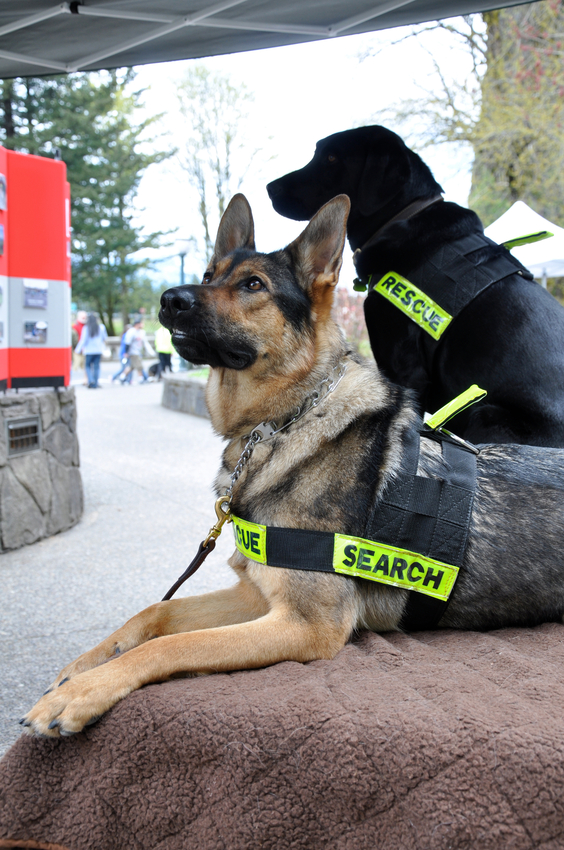
Search and Rescue Dogs“{Pain} is justified as soon as it becomes the raw material of beauty.” –Sartre

Whenever the word “pain” is mentioned, I immediately think of MacGregor, my Dog from Hell. Now don’t get me wrong. I love MacGregor. But he’s one of the world’s most demanding, high maintenance dogs. MacGregor is a ninety-pound, natural born herding type breed, long, lean, and somewhat feral looking. He’s a veritable wolf dog. MacGregor should have been born on a sheep farm, not confined within the gated walls of sedate suburbia. At the very least, he should have been adopted by a marathon runner, not by me, the Original Couch Potato. To keep my hyper-amped dog active enough to satisfy his restless herding breed instincts, I have cycled him through a series of dog walkers, hikers, boot camp drill sergeants, and even one former K9 cop turned dog trainer and psychologist. Their unanimous (and very expensive) verdict: MacGregor is indeed The Dog from Hell.

Dog and I hit our personal nadir last month, while I was recuperating from arm surgery. I wasn’t supposed to move my arms very much, so I had his leash fastened around my waist. (Dog people will guess what’s coming next.) As we passed a nearby house, a golden retriever rushed a fence to lodge her vociferous objections to our presence; then, MacGregor lunged left  to argue the point, upending me in the process. The result: several  bruised ribs, plus black-and-blue contusions from shoulder to knee. (Fortunately my arms were mostly spared.)

As I was sitting in the doctor’s lab waiting to get a chest x-ray to check for broken ribs, I did some agonized reflection on my relationship with my dog. It seemed that both of us had wound up with a lousy deal in our partnership. What could I do to turn the situation  around, short of starting my own sheep farm?

In a moment of desperation, I started thinking outside the box. At some point I stumbled across an interesting site: CARDA, a volunteer search dog organization.  If you’re ever lost in the mountains, CARDA volunteers and their dogs are the teams who’ll come looking for you. CARDA services are free of charge to the public and law enforcement. All expenses are paid by volunteers and donations. In each CARDA certified search team, both the human and dog undergo extensive training–it takes three years of training to become certified as a CARDA search and rescue team. Both the human and the dog have to be able to handle the rigorous requirements of search and rescue operations. In a moment of foolhardy optimism about my physical ability to handle hiking anything rougher than a golf course knoll, I submitted an application to CARDA. A friendly-sounding district representative quickly invited me to attend a training class this Wednesday night. (The first class is in Malibu, my kind of place.)

Disclosure: I predict that MacGregor will prove to be a natural as a search and rescue dog, but I’m fairly certain I won’t pass muster as the human half of our equation. The good folk at CARDA may take one look at me and bounce me back to Couch Potato School, to take Remedial Treadmill 101.

But in the end, it’s not important whether the dog and I ultimately graduate as a certified search and rescue team. It’s the journey that’s important. I’ve already latched onto the search and rescue notion as interesting story material. Instead of going to the gym to work out to get in shape for CARDA training, I’ve spent copious amounts of time browsing the web to learn about the culture of search and rescue volunteers (natch, because I like web surfing, not hiking). I’ve discovered all kinds of fascinating stories and camp fire lore about the volunteer search and rescue tradition. However long I survive the training itself, my CARDA experience will serve as research for a new project that’s started bubbling around in my head. For now, I’m calling that project A Working Dog Mystery.

If The Working Dog Mysteries bear fruit, I’ll really owe it all to MacGregor.  Or, to put it another way (and misquote the Rolling Stones song):

You can’t always get the dog you want

But if you try sometime you just might find

You get what you need

What about you? Has life ever handed you a lemon in terms of having a challenge or bad experience, and then you transformed that crisis into story material? Tell us about it in the Comments. Thanks!

The real MacGregor

The real MacGregor

Rejection: The Good, The Bad, And The REALLY Ugly

By Kathryn Lilley

shutterstock_135522785For those of us who still work (or aspire to work) in the land of traditional publishing, we all encounter rejection at some point. Most published authors get turned down by numerous agents and editors on the road to publication. Learning to deal with “No” is part of the writing process—I’d even say it’s one of the most important parts. You have to be able to handle rejection to stick with writing long enough to get better. And let’s face it: when we’re starting off as beginners, most of us have to become better writers in order to produce anything publishable. Agent, editors: those traditional publishing gatekeepers may be the dreaded Gorgons who spew fiery “No!” in boilerplate missives, but they have traditionally served a vital function. They force us to improve our writing.

"Sorry, not for us!"

“Sorry, not for us!”

But no matter how you rationalize it, being rejected feels like total crap. So whenever we get the dreaded “Not for us” email or letter in the mailbox, it can be comforting to recall the rejection-war stories of other writers:

In his book On Writing, Stephen King describes the wad of rejection notes he had stuck on a spike in his bedroom, and the encouragement he felt when he finally got one that said something along the lines of, “Not for us, kid, but try again—you’ve got talent.”

NPR’s Liane Hansen did a story that told the story of how soon-to-be famous writers, including Jack Kerouac and George Orwell, were rejected by the publisher Alfred A. Knopf. Possibly the best of the lot was the one that rejected Kerouac’s On the Road, in which an editor reportedly stated, “I don’t dig this one at all.”

My most memorable rejection came from an agent who had requested to read my manuscript on an exclusive basis. (My advice? Never give an agent an exclusive. It’s a better deal for the agent than the writer.) After keeping me in suspense for a long while, she eventually sent me an email along the lines of:

“Dear Kathryn: I really wanted to like this story. But I just didn’t like the character; I didn’t like the story; I didn’t like the voice. In fact, I just didn’t like anything at all about this story at all.”

Ouch. Fortunately, the next agent who read the manuscript loved the story, agreed to represent me, and quickly got me a series contract.

What about you? What’s been your best/worst rejection letter thus far?

Via catwalker/shutterstock

Via catwalker/shutterstock.com

The 3 (Or 7, or 36) Basic Plot Lines In Fiction

By Kathryn LIlley

According to some writing gurus, there are somewhere between seven to 36 basic plot lines in fiction (depending on which expert you believe) that structure most works of fiction. Here is a list of some of the  plot lines that are often described as basic elements comprising all works of fiction:

Happy Ending/Comedy

Tragic Ending

“Literary” Ending (Plot revolves around a question or sense of fate, rather than actions or decision)

Other sources break down the Big Three plot lines into more specific categories:

Overcoming the Monster

image


Quest

Rags to Riches (Or Riches To Rags And Back To Riches)

image


Voyage And Return

Mystery

Crime Pursued By Vengeance/Prevention of Bigger Crime  (a plot line that would define most thrillers)

I have to admit, I started looking into the notion of basic plots because I once took a Hollywood screenwriting seminar delivered by one of the better known screenwriting teachers in LA. He first introduced me to the idea that there were only a limited set of original plot lines in fiction, most of which harked back to classic Greek drama.

Check out this link to a summary of some of the prevailing notions of a limited set of fundamental, archetypal plot lines in fiction, and let me know–are people getting carried away with the idea? I think a story’s plot itself is less Important than the way that story is told–the plot, however basic and fundamental, must be told in a way that is fresh, original, and compelling. And making a stale plot seem fresh and new (aka rags to riches==>Cinderella==>Pretty woman): that is the hardest part of writing.

But I suspect I my story structure and story coach colleagues (and everyone else) might have some thoughts about this topic. Please share yours?

Use Your Writing, Editing, or Reading Skills to Make a Difference in the World

Pageflex Persona [document: PRS0000039_00007]

E-book is 99 cents today!

By Jodie Renner, Editor, Author, and TKZ Emeritus 

Have you thought about using your skills to help the less fortunate? Here’s a project I decided to try, and an easy way that you can help, too, if you’re interested.

I’ve been a freelance editor since 2007, when I retired early from a career as middle-school teacher and school librarian. Over the nine years since, I’ve continually increased my editing skills, and about a year and a half ago, I started thinking about how I could use those skills to give back, to help victimized people in the world, especially children.

I was doing a Google search when I came across the true story of a young Pakistani slave worker who was murdered for daring to protest against the inhumane conditions of Asian child laborers.

In 1986, when Iqbal Masih was four years old, his father sold him to a carpet weaver for $12. Iqbal became a slave, a bonded worker who could never make enough money to buy his freedom. In that carpet factory in Pakistan, this preschool-age boy began a grueling existence much like that of hundreds of thousands of children in other carpet factories in Pakistan, India, and Nepal. He was set to weaving rugs and tying tiny knots for more than twelve hours a day, seven days a week, with meager food and poor sleeping conditions, while being constantly beaten and verbally abused.

Six years later, at the age of ten, Iqbal managed to escape and was fortunate to be able to attend a school for freed bonded children, where he was a bright and energetic student. Iqbal began to speak out against child labor. His dream for the future was to become a lawyer, so he could continue to fight for freedom on behalf of Pakistan’s seven and a half million illegally enslaved children. One day, while riding his bicycle with his friends, Iqbal was shot and killed. He was twelve years old. It is widely thought he was killed by factory owners for trying to change the system.

Even though Iqbal’s story is over two decades old, conditions haven’t changed much for impoverished children in developing countries since then, as I found out through more research.Even today, throughout Asia and elsewhere, children as young as four or five are routinely forced to work seven days a week, for twelve to sixteen hours each day, in factories, quarries, rice mills, plantations, mines, and other industries, many of them hazardous, often with only two small meals a day. Most are not allowed out, and they often sleep right where they work. When inspectors come, the children are quickly hidden or told to lie about their age.

Not only are these children denied a childhood and schooling, so most are illiterate, but they very often end up with crippling injuries, respiratory disorders, and chronic pain.

I decided to use my background as teacher of children aged 10 to 14 to organize an anthology of stories aimed at that age group, in hopes that librarians, teachers, and students could influence others to take action. All net proceeds would go directly to a charity that works to help these children regain their childhood and a much better future.

As it would be too difficult to find or write true stories about any of these children, I decided that the best approach would be to organize a variety of well-researched, compelling fictional stories that would appeal to readers from age 12 and up.

To find writers, I called for submissions through my blog, Facebook, and emails. I was extremely lucky that one of the first people I contacted was Steve Hooley, whom I’d first met through TKZ, then in person while presenting at a conference organized by Steven James in Nashville. Steve is an active member of the TKZ community, a talented writer, and an all-around awesome guy! He helped get the word out to others, including the ACFW. Steve also researched and wrote three fabulous stories for the anthology, depicting South Asian child workers in different situations – a 9-year-old boy who works in a carpet factory, a 12-year-old welder who comes up with an ingenious plan, and a girl who works in a clothing factory that collapses.

Story ideas came in from writers across North America and also from Europe, Australia, and India. Caroline Sciriha from Malta, an educator for whom I was editing a story, got on board early on and contributed two stories and has helped spread the word to educators in Europe. Both Caroline and Steve also acted as valued beta readers for stories from other contributors, helping me decide which to accept and which needed revisions. Steve also talked The Kill Zone’s Joe Hartlaub into reading and reviewing the anthology. TKZ founder Kathryn Lilley was also kind enough to read the stories and write an endorsement.

I was thrilled by the quality of stories submitted by talented  writers from all over. Other story contributors include Tom Combs, MD, thriller author, also a regular reader/commenter here at TKZ, and award-winning international journalist Peter Eichstaedt, whose contribution is based on true events he encountered. We were also fortunate to entice prolific, talented author Timothy Hallinan to write a powerful Foreword to the book.

Other talented contributing writers not already mentioned above: Lori Duffy Foster, Barbara Hawley, D. Ansing, Kym McNabney, Edward Branley, Fern G.Z. Carr, Eileen Hopkins, Sanjay Deshmukh, Della Barrett, E.M. Eastick, Rayne Kaa Hedberg, Patricia Anne Elford, Hazel Bennett, Sarah Hausman, and myself.

My challenges as organizer and editor included helping with research to make sure the stories depicted real situations in a broad cross-section of labor sectors where children are used as slave workers. And, for the stories to get widely read, I needed to make sure that, although true to life, they weren’t all depressing. The talented writers created characters that came to life and found a variety of realistic ways to insert hope into each story.

The stories needed to be evaluated and edited, with versions going back and forth several times. The contributors, besides having an opportunity to be published in a high-quality anthology, all gained by working with a professional editor and receiving advice that would improve their writing skills in general. Our dedicated, talented beta readers included other contributors and volunteer readers from South Asia.

Surprisingly, one of my most difficult tasks was to find a charity that would allow us to use their name on the book in exchange for donating all net proceeds to their cause. Having a specific, respected charity on board of course increases credibility and sales. Many charities, such as GoodWeave.org, replied that they just didn’t have the personnel to read the book carefully to make sure the children’s stories were handled appropriately and sensitively. Fortunately, we were finally accepted by SOS Children’s Villages, a highly reputable charity that helps impoverished and disadvantaged children all over the world.

As a writer, submitting to an anthology, besides an opportunity to work with an editor to polish your writing and get a story published, can also broaden the scope of your writing, let you experiment with different voices, and, in the case of an anthology for a good cause, provide you with a great way to make a difference in the world.

A little about this project:

Childhood RegainedStories of Hope for Asian Child Workers aims to bring to life some of the situations children in India, Pakistan, Nepal, and Bangladesh still face today, in 2016. The captivating, touching stories, each told from one child’s point of view, depict situations for children and young teenagers in garment factories, stone quarries, brickyards, jewelry factories, carpet factories, farms, mines, welding, the service industry, hotels, street vending, sifting through garbage, and other situations. The book also includes several appendices, including factual information on each topic and story questions and answers, as well as lists of organizations that help these victimized kids to regain their childhood.

How you can help child laborers in developing countries: Spread the word about this anthology, especially to teachers of 11- to 14-year-olds and school librarians. I’ll be glad to send a free PDF or e-copy of this book to any interested middle-grade or junior high school teachers, other educators, or librarians. I’ll also send out free sample print copies to educators and librarians in North America. Please have them contact me at: info@JodieRenner.com. We’re in the process of creating a MIDDLE SCHOOL EDITION, so we especially welcome feedback from middle-grade teachers. Thanks for your help!

For more information on Childhood RegainedStories of Hope for Asian Child Workers, go to its page on my website or on Amazon. The e-book is ON SALE for $0.99 today through Monday.

imageJodie Renner, a TKZ alumna, is a freelance fiction editor and the award-winning author of three craft-of-writing guides in her series An Editor’s Guide to Writing Compelling Fiction: Captivate Your Readers, Fire up Your Fiction, and Writing a Killer Thriller. She has also published two clickable time-saving e-resources, Quick Clicks: Spelling List and Quick Clicks: Word Usage, and has organized and edited two anthologies for charity: Voices from the Valleys and Childhood Regained – Stories of Hope for Asian Child Workers. You can find Jodie at Facebook and Twitter, and at  www.JodieRenner.com, www.JodieRennerEditing.com, or her blog, Resources for Writers.