We’re long into the age of social media. What do you love/hate about it?


by James Scott Bell
@jamesscottbell
 So I’m writing away on my WIP a couple of weeks ago when I suddenly stopped short (no, not the Seinfeld kind; the Hey, wait a second kind). What did it was a scene where my Lead gets introduced to someone and they shake hands.
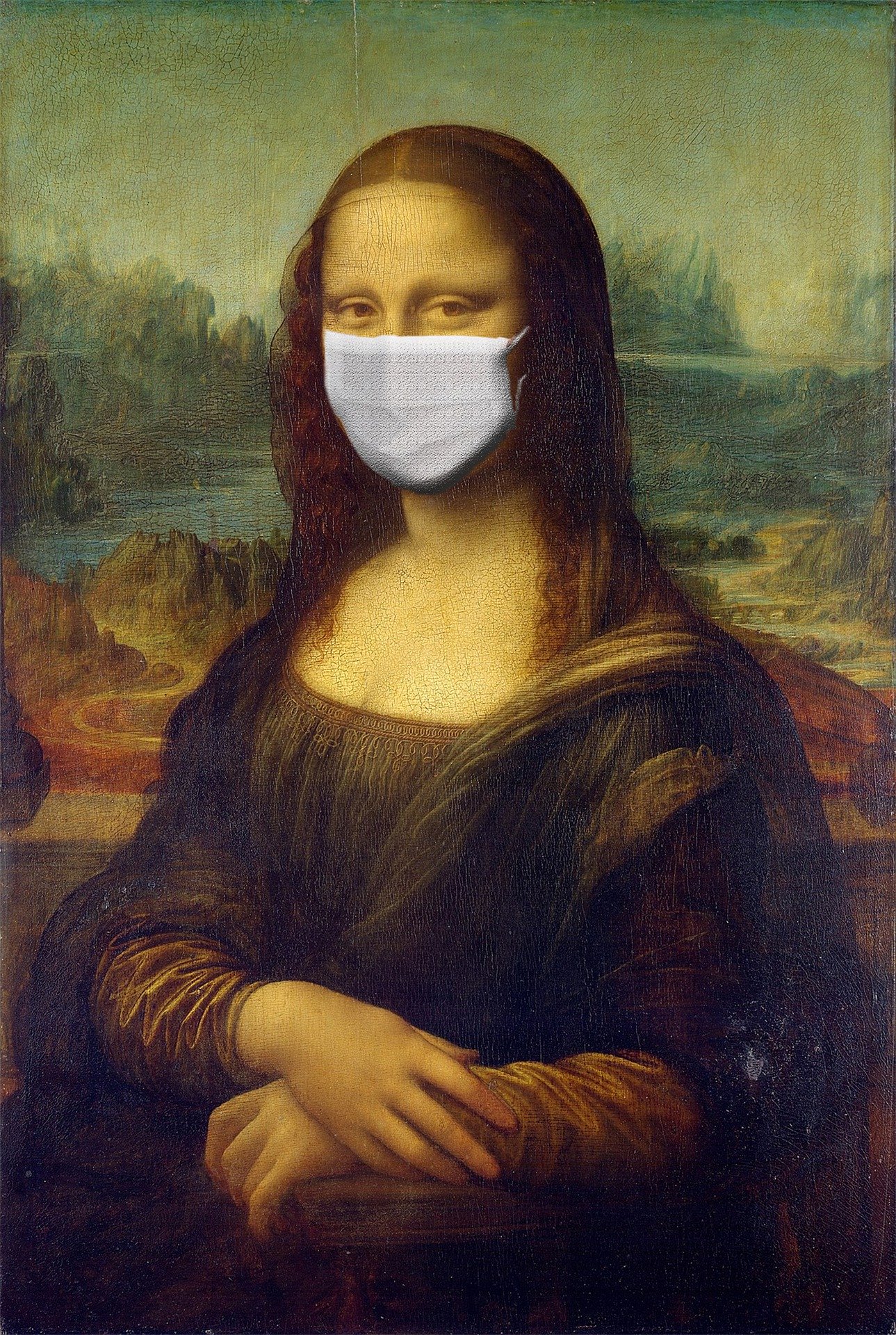
Will anybody be doing that when this stinking, rotten, unprecedented pandemic and societal shutdown is over? I’ve heard several folks (including President Trump and Dr. Fauci) suggest that we should scrap handshakes altogether.
Wrap your mind around that. We’ve been shaking hands since Socrates was a baby. It is a way to say hello, make a deal, show good faith, express gratitude or admiration. The Civil War ended when Grant offered his hand to Lee and the two warriors shook. (On the other hand, some handshakes haven’t worked out so well. See Chamberlain, Neville, who declared “Peace in our time” after shaking hands with that Austrian paperhanger with the Charlie Chaplin mustache.)
Even if the handshake is not officially dispensed with, a large swath of people won’t do it anymore. This will have to be reflected in our fiction.
And what the heck will replace it? Please, please, I beg on my knees…not the elbow bump—the ugliest, ungainliest contortion outside a game of beer-bong Twister. Some are touting the Hindu namaste, a slight bow with both hands pressed over the heart. Others advocate the slight nod. Former hippies have resurrected the peace sign.
What will your characters do?
Hugs are also certain to go the way of the Blue-Footed Booby. Which makes me sad. I’m a hugger. If I know the person and haven’t seen them in awhile, I do the grizzly. I always give and get lots of hugs at church. But post-pan will people be too nervous to give or receive a hug?
How will social gatherings change? What if you have a scene in a baseball stadium, movie theater, or shopping mall? Our scenes will have to reflect the “new normal.” But what will that look like? What details will we need to emphasize?
What about the courtroom scene? Will they still pack a jury box? Will a criminal defendant who has been in the viral hothouse of the country jail be required to wear a mask?
How about restaurant scenes? Will servers wear gloves to go with their masks? And beauty salons and coffee houses—how will people space themselves in these venues? What will be happening on airplanes and buses and subways? What will folks be nervous about? Will a sneeze start a bar fight? Almost surely if a Raiders game is on.
If there is a Raiders game!
And what are we to do about little action beats like stroking the chin or rubbing the eyes? Careful, or you might get angry emails saying, “Your characters touch their faces! What are you teaching our children? Do you want to kill us all?”
Here’s another kettle of trout: the rules of romance. Will dates be dictated by distance? What’s a man supposed to do at the end of the evening? Will a kiss ever be just a kiss? Or will it be a negotiated transaction with terms, conditions, representations, and warranties?
Will a man who wants to get serious give his prospective lover flowers or a twelve pack of toilet paper?
Maybe love scenes will have to go like this:
Chase looked into Dakota’s eyes, eyes that said Yes and I don’t care about germs. He leaned forward then, reaching out tenderly, wantingly, and with a hand trembling with desire, he unhooked her mask.
I ask you: What changes do you foresee in our social habits post-pandemic? How will all this change our fiction?
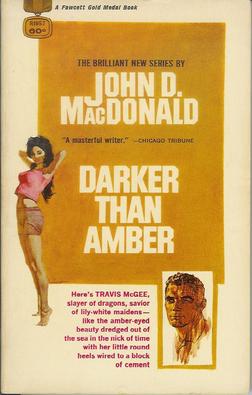 She sat up slowly, looked in turn at each of us, and her dark eyes were like twin entrances to two deep caves. Nothing lived in those caves. Maybe something had, once upon a time. There were piles of picked bones back in there, some scribbling on the walls, and some gray ash where the fires had been. (Darker Than Amber by John D. MacDonald)
Share one of your favorite examples of description from a novel.
by James Scott Bell
@jamesscottbell
Goodness knows, we need all the fun we can get right now. So in lieu of my usual craft column, I’m declaring today an official TKZ Fun Zone (TKZFZ). Let’s play a game.
The name of the game is Less Interesting Books. You take a well known title and change a word or two to come up with a not-so-compelling alternative. For example:
Moby Bob
The Mediocre Gatsby
Nathan’s Walk
That’s all there is to it. One rule: One title per comment (that way if someone wants to give you a high five, they can). If you come up with another title, just leave another comment. Clear?
Okay, boys and girls, let’s play!
by James Scott Bell
@jamesscottbell
Unless you’re writing literary fiction, where an expansive style is part of the experience (e.g., Thomas Wolfe), you should strive to write tight. You’re telling a story. Your goal is to draw readers into that story, fast, and keep them there. Every sentence should serve that purpose. Writing tight means no excessive prose, no over-padded paragraphs, nothing to get in the way of the fictive dream.
Now, this does not mean you can’t have what John D. MacDonald called “unobtrusive poetry” in the style. The key word is unobtrusive. It does its work pleasantly, then steps out of the way. Not this:
With sharp whetted hunger he thought of breakfast. He threw the sheet back cleanly, swung in an orbit to a sitting position and put his white somewhat phthisic feet on the floor. (Look Homeward, Angel by Thomas Wolfe)
Eh? What? Is that a typo? Phthisic? What the heck is that? (It’s actually a word. You can look it up. Which is not a good way to write, sending readers to the dang dictionary!)
Instead, this:
The sun that brief December day shone weakly through the west-facing window of Garrett Kingsley’s office. It made a thin yellow oblong splash on his Persian carpet and gave up. (Pale Kings and Princes by Robert B. Parker)
So let’s look at some ways you can write tighter.
Cut Flab
In Stein on Writing, Sol Stein defined flab as “superfluous words and phrases.” Most flab comes in the form of adjectives and adverbs. Stein’s advice is to cut all the adjectives and adverbs in a manuscript, then readmit only “the necessary few after careful testing.”
As an example, I want to show you a sentence I read in a non-fiction article posted on a popular sports website. It had to do with NBA Mavericks owner Mark Cuban getting into hot water with the league (a habit with him):
Cuban felt the refs did his team dirty and ultimately blamed the officials for the Mavericks ultimately losing the game.
We’ll get to the repetition of the adverb ultimately in a moment. But first, does that word help this sentence in any way? No. It adds nothing but flab. How much stronger it is this way:
Cuban felt the refs did his team dirty and blamed the officials for the Mavericks losing the game.
And, of course, using that adverb twice in the same sentence is truly felonious. You need to watch for the same thing in your paragraphs, too. I call these…
Echoes
Take a look at this:
Max walked into the bar. It stank of beer and sweat. He spotted Henderson sitting at a table, alone. He walked over and stood there, arms folded. Henderson looked up. His eyes told Max he just wanted to be left alone.
The repetition of alone is an echo. While it doesn’t violate any rule of grammar, it is what I would call a little “speed bump” that momentarily takes the reader out of the scene. The repeated sound is jarring.
The solution is simple: cut one of them. You could do it this way:
Max walked into the bar. It stank of beer and sweat. He spotted Henderson sitting at a table. He walked over and stood there, arms folded. Henderson looked up. His eyes told Max he just wanted to be left alone.
Or this way:
Max walked into the bar. It stank of beer and sweat. He spotted Henderson sitting at a table, alone. He walked over and stood there, arms folded. Henderson looked up. His eyes told Max he didn’t want to talk to anybody.
The exception to this guideline is when you purposely want to emphasize a word, as in the following:
His shirt was black. His pants were black. His boots were even blacker, if that was possible. He looked like Johnny Cash at a funeral.
Dialogue
As I contend in my book on the subject, dialogue is the fastest way to improve a manuscript. An agent or editor, or reader for that matter, knows good dialogue because they’ve seen so much of the bad variety.
One of the marks of effective dialogue is compression. Unless there is a reason a character long winded, keep the dialogue tight and to the point.
The easiest way to do this is to cut words. You can almost always cut a word or two out of dialogue and make it sound better. Example:
“I don’t think this is a good idea,” Max said.
“Well then, what do you suggest we do?” Henderson said.
“I don’t know, drive around to the back maybe.”
“That would be a stupid thing to do.”
“Why do you say that?”
“Because that’s where all the cops will be.”
Can we tighten this up? I think we can:
“This isn’t a good idea,” Max said.
“What do you suggest?” Henderson said.
“Drive around the back maybe.”
“Stupid.”
“Why?”
“That’s where all the cops’ll be.”
Obviously you adjust according to the way your characters talk. But you will be amazed how much better your dialogue sounds when you trim the fat this way.
How would you describe your default writing style? When first drafting, do you tend to write long and cut? Or do you write lean and add?
by James Scott Bell
@jamesscottbell
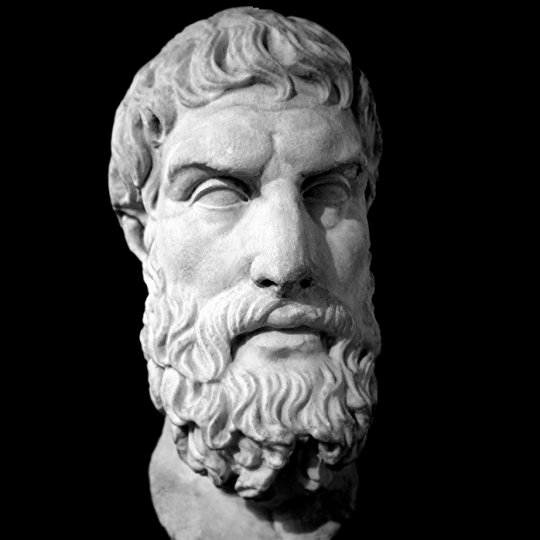
Epictetus
Sometimes I wake up in the middle of the night and my mind is abuzz. It could be that the Boys in the Basement are hard at work, and making a lot of noise. It might be that extra bit of spicy tuna I chomped at dinner. Or perhaps something has intruded on my bio-rhythms, some idiotic remark I heard on a newscast, which is always a possibility when Congress is in session.
Regardless, I know myself well enough to know I’ll be up for about an hour.
So I’ll pad out to the family room and turn on the TV. At that hour there are lots of classic shows on. Which are the best shows (says this Boomer), e.g., Alfred Hitchcock Presents, The Twilight Zone, Perry Mason. Part of the fun is seeing young actors making their early appearances. Like Robert Redford as Mr. Death in a Twilight Zone. Or Ryan O’Neal as a murder suspect in Perry Mason.
Anyway, the other night I started watching a fave from my adolescence, Mannix. That PI show starring Mike Connors ran from 1967 to 1975. It had one of the great musical themes (via Lalo Schifrin). Connors was always solid, and the plots twisty and turny and fun.
This particular night the episode was “Color Her Missing.” A PI friend of Mannix is murdered, and a big-time lawyer is a suspect. He has an alibi, but it’s hard to prove. So he asks Mannix to confirm it. And on we go.
As a former actor and student of the art, I always appreciate a good performance. And the guy who played the lawyer caught my eye. He was very good, very natural, and ruggedly handsome. He looked like a guy who should have had his own PI show, or been either a star or dependable character actor in the movies.
So I looked him up on IMDB. His name was Jason Evers. I’d never heard of him. But I’ve probably seen him a number of times, as he worked consistently in TV. He never made it in the movies, however, coming closest in the camp classic The Brain That Wouldn’t Die (1962). [Side note. The decapitated head in that film was an actress named Virginia Leith. She was a knockout beauty and terrific actress, by way of her role in the neo-noir A Kiss Before Dying (1956). After I watched the film I wanted to know what became of her, as she was definitely star material. But she’s best known as that doggone head!]
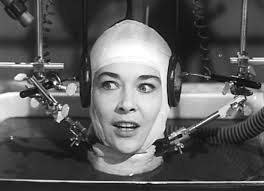
Virginia Leith in The Brain That Wouldn’t Die
Why do I mention this? Because not everyone who deserves to be a star becomes a star. Not every writer who is good enough to be on the A List makes it to the A List. There’s an element built into nature that leaves some things to pure chance.
The trick in life is not to stress about those things.
That is the essence of the Stoic philosophy. Epictetus put it best: “There is only one way to happiness and that is to cease worrying about things which are beyond the power of our will.”
You got that right, Epic. Most writers worry about every single aspect of every single book release. Will it sell? Will it be seen in bookstores? Will the critics/reviewers hate it? Will it land on a major bestseller list? Will I get that literary award I’m lusting after? Does Oprah have my phone number?
None of these things can you control.
Thus, the writer determines to do everything within his power: bookmarks, swag, panels, bookstore signings, blog tour, Facebook ads, Amazon ads, Bookbub ads, tweets, ’grams, howling at the moon—all the while stressing over the results.
But when the dust settles down, down to the lower depths of the Amazon rankings, what then? If the author has too much emotional investment in great expectations, he will suffer needless inner turmoil. It can hamper or even end a writing career. Many a writer has called it quits after a third or fourth book got remaindered within a month and the publisher did not offer another contract.
To repeat: Not everyone who should be a star becomes a star.
Not every writer who should be on the A List makes it to the A List.
But anyone who keeps writing is a writer. And that very act—the writing, falling deeply into a scene, getting into “the zone”—turns out to be the only real antidote for writerly anxiety.
So put this on a sign or sticky note on your desk:
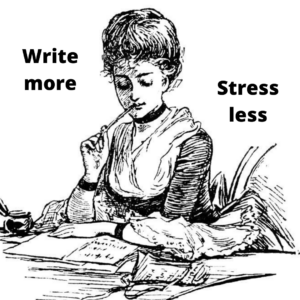
What’s your stress assessment? Do you worry too much about things outside your control?
If you need help with the mental game of writing, let me suggest this book.
by James Scott Bell
@jamesscottbell
 We’ve had some good posts and comments about writing methods, grouped generally under the two broad headings of plotter/outliner and pantser. You can read the latest entries HERE and HERE.
What I want to examine today is a bromide I often hear when this subject comes up. It issues from the pantsing side of the room, and goes something like this: “If I had an outline and knew everything beforehand, that would take all the fun out of writing the book.”
I beg to differ. For the one thing both sides should agree on is that writing scenes is the most fun of all.
Why? Because, of course, the scene level is where the story actually happens, unfolds, gets “discovered.” For the pantser it’s all discovery. For the outliner, the discovery is in finding, and delighting in, the granular details of bringing the scene to life.
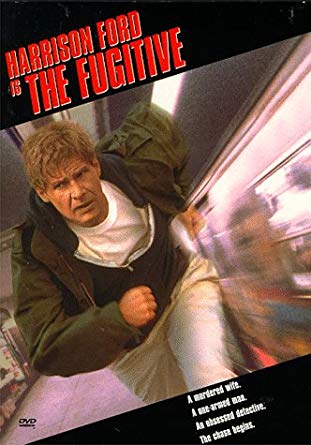
Let’s illustrate how this is done. I give you a writer named Jeb David Huggins (this is a mash up of the three writers behind one of my favorite action movies, The Fugitive starring Harrison Ford. Jeb Stuart and David Twohy did the screenplay; Roy Huggins was the creator of the TV series upon which the movie was based).
Jeb has a tight outline for the story and knows the ups and downs and ins and outs of the plot. He’s created a fantastic cast of characters, from Sam Gerard (Tommy Lee Jones) all the way to the Chicago detectives who muck up the case (Ron Dean and Joseph Kosala). Now he starts writing.
And does he knows how to open a thriller! A murder scene and the arrest of respected surgeon Dr. Richard Kimble on suspicion of killing his wife. Trial. Conviction. Death Row.
Then he’s on the prison bus, and there’s an attempted takeover by the inmates. The crash. The train coming! Kimble saves a wounded prison guard, and barely makes it off the train!
Now, in his outline, Jeb has a scene card: KIMBLE JUMPS OUT OF THE PRISON BUS JUST BEFORE TRAIN RAMS IT.
At outline time that was enough. But while writing the scene Jeb gets a happy idea. What if we keep this going? What if the train derails…and heads straight for the escaping Kimble, who is still in leg irons!
Hot dog! (That’s what writers say when they come upon a delightful idea).
More delight comes in the writing of dialogue. You have so much leeway here. Whether you’ve outlined the scene or are pantsing through it, dialogue is yet to be discovered.
In The Fugitive, after the bus escape, Kimble is alive but wounded. The one guy who helps him is Copeland, a big, bad dude from the bus. Really bad. He’s a stone-cold killer. He says to Kimble, “Now you listen. I don’t give a damn which way you go. Just don’t follow me. You got that?”
As he’s pulling away Kimble says, “Hey Copeland.” Copeland turns around. Kimble says, “Be good.”
It’s a great moment which was not in the original script. Sometimes happy surprises are provided by the characters in the scene!
Let’s cut to a scene further on, where Kimble has managed to find some old coveralls and now must sneak into a rural hospital. He has to tend to his wound, change his appearance, find clothes, and get out.
That could be the scene card: KIMBLE HAS TO TEND TO HIS WOUND, CHANGE HIS APPEARANCE, FIND CLOTHES, AND GET OUT.
Both outliners and pantsers need to understand scene structure. I break it down into the Three O’s: Objective, Obstacles, Outcome. This is where you brainstorm.
Kimble’s objective is as described above. You—be ye pantser or plotter—have an idea of the outcome (Kimble will get away, but with more trouble following).
Now the fun of the obstacles. In the movie we have the following: time pressure, finding a room with medicine and stitching supplies; a state trooper arriving; a fax coming in with Kimble’s face; finding a room with a sedated patient; Kimble shaving off his beard…(brainstorm, brainstorm) a nurse enters the room! Kimble hides, nurse leaves, Kimble needs food…he takes the uneaten breakfast of the sedated man…Kimble finds a doctor’s smock and puts it on and starts walking out…(brainstorm, brainstorm) the state trooper is coming right toward him! The trooper says, “Hey Doc, we’re looking for a prisoner from that wreck. He might be hurt.”
Kimble keeps walking. “What does he look like?”
TROOPER: Six-one, 180, brown hair, brown eyes, beard. Seen anyone like that around?
KIMBLE: Every time I look in the mirror, pal. Except for the beard, of course.
So far so good. Anything we can add? (brainstorm, brainstorm). Ah! As Kimble is about to walk off, the trooper says, “Hey Doc.” Uh-oh. Why? Then the trooper indicates Kimble should zip up. His fly is open. Happy surprise! (Any time you can add a little laughter relief to a thriller, do it.)
Outcome: Kimble exits the hospital and steals an ambulance. Wait…we can do better. As Kimble comes out an ambulance pulls up, and out of the back the paramedics have trouble with the gurney. Kimble helps, but on the gurney is the guard whose life he saved! The guard starts to say his name, so Kimble nabs an oxygen mask and presses it on the guard’s face.
Now what? Kimble tells the medics to inform the attending physician that the guard has a puncture in his upper gastric area. One medic says to the other, “How the hell could he tell that by looking at his face?”
Perfect! Kimble gets the ambulance, but because of his act of decency (he’s a doctor, he can’t help it!) he is going to get in more trouble pretty quickly.
This is fun! (Note: Outcomes should generally set the character back, make things worse. You can have an objective realized, as in this scene, but then have the good outcome lead to greater trouble down the line.)
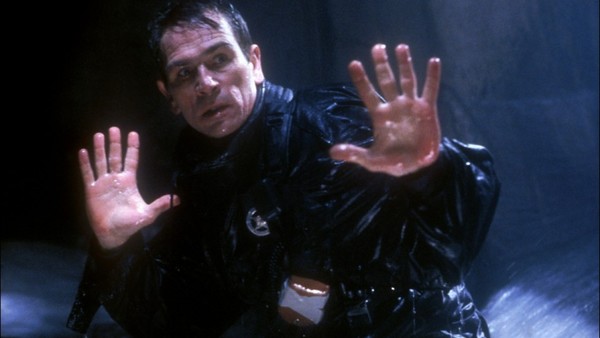 Here’s another area for surprise: how we characterize. In The Fugitive, the best lines come from Sam Gerard and the great turn by Tommy Lee Jones. Remember the spillway scene? Kimble has a gun on Gerard. Kimble says, “I didn’t kill my wife!” And Gerard says, “I don’t care!” Great dialogue! (Again, not in the original script; many of these lines were improvised on set.)
And then Gerard has a team with him, who provide more comic relief. At one point Gerard asks his youngest teammate, “What are you doing?” The young man says, “I’m thinking.” Gerard: “Well think me up a chocolate donut with some of those sprinkles, as long as you’re thinking.”
See how much fun we’re having? Yes, even the outliners!
So find your delight in your obstacles and outcomes, your characterizations and dialogue. If you’re doing this right you’ll say “Hot dog” a lot!
Are you having fun yet? Tell us about it. Note: I’m on the road and in the air today, so I’ll be sketchy checking in. Talk amongst yourselves!
by James Scott Bell
@jamesscottbell
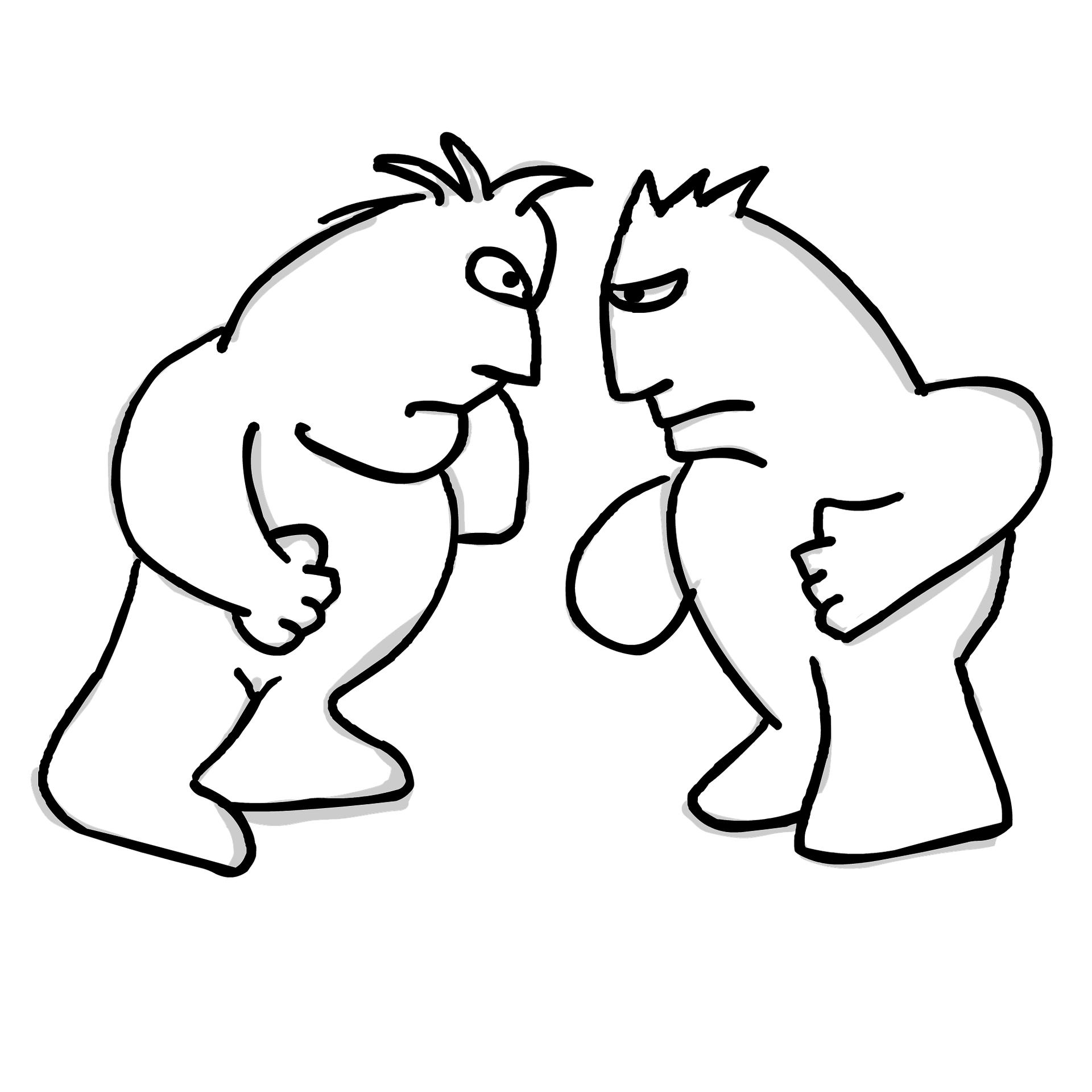 Not many people know that the decades-long feud between the Hatfields and McCoys started at a writers conference. The head of the Hatfield clan was an outliner. McCoy was a pantser. They were on a panel together and things got heated. Then the shooting started.
In those days, several McCoys were heard to say that they had to write the book in order to “discover” what the book was really about. If they got tied down to an outline, that’d take all the originality and “fun” out of the writing. They’d chew tobacco when they said such things, and every now and then they’d spit and say something about how an outline removes spontaneity (although they didn’t know words like spontaneity). A McCoy once remarked, “Them ’liners don’t never have no surprises. They don’t discover nuthin’. Got no use for ’em.”
Well, the guns are put away now, but the outliner (plotter) v. pantser divide is still grist for the panel mill. What I want to home in on today is this notion that the best method for “discovering” your story is by not knowing what you’re going to write until you write it. That way the whole thing is organic and surprising. And if the author is surprised (so goes the reasoning) the reader surely will be surprised as well.
Implied in this is the idea that plotters are stuck with their outline and are thus discovery challenged.
I’m going to blow that notion up.
First, let’s follow a typical pantser. She begins writing about a character…that’s the “fun” part. The character has some sort of issue or problem, but we don’t know what it is yet, or how it will manifest itself. At the 15k word mark, our pantser wakes up one morning with a mind-blowing idea—the abusive antagonist actually turns out to be the brooding boy from the MC’s past. Wowsers! That’s not what she expected! But that’s what she loves about pantsing!
Full of delight, our pantser writes another 20k words along this new trajectory, until the plot begins to stall because there’s not enough conflict, or the love part isn’t working, or things have moved too quickly and the book is close to being over … or any of an infinite number of plot problems that pantsers have to figure out how to solve—now, or in the messy future when they take a tangled, unkempt first draft and try to make it something readable.
But the big discovery—that the antagonist is really the boy from the past—remains. To change it now would mean starting at ground zero again, and that’s not a happy thought.
So what’s happened? The pantser got to a major plot path, one that sprang up one day and said Take me! and she took it. One path. And maybe it works out.
Or maybe it doesn’t. Still, the pantser contends that this discovery method is “purer” storytelling than some stodgy old outline.
To which the plotter says, “Hold on there, Lightning. You need to understand something. We enjoy even more discovery than you, and faster, too! It happens before we outline. We look at many paths and follow them as long as we like. Each one is a surprise; we’re not limited to one or two. We can then pick the most exciting one and start to outline. If something better occurs to us along the way, easy…we tweak the outline. Discovery after discovery!
Which is a little more freeing that finding one discovery after thousands of words of writing.
Let me give you look at my own process. I always start with a “white-hot document.”
I got this idea from one of my first, and most beloved, craft books, Techniques of the Selling Writer by Dwight V. Swain. He advocated writing a stream-of-consciousness document, where you just let your imagination run wild. No editing. Jot whatever plot, character, scene, big picture ideas hit you. Follow tangents wherever they lead. The next day you come back to this document and annotate. Highlight the best parts, then start writing again, following your imagination wherever it goes. Annotate the next day. Repeat this process several days.
David Morrell has a similar practice as explained in his book The Successful Novelist. He advocates asking yourself question after question, getting yourself deeper into the reasons you like this idea.
What’s happening is I’m letting the imagination and subconscious play, bringing me surprise after surprise. But I’m not yet wedded to any!
Next, I get a bunch of 3 x 5 cards and go to a coffee house and grab a large brew. I find a chair and start writing down scene ideas. Randomly. Without thought as to where they go. It’s enough just to jot this much:
Sister J has to fight a knife-wielding dental hygienist.
Later, I shuffle the cards and take out two at a time to see what plot ideas they suggest. In effect, I’m taking dozens of paths, checking out the scenery, and choosing the best one to follow.
I’m also fleshing out the members of my cast, remembering the principle of “orchestration.” That is, each character ought to be different from the others so there’s a possibility of conflict with everybody else.
Finally, I start laying out my Super Structure signposts, setting up the major movements of the plot. I have plenty of scene ideas to go in between. (I use Scrivener for this.)
Then I write.
Now, I fully realize dedicated pantsers are to outlines as mosquitoes are to Off. And that’s fine. You’ve got to go with what works for you, what brings you the most creative joy. The point of my post today is to emphasize that there’s joy and creativity and spontaneity in plotting, too…and in buckets!
So put down your muskets and tell us: how do you do most of your discovering?
by James Scott Bell
@jamesscottbell
 In my one-day workshops I do an exercise called “Shocking Coffee.” You, the author, imagine you are seated with your main character over a cup of coffee. She tells you she doesn’t think you’ve quite captured her. That surprises you a bit. I mean, after all, you created her.
So you ask, “In what way?” And your character tells you something that shocks you. What is it? (I have the students write for one minute.)
Then I say: You’ve spit out your coffee. Your character hands you a napkin and then tells you something even more shocking! (Write for one minute.)
I was conducting this at a recent conference, and while the students were writing a voice said, “Wow!”
Another voice chimed in. “Exactly!”
And everyone laughed. When we were done I asked a few people to share what they’d come up with. One woman said this clarified the entire novel for her. Another said this offered a whole new direction she’d never thought of.
But one student, a middle-aged man, seemed troubled. He had explained earlier in the workshop that his story was about a man carrying around a load of guilt because he’d accidentally killed his brother years ago. He fears that if his secret ever gets out it will hurt a number of people.
Now he said, “The more shocking thing he told me was that he intended to kill his brother, because he was jealous.”
There were audible oohs and ahhs throughout the room.
“But,” the man protested, “this would make him totally unsympathetic.”
The oohs and ahhs turned to No! and You’re wrong!
I asked the students, “Who is more interested in this book now?”
All the hands shot up.
The author still seemed confused.
I told him it doesn’t matter where the character has come from, or what he’s done, so long as he’s got the capacity to change and the will to try. We will follow a character like that, hoping for his redemption. Indeed, it’s one of the most powerful engines of fiction.
What had just happened was that the author, by way of a simple exercise, had gone deeper into his material than ever before. Before, he’d stopped at a “safe place.” Now he had pushed past that, and it scared him a little.
Which, I told him, is a good thing, because that’s where originality comes from. (For more on this, see my post here.)
To push through the safe places, try these exercises:
More material like this can be found in my course, Writing a Novel They Can’t Put Down.
So when was the last time one of your characters surprised you? Did you go with it or resist it? What techniques do you use to deepen characters in your fiction?
by James Scott Bell
@jamesscottbell
We have another first page for critique today. See you on the other side.
THE OIL PATCH PROJECT
1. Slinging Pebbles at Goliath
Southwest National Laboratory
Albuquerque, New Mexico
A Monday in October
Engineering geologist Jim Checkers pushed open the door labeled “GEOCHEMISTRY LAB,” strode across the room to a workbench, and picked up a bulging old briefcase that was sitting among tools, a voltmeter, and a jar of vacuum grease. The place smelled like acetone.
Mattie Hawkins, geochemist at Southwest National Laboratory, locked into Jim’s eyes. “You’ve been spending a lot of vacation time at those oil meetings. Doesn’t your wife care?”
“I suppose, but she’s occupied with her own business.”
“Jim, did it ever occur to you that you can’t save the world?” He stopped to listen. It was pleasant to be around Mattie, the lovely tech who analyzed his samples and generated the data.
“No,” he said, as though answering a question about the weather. “I’ve got the facts … it will force change. I can’t let them continue dumping salt on the land.”
Stuffing another paper into his briefcase, Checkers reached for the old dinner jacket and tie he kept behind the door in case the lab’s brass brought official visitors from the Department of Energy.
“You can’t take on the entire oil industry, Jim.”
“Well, I’ll have to. I registered as a technical witness this time.” He brushed a stray hair from his eyes.
“Jim, you’re playing Don Quixote. The oilmen play for keeps.”
“I’m David facing Goliath, not Quixote fighting a windmill.”
She watched him hurry out and shook her head. “They’ll kill you,” she said to the closing door. “I should know. I grew up in the oil patch.” She wished she hadn’t mentioned his wife.
***
JSB: All right, let’s roll up the ol’ sleeves. I am assuming this is going to be a thriller. Thus, the first thing that needs to change is the title. The Oil Patch Project sounds like a chapter from the annual report of a city council’s energy committee … or a children’s story featuring bunnies. Maybe it’s the world Patch (e.g., Sour Patch Kids). Anyway, it isn’t a compelling thriller title, so I suggest you review this post and come up with alternatives.
I don’t like the chapter title, either. This could be the subject of a whole post, but outside of juvenile lit I’m not a fan of giving titles to chapters. In any event, “Slinging Pebbles at Goliath” is confusing. David grabbed five smooth stones from a stream, suitable for killing. So if your hero is taking on the David role in this book, why is he only using pebbles? You may have an ironic meaning in mind, but it tripped me up. Do you really need it?
Then we come to the location/day stamp (we’ll get to the actual content soon, I promise!) I’m not against these, but I do think you need to be more specific. “A Monday in October” has me thinking, Wait, aren’tyou the author? How come you don’t know the date? I’d thus use “Monday, October 13” or just cut it and indicate the month in the text (if necessary).
We’re writing a thriller here, right? Titles and character names are crucially important. Don’t use the name Checkers. It sounds funny. A clown or a dog (see, e.g., Richard Nixon) might be named Checkers, but not the hero of a thriller.
Okay, let’s get to the content. I want to concentrate on two big areas. We can nitpick sentences here and there, but I’d rater you get your craft in order on these two items before you do anything else.
First is the dialogue. It’s expository. Review my post on the subject. You have the characters saying things not so much to each other as to the reader. In a few short paragraphs you’ve told us all about the high stakes. We need to see them, feel them, as they unfold for the main character. Don’t be in such a rush to tell us everything about a scene. Readers are patient if there is some real action and tension happening.
Don’t confuse the reader with wrong pronoun placement. You have:
“Jim, did it ever occur to you that you can’t save the world?” He stopped to listen.
That is Mattie’s line of dialogue, but you have Jim’s pronoun immediately following. No, no, never, never. It should be:
“Jim, did it ever occur to you that you can’t save the world?”
He stopped to listen.
Also, you have Mattie using Jim’s name three different times in this short segment. Once is enough.
Now on to the second problem—Point of View. The first two paragraphs are omniscient, with the author telling us about each of the characters in the scene:
Engineering geologist Jim Checkers…
Mattie Hawkins, geochemist at Southwest National Laboratory…
Then we drop into Jim’s POV:
It was pleasant to be around Mattie...
But at the end, we switch to Mattie’s POV:
She watched him hurry out…
This is called “head hopping.” The effect on the reader is subtle confusion. Who am I supposed to care about? Whose story is it?
So here’s what I want you to do, author.
Don’t worry. Many, if not most, new writers struggle with POV. But once you get the hang of it, you’ll find it makes an almost magical difference in your writing. You can begin your studies right here at TKZ. Emeritus blogger Jodie Renner did a great series on POV a few years ago:
POV 101 – Get into Your Protagonist’s Head and Stay There
POV 102 – How to Avoid Head-Hopping
POV 103 – Engage Your Readers with Deep Point of View
Get a few novels by dialogue masters and see how they do it. Notice how tight their dialogue is, how there’s no rush to give out information, how it is consistent with their characters, and how it contains tension or conflict. Let me suggest Elmore Leonard and Robert B. Parker (1980s and 90s Parker) as exemplars. Perhaps others will have suggestions in the comments.
And for the definitive text on the craft of dialogue, I humbly suggest this one.
Don’t let this discourage you, author. Craft improvement is hard work. But the rewards are great. Study, write, get feedback, write some more. Do this for the rest of your life. You’re a writer, after all.