Author Archives: Joe Moore
Reader Friday: Meet our Muses
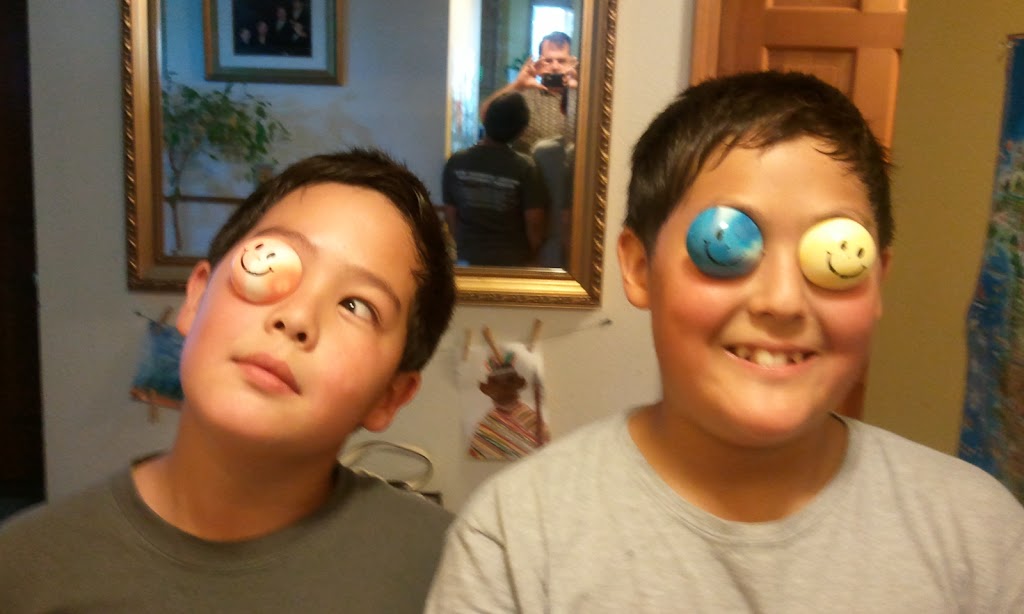
Last Tuesday we put out a request for pictures of your muses–we asked to see the people, spirits, or things that inspire you to keep filling the blank page with words.
We received some great results! Here they are, in no particular order:
Dave Williams: Twin Muses

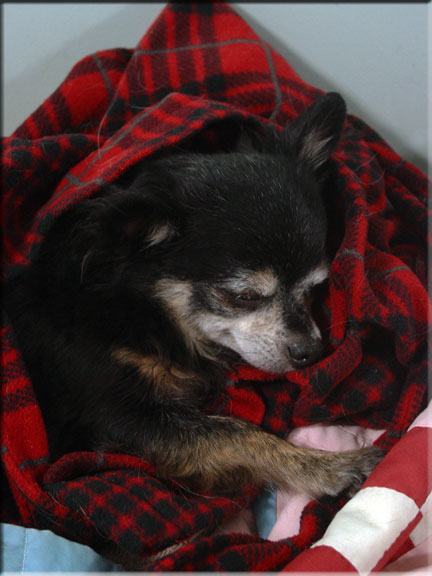
“This is ONE of my rescues – Sancho,” she writes. “We have two dogs and two cats, all from shelters. But this guy makes me laugh every day. He loves sprawling on his belly and ‘snakes’ off the sofa. Epic cuteness.”
What Killed the Thriller Writer: Your Attention Span
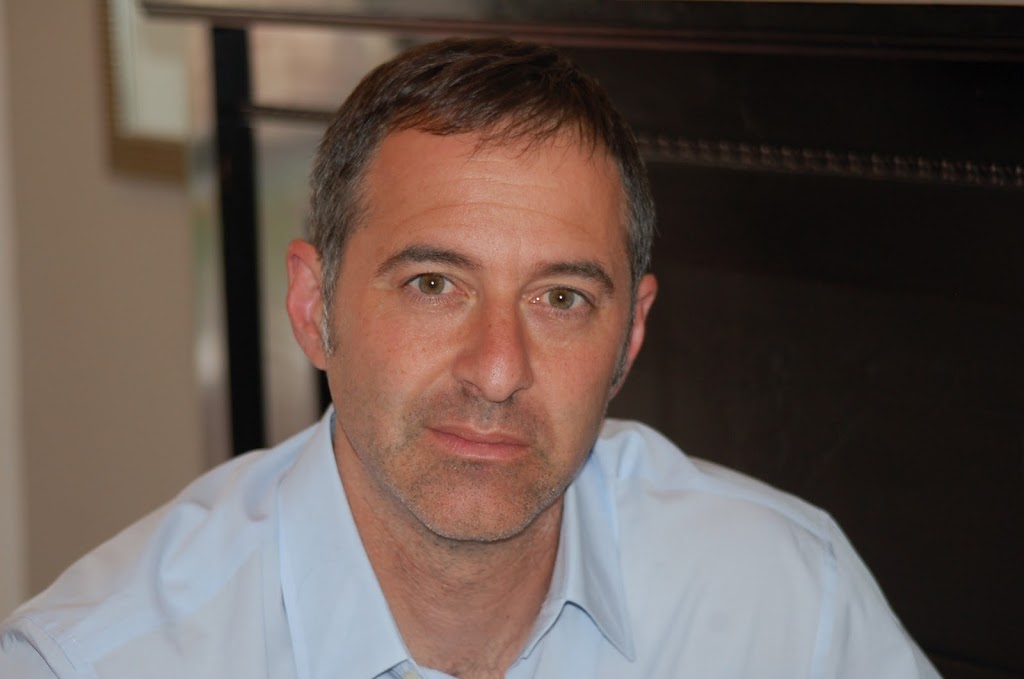
by Matt Richtel
Today TKZ is delighted to host Pulitzer Prize winning NY Times reporter and thriller author Matt Richtel. His post today ties in nicely with a discussion Clare began on Monday: read her post here if you missed it, and let’s continue the debate…
Body counts are rising, blood spilling in buckets. It’s a conspiracy pandemic. Thriller writers entering an epic age of mayhem.
Credit the muse? Maybe.
For sure blame the Internet.
It is responsible for a fascinating new trend among, in particular, mystery and thriller writers. We are writing more than ever. No longer just a book ever year. In the last year, it has become au courant for us to also publish short stories at least once a year, between book releases.
Lee Child, Lisa Gardner, Steve Berry, go down the list of the heavyweights. They’ve all getting into the short-story game, creating a thriller wellspring, or, if you prefer, a bloodbath. I enter the fray myself this month with “Floodgate,” a political thriller, my first short story.
But as with any good plot twist, there is well more here than meets the eye, a backstory, and some troubling questions, including, chiefly: is this a good idea? Or are we at risk of murdering something truly dear: our craft?
First, ladies and gentlemen of the jury, the facts:
It’s long been tradition for thriller writers to put out a book once a year to keep audiences attached to characters and authors and, bluntly, to their brands. This was not necessarily an easy schedule for writers, especially those who really invested in depth, but it was doable and simply understood as necessary.
I’ve had some big-name thriller-writer friends tell me that when they didn’t write a book one year – say, because of a divorce or contractual dispute – they’d see a material decline in their sales.
Then along came the Internet, with all its mixed blessings (see, duh: Amazon). More competition, less shelf space, less control for publishers on distribution (see: almost none). How did short stories become a response?
The publishers (and we writers, by extension), began to fear that we’d get lost in the white noise of competition. Make a reader wait a year for a new book? Heck, by then even loyal readers might’ve made for the nearest cat video. So part of this is an effort to keep our names in the LED lights.
There’s also a more direct marketing reason. The short stories are “e-pub,” electronic only. They are relatively cheap, 99 cents or so, so there’s little incentive for a reader not to at least give it a shot, particularly if written by a favorite author. At the back of the short story, there often is the first few chapters of the author’s next book, and a “click-to-buy” button.
If readers like the story, they pre-order the next book. Pre-orders are great because they build the so-called “first-week sales,” which, if those mount, can get the writer on the bestseller list. In short: the short story as loss leader.
Writers privately grumble: you mean I gotta write something else, for free, while I’m already on a breakneck cycle of write, edit, publicize, repeat? Oh, and did I mention blog, Facebook update, tweet, repeat?
How good can these stories be if we’re writing on a treadmill?
So it all sounds like marketing, and nothing more, right? Like: gag me with a spoon (and put police tape around my utensil-strangled body). Not so fast. There’s, potentially, a lot to like here.
First of all, short stories, when done well, can blow the mind. Swift movement, concision, detailed and fast character development, a flurry of clues. A short story can make every word count, the language itself pregnant with clues.
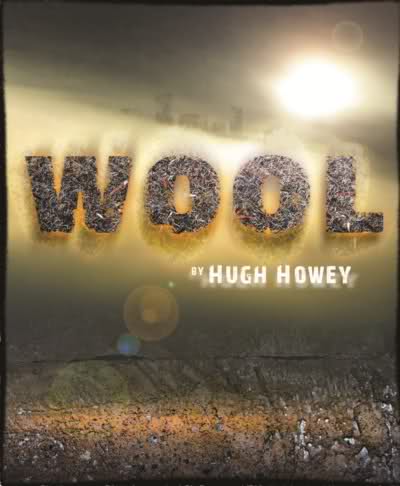
(One great short story making a lot of rounds is “Wool,” if you haven’t read it; I’m told it has been optioned by Ridley Scott).
The medium also is a chance to introduce or try on a new character, not your usual protagonist. In the case of Floodgate, my latest, I’d long been aching to write about Zach Coles, a bitter, hostile out-of-work journalist who once punched an editor for misplacing an adjective; he’s tall and awkward, moving like a drunken Ostrich but fighting like a Ninja.
One friend with a string of bestsellers urged me to weave into Floodgate my regular protagonist, create a bridge, if you will, between short story and my other books. And creating, in turn, for my regular readers, a bit of an Easter Egg.
In the end, it was extra work I hadn’t contracted for. More bodies piling up. Another conspiracy I hadn’t expected to execute this year. An experience driven in the first instance by marketing, not the muse.
But she did take over, the muse, wrestling away what might’ve been a very cynical process. I gave a damn (unlike Zach Coles, whose venom makes it very hard to save the world). No wonder. We, thriller writers, don’t kill because we have to. It’s because we need to.
Meantime, Harper Collins is doing its part, meeting me more than halfway, putting out some swanky videos, radio spots (Don Imus!) and banner ads they hope will make it viral (fat chance but not less-than-zero). So blame the Internet for mass murder. But hopefully we can rely on the muse to spare us and make the killings artful.
Matt Richtel is a Pulitzer Prize winning New York Times reporter and bestselling thriller writer. His latest, Floodgate, a political conspiracy that puts Watergate to shame, comes out this month. He can be reached at mattrichtel at gmail dot com.
If it bleeds, it leads
Hosted by Joe Moore
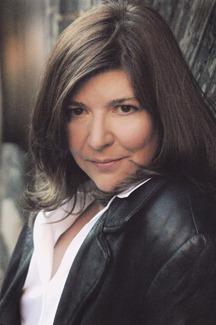
Today I’m pleased to welcome back to TKZ my friend and fellow ITW member, Julie Kramer. Julie is an internationally published and award-winning crime author, and one of my favorite writers. Her latest thriller, SHUNNING SARAH (Library Journal starred review) was released yesterday and I hope you’ll grab a copy. Enjoy!
My fifth media thriller, SHUNNING SARAH, is out this week and I’m starting to think
making my heroine a TV reporter might not have been such a good idea. One of the general rules of novel writing is that your protagonist should be “likeable.”
But just the other day a Gallup poll said the public’s trust in TV news is at an all-time low, almost as low as Congress. I can understand those stats. After all, two networks, in their zeal to be first, recently flubbed coverage of the Supreme Court’s ruling on government-mandated health care. Another network took liberties editing audio of a 911 call in the Trayvon Martin shooting in Florida.
Used to be, journalists were the good guys. America cheered TV shows like Mary Tyler Moore, Lou Grant, and Murphy Brown. And don’t forget, Superman’s day job was as a reporter for the Daily Planet. And Spiderman took pictures for his local newspaper. In Network, Howard Beale became a provocative folk hero for railing “I’m mad as hell and won’t take it any more.” And in real life, Woodward and Bernstein inspired a generation of investigative journalists, including me.
The tabloidization of mainstream media and the narrowing of the line between news and gossip have damaged the credibility newsrooms once took for granted. Are we heading back to the sensational days of yellow journalism? My heroine, Riley Spartz, sure hopes not.
I hear from readers who continue to appreciate her as a character because she reflects the problems plaguing newsrooms across America. Her voice is cynical, yet principled as she chases ratings and villains.
I know from a career in the television news business that words can be weapons. Satire and deadpan humor help Riley cope as news budgets are cut and bosses demand 24-7 coverage. Readers tell me they don’t watch news the same way after reading my books. It’s like sausage and laws. You don’t want to watch how they’re made. And my former news colleagues sometimes wish I wasn’t quite so candid.
“Did you have to tell them ‘if it bleeds it leads?’” they ask.
But it’s important for my writing to accurately reflect the state of the news business, good and bad. Because I love news. I’m addicted to knowing who, what, when, where and why. And I honestly believe a free, objective press is one of the best things our society has going. I like it when reviewers praise my depiction of behind-the-scenes action in the newsroom – warts and all.
But what I really need is for the new HBO series, The Newsroom, to take off big and get viewers rooting for TV news again. Then maybe I could sell film rights, and Riley could make it to the big screen.
How big a role does a character’s profession play in what you write or read? And if you simply need to rant about the media, I won’t take offense.
Investigative television journalist Julie Kramer writes a series of thrillers: STALKING SUSAN, MISSING MARK, SILENCING SAM, KILLING KATE and SHUNNING SARAH—set in the desperate world of TV news. Julie won the Daphne du Maurier Award for Mainstream Mystery/Suspense, RT Reviewer’s Choice Award for Best First Mystery as well as the Minnesota Book Award. Her work has also been nominated for the Anthony, Barry, Shamus, Mary Higgins Clark, and RT Best Best Amateur Sleuth Awards. She formerly ran the I TEAM for WCCO-TV before becoming a freelance network news producer for NBC and CBS. Visit her website at http://www.juliekramerbooks.com/
Finding the right Muse
I love the idea of having a Muse. Not a grand, ephemeral, spiritual Muse, but an actual Muse. The kind of Muse that can sleep on the bed and follow you around the house, like a dog. Dogs make great Muses. They always come when you call them. Especially when you have a piece of meat in your hand.
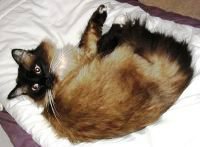
Cats in general do not make reliable Muses. My Muse is Smokie the Ragdoll cat; I introduced him in my Fat City Mysteries as Elfie, Kate’s Ragdoll. (I changed his name and gender to make sure he didn’t know I’d “used” him as a character!) Elfie née Smokie is a great character, but a finicky Muse. He turns up to lend creative inspiration only when he damn well pleases. Mostly he’s pleased when I’m opening a can of tuna.
Recently I wondered about famous writers and their muses. I did a little digging:
F. Scott Fitzgerald:
F. Scott Fitzgerald’s most potent Muse was probably his wife, Zelda. Her Muse-dom came with a catch, however: she refused to marry Fitzgerald until he could support her in a lifestyle befitting America’s first celebrity flapper. Fitzgerald sprang into action. He quickly cranked out THIS SIDE OF PARADISE, and published it to critical success. Zelda agreed to marry him soon afterward. Then she set about making the rest of his life a living hell.
The F. Scott Fitzgerald Rule about Muses: Don’t marry them.
Ernest Hemingway
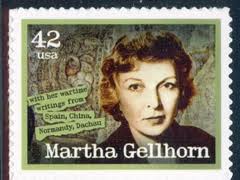
Hemingway had a similarly bad outcome with one of his Muses, journalist Martha Gellhorn. The couple met at a bar in Key West (where else?). She later became his third wife. Gellhorn was reportedly too strong and spirited for Hemingway. She dumped him.
The Hemingway Rule about Muses: See the F. Scott Fitzgerald Rule.
I’m beginning to see a trend here. Famous writers are inspired by living, real people. People with whom they have hot, torrid affairs, but are better off not marrying.
Hmm. Those of us who are happily married to non-Muses will simply have to find our creative inspiration another way.
What about you? Do you have a Muse? If so, send us a picture. We’ll post the pictures this Friday. You can send the picture of your Muse to killzoneblog at gmail dot com.
Prequels, Sequels, Novellas…The Ebook Deluge
A while ago I blogged about increasingly expectations among publishers (and the reading public) that authors produce more than one book a year – now, as I peruse the emails in my inbox from Amazon, I’ve noticed another phenomenon – the increasing number of ‘extras’ authors are now providing.
There was an email regarding the new prequel to James Dasher’s book The Maze Runner (which I loved – will be pre-ordering that for sure!) and then a notice regarding an e-book offering from Veronica Roth (who wrote the terrific Divergent Trilogy) with a novella describing a key scene from her first book from the male protagonist’s point of view. This, coupled, with all the extra content I am seeing on offer from authors (including, I might add from one of our blog mates, Michelle Gagnon, who has written an e-book prequel entitled No Escape, to her young adult book Don’t Turn Around), has got me wondering about the pressure authors now face to produce a stream of material to support their full-length books.
Publishers are obviously keen to keep the buzz alive with a plethora of e-book offerings – from prequels, novellas and short stories – in an effort to sate readers’ appetites until the next full-length book is released. As a reader I love this (always happy to gobble up more from my favorite authors!) but as a writer I wonder about the pressure these increasing demands place (especially in light of the need to produce more than one full-length book in the year as well!)
Though I am seeing most of these additional content offerings in young adult fiction (which makes perfect sense), I wonder whether this reflects a kind of tipping point, not just in young adult books, but across the board. Now, don’t get me wrong I think it’s great that e-books and online marketing make this kind of additional content and material accessible. It gives authors an ideal opportunity to introduce readers to the worlds they have created and to further drive interest in their work. The push to supply all this additional content must, however, come at a cost – and I am wondering, as writers, how we feel about having such increasing demands on our time, creativity and energy. How can we juggle all the demands now made upon us?
So I’m looking for feedback:
- For those of you with upcoming releases, how much pressure has there been to produce prequels, novellas and other e-book shorts?
- How have you found juggling these demands with those of your full-length projects?
- How do you maintain standards?
- Have you said no to any of these demands?
- Have you contemplated ‘outsourcing’ some of these extras to ghost writers or publicists?
For everyone else, have you noticed this trend? What do you think of it? Does some of emphasis on volume of content dilute the books or enhance them?
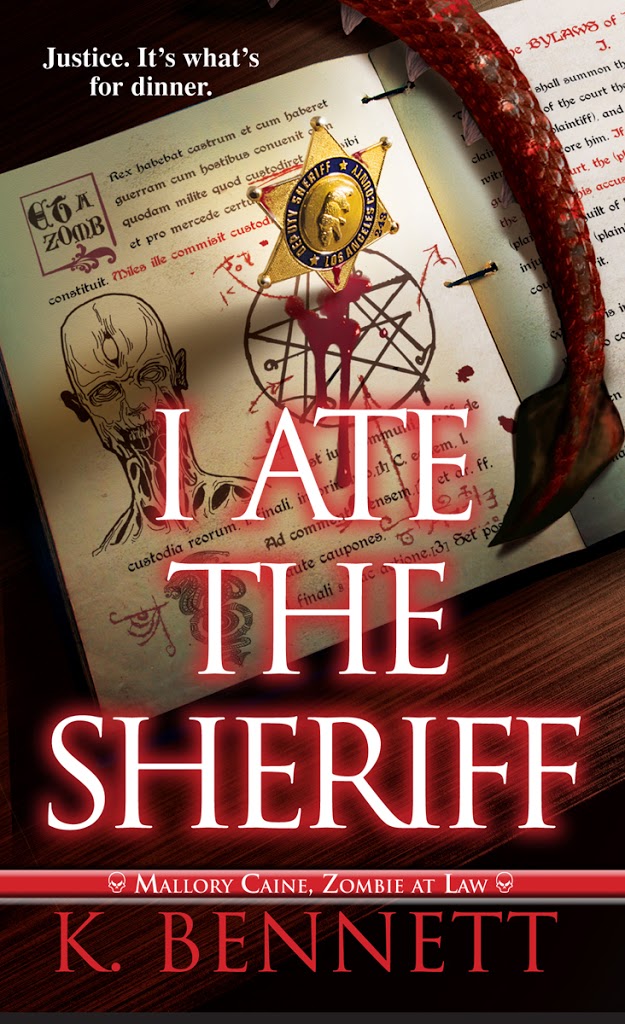
Writing for Money is a Good Thing: The K. Bennett Interview
Words we love way too much
I have a bad habit of overusing pet words in conversation. Every once in a while I’ll seize on an appealing new word and insert it at every opportunity.
Often I’m unaware of this repetition until someone points it out to me. Usually that someone is my youngest sister.
“Is ‘draconian’ the new word of the day?” she’ll ask helpfully. “That’s the third time you’ve used it today.” (I figure her obsessive need to point out my verbal flaws is a youngest sister thing.)
I’ll think back and realize that yes, I have been overdoing draconian. I’m on a draconian diet. The city council passed draconian new trash-day parking fines. And so on.
“Epiphany” is another word I’ve pounded into the dust. If I ever have another epiphany in my lifetime I’ll have to keep it to myself, because that word has been banned in my circle of close friends and relatives. I call them my Beta Chatters.
I’m always looking for signs of Word Repeatus Syndrome in my writing. And I usually find it. I’ve learned to do a global edit for any suspicious words. Suspect words include any that I particularly like. For example, “halcyon” would be a word I’d check, just because I like how it sounds. I’m probably a recidivist repeater of that term. I’d also check ‘recidivist’. If the word appears more than two times in the manuscript, or once in a chapter, I rewrite it.
I always check for repetition when a beta reader asks about the meaning of a word. You can get away with using an unfamiliar word once, but do it twice and you look like you’re trying to be a pretentious know-it-all. (See last Friday’s post).
What about you? Do you have a tendency to overuse favorite words? Do you make a special effort to root them out during edit?
Watchers: Heroes in Fiction (Guest Post Donna Galanti)
Hosted by Jordan Dane
I’m pleased to have a guest for TKZ today. Donna Galanti is the author of the paranormal suspense novel A Human Element (Echelon Press). She is an ITW debut author of the class of 2011/2012 and a member of SCBWI and Horror Writers Association. She lives with her family in an old farmhouse in PA with lots of nooks, fireplaces, and stinkbugs but sadly no ghosts.
Welcome, Donna!
Watchers. My favorite fictional figures that hover on the sidelines weaving in and out of the story. They change lives.
You may know them as guardians, guides, mentors, or allies. They help the hero on his journey by blocking them, guiding them, or even saving them. They can be a mysterious and dark overseer or a jolly and light eccentric. They ultimately save the hero or motivate him to save himself.
In my suspense novel, A Human Element, I created The Man in Black (Felix) as a watcher. He is a guardian, a guide, and a hero. He connects to both the earthly and the other-worldliness in my characters. Sometimes Felix is there, like a lifeguard, and sometimes he’s watching and you simply sense his presence, more like a god. In the end he suffers and is a martyr for the greater good so his people can go on.
How did Felix evolve and how do I perceive his function? He evolved as an instrument of light to help others survive so his own world would survive. His presence allows me to push the protagonist truly beyond the brink and eventually be saved. He also represents hope and acts as a catalyst to keep hope alive. He is like a god because he changes the destiny of others for a greater good (an entire people). And, like a god, he chooses not to always interfere unless it’s for the greater good. In a way he is a mythical figure.
My favorite mythical watcher in fiction is Merlin from the Arthurian legend. He’s a man of mystery and magic with roles as a sorcerer, prophet, bard, adviser, and teacher. In Mary Stewart’s Merlin Trilogy, Merlin is an ordinary mortal but one with intuitive intelligence and clairvoyance. He has foreseen that Arthur will become a great king who will unite all of Britain.
Just as Felix’s mission in A Human Element drove him to facilitate a child’s creation to carry on the line of his dying people, Merlin’s vision led him to facilitate Arthur’s creation as well. I like the idea of connecting medieval to modern times knowing that Merlin and Felix share the same mission. They both originate as earthly and mystical watchers who change destinies so their people may conquer. And don’t we, as authors, often look to the past to create something new in the present?
It appeals to me that often the watcher figure is a hero too, willing to sacrifice his life for the one he oversees. He gives the protagonist what he needs to finish his journey and outwit death, and in doing so may need saving himself.
Literature is full of such heroes whose actions require that they, too, be saved. Like Arthur “Boo” Radley in Harper Lee’s To Kill a Mockingbird. He’s a mysterious character we slowly get to know. At first, perceived as a dark, ghostly figure he ends up saving the children, Scout and Jem. He’s a self-exiled loner who appears as needed to save the children from evil. In the end Scout and Jem save him back, providing justice for Boo.
One of my favorite authors, Dean Koontz, is known for his watchers. In his book, Lightning, Stefan Krieger is a watcher hero who needs saving himself. He’s a time traveler and a guardian of Laura since she was born. He interferes when necessary to save her life many times. In doing so he changes the course of her destiny for good–and bad. His fate eventually interweaves with hers until they are caught in a life or death situation. He saves Laura, but in the end she saves him too.
I can’t forget my beloved animal watchers in fiction. In Watchers (great name!) by Dean Koontz, Einstein is a genetically altered golden retriever with human intelligence. He’s also saved by the couple he watches too. Escaped and on the run, Einstein acts as a guide to bring these two lonely people together and transform them. He becomes their guardian inspiring them to save him from his nemesis, who in turn watches him. Check out other fictional dogs in literature HERE, including my favorites, Buck and White Fang.
I didn’t realize I had an obsession with watcher figures until pulling book after book out from my shelves. And then I knew why. I adore tormented characters and that’s often what watchers are. And that’s why I write them. They are wounded heroes that travel with us to the dark side and help draw us back. They may not always save the hero by their own hand, but at that critical moment they drive the hero to take control of his own destiny. And sometimes the watcher needs saving right back.
Do you have favorite watchers from other books or movies? What “saves” you, as author, when you’ve spent too long on your dark side? Do you have a “watcher” to help pull you back from the dark side and save you?
Donna Galanti Contact Info:
Facebook & Website & Twitter: @donnagalanti