About Joe Moore

#1 Amazon and international bestselling author. Co-president emeritus, International Thriller Writers.

“I hate scrabble”: Q & A with Hallie Ephron

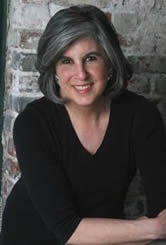
Hallie-Bricks-smaller Today The Kill Zone is delighted to welcome Hallie Ephron. NEVER TELL A LIE, her first solo thriller, has drawn wide acclaim. It received a PW starred review and was described by the San Francisco Chronicle as, “A book to be gobbled up whole, its pace never slackens.” A renowned writer, book reviewer, and writing teacher, Hallie was kind enough to share how she feels about reviews of her own books, and why she doesn’t play Scrabble.

Q: As a reviewer, how do you feel about reading reviews of your own work?

A: I hate it. Doesn’t everyone? Oh, the good ones are great, but every little jab and jibe goes right to the jugular.

Q: What influence do you feel reviews now have in an online world where everyone can blog/review a book?

A: I think the influence is still very significant. As I watch my Amazon numbers (a bad idea; don’t do it) I see a very significant bump when a good review comes out in the mainstream press. A nice blog review? Not so much.

Q: Along those lines, what’s happening to the book publishing industry, and where does book reviewing/reviewers fit into the picture? Can they help save it?

NeverTellALie_cover-smaller A: Like every other industry, the publishing business is shrinking. I think book reviewers have always, and I hope they will continue to guide readers to worthy books.

Q: NEVER TELL A LIE starts with a seemingly innocent yard sale. What’s the best yard sale purchase you’ve ever made? Ever had a bad experience? (hopefully not as bad as what happens in the book!)

A: BEST: A Stickley 2-door, glass-fronted oak bookcase with hammered copper pulls—the real deal—for $25!

WORST: Well, there was 1920’s bakelite “tombstone” radio I bought at a friend’s yard sale for $20. When I discovered it was worth over a thou, I returned it to her. Moral: Don’t shop at a friend’s yard sale.

Q: Do you believe that there is now gender equality in terms of the reviews and/or coverage mystery books get – particularly thrillers?

A: I’m not sure about equity, but I’d be surprised if differences are measurable. Publishers are very bottom-line oriented—they want to publicize what sells.

Q: Your previous novels were written with a writing partner, Donald Davidoff, under the pseudonym G.H. Ephron. How was it different for you to fly solo this time?

A: The writing was the same because I did the writing for the partnership. But plotting is a bear. Coming up with ideas, working my way out of plot-holes, coming up with credible surprises are so much easier when there’s someone else in the boat rowing. Brainstorming really requires at least two brains.

Q: What are your next plans? Another solo novel, one with your writing partner, or a non-fiction work?

A: I’m finishing “The Bibliophile’s Devotional” – a book for each of 365 days. And I’m in the middle of a solo novel.

Q: Do you think there is any self-published crime fiction out there worth reading?

A: Of course there is. But there’s too much crime fiction being well published by mainstream publishers for there to be time (for me) to look at self-published work.

Q: Why don’t more reviewers come to writers’ conferences or participate in panels?

A: One reason: it’s so darned expensive. And given that, a lot of them do, they just don’t advertise their presence. At the New England Crime Bake, we invite crime fiction book reviewers and ask them to speak or chair panels, and we try to comp their registration – as a result we’ve had quite a few come.

Q: What are the well-regarded review sources, and the ones to watch out for? (Not counting NYT, LAT, Boston Globe)

A: There are the trade publications like Publisher’s Weekly, Kirkus, and Library Journal that review in advance of publication. They can make a huge difference in terms of pre-orders from bookstores and library sales. Beyond that, there are just a few mainstream newspapers that regularly review crime fiction. You’ve mentioned some. The wonderful Oline Cogdill no longer works full time for the Sun Sentinel, but the silver lining is that her reviews now get picked up by papers nationwide. And then there are a gazillion self-anointed reviewers who write about books on the bookseller web sites, on blogs, on listservs, on FaceBook and other social networking web sites, and on it goes. So many! For an author that’s daunting and hard to know exactly how to crack.

Q: You come from a family of writers. I’m curious: do family Scrabble games get a little too intense?

A: I HATE Scrabble. I know that’s anathema. But I’m married to a lovely man who can beat me and everyone I know or am related to. I long ago gave up playing because, to put it bluntly, I hate to lose.

Q: And along those lines, Kathryn wanted to know: “Does Nora still hate her neck? I’ve been contemplating having a neck lift ever since reading her book.”

A: It’s not something I’ve asked her lately. She does have a movie coming out next summer. It’s based on Julie Powell’s wonderful book “Julie and Julia” – that delightful memoir about cooking all the recipes in Julia Childs’s cookbooks. Meryl Streep plays Julia (can’t wait to hear her do the voice) and Amy Adams plays Julie. Scuttlebutt on the movie: it’s going to be a blockbuster. Nice distraction from a saggy neck.
The Change I Want to See, Mr. President

John Ramsey Miller

I missed the Obama inauguration because I was writing something, and I honestly just forgot it was on. By the time I tuned in I’d missed the swearing in, but I read his address online. Although I had my reservations, I think if he can bring about real change in Washington it will be good, if that change makes life better for Americans it will be very good, and if he can fix the economy, it will be a miracle, but one I approve of. If the economy gets better, maybe they’ll work on the fundamentals to help it stay that way. I’ll be watching as his term progresses, and I’ll be hollering at the TV a lot. I’m a TV talker and it drives my wife crazy. My grandmother talked to the TV, answering any questions the actors asked with personal comments. Once I heard her address James Arness, Matt Dillon, tersely when he asked Miss Kitty a question, “mind your own business! You don’t know me that well.” She wasn’t in control of her faculties, but she had a good time in Lu-Lu Land and it entertained us kids. I tend to be sarcastic and abusive when something on the TV touches a nerve. When Justice Roberts flubbed the oath because he didn’t have crib notes, if I’d been Obama I would have said, “Check the damned script, your honor!” I also suspect that Chief Justice Roberts used the Hussein part of the President’s and messed up the text on purpose because Obama opposed his nomination to be the Court cheese. I think he thought it would make Obama look silly, if he knew the oath and said it correctly. Imagine just one of them had practiced over and over in front of his Blair House mirror the night before.

The publishing and book-selling industry is no doubt getting a lot of business from the spate of Obama books that have shot from the presses like stomped shrimp, but it won’t inspire anybody to start reading other books, the way Harry Potter did. So (in a way) President Obama is helping the economy and he didn’t have to give the publishers billions of dollars of tax money. However, that said, books are one of the few our country actually still produces from raw material to finished product. Well, that and cheese. And books are as necessary as weapons for our armed forces. The sharing of knowledge is paramount to maintaining our country’s greatness, and literacy is a national treasure. The best thing about Obama being elected is that inner city youths can see the value of education and how simple knowledge can get you ahead in life more surely than a trick shot on the basketball court, or throwing or catching a pass accurately under pressure. I hope this spurs an interest in reading, and that everybody benefits from it, which they’d have to. Stupidity is forever, but ignorance is fixable.

I found it astounding that out of two million visitors to Washington on Tuesday, there was not one arrest related to the people attending the inauguration ceremonies. They did make one hell of a mess. The Mall looked like Woodstock after that event. Astounding. Woodstock, in comparison, even given the love-and-peace theme, didn’t even come close since a lot of the music worshipers were arrested, beaten, overdosed on that brown acid and stuff like that. Seriously, I have never seen so many smiles and people who’d, in a lot of cases, given up a lot to get to DC and went to a lot of trouble to be in attendance. I find that amazing, awing, heartwarming and hopeful. If this man can bring so many different kinds of people together in such a joyous manner then there is hope. The President is just a figurehead really. He can do a lot officially like start wars, and earmark stimulus money, and raise hell on TV, but it’s just a shame that he’s going to be working with the same old people who are corrupt and shortsighted and nearsighted and greedy for mo power.

I like to think there is hope and that reading will become popular once more with young people as it was with my generation. People are still reading, buying books, When I was fourteen my mother enlisted me in The Book of the Month Club, and I chose my books and I waited for them to come the way kids wait anxiously for a new video game. If Obama can do just that––just bring back a sense of awe for books by his example, I’ll be in awe of him. That’s the kind of change I’m looking for. Have at it, Mr. President, and best of luck.

Could It Be . . . Good News?

By John Gilstrap
http://www.johngilstrap.com/

Perhaps the future is not as bleak as we fear it to be.

According to the January 19, 2009, edition of Publishers Weekly, the National Endowment for the Arts reported last week that the population of fiction readers in the United States has increased by 16.6 million since 2002, “creating the largest audience in the history of the NEA survey.” No one knows why, exactly, but there’s general agreement that this is a good thing.

I have to tell you that the news doesn’t surprise me. For years—even during the days of the booming economy—I’ve listened to publishers and frightened authors complaining that no one ever reads anymore; yet when I walk into a B&N or Borders anywhere in the country, the aisles are fairly packed with people, and I have to wait in line before I can check out. Who are these people if not readers?

More recently, we’ve heard about the “collapse” of the publishing industry, with the concomitant panic response of layoffs and such, but then we hear of net sales declines of less than one percent. I understand that negative growth is never good in business, but a gnat’s whisker from break even—on the heels of five years of record growth—is hardly a “collapse.”

Years ago, when I was a junior officer in the fire service, a veteran captain gave me one of the great antidotes to panic: a good old fashioned deep breath. When you roll up on a working fire in the middle of the night, where people may or may not be trapped, and there’s a fleet of additional fire trucks on their way, and you have to make a thousand relatively irreversible decisions in just a few seconds, it’s easy to get overwhelmed. The captain’s specific advice was to sit in the cab of the fire truck for five seconds, and allow myself a couple of cleansing breaths before I say anything to anyone. It always worked.

I think the CEOs of the major publishing houses need to take a breath. I think authors need to take a breath, too. There seems to be this snowballing of doom that is augmented by rumors of more doom. This despite the fact that bookstores are still crowded, and more people than ever are reading. More books than ever are being published. Writers make the Times List for the first time every year. The Internet is an unexplored new frontier.

There are a lot of positive things happening. Sure, there are negatives, too, but I choose not to concentrate on those.

For the time being, I get to write books and get paid for it. No, really. Think about it. I get to write books and get paid for it! The publishers and their distribution networks will find their balance, and good times will return; but even when they do, I’m still going to have to work just as hard as I do now. In fact, no matter how good the business becomes in the future, this business of living one’s dream will never be easy.

As writers, we face far greater challenge than any of the suits in the publishing houses: We have to stay relevant.

I think of that great line from Field of Dreams, “If you build it, they will come.” Nowhere is the statement truer than in the entertainment business–our business. The reading public is building everyday. They’re building new tastes in new media. They’re seeking new inspiration, and they’re facing new fears. They’re telling us all as clearly as they know how what they’re looking for.

But will we come? Will we be the ones to satisfy their needs, or will that honor fall to others who spend less time looking behind, and more time thinking like entrepreneurs? They’re the customers, after all. We are merely the supply chain.

Things I’d Rather Forget

by Michelle Gagnon

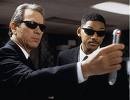
MIB memory deviceI was at a cocktail party over the weekend, talking to a friend who recently read my last book. “How do you do it?” She shuddered. “Writing about all that stuff. I couldn’t sleep nights.”

I explained that I usually enjoy the research, which inspired a fresh round of shudders. “Ugh. Don’t you wish you didn’t know about it?”

I was about to explain that in fact, writing about the dark side of the human condition can make it seem less scary. But I stopped myself. Because when I really thought about it, I realized there are things I’ve stumbled across in the course of doing research that I would much rather not know about.

The subject of when violence crosses the line into gratuitous territory is a perennial source of debate for mystery groups. I generally don’t participate. While I can’t sit through a slasher film, and rarely read horror, even the most explicit scenes of most thrillers don’t unsettle me. And that’s not entirely due to the fact that I’ve become desensitized (although that’s probably part of it). What always crosses my mind when I read diatribes against that level of violence in books is this: if you only knew. Honestly, I havebundy no idea how homicide investigators sleep at all, considering the things they encounter in the course of doing their job.

When I was writing BONEYARD, I immersed myself in everything I could find on serial killers. And believe me, the reality is so much worse than anything depicted in fiction. I made the mistake once of mentioning a tidbit about Bundy to my husband over dinner. His fork froze over the plate, and he gave me a look I’d never seen before, saying, “Please, don’t ever say anything like that again during dinner. Or ever. I don’t want to know.”

perrino On The Daily Show the night before the Inauguration this week, Bush’s press secretary Dana Perrino appeared in a taped segment during the show’s final moments (and no, I’m not making this up) and donned a pair of sunglasses. Holding up a replica of the memory-erasing device immortalized in Men in Black, she said, “This will just take a minute. Please focus on this spot.” It flashed, and the segment ended.

There are times that I want that device. Terrible stories pop into my head at inopportune moments, flashes of the very worst people are capable of. So maybe my friend was right. There are things I’d rather forget.

Hard times for publishers

By Joe Moore

In her post yesterday, my friend Kathryn Lilley asked, "I’m also wondering how the book publishing business is going to survive in general?"

Like so many other segments of American business, publishing is hurting from the economic downturn. Publishing houses are downsizing, merging, laying off employees, and in some cases, temporarily halting the acquisition of new titles. Assuming that a congressional bailout is not in the cards, are there any other ways publishers can take action to save money and stay in business? Here are a few suggestions I think could help.

During the Great Depression, Simon & Schuster was the first publisher to offer booksellers the privilege of returning unsold copies for credit. The idea was to allow bookstores to take chances on new titles and help get unknown authors onto the selves. The practice has been in place ever since. With another possible depression on the horizon, maybe it’s time to change that practice. What if publishers offered stores incentives not to return books? Or eliminated the practice altogether? It would greatly reduce cost on both ends; the house could cut down on the costs of handling returns while the bookstore could take advantage of deeper discounts and rebates to increase their margins. Just because that’s always the way it’s been done, doesn’t mean it’s still the right way.

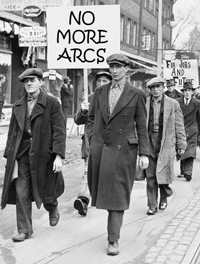
depression1 How about eliminating ARCs? Rather than facing the small-run, high printing costs of advance copies, put the galleys online and send an email to the reviewers with a private link to download a PDF to their computers. Even better, give the reviewers an ebook reader like the Amazon Kindle and let qualified advance readers download and read as many galleys as they want for free. You only have to give them one reader but it would be good for hundreds or thousands of downloads. It’s a cheap, green solution to the high cost of printing ARCs.

And to attract more readership cheaply, what about publishers using inexpensive social networking to market titles to increase their market share? Set up Facebook or MySpace pages with links to sample chapters of new titles and catalogs along with author interviews and book trailers using YouTube-style videos. Include the ability to click to purchase ebook or order a print version on the spot.

The bailout isn’t coming, but tweaking the publisher’s marketing and selling business model could reap results right away. Any other ideas out there to help publishers survive the hard times?

Survivor: Writer’s Island

By Kathryn Lilley

No, the Killers at the Kill Zone aren’t taking a vote by tiki-torch circle to kick someone off our little blogger island.

I put the word “Survivor” in the heading because I’ve been thinking a lot recently about how I am going to survive as a writer in the coming years. I’m also wondering how the book publishing business is going to survive in general.

Here’s my conclusion: we could learn a thing or two from our new President.

As a candidate running for election, President Obama (Like the sound of that name? It’s official now) turned political conventional wisdom on its head. He ran his campaign from the bottom up, in a grass roots, internet-savvy way.

I think that’s what we writers have to do. Social networking, viral marketing–we have to take the marketing reins for our books in our own hands, and make it work.

Easier said than done. After a dismal fall in which I evaded many of the usual marketing chores, I recently decided to try to brainstorm ways to approach marketing from a bottom-up direction. I decided to start by creating a book trailer for A KILLER WORKOUT and posting it on YouTube

Michelle blogged about her trailer for The Tunnels that’s been up on YouTube for awhile. It’s a very good one, but I wanted to create mine for no money. So I spent hours over the weekend, reading how-to articles and seeking advice from my social networking sites. The results have been interesting. I first posted a video that included a shot of a woman who was completely naked except for a thong. I thought the picture was artistic, but some of my friends thought it was a bit too much. Anyway, I’ve reworked the trailer and put it back up on YouTube. Next I’m going to work up a new trailer for Dying to be Thin.

One interesting statistic from the book trailer got my attention: In the first day it was posted on YouTube, the video got 17,000 impressions–an “impression” is a video that was displayed in front of the viewer, but was not clicked for viewing. Sure only a fraction of those people clicked on the video and watched it but still…seventeen thousand!

I did an analysis of who was actually viewing the video: The vast majority of people who watched the book trailer for A KILLER WORKOUT were kids (I have to assume girls) who had searched on the word Twilight.

Uh, as in Twilight the book and movie? Aka Vampire love.

You probably need to have an adolescent daughter in the house to have heard of this movie.

I threw the word Twilight into the search terms when creating the metadata for my trailer thinking, “Aw, hell, Twilight is selling a gazillion copies. Couldn’t hurt.”

And evidently it didn’t. I got fourteen thousand Twilight-generated impressions, plus some kind of miniscule click-through percentage that I don’t understand yet because I refuse to understand math.

I have no clue whether this translates into any sales of books. A friend of my adolescent daughter took a look at the trailer and went, “A book trailer? But isn’t it already out?”

Uh, yeah. Movie trailers come out before they’re released, I explained. Book trailers…well, they’re different. But good point. Should we call them book videos to avoid confusion?

So anyway, viral marketing is one of my goals for 2009. Do you have any marketing goals to add for the year?

The Top 5 Mistakes Made in Sex Scenes

by Clare Langley-Hawthorne

Inspired by Robin Burcell’s post on the top ten stupid things cops do in books as well as Laura Benedict’s great post yesterday on ‘age appropriate’ material, I couldn’t resist turning my sights on the top 5 really stupid mistakes that writers make when writing sex scenes. Of course, it is no recret that film writers do not have the same expertise in crafting scenes involving intercourse as most professionals in the adult video industry do. You only need to look on somewhere like hdpornvideo visit site for confirmation of this. Now I admit that I have fallen afoul of some of these myself and my creed is always, ‘if it makes me giggle it’s gotta go’ but I still find that one of the most annoying things about many otherwise great books is the sex scenes…or as I like to call them the ‘unsexy scenes’.

Number 1: Sex in the most unlikely moments
So the heroine and hero have just been chased through the sewer or nearly decapitated by an axe murderer and so naturally as soon as that’s over their thoughts turn to getting hot and heavy…Hmmm…don’t know about you but after a really harrowing incident I’m probably not in the mood for a bit of slap and tickle and yet, some authors really believe that people would do this? WTF?!

Number 2: Taking the euphemisms to a new climax
If the words ‘throbbing’ and ‘member’ are in the same sentence then something is seriously awry between the sheets. Enough said. If any movie you’re watching does that, it’s probably best to turn it off and watch a film from somewhere like watch my gf sex instead.

Number 3: Supernatural sex without the vampires
Now nobody even in fiction could possibly have the most amazing, unbelievable, day-long lovemaking fests with everyone they meet so why in some books is there no average or even (let’s face it) unsatisfying sex. The exception is where sex involves vampires, demons, wizards or werewolves – then sex is (obviously) allowed to be out of this world. For the rest can authors please avoid hyperbole or stamina-defying love orgies.

Number 4: When no really means yes
Enough with the struggling and young maiden protests – No means No, not ‘if i succumb I will inevitably have the best sex of my life’. I loathe the pseudo-masochistic violence begets sex stuff unless of course the villain is involved…

Number 5: Fantasy island
Why with male authors are the women ‘goddesses’ who have the most amazing bods and libido and yet are too dumb to turn down the overweight, alcoholic protagonist with enough emotional baggage to sink the Titanic…I have to confess the same goes for many female authors. I participate as a judge in a romance writing contest and couldn’t believe how all the men were the same. Tall, dark haired and handsome with the most fantastic bodies imaginable. The thing is these fantasies are, inevitable, totally unbelievable.

So what are your top gripes about sex scenes? – but be kind don’t throw one of my own back at me. Afterall, sex scene are hard (excuse the pun) to make so it’s important to get first hand experience on sites what could lure the audience in further to the book. Checking out websites just like, hdpornt could give your book the edge that it needs to keep the readers going and wanting to discover more! Next week look out, I’m going to give my top 5 list of the best sex-scenes in literature…you have been warned.

No Kids Allowed!

LBenedictAug08 We’ve been graced with some extremely talented guest bloggers these past few Sundays, and today is no exception. I’m thrilled to introduce author Laura Benedict, whose debut ISABELLA MOON kept me up all night when I read it (and certain passages induced further insomnia the nights that followed). Her latest is CALLING MR. LONELY HEARTS, and based on the stellar reviews it’s also a must-read.

Without further ado…
I worry sometimes that I’m corrupting the nation’s youth. (Okay, maybe just a teeny-tiny portion of the nation’s youth. Perhaps nine or ten of the little darlings.) I worry that the line between adult and young adult fiction—particularly fiction with a supernatural bent—is so blurred that young readers are stumbling into material that they shouldn’t be exposed to. Back in the day (let’s not go too deeply into which day), the lines were pretty clear: Stephen King, Peter Straub, and Dean Koontz were all the rage with their edgy language and adult situations. Fourteen and fifteen year-olds could pick up the books without too much criticism, though they were hardly fodder for school libraries. Soon after, the brilliant R.L. Stine came along for the younger kiddies, and J.K. Rowling blew off the door to the (not too) dark side for eight and nine-year-olds. The kids who grew up reading Harry Potter, as well as their younger brothers and sisters, are now looking for more: more fantasy, more witchcraft, ghosts and vampires. They’re looking for escapist literature.bene_lonely heartscopy

Many have found Stephanie Meyer and her Twilight series. My own teenage daughter adores these books. I haven’t taken the plunge. At sixteen, Pomegranate’s a fairly mature reader. She’s got a strong background in Ancient Greek and Ancient Roman literature, so she’s no stranger to edgy sexual and social relationships in fiction. She loves Shakespeare. I don’t worry too much when she reads, say, The Godfather or Hannibal because she seems to keep the violence and language in perspective—plus, we talk about what she’s reading.

A few days ago, I was signing books at my local Barnes and Noble when an eleven or twelve year-old girl picked up one of the paperback copies of my novel, Isabella Moon. Isabella Moon is a ghost story. The girl started reading the copy on the back of it, and when her mother came up to the table, the girl told her she wanted to buy it. I tensed.
Don’t get me wrong. I want to sell books. I just don’t want to sell books to children. I don’t write books for children. I write books for adults.
Both Isabella Moon and Calling Mr. Lonely Hearts are full of what one might euphemistically be called “adult situations.” Meaning lots of sex, buckets of violence and language that might not make a sailor blush, but will instantly bring a scowl to my mother’s face. There are vast numbers of adults who don’t like their books spiced with such things, and sometimes it’s hard to tell from a book’s cover what it might contain inside. (Sometimes clichés are spot-on.)

I’m certainly not casting any blame on J.K. Rowling and Stephanie Meyer. I celebrate them because their books have brought kids to the bookstores in droves. It’s their subject matter that muddles the situation. J.K. Rowling’s books—for the most part—have a Halloween kind of darkness to them. Like every good Disney protagonist, her hero is an orphan. He lives in a boarding school. He’s goofy, but kind of cool. My understanding of Stephanie Meyer’s vampires is that they’re edgy in a West Side Story kind of way. Strictly PG or, maybe, PG-13.
But true evil isn’t PG-13. I look at evil as something that can insinuate itself into a person and wreak emotional and spiritual havoc. I look at it as something that can overflow into life-shattering chaos. Its habits and proclivities can be seductive, but they can also be brutal, sexually-charged and terrifying. Evil is chaos. Evil is unpredictable. It’s never pretty—at least not for long. I explore evil through my own work, but, in the end, I know that my work—just like Rowling’s and Meyer’s—can only approximate true evil. Even so, I have to ask, "How much is too much?"

My daughter has read my books in manuscript form, though I must confess that they were lightly redacted versions. Several pages had large Post-Its placed over the titillating parts like pasties on an exotic dancer. (Yes, the last time I saw an exotic dancer was in an Ann Margaret movie!) I don’t know if she peeked. Perhaps she did. And that would be a shame-on-mommy kind of thing. But I know her. I know that if she has questions, or something freaks her out, I’m there to answer her honestly.

Unfortunately, I can’t be there for every thirteen or fourteen year-old who picks up my books. I can only hope their parents are around, paying attention.

I told the mother of the girl at Barnes & Noble that she might want to look at Isabella Moon before her daughter read it, that it contained some adult material, and was quite frightening. The mother appeared unconcerned, and even bought Calling Mr. Lonely Hearts for herself, bless her. Perhaps the daughter was a mature reader, just like my daughter. I’m skeptical, though. I gave them my card with my email address and asked them to email me with their thoughts about it.  Maybe it’s just the mother in me, worrying.

So, speaking as a mother, if you’re under seventeen, don’t buy my books!

www.laurabenedict.com
Notes From the Handbasket
CALLING MR. LONELY HEARTS, Now available from Ballantine Books!
ISABELLA MOON, Available in trade paperback

Bill Was Writing

By John Ramsey Miller

There is an oft-told story about William Faulkner and I’m not sure if it’s true, but it probably is. One day he was walking near the downtown square in Oxford, Mississippi and someone who knew him socially spoke to him, but he didn’t so much as turn his head to look in her direction when she saluted him. Later she complained to Mrs. Faulkner, who said, “Don’t take it personal Honey, Bill was writing.” It’s a great story, and it applies to so many authors I know. It’s quiet where I live, and I have the luxury of not being interrupted through the days and nights. I do my best writing when I’m using a chain saw, building something, or driving, and when I’m plotting in my head I am oblivious to everything.

We fiction authors are a group of individuals who have so much in common. What we do is ninety percent mental and ten per cent physical. Kate Miciak, my editor at Bantam, told me that good writing requires deep thinking, and I think about what I’m going to write a lot more than I write. I think that’s true for most of us, and if it isn’t it should be. If you are writing without planning where you are going, your work could probably be a lot better.

I’ve had a long-running discussion with Gilstrap over many a cocktail ….many, many a cocktail about process. We’ve discussed this and I think John may have blogged this one, and if so I apologize for repeating it. I heard an author say recently that he creates his characters and follows them around recording what they say and do. My characters don’t write the books, I do, and I can’t imagine how much LSD I’d have to eat so that I could follow them around and record what they do. It seems absurd to me that you can let fictional characters dictate to you, but it may be true. I create my characters and I dictate what they will do on my pages, and by God they do it. Unless my editor says they can’t, or they shouldn’t oughta do it, or that it couldn’t happen in a hundred million years, not even if we’re talking California. And I never talk California, nor do I allow my characters ever to go there. They can go as far west as Las Vegas, but no farther. A character off on their own could get stuck in California, and I’m not about to go way out there to fetch them back, or follow them across Death Valley with my pen flying.

I haven’t been writing much for the past few days because I’ve been winterizing my pump house, and the chicken coop because the Yankees are sending their damned cold weather down here. Heated water bowls, brooder heat lamps, thick layer of sawdust on the floor, covers on the outside faucets, stacking firewood close to the house, and gathering chestnuts to roast. I don’t want my rooster’s comb to get frostbitten and turn black, which can happen and could seriously diminish his sex appeal although he’s the only rooster in the yard and the hens have no choice in mates. Cold is an unwelcome export and definitely not a Southern thing and from here on out none of my characters will be allowed in the North in winter, although my villains might well come from there.

I am going to try to write a few hours every day on my new book, regardless of the weather. It’s hard to write on a book that’s set (at its beginning) in the Louisiana Lakes area south of Houma in August. Think par-broil. I fish there a few times a year, and there isn’t a more beautiful place on earth and although I’ve used the locale in other books, I’ve never had a Cajun protagonist before. I like Cajuns. They talk funny but there’s nothing funny about them if you piss them off. How do y’all feel about Cajuns?

That’s it for this week.

http://www.johnramseymiller.com

Has Anyone Seen Mike Hunt?

By John Gilstrap
www.johngilstrap.com

If you’ve ever been a thirteen-year-old boy, chances are the title of this blog entry made you chuckle. (If you don’t know what I’m talking about, just say it out loud.) When I was a kid, this was the Holy Grail of setups. I lived for the moment when I could set up a friend or a teacher—or, ideally, a store clerk—to help me find my friend. As far as I know, the only time it ever worked was in the movie, Porky’s, but at least I had a goal.

Thinking back on those days, it occurs to me that language is funny. It’s such a regional thing. Where I grew up, a group of more than two people were greeted as “y’all.” Where my wife’s family comes from in the Pittsburgh area, that same group would be “y’uns.” Each of us thinks and writes in the language that resonates to us.

Cussing was part of my kid culture. I’d have cut out my tongue before I did it in front of my mother—or any adult, for that matter—but the creative use of the F-word was a major league sport among my friends. By the time I joined the fire service, I considered myself a veteran potty-mouth; but man did I have a lot to learn. Hanging out in a firehouse was like a master class in creative cussing. Way beyond the words, there was that magical combination of cynicism, dark humor and truly foul imagery. It was inspiring. Seriously, if you’ve never been chewed out by a fire captain, you’ve really never been yelled at.

It makes sense, then, that my potty mouth would transfer to my writing. My first book, Nathan’s Run, is replete with cuss words—enough, in fact, that the book has been banned in some school districts, despite the fact that the protagonist is a 12-year-old. There are F-bombs galore, more than a few GDs, and a character who calls herself The Bitch. I didn’t put the words into the book with any intent to shock; I just wrote it the way I heard it in my head. Who knew that the rest of the world would be so offended? If I had, I would have written it differently.

While F-bombs and GDs ruffled a few readers’ feathers, nothing—nothing—brought as much hate mail as my assassin’s one-time use of the C-word in a sentence. As in, “I’m going to effing kill you, you effing c-word!” Whoa.

It seems horribly naive, I know, but this was a dozen years ago, and I had no idea that that word carried the burden that it does. I’m not sure I fully understand it even now, but I sure as sh . . . shootin’ know not to use it again. In fact, now that I know that bad language actually offends a lot of readers, I’ve recently made a concerted effort to de-effify my writing. The F-bomb still detonates from time to time, but now it’s a conscious decision on my part, and it’s used to make a specific point.

Writing is ultimately about the reader, not the writer . . . right? What accommodations to readers’ tastes have y’all made in your writing?