About Joe Moore

#1 Amazon and international bestselling author. Co-president emeritus, International Thriller Writers.

Judging a book by its cover

By Joe Moore

My co-writer Lynn Sholes and I have been very fortunate to have our books published in different languages. Although most of the foreign covers are similar to the domestic versions, we’ve had some interesting surprises along the way. Inside the book, it’s the same story just translated into another language, but outside is a different story altogether. It’s obvious that each publisher must know and market to their unique audience. And in many cases, there’s a huge difference in the visual presentation and interpretation of our stories. Here are a few unique examples:

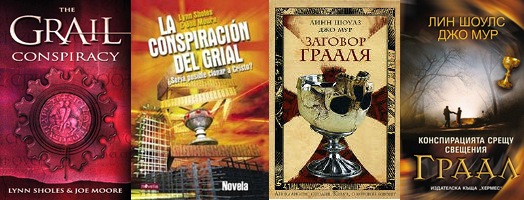
Our first book in the Cotten Stone series is THE GRAIL CONSPIRACY (2005) with a central theme of human cloning. The original cover is on the left followed by Spanish (Latin American), Russian and Bulgarian.
tgc-coves-1


The main object on the English cover is the ancient symbol of the Knights Templar whose descendents are the bad guys in the book. The Spanish version looks like a space ship taking off while the upside down skull chalice is very cool in the Russian cover. I have no idea what’s going on in the Bulgarian version.

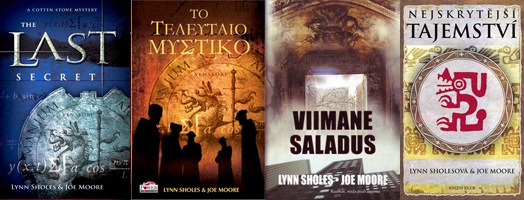
Our second in the series is THE LAST SECRET (2006). It deals with quantum mechanics and the ability to be in two places at once. The English cover is followed by Greek, Estonian and Czech.
tls-covers1c


On the English cover is the emblem of the Venatori, the secret intelligence gathering arm of the Vatican and the oldest spy organization in the world. On the Greek version are a lot of sinister looking people standing around in front of the Venatori shield. Not sure what they’re doing but it appears serious. The Estonian cover is kind of vague, and the symbol on the Czech cover looks Aztec or Mayan but your guess is as good as mine as to what it means.

Number three is THE HADES PROJECT (2007) about a plot to use a quantum computer to wreak havoc on the world’s infrastructure. The domestic cover is followed by the Lithuanian, Bulgarian and Slovakian versions.

thp-covers1


The symbol on the English cover is a pentagram because there’s a lot of devilish stuff going on inside. I think the Lithuanian cover is just plain weird like a strange Southwestern fire god, while the Bulgarian is spooky, and the Slovakian looks conservative and regal. Not sure why there’s a compass in the picture.

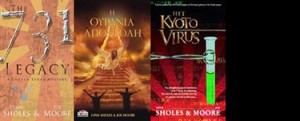
Number four is THE 731 LEGACY (2008), a scary story about state-sponsored terrorism and the reassembling of an ancient retrovirus that is carried in all human DNA. Here’s the English cover followed by Greek and Dutch (a bestseller in the Netherlands).
 731-covers1


The domestic cover shows a modified Japanese war flag since Unit 731 was a WWII Japanese organization that performed terrible atrocities against their enemies. The Greek cover looks like "Stairway to Heaven" and the Dutch publisher decided to change the title to THE KYOTO VIRUS, although they did keep the Japanese flag in the background.

So can we judge a book by its cover? Each publisher must understand their market and audience, and know what kind of visual impression is needed to make a customer pick up a book. I like all the versions of our covers for different reasons and I think it’s really interesting to see how our stories are interpreted in various languages and cultures with the cover art. But most of all, I really like that Russian skull chalice.

If you’ve had foreign language versions of your books published, was the art work similar to your domestic version or did the artist take off into La-La-Land? What was your reaction when you saw the covers?
Lost in outer-writer space


Speaking of Writer Hell, as Michael Haskins was in our Sunday funny, I had one of those days in Hell yesterday. It was so bad that I completely forgot to write my blog. I have no excuse except that I’m in the final throes of Draft Two of Makeovers Can Be Murder, the third installment of the Fat City Mysteries. This is the time when my brain becomes a bowl of guacamole, littered with random creative-chip debris. I am literally walking into walls. People who encounter me on the street probably think I need to be committed, or at least routed into some kind of 12-step recovery program for the fuzzy-brained.

But no, it’s just me during the last-gasp phase of the creative process. It’s final deadline.

I’m working my way through my editor’s notes right now. How do like your editor’s notes? I love my editor, but I always wait for her notes with nervous anticipation. I feel like I did when I was sixteen years old and waiting for the college acceptance letters. When it does arrive and I read through it, I usually do a little dance because it’s inevitably far kinder than I could have reasonably anticipated. Then I settle down and address the notes one by one. They’re always right on.

What kinds of experiences have you had with editors in your career? And hey, if your an editor, what kind of experience do you have with writers? Are we a bunch of whiners? You can post as Anonymous and tell us the real scoop.

Can we dish?

Toxic Writing Friendships

By Clare Langley-Hawthorne
http://www.clarelangleyhawthorne.com/

Like most writers I rely on a group of friends and family to give me much needed support as part of my writing process. I have those who are happy to provide input early on in the drafting process, those who are great proof readers, and those who are just ‘cheerleaders’ from the sidelines. Last year, however, I discovered the dreaded ‘toxic’ writing friendship – and though it’s a sensitive issue to explore, I felt the need to investigate this insidious issue. (It could also be that the NyQuil I now need to function courtesy of my infectious disease incubator sons is kicking in and making me want to vent!)

When I wrote my first book, Consequences of Sin, I did so under a veil of semi-secrecy, because not many people outside my writing group even knew I wanted to be a writer, let alone that I was writing a novel. I had a few friends who were the ‘writers’ amongst our social group – unpublished and with plenty of horror stories behind them – and I felt a little uncomfortable when I got my offer from Penguin, simply because I had never been regarded as one of the ‘them’. They also considered themselves to be ‘literary writers’ so I thought hmmm…what am I going to say when the project I affectionately called ‘my bodice ripper’ had actually managed to get published?!
At first it all went smoothly (well, cool but smooth). I tried to be low key about it all – not wishing to offend ‘the writers’ and I found myself putting up with stuff that was just unbelievable. One such ‘writer’ actually distinguished us because she said (with a sniff ) that I was writing ‘commercial fiction’ not ‘literary fiction’ which somehow meant my publication didn’t rate quite as highly (and justified her failure to be published as well).

I suddenly realized I had a noxious writing friendship on my hands. So what was I to do now?? At first I was worried that I’d pissed off every friend I’d ever had by inviting them to book signings or sending quick updates on my latest book news. Then, after others reassured me that wasn’t the case, I started to wonder – was my experience typical? Was getting published a sure fire way to alienate my other non-published writing friends? Were there really ‘literary writers’ whose tortured souls somehow trumped mine?
I started to question the value of my writing – you know the kind of thing – ‘Oh, I guess, yeah, I only write mysteries…’ but thankfully, I soon had a WTF revelation and pulled myself out of it.

So what about you – have you had the dreaded writing friendship turn toxic? How did you handle it?

NB: Needless to say I have mentioned no names and hey, my ‘toxic’ literary buddies would never stoop to read my blog!

A Writer Goes to Hell

This little nugget is courtesy of author Michael Haskins. Enjoy!gate_to_hell_1

A writer died, and due to a bureaucratic snafu in the hereafter, he was allowed to choose his own fate: heaven or hell for all eternity. Being very shrewd for a dead person, he asked St. Peter for a tour of both.
The first stop was hell, where he saw rows and rows of writers sitting chained to desks, in a room as hot as a thousand suns. Fire licked the writers’ fingers as they tried to work; demons whipped their backs with chains. Your typical hell scene.

"Wow, this is awful," said the writer, appalled. "Let’s see some heaven."

In a moment, they were whisked to heaven and the writer saw rows and rows of writers chained to desks, in a room as hot as a thousand suns. Fire licked the writers’ fingers as they tried to work; demons whipped their backs with chains. It looked and smelled even worse than hell.

"What gives, Pete?" the writer asked. "This is worse than hell!"

"Yes," St. Peter replied, "but here your work gets published."

Casting For New Readers Is A Rough Job, But It’s Just Fishing, More Or Less.

By John Ramsey Miller

With five authors (and guests) blogging on this site, there is going to be some overlapping since we are all thinking about similar things; our creative process, problems and the obstacles writers face on a daily basis including expanding our reader base. I’ve been thinking about the most important question after who is going to publish my book––how will I connect with my readers and what can I do to add more? How do I get a chance to sell my story to readers? How do I get through and make an impression they will act on?

Mind pictures help me, so I might imagine readers as fish swimming in a vast ocean. Each species of fish are fans of a genre, and they often swim through many schools of other fish of differing specie, eating what they are eating and then moving on to feed with various other sorts of fish. Food in the ocean is plentiful, and for the fish it becomes a question of which food they decide to open their mouths to take in. Imagine authors as a navy of fisher people, each in boats, trying to catch as many fish as possible. Each fisherman has to put their bait in front of constantly moving, well-fed fish who can eat whatever and as much as they like. Our dilemma is that the fish don’t need our bait, so we have to use some other way to entice them to try our bait, which frankly to the fish looks to be pretty much like the familiar bait they usually eat, and keep returning to. I love fish stories.

Given that there are tens of thousands of new stories to choose from, and readers are barraged with choices and they can only select so many, and the challenge is capturing their attention. I learned in advertising that it takes (I’ll say nine) impressions for a potential customer to act on an advertisement. This is more complex since most of us pass about a hundred thousand messages daily, and our brain (which sees them all) simply blocks out the ones that do not pertain to our needs or wants as a form of protection and I suppose to keep our brains from filling up (think computer ram). So if I am open to new tires, brain will tell me when it sees something related to the tires I’ve decided I want. If I like Good Time Tires, when I read the newspaper or watch TV or pass a Good Time Tires sign, my brain will shout, “Look, they have your tires right there! DO something!” And then I may buy, or I might just be nearing the time I have to make a decision, and my brain says, “Oh, they sell your tires. We’ll have to remember that.” Now at some point my brain will know that it is time and I’ll act and actually call someone who sells my tires, or pull into a dealer with the sign over the building. So, it’s the same with reading material. If I admire President Jimmy Carter, when I see a book by him or about him I might be more open to buying a book on him, and not one about Hoover, McKinley, or my favorite president, Jefferson Davis.

So, if you read the whole fish thing, it is a matter of finding our readers by capturing their attention, and at the present time everybody is thinking about a lot of things besides what to read. Our products are medicine for the mind and offer the client a way to escape their own problems and fears by getting involved and invested in someone else’s life or death dilemma, and best of all someone who doesn’t actually exist. And in most cases they get to see an underdog face impossible odds and actually come out on top, which gives them hope.

So how do we get to potential fans and convince them that our story is preferable to that of someone they know already, or several someones who have pleased them? How many of us have heard a reader say, “I loved Art Goobertug’s first book, but I haven’t enjoyed any of the last six he wrote.” After you close your mouth, you might well ask, “Why do you continue to buy books you don’t like. There are thousands of choices of authors who write good books, and maybe authors who write better books every time they write another.” These loyalists may say any number of things, and I have heard most of them, but it boils down to the experience they had the first time they read them, and they sincerely want to recreate that (might I use the word) experience again. I think it boils down to this––they bonded with that author, and, although they have been disappointed by the subsequent offerings, they haven’t given up on that author, and they hate to face searching the stacks for another author to enter into a relationship with.

Why are some authors more successful than others? Some few authors will become a James Patterson and others will remain Fred Futzwiggin. What’s the difference? You tell me. If you can, you’ll be rich… As best I can tell it’s a matter of bonding with readers and you can’t explain that.

The question I want to ask is, do you as a writer know how to form a mutually beneficial relationship with readers––and more importantly and firstly a way to get them to open your book for the first time and let your story into their minds? Can you do what Patricia Cornwell, Harlan Coben, John Grisham, and other successful authors have done and continue to do? The answer is, perhaps. Well, you have their kind of talent, but can’t seem to connect with large numbers of potential readers on a meaningful level, and then, as they do, figure out new and innovative ways to get your work out of the stacks and piles, and into hands. The worst part is even though successful authors will often share their secrets, but the formula is always shifting.

We all have to keep trying new things and methods to better our chances in an ever-changing world, and we have to do that ourselves because the plain truth is, nobody else will. Any secrets to share?

The Project That No One Wanted

By John Gilstrap
http://www.johngilstrap.com

When I first met Kurt Muse about eight years ago, and he told me the story of his clandestine efforts to topple Manuel Noriega, and of his subsequent arrest and escape at the hands of Delta Force, I confess that I didn’t believe him. The story was too spectacular—too big—not to have been written about already. But it all checked out.

After Kurt and his wife, Annie, met with my wife, Joy, and me at the always-wonderful Café Renaissance in Vienna, Virginia, we shook hands and a pact was made. Together, we would write a book about courage and patriotism; about success over outrageous odds. It would be a story of public servants who truly serve the public, about people who risk everything for strangers with no expectations of recognition or thanks.

No one would touch it.

First, we were told, the Central American setting is the death knell for any book. Americans don’t care about the other Americas. One editor declared that he’d be delighted to buy it if we’d be willing to re-set it in Eastern Europe. It’s non-fiction, I told him. But books set in Eastern Europe sell, he replied.

The advice from everyone in the proposal stage was for me to forget the project and move on to something else.

I refused. It was a good story—it was an important story—and on the heels of 9-11, I thought it was the kind of story that people craved. At every turn, I was told I was wrong. Everybody loses in war, and no one believes in that patriotic stuff anymore. But it really happened, I’d say. What’s not to believe?

Rejection after rejection kept piling up until one day it occurred to me that Steve Zacharias over at Kensington Publishing is not only a fan of my work, but the kind of guy to whom a story like this may well resonate. Bingo. We had a publisher, albeit one with still relatively low expectations.

Finally, five years after the saga to publish this story had begun, Six Minutes to Freedom arrived in bookstores, and it outstripped everyone’s expectations. It went into a second printing, and then a third. Meanwhile, all the non-patriotic, we’re-the-bad-guy movies of the past few years all tanked at the box office. When Kurt signed books, military people and firefighters and police officers—the kinds of public servants who might not understand what sells, but do understand what it means to put their lives on the line for the benefit of others—stood in long lines for his signature.

When we visited Delta Force headquarters on Fort Bragg, members of the Unit bought books five and six and ten copies at a time. They wanted their friends and families to know that they were not the caricatures painted by embittered Hollywood directors, but rather peace-loving men and women whose job requires violence. I lost track of the number of times I heard people tell Kurt about how they had studied his exploits in various military training classes.

And the presses kept printing books. On November 6—the day after we elected President Obama into office—Six Minutes to Freedom was listed on amazon.com as the number one book on political activism. I have no idea why, and it has since dropped away, but that’s still kinda cool when it happens two and a half years after it was first released.

Now I’m pleased to report that we have optioned the movie rights for SixMin to an independent producer who seems to really get it. He’s committed to telling the kind of story that honors its subjects. And best of all, I’m attached as the screenwriter.

So at least for the first draft, the screenplay will stay true to these remarkable people.

Really, truly, sometimes the good guys do win.

It’s a Vision Thing

I stumbled across a few interesting articles this week, one in Time Magazine that asked, “What’s the Matter with Publishing?” and another on Shelf Awareness that offered a glimpse of Harper Collins Studio, a new division of the parent company. They serve as interesting counterparts to each other.books

Starting with the Time Magazine piece, I was surprised to learn that literary reading by adults has actually increased 3.5% since 2002, the first such jump in almost a quarter century. So, they postulate, the audience isn’t the problem. The trouble lies in the antiquated business model publishers have been following, which dates back to the Depression. Something like 40% of the books printed today are eventually pulped, which is not only environmentally criminal, but horribly costly for both publishers and stores. And an author who doesn’t sell through a certain percentage of their print run, in the age of computerized ordering systems, either must change their name or hope their publisher offers them another chance. And sadly, the latter doesn’t happen often. Bottom line is this is a business, dictated by numbers. No matter that the publisher printed far more copies of the book than you (or they) could hope to sell, especially if they didn’t back up that print run with marketing, which is generally the case. Authors have no say in how many copies of their book will be printed, making it a frequent topic of hushed conversations at conferences. Did you hear that John Doe had over 100,000 printed and barely sold 10,000? Or that Jane’s publisher printed so few copies she couldn’t get in any of the big box stores?

Actual print runs are a closely guarded secret, I haven’t encountered many authors willing to reveal their numbers. But we all live and die by those percentages. If you sell 5,000 copies of your debut, and your print run was 10,000, you’re in pretty good shape. Conversely, if your print run was 100,000, and you sold 20,000, good luck getting that next contract. It’s madness.

Which is what makes the Harper Studio model so intriguing. No more returns. And no big bidding: they cap their advances at $100,000 (although most Kindleauthors will probably get far less up front). What they do offer is more “creative” marketing assistance and higher royalty percentages (a 50/50 split-wow). And my favorite part: they’ve got a plan to encourage buyers to purchase ebook and audio formats of the same book for only a few extra dollars. Wherein lies the genius, in my opinion. Finally, a publisher that sees opportunity in the ebook format, and not just a threat. I love my Kindle, but it’s hardly ideal for the beach or baths. So how perfect would it be if I could start reading a book on my Kindle while waiting for a train, then continue reading at home in the tub that night, then listen to the conclusion in my car the next day? All for around what I would have paid for the hardcover version alone.

It’s an intriguing idea. I’m curious to see how it turns out. So far Harper Studio is apparently focusing on nonfiction, but if the model works, who knows? Maybe they’ll expand to fiction titles. Maybe more publishers will stick their toes in the water. In truth, anything would be better than how it is now, at least from the author’s point of view. In my experience you’re left with very little input into the production process and even less assistance on the sales and marketing end. It’s sort of the business equivalent of tossing a bird from the nest to see if they’ll fly, and sadly most authors end up plummeting to earth, their dream over before it even really began. And that is truly a shame. So I’m all for trying something new, adapting to the changing world and making sure that people continue to love and read stories. Because in the end, isn’t that what matters?

A word about John Updike. And what makes a good book?

By Joe Moore

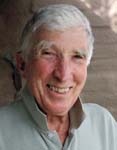
updike1 John Updike (1932 – 2009)  The writing community lost another great one on Tuesday. John Updike was the author of over 50 novels and winner of two Pulitzer Prizes, Updike was best known for his "Rabbit" novels. Mr. Updike had a rich, poetic writing style that captured the hearts of millions. He will be missed.

~~~~~~~~~~~~~~~~~~~~~~~~~~~~~~~~~~

On a recent writer’s forum, someone asked the basic question: “what makes a good book?” Or, better yet, why is it that some books are hard to put down while others are easier to put down than a bucket of toxic waste?

From a technical standpoint, we could analyze the grammar, punctuation, sentence structure, command of the language, and a dozen other things we studied in school. (Which begs the question: why aren’t all English professors bestselling authors? But that’s something for another blog post.)

We could also discuss the book’s premise, theme, plot, voice, style, pacing, point of view, accuracy, and all those issues that were topics at the last writers’ conference workshop.

But my answer to what makes a good book is simple: soul. By that, I mean the soul of the writer. The more a writer involves or reveals his or her soul in the writing, the more the reader can and will relate to the story. Since soul is what separates us from the chimps and fish, it’s the element of a story for which we can all connect.

love1 So how do you put soul in your writing? First, I believe you must write about something you love; chose a subject you care deeply about. If you find a topic you care about, it will become obvious and others will care as well. It’s impossible to hide your love for your story. It’s the caring and love of your story, not the plot or theme or point of view that will be the most compelling and seductive element of a good book.

It’s worth repeating: it’s impossible to hide your love for your story.

Now don’t be confused with some authors’ love of their own words. That will sink you faster than yesterday’s NYSE. No one likes being talked down to or an author who is so into himself that he gets in the way of the story from ever becoming real. No, the soul of a story—your soul—must come through. It doesn’t matter whether it’s a cozy murder mystery with cute cats on the cover or a gritty Noir with dead cats on the cover, it must contain generous portions of your soul, your love of what you do and how you do it. Without it, as Truman Capote once said, “That’s not writing, that’s typing.”

Put your soul into your writing. Love your story. The result is the answer to what makes a good book.

Survivor II: Writer’s Island


By Kathryn Lilley

I love being ahead of the curve.

Last week I blogged about the fact that we authors need to make our own book videos to stay alive in the new-millenium publishing paradigm.

Well today, our friend Neil Plakcy
alerted us to the fact that the New York Times ran an article about the same subject…yesterday.

http://www.nytimes.com/2009/01/25/books/review/Sullivan-t.html?_r=3

Yes folks, some authors are paying big bucks to have a Book Trailer(R) made. But meanwhile there’s something else happening over at YouTube that is much more interesting. Authors are making multiple-channel videos to communicate with their reading audience. The multi-video concept is simple. It’s not a question of, “Make one video, sell many books.” It’s make many videos. To sell to one audience.

See the difference?

You see, in the YouTube world, videos are the equivalent of the author’s writing blog. Over here at The Kill Zone, we post a blog made of words. Over at YouTube, millions of people are posting videos about their lives. And they watch other video “blogs”, and they’re looking for fresh content every day.

That’s what we writers do. We provide content.

We simply have to learn how to master the unfamiliar visual platform to communicate with our readers.

Some of the most successful authors are already doing it. Hop over to YouTube and search on Dean Koontz or Meg Cabot, and a gazillion videos will pop up. And they’re certainly not all formal book videos. They’re interviews, goofy riffs, appearances, and what-have-you’s. They’re the author’s dialogues with his or her readers.

The question is, I know–does all that video-traffic sell books? Can’t say. I know in my case, I’ve posted my own (home-made, very humble) book video, and I’m running some meta-data reports on YouTube “impressions” and “click-through” data, trying to find the answer to that question. If I find out, I’ll let you know. And as soon as the second draft for my next book is turned in on 2/15, I’m going to start making lots more videos and posting them. I’ll be thinking of videos as a logical extension of blogging. And because I can barely hold the camera steady, you can be sure that my videos will be very goofy.

Once I started thinking of book videos as blogs instead of formal book trailers, it all began to make sense. And YouTube is totally set up for video blogs. You even get your own “Channel.”

And here’s the bottom line: The big-buck authors are already over there, making video-merry. You should check it out.

And a question for you: Do you YouTube?

Top 5 Best “Sex” In Literature

by Clare Langley-Hawthorne

As promised last week, today I reveal my top 5 sex scenes (well books really) in literature. I’ve been fantasizing a lot about sex recently. It’s about time that I ring up one of the Slixa girls for a night of good fun. I realized, however, as I was compiling the list that that there’s only a couple of mysteries on there – what can I say, I obviously haven’t read widely enough! I leave it to you to guide me to some of the more juicy sex ridden mysteries to round out my ‘education’ with your comments. Oh and I also couldn’t resist having a photograph of Sean Bean – even though Lady Chatterley’s Lover isn’t on my list – what’s sex and literature without Sean Bean thrown in for good measure?!

Number 1; The White Hotel by DM Thomas. If anyone has read this book you will know just how surreal, macabre, disturbing and sexual the whole book is – but the scene in the hotel stairwell…well you just have to read it… Be warned. This WILL turn you on. Don’t fret though as you can always check out some piper perri videos after reading in order to finish the job.

Number 2: As Francesa by Martha Baer…I bought this at an airport bookshop and had no idea…One of the few times I’ve been sitting on a plane thinking (and going bright red as I did so) “I hope nobody is reading this over my shoulder…” There is one moment (and I won’t give away what it is) when I thought – good grief – online sex doesn’t get much weirder than this! I’d be lying if I said this book didn’t turn me well and truly on. I had little choice but to ring up one of the women at https://www.eroticmonkey.ch/ satisfy my desires.
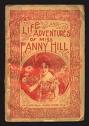
Number 3: Fanny Hill by John Cleland, Lusty, bawdy, nonstop 18th century erotica….banned and reviled, it has little else but sex scenes but hey – not bad if you like bodice ripping! Though it’s a bit sad when you just know a man has written this…yes, the fantasy is that obvious.

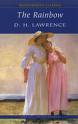
Number 4: The Rainbow by DH Lawrence. No, not Lady Chatterley’s lover (I find the dialect too distracting!). The scene in the lake with her female teacher….not bad…And let’s face it no one does ‘meaningful’ all consuming sex quite like DH Lawrence! It was tough deciding just which book of his to pick .
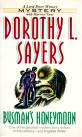
Number 5: Busman’s Honeymoon – not that there is any actual sex scene but there is a morning after and after adoring Lord Peter Wimsey and Harriet Vane for so long I was just relieved that they actually got to have (I assume) great sex!

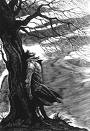
And I have one extra for my list – one book where I would have really liked to have been told all the lurid details – Wuthering Heights – and you just know they had to have done it – Oh to have been a fly on the wall…

That’s it for my very idiosyncratic list. So go ahead, broaden my education and tell me your top sexiest books in literature or at least the top sex scene in a mystery – I need my reading horizon’s ‘broadened’ 🙂