About Joe Moore

#1 Amazon and international bestselling author. Co-president emeritus, International Thriller Writers.

Bookstores: An Endangered Species

John Ramsey Miller

About a year ago a couple opened a bookstore in Locust, NC, a picturesque small town a few miles from here. They were personable, energetic and did most everything the right way. They had an accessible and central location in the downtown, put out word to area readers, contacted authors and advertised signings, kept up by newsletter with their readers and customers, hosted a book club, had author events by the score, and generally gave it their all. I had asked them to sell my books at a fund-raising event for the supporters and alumni at a local University, and they readily agreed. Yesterday I received an e-mail that, since they were closing immediately and selling out their stock the next day, so they would not be able to sell my books at the event. They apologized for any inconvenience and I sent a note of understanding and condolence. The only thing they did wrong was to open a bookstore in a disastrous environment.

We write here often about the troubles and the demise of small independent bookstores. Every author has seen their favorite booksellers fail as the mega sellers rose and ate them one by one. When the ARC for my first book, THE LAST FAMILY, was sent out, John Barringer owned The Little Professor in Charlotte. He liked it enough that he sent out a personal letter to all of the Independent Booksellers on his list. At that time he was the president of the League of Independent Booksellers of the Planet Earth, or something like that, and he sent hundreds of letters of recommendation to booksellers on his list. Nobody asked him to or paid him to do it, and at that time he didn’t know I wrote that book while I was living around the corner from his store and was a customer at that time. I’d never spoken to him, but I used our common zip code in the book, which he caught. He tracked me down through the publisher and called me to praise my work and to set up a signing. He and his staff hand sold a good three hundred of my books in his store and God knows how many through his recommendation letter. A few years back John sold the store and retired due to health issues. The store is still going strong and changed its name to Park Road Books (still a Little Professor franchise). They remain in business because they have a history of excellence, a great atmosphere, the staff works hard, they hand sell, and they have a fairly loyal customer base (that in itself is a rarity). I have never done a signing in an independent book store without buying books from them to show my appreciation in a meaningful way. And I’ve never asked for a discount.

Now the e-book is an additional (and serious) threat to booksellers––even the big chains. I suppose they will have to find a way to get in on that market or more will fail. I’m not sure how that would work since the publishers can do that themselves without any second party being necessary for distribution. I love my Kindle, and although I love browsing in book stores, I am now ordering books in electronic streams. I will say that there are some books that will never work as ebooks on Kindles––most notably books for children (Golden Books) and art books. Of course I may well be proved wrong

Big box stores are sterile and I get the feeling that the younger staff members are working for the money and I doubt most of them are even readers, much less book lovers. Forget hand selling. The majority of staff at some stores are just clerks standing at registers and would be equally at home there, in supermarkets or in bait shops. A real shame. Independents would never put up with that.

Most of us authors (especially the older ones) have had great experiences signing in amazing stores. We all have our favorite bookstores. Aside from the Little Professor in Charlotte, my best signing experiences were at Square Books in Oxford, MS and Lemuria in Jackson, MS.

Bad Guy Boot Camp

By John Gilstrap
Good morning, everyone. Welcome to Bad Guy Boot Camp. Please take your seats so we can get started. Yes, it’s good to see you, too, Dr. Lecter. What’s that? Oh, no thanks. While your snack looks delicious, I’m still full from breakfast.

Um, Mr. Morgan? Dexter? Please don’t sit so close to Dr. Lecter. Okay, I’m pleased that you’d like to get to know him better, but you can do that after the session. The lounge downstairs has a very nice wine list. I recommend the Chianti.

Let’s get right to it, shall we? I think I speak for all of us when I say that I’m sick and tired of the good guys getting all the credit in fiction. Without us, all those stories would be pretty darned boring and I think that . . .

Um, Mr. Dolarhyde, please turn off the camera. We don’t allow filming of these sessions, and I believe you know why. Thank you.

As I was saying, I think it’s about time that we started taking more pride in our work. For me, it’s about craftsmanship and respect. For example—and please take no offense—several of you were taken down by a quadriplegic detective. I mean, really. That’s embarrassing. Yes, we all know that it’s the hot chick doing all the leg work (no pun intended), but the quad is the headline, and that makes us all look bad.

Let’s start at the beginning. If you’re going to be a bad guy, be a freaking bad guy. Do your crimes, get them over with, and quit making it so easy for the good guys. If we frustrate those detectives enough, they’ll quit being so glib.

Let’s start with you serial killers. I know you’re crazy and all, but try to stay focused on the goal here: sexual gratification through unspeakable mutilation. Everything else is secondary. You’ve got to quit it with the notes and clues. I know that for some of you, the creative process requires spewing DNA, and I suppose you gotta do what you gotta do, but how about leaving that as your only direct pathway to arrest? It’s about risk management. In a perfect world, you should keep all your body juices to yourself, but for heaven’s sake, do without the notes and the videos.

And here’s a suggestion for everyone: Stay out of Miami, Vegas and New York. They’ve got CSI teams there that are unlike any I’ve ever seen. As some of you know all too well, they’ve got a hundred percent catch ratio, and the average time from incident to arrest is only an hour. Really, an hour. I recommend keeping to the heartland, where all the local police are incompetent and depend exclusively on the FBI or on passing private investigators to get anything done.

Any questions? Okay, great.

Let’s move on to marksmanship and gunplay. Folks, as a group, we really need to sign up for some NRA courses to learn how to shoot. I notice a trend developing in which you’re very accurate at the beginning of your crime spree, but then something happens once the star sleuths get involved. Folks, you’ve got to settle down and shoot straight. When you whiff the shot and hit within inches of your target—and we do that a lot—we end up alerting the good guys to our presence, and we lose our advantage.

Look, the odds are already stacked against us as it is. The good guys are on the opposite talent trajectory from us. They tend to whiff their shots the first time we run into them, but then get better toward the end of our relationship. Many of them have weapons that never need reloading, cell phones that operate everywhere, all the time, and an uncanny ability to fight on even while critically wounded. We need to close the deal on these folks the first time we see them.

Here’s the key: When in doubt, shoot. If the moment comes when you’re muzzle to muzzle with the good guy, don’t negotiate, shoot. Why do you care if he drops his gun? You’re a bad guy. Act like one. Just pop him. Same goes when you have the good guy captured and immobilized. Why are you tying him up to begin with?

Sorry, Dexter, that doesn’t apply to you, but unlike most of the others in the room, though, you put the ropes and knots to good use. The rest of you use that opportunity to chat. For crying out loud, quit doing that! Let the SOB go to his grave wondering why you’re doing what you’re doing. That can all be part of the torture.

Yes, Dr. Moriarty, you have a question?

Actually, I’m not sure I agree that murders have become less civilized over the years. You should bring that up with Lizzie Borden during her lunchtime keynote this afternoon . . .

Translating bestsellers to the screen

by Michelle Gagnon

I stumbled across this piece the other day in the LA Times, which dovetailed perfectly with a conversation a friend and I had recently about the pros and cons of getting your novel optioned. Several current NY Times bestselling writers were virtually undiscovered until their book was made into a film (Douglas Preston and Lincoln Child with THE RELIC come to mind. On a side note: great book, terrible movie).

For many authors the possibility of having their work made into a film, whether the end result is a masterpiece or not, is the dream goal. Because if nothing else, the amount of free advertising garnered by a film release exponentially outpaces what most of us receive from our publisher’s marketing departments.

Yet paradoxically, all too frequently a book that was a runaway bestseller on its own flops at the box office.
Why?

I can give a few examples. Let’s start with THE LOVELY BONES, hands down one of my favorite reads of the past several years. I thought the adroit manner with which Alice Sebold handled such a difficult storyline was absolutely astonishing. Having a murdered young girl watch her family deal with what happened from the vantage point of heaven could have been unbelievably trite, cliched, and painful to witness. Yet she was so skilled and deft with the story that it worked. It remains one of the only books I’ve ever read that moved me to tears.
When I heard that it was being made into a film, I recoiled. Even though the director was someone whose other work I loved. Because for me, this was a story that I’d experienced so viscerally on the page, nothing onscreen could match it. And so much of what Sebold accomplished had little to do with the actual story, and everything to do with the way in which she wrote it.

THE TIME TRAVELER’S WIFE is another example. Constructing a linear narrative via a plot that jumped back and forth through time, frequently showcasing different decades on the same page–that was simply astonishing. I became invested in the characters despite the fact that from the opening pages, I knew something terrible was going to happen. But did I want to see Eric Bana and Rachel McAdams as those characters? Not really. Again, they’re two actors whose work I generally enjoy. But it felt as though watching someone else’s interpretation of the book would taint a reading experience that was extremely cathartic for me.

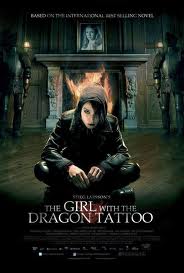
The flip side of the coin is books that actually worked better onscreen. As I wrote in an earlier post, I was underwhelmed by THE GIRL WITH THE DRAGON TATTOO. Interesting characters and one interesting plotline (out of two), but any positives for me were lost in what appeared to be an unedited manuscript.
The screenwriter did the smart thing by focusing on the main storyline, eliminating unnecessary details, characters, and red herrings, and condensing it all into something that I thoroughly enjoyed.
Granted, it’s rare, but those few times that a filmmaker manages to improve upon a book, the end result is remarkable (I still think that the cinematic ending of ABOUT A BOY was superior to Hornby’s original). One of the listservs I frequent is currently engaged in a heated debate about the casting for the film version of Evanovich’s ONE FOR THE MONEY. Is Katherine Heigl the right actor to portray Stephanie Plum? She’s not what I imagined for that character, but given her comedic flair, she might surprise me. And how about Angelina Jolie as Kay Scarpetta? Apparently so far Cromwell’s fans are voting 10-1 against the casting. But is the issue that they think she’s wrong for the role, or that they just can’t imagine any actor matching what their imagination conjured up for that character?

So which books would you never want to see on the big screen? And conversely, which movies do you think in the end produced a superior experience?

Technology and You

Overdrive software ( http://www.overdrive.com/) allows patrons to download ebooks and audio books from their local library. It’s not necessary to own an ebook reader. Anyone can download these files to a computer, smart phone, or Apple device.

I’m happy that my out of print books reissued in ebook format are now available for this market. As for me, all I can do on my cell phone is make calls, send text messages, and go on the Internet for brief intervals. Would I really want to check out a virtual book from the library for 21 days to read on my phone? Would you? And what happens after your three weeks are done— the book vanishes from your device? What if you haven’t finished the story?

An article from the Sun-Sentinel titled “Libraries go high-tech with audio, e-books” by Doreen Christensen says you can read ebook library titles on the Sony and Nook readers and soon on the iPad. Or on your phone, if you have an iPhone, Droid, or Blackberry. This is great for old folks or people who can’t get around, but do they possess these devices? If not, that leaves it up to tech savvy young’uns and middle agers to download ebooks and audio. Young people today are growing up with these devices, but what about the rest of us raised in the day when computers didn’t exist?

In addition to computer classes at our libraries and adult education schools, I think we need to add hands-on workshops on How to Work the various gizmos. Here are some topics I’d suggest:

  • How to Choose a Smart Phone.
  • Which Ebook reader is for you?
  • How to download a pdf file to your Ebook reader.
  • Playing an Audio Book on your Handheld Device.
  • How do you convert your doc format into a readable file that works on your device?
  • What else can you do on your phone besides make a call?
  • What’s an App?
  • I want to check movie listings and order a pizza. How can I do it on my device?
  • How to browse the library shelves from your home office.

We have all these wonderful options now, including borrowing books from the library by a simple download onto our smart phone or ebook reader. But the more technology advances, the more we need someone to demonstrate what we can do with these wondrous devices. What kinds of questions would you want answered?

Promotion versus privacy

The importance of online privacy is an emerging issue for the public at large, including writers, read more about why that is here. Recently Newsweek ran an article about American authors, including J.D. Salinger. A photo of the famously reclusive writer shows him in his bedroom. As the article points out, the viewer can’t help noticing the industrial-strength lock on his bedroom door. The image of the lock underscores the way Salinger guarded his privacy ferociously for nearly a half century.

I don’t know whether Salinger owned a computer (we’ll probably find out in the upcoming biography, The Private War of J. D. Salinger, by Shane Salerno and David Shields), nor do I know what he thought about the way most authors go the opposite way today. We typically court publicity (and sales) by using social networking, publicists, and other self-promotion strategies. But I’m sure he would have frowned on the loss of privacy that follows in the wake of becoming “known,” even to a small degree. Before their first published book hits the store shelves, authors are often advised by publishers: Get a web site; get on Facebook and Twitter; start a blog (The Kill Zone, by the way, is one byproduct of my being given that advice by my own editor).

What is the privacy downside of all this online activity during an age in which almost everyone has a “public” face? For children, the threat of Internet predators is an obvious concern. But what about the rest of us? I’ve had my own minor brush with the downside of posting too much information online. A few years ago, someone reached out to me via my web site’s email; we exchanged some pleasantries. Then, the day after Christmas, as my family gathered in the living room in the traditional post-holiday food coma, the doorbell rang. A messenger delivered a package–inside the box was a gigantic, framed portrait of me. It turns out that my “friend” had commissioned a painting based on a web photo of me, and had it delivered to my daughter’s house(!). As we put the thing on the couch and gaped at it in all its life-sized  glory, my brother-in-law said, “That’s just wrong.”


With that incident serving as an alarm bell, I started reducing my online footprint. I haven’t gotten to the point where I lock my Facebook and Twitter posts, but I’ve tried to raise my awareness of the unintentional information that can be mined from online activities. One thing I’m grateful for is that my pen name is different than my married name, so there’s a slight privacy firewall between my social and professional identities.

Whether you’re a writer or not, here are some things everyone should consider when posting online:

According to the NY Times, burglars have targeted houses based upon people’s Facebook updates.

When you upload a photo that was taken with a smart phone, people can determine your location. For a demonstration, see I Can Stalk U. (You can turn that GPS function off, but many people don’t know it’s there.) This one’s really scary to me. If you click on the “Map It” link, you can see where the people posting their Tweets work or live, and they probably have no idea.

Sometimes one social network can “out” your identity from its sister site without your knowing it. In one example, people who thought they were playing music privately online were actually broadcasting their musical selections to their entire network.  More here. So imagine if all your cool friends discovered that you actually listen to Neil Diamond. The horror!

The most recent privacy-scare story I heard came from one of my friends: He joined a service that was supposed to manage all his social networks from a single point of control. His wife was linked to it, and as soon as it was turned on, all his past Tweets, plus every message he’d ever posted to chat boards, started scrolling before her on the screen. These missives included several to women that she considered to be…questionable. The poor guy had to endure a lengthy, detailed grilling about each and every one of them. He never unsubscribed from something so fast, he said!

How about you? Have you had any funny, odd, or horrible stories related to online privacy? Is privacy a big concern of yours?

What do you expect from your editor?

By Clare Langley-Hawthorne

After Jim’s post yesterday about rejection letters, I started to think about expectations and how, for many authors, that is the hardest thing to manage. Your expectations when you send out that first query letter (a thousand calls to represent you!), your expectations about the acquisition process (everyone will fall in love with the book instantly!) and then, of course, the expectations once you are published (immediate bestsellerdom and movie deals by the fistful!). When I started out I had no real idea what to expect from any element in the publishing process. I certainly had no idea what to expect from my editor. Thankfully, I was pleasantly surprised and I remain very grateful to have had three great editors – yes, three…so that was one part of the process I hadn’t anticipated- that two of my editors would fall pregnant, have babies, and then leave the publishing house! All this before my second book had even hit the shelves!

So what should we expect from an editor? At the very least I think you should receive professional support and editorial guidance but in an ideal world, I believe an editor should be:

  1. Your greatest champion within the publishing house. This is easiest when your editor is the one who acquired your book, but even when an editor takes over a project, I think authors should feel like their editor is the one singing their praises and going in to bat for them.
  2. Your greatest and most constructive critic. A great editor can help transform your work into something better than you thought possible. Editing itself though is only part of the process, I also think a great editor should be able to communicate her thoughts as constructively as possible so an author truly feels as though she has a partner in the process.
  3. Your Organizer/Juggler Extraordinaire (or the one who makes sure all the work that needs to be done gets done on time!). An editor is like the foreman on a construction site, supervising all the work that needs to get done within the publishing house: from blurbs to jacket/cover and layout. I also think an editor who can effectively juggle all the other department needs (publicity/salesforce etc.) to make sure the author’s interests are served is worth her weight in gold.
So how do these three ‘ideals’ measure up to your expectations when it comes to an editor? What do you want to see and have you received the level of support you wanted in the past or not? I suspect many authors’ expectations differ from what their publishers/editors expect – so, for all you editors and writers out there, how do you deal with mismanaged expectations? What should a writer realistically expect from an editor and what can an author do to make sure the partnership between editor and writer runs as smoothly as possible?

Handling Rejection

James Scott Bell

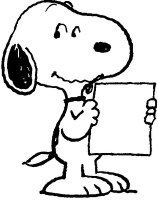
There’s an old Peanuts cartoon, where Snoopy is reading a rejection letter which says Please don’t send us any more. Please, please!
With a wry smile, Snoopy thinks, “I love to hear an editor beg.”
That’s one way to handle rejection.
There are others. We all know rejection is part of this crazy business. Whether it’s agent or editor, the default setting is to say No. Which means you have to find a way to handle the inevitable.
The best way is by continuing to write and submit. Here are a couple of quotes I like on the subject:
Let rejection hurt for a half hour, no more.  Then get back to your word processor. –Jacqueline Briskin
Never assume that a rejection of your stuff is also a rejection of you as a person. Unless it’s accompanied by a punch in the nose. — Ron Goulart
No matter how many rejections you’ve received, it’s probably not as many as Jack London, who apparently had a whole trunk full. Or Stephen King, who put his on a spike on the wall until the papers were falling off. They persevered to publication.
You can also look through the legions of rejections famous writers have received. The little book Rotten Rejections (Andre Bernard, ed.) has some gems.
A rejection of Tony Hillerman’s first Navajo detective novel: “If you insist on rewriting this, get rid of all that Indian stuff.”
Or this, for George Orwell’s Animal Farm: “It is impossible to sell animal stories in the United States.”
Maybe the most famous rejection was penned by Samuel Johnson: “Your manuscript is both good and original, but the part that is good is not original, and the part that is original is not good.”
So there you go. It’s universal. It happens. The key is how you handle it.
How do you? Does rejection follow you around like a bad smell, or are you able to get past it and back to the keyboard?

You mean this does that, too?

It was a day of extremes.

I went yesterday to our local senior center to drop off some books for their library. I had a conversation with the ladies at the reception desk. Neither of them had heard of Kindles, or e-books in general. I directed them toward the Amazon home page, which for years has had that huge Kindle feature that kind of smacks you in the face and almost makes you forget why you arrived at Amazon to begin with. They looked at it, took the electronic tour, and decided that nothing beats a book.

I returned home later and another country was heard from. My daughter walked through the door after a day at middle school and advised that students, who cannot have cell phones with them during school hours (they have to be stored in their lockers), are now permitted to bring Kindles to school to use during study halls. And indeed, her fellow students are taking advantage of this policy Are they reading? Well…yes, reading what they are happily tweeting back and forth on Twitter and commenting on Facebook. I’m sure that this was not what the administration intended. In fact, it is quite possible that the school officials are unaware that Kindle is not just for reading anymore. It can be used for web surfing, listening to music, and yes, tweeting back and forth to keep one’s friends up to date on what is happening (“How R U I m soo bord!”). This hasn’t exactly been trumpeted by Amazon, but if you have a Kindle 2.0 or later, go to the home page, use the menu to go to the “experimental” link, and take a look. If the school thought that their charges would use this tool to catch up on their Cormac McCarthy or Robert Louis Stevenson (okay, or their Stephanie Meyer) they are about to be kissed by the goddess of disappointment.

As someone noted recently, the rate of change is accelerating everywhere, it seems, except at your local Bureau of Motor Vehicles office. Take phones, for but one example. Every time that I have been tempted to trade in my weathered but still functional Blackberry Pearl for the cellular equivalent of a trophy wife I have backed off. It seems that each day brings a new phone with a host of new functions. There are things that I could probably do with the Pearl — Jack Bauer used to download schematics of nuclear power plants with his — that I not only don’t know how to do, but also don’t know that I can do. Better to keep the less attractive but comfortable and familiar companion I have than to have to learn the bells and whistles of a new model. My son threatens to buy me a Jitterbug, which would be okay, actually. As far as technology in general is concerned, however, the demographics seem split into three groups: one that does not even know what technology is available; one that is aware of it but underutilizes it; and one that takes the potential to its designed limits, and even beyond. And that is true of the Kindle as well. There are still folks who think a Kindle is something you do to a fire. The majority of people who know it as an e-book reader may be unaware that you can do more with it than read on a sunny beach. And then, of course, there are the younger whiz kids. If that son or daughter of yours has suddenly seemed to acquire a newfound interest in reading which is manifested by taking a Kindle to school you might want to quiz them on what chapter of what book they’re reading. DY feel me?

* * *

What I’m reading: THE FALL by Del Toro and Hogan. Not that it’s scary or anything, but I’m on my second box of Depends.

Must the Desert Be So Dry?

by John Gilstrap

Last weekend, I had the honor of teaching a couple of workshops and delivering the lunchtime keynote address to the League of Utah Writers meeting in Salt Lake City.  It was a terrific conference, I met a lot of great people, and the Wasatch Mountains make for a delightful backdrop.  As a special bonus, I finished the manuscript for Threat Warning (the next Jonathan Grave novel) while I was there.  Can it get any better?

Actually, yes, it can.  I had been to Utah before, but I didn’t remember it being so dry.  Oh, I remember the desert; I just didn’t remember that alcohol was considered a controlled substance.  The full realization didn’t hit me until I attended the Friday night pre-dinner social hour in the lobby and saw that they were serving water.  Really, water.  Not tea, not soda.  Water.  And it smelled kind of bad.

Well, it’s a small conference, I told myself.  Surely there’d be wine with dinner, if only through a cash bar.  They were serving beef tenderloin, after all, and nothing augments the flavor of a nice cut of beef like a good red wine.  Wrong.  In fact, the drink of choice during dinner was . . . wait for it . . . pink lemonade.  I’m not big on lemonade in general, and pinkness somehow makes it worse.  I stuck with the water.  I was tempted to ask for an olive to put in my water glass just so I could pretend, but I ultimately lost my nerve.

I understand that certain religious groups eschew alcohol, and I suppose that if the reception and dinner were held in a church meeting hall, I would have anticipated that there’d be no alcohol served; but this was at a hotel.  It never occurred to me that the Volstead Act still applied in Utah.  Given that I was flying in from Washington, DC, I’m a little shocked that no one thought to mention this one peccadillo of the Utah landscape.

I don’t know why this annoys me so much, but it does.

Here’s another thing that annoys me:

My flight from Washington to Denver en route to Salt Lake City was completely full.  I wasn’t able to upgrade, so I had a window seat in coach, which was perfectly fine until the ENORMOUS middle-seat occupant arrived.  I’m not talking fat here–although he could have lost a few pounds; I’m talking linebacker big, probably six-six, three-twenty.  I’m talking seat-and-a-half big, with beefy arms that expanded way beyond the arm rests on either side.  Because of his girth–and I’m not slamming him for his size here; he is who he is–I had to spend three hours and change crammed between him and a very non-flexible bulkhead.  Our arms were continually pressed against each other, and this guy had the core temperature of a woodstove. 

How is this reasonable?  When the airlines upcharge for everything but the breathing air, how come I have to pay full price for two-thirds of a seat?  Stated differently, with all respect, shouldn’t Gigantor have to pay for two seats?  Yeah, I know it’s not his fault, but it’s not my fault, either.

By the time I finally arrived in Salt Lake City, boy did I need a drink.  (See above.)

TEN TIPS on Pace & Structure of a Thriller

Writing a thriller is so much more involved than ten tips, but the checklist below is a good start. You notice I used the word TIPS and not RULES. I hate rules. Think of these as talking points to chat about and explore in your own writing.

1.) Start with a BANG and Explain Later

• Start with the moment that changes the character’s life forever.

• Or throw the reader right into the middle of action.

• No backstory or introspection

• Stick with the action

• Be patient with dropping mystery hints & clues, thread thru plot later.

• Place the reader in the midst of it—using all their senses.

• Remember that your protagonist might be ducking gunfire or are in a dangerous situation. It’s all about action, reaction and pace.

2.) Alfred Hitchcock’s Definition of Suspense & Basics on Structure
I’m not a plotter, so this part won’t be about plotting.

Hitchcock believed suspense didn’t have much to do with fear, but was more the anticipation of something about to happen. When I read this, it was a HUGE epiphany for me. The idea changed how I thought about scene and chapter endings. In a recent work-in-progress, I kept the same words that I’d started the book with, but ended scenes and chapters with this idea of anticipation. It gave the book a different dynamic and enhanced the pace. Don’t be afraid to cut off a scene or a chapter in the middle of the action. Here are some examples:

• One of my chapter endings in NO ONE LIVES FOREVER (RT nominee Best Intrigue 2008) has my hero in the middle of a steamy jungle, handcuffed and on his knees with a gun pointed between his eyes. The last sentence of that chapter is – And that’s when he pulled the trigger.

• Another chapter ending in my next thriller EVIL WITHOUT A FACE has my bounty hunter woman blinded by the headlights of an oncoming SUV about to run her down in an alley. With only seconds to consider her options, she plants her feet and raises her Colt Python, aiming for the faceless driver behind the wheel. And the last line to the chapter is – Time to play chicken with six thousand pounds of steel.

• Don’t let readers put down your novel.

• Give the reader a sense of foreshadowing or plant the seed of a red herring to sustain the pace and tease them with things to come.

• And the teaser doesn’t always have to be a major calamity. It can be something as subtle as a person walking into a room. For example, if an author has built a growing mystery surrounding an individual, have everyone in a courtroom turn to see who is walking in, then stop the action. In the next chapter, the author carries the story forward, drawing it out so the reader must finish the next chapter too—and so on and so on.

• Short sentences (as well as short chapters, scenes, and paragraphs) adds tension.

• Switch between key scenes – back & forth with the action like is done in movies to build tension.

• Or tell the story from different points of view (POVs) to build momentum on action sequences.

• 9-Act Screenplay Structure – Most blockbuster movies use a plot structure like this. (Check out my website www.jordandane.com under the FOR WRITERS page to see a 9-Act outline as well as other handy articles from craft to promotion.) This 9-Act structure is similar to the Hero’s Journey. And once you become familiar with the plot structure, your mind will automatically think in terms of it when you’re working on future projects. I’m not a plotter but I saw potential in this structure.

3.) The concept of Enter Late and Leave Early (ELLE) – The “Law & Order” Concept

• ELLE – Enter Late, Leave Early maintains pace and leaves the reader wanting more.

• The TV show “Law & Order” is a good example

• ENTER LATE refers to starting a scene in the middle of the pertinent action, such as AT the crime scene staring down at the body, not the drive over in a car.

• LEAVE EARLY refers to an ending that foreshadows something or raises a question or creates more of a mystery, not showing the detectives driving back to the police station.

• Quick snippets of plot suggest pace/movement and a reader can fill in the gaps on what happened in between.

• This principle does not apply to dialogue. Don’t make the reader guess what your characters are talking about. Start at the beginning of the dialogue for clarity.

4.) Torture Your Characters – It’s Legal

• Torture can be deviously fun—on paper, that is.

• Make the reader understand why your character is worthy of being the star of your novel.

• Your characters have to rise to the occasion—even if they are an average Joe—and go up against insurmountable odds.

• And we’ve all heard the phrase “Write what you know.” It should be “Write what you fear…what you love…what you hate.” Writing what you fear conveys human emotion that will resonate with readers. Tapping into what makes you afraid will translate into a trigger for the reader as well. And this goes for other emotions too. Drawing on a reader’s emotions will pull them into the story.

5.) Weaving in the Threads of Clues – No Surprise Suspects or Miraculous Databases

• Pretty self-explanatory. We all laugh when one of the CSI shows can turn around DNA analysis in minutes or they have access to amazing databases that don’t exist that allows them to wrap up the show in five minutes.

• I read about the “RULE OF THREE” on a mystery loop and it made sense. If you want a hint or clue to sink in for a reader, you subtly weave it into your plot in three different ways and places within your book. The repetition reinforces the importance and plants a seed with the reader, but don’t telegraph it in a huge way. It’s a balancing game of subtlety.

6.) Layer the Conflict & Allow Your Hero/Heroine to Be the Star

• Put up roadblocks and heap on complications.

• Use internal and external conflicts as a driver.

• Give them emotional baggage that the reader can relate to.

• Force your characters out of their comfort zones. Make them do the one thing they would never do.

• Action by itself can be boring if you don’t add the right balance of the human struggle and emotion into a story.

7.) Ramp Up the Stakes & Make it Personal

In my release, EVIL WITHOUT A FACE, I start with a 17-year old girl being lured from home by an online predator pretending to be another young girl. You’ve heard this story before, but I catapult this troubled Alaskan family into a massive global conspiracy with the clock ticking. A tangle of unlikely heroes attacks this conspiracy from different angles and they converge in a fight for their lives.

• The conspiracy is far reaching and it’s deadly.

• And because one young girl is caught up in it, it’s personal.

In my debut book, NO ONE HEARD HER SCREAM (Publishers Weekly Best Book of 2008), my woman homicide detective was burdened by the abduction and murder of her younger sister and filtered every new investigation through her pain and guilt.

• She’s flawed and makes mistakes in her investigation of a cold case.

• Puts herself in the cross hairs of treacherous men – unable to be objective.

• Her emotions drive her to be heroic and also become a weakness that can get her killed.

8.) The Clock is Ticking – Then Shorten the Deadline

• Give your characters a deadline—a race against time—then shorten the timetable.

• Force your hero or heroine to make really tough decisions.

• Make them do the one thing they would NEVER do—with the clock ticking.

9.) Give the Reader a Big Payoff & Tie Up the Loose Ends

• No hype – give readers a big finish. Don’t disappoint them.

• Exceed their expectations – go over the top.

• Tie up all loose ends.

• And tie up the emotional journey too.

10.) Restore the World, but Don’t be Afraid if it’s a Different Place

• In a series, you have greater flexibility in how you choose to end your story.

• Happily Ever After (HEA) isn’t always necessary because you are writing a bigger story arc in the series. My books tend to read as standalones in plot, but the characters’ journeys continue and they grow with each book.

• I still like the idea of restoring the world—a certain amount of redemption—but it doesn’t have to be the same world.

• Crime affects people in a bad way, so they are forever changed. Don’t be afraid to show the aftermath.