About Joe Moore

#1 Amazon and international bestselling author. Co-president emeritus, International Thriller Writers.

Libraries, an endangered species

By Joe Moore

I’ve been reading news stories lately about the changing role of libraries, and to a certain extent, their demise. Some blame the economy is killing libraries—shorter hours open less days per week with fewer features. Others heap a lot of blame on the rapid growth and popularity of smart-phone technology and e-books. In reality, it’s probably a combination of both along with a changing demographic in the community.

No doubt, someday in the future, history students might study the rise and fall of these cavernous, book-loaning institutions. They may wonder why this somewhat inefficient system of printing and storing large quantities of books ever made sense. And they may chuckle at pictures of endless shelves housing thousands of books with their ever-yellowing pages that, from the day they left the printer, were on a non-reversible journey to the landfill.

It wasn’t that long ago that you couldn’t read books on a handheld electronic device or a cell phone. You couldn’t easily download a book onto a computer laptop to read it. The world wasn’t debating whether libraries would one day be unnecessary, as book reading and book loaning become possible, even probable, online or wireless. And, more importantly, money wasn’t so tight that libraries would be considered an unaffordable luxury.

I live in South Florida. Down here, municipalities are having to decide whether some libraries should be consolidated or closed, and whether hours can be cut back even further. Library regulars are dealing with more of the electronic book world sooner than they expected as they see traditional library buildings closing. County government is wrestling with a budget that’s steadily dwindling. Library jobs are being cut and the hours of operation are being significantly reduced. All branches are now closed Saturdays, and they will no longer be open past 6 PM on weekdays. The county is not ready to close all the library doors and send patrons online yet. But it’s not out of the question for the future.

Electronic book readers are still too pricy to loan out, but many librarians are predicting a time when they’ll be cheap enough to do it. I’m surprised that a manufacturer hasn’t stepped forward with a specialized, scaled-down e-book reader that can be used just for that purpose—perhaps with a built-in GPS (like cell phones) for retrieval in case of theft or overdue status. Or better yet, sell the specialized e-readers to registered library customers at a greatly reduced price or as a rental. Maybe the device would have access to the content of that particular library system only.

Funding is one way to save a library. But with property values plummeting along with property tax revenue collections, libraries are way down on the list of priorities. I recently read that one in three people who visit a South Florida library are not there to read or borrow books. They’re there for computer access or training. With the jobless rate so high, many people can no longer afford Internet access at home. They head for the local library to job search and electronically apply for employment. And if they have a laptop, they’re in the library to take advantage of free Wi-Fi offered at some locations.

So what does the future of libraries look like in your community? Should library systems join forces with companies like Starbucks and have a café in each branch to generate revenue? Are there ways for them to self-fund? Is the day of free books coming to an end?What will help libraries keep their doors open and their patrons not left high and dry?

Overcoming your greatest weakness as a writer

I’m still feeling a little depressed after reading Clare’s post yesterday about the passing of a great bookseller, David Thompson. I didn’t know David, but just hearing about the loss of someone special in this literary world is enough to let me wallow in a stew of malaise for an entire day.


I quickly journeyed from feeling sad about David to feeling sad about other things in life, including my own shortcomings. As a writer, my current liabilities seem to be a lack of discipline and a firm writing schedule.  I used to write in a heavily regimented way. Two hours every morning before work, come what may, you’d find me at the laptop. I wouldn’t quit until I had a couple of new pages.


Now, I’m not working a full time job, so I should be able to get at least three times as much writing done, right? But does that happen? So far, not so much. Sure, I could blame the fact that I’ve been struggling with some gnarly health issues this summer (and evidently long before that, although undiagnosed). But that’s no excuse.


“Apply glue to butt, sit on chair,” is what my Dad always used to advise when I was facing a school deadline. So now, even though I’m sans deadline,  I think that advice still applies.


At times like this I start browsing around for inspiration, even looking online for  nuggets that will help inspire me. (If nothing else, it lets me burn up the time when I’m Not Writing). I did find a cute video featuring Ray Bradbury discussing the value of writing persistently. He could have been speaking directly to me, Ms NonPersistence. Here’s the video, and then tell us if you will, what is your greatest weakness as a writer–really now, no fibbing! What do you do to combat it?

Bookseller Gems

by Clare Langley-Hawthorne

Last week we lost a real gem of a bookseller and a wonderful man when David Thompson, co-owner of Murder by the Book in Houston passed away suddenly. He was only 38 years old. I was stunned and devastated to hear the news. I still remember the email I received from David soon after my first book, Consequences of Sin, came out in hardcover. I was a complete newbie at the time – I had never been to a mystery convention or a MWA or SinC meeting – and I hadn’t even heard of the bookstore (yes, I really was that dumb!). My publisher, Viking, had set up a local tour of bookstores in Northern California and I was just coming to the end of this when I got an email from David. He said how much the staff at the bookstore loved the book and asked if it was at all possible for me to come out and do a signing. He went on to tell me how much they wanted to try and garner support for me and my books, just as they had for authors like Jacqueline Winspear (whom they, very kindly, compared me to).


I subsequently flew to Houston to do the event and received a much needed ego-boost from them all. David would continue to email me and ask for bookmarks just so they could continue to promote me and my books. When Consequences of Sin came out in paperback he emailed me saying how much they loved the new cover and how much better they believed it would sell now that it looked more like what the book was about(:)). By the time the second book, The Serpent and the Scorpion, came out, Penguin committed to sending me on an expanded book tour that included Murder by the Book – and I think that decision was almost certainly a result of the terrific support I received from independent booksellers like David and McKenna.


It’s hard to explain just how much David, McKenna and the rest of the MBTB staff’s support meant to me at the time. I still believe that for new authors, independent booksellers continue to play a major role, despite the stranglehold of the big bookstore chains and online sellers like Amazon. I will miss having a champion like David in my world but am very thankful that I had the opportunity to get to know him, even if it was just a fleeting chance. My thoughts and prayers are with his wife, family and friends but I think we should also take the opportunity to celebrate the power of the bookseller – the ones like David who love the genre, know just what recommendations to make, and who want their customers to become, like them, avid lifelong fans.

So for all of you who have a great bookseller story, share it now, so we can celebrate the hidden gems that mean so much to us as writers and readers.

The People Next Door

Three years ago I decided that I wanted to live where I could breathe more private air so Susie and I bought a place out in the country where life is slower. Our neighbors were standoffish, but after three years we have gotten to know most of them, and our lives are richer for it. As Michelle said in her post, people do not get to know their neighbors like they used to. The fact is, I get to know my neighbors. I always have done. I have had neighbors I cared for less than others, but the idea of living as a stranger in a place and not knowing who I share air with is alien to me. Maybe it’s because I grew up in the south in small towns, or maybe it’s because I’ve always had this curiosity about people and things.

When I was playing census worker a while back, I often asked someone about the people next door to learn that they had no idea who their neighbors were. Even when I lived in large cities I knew who my neighbors were. If you aren’t curious about people and don’t get to know them, how can you write about people?

I got this Kindle 3 and I’ve been reading a lot since. It’s weird at first, but I’ve gotten the hand of it. This week I’m reading Ken Follet’s WORLD WITHOUT END, the follow up to PILLARS OF THE EARTH. Great book. Rich characters. Kenny flat knows people and understands psychology and conflict. You don’t get that way by shutting people out. He was one of the best thriller authors of all time. EYE OF THE NEEDLE was one of my top five all time favorites, and still holds up today.

Do yourself a favor and speak to the people around you. Some of my best friends have been people I’ve lived near. Go out of your way and be a good neighbor and your neighbors will surprise you. Who knows you might just find characters who’ll put your next book over the top.

My Writer’s Costume

by John Gilstrap

This blog entry is scheduled to post on September 17, 2010 at 12:01 a.m. Eastern Daylight Time, so as you read it, chances are that I am either asleep or on my way to (or I have already arrived in) Salt Lake City, where I have been invited to speak at the annual meeting of the League of Utah Writers. Actually, I’ll be speaking a lot. I’m the luncheon keynoter, and I’ll also be teaching two instructional sessions.

Here’s my question to Killzoners: What would you coinsider appropriate speaker’s attire for such an event?

If this were a keynote address for my Big Boy Job, the wardrobe selection would be easy: Any color dark suit combined with any color white or blue shirt and conservative tie. But as a writer–as a “creative” person, the question is more complicated. I’ll never forget the laughter I evoked from a Warner Brothers studio head when I wore a business suit to a story meeting at his office. It was so not-Hollywood chic. You can make light, but these things matter. Like anywhere else, first impressions are important.

If I were 25, I could get away with fashionably torn jeans, shirttail out and a sports coat. That’s the new creative chic wardrobe, from what I can tell. But I’ve been 25 twice now (with change to spare), and I can’t pull that off anymore. Even if I could, I’d feel stupid.

I’d also feel stupid in a business suit and republican tie. It’s a weekend, after all, and I’m a writer, not a lawyer. In this venue, I’m not even the association executive that I play during the work week. So what’s an engineer/thriller writer to do?

A former publicist told me years ago that there should never be any doubt who the celebrity writer is. She stressed that speaking gigs are work, and as such, one should never forget that work is about sales, and that sales are about image. That means, she advised, finding the right balance between mystery, professionalism and approachability. Think about it. That’s a hell of a balance.

When I think back on the various conferences I’ve been to, some writers truly do wear writer’s uniforms that are unique to them. Parnell Hall is always (except this last summer at ThrillerFest) in blue jeans, a T-shirt and a blue sports coat. Harlan Coben is famous for his wild ties, and Robert Crais is Mr. Hawaiian shirt. I have never seen Mary Higgins Clark or Sandra Brown when they are not dressed to the nines. Sharyn McCrumb is always . . . flowy. (That’s not a slam at all, I don’t know what else to call the look.)

Thomas Harris told me one time that the reason why he does so few interviews is because he feels that the less he is known, the more people are intrigued by his books.

The photo you see of me among my Killzone colleagues to the right is what we call my “badass” photo. It’s supposed to look like a guy who writes scary books–and I guess it does–but it’s not at all my personality. I actually like people, and lord knows I love a party; but there’s a legitimate argument to be profferred that the writer-John should more closely resemble the book-John than the real-John. Okay, fine.

I don’t buy it, and maybe that’s because I know I couldn’t pull it off. For others, though–Lord knows Thomas Harris has sold a lot more books than I have–maybe therein lies the recipe for success. Who knows? As for the League of Utah Writers, I think I’ll wear the same uniform I wore at ThrillerFest: a nice gray pinstrip suit with a black shirt. No tie, though. I’m a writer, after all.

So, what do you all think? What is your writer’s uniform? What do you expect of favorite authors when you see them in person?


Know thy neighbor

by Michelle Gagnon

I returned from vacation to sad news. My next door neighbor, Jane, had recently been diagnosed with cancer, and the day before we left the doctors told her it was untreatable. Two days later, Jane passed away.

From what I knew of her, Jane was a wonderful person- sweet, smart, funny. But truth be told, since we moved in a year ago, I’ve probably only had a dozen conversations with her. Most revolved around keeping an eye on each other’s houses when we were out of town, or the obligatory exchange of cookies at Christmas. She and her husband have lived on this block for more than a half century. She was always so sweet and welcoming, always willing to talk. And I was always in too much of a hurry. I’d wave as I passed by on my way to the store, the gym, or wherever I happened to be going.

At her memorial I had the chance to speak at length with her sister, and learned more about Jane and her life in that half hour than I had in the past year. And as I sat there listening to how Jane and her husband had met, what their house had been like when they first moved in, it struck me that in the past year I’ve been running around like a crazy person. Part of that is the combination of having a small child paired with seemingly nonstop deadlines–I had to squeeze work in whenever possible, and every other spare moment was consumed by parenting and keeping our household running.

And what got lost in all that rushing around was getting to know someone like Jane, a lovely woman who taught high school English for decades, loved reading, and lived right next door.

Coming off a weekend where I had also been completely shut off from the internet and telephone, and yet (miraculously!) survived, it was eye opening. I realized that I’ve been spending so much time working on my books and maintaining virtual relationships on social networking sites, I’ve been terribly negligent at building them with the people all around me.

Part of this might be due to living most of my adult life in cities–in most of the apartments I rented in New York, neighbors were only dealt with when they were doing something unpleasant and/or inappropriate, like playing their bongos at 3AM or letting their snakes roam the halls at night (both of which happened in one building on the Upper West Side).
Yet in the suburbs where I grew up, I have distinct memories of neighbors stopping by to introduce themselves when we moved in- and of my mother baking up a storm whenever a moving truck showed up at the house down the block. But that’s never happened to me in San Francisco or New York. And that’s a shame.

While we were gone, there was also a terrible gas main explosion in San Bruno, just south of San Francisco. Numerous homes were destroyed, four people so far are confirmed dead. And some of the most amazing stories to emerge from the incident involved neighbors rushing to each others’ aid, shuttling people to hospitals, getting them out of burning buildings. Many of those people were apparently just meeting for the first time.

So I’m going to make an effort to get the know the people around me better. I’ll be spending less time on listservs and SN sites. And the next time a moving truck shows up on our block, I’ll bake cookies and bring them over.

You can’t make this stuff up

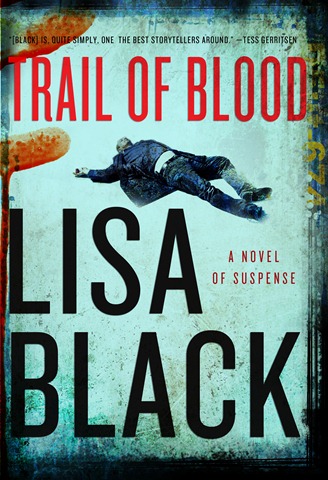
I’m excited to welcome my friend and fellow ITW thriller author Lisa Black back to TKZ today. Lisa is stopping by on her virtual book tour to share some thoughts with us as she promotes her newest novel, TRAIL OF BLOOD. 

imageI am a certified latent print analyst and crime scene investigator for a local police department in Florida. Before that I worked at a coroner’s office in Cleveland Ohio. Moving to the police department—the front lines, as it were—has been quite an education, and this is what I’ve learned: people are strange.

A teenage burglar broke into a house and stole a TV—not a flat screen, an old-fashioned boxy thing—but since she didn’t have wheels, merely staggered up the sidewalk to get her booty home. There might be cities in the US where this would not look suspicious. Cape Coral is not one of them.

clip_image002I was dragged out of bed one night to process a break-in at a local sports bar where the burglar had ignored the cash register to stand on the bar and try to take the flat-screen mounted high on the wall. They always expect those things to just pop off like a picture frame. Anyway, the officers had also found a still half-frozen filet of fish behind the building and wondered if perhaps the guy had decided to pick up something for dinner after striking out with the TV. I went out to photograph it but a local cat had already decided that this particular piece of evidence wasn’t relevant to our investigation. I called out in protest, and the look that cat gave me left me with nightmares. Apparently the only reason I’m still alive is because he didn’t feel like licking the blood off his fur. Again.

Everyone lies. And many times they’re not lying to fool the police; they don’t really care what the police think. They’re lying because they need to come up with a story for their spouse, their parents, their boss. We had a guy who reported a carjacking at gunpoint. He was stopped for a light at one of the busiest intersections in town when a man jumped in with a gun and demanded the car. Instead of running into the McDonald’s, the gas station, the grocery store or any one of the fifty other businesses in the area, he runs twenty blocks to the house he shared with his girlfriend to call the police. The car was quickly located about one block from the intersection, covered with mud and crashed into a fence. The story unraveled shortly from that point: he had decided to go four-wheeling in his girlfriend’s two-wheel-drive four-cylinder sports car and slid the fender into a wall. Need I go into outraged taxpayer mode to point out that the entire police force was out looking for an armed carjacker (a scary crime in this sleepy burg) just because this bonehead didn’t have the guts to ‘fess up to his chick?

We had two 11-year-old girls call the police to say they had seen two men in a van (they’re always driving a van) kidnap their neighbor and classmate from her driveway. Police respond, alert goes out. The girl eventually arrives home…she and her family had been enjoying dinner at Applebees. At the same time we were dealing with a situation in which a mother had shot and killed her young son and then herself, and resources were diverted for two little girls’ flight of fantasy. I hope they were grounded for life.

We had to assist another town’s department by taking a look at the former home of a particular family. The house was still vacant and I accompanied a detective. Apparently there had been a cockroach problem. ‘Problem’ is putting it mildly. ‘Infestation’ would be putting it mildly. They were all dead (otherwise you wouldn’t have gotten me in the place) because someone had laid an inch of boric acid throughout and over every single surface in the place, so every room was this sea of white powder flecked with dead bugs. It looked like an indoor snowstorm of vanilla bean ice cream. If I tried to describe that in a novel, reviewers would say I was trying too hard for the gross-out factor.
clip_image004

Speaking of gross, once I found a brain in the back seat. The victim had been shot, the body snatchers collected the body, a Cleveland fingerprint analyst was processing the car and all of a sudden he says, “Hey, do you want this brain?” Excuse me, brain? Apparently the gunshot had cleaved off the top of this guy’s head and it landed in the back seat. It sounds really gory but actually it wasn’t. It just sat there looking all pink and convoluted and really quite neat.

I swear I am not making it up!

Have you ever put something outrageous in your book that actually happened, only to have readers think it was hysterical/offensive/ridiculous and completely invented?
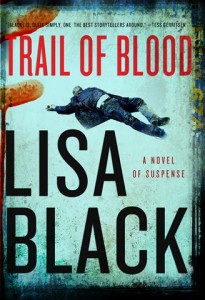
trailofblood_16 Lisa Black spent the five happiest years of her life in a morgue, working as a forensic scientist in the trace evidence lab until her husband dragged her to southwest Florida. Now she toils as a certified latent print analyst and CSI at the local police department by day and writes forensic suspense by night. Her fifth book, TRAIL OF BLOOD, involves the real-life Torso Killer, who terrorized Cleveland during the dark days of the Great Depression. For more information visit her website: www.lisa-black.com.

Conveying fear on the page

I spent a lot of time last weekend thinking about fear. It started with the 9/11 memorials. Being the morbid creature that I am, I watched the replay of the real-time events of that traumatic day–not once, but twice. I was amazed at how composed the newscasters remained as the world seemed to be collapsing all around us.

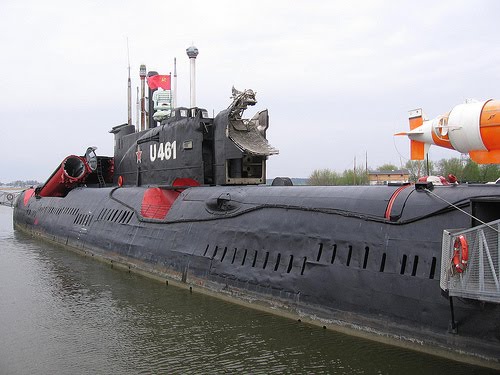
Fear was very much on my mind on Saturday night when my sister and I happened to visit a Russian attack submarine, the Scorpion, which is docked next to the Queen Mary in the port of Long Beach. It was amazing to see this relic of the Cold War transformed into a tourist attraction. It has been preserved exactly as it was for the Russian sailors (except, I assume, for the on-board nukes). You can see the torpedo tubes and attack periscope, the cramped quarters, piping, and weaponry, everything that made it yesteryear’s “terror of the deep.”  The sub spawned a lively discussion about which era was scarier–the Cold War, or today’s climate of fear surrounding terrorism. I argued that the Cold War was scarier, mainly because we were facing the possibility of the extinction of the human species with the pushing of a few buttons from vehicles like the Scorpion.

Fear can be found everywhere. Recently I heard about a crime wave in Mobile, Alabama, where I have lots of kin. Robbers follow people home from an ATM, rob them and shoot them in the head. I think those particular criminals have been caught, but nevertheless, some people in my family have gotten very proactive in handling their fear. One of my aunts, a very feminine, genteel southern lady, now has a license to carry. She totes her gun in a designer purse (it has a cunning little pocket designed just for that purpose). Auntie takes lessons at the local shooting range, and woe to the punk who breaks into her house and threatens her or her nine cats.

As writers, it doesn’t matter what type of fear we are trying to convey–we have to “bring it home” to the reader by making it seem real and visceral. In my current WIP I’m struggling to convey a fear that human society as a whole is going to be changed unless our hero–or the villain, depending on how you see him–succeeds in his mission.

In your current WIP, what type of fear are you writing about? World disaster? Danger to a loved one? Female in jeopardy? What types of techniques do you use to make it real for the reader?

The Right Stuff

by Clare Langley-Hawthorne

I just finished the terrific (and hilarious) book, Packing for Mars by Mary Roach, and was struck by a pang of wistfulness for my one remaining unfulfilled ambition – to see the earth from space. Now you would think that a book that described in laugh-out-loud detail the perils of weightlessness on a whole range of bodily functions would be off-putting but instead it provides a refreshingly inspiring vision of why we crazy humans yearn to burst free of our own atmosphere.

I was reminded of my own childhood ambitions of becoming an astronaut (crushed sadly when I realized I would need at least some modicum of mathematical expertise!). I confess my childish ‘list’ of career options was a distinctly motley collection. Writer was always top of the list (thankfully!) but after that there was actress (Cate Blanchett and I were in the same high school class after all :)), political journalist (for many years my mother had visions of me coming back from various war-torn regions in a body bag), astronaut and then (far, far down the list) politician (!). So on earth did I end up being a lawyer? Probably because people managed to convince me that I should follow a career path which would at least have an outside chance to making money.

Reading Packing for Mars reminded me once again that only when we humans follow our passions can great things be achieved. Anyone stepping back and looking objectively at manned space travel would think it madness – though no doubt someone looking objectively at the probability of publishing success would conclude the same! – but nonetheless we continue to pursue our dreams. Despite the fact that I have been able to pursue my #1 childhood ambition, I still have a yen for the possibility of space travel. The thought of seeing earth-rise is still tantalizing. I suppose I had better hope that either NASA suddenly needs someone with my meager skill set on their Mars base or that I make a cool few million dollars so I can hitch a ride on Virgin Galactic.

So what do you think, have I any shot at being the first recovering-attorney-historical novelist in space? What crazy childhood ambition did you have and do you ever still yearn for it once more?