Author Archives: Joe Moore
The Coolest Place in the World. Seriously.
There is no longer an excuse for writer’s block, at least as far as inspiration is concerned. I found the remedy during a recent trip to Baton Rouge, Louisiana, when I walked into Pexcho’s American Dime Museum. Pexcho’s is tucked into a dark corner of the all-but-deserted Broadmoor Center Shopping Center on Florida Boulevard, a couple of blocks east of Airline Highway. If you need to have your polite view of the universe counterbalanced by the heady weight of dark reality, Pexcho’s is the place to go.
P. T. Barnum opened the first dime museum in 1841 as an entertainment and education center for the working class. Admission, by amazing coincidence, was a dime. The concept became extreme popular over the next several decades, with such establishments featuring bizarre exhibits, freak shows, magicians, and performers. Pexcho’s American Dime Museum is the last existing such establishment in the world. A great deal of its inventory was acquired from the gone, but not forgotten, Baltimore Dime Museum which closed in 2007.
So what is Pexcho’s American Dime Museum? The coolest place in the world, nothing more or less. When I toured the establishment, late on a Sunday evening in August, Proprietor Peter Excho was happily inking a tattoo in a parlor designed for such matters in the rear of the museum. Caila, Peter’s charming wife, expertly balanced an infant while showing me around the museum, which resembles nothing less than the home of your Uncle Indiana Jones. Two red velvet chairs which once sat proudly in a house of prostitution owned by former Louisiana Governor Huey Long sit quietly next to an aquarium which houses what is known as a “Pac-Man toad,” which flattens itself into a disc until dinner, in the form of a baby rat arrives. Indigenous to the South American rain forest, this little fellow has a mouth full of inverted teeth which makes it impossible for prey to escape its grasp.
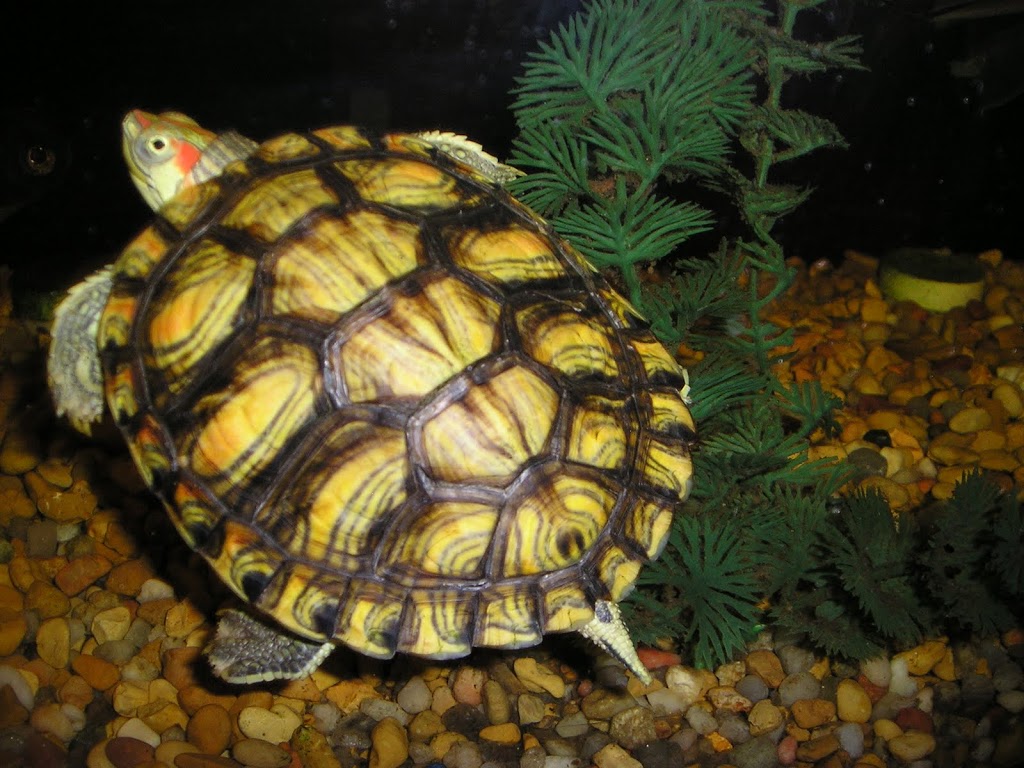
And yes, it will latch on to bare feet. Another aquarium houses a Florida Snapper Turtle, which, according to my host and hostess du jour, is used by body search teams in south Florida to locate waterlogged cadavers, since it regards decayed flesh as a delicacy. A clear plastic toy gun is safely and securely ensconced within a glass case.
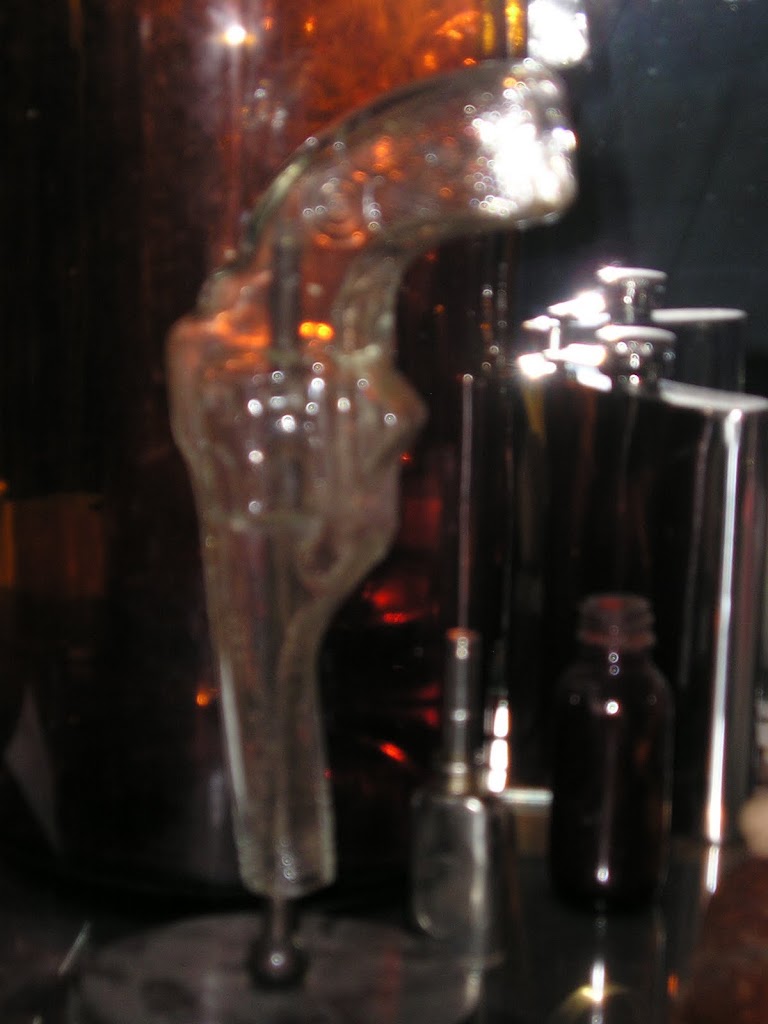
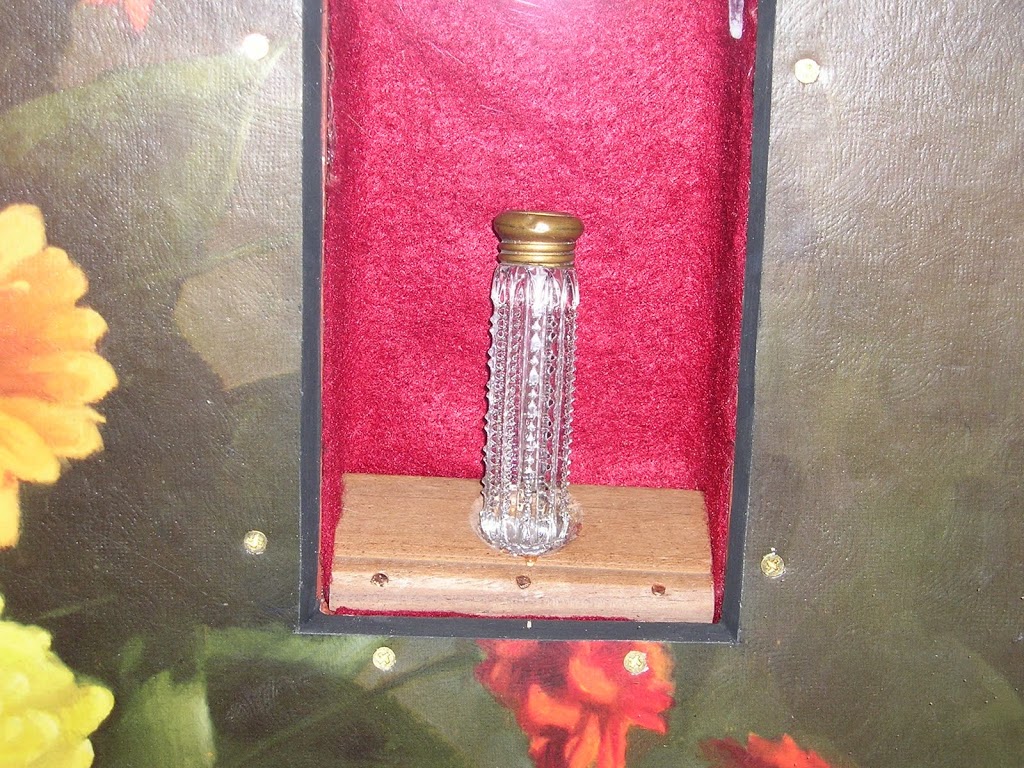
This item was briefly marketed as a candy dispenser. The candy pellets were placed into the toy gun, and the user then put the barrel into their mouth and pulled the trigger. A shiver went down my back. And, against a far wall, a display devoted to the French entertainer Le Petomane and which includes vials which are reputed to contain sealed samples of his gaseous products. Verification was neither offered nor requested. 
There are many, many more objects, loving displayed and wonderfully disarrayed. Peter, who spoke excitedly about forthcoming new exhibits while a young man reclined in a chair and watched his pectorals being pricked and inked with a stoic indifference, is awaiting the arrival of Abraham Lincoln’s last bowel movement, preserved from a chamber pot in Ford’s Theatre on that fateful night almost one hundred fifty years ago. That alone would be worth the return trip to Baton Rouge. You can visit online at www.pexchos.com , but you need to see the place in person to believe it. And when you get there, ask Caila to tell you the story behind the carving of the weeping pregnant woman. It is one of the saddest stories you will ever hear.
***
On a personal note: I am not the photographer in our family as should be obvious by the pictures which accompany this installment. My wife Lisa is, and her talent is surpassed only by that of my alternate blogmate John Ramsey Miller. Lisa’s work recently graced the cover of Westerville Magazine and some of her award-winning photos can be seen at the magazine’s website at http://www.columbuscityscene.org/capturing_life039s_moments.html
As you scroll down, the pictures beginning with the dragonfly (which was the September/October cover for the magazine) through the girl reading with the statue (featuring our daughter Annalisa) are hers.
***
What I am reading: TRAIL OF BLOOD by Lisa Black. A grisly discovery puts police forensic scientist Theresa MacLean in the middle of one of Cleveland’s oldest and most bizarre unsolved mysteries. You don’t want to be between me and the pages of this book until I finish it. Honestly.
Faceless Characters
A friend and fan asked me last week what one of my characters looks like. After giving it some thought, I had to admit that I have no idea. In fact, I have only a shady idea of what any of my characters look like. I know how they think and how they feel, and I know how they view the world; but their faces? Not a clue.
My characters are more like well-defined silhouettes for me. They have no faces.
By contrast, I visited a writer’s board a few weeks ago where a writing “expert” went on at length about how to develop physical profiles for your characters, using known actors or your own acquaintances as prototypes. Until that step is completed, this “expert” argued, you can’t have flesh-and-blood characters.
Hmm. Yet another example of how different authors’ processes work, and of how there are no hard and fast rules in any art form.
I wish I could say that my characters are deliberately faceless—part of an intentional statement on my part—but that would be lying. It’s just the way it works for me. Now that I think about it, I don’t notice faces all that much in real life. I’m notorious for failing to recognize people I’ve only recently met. I don’t say this with pride—in fact, it’s embarrassing and arguably hurtful, which is never my intent—but I remember conversations and mannerisms far more readily than I remember faces and names.
In my writing, I’m a limited third-person point of view purist. As the author, I work hard to keep myself out of the story. Every scene I write is filtered through the eyes and personality of the character who’s living it. As such, it’s difficult to make any casual observations about physical attributes. They would seem out of context to me.
As I write this, I am sitting at my desk, wearing blue jeans and a blue and white striped shirt. I have a hairline that doesn’t exist anymore, and I have a graying goatee on my chin. Those are the facts, but none of those would factor into a scene I wrote about a guy writing a blog post at is computer. The POV reality would be the thoughts flowing through the character’s head as he wrote, and, because I’m channeling the characters feelings, I might include something about the temperature of the room or the comfort of his chair. But why would I work in the clothes and the beard? How would that be relevant to his world view? I suppose he could scratch the beard and reveal it that way, but unless it contributed to character or plot, that passage would likely not survive my final edit. My number one rule: Never stop the flow of the story.
In the Jonathan Grave books, we know that Boxers is huge and that Jonathan is wiry because those are observations made about them by other point of view characters. We know that Gail Bonneville is “hot” and that she’s got great legs, because that’s what Jonathan first notices when they meet. And we know that she’s got beautiful eyes. But a face? Nope. At least not on the page.
Yet I hear from people all the time who are ready to cast the movie version of the books. (No, no such movies are in the works. Dammit.) Readers assign their own faces to characters as they read. Given the knowledge of beautiful eyes and great legs, readers can plug images from their own passions, whether it’s their current squeeze, or a favorite movie star.
This is a good thing. If one person is seeing Matt Damon in their head when they’re reading about Jonathan Grave, and another is seeing Clark Gable in his prime, does that mean I’m not doing my job as a writer? Or does it mean that I’m enhancing the imaginative potential of the story?
I’m probably not the best judge for such things, but here’s the God’s honest truth: No matter how you describe your characters in your story, the effort is going to be wasted on me because faces aren’t important. What’s important to me is the character’s heart and soul. Sell me on those, and I’ll hang on your every word.
The Inspiration Behind Echo
Big IS better
I recently began reviewing books for a network of book review sites (under a pseudonym, so don’t look for any critique-bouquets or brickbats from me online), and it’s been an interesting experience. Most of the books I’ve reviewed so far have been readable, well written, and fairly interesting. (Except the historical romances. I told the editors to spare me any more bodice rippers. Can’t stand ’em.) But overall I’d have to say the books I’ve reviewed so far are simply…ho hum. With few exceptions, I’d never spend my own money to buy another book by these authors. The experience has made me wonder: What is it exactly that makes a compelling story? Why are the books I’ve been reviewing not living up to that standard? The answer, I’ve decided, is that they’re not big enough. The stories lack the “hugeness” that is necessary to make a story into a must-read novel.
What do I mean by “big”? Think of
Small-scale family dramas can be big as well as super-sized stories. Think of The Bridges of Madison County (don’t groan–it sold 12 million copies). As long as the emotional stakes are huge, any type of drama, large scale or small, can be “big.”
Do you agree that being big is important to the success of a story? What are some of the “biggest” stories you’ve loved?
Juggling Multiple WIPs
by Clare Langley-Hawthorne
Now that I am getting settled once more,(if you can call waking at 3am each day getting settled!), I am finally getting back to finalizing edits to my current young adult work in progress. After nearly two months on the road with little opportunity for writing, I am eager to get back to work. I also have a number of new ideas floating around which I am impatient to start. When I met with my agent a few months ago he raised an interesting suggestion – that perhaps I consider juggling multiple WIPs at once. While I have certainly managed copy edits while writing a new project, I have never actually juggled two WIPs and I am intrigued as to the practicalities of having more than one active project on the go at once. To be honest I am a bit of a linear writer, tackling one draft at a time, but now I am seriously considering the possibility of trying to complete multiple WIPs simultaneously…and I need some advice.
- For those of you who have juggled multiple WIPs, how did you handle it?
- How did you divide your time and deal with the development process for each?
- Were you able to retain a sense of balance?
- Was it easy to keep each ‘voice’ unique or did the projects blue or affect the others?
All and any advice on juggling multiple projects will be gratefully received (!) while I try and wrap my head around getting back into the swing of writing once more…I have to tell you though moving countries plays havoc with your schedule:)!
The Nighttime Novelist
We talk here often, in posts and in the comments, about day jobs and family life and finding time to write. Let’s face it, most writers do not have the luxury of lounging on a balcony overlooking the ocean, waiting for inspiration to hit them as the butler delivers another Piña Colada. (During this economic downturn, I had to let my butler go).
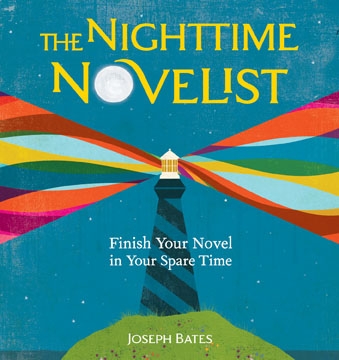
The Nighttime Novelist is by Joseph Bates, who teaches creative writing at Miami University in Oxford, Ohio. It’s laid out in a logical order, from developing ideas all the way to the revision process. So it’s possible to go from beginning to end and write an entire novel using the tips in this book.
There are three main sections: Beginnings, Middles and Endings. Each section is further broken down into areas like “Developing Initial Ideas” and “Crafting & Maintaining Suspense.” There are subsections, too, color coded as Technique, Hurdles and Going Deeper. So you may be having a problem, say, with one of your characters being flat. In the section called “Character Concepting” you’ll find a Hurdle called “Rounding Flat Characters.” Here you’ll find two pages of tips to solve that particular problem.
Or maybe your plans for Act Two seem a little forced. You can turn to Going Deeper in the “Middles” section and find advice on “Leaving Room for Organic Story Growth.”
And what do you do when you reach a hurdle in your manuscript? You come to a “problem” you’re not sure how to solve. What’s your strategy for getting over that obstacle?
21st Century, Here I Come…kicking and screaming
John Ramsey Miller
Evidently my wife reads my blogs. After I complained here after Father’s Day about not getting a Kindle, I learned that she ordered me a Kindle 3 for my birthday, and it’s been back ordered for weeks and weeks. It may be late arriving, but that’s okay. I was actually joking because I didn’t actually think I really wanted one, but now that I know it’s coming, I’m intrigued and can’t wait to get in my hands. I was playing with one that belongs to a friend and I must say after ten minutes I had not a clue how it worked, nor was I sure I could learn to use it. I suppose I will and the idea of downloading any book I want in seconds without leaving the house is amazing. Will I be getting first electronic editions? I have a lot of first editions hardcovers that I love having in my shelves, and having my shelves replaced by a Kindle is sort of a weird concept.
I’m also wondering if I’ll buy new releases only or add classics I love like THE GODFATHER, which I try to read yearly. Re-reading a novel from your past that moved you is like listening to music from your youth––touch stones. I just bought hardcovers of the RIPLEY novels by Patricia Highsmith and put them next to my Larry McMurtry collection. I have first editions of MARATHON MAN, SNOW FALLING ON CEDARS, THE MOVIEGOER, Shelby Foote’s Civil War Trilogy, PLAINSONG, SIX MINUTES TO FREEDOM signed by Gilstrap, the Delta Force guys, Radio Free Panama staff, Kurt Muse, and a bunch of other players in the Panama invasion. Those books all I can get on Kindle, but they won’t be the same thing. Plus what if the drive crashes? Is there a drive in the dang things? What if I lose it? A library wiped out in the blink of an eye. Is everything backed up somewhere in the Amazon internet vaults?
Libraries are downloading their books to most e-readers, but not Kindles. You download the book and it stays in your reader for two weeks so you have to read it before it self-destructs or dims to nothing. I’m overwhelmed by the possibilities and I’m sorry Kindle is a closed channel and doesn’t play with others. I’d also like to be able to load my manuscripts to the Kindle to proof read them like my agent can do with MS documents attached to e-mails using her Sony e-reader. Instead of lugging thick printed MS’s on the subway or in cabs, she can carry fifty or more of them in her purse.
I can’t decide on a cover for John R’s new Kindle. There are fake leather ones, tooled real-leather ones in lots of colors, exotic skins, aluminum ones, and ones made of plastic. I want one whose cover flips around out of the way (even though book covers don’t fold back). I don’t like the fact that Kindle books don’t have page numbers on them. I’m worried about going back to where I stopped off, but I’m sure that isn’t a problem. I’ll figure it all out, but at the moment I look at the Kindle and I feel like Andy Rooney looks.
Change Is Definitely Coming
Okay, I’ll confess it up-front. Today’s post started out as a response to Michelle’s provocative essay yesterday about the demise of the mass market paperback. Once it got to about 200 words, though, and I still had to write something for Friday, well, it only made sense to keep the discussion alive.
I personally think that the hardcover and the mass market paperback original (mmpo) are both on their deathbeds. I see trade paperbacks taking over for hardcovers (as they have throughout Europe), and the eBook taking over the slot once held by the mmpo.
The issue is distribution. Back in the day, the attraction of the mmpo was its universal presence. Every newsstand, drug store and grocery counter had a huge selection. The Big Box stores didn’t yet exist, so book stores, per se, were few and far between–at least where I grew up.
Now the Big Box stores grow like weeds, and the mmp distribution has imploded. Newsstands don’t even exist anymore, at least not as they used to. Where drug stores, etc. do stock mmps, they’re just the reprints of last year’s hardcover bestsellers. That in itself is a sound business decision, considering the cost of retail space, and the dismal performance rates of most paperback originals (PBOs).
According to yesterday’s New York Times, “By the end of this year, 10.3 millions people are expected to own e-readers in the United States, buying about 100 million e-books. . . This is up from 3.7 million e-readers and 30 million e-books sold last year.” If I do my math properly, that’s a 330% increase. Take those statistics in context with B&N’s financial troubles and Borders’s virtual collapse, and it’s easy to see the allure of the eBook.
Historically, the marketing strategy behind the PBO was to get it into as many outlets as possible and to count on impulse buyers to carry the day and spread the word. High volume sales would compensate for the low price point. With the collapse of the distribution network, though, comes the collapse of the marketing strategy. To pick up one of my books in paper, you pretty much have to go to a bookstore to get it. To get a book that is more than two years old, you’ll probably have to special order it.
PBOs get lost in commerce. In the Big Box Stores, the casual shopper sees the PBO by Gilstrap as just another spine-out splash of color between the face-out Gerritsens and Grishams. Unless that book is on the front table (paid-for space), then it’s not going to be seen, except by those who are specifically searching for it.
According to a recent article in Publisher’s Weekly, Amazon.com is turning out to be the nemesis of the Big Box stores, and this is even worse news for the mmp, where the shipping cost of a mmp purchase can equal 25-50% of the cost of the book. Who’s going to pay that?
Consider this: My latest novel, Hostage Zero, just finished a 58-day run in the top 100 paid sales in the Kindle Store. As I write this, it’s ranked #123. That means (thankfully) tens of thousands of copies sold in the last two months. The paperback sales, by contrast, have been just-okay, and the book’s current rank on Amazon is #67,479. Over at the B&N site, my eBook rank is #35, while the paperback rank is #40,013. I’m being perfectly honest when I say that I am far more thrilled that so many people are reading my work than I am disappointed that the pages they’re reading aren’t paper.
This brings me to my prediction for trade paper taking over for hardcovers. For me, the principle weakness of mmps in general is the font size. They’re just hard to read sometimes. The converse is the chief attraction of the hardcover; but that advantage has to be balanced against the weight of the book and the outrageous price point of a hardcover.
Enter the trade paperback. It’s a compromise. They’re lighter weight, the print is big and the price is more reasonable.
My crystal ball, then, shows nothing but brightness for the book industry. Back when I was a kid, a paperback was only $4.99 and hardcovers were about $14.00. Now that we’re in the 21st century, I see a future of eBook originals at $4.99, and trade paper at $14.00. And when it all settles out, new star authors will be born.
The Demise of Mass Market Paperbacks?
Recently, Dorchester Publishing, one of the country’s oldest mass market publishers, announced that it is abandoning traditional print books in favor of digital format and print on demand.
That announcement reminded me of a conversation I had with an editor at a conference a few months ago. She predicted that in the coming digital shakeup, hardcover print runs would be smaller, trade paperbacks would boom, and mass market books would vanish entirely.
I was skeptical. After all, the great thing about mass market books is that they remain almost as cheap (or cheaper) than digital downloads, and they’re ideal reading material for all of those places you wouldn’t take your Kindle/iPad: the beach, the tub, the pool. So why would this be the first format to fall to the digital ax?
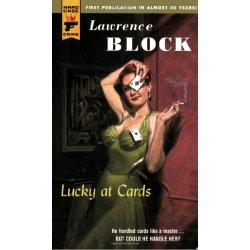
The fact that Dorchester is the first to make this shift is particularly bad news for Hard Case Crime, the imprint that has revitalized the pulp fiction industry with semi-ironic works
by major novelists such as Ken Bruen and Stephen King. Going digital stands in stark contrast to what publisher Charles Ardai was attempting to achieve–a return to the era of dime store novels you could tuck in your pocket. (On a side note, how ironic is it that Ardai, who made his money via the dotcom boom, is deadset on producing books in print?) In response to the Dorchester move, he’s apparently considering moving the entire imprint to a different publisher.
I was encouraged to see that in the article, a representative from Random House expressed faith in mass paperbacks. These days, most midlist and debut authors are only offered a mass market release. If that shifts entirely to digital content, it would be a shame. For me, the best part of the publishing process was the day that I opened a box to find a stack of novels with my name on the cover. I’m not sure that opening a pdf file would convey the same thrill.
So what does everyone think? Are mass markets the new eight tracks?