About Joe Moore

#1 Amazon and international bestselling author. Co-president emeritus, International Thriller Writers.

First-page critique: THE LATERAL LINE

By Joe Moore

As we continue with our annual springtime first-page critiques, here’s an anonymous submission called THE LATERAL LINE. My comments follow.

Gabriel knew this day would come. It had taken fourteen years and more warnings than he thought necessary but fate had caught up to them. The danger he saw years ago had come to meet them head on. The alarms sounded shrilly over head and the sprinkler system made it rain indoors. An eerie red glow from the emergency generators made navigating tricky, but Gabriel knew where he was going. All he had to do was follow the trail of bodies.

His feet slapped the puddles on the floor as he ran, his breath come in gulps. He had one chance to finish this, to do what should have been done years ago. Fear made his hands shake but he knew he couldn’t fail this time. A side hallway brought him out ahead of the boys he followed and as he rounded the corner he saw he judged correctly. Gabriel stood at one end of the long hallway and watched as his sons walked toward him.

They were silhouetted against the flashing emergency lights and dripped with water, but they walked confidently forward obviously not concerned that their father waited. Half-way up the hallway, they stopped. It was close enough for Gabriel to see the cocky grin on Cross’s face. That only served to convince Gabriel this needed to be done. He brought the gun up and leveled it with Cross’s head. His brother stepped forward, concern etched into his features.

“Just let us walk out of here, Dad. No one else has to get hurt,” Kale said. Cross just glared and kept quiet. Gabriel never took his eyes off the boy.

“I can’t let that happen, Kale. You know that.” Gabriel’s head buzzed with the intrusion he felt from Kale. The psychic push he understood his son was capable of. Gabriel knew if he wavered now, he would end up like the men and women he passed in the hallway. He was the only thing that stood between a terrible mistake and a messy death.

“This ends now,” Gabriel said and pulled the trigger.

I think this is a terrific first draft. It has all the right stuff: conflict, tension, suspense, action, mystery, and more. There’s no doubt that something really bad happened here as Gabriel navigates a “trail of bodies”. And the fact that a father is faced with possibly having to kill his sons is about as tragic as it gets. I assume the two boys are responsible for the multiple deaths, and judging from Gabriel’s determination to stop them, this is not the first time they have killed.

I get the feeling from the statement “The psychic push he understood his son was capable of”, that we’re dealing with the supernatural or horror genre. Just need to get rid of the dangling preposition.

Thankfully, there’s no backstory or flashbacks to slow us down. The author tosses us right into the “middle of things”. Within a few paragraphs, he/she has cut to the chase and we’re whisked along for the ride. There’s a strong sense of place and a threat of immediate danger.

I think the only thing needed is a surgical pass through this sample with a sharp editor’s knife. Despite a need to tighten and clean up, this submission shows great promise and I would definitely read on.

How about you? Would you keep turning the pages to find out what happened?

**********

THE PHOENIX APOSTLES, coming June 8. Preorder now at Amazon or B&N.
Today’s critique – TRUTH BE TOLD

Today we have an intriguing opening page. The story is called TRUTH BE TOLD. My comments follow the asterisks.

She had handled the photograph so often its surface was lined with creases and vein-like cracks. Tiny chips of colour would deposit themselves in the grooves of her fingertips, leaving the smiling faces pockmarked with spots of white. She was clutching the photograph now, tightly between forefinger and thumb. Her fading eyesight meant she had to hold it up close to her face if she wanted to see it clearly but it mattered little. The image was indelibly imprinted in her memory and had been ever since it had landed on her doormat, along with the note.

With considerable effort, Sadie Cardle craned her head towards her bedside table. The exaggerated numbers on her alarm clock told her Della was late again, by almost 20 minutes this time. Sadie hoped she wouldn’t be much longer. They had few moments left to spare.

Her death was fast approaching. Sadie knew because her body was telling her so. The disease that germinated in her right breast had spread to her lymphatic system. Nothing could be done to halt its progress and Sadie could sense its wretched presence as it silently stalked her body, filling every nook and cranny with its poison. The morphine that dulled the pain could not quell the sensation her body was gradually shutting down. Her limbs were beginning to feel numb and detached, as though they were no longer fused to the rest of her. She was exhausted from the effort it took to draw air into her lungs. The nurses wanted to administer oxygen to ease her discomfort but Sadie refused. Not yet, she told them. She wouldn’t be able to speak properly if a breathing mask was obscuring her face. And she desperately needed to speak to her granddaughter.

*  *  *


There are many things to like about this first page. It quickly draws you into an urgent situation–an old woman, dying, clutches a faded photograph. She’s trying to resist death long enough to convey a message to her granddaughter. Whose faces are in the photograph?  What secret is she about to tell? I’m hooked.

There are a few changes I’d suggest.  I might try switching the first and second paragraphs. Have Sadie realize with dismay that her granddaughter is late before you get into the photograph discussion. (The opening line could be “Della was late again.”) I think that change would result in an even greater sense of urgency. The way it’s written, you have to get to paragraph 3 before you realize she’s in a hospital. By that point in my reading I’d already envisioned her at home.

In the current second sentence, the use of “would deposit” took me out for a moment, because it interrupted the sense of time. The spelling of “colour” and use of “towards” (instead of the more frequently used toward, in the US) was distracting to this American reader. I’d also avoid the cliche “nook and cranny.” Here and there I also would have liked to see an additional comma used (but I’m old-fashioned when it comes to liking commas).

But those suggestions are really just nits. Overall I liked this piece, and would keep reading.

Thoughts?

Elmore Leonard’s Rules

By Clare Langley-Hawthorne

I borrowed Elmore Leonard’s 10 Rules of Writing the other day from the library – although I had read many of his rules before, I realized I hadn’t actually read the whole (albeit very short) book. Since we have been doing our first page critiques, I thought it was probably a good time to highlight his rules – many of which we have already discussed in our critiques – and to also fess up to my own shortcomings…

Here are his 10 rules…
1. Never open a book with weather
2. Avoid prologues
3. Never use a verb other than “said” to carry dialogue
4. Never use an adverb to modify the verb “said”…
5. Keep your exclamation points under control
6. Never use the words “suddenly” or “all hell broke loose”
7. Use regional dialect, patois, sparingly
8. Avoid detailed descriptions of characters
9. Don’t go into great detail describing places and things
10. Try to leave out the parts that readers tend to skip

While these are excellent rules, I have to confess to breaking at least half of these in my own work. I have used a prologue and (mea culpa) even the word “suddenly” on the odd occasion.

As a writer of historical fiction I also admit to giving pretty detailed descriptions of places, things and people in order to give the reader insight into the time period. However, the hardest rules for me, are rule number 3 and 4. While I certainly try and avoid overusing adverbs and bizarre speech handles such as “asseverated” I find when I try and limit my dialogue to using only “said”, it becomes stilted and hollow. My solution has been to try and limit my adverb use and to highlight gestures, actions etc. to provide appropriate texture to the scene – but still, I fear my dialogue drafts are way more ‘flowery’ than Elmore would like:) As part of my editing process I am extra vigilant when it comes to this rule, but also equally aware that stripping my work down too much saps it of its color. It’s a balancing act, as with most things in writing.

So what about you? Which of these rules have you broken in your own work?

The Flashback Quagmire

Today’s entry in the first page critique roundtable brings up the issue of flashbacks. Let’s have a look, and then we’ll talk.
***
Bobby was at a dead sprint when the first bullet hit him in the kidney. He went down hard face first on the concrete and fought to catch his breath. He’d never been in so much pain, but the adrenaline coursing through him forced him to his knees and back to his feet. He was bleeding badly, and his breath came in ragged gasps. He knew he was about to die but couldn’t bring himself to stop running.
The rotted corpse of Holy Cross High School, vacant for decades, loomed in front of him. If he could reach the school he might be able to hide from the men hunting him and die in relative peace. God only knew what they had in mind for him if they caught him.
Another shot was fired, but didn’t hit him. He knew he’d be easy to track with the amount of blood he was losing. He was growing light headed and his vision was clouding. He was struck by a sudden sadness at the thought of never seeing his family again, and wished he’d listened to his father when he told him to stay the hell out of New Orleans.
Hours earlier, Bobby was laughing and drinking beer in Johnny White’s bar on Bourbon Street. A natural extrovert, he did his best to keep a low profile but he couldn’t help chatting up some of the more attractive clientele. He never even noticed the young guy with a buzz cut watching him from across the bar.
The buzz cut didn’t miss a trick. He watched Bobby drink several beers, make time with a couple of vacationing coeds, and then settle his tab with a Kennedy half dollar. He made a note of the bartender’s name, and debated whether to include it in his After Action Report. It was handy to know who did business with freebooters in New Orleans, after all.
As Bobby was leaving the bar, the buzz cut bumped into him and apologized. It never occurred to Bobby that the stranger who bumped him planted an infrared tracking device on him. From then it was just a matter of time.
***

Let me say a couple of things about the first three paragraphs.
Our POV character in this scene is Bobby. And he’s been shot. He’s on the run. We have a chance, then, to become bonded to Bobby and his plight right away.
That’s why I need to feel a bit more of the pain and fear in Bobby. Right now I’m a little “outside” the action. Part of that is do to this passive construction: Another shot was fired, but didn’t hit him. We need to be in Bobby’s head. He heard another crack. Asphalt splattered in front of him. Etc.
It’s not enough to have an action opening. It’s what the action feels like to the character that’s essential. 
You’ve got a potentially arresting hook here, but for it work to the max we need that POV “heat.” See John G.’s post on Friday. Play the scene in your mind several times as if you were Bobby, then re-write it.
Okay, so now you’ve got this guy being shot at, chased and then . . . flashback!
Ahhhh!
Don’t do this. I know it feels like a little “teaser” but to the reader it’s more like a “cheater.” It’s too obvious you’re manipulating them by inserting a flashback to create an artificial cliffhanger.
So here’s a rule (even for people who say there are no rules in writing): No flashbacks in the first fifty pages! When you put in a flashback too soon it stops the action cold and jars the reader. It pulls them right out of the fictive dream you’ve been weaving. (Note, I am not talking here about a “frame story,” where we begin in the present then have the bulk of the book take place in the past. That’s another matter entirely.)
Also, you’re using an omniscient POV in the flashback. If Bobby never even noticed the young guy with the buzz cut, the only one who can see him is the author. This removes us further from Bobby. Keep the POV “hot” even in flashback scenes.
Now, what about flashbacks later in your fiction? Remember, by definition they stop the action, so you’d better have a very good reason for using one (e.g., essential character background info that is so crucial you need to dramatize it).
And if you do use a flashback it needs to stand alone as a scene, with all the sensory description and intensity of a scene from the main plot line.
Flashbacks. Handle with care. But in the opening chapters, don’t handle them at all.
***
Speaking of getting more emotional heat into your characters, that will part of My “Sell Your Novel and Screenplay Intensive” coming up June 4 & 5 in Los Angeles. 

Milestones

I will be mercifully short this week. I drove to Baton Rouge and back from Westerville, Ohio for a quick two day visit and am still working the road whine out of my ears and catching up on the archeological dig which I call my desk. I do have something to share with you, however.

This week marked a couple of personal milestones for me. The first, and more important of the two, was that on April 1 I completed twenty years of sobriety. I believe in giving credit where credit is due and the credit in this case is due to a now-retired Baton Rouge pediatrician named Leon Bombet whom I was fortunate enough to meet in 1989. Dr. Leon at that time had been sober for nine years, and my reaction, which I kept to myself at the time, was “What?! Nine years?! Without a drink! Wow. I’m sure glad I don’t have a drinking problem.” Of course, I did. I eventually stopped stuffing my life down the commode and it has been Dr. Leon’s friendship and example, and that of his wife Susan, that have kept me on the proper course some two decades down the road.

The second milestone was the fulfillment of a promise I made to myself as an urchin in short-pants in 1962. When I wasn’t sneaking Shell Scott and Mike Hammer paperbacks into my bedroom, I was reading a lot of science fiction. Ace Books at the time published a number of titles per month, Dick and Vance and Zelazny, oh my, as well as reprints of Burroughs’ Tarzan and John Carter titles with those beautifully painted covers by Frank Frazetta. I promised myself, at the tender age of eleven, that I would be published by Ace Books one day. That happened this week with the publication of Dark Delicacies III: Haunted, an anthology of original fiction in which my story “Starlets & Spaceboys” appears. “Starlets & Spaceboys” was inspired by a hallucination I experienced some six years ago in the New Mexico desert just west of Albuquerque while driving with author Marcus Wynne; the title was graciously given to me by my lifelong friend William D. Plant III. I would not be sitting here today but for the friendship and assistance of both of those gentlemen.

****

What I’m reading: The Priest by Gerard O’Donovan. Just get it and read it, whatever you do. You won’t be sorry. You will have nightmares.

Method Writing

By John Gilstrap


I used to be fairly addicted to James Lipton’s show Inside the Actor’s Studio, during which he would conduct incisive interviews with famous actors. It used to come on every Sunday night, but got shuffled in the schedule a while ago, and I’ve not been able to catch up with it again. The stories of creative courage, and of success in the face of repeated rejection inspired me. I think the show was inspiring to anyone of a creative bent.

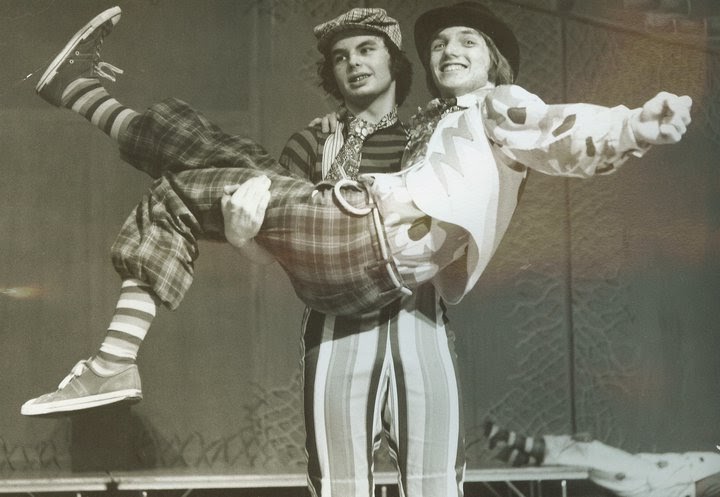
Back in high school, I used to toy with the idea of becoming an actor—having been a star in our production of Godspell and learning to love the sound of applause. (I’m the holder in the picture, not the holdee) Then I was cast as George in the school’s production of Our Town, and I realized that I was far too self-conscious to strip away the social armor of adolescence and show real emotion to a room full of strangers. I went through the motions because that was what I’d signed on to do, but acting was not for me.


I chose instead to do my emoting on the page, where I have the luxury of limitless attempts to get it exactly the way I want before I show it to anyone. It’s part of my nature as a control freak.


While the up-by-the-bootstraps stories were inspiring, I also took great interest in the guests’ discussion of method acting, in which actors insert themselves emotionally into their character’s reality, and then leverage their own emotional and sensory memory to deliver a convincing performance. The Method, as it is called, contrasts with “classical” acting, in which actors merely simulate their characters’ emotions through external factors such as voice and facial expression. (Thanks to Wikipedia for the definitions.)


We talk a lot about point of view here at The Killzone, and for me, there’s a lot to be learned about POV by what little I understand about The Method. I’ve never articulated it as such, but when I write any given scene, I am in the emotional space of the character to whom the scene belongs. I see and hear what they see and hear. When I’m truly in the zone, writing a scene is merely a matter of reporting what I see and what I feel. I can be that much in the moment.


To the degree that I have a gift for writing (how’s that for a pretentious phrase?), I think that gift lies in my ability to bring readers into my characters’ heads. I’d been writing that way for long before I watched my first episode of Inside the Actor’s Studio and learned about The Method, but the more I think about it, the more I believe that the processes are similar.


As I write this, I realize that there’s also a writing analogy to the classical style of acting. It manifests itself in the writing styles of many of the titans of the mystery genre, starting with the Great Agatha. While I enjoy her stories, I never feel terribly bonded to her characters emotionally. I admire them for their puzzle-solving abilities, but I don’t feel that I know them personally. (Having written this paragraph, why do I feel like I should be digging a bunker to hide in?) As a result, those stories feel dated to me.


What about you, fellow Killzoners? Do you think there’s a link between acting and writing?

The Creative Bond

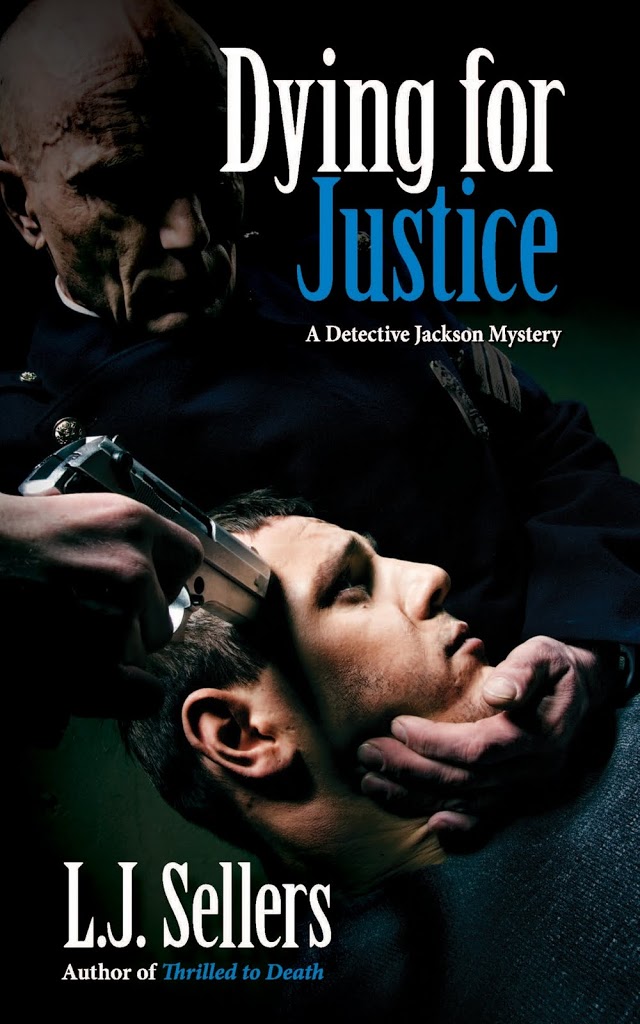
by L.J. Sellers

Since there’s an extra Thursday this month, Jordan and I decided to host a guest blogger. So today L.J. Sellers stops by to discuss her latest thriller, and the benefits of working in tandem…

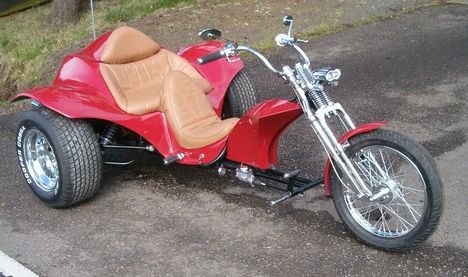
Last fall my husband started building his seventh trike, just as I started writing the fifth book in the Detective Jackson series (my tenth novel altogether). Dying for Justice was released last week, and yesterday Steve took his first ride on the new trike. Always having a creative project in the works is one of the bonding elements of our 23-year relationship. He listens while I talk about plots, publishing, and promotion, and I listen while he yaks about Type 1 Volkswagen engines, fiberglass bodies, and adjustable foot pegs. He reads my novels, and I take trike rides with him. I believe he gets the better deal, but I’m biased. Still, I think the three-wheeled motorcycles are so cool, I’ve given my main character, Detective Jackson, a trike-building hobby.

You wouldn’t think a three-wheeled motorcycle and a crime fiction novel have much in common, but the creative process is surprisingly similar. Both start with a concept, a simple idea that each of us has been thinking about and can’t wait to develop. For me, it could be a vivid opening scene or a character that sparks the whole novel. For him, it’s often a type of engine or a new way to connect the two halves of his vehicle.

Next is the planning/designing phase. The first part of this process is all mental. We both spend a couple of weeks thinking about our projects, turning them over in our minds until they began to take shape. I can look at the expression on his face and know he’s thinking about his next trike. Honey, you’re focused on your trike and haven’t heard a word I’ve said, have you? On the other hand, I do a lot of my brainstorming while I’m exercising. (Those endorphins help produce some great plot twists!)

Then the tangible planning takes place. For me, it means outlining. Determining and plotting, day-by-day, what happens in the story and in the investigation, then mapping it out in a Word document. For Steve, my trike builder, planning means drawings. He starts with a pencil drawing of the whole trike, then progresses to CAD versions of all the individual components, including dozens of parts for the frame alone. We each modify our plans as we go along, seeing what works and what doesn’t.

Then he starts building and I start writing. For both of us, this is the hands-on work, the joy, and how we spend the bulk of our time. We’re both happiest in the crafting phase. Of course, we have occasions when we get stuck. I’ll realize a plot element doesn’t work because of wrong timing and have to back up and revise. He’ll recognize that two components don’t fit together the way he envisioned, so he’ll stop and redesign.

But it’s just part of the process. We know from experience that we’ll work through whatever glitches we encounter. In all our years, he’s only abandoned one trike project, and I’ve only abandoned one novel. (But my agent at the time discouraged me from it, and I may finish the thing yet.)

I don’t mean to imply we’ve always worked in tandem—in fact, we’re often in different phases—but we do have a similar process and timetable. And eventually, we both end up with a finished product that we’re proud of. Some people insist that what we both do is art, but we think of our projects as crafts…and now, small businesses.

Here’s where the difference comes in. Steve sells each trike (or motorcycle) to a single individual to enjoy, and I sell my novels to thousands. But we both love what we do and can’t imagine our lives without a project in the works. Sharing a creative compulsion is a big part of what keeps our relationship healthy.

What is your creative process? Do you have someone you can share it with?

L.J. Sellers is an award-winning journalist and the author of the bestselling Detective Jackson mystery/suspense series. The Sex Club, Secrets to Die For, and Thrilled to Death have been highly praised by Mystery Scene and Spinetingler magazines. Her fourth Jackson story, Passions of the Dead, has just been released. L.J. also has two standalone thrillers, The Baby Thief and The Suicide Effect. When not plotting murders, she enjoys performing standup comedy, cycling, social networking, and attending mystery conferences. She’s also been known to jump out of airplanes.

Making a Book Trailer

An author’s online presence has never been so important in order to sell their books. An active Instagram, informative Twitter and well laid out landing page are all perfect ways of boosting your growth. If you’re not sure how to make a website landing page, don’t worry; it’s simple, just look at bio.fm vs. Carrd for more information on the best one to use. Another great way to improve your presence while also building hype for your new books is to create book trailers.

Ever since book trailers came out, I’ve been taking notes off the writers’ loops on how to make them, what length they should be, what to include, etc. Recently, I distilled these notes into a one page outline for using Windows Movie Maker to make my own video. I’d save money if I could do it myself, right? First I began by writing the text for upcoming mystery release, Shear Murder. I made sure to use short lines and action verbs and keep it brief.  

Now it was time to search for photos to match the lines. I went to my favorite site for royalty free pix at http://www.123rf.com and started adding photos to my Lightbox. This is time consuming but fun when you find the right characters and poses to suit your story.
Next comes the music. You’ll want to find a piece that evokes the feel of your story, builds tension, and has stanzas that work where you want your images or text to change. Huh? I am not musically inclined enough to figure this out. I searched through some of the sites and found some cool melodies but they cost nearly $30 each. Clearly I wasn’t looking in the right place. Now I’d have to start all over somewhere else. I tried a new site for music, but damned if I could figure out how it works. I can play the samples, but there isn’t any Lightbox. How do you acquire the tune?
This is getting too time consuming and confusing. I really wish I could learn how to do it myself, but I am ready to give up. I look through my list of video trailer producers. There’s one who offers reasonable fees if you do some of the work. No problem; I’ve already written my text and selected most of the photos. Budget is a concern, and I don’t want to spend a whole lot for an entity that isn’t proven to drive sales. Nonetheless, I’m afraid I’ll have to bite the bullet and hire someone. My time would be better spent elsewhere.
As for learning how to do a podcast next, forget it!
See the video for Silver Serenade here: http://www.youtube.com/watch?v=bNcSYlRHAY4
Produced for me by author Linnea Sinclair.

How many of you are Do It Yourselfers?

ANSWERING JORDAN . . .

By: Kathleen Pickering

Last Thursday, Jordan Dane’s blog discussed how we stumble upon, or in the more focused minds like the scientists of NOVA, discover plots that ultimately form our stories. I’m here to answer Jordan’s ending question on motivating, strange events.

Jordan, I’m discovering the strangest things that make me think of a book plot come from my own family–my sisters and my mother. (My two brothers are currently exempt.) I’m convinced the women in my family have been sabotaging my thirty year marriage and hence, giving me fodder to plot murder mysteries.

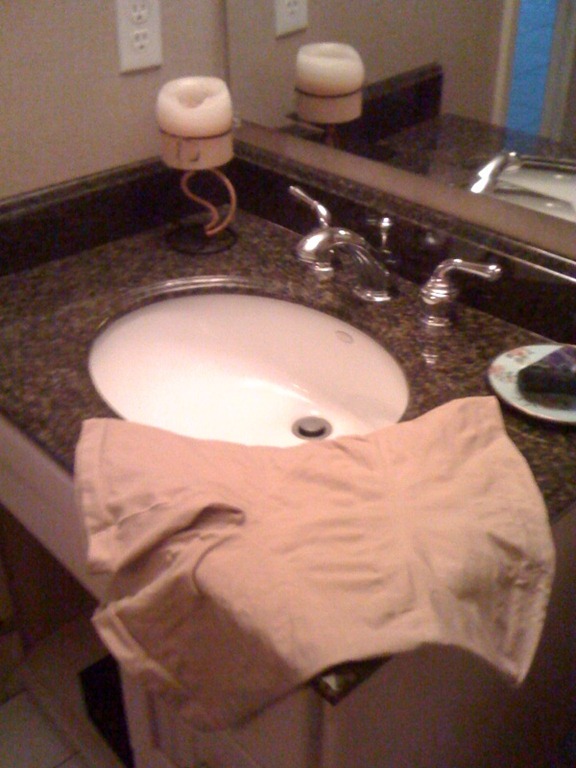
For example, today, my bathroom sink drain wouldn’t open. So, I climbed under the cabinet to fix it and found a pair of perfumed women’s Spanx stuffed in the back. Now, mind you, Spanx are not a lacy, black thong, but a highly constructed, beige spandex body slimmer, thigh length. Not at all sexy. See what I mean?

spanx4real

I laugh and post the photo on Facebook because it’s too freaking funny. Between the constant flow of house guests and the occasional pet-sitter, I know there is an answer other than the obvious insinuation that my husband has been having voluptuous women over when I’m traveling. Because after all, I would have to plot a murder mystery based on his unexplained demise, should it be the truth.

A phone call from one of my five sisters solved the mystery: “Oh, Kath. Ha. Ha. That’s mine. I was wearing it at your party in January and it got too uncomfortable. Ha. Ha. I’ll bet you gave Jimmy a rash over that one! By the way, can you take the photo off Facebook?!”

Or the time, when I picked up Jim’s suit from the cleaners, only to have the man who didn’t speak English very well hand me a folded wax paper bag with a woman’s bra . . . lace . . . beige . . . not mine . . . that the cleaner had found in the breast pocket of his jacket! I had been on my way to pick Jim up for a trip to eastern Long Island at the time. Needless to say, this “find” made for some colorful conversation on our two hour trip.

What did we discover upon arrival at my mother’s? “Oh. Ha. Ha. Isn’t that funny,” says Mother. “When you were here last week, I was picking up after everyone went swimming. Saw the bra on the floor, thought it might be yours and stuffed it in Jim’s suit pocket.”

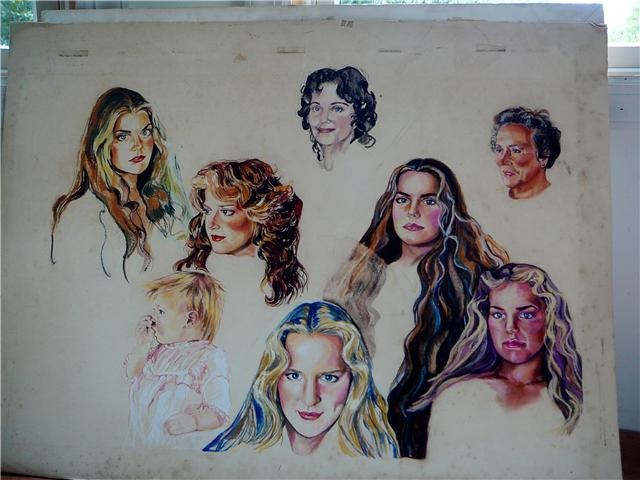
Ha. Ha. It was my other sister’s. Or the other time, my younger sister borrowed my clothes and Jim pinched her rear-end because from the back, he thought she was me? Or the time my other sister took off her shirt in front of Jim thinking she still was wearing a bikini top? Here is a pastel of the women in my family, minus the artist—the one Jim pinched:

Mary alice pastel

The stories go on and on. So, I ask you? What kind of family would sabotage their unsuspecting brother/son-in-law with a wife in possession of an over-active imagination unless they were trying to trigger her homicidal story ideas? There’s more, but I’ve already over run my 300 word count.

The strangest things come from my family, Jordan. I will be writing an autobiography very soon.

Monday’s Critique


Today’s critique focuses on two particular maxims of the publishing world – show don’t tell; and it’s all about the voice. I think today’s entry, Cold Summer, aptly raises both these issues…but more about this in my comments after the piece…

COLD SUMMER
Sammy Davis Jr. was no relation to the famous twentieth century performer. For that matter few people he knew even had regular jobs, at least not legitimate jobs. Anchorage Alaska’s Sammy Davis Jr. made his living as a small time drug dealer, primarily marijuana and ecstasy. He dabbled here and there with other drugs but being afraid of the stiffer penalties for cocaine or methamphetamine, neither of which he used himself, he avoided them as much as possible.

As a supplemental source of income Sammy committed the occasional burglary. For the most part he stuck it to businesses, alleviating a great deal of the guilt that straddled his conscience. He hated the thought of leaving a family’s children crying from nightmare images of a bad man breaking into their home. And he certainly didn’t want to crush a woman’s heart by stealing her wedding jewelry or some keepsake. He may be a professional criminal but he still had morals, even feelings. Hell, he even cried at movies sometimes, like when that girl died in Bridge to Terrabithia or when the farmer said “Well done pig” in Babe.

While he didn’t rob the homes of families, that moral barrier didn’t include people’s cars. Wallets, purses, laptops, even an occasional gun, were all for the taking if some idiot left a car unlocked, or not locked enough. That Saturday morning though, Sammy Davis Jr. made a slight change in his routine. He’d never robbed a church or a synagogue. Sammy had always felt that while he was pretty sure he wasn’t going to make it to heaven he didn’t want to totally blow whatever chances he had by burglarizing God’s house.

Both of his parents were religious people, Messianic Jews (that is Jews who hold to Christian beliefs about Jesus). Sammy had been both Bar-Mitzvah’d and baptized as a teen. He hoped that somehow those actions and his parent’s prayers might redeem him. Churches and synagogues were out of the question. But a Mosque, that was different. Or so he had told himself.

My Critique: First off let me say that I did like the tone – a distinct voice is starting to emerge (particularly re: crying at the movies and the morals of this small town drug dealer) but at this stage it isn’t quite strong enough to carry off what is essentially a first page of exposition. Starting off with nothing but narrative is a tricky thing to pull off but in order to succeed the voice must be amazing – it must be enough to lure a reader in and keep them turning the pages.

This is an incredibly difficult thing to do and I would recommend that the writer consider starting this story off with a Sammy in a compromising position which can enable the exposition and voice to come through in smaller chunks. Perhaps Sammy is trapped in the mosque he is trying to rob (?), or he is facing an angry accusatory cleaning woman there…some kind of situation (possibly farcical given the satirical edge to the piece so far) which reveals to the reader who Sammy is and also gives some action that can help draw the reader in.

At the moment the piece feels a little too stiff and forced (too much telling and not enough showing), and maybe a situation with characters, action and dialogue all in motion will help give it greater momentum. As for the voice – I think, again, some action and dialogue may help strengthen this.

The juxtaposition of Sammy’s inner voice and what is happening around him could add further humor as well as tension to the piece. Voice is one of the hardest elements to explain (you kind of know it when you see it) but I do see strong glimmers here – though at the moment it seems constrained by the lack of action. My recommendation? Brainstorm some scenarios that allows this background information and voice to come through to greater effect.

So what do you all think? any other suggestions for the author of Cold Summer?