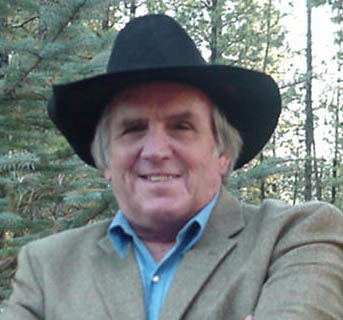
About Joe Moore

#1 Amazon and international bestselling author. Co-president emeritus, International Thriller Writers.

Book tours and signings and such

By Joe Moore

A few weeks ago, my blogmate John Gilstrap, posted Best Advice Redux in which he said, “Standard book signings are to me a waste of time. Ditto book tours.” I left a comment that I agreed and could prove it was true, at least for me. So that’s the subject of today’s blog: are book signings and tours necessary? And in addition, are the marketing efforts of the publisher important if not critical?

First, let me start with a disclaimer. My comments here are my own opinion based on my personal experience. I fully expect that others will feel different, and have equally compelling reasons to believe that the opposite is true. That’s fine. But here’s what I believe:

You can have a bestselling novel and never conduct a book signing or book tour. I know because I’ve done it—more than once.

The first book I had published was THE GRAIL CONSPIRACY (2005), co-written with Lynn Sholes. It was released by Midnight Ink, a small Midwest imprint of a large and venerable house called Llewellyn Worldwide. We had modest domestic sales with TGC, earned back our advance and experienced an excellent sell-through percentage. Midnight Ink went on to publish our next 4 books including our newest, THE PHOENIX APOSTLES. I don’t know the numbers on TPA yet, but the others (THE LAST SECRET, THE HADES PROJECT, and THE 731 LEGACY) also had modest sales, earned out their advances, and had high sell-through.

Lynn and I did many book signings through the course of the first 4 novels (the Cotten Stone series). Some signings drew impressive crowds while others drew a handful of friends and family. Sometimes we would sell 60-70 copies while other times we would sell just a few. Our number of signings fell off over the years in part because we are located at different ends of the state with over 400 miles in between. We still do a few signings a year, mostly at conferences.

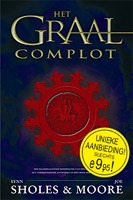
Now, let’s shift gears. THE GRAIL CONSPIRACY was bought by a publisher in the Netherlands (same company that publishes Dennis Lehane, Clive Cussler, John Grisham, Stephen King, and others), dutchtranslated into Dutch and released. They bought it solely because they liked the story, not because it was a bestseller with high numbers in the U.S. In fact, TGC had no significant domestic track record. The only factor that affected the sale of the Dutch version was the efforts of the publisher to market it. Lynn and I never held a book signing in the Netherlands. We never did a book tour. In fact, to this day we have never communicated with our Dutch publisher. THE GRAIL CONSPIRACY (Het Graal Complot) spent 9 weeks on their national bestseller list and earned us more money than our domestic sales for the same book. And all we did was write the book.
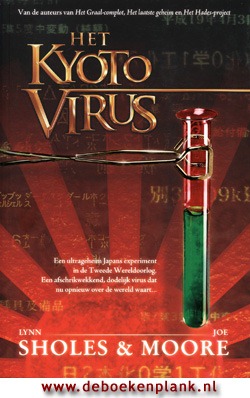
sholes_moore_kyotovirus_08Our Dutch publisher went on to buy our next 4 thrillers. Our 4th book in the Cotten Stone series, THE 731 LEGACY (Het Kyoto Virus), also hit the bestseller list in the Netherlands and brought in more earnings than the domestic version.

The same thing happened in Poland. With no track record, our Polish publisher (Grisham, Cussler, Cabot, Tolkien) promoted THE GRAIL CONSPIRACY (Spisek Graala) right onto the bestseller list where polishit sat for weeks. No signings or book tour or any communications from us. Nothing.
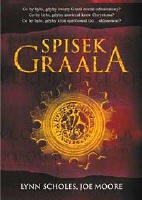
Over the years, our books have been translated into 24 languages including Chinese, Russian, Greek and Thai, even Serbian. The majority of the foreign publishers have bought all our books. Almost half were hardcover deals. Many were later republished in paperback. Our foreign royalties have far exceeded all our domestic sales many times over. All done with no book signings. No tours. No communications with these publishers. How can you have a bestselling novel with no personal author involvement? I believe it’s starting with a good book combined with aggressive, savvy publishers who know how to market to their audience.

So, are signings useful? Should writers conduct book tours? Are the publisher’s marketing efforts important? I can only speak for myself, but my answers are, probably not much, no, and definitely yes.

What do you guys think. Do you tour? Do book signings work for you? Does your publisher do a decent job of promoting your books?

———————-

THE PHOENIX APOSTLES is “awesome.” – Library Journal. Visit the Sholes & Moore Amazon Bookstore.
How the dog park rescued my writing

A while ago, I was struggling with my writing. It required a huge effort to come up with fresh plot twists and characters–everything I produced seemed oddly familiar, a rehash of something I’d written in the past. My “boys in the back room” kept betraying me, throwing up the same old-same old. No matter how hard I worked, the results sounded suspiciously close to something I’d already written. I briefly considered suing myself for plagiarism.

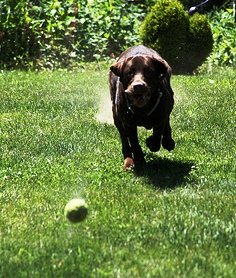
In desperation, I took a few weeks off from writing. During that respite I adopted a new puppy (a Lab/Shepherd mix named MacGregor, aka “Little Mac”). Little Mac is 50 pounds of energy with the attention span of a toddler (read: none). To save my sanity, he and I started spending lots of hours at our local dog park. There, Little Mac gets to run around with other dogs, and hopefully work off some of that insane puppy energy.

At the dog park, casual conversation flows easily between strangers. The most taciturn curmudgeon will usually melt into smiles when you compliment his canine buddy.

Stereotypes break down quickly as you watch people with their dogs. Young guys who are covered with tattoos and dressed like gang bangers often turn out to be the politest people at the park, with the best-behaved dogs.

I usually sit on a bench at the dog park, so my conversations are limited to the people who choose to sit beside me. I’ve met some incredible characters this way. Recently my bench partners included: a self-described ex-hippie jazz man who teaches music in the inner city; an Air Force officer who is between engagements in the Middle East; a woman who casually mentioned that she communicates with animals and (human) spirits.

Humans reveal a lot about themselves in the way they handle their dogs. Our park is divided into two areas, one for puppies and small dogs, the other for large dogs. Little Mac quickly outgrew the small-dog side of the fence, so we roll with the big hounds. Some humans seem fretful and anxious with their dogs, while others are completely oblivious to anything that’s going on. I get along best with the medium-energy humans–they tend to have the best-behaved dogs, perhaps not surprisingly.

After a few weeks of observing people and canines at the park, I came back to writing with a renewed energy. Maybe the outings didn’t have anything to do with it–maybe I just needed a break. But I find that my new routine is helping me recharge my imagination.

Have you ever needed to take a complete break from writing? Did you find anything that helped you revive  your muse?

When is it Time?

An author friend of mine came to me the other day and posed a sensitive writing question that her husband had raised with her the day before, namely: “How long are you going to keep trying to get published before you give up?”


Now before we all jump in and scream at the guy for being an unsupportive #$&@ to even ask such a thing, I guess on one level, he has a point. I mean, in his mind, he has been watching his wife put in hundreds of hours of effort and, thus far, to no avail (well, publishing wise, not writing wise, she has completed three manuscripts). She has had an agent for a couple of years now, but he hasn’t been able to place her work…so she has (with her friends’ support) continued to try and write full-time while juggling being a mum (and I know all about how hard that juggling process can be!)


At first her husband was really supportive, especially once she landed an agent, but, as the years passed and the rejections mounted up, I could tell he was starting to get antsy. I’m not sure whether he doesn’t want his wife to waste her time or whether he thinks she should use that time on a ‘real paying job’, but I do know that he finds all the angst that accompanies his wife’s ‘hobby’ (his words, not mine) unnerving. I think he worries that all his wife’s hard work, anxiety and pain will never pay off.

I’ve tried to tell my friend that there are countless examples of great writers who took years to get published and many who then went on to be very successful…but, she countered, exactly how long should I wait before I give up on the dream? 5 years? 10 years? 20? I couldn’t answer – except to point (rather lamely) that there are a multitude of ways writers can now get their work out into the public domain. My friend is, however, a traditionalist and is hanging out for a traditional publishing contract. I also suspect she feels that her husband won’t really accept anything else as ‘success’.

So how would you answer my friend? How long should she continue to dedicate the hours in pursuit of her publishing dream? Would your answer be any different if she had been published before (perhaps many years ago) and was still finding it hard to get the next contract? What advice would you give her (or her husband:)!)…

The Writing We Leave Behind

James Scott Bell

Something got me thinking about what I’m leaving behind as a writer. It was the death a few days ago of a dear friend, the novelist Stephen Bly.
Steve and his wife, Janet, were two stalwarts in a group of novelists I’m part of and a lovelier couple you will never meet. They had been together since high school in Visalia, California, where they sat next to each other in a first year English class.


Steve was a man’s man, John Wayne-size. He was a real westerner, and came by his cowboy hat honestly. He was born in 1944, grew up on a farm and ranched a good part of his life. But he also graduated summa cum laude in philosophy from Cal State University, Fresno, and went on to earn an M.Div. from one of the premier theological seminaries in the country, Fuller. He had a deep, resonant voice, the kind that made you sit up and listen.  He was an ordained minister and served as mayor of the small town in Idaho (pop. 303) where he and Janet lived.
I heard a story about him once that went something like this. A woman called his house late at night. She was distressed because her water had been shut off for lack of payment to the water company. Steve said there was nothing he could do and that the bill would have to be settled.
She huffed at him. “That’s not what I expected to hear from a minister.”
Steve said, “Oh, you’re calling the minister? I thought you were calling the mayor. I’ll take care of it for you.” And he did. That was Steve Bly.
He loved to write, especially about his beloved West. He was a stickler for authenticity. Once, when we were at lunch together at a writers conference, I mentioned one of my favorite films, Shane. Steve didn’t care for it (he thought, for example, that Jean Arthur shouldn’t have been wearing pants). “Them’s fightin’ words,” I said and stood up. Steve stood up across from me. We looked like we were going to draw on each other. Then we cracked up and so did everyone else.
Several years ago, at a writers retreat, Steve talked about why he wrote. First and foremost, he said, it was for “Jannie-Rae,” his wife and partner. Then, he said, it was for that single mom who has put in a hard day at work. She picks up the kids from day care, brings them home, feeds them, gets them washed and in bed. And now she has a few moments to herself before falling asleep, and picks up a book. If it was his book, he wanted it to be an uplifting story, fully captivating and life affirming. Reminded me of something Dean Koontz once said: “I write to entertain. In a world that encompasses so much pain and fear and cruelty, it is noble to provide a few hours of escape.”
That’s a great testimony for a body of work, I think. Our sojourn on this earth is brief. It’s good for a writer to stop every once in awhile and ask, What sort of writing do I want to leave behind?
Steve’s writing and life were noble in the truest sense. People who came into contact with him personally, and through his books, were the better for it.
I’ll remember Steve as a consummate professional, the kind of workman I admire and try to be myself. He’d been in a battle with cancer for several years, fought a good fight, then took a turn for the worse a few weeks ago.
Even so, Steve kept writing. Right up to the end. His last post on Facebook, a week before he died, was this: “Despite being poked, prodded, tossed and turned every hour by numerous nurses while I bide my time in a quarantined hospital bed, have managed to complete 5,700 words rough draft on Stuart Brannon’s Final Shot. Only 69,300 more words to go.”
Well done, good and faithful servant. 

Ghosts in the Machine

It has been a lousy two weeks, one that has challenged mightily my natural good cheer. I won’t even go into the worst of it, at least right now. Maybe next time. No, for now let’s just concentrate upon the merely irritating.

Technology — my friend, my lover, my goombah, my bro — turned around and snakebit me last week on two fronts. The first was my laptop. I was in the middle of a story, working toward a deadline, when things started to…freeze up. Everything. All of my efforts to correct were rewarded with an electronic megabit middle finger salute in the form of a series of pop-up boxes with cryptic error messages along the lines of “the application at 0xc000000005x4l would not register because you are an assh…” or words to that effect. I called a friend of mine, one of the most brilliant minds on the planet in terms of computers and writing code, and he patiently walked me through a test or two (“How comfortable are you with removing a memory chip from your computer? Hello? Hello?”) and determining what the trouble was (Computer Alzheimer’s = corrupted memory). I got over my aversion to unscrewing the back of my laptop (I use a screwdriver to retrieve paperclips from the keyboard, and pick my teeth with a safety pin, so hey, why not?) and found out that you can actually remove one (but not both) memory chip from your computer at a time. And, you can even write on an otherwise useless computer, utilizing safe mode. I’m doing it right now as I’m waiting for my laptop’s new memory chips to arrive.

The second was related to my home’s air conditioning system, which was newly installed three years ago. I turned it on this past week when the temperature hit ninety degrees, and it responded by serving up a big foaming mug of “F@#k y#$, Fatboy.” The repairman who installed it has been out four times since then and it still will not work properly. The outside compressor continues to run after the inside blower motor stops. This causes ice to form on the compressor wires, quite a sight when it’s 89 degrees in the shade. Sometimes the blower motor will start up for a few seconds, then shut down, even when the system has been turned off. Haunted. I got online (with my smart phone, since the computer is not working) and discovered that I have plenty of company, consisting of folks who bought the same unit I did from the same manufacturer, and who are having the same problem. I won’t say the manufacturer’s name, by the waym but if you were to guess that it is the antonym of “bad guy,” and is the same as the last name of a well-known actor, you wouldn‘t be wrong. When I purchased the system three years ago, seldom was heard a discouraging word. Now? There are a bunch of angry people out there, and that guy in the front of the pack, with the pitchfork and the torch, knocking on the castle door with the big ‘G‘ on it, would be me. If you need a new unit, and your repairman, when discussing a replacement, mentions an air conditioning/furnace unit manufactured by a company whose name is the generic term for a hero, run.

So what does any of this have to do with a blog titled The Kill Zone? Simple. It’s 90 degrees in the house, and I’m ready to commit murder. Actually, what this has to do with a writer’s blog is that you can’t rely on technology. Air conditioning aside, back up your work. If you are an aspiring author, back up every word you type to an external hard drive and do it weekly. A 1T external hard drive can be had for less than one hundred dollars. Better yet, back your work up on a thumb drive daily. Thumb drives can be had for the price of a paperback. It doesn’t take all that long to do either back up; take the time to do it and do it. I have manuscripts and documents and legal forms and almost 100g of music and another 50g of pictures and video, much of it nigh on replaceable, and I have everything backed up twice on two separate external hard drives. I was able to reboot a New Orleans musician’s career because I had all of his music — every one of his compositions — backed up. When he called me in tears after Hurricane Katrina flooded his home and ruined his computer, his CDs, and all of his cassette tapes,including dozens of compositions that we was working on for soundtracks and commercials, I was able to give him one bit of good news: his work of some fifteen odd years was preserved. Don’t lose yours. It could be the most important few minutes of your workday and workweek that you spend.

Jason Starr’s Hollywood Glossary

by Jason Starr

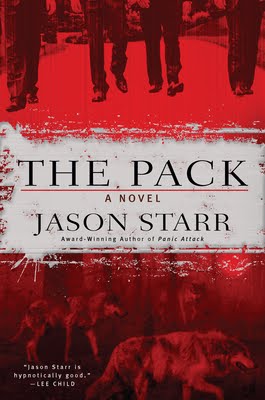
TKZ is thrilled to host Jason Starr today, an award-winning author who has written everything from graphic novels to novels to screenplays. His first series just hit bookstores this week, leading off with THE PACK, of which PW says, “Manhattan receives a lustrous varnish of black, black humor in this sly urban fantasy thriller.” His last thriller, PANIC ATTACK, was recently optioned by David Fincher (yes, THAT David Fincher, director of THE SOCIAL NETWORK and SE7EN), with OCEAN’S ELEVEN screenwriter Ted Griffin attached to write the screenplay. Here, the aptly named “Starr” offers helpful tips to navigating the Hollywood quagmire…

It’s widely known that in Hollywood people very rarely say what they are actually thinking, so the next time you interact with any agents or producers this glossary may come in handy. Here are some comments you might hear during your next trip to Hollywood, along with their actual meanings.

HOLLYWOOD: “Everyone’s really excited about your script.”
TRANSLATION: “I haven’t brought up the script with anybody yet except my girlfriend, but she thought the concept sounded pretty dope.”

HOLLYWOOD: “I like your script.”
TRANSLATION: “I think I read part of that script a couple of weekends ago. Didn’t I? Eh, maybe, maybe not. Wait, yeah, I did read it. I can’t remember much about it, but I think I remember not hating it.”

HOLLYWOOD: “I love your script.”
TRANSLATION: “I read your script. It was okay. I think there’s a five percent or less chance any studio will want to do it, but what the hell? If you’ll let me go out with it for free, I’ll give it a shot.”

HOLLYWOOD: “I’m obsessed with your script.”
TRANSLATION: “I like your script. I think it’s pretty good. I’m not sure anybody else will like it, but I actually think there’s a decent shot of other people liking it.”

HOLLYWOOD: “I have notes.”
TRANSLATION: “This script sucks. I pretty much hated everything about it. Did you really write this garbage? I have no idea what you can possibly come up with to salvage this total mess but I’ll have my assistant come up with some notes to send you.”

HOLLYWOOD: “We’re approaching Leo.”
TRANSLATION: “I’m going to discuss the idea of Leo, or some other A-list names we have no chance in hell of actually getting, with some other people here. Maybe I’ll do that sometime next week? Or maybe not. It’s probably a waste of time anyway.”

HOLLYWOOD : “Leo’s people are interested.”
TRANSLATION: “I think Leo’s name came up at that party at Cannes two weeks ago. Didn’t it? I don’t know, I was pretty wasted that night. Also, I think I was talking about like six projects at once, all bigger than yours, and I can’t really remember if I mentioned Leo in connection with your project or something else, but people totally seemed into the idea of trying to attach Leo to something. Yeah, this definitely sounds like a good idea.”

HOLLYWOOD: “Leo’s attached.”
TRANSLATION: “No one has actually made an offer to Leo yet. Leo’s manager is into the idea of Leo taking this role, but his agent will probably talk him out of it. Maybe I can figure out a way to get to Leo directly. Do you know anybody?”

HOLLYWOOD: “I want to make your movie.”
TRANSLATION: “I really do want to make your movie, but I’m broke and I’ve burned a lot of bridges lately. I think it would be a cool project to shop around though. Can I have a free option?”

HOLLYWOOD: “I want to make your movie in the fall.”
TRANSLATION: “Yeah, I want to make your movie in the fall. I want to make all my movies in the fall. You have fifty million dollars to lend me?”

HOLLYWOOD: “I’m going to make your move in the fall.”
TRANSLATION: “I’m not going to make your movie in the fall. I can guarantee you that.”

HOLLYWOOD: “There’s heat on me.”
TRANSLATION: “Fox hired me to write something five years ago. My deal has long since run out and I’m desperate to get back in the game.”

HOLLYWOOD: “I lost my offices at Fox.”
TRANSLATION: “Fox fired my sorry ass.”

HOLLYWOOD: “We have access to German money.”
TRANSLATION: “We don’t have a development deal anywhere and we have access to no money. But I met some guy from a German fund last year at that party at Sundance, and maybe if he’s still with that fund and they’re still interested in new projects they might want to do this. It’s worth a phone call anyway, right? Or, the hell with it, I’ll just have my assistant email the guy sometime next week. Hopefully by then you’ll forget this conversation ever took place.”

HOLLYWOOD: “It’s a go picture.”
TRANSLATION: “We’re hoping they greenlight this thing soon, but we haven’t heard anything yet and we’re all starting to seriously panic.”

HOLLYWOOD: “The movie’s been greenlit.”
TRANSLATION: “I hope the movie’s been greenlit. But everybody’s such a liar in this town, I hope people aren’t lying to me, but they probably are.”

HOLLYWOOD: “The movie is shooting.”
TRANSLATION: “The movie is shooting.” *

*This may mean the movie is actually shooting, but must be confirmed by an actual visit to the set.

JASON STARR is the author of numerous novels including THE PACK, the start of a new series, which is on sale now in hardcover and e-book from Penguin/Ace. He has several film and TV projects in development, including adaptations of his recent books THE FOLLOWER and PANIC ATTACK. For more info check out www.jasonstarr.com. Connect with Jason on Facebook and Twitter.

Drinking with Authors and Other Scraps

Drinking with Authors and Other Scraps

NEW YORK (Reuters Life!) – A New York children’s author who used a curse word in exasperation during a plane delay at a U.S. airport was ejected from the aircraft for disruptive behavior.

Robert Sayegh, 37, said Atlantic Southeast Airlines overreacted to his salty language when it summoned police aboard to escort him off the Sunday evening flight at Detroit Metro Airport.

I get it. Most of us get exasperated and drop the F bomb, but not on planes. Flying is hard enough without upsetting flight attendants. Times have changed. They don’t fly terrorists, obvious madmen, drunks, or dirty mouths. If old Bob there hadn’t been a kiddie-book author it would not have been news. Kids don’t read papers, so the publicity won’t help his sales. It got me thinking about the times my mouth has thrown me into a bear stew. Roal Dahl proved you don’t have to be an angel, or even a nice person, to write great and classic kids books. But I’m sure Robert is a great guy once you’ve had a drink with him.

On occasion, my social filters fail. One example of hundreds: I was in a restaurant in New York a few years ago sitting with another author and our conversation rolled around to some example of violence and gore. Conversation was purely technical, as I recall––heads of shotgun suicides that looked like day lilies, or perhaps what high-velocity rounds do to a human body. I was blissfully unaware of my surroundings until a woman at an adjoining table interrupted us to say, “Could you please change your conversation, we’re trying to eat here.” I don’t get that. I’ve been at an autopsy where the ME and an assistant were talking about cooking various venison dishes while the ME was popping out a brain, and weighing it. You get inured to what exposure to such subjects do to other people when you are always thinking and writing about it.

Most authors are curious about a wide variety of things, and they will go to amazing lengths to learn something potentially useful. Instead of having knowledge in a concentrated area, their knowledge tends to be as wide-ranging as that of a Jeopardy Champion. I once sat through an hour-long story that had no punch line at all. It was riding in a ox-drawn cart five miles across a desert only to ride off a cliff. Conversations with most of the authors I’ve met (especially in a bar) are almost always interesting, entertaining, and enlightening. It’s no surprise that authors tend to find each other’s company pleasurable. You sit having drinks, listening to people who know how to tell a good story with maximum impact­, and it is never boring.

I’ve never decided if conferences were profitable, but they are worth the investment simply for entertainment value and being in contact with peers. It can be expensive to attend Bouchercon, Thrillerfest, Magna Cum Murder, or any one of a hundred national, regional or local writers conferences. If you’ve never been or can’t afford $1500.00 on a weekend, what you should do, if you’ve never done one, is drive to the closest one and go to the closest bar to the conference rooms (Usually in the venue hotel), get a table, order a drink to nurse, and just sit there. When the authors start walking in and the place starts filling up, offer one a place at your table. Soon the table will be crowded with authors because they are social animals, especially after a drink or two. The later it gets the better the stories. Don’t be shy. Most authors are approachable. This will never fail, and you can decide if you want to sign up for the next one and spend the money. You don’t have to be a published author. You can be a fan of a conference’s genre, a librarian, or an accountant. It doesn’t matter at all. If you have questions, you’ll get real answers and unguarded ones at that. And you will laugh. That in itself is worth the effort and the expense.

I am a fan of interesting conversations over drinks in a quiet bar or on my deck. I am not very comfortable in crowds, but I’m okay in crowded bars filled with good people. You don’t have to be a drinker for this at a conference. A quarter of the authors in the room will be drinking soda with a bit of lime in the glass, which is, of course, a fictionalized drink.

John Ramsey Miller from Paradise

The Self-Pub Adventure

I am about to dive in where others have gone before. I’ve finished revising my last backlist title. It took me quite a while, as the doc file is over 500 pages and I made lots of changes. Now comes the next stage, which is to hire a cover designer.
Wait, not so fast. First, I need to determine the back cover copy. That’s not so hard. I can use the same one that’s on the original paperback with a few heading changes. But inside the book are more challenges. There are several introductory pages containing an excerpt, review quotes, and a dedication. I ditched the latter, as those people no longer apply to my current career. The excerpt and quote are reusable with some slight modifications. But what now? Do I add them to the front of my doc file? Should I include a title page? Maybe on Smashwords, these things are delineated, but I haven’t gone there yet to read the requirements. First I have to get a cover.
Getting a cover will probably necessitate filling out a description of the hero/heroine and a suggested background scene. I already have a list of cover artists garnered from other authors’ online posts. But now I must prepare these materials for when I contact one of them. Hopefully the artist will determine the proper fonts and where to put my name and book title. And I have to remember to state somewhere that this book was previously published and written under a pseudonym.
This whole process seems daunting, but I’d like to use this book as an experiment. Because who knows, if my current works on the market fail to sell, I may choose to go this route. Or I may just get tired of waiting for a response and then waiting another year or two for the book to be published.

It’s a scary thought for an author who has only sought traditional publishers or legit e-book pubs before. Plus, self-published works are still not accepted by many reviewers or booksellers for signing events, so there is a certain loss of prestige.
I know some of you have already cast off the shackles of print publishers and ventured into this new territory. Are you happy with your choice? How many of you have done it for original works?

Cyborg Author: Not Another Conspiracy Theory!

By: Kathleen Pickering

I can enjoy a good conspiracy theory, just like any other paranoid earth-dweller. Today, however, I discovered that an author’s worst nightmare has come to life: A Robot Writer.

thumbnail[3]The conspiracy? They say this new cyborg writer, just born in late 2010, was developed to turn statistics and sports writing into entertaining information, but I just know there is a Dr. Frankenstein out there building my double in robot form. I am seriously thinking about taking my writing arm underground before they invade the matrix and find me through my computer!

The company? Narrative Science, out of Chicago. (I hate to say their name out loud for fear they’ll hear me and discover my hide-out! After this point we shall call them, They who shall not be named. Or, for short: TWSNBN)

The reason for my dismay? The damned cyborg is good! It’s writing was put up in a contest against a rookie sports writer and won. Here was the robot’s take on a ball game:

“Tuesday was a great day for W. Roberts, as the junior pitcher threw a perfect game to carry Virginia to a 2-0 victory over George Washington at Davenport Field.

Twenty-seven Colonials came to the plate and the Virginia pitcher vanquished them all, pitching a perfect game. He struck out 10 batters while recording his momentous feat. Roberts got Ryan Thomas to ground out for the final out of the game.

Tom Gately came up short on the rubber for the Colonials, recording a loss. He went three innings, walked two, struck out one, and allowed two runs.

The Cavaliers went up for good in the fourth, scoring two runs on a fielder’s choice and a balk.”

See? I’d have to give ol’ Robo an A+. Not good! I visited TWSNBN’s website. This is what their creator says:

We tell the story behind the data. Our technology identifies trends and angles within large data sources and automatically creates compelling copy. We can build upon stories, providing deeper context around particular subjects over time. Every story is generated entirely from scratch and is always unique.

Sorry. That sounds like fiction writing to me. I just know they’re planning on hunting us authors down, will carve out our brains and make body doubles of all of us.

Beware, my author friends. Articles already written about TWSNBN state that their Cyborg’s talents will make some writing by humans obsolete. I can just hear my editor now: “Um, Kathleen, you know we just love you, um, but, we have to let you go. I’d like you to meet your replacement:

thumbnail[4] Kataborga Pickerbot. No hard feelings. Really.”

We’re doomed, I tell you! Sigh . . . and to think, I just got started in the writing world. Talk about bad timing!

Gender in Writing (or VS Naipaul’s Talks Tosh)

by Clare Langley-Hawthorne

Last week VS Naipaul inflamed a fair bit of controversy when he declared that there was no female author whom he considered his equal. Setting aside the sheer stupidity of such a statement (and the question of his own mental state) I found it interesting that he felt that he could tell “within a paragraph or two” whether a piece was written by a woman. According to Naipaul women have a sentimental, narrow view of the world which comes across in her work as “feminine tosh” in his view (yes, my hackles are rising as I type this).

Now our very own Kathryn Lilley raised the issue of ‘gender detection’ in writing in a blog post a while back and, if memory serves me right, we all submitted a paragraph to a website (possibly gender genie) to have a computer program evaluate an author’s gender based on the words used. I also seem to recall that this so called assessment misdiagnosed a number of pieces – so I continue to wonder, can you really tell if a woman or a man wrote something??

For my part, I doubt I would be able to distinguish a thriller by our own Michelle Gagnon from those of her male colleagues (except that I obviously have read her work and know it). Indeed many female writers have been mistaken for being male writers (some deliberately choosing to adopt male pseudonyms as well) so you have to wonder what planet Naipaul is on. I wouldn’t know that PD James was a woman from reading her Adam Dalgliesh novels just as I wouldn’t have guessed that a mother and son were the mystery author ‘Charles Todd’. There are also just as many book written by men that, had I not known that, would have assumed were written by women (Snow falling on Cedars and Room with a View, to name just two). Even in the literary sphere has Naipaul not heard of Currer, Ellis and Acton Bell or George Elliot??

But, rather than continuing to rant (VS Naipaul isn’t worth it), let’s focus on the nitty gritty – can you honestly tell if a novel is written by a man or a woman?