Author Archives: Joe Moore
Our Survey SAID…
I received a Kindle for Father’s Day 2010. I loved it. I still do. It is the junkie’s dream come true, instant gratification in a tool that will fit in Captain Kangaroo‘s pocket. On Father’s Day night, I looked at the stacks (yes, stacks) of books next to my bed that await my terminal illness (I figure I’ll have lots of time to read everything if I’m too ill to do anything else. Well, maybe not lots of time…) and told myself that there was no longer need for me to grab a book off of a store shelf that I didn’t have time to read, just so I’d have it when I wanted to read it. Since I could have a book when I wanted it just by pressing a couple of buttons, I didn’t need to create a backlog. I would load a book, read it, and then buy another. Never again, I told myself, would I need to hoard books. Right.
At last count, one year later, I have thirty or so books that have accumulated on my Kindle. I mean, why would I pass up the complete works of Sax Rohmer for a couple of bucks? Or a new Marcus Wynne novel for ninety-nine cents? I drop ninety-nine cents in change on the floor of my car when I’m exchanging bucks for ambrosia in the Sonic Drive-through. I’m going to resist buying Lawrence Block books, which have been out of print for decades, for less than the cost of a Venti espresso that I will purge within an hour? I’m going to pass that up?
So I ask…how many of you out there have an accumulation of unread books on your Kindle? If you have such an accumulation, how many do you have? And do you have any idea why you are doing it, since, well, it’s not like Amazon is going to run out of a particular title? Is there something really, really wrong with us? Or are we okay and it’s just the guy who collects virtual beer cans who needs an intervention? You tell me.
Sometimes A Guy Can’t Win
By John Gilstrap
I’m no expert in young adult fiction, but over the past ten years or so, I’ve consumed more of it than I ever did when I was a young adult. (I don’t think that “young at heart” counts in this context.)
I’m an avid Harry Potter fan—in fact, I already bought my tickets for the July 15 opening. I love the concept of the boy wizard who has no idea who he is, but even more than that, I love the interaction of the characters. They seem very real to me. They’re not the best-written books in the world (J.K. Rowling loves adverbs enough to create brand new ones on the fly), but that doesn’t matter because the stories are so compelling. The characters are so compelling.
There’s no doubt in reading the Potter books that it’s Harry’s story. Still, the secondary characters really sing. Hermione Granger is among my favorites. Smarter than any of the boys, she has a strong moral center, and she’s willing to fight for what she believes. Cupid delivers her a few tough blows along the way, but never once does she go to that self-destructive place that seems popular in other YA stories I’ve consumed recently. She never ties her self-actualization to the whims of a jerk.
Then there’s Bella of the Twilight series—whiner in chief. Never mind that she has no interest in Jacob, the guy who actually loves her and treats her like, well, a human being. Never mind that Edward is constantly pushing Bella away. Let’s concentrate for a moment on the fact that Bella has to die to be with the one she loves. Yeah, I know, dying is part of the construct of the whole vampire craze, but in the second of the Twilight stories (or, at least the second movie I watched), Bella sees self destruction—multiple suicide attempts—as the only way for Edward to pay attention to her.
If you’ve read this blog for any time at all, you know that I am 100% against censorship in all of its forms, but is this really the message with which American girls bond so thoroughly? Is there a purer form of narcissism than the gambit of “If you don’t pay attention to me, I’ll hurt myself”? How is this remotely empowering to young girls?
When did it become cool for girls to hand their emotional future over to some guy who treats her like crap?
Most recently, I read the first book in the Hunger Games trilogy, in which young Katniss Everdeen (a girl) has to fight 23 other teens to the death in a contest that is televised as a sporting event. The Hunger Games is the new Big Thing in YA fiction. Having read and enjoyed Battle Royale—a Japanese version of a story that is strikingly similar—I thought I’d give Katniss and her adventures a whirl. It’s actually a pretty good book.
Katniss is no Bella. She can thread a needle with a bow and arrow at 50 yards, and she doesn’t take crap off anybody. As luck would have it, one of her opponents in the games is Peeta, a boy her age who fell in love with her at first sight back when they were both six or seven years old.
MILD SPOILER AHEAD
Peeta repeatedly saves Katniss’s life at the risk of his own, and he announces his love for her on national television, but she pays little attention because her heart belongs to another guy. It’s the conceit of the story that Katniss suspects that he’s merely using professed love as a strategy, but in the author’s hand, Katniss just comes off as obtuse at best, moronic at worst.
SPOILER ENDED
I know it’s all fiction, but for these stories to resonate as they have, there has to be some element of universal truth. Is this really how the adolescent female mind is wired? Do good guys have any chance at all—and in this case I mean that literally, as in guys who are good to others?
Okay, don’t answer that. Good guys are doomed—at least among adolescents and certainly in YA fiction. The romance of the “bad boy” is at least as old as the printing press. Certainly, as far back as my own high school days, really hot girls have always been drawn to the guys who treat them like crap. The good news is that like everything else about adolescence, most people outgrow the roles they play as teenagers and ultimately get their heads straight.
During that transitional time though, when the out-growing is underway, I hope there are some strong parental hands on the tiller.
When all is said and done, though, Hermione will have been a lot more help creating well-balanced young ladies than Bella ever was.
E-Pub versus Indie Pub
My last topic here was on The Self-Pub Adventure. Here are my conclusions so far.
Writing and Basic Human Needs
By: Kathleen Pickering
That, of course, got me thinking, well why not? Not writing wouldn’t kill me. I’d feel less pressure to perform, my days would free up and I could enjoy all those characters in my head as imaginary playmates. But, then I realized why I reacted so uncomfortably to Clare’s question. Simply put, we all have basic human needs. For me, writing fulfills all six of the basic human needs Anthony Robbins says every person craves for personal happiness. No wonder we authors are addicted to the craft!
Here are the needs as Tony Robbins lists them. I’ve shown how they fulfill my need to write:
1. Certainty – We all want to feel safe in our world. As a writer, I know the world I create is my own, no one can hurt it, change it, take it. I feel safe in my writing cocoon.
2. Uncertainty – We all crave variety, surprise and spontaneity or we’d get bored. Well, heck, do we or do we not get uncertainty and surprise from our characters? They always take us somewhere we don’t expect. Also, the uncertainty of the publishing industry and reader/editor opinion offers no small adrenaline rush in working towards success.
3. Significance – We all need to feel important in our world and often carry a fear of “not being enough.” Writing offers me a sense of significance, in that I feel unique in my craft and how I tell my stories. Being an author gives me a sense of worth.
4. Growth – If we don’t grow, we die. The richness of every book experience, from creating the work to selling, to networking, to celebrating and sharing, all contribute to my personal growth as an author. I feel an internal shift upwards with every book I write.
5. Connection/Love – We all need to bond and feel grounded with others. We all understand this. A perfect example for me was at this year’s Sleuthfest conference. I asked Dennis Lehane what inspired him to write Shutter Island and how he conducted his research. I was rewarded with a smile, an in-depth and heartfelt explanation that ended with, “this book describes me the best.” We all need connection and welcome the recognition in others.
6. Contribution – We act to make the world a better place. I’m not alone when I say I am an author with more than just a story to tell. (My brand.) Every book I write has a purpose, a theme, and mine is redemption. My world view is that we were born perfect onto a perfect planet, and somewhere along the line we lost that understanding. I write hoping my stories will get folks thinking towards shifting our perceptions back to a place of dancing and joy and connection with ourselves, each other and our precious world. I tell you, writing rocks!
My urban fantasy, Mythological Sam – The Call, embodies all six basic human needs of which Robbins speaks. That’s why I love writing and could never stop. Who else gets the opportunity to get their message across with a hilarious, demon-busting call to adventure while meeting their own human needs?
So, I ask you, as an author and a reader . . . how does writing/reading meet your human needs? And which two are most important?
A Peek into The Teenage Mind (or How I Survived Exam Supervision)
- The boys who arrived and promptly fell asleep at his desk for 45 minutes. I had to wake him when he started snoring but I still don’t think he actually did anything on the exam. Instead he drew on his hand, drew on the desk, chewed gum, sighed, tried to sleep again, doodled all over the exam booklet and generally behaved like someone with a mental disorder of some kind.
- Half the class who had come to an exam without pencils or eraser even though…yes, you guessed it that was all that was required.
- The boy who constantly sniffed and made bizarre wheezy-nose noises but still refused to take the tissue I offered, despite grossing me out for most of the morning.
- The boy at the back who decided that making dandruff pictures (a la the Breakfast Club) was the most inspired use of his time – oh, as well as cracking his knuckles. Delightful in a small confined space like a classroom…yes, truly delightful.
- Well, that it’s no surprise boys aren’t reading. From what I saw, it’s a miracle they can get out of bed in the morning and dress themselves.
- That most sixteen and seventeen year olds are really young and immature (I was giving them far more credit before this experience).
- For most boys a toilet level of humour still applies.
- That I will never be able to describe the hairstyles that have been adopted without laughing.
- That Twilight level romance is so far-fetched at this level it’s laughable.
- That the gap between the maturity levels of girls and boys at this age is so vast, that I may as well forget boys as a target audience all together.
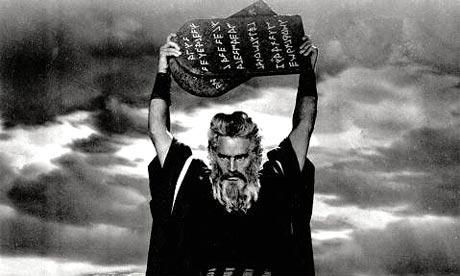
10 Commandments for Writers
Drinking with Authors and Other Scraps
NEW YORK (Reuters Life!) – A New York children’s author who used a curse word in exasperation during a plane delay at a U.S. airport was ejected from the aircraft for disruptive behavior.
Robert Sayegh, 37, said Atlantic Southeast Airlines overreacted to his salty language when it summoned police aboard to escort him off the Sunday evening flight at Detroit Metro Airport.
I get it. Most of us get exasperated and drop the F bomb, but not on planes. Flying is hard enough without upsetting flight attendants. Times have changed. They don’t fly terrorists, obvious madmen, drunks, or dirty mouths. If old Bob there hadn’t been a kiddie-book author it would not have been news. Kids don’t read papers, so the publicity won’t help his sales. It got me thinking about the times my mouth has thrown me into a bear stew. Roald Dahl proved you don’t have to be an angel, or even a nice person, to write great and classic kids books. But I’m sure Robert is a great guy once you’ve had a drink with him. Maybe the author was late for a conference. I bet the bar at a kiddie authors conference is Lamp Shade City.
On occasion, my social filters fail. One example of hundreds: I was in a restaurant in New York a few years ago sitting with another author and our conversation rolled around to some example of violence and gore. Conversation was purely technical, as I recall––heads of shotgun suicides that looked like day lilies, or perhaps what high-velocity rounds do to a human body. I was blissfully unaware of my surroundings until a woman at an adjoining table interrupted us to say, “Could you please change your conversation, we’re trying to eat here.” I don’t get that. I’ve been at an autopsy where the ME and an assistant were talking about cooking various venison dishes while the ME was popping out a brain, and weighing it. You get inured to what exposure to such subjects do to other people when you are always thinking and writing about it.
Most authors are curious about a wide variety of things, and they will go to amazing lengths to learn something potentially useful. Instead of having knowledge in a concentrated area, their knowledge tends to be as wide-ranging as that of a Jeopardy Champion. I once sat through an hour-long story that had no punch line at all. It was riding in a ox-drawn cart five miles across a desert only to ride off a cliff. Conversations with most of the authors I’ve met (especially in a bar) are almost always interesting, entertaining, and enlightening. It’s no surprise that authors tend to find each other’s company pleasurable. You sit having drinks, listening to people who know how to tell a good story with maximum impact¬, and it is never boring.
I’ve never decided if conferences were profitable, but they are worth the investment simply for entertainment value and being in contact with peers. It can be expensive to attend Bouchercon, Thrillerfest, Magna Cum Murder, or any one of a hundred national, regional or local writers conferences. If you’ve never been or can’t afford $1500.00 on a weekend, what you should do, if you’ve never done one, is drive to the closest one and go to the closest bar to the conference rooms (Usually in the venue hotel), get a table, order a drink to nurse, and just sit there. When the authors start walking in and the place starts filling up, offer one a place at your table. Soon the table will be crowded with authors because they are social animals, especially after a drink or two. The later it gets the better the stories. Don’t be shy. Most authors are approachable. This will never fail, and you can decide if you want to sign up for the next one and spend the money. You don’t have to be a published author. You can be a fan of a conference’s genre, a librarian, or an accountant. It doesn’t matter at all. If you have questions, you’ll get real answers and unguarded ones at that. And you will laugh. That in itself is worth the effort and the expense.
I am a fan of interesting conversations over drinks in a quiet bar or on my deck. I am not very comfortable in crowds, but I’m okay in crowded bars filled with good people. You don’t have to be a drinker for this at a conference. A quarter of the authors in the room will be drinking soda with a bit of lime in the glass, which is, of course, a fictionalized drink.
John Ramsey Miller
Can A Bestseller Be Engineered?
By John Gilstrap
In 1997, a literary author named Bradford Morrow made big headlines in the book industry when he allegedly told a reporter from New York Magazine that his publisher, Viking, was trying to engineer a bestselling thriller out of his next novel Giovanni’s Gift. To support the book, and to give it a leg up on sales, the publisher spent a lot of dough promoting it. That’s a good thing, right?
Well, not necessarily. When the New York Magazine story was published, New York Times Book Review writer Walter Kirn tore apart not only the book, but also the author and publisher. Here’s a link to a piece that Salon did on the brouhaha: http://www.salon.com/march97/media/media970331.html.
While some reviews leave room for interpretation, I think intelligent minds can agree that this is gratuitously awful: “an unintentionally campy blend of artistic ambition and commercial cynicism … a case study in the novel as gilded kitsch — a book that proposes to elevate its readers even as it takes calculated aim at their presumed stupidity … a thin romantic melodrama insulated in operatic twaddle.”
Morrow’s offense, such as it was(n’t) was his decision to share with the world his desire for commercial success. (In future interviews, he maintained that he never writes for money.)
How the world has changed, huh? In a mere fourteen years, we have come to a place in history where it’s okay for an author to publicly state his desire for commercial success. (I’ve long believed that even literary writers secretly want to make money off what they write.)
Carrying on with this week’s theme of finding the right strings to pull to engineer a bestseller, I continue to question whether any individual writer can do anything to significantly influence sales. Sure, there are outliers and exceptions (paging Joe Konrath), but in Joe’s case you have to give credit to the power of being first.
Yesterday ended a 10-day run for my book At All Costs on the Kindle Top 100. (As I write this, it sits at #105, having gotten as low as the 20s.) This is great news for a book that was written in the same year when Giovanni’s Gift was released. Could it possibly be that my fan base has finally reached that self-sustaining critical mass?
Maybe. I hope so. But I have serious doubts about that. If that were the case, my Nook sales rank would be substantially lower than 10,223, which is where it sits as I write this. So, what’s going on?
The answer in two words: Paid Promotion.
My publisher is spending real coin at Amazon on my behalf for banner ads and email blasts that alert anyone who has ever bought my work or the work of anyone who writes similar thrillers that there’s a new Gilstrap eBook out there at the readily affordable price of $1.99 (down from the original $4.50-ish). I assure you that it’s no coincidence that everyone who buys the At All Costs eBook will get to read the first chapter of Threat Warning, the front list book coming out on June 28 as an eBook and July 1 as a pBook.
Words cannot express how grateful I am to Kensington for getting behind me and my work this way. It’s all part of a strategy that was engineered and is continually tweaked by several departments of professionals who promote books for a living. If they’re doing this for li’l ole me, can you imagine the horsepower that’s behind the likes of Baldacci, Coben and Deaver? Sure, at the end of the day, the quality of the work is paramount—an author has to entertain his audience—but a lot of the frenzy that surrounds the release of a book is bought and paid for, including much of the stuff that seems spontaneous.
I have no idea what the price tag of all of this is, but I’m going to guess that it’s significant enough to be out of range for most people I know. It’s not just the absolute value of the time and the cash that’s involved; it’s the risk factor, too. There’s no guarantee that they’ll ever see a return on their investment.
My writing career is eight books deep now—eight books published, anyway. I’ve hired two independent publicists in that time, I’ve arranged book tours, I’ve typed my fingers bloody on blog tours, yet I can tell you without hesitation that nothing I’ve done in self-promotion comes close to providing the results of what Kensington is doing for me. And it’s not just the money; it’s the know-how.
I’m the first to say that I’m perhaps overly blessed at the moment, but some really dark times preceded the last couple of years. This is a tough, tough, business, and with few exceptions the road to success—whatever that means to whoever it means it to—is paved with divots and bloodstains.
Jeffery Deaver and I used to meet for drinks and dinner every Thursday evening for five or six years, and during the darkest of the dark times he endured my pity party for a while. Then, when I asked him what he’s doing right that I’m doing wrong, he put it in perfect perspective for me: “I’m twenty books ahead of you,” he said.
And there it is: the secret to publishing success. And after the twentieth book comes the twenty-first. I’ve come a long way since that chat with Jeff, but I have a long way to go.
Finally, at long last, I’m part of a team that supports me; but part of the reason they support me is because they feel I’ve earned it, a book at a time and a fan at a time.
Can you engineer a bestseller? I believe it’s done all the time. But key elements of the blue print include an established, enthusiastic fan base, and a proven ability to turn out good work.
Can a first time author engineer a bestseller on his own? The occasional exception notwithstanding, I believe the answer is no.
The Reality of Book Promotion
Book promotion has changed over the years and the developments are coming even faster as we trend up in the digital world. I have an e-reader now too, which has drastically changed how I buy books and how I hear about novels that interest me. So how does the average author today promote their own book in this evolving business?
This usually translates to online promotion since it’s free (except for the time you put into it). Focusing your marketing and branding efforts online can be an effective means to get the word out to the right people. On my recent summer read tour with fellow Texas YA authors, we had a tour blog set up a couple of months prior to our events that garnered thousands of hits and counting. Old school thinking on group signings is how many books did you sell. New school thinking is about exposure, perception, name recognition and the number of online hits you get before, during, and after the event if it’s promoted effectively online.
A book signing might have ad promo and get people to come see you, but the exposure is greater online where a website’s traffic can be hundreds or thousands of hits a day with the post continuing to get hits even after the book signing event is over. And with a reader already online, they can click on a link and buy your book, or download a sample on their e-reader that might entice them to buy the rest of your novel. This doesn’t mean the book signing is dead. It just means authors have choices on how they spend their time. And some ingenious folks have devised a way for authors to digitally sign a photo taken at the event or their actual e-book. (Here’s one LINK on that.)
Online Marketing I’ve Found Effective:
1.) A professional looking website or blog – Blogs are free if money is tight and you can share the work by putting together a group blog, like TKZ. My website designer –
xuni.com – specializes in authors. For great examples of websites with cool navigation, check out her portfolio.2.)
Twitter – Get to know your regional review bloggers. They can be great support.3.) Other Social Media – I hate Facebook for many reasons, but there are other sites that could be more effective. I’m trying
Tumblr now.4.)
Goodreads – If you don’t have an author page here, why not? It’s free and you can link your blog to your Goodreads author page to keep material fresh without much effort. Any Goodreads member is a reader and your target audience.5.)
Amazon Author Central – Did you know that you can update your own author/book page for reviews, book endorsement blurbs, post book trailer videos, etc.? If your brand is important to you, you may want to take control of your author page.The simple truth is that most authors won’t see a great deal of promotion dollars from their publishers. You’d think that if a house were taking on a new author and book that they would include a certain amount of money geared for promotion, but the reality is that the publisher spends generic dollars on promoting their line of books or other authors’ work and hope readers will notice your book in the process. They rely on the author doing their own promotion. It’s quite conceivable that the average author will spend more to promote their book than their publisher will, especially given that houses are tightening up on advances and other expenses.
So as authors look seriously at self-publishing and e-books, it’s real tempting to cut back on the time consuming and resource depleting efforts to promote that detracts from the time you have to write. Time literally is money in this empowering new future, but having online marketing supports your digital sales. Many might think that simply having your book available for purchase online is enough and that money will roll in. For the average author, this simply isn’t the case. You have to try things to see if they work for you. Traditional houses are watching the self-published authors with solid sales and offering them contracts because they have a readership and a marketing platform that will come along with them. When I first sold, I had no idea how important my own marketing would become. Self-published authors today will know more than I did when I sold, but they will also have to weigh how important it will be for them to sell traditionally if it means giving up control of their copy rights and business decisions.
In my opinion, the number one best thing you can do—whether you get published traditionally or go the self-published route—is to write a good book. And in either case, you’ll need to build a readership, people who like what you do and will come back for more. Online promotion on various fronts is a good way to get the word out in a cost effective manner to tap into a marketplace of the savvy readers we have today.
For discussion, I’d love to hear. How do you find out about books you want to buy these days? And how important is it for you, as a reader, to make a connection with the author either online or in person? What are your favorite ways to do this?
Specifically for authors—aspiring, self-published, or traditionally published—what methods of promotion have you found most helpful? (Yes, aspiring authors should weigh in. Having an online website/blog presence is important for you, too.)